

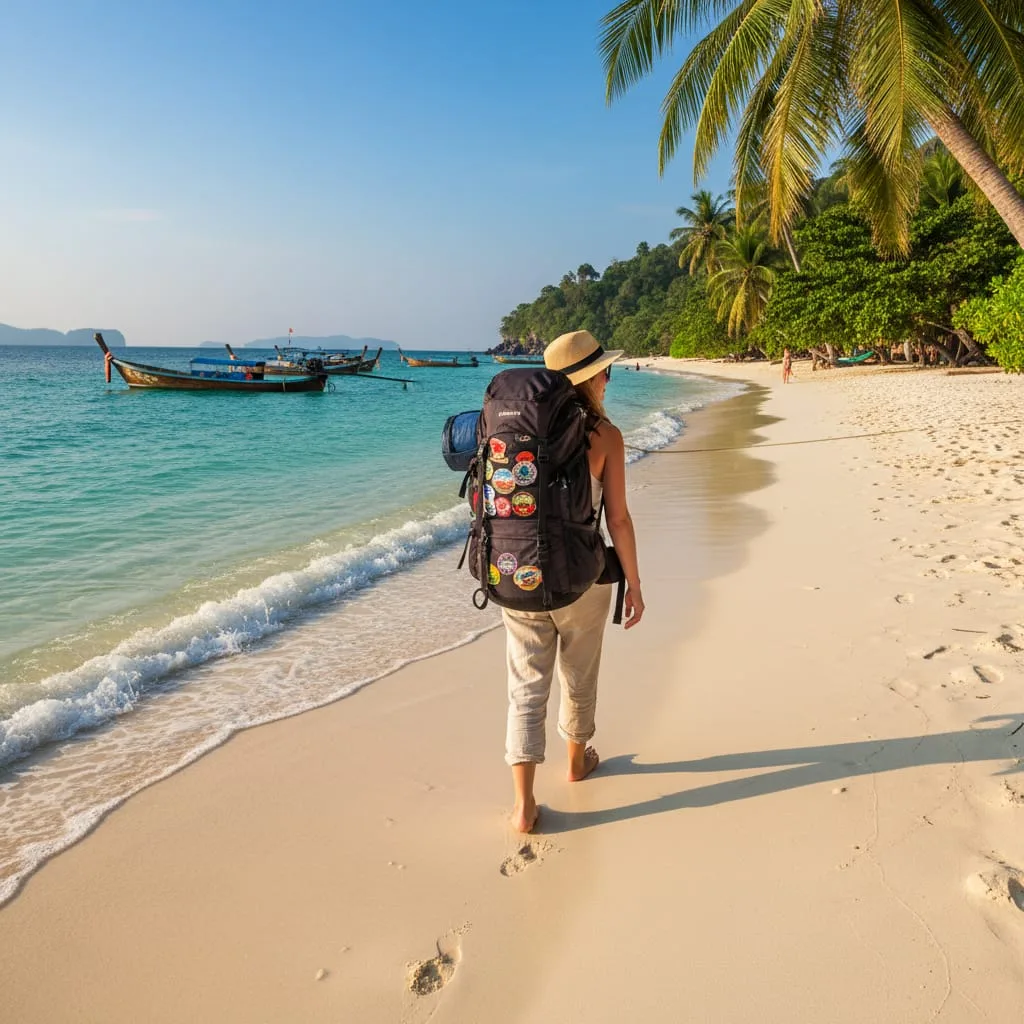
Southeast Asia Backpacking Route from India: 2-4 Week Itinerary
In this guide (14)
- Why Southeast Asia Is Perfect for Your First Backpacking Trip
- Southeast Asia Backpacking from India Route 1: The 2-Week Sprint
- Southeast Asia Backpacking from India Route 2: The 3-Week Deep Dive
- Southeast Asia Backpacking from India Route 3: The Full 4-Week Circuit
- Visa Strategy for Indians: Which Countries Need What
- Border Crossings: Land vs Fly for Indian Passports
- Budget Breakdown Per Country Per Day
- Accommodation Strategy: Hostels, Guesthouses, and When to Splurge
- Transport: Overnight Buses, Trains, and Budget Flights
- Backpack vs Suitcase: The Eternal Debate
- Monsoon Timing: When to Go and When to Avoid
- Safety, SIM Cards, and Money
- Getting TripCabinet to Plan Your Backpacking Trip
- Frequently Asked Questions
I was 23, broke, and terrified when I boarded that overnight train from Bangkok to Chiang Mai. My backpack was too heavy — rookie mistake — and I had exactly ₹85,000 budgeted for three weeks across four countries. That trip changed everything. Planning your southeast asia backpacking from india route might feel overwhelming right now, but trust me: it's simpler than your parents make international travel sound.
Southeast Asia remains the best first backpacking destination from India. Not Europe (too expensive), not South America (too far), not Australia (visa headaches). SEA sits right in our backyard, the food doesn't make you sick (mostly), and you can live like a king on a budget that wouldn't cover a weekend in Goa. This southeast asia backpacking from india route guide has become almost a rite of passage for young Indian travelers — and for many, it's the first leg of a bigger dream. Some use this as a stepping stone to a full round the world trip from India. I'm going to show you exactly how to do this first step right.
This guide covers three complete route options: a 2-week sprint, a 3-week deep dive, and the full 4-week circuit. I'll break down exact costs in INR, which border crossings are worth the hassle for Indian passports, and the visa strategy that saves you both money and airport queues.
Why Southeast Asia Is Perfect for Your First Backpacking Trip
Let's be honest. Your first solo or budget trip abroad is terrifying. You're worried about safety, food, communication, money — everything. SEA solves most of these problems without you even trying.
Flight time from major Indian cities: 3-5 hours. That's it. Bangalore to Bangkok is shorter than Bangalore to Delhi. You can leave Friday night and be walking through Khao San Road by Saturday morning. The psychological comfort of being "close to home" matters more than you think when things go wrong.
English works everywhere. Not fluent English, but functional English. In tourist areas of Thailand, Cambodia, and Vietnam, you won't struggle to communicate. Hand gestures, Google Translate, and pointing at menu pictures fill the gaps.

Food. This is the real reason. Indian stomachs adapt to SEA cuisine faster than anywhere else. The flavors aren't alien — coconut, rice, noodles, spice, tamarind. You'll find vegetarian options at most restaurants (though not as easily as home). When you're homesick? There's an Indian restaurant in every major tourist town. Not great Indian food, but it exists.
Budget reality: ₹2,000-3,500 per day covers everything. Hostel dorm beds run ₹500-1,200. Street food meals cost ₹150-300. Local transport is dirt cheap. Compare that to Europe where a single hostel night eats half that daily budget.
Southeast Asia Backpacking from India Route 1: The 2-Week Sprint
Two weeks sounds short, but it's actually plenty for a focused trip. This route gives you two main options, depending on what draws you more — temples and ancient history, or mountains and Mekong rivers.
Option A: Bangkok → Chiang Mai → Luang Prabang (Laos)
Days 1-3: Bangkok
Land at Suvarnabhumi, grab the Airport Rail Link to city center (฿45/₹110). Skip Khao San Road for sleeping — stay in Silom, Sukhumvit, or Ari for better value hostels. Spend Day 1 recovering from travel, eating street food in Chinatown's Yaowarat Road.
Grand Palace and Wat Pho on Day 2 (the reclining Buddha) in the morning. These get unbearably hot and crowded after 11 AM, so arrive at opening time. Afternoon at Chatuchak Weekend Market if timing aligns, or explore by BTS/MRT.
Floating markets on Day 3 (Amphawa is more authentic than Damnoen Saduak, but requires overnight stay). Or skip the tourist circuit entirely — I prefer wandering neighborhoods like Thonburi, taking random ferries across the Chao Phraya. Check the Tourism Authority of Thailand website for current market schedules.
Our Bangkok floating market tour price guide compares Damnoen Saduak, Maeklong and Amphawa tours and when each market opens.
Budget: ₹3,000-4,000/day including accommodation
Days 4-7: Chiang Mai
Take the overnight sleeper train (12 hours, ₹1,200-2,500 depending on class). Booking via 12go.asia works fine. Flying is faster (1 hour, ₹2,500-4,500) but you lose the experience and save no real money.
Chiang Mai is temple overload in the best way. Doi Suthep is the must-do — take a songthaew (red truck taxi) from the Old City moat. The Sunday Walking Street market runs the entire length of Ratchadamnoen Road and is genuinely worth planning around.
Consider one elephant sanctuary day. Actual sanctuaries, not the riding places. Elephant Nature Park is the gold standard (₹6,000-7,500 for day visit). The Chiang Mai Night Bazaar is more touristy than Sunday market but still fun.
Budget: ₹2,500-3,500/day
Days 8-11: Luang Prabang, Laos
Here's where it gets interesting for Indians. Thailand gives Indians visa-free entry, but Laos requires a visa on arrival (USD 40 / ₹3,350).
The route: Fly Chiang Mai to Luang Prabang (1 hour, ₹5,000-8,000 on AirAsia). Or take the dramatic slow boat journey — bus to Chiang Khong (5 hours), border crossing to Huay Xai, then two days on the Mekong to Luang Prabang. The slow boat is uncomfortable, beautiful, and costs around ₹3,500 total including one night in a riverside village.
Luang Prabang is French-Lao magic. Morning alms-giving ceremony (wake at 5:30 AM), Kuang Si waterfalls (best waterfall in mainland SEA), cooking classes, night markets. The pace here is deliberately slower. Don't fight it.
Budget: ₹2,000-3,000/day (Laos is cheaper than Thailand)
Days 12-14: Return to Bangkok
Fly Luang Prabang to Bangkok direct (2 hours, ₹4,000-7,000). Don't attempt the overland return unless you have extra days — it takes 24+ hours.
Option B: Bangkok → Siem Reap → Ho Chi Minh City
Days 1-3: Bangkok (same as above)
Days 4-7: Siem Reap, Cambodia
Fly Bangkok to Siem Reap (1 hour, ₹2,500-5,000). Cambodia eVisa for Indians: apply online (USD 36 / ₹3,000), approved in 3 days. Do this before your trip.
Angkor Wat. This is why you're here. Buy a 3-day pass (USD 62 / ₹5,200) — one day isn't enough unless you're only doing the greatest hits. Our Cambodia travel guide covers the temple circuits in detail. Sunrise at Angkor Wat is overcrowded but still worth doing once. The real magic is in smaller temples — Ta Prohm (the tree temple), Preah Khan, Bayon.
Stay in the Old Market area for walkable restaurants and cheap dorms. Pub Street is fun but gets sloppy. The Angkor Night Market is better for shopping than the day markets.
Budget: ₹2,500-3,500/day (temple pass adds significant one-time cost)
Days 8-11: Ho Chi Minh City (Saigon)
Fly Siem Reap to HCMC (1.5 hours, ₹3,000-5,500). Vietnam eVisa for Indians: USD 25 / ₹2,100, apply online, approved in 3 business days.
Saigon is chaos in the best possible way. The motorbike traffic seems terrifying until you realize: just walk steadily, don't stop suddenly, and traffic flows around you. I swear this works. District 1 for budget stays, Ben Thanh Market for tourist shopping (bargain hard), Bui Vien Street for backpacker bars.
Day trips: Cu Chi Tunnels (mandatory), Mekong Delta (optional, quite touristy). War Remnants Museum is intense but essential — don't skip it.
Budget: ₹2,500-3,500/day
Days 12-14: Return via Bangkok or Direct Flight
Several airlines fly HCMC to Indian cities direct (Bangalore, Mumbai). Check VietJet and IndiGo for deals. Or fly back through Bangkok if your original ticket was a return.
Southeast Asia Backpacking from India Route 2: The 3-Week Deep Dive
Three weeks lets you actually breathe. This is my recommended duration for a first backpacking trip — long enough to explore properly, short enough that you don't run out of steam or money.
The Classic Circuit: Bangkok → Cambodia → Vietnam
Days 1-3: Bangkok (as above)
Days 4-6: Siem Reap
Three full days for Angkor. Get the 3-day pass. Small circuit on Day 1 (Angkor Wat, Angkor Thom, Bayon). Grand circuit on Day 2 (Ta Prohm, Preah Khan, East Mebon). Outer temples or floating villages on Tonle Sap for Day 3.
Days 7-8: Phnom Penh
Bus from Siem Reap (6 hours, ₹700-1,000). This isn't an easy destination emotionally. The Killing Fields and S-21 prison are harrowing but important. The Royal Palace is stunning. The riverside is lovely at sunset. One day is enough; two lets you breathe.
Days 9-11: Ho Chi Minh City
Bus from Phnom Penh (6 hours including border crossing, ₹1,000-1,500). The land border is straightforward for Indians with valid eVisa. Cu Chi Tunnels, War Remnants Museum, eating your way through District 1.
Days 12-14: Hoi An
Fly HCMC to Da Nang (1.5 hours, ₹2,500-4,000), then taxi or Grab to Hoi An (30 mins). Hoi An is a living museum — lantern-lit streets, ancient houses, incredible tailors who'll make you custom suits in 24 hours. An Bang Beach for beach days. Cooking classes here are the best in Vietnam.
Days 15-17: Hanoi
Fly Da Nang to Hanoi (1.5 hours, ₹2,000-3,500). Hanoi's Old Quarter is tighter, grittier, more chaotic than Saigon. Different vibe. Bun cha (grilled pork noodles) is a religion here. Hoan Kiem Lake is the heart of the city. The Train Street is mostly for Instagram, but fine for a quick look. Vietnamese coffee is strong enough to power a spaceship — try the egg coffee.
Days 18-20: Ha Long Bay
Day trips are disappointing. Book an overnight cruise (₹5,000-15,000 depending on boat quality). Two nights is ideal if budget allows. Cat Ba Island is the budget alternative to fancy cruises — stay on the island, rent kayaks, do day trips to less crowded parts of the bay.
Days 20-21: Return
Fly Hanoi to India direct (VietJet, IndiGo to Bangalore/Mumbai/Delhi). Or return through Bangkok.
Southeast Asia Backpacking from India Route 3: The Full 4-Week Circuit
Four weeks is the sweet spot for the full circuit. Not rushed, not dragging. This is the complete backpacking route that covers all four mainland nations and gives you proper time in each country.
Week 1: Thailand
Bangkok (3 days) → Chiang Mai (4 days). Add Pai (mountain town, 3-hour minibus from Chiang Mai) if you want to slow down. Pai is backpacker paradise — lazy, cheap, beautiful. Some people go for 3 days and stay 3 weeks.
Week 2: Cambodia
Fly Chiang Mai → Siem Reap. Angkor complex (3 days) → Phnom Penh (2 days) → optional: Kampot (2 days for pepper farms and cave temples, genuinely underrated).
Week 3: Vietnam
Overland to HCMC (2 days) → Hoi An (3 days) → Hanoi (2 days). The overnight buses in Vietnam are decent — "sleeper buses" with actual beds. Giant Ibis and Sinh Tourist are reliable operators. Domestic flights remain cheap if you book early.
Week 4: Ha Long Bay + Laos
Ha Long Bay (2 days) → fly Hanoi to Luang Prabang (1.5 hours, ₹4,000-7,000). Luang Prabang (3 days) → fly back to Bangkok and home.
Total estimated cost for 4 weeks: ₹1,20,000 - ₹1,80,000 depending on accommodation choices and pace. That's flights from India, all internal transport, accommodation, food, activities, visas, everything. This delivers incredible value compared to almost any other international destination.
Visa Strategy for Indians: Which Countries Need What
This section alone will save you hours of confusion and possibly a missed flight. Understanding visa requirements is essential for any southeast asia backpacking from india route you choose.
Thailand: 30 days visa-free for Indian passports (since 15 September 2026). You literally walk through immigration with just your passport. No eVisa, no visa on arrival, nothing. Check current Thailand visa rules before booking.
Cambodia: eVisa (USD 36, 3 business days) OR Visa on Arrival (USD 30). I recommend eVisa — the VOA queue at Siem Reap airport can take 45 minutes on busy days. Apply at evisa.gov.kh. The paper visa has a photo, looks official, and they staple it into your passport.
Vietnam: eVisa only (USD 25, 3 business days). Apply at evisa.xuatnhapcanh.gov.vn. Valid for 30 days, single entry. For longer stays or multiple entries, you need a traditional embassy visa (more paperwork, not recommended for tourists).
Laos: Visa on Arrival only (USD 40). No eVisa option for Indians. Bring two passport photos and exact USD cash. The VOA process at Luang Prabang airport is relaxed, usually 15-20 minutes.
Malaysia (if you're routing through): Visa-free 30 days for Indians since December 2023; the current exemption runs until 31 Dec 2026. See our Malaysia visa guide for conditions.
Border Crossings: Land vs Fly for Indian Passports
Land borders in SEA are romantic. Slow boats, dusty bus stations, walking across bridges between countries. They're also sometimes a massive hassle, especially for Indian passports.
Thailand-Cambodia (Poipet/Aranyaprathet): Fine for Indians with Cambodia eVisa. The border itself is chaotic — touts, scammers, casino buses. Stay calm, ignore the "VIP fast track" people, walk through the official channels. Budget 2-3 hours for the full crossing. Bus from Bangkok to Siem Reap is 8-10 hours including border (₹1,500-2,000).
Cambodia-Vietnam (Bavet/Moc Bai): Smooth if you have Vietnam eVisa. Bus from Phnom Penh to HCMC is 6-7 hours including border (₹800-1,200). The border crossing takes 30-45 minutes. Much easier than Thailand-Cambodia.
Thailand-Laos (Chiang Khong/Huay Xai): For the slow boat to Luang Prabang. Fine with Laos VOA. Cross the Friendship Bridge by bus, get your visa at Laos immigration, then proceed to the boat pier. Allow half a day for the crossing itself.
Vietnam-Laos (various crossings): Possible but complicated. The most common is Cau Treo between Vinh and Phonsavan. Very few tourists do this. Flights are cheap and save 15+ hours of mountain bus torture.
My recommendation: Fly where flights cost under ₹5,000. The time savings on a tight schedule outweigh the "experience" of border crossings. Exception: the Mekong slow boat into Laos. That's worth the time.
Budget Breakdown Per Country Per Day
These are realistic backpacker budgets — hostel dorms or budget guesthouses, street food and local restaurants, public transport, occasional activities.
| Country | Shoestring (₹) | Comfortable (₹) | Notes |
|---|---|---|---|
| Thailand | 2,000-2,500 | 3,500-4,500 | Bangkok is 20-30% pricier than elsewhere |
| Cambodia | 1,500-2,000 | 2,500-3,500 | Temple pass adds ₹5,200 one-time |
| Vietnam | 1,800-2,300 | 3,000-4,000 | Domestic flights are surprisingly cheap |
| Laos | 1,500-2,000 | 2,500-3,500 | Less developed = less expensive |
Fixed costs to add:
- Flights India-Bangkok round trip: ₹15,000-30,000 (book 4-6 weeks ahead)
- Thailand visa: Free
- Cambodia eVisa: ₹3,000
- Vietnam eVisa: ₹2,100
- Laos VOA: ₹3,350
- Travel insurance: ₹1,500-3,000 for 3-4 weeks (don't skip this)
Accommodation Strategy: Hostels, Guesthouses, and When to Splurge
Hostel dorms: ₹400-1,200/night. Higher in Bangkok and Vietnam beach towns. Hostelworld and Booking.com both work. I actually prefer Booking's map view for finding locations. Hostels in SEA are generally clean and social. Avoid party hostels if you're trying to actually sleep.
Guesthouses: ₹800-2,000/night for private rooms. These are everywhere and often include basic breakfast. Family-run places have more character. Fan rooms are significantly cheaper than AC — and honestly, you'll survive.
When to splurge: Ha Long Bay (one night on a decent boat), Hoi An (the ancient town hotels are worth it), Luang Prabang (boutique French colonial stays around ₹3,000-4,000 feel impossibly luxurious).
Transport: Overnight Buses, Trains, and Budget Flights
Overnight transport doubles as accommodation. A 12-hour sleeper bus or train saves one night's hostel cost and travel time. In Vietnam especially, the night buses are surprisingly comfortable — actual lie-flat beds, blankets, sometimes even WiFi.
Trains: Thailand has the best train network. The Bangkok-Chiang Mai sleeper is a classic. Vietnam's Reunification Express runs Saigon to Hanoi (30+ hours, usually done in sections). Cambodia and Laos have minimal rail.
Buses: Vietnam: The Sinh Tourist, Futa, and Hanh Cafe are reliable long-distance operators. Cambodia: Giant Ibis and Mekong Express. Thailand: 999 VIP buses are surprisingly good.
Budget flights: AirAsia, VietJet, Thai Lion Air. Book direct on their sites, not through Skyscanner (direct is often cheaper). Check baggage rules — most don't include checked bags in base fare. A 7kg cabin bag is usually fine for backpackers.
Local transport: Grab works in Thailand, Vietnam, and Cambodia. It's your best friend. Fixed prices, no haggling, GPS tracking. Motorbike taxis (grab bike) are the fastest way through traffic.
Backpack vs Suitcase: The Eternal Debate
Backpack. Always backpack for SEA. No question.
You'll be walking on unpaved roads, cramming into tuk-tuks, fitting luggage into overhead bus compartments, climbing narrow hostel stairs. A suitcase is physically impractical in most situations. The one exception: if you're doing a resort-style Thailand trip with airport transfers and taxis everywhere. But that's not backpacking.
Size: 40-50 liters is enough. You'll do laundry every 3-4 days (₹150-250 per load at guesthouses). Don't overpack "just in case" — everything you need is available cheaply in Bangkok or Hanoi.
Daypacks: Bring a small foldable daypack (20L) for temple visits, hikes, and day trips. You'll use it constantly.
Monsoon Timing: When to Go and When to Avoid
SEA has complex weather patterns. The short version:
November-February: Peak season everywhere. Dry, cooler (relatively), crowded, expensive. This is when everyone goes. Book accommodation ahead.
March-May: Shoulder season. Hot. Really hot. 38-42°C in Thailand and Cambodia. Vietnam is more bearable. Fewer tourists, better deals, but temple-hopping in that heat is brutal.
June-October: Monsoon. It rains, but usually not all day — typically afternoon storms for 1-2 hours. Landscapes are green, prices drop 30-40%, crowds vanish. Ha Long Bay and islands can be rough (sea conditions). I've done August trips and they were fine, just flexible.
Best balance: Late October or November (just after monsoon) or February-March (before extreme heat).
Safety, SIM Cards, and Money
Safety: SEA is extremely safe for travelers, including solo travelers. Petty theft exists (don't leave phones on restaurant tables, watch your bag in crowded areas) but violent crime against tourists is rare. The biggest danger is actually motorbike accidents — wear helmets, don't drive drunk, and understand that you're almost certainly uninsured while riding.
SIM cards: Buy a tourist SIM at airports. ₹500-800 for unlimited data and enough calls/texts. Works everywhere, incredibly reliable. Thailand: AIS or DTAC. Vietnam: Viettel or Vinaphone. Cambodia: Smart or Cellcard. Don't bother with international roaming from Indian carriers — it's stupidly expensive.
Money: Carry USD 200-300 as emergency cash plus your ATM cards. ATM fees are brutal — Thailand charges ₹180-220 per withdrawal regardless of amount, so withdraw larger sums less often. Vietnam and Cambodia have lower or no ATM fees. Credit cards work at hotels and tourist restaurants but not street vendors or local shops.
Cards: Charles Schwab debit card refunds all ATM fees globally (for US accounts). For Indians, HDFC ForexPlus and Niyo Global are reasonable options. Avoid Axis and SBI's forex cards — the fees are hidden and painful.
Cash vs card: Carry cash for daily expenses, card for emergencies and larger purchases. Exchange rates at money changers are usually better than ATMs, especially in Thailand (Superrich is the gold standard).
Getting TripCabinet to Plan Your Backpacking Trip
Look, I've given you the DIY framework. But here's the thing: planning a multi-country backpacking trip while working full-time is exhausting. The visa applications, transport bookings, accommodation research, border crossing logistics — it adds up to dozens of hours.
TripCabinet handles all of this. We're a Bangalore-based travel agency (not a comparison marketplace) that specializes in SEA trips for Indian travelers. We book the flights, arrange the visas, schedule the transport, pre-book the accommodation, and give you a day-by-day itinerary. You show up with your backpack and follow the plan.
We know the scams, we know which bus companies are reliable, we know which hostels have bed bugs. That local knowledge comes from doing this hundreds of times. If something goes wrong — a missed connection, a canceled flight, a booking issue — you call us and we fix it. No frantic midnight Googling in a foreign country.
Flexible packages start around ₹45,000 for 2-week Thailand-Cambodia trips (excluding international flights). We customize everything based on your pace, interests, and budget. The planning stress disappears. You just travel.
Frequently Asked Questions
How much money do I need for a 3-week backpacking trip through Southeast Asia from India?
Budget ₹80,000-1,20,000 total for 3 weeks including international flights, visas, accommodation, food, transport, and activities. Shoestring travelers can manage on ₹60,000-70,000 with careful planning, staying in dorm beds, eating street food exclusively, and avoiding expensive activities. Comfortable mid-range traveling runs closer to ₹1,20,000-1,50,000.
Is it safe for Indian solo travelers to backpack through Thailand, Cambodia, and Vietnam?
Yes, extremely safe. Southeast Asia is one of the safest regions globally for backpackers. Violent crime against tourists is rare. Watch for petty theft in crowded areas, use Grab instead of unmetered taxis, and wear helmets on motorbikes. Female solo travelers should exercise standard precautions but generally report feeling very safe. The biggest actual risk is traffic accidents.
Which countries in Southeast Asia need a visa for Indian passport holders?
Thailand: Visa-free (30 days). Cambodia: eVisa (USD 36) or visa on arrival (USD 30). Vietnam: eVisa required (USD 25). Laos: Visa on arrival only (USD 40) — see our complete Laos Myanmar travel guide for detailed visa info. Malaysia: Visa-free (30 days). Apply for Cambodia and Vietnam eVisas online before your trip — processing takes 3 business days.
What's the best time of year for backpacking Southeast Asia from India?
November to February is peak season — dry weather, moderate temperatures, but higher prices and crowds. Late October or late February offer better value with similar weather. Monsoon season (June-October) means afternoon rain showers and 30-40% lower prices. Avoid March-May for first-timers — extreme heat makes temple-hopping uncomfortable.
Should I book accommodation in advance or find places on arrival?
Book the first night in each city to avoid stress after long travel days. Beyond that, peak season (November-January) requires advance booking for good hostels. Off-season, walk-in rates are often cheaper than online prices. Always book Ha Long Bay cruises and popular Chiang Mai elephant sanctuaries in advance — they sell out.
Want a complete day-by-day plan for Vietnam specifically? Our Vietnam 2-week itinerary from India covers Hanoi, Ha Long Bay, Hue, Hoi An, and Ho Chi Minh City with budget breakdowns.