
Loading
Malaysia is Southeast Asia's most diverse destination, offering Indian travellers an extraordinary mix of modern cities, ancient rainforests, pristine islands, and a food scene that rivals anything on the continent. Our Malaysia tour packages cover everything from the iconic Petronas Twin Towers in Kuala Lumpur to the untouched beaches of Langkawi, the street food paradise of Penang, and the cool highlands of Cameron — all at prices that make Malaysia one of the best value international holidays available from India.
Malaysia has a large Indian community — about 7% of the population — which means Tamil signage, Hindu temples, banana leaf rice restaurants, and a cultural familiarity that makes Indian visitors feel immediately at home. Little India neighbourhoods thrive in every major city. Vegetarian food is widely available at Indian restaurants, Buddhist Chinese eateries, and Malay stalls that clearly label halal and vegetarian options. The vegetarian food guide covers the best options across the country.
Flights from India are short and affordable — Kuala Lumpur is just 4-5 hours from major Indian cities, with budget airlines like AirAsia offering fares as low as INR 5,000 one way during sales. Malaysia's visa-free entry for Indians (up to 30 days, until 31 December 2026) needs no application, making trip planning effortless. And once you arrive, the ringgit's favourable exchange rate means your rupees stretch remarkably far.
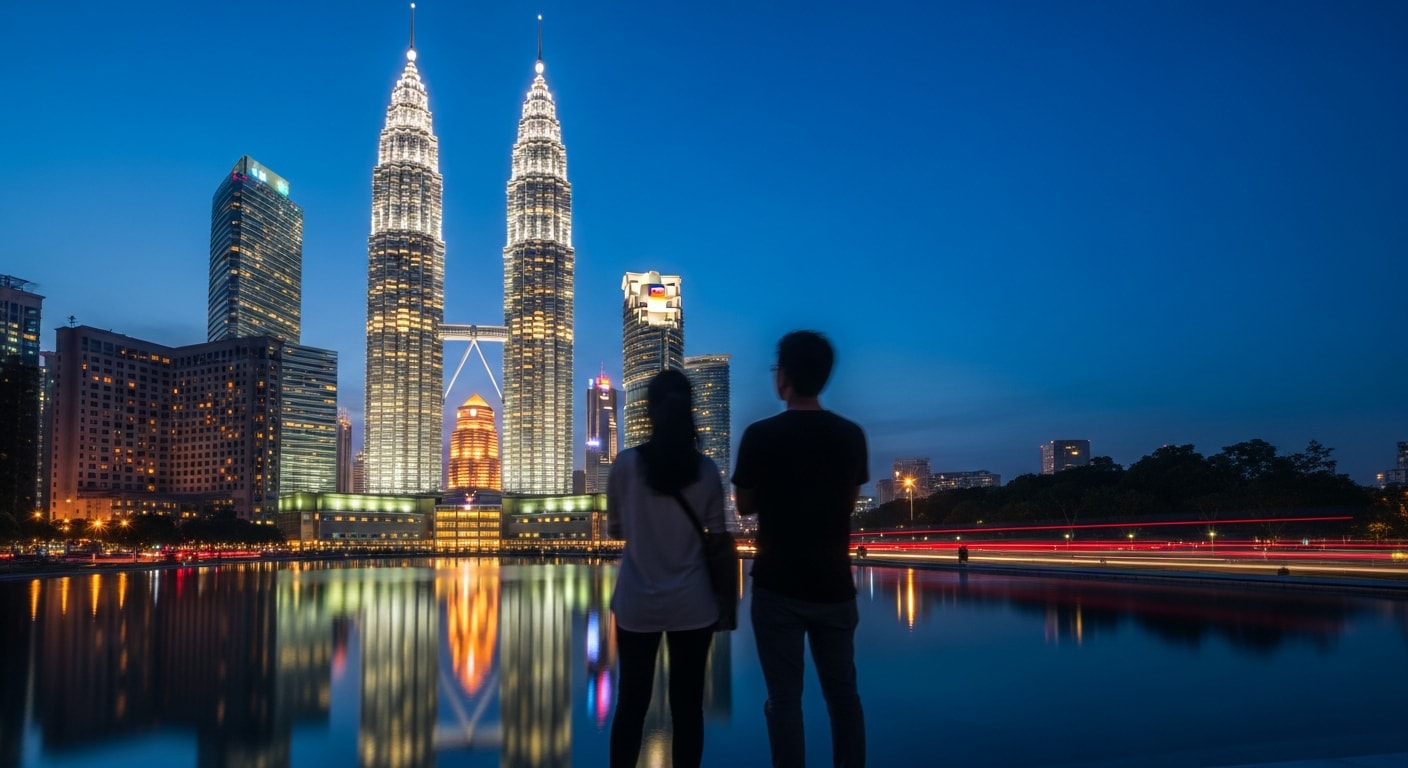
Every Malaysia tour package begins in Kuala Lumpur, a city that perfectly balances Malay, Chinese, and Indian cultures against a skyline of glass towers and colonial architecture. The Petronas Twin Towers remain the city's crown jewel — the skybridge and observation deck offer panoramic views that put the city's scale into perspective. At ground level, KLCC Park's fountains and jogging paths provide a green escape.
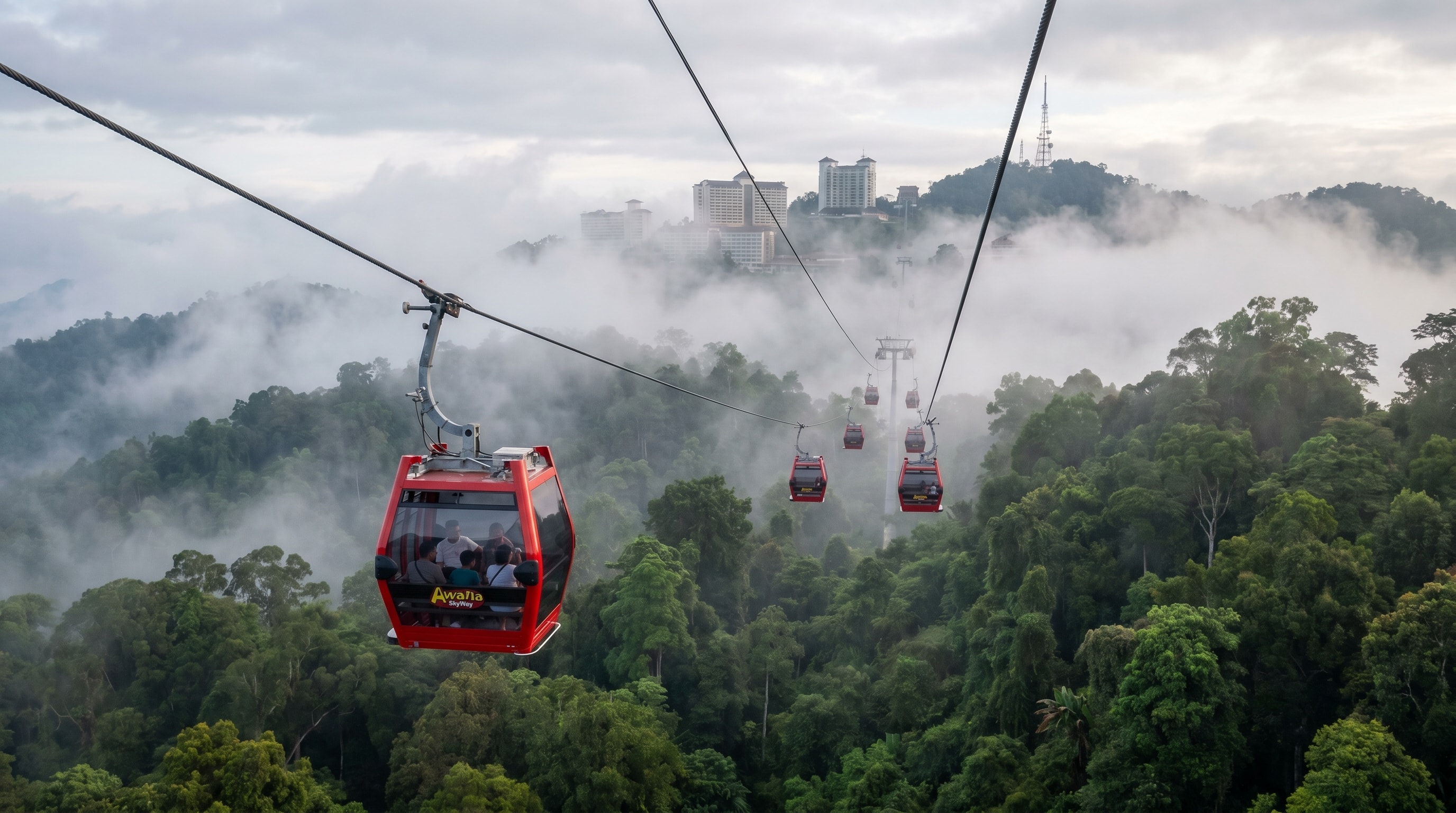
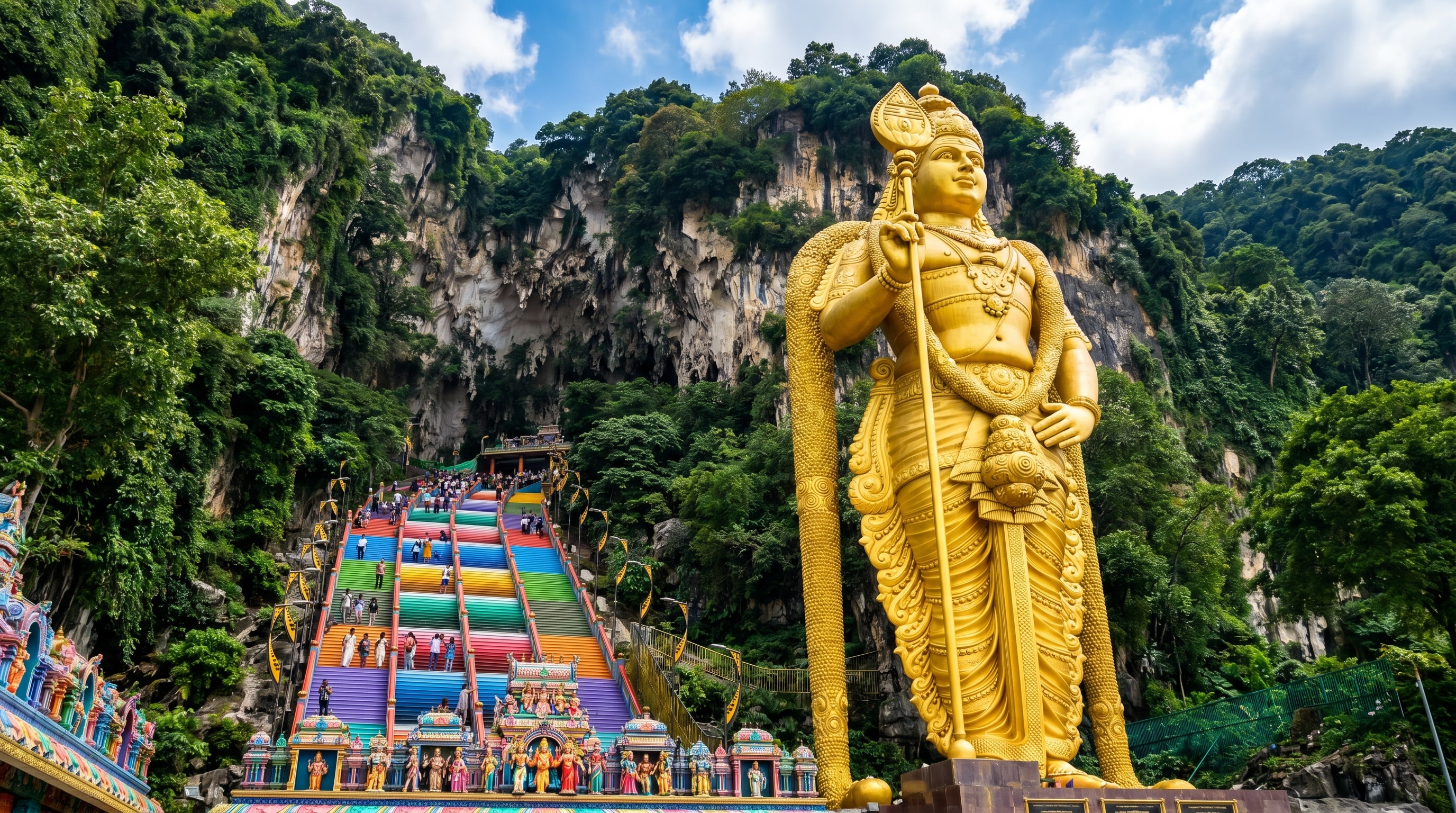
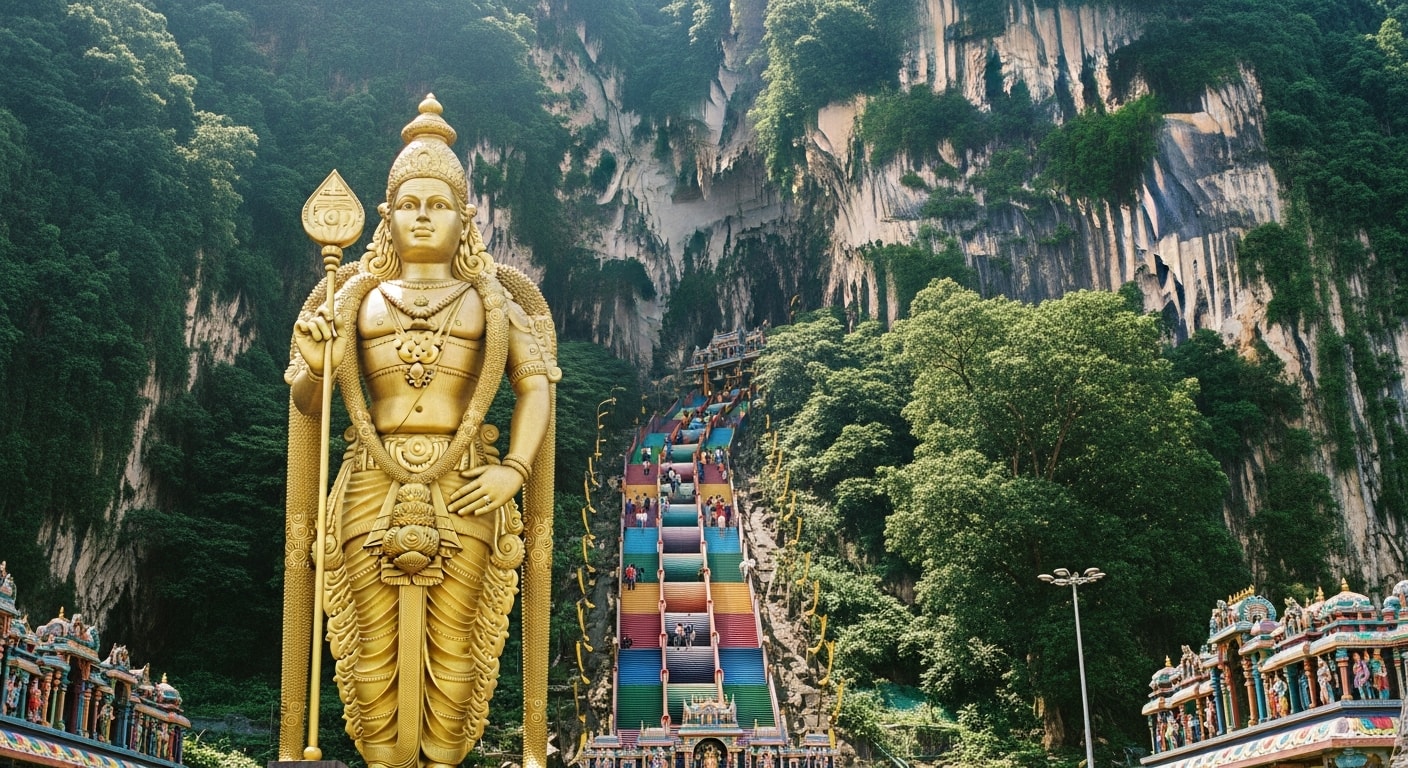
Our KL travel guide maps out the best itinerary: Batu Caves for the spectacular Hindu temple complex, Merdeka Square for colonial history, Jalan Alor for the city's best street food after dark, and KL's shopping districts from budget Petaling Street to luxury Bukit Bintang. A day trip to Genting Highlands — the hilltop casino and theme park resort just one hour from KL — is included in most of our packages.
Langkawi is Malaysia's jewel island — a duty-free paradise of dramatic limestone formations, eagle-watching boat tours, cable car rides above ancient rainforest, and beaches with powder-white sand. Our island packages include the famous SkyBridge, mangrove kayaking, and sunset sailing cruises that show why Langkawi regularly appears on lists of Asia's best islands.
Beyond Langkawi, Malaysia's island hopping circuit includes the Perhentian Islands for world-class snorkelling at budget prices, Tioman for diving among coral gardens, and Redang for crystal-clear visibility that rivals Caribbean waters. The east coast islands are best visited between March and October when monsoon season is over and the seas are calm and warm.
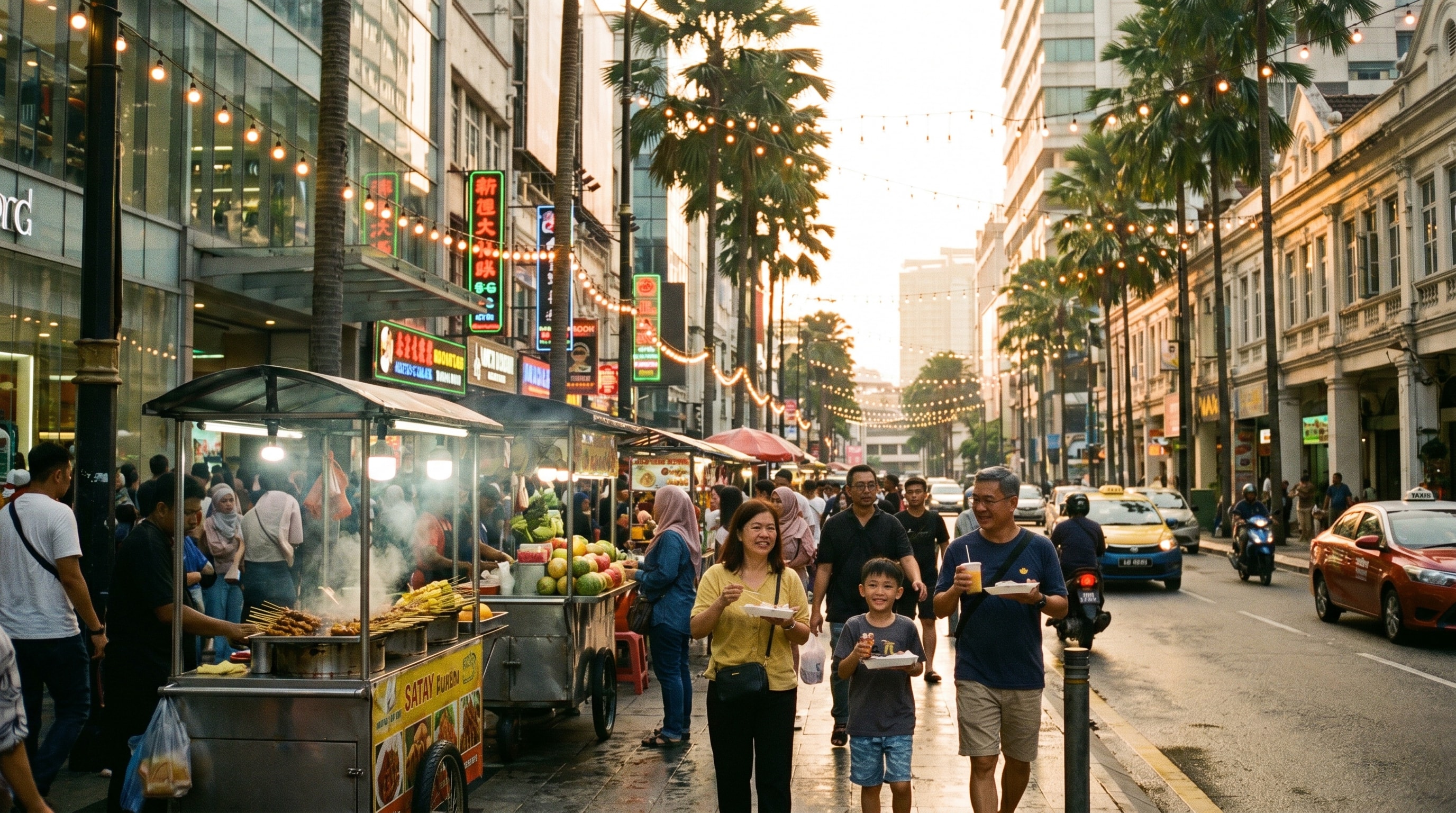
Georgetown, Penang's UNESCO-listed capital, is regularly voted the best food city in Asia — and after one meal at a hawker stall, you will understand why. Our Penang food guide and street food guide cover the essential dishes: char kway teow fried over charcoal, assam laksa with its tamarind-sour fish broth, nasi kandar piled with curries, and cendol — shaved ice with palm sugar syrup, coconut milk, and green pandan jelly.
Beyond food, Georgetown's street art murals, Chinese clan jetties, Armenian Street boutiques, and colonial mansions create one of Southeast Asia's most photogenic and walkable old towns. A full day here is included in our extended Malaysia tour packages.
The Cameron Highlands offer a cool escape from the tropical heat, with tea plantations stretching across misty hillsides, strawberry farms, mossy forests, and morning temperatures that actually require a jacket. Melaka (Malacca) is a UNESCO city where Portuguese, Dutch, and British colonial layers blend with Malay and Chinese heritage — Jonker Street's weekend night market is a highlight.
For adventure seekers, Malaysian Borneo is a world apart — orangutan encounters at Sepilok, climbing Mount Kinabalu, diving at Sipadan (one of the planet's top five dive sites), and exploring ancient caves at Mulu National Park. The Taman Negara rainforest, on the peninsula, is 130 million years old and offers canopy walkways, night jungle treks, and river tubing.
We offer Malaysia tour packages designed for Indian travellers across every budget. The budget travel guide shows how to experience Malaysia from INR 25,000 per person, while our premium packages include overwater chalets in Langkawi, Borneo wildlife lodges, and luxury KL hotels.
The best time to visit Malaysia depends on which coast you prioritise — the west coast and KL are great year-round, while the east coast islands shine from March to October. Our Malaysian culture guide helps Indian travellers navigate local customs, and the 7-day itinerary shows exactly how to make the most of a week in this incredible country.
Browse our Malaysia packages below and let us handle the planning while you pack your bags for one of Asia's most rewarding destinations.
What each package costs in total, twin sharing, before flights.
| Package | Duration | Per person | Couple | Family of 4 |
|---|---|---|---|---|
| Malaysia City Break - 3 Nights 4 Days Kuala Lumpur Package | 3 Nights / 4 Days | ₹29,999 | ₹59,998 | ₹113,996 |
| Malaysia Highlights - 5 Nights 6 Days Kuala Lumpur, Genting & Culture Package | 5 Nights / 6 Days | ₹39,999 | ₹79,998 | ₹157,998 |
| Malaysia Honeymoon - 6 Nights 7 Days Kuala Lumpur & Langkawi Romantic Package | 6 Nights / 7 Days | ₹49,999 | ₹99,998 | ₹203,998 |
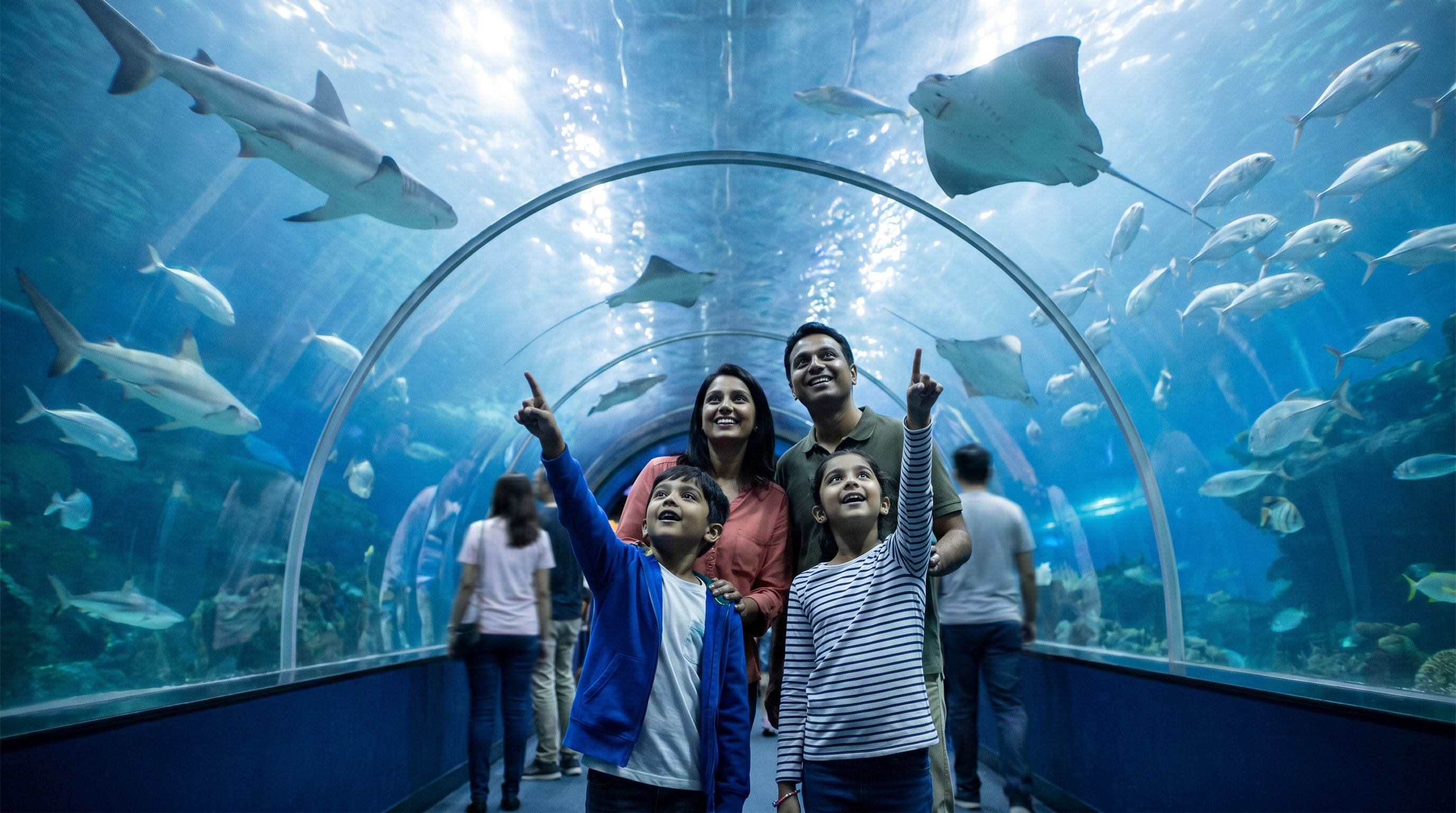
| Malaysia Family Adventure - 5 Nights 6 Days KL, Genting & Sunway | 5 Nights / 6 Days | ₹52,999 | ₹105,998 | ₹199,996 |
| Malaysia Beach Escape - 4 Nights 5 Days Kuala Lumpur & Langkawi | 4 Nights / 5 Days | ₹54,999 | ₹109,998 | ₹207,996 |
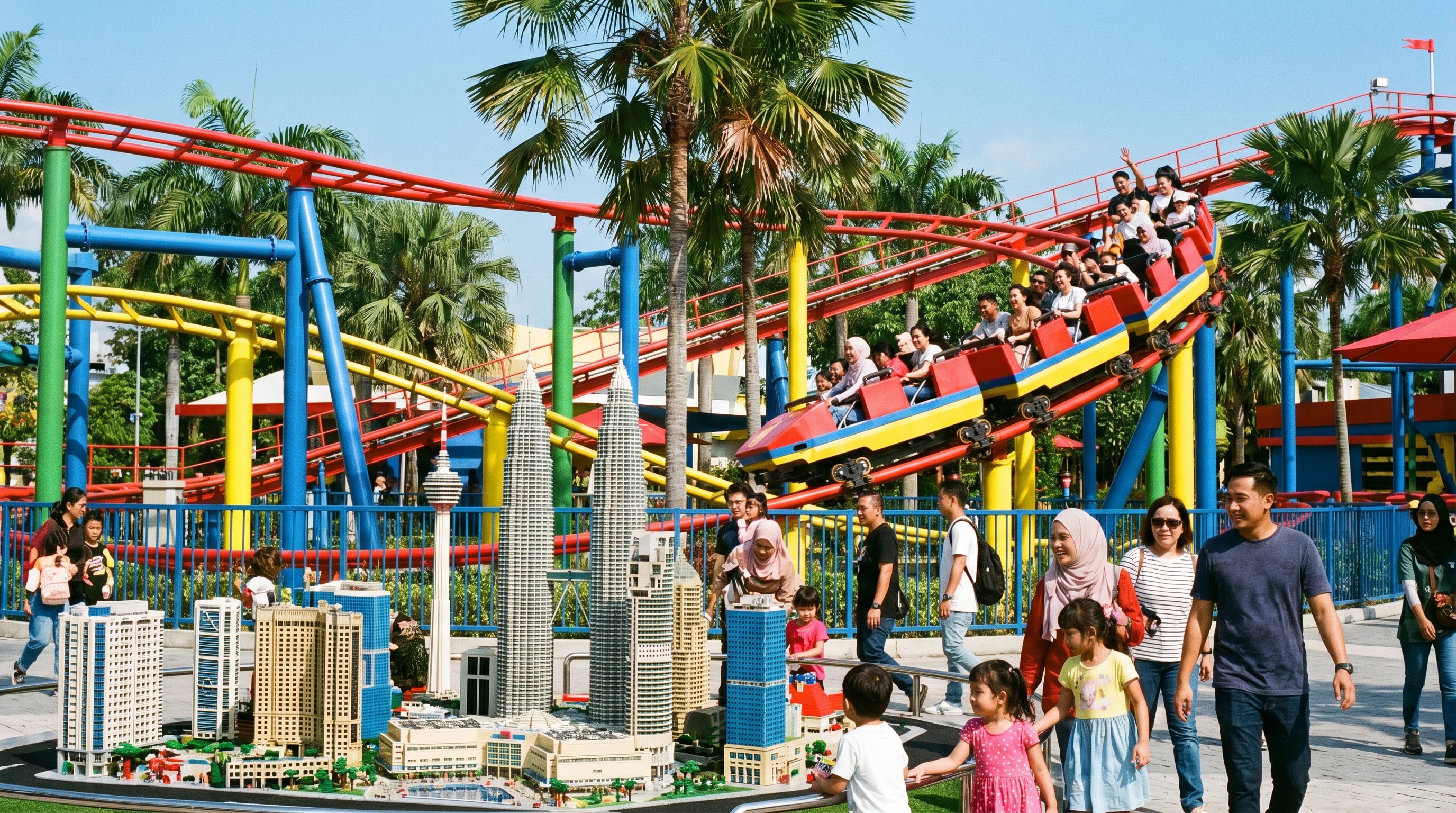
| Malaysia Family Fun - 5 Nights 6 Days Kuala Lumpur, Genting & Legoland Package | 5 Nights / 6 Days | ₹64,999 | ₹129,998 | ₹219,998 |
City-specific flights, fares and itineraries from your home airport
Tell us roughly when and how many — our travel expert sends you a custom quote, usually within a few hours.
The driest months on the west coast, including Kuala Lumpur, Penang, and Langkawi. Temperatures hover around 27–33°C with lower humidity. Chinese New Year festivities light up the country in January or February.
March is usually dry and hot. April and May bring a second, lighter spell of afternoon thunderstorms on the west coast, though mornings stay clear for sightseeing. Good for the Cameron Highlands and Malacca without peak-season crowds. Temperatures range from 28–34°C.
School holidays bring domestic tourists to popular spots, but the weather stays pleasant on the west coast. East coast islands like Perhentian and Redang are at their best — calm seas, clear water, and perfect diving conditions.
October to November is the wettest spell on the west coast, including Kuala Lumpur and Penang, with heavy afternoon and evening thunderstorms, so keep indoor options in your plan. From November the northeast monsoon brings the heaviest rain to the east coast, and many resorts on Perhentian and Redang close until about March.
Kuala Lumpur International Airport (KLIA) is the main gateway, served by over 60 airlines including Malaysia Airlines, AirAsia, and Singapore Airlines. KLIA2 handles budget carriers. Penang, Kota Kinabalu, Kuching, and Langkawi also have international airports. The KLIA Ekspres train connects the airport to KL Sentral in 28 minutes.
Well-maintained highways connect Malaysia to Singapore via the Causeway and Second Link, and to Thailand through Bukit Kayu Hitam and Padang Besar. Long-distance express buses run between KL and Singapore (5–6 hours), Hat Yai, and Bangkok. Car rentals are affordable and driving is on the left side.
KTM Intercity trains run along the west coast from Singapore through JB, KL, Ipoh, and up to Padang Besar on the Thai border. The Jungle Railway (Tumpat line) cuts through the interior from Gemas to Kota Bharu — one of Southeast Asia's most scenic rail journeys. The ETS (Electric Train Service) connects KL to Ipoh in just 2.5 hours.
Regular ferry services connect Langkawi to Penang and Kuala Perlis, Penang to Butterworth, and various ports in Sabah and Sarawak to the Philippines and Indonesia. Star Cruises and other lines operate from Port Klang. Speedboats run to the Perhentian Islands from Kuala Besut jetty.
No trip to KL is complete without seeing the 452-metre towers up close. Book the Skybridge tickets online in advance — they sell out fast. Afterwards, walk through the lush KLCC Park with its fountains, jogging track, and a playground that kids absolutely love.
George Town is a UNESCO World Heritage city with possibly the best street food in all of Southeast Asia. Start with char kway teow at Lorong Selamat, grab assam laksa at Air Itam market, and finish with cendol at Penang Road Famous Teochew Chendul. Walk it off past the street art murals.
Take a boat tour to Pulau Dayang Bunting (Pregnant Maiden Lake), Pulau Singa Besar (wildlife park), and Pulau Beras Basah (white sand beach). The whole trip takes about 4 hours and costs around RM35 per person from Kuah Jetty.
The 272 rainbow-painted steps leading up to this limestone cave temple are one of Malaysia's most photographed sights. The main Cathedral Cave houses Hindu shrines and is free to enter. Visit during Thaipusam (January/February) for the full spectacle — over a million devotees make the pilgrimage.
Escape the heat at 1,500 metres above sea level. The BOH Tea Estate offers free guided tours of the plantation and factory, plus a café with panoramic views over endless rows of tea bushes. Pick your own strawberries at one of the farms along the road to Brinchang.
Consistently ranked among the world's top dive sites, Sipadan sits off the coast of Sabah in Malaysian Borneo. The drop-off wall plunges 600 metres and is home to barracuda tornados, sea turtles, and reef sharks. Only 120 dive permits are issued daily — book months ahead through a licensed operator.
Walk through 600 years of history along Jonker Street and around Dutch Square. Visit the A Famosa fortress ruins, Christ Church (1753), and the Baba Nyonya Heritage Museum. On Friday and Saturday nights, the Jonker Street Night Market transforms the area into a food and shopping paradise.
One of the oldest tropical rainforests on earth — over 130 million years old. Take the canopy walkway 40 metres above the forest floor, go river rafting on the Tembeling River, or hike to Gunung Tahan, the highest peak in Peninsular Malaysia. Night jungle walks reveal a completely different world.
Malaysia's highest peak at 4,095 metres. The two-day climb is demanding but doesn't require technical gear — just decent fitness and warm layers for the summit push at 2am. The sunrise view from Low's Peak, above a sea of clouds, is genuinely unforgettable.
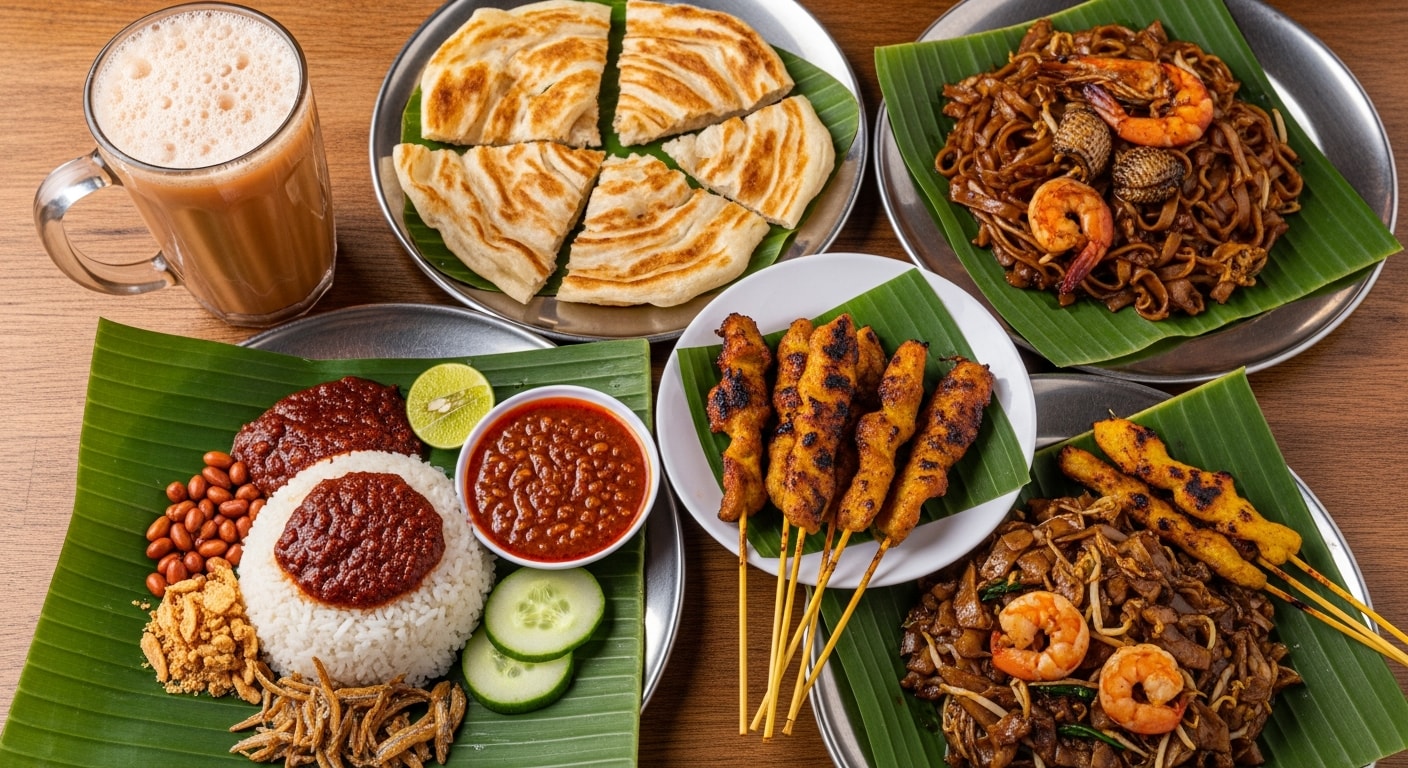
Malaysia's national dish — coconut rice served with sambal, fried anchovies, roasted peanuts, cucumber, and a hard-boiled egg. Wrapped in banana leaf from a roadside stall at 7am is the authentic way. Village Park in Damansara and Nasi Lemak Antarabangsa in Kampung Baru are legendary.
Flat rice noodles stir-fried with prawns, cockles, Chinese sausage, egg, and bean sprouts over a screaming hot wok. The Penang version is the gold standard — smoky, slightly sweet, with just enough chilli. Sisters Char Kway Teow on Macallum Street has had queues since the 1970s.
Flaky, buttery flatbread flipped and stretched by hand, cooked on a flat griddle until crispy on the outside and soft within. Served with dhal or curry for dipping. Every mamak restaurant has its own version, and they're open 24 hours. Valentino Rossi supposedly loves the roti canai at Pelita in KL.
Malaysia has two distinct versions. Penang assam laksa uses a sour, fish-based broth with tamarind and is fiery hot. Sarawak laksa — Anthony Bourdain's breakfast of choice — has a creamy coconut-prawn stock and comes loaded with prawns, chicken strips, and omelette shreds.
Marinated chicken, beef, or mutton skewers grilled over charcoal and served with a thick peanut sauce, ketupat rice cakes, and raw onion. Kajang, a town 30 minutes south of KL, calls itself the satay capital — Sate Haji Samuri has been the benchmark since 1962.
Pork ribs simmered in a herbal broth of star anise, cinnamon, cloves, and garlic. The Klang version uses a darker, more herbal stock than Singapore's peppery style. Head to Klang's Jalan Besar for the real thing — stalls have been serving it since before dawn for decades.
Shaved ice topped with green pandan jelly noodles, coconut milk, and gula melaka (palm sugar). Simple, cheap, and absolutely essential in the heat. The stall at Penang Road Famous Teochew Chendul has been making it the same way since 1936.
A Penang institution — steamed rice drowned in a mix of curries and gravies, piled with fried chicken, squid, fish roe, and okra. The magic is in the "banjir" — flooding the rice with multiple curry sauces. Line Clear on Penang Road and Restoran Hameediyah (operating since 1907) are the go-to spots.
KL's main shopping district stretches along Jalan Bukit Bintang with Pavilion KL at one end and Lot 10 at the other. Pavilion houses luxury brands and Fahrenheit 88 caters to mid-range budgets. Sungei Wang Plaza is the spot for bargain electronics and street fashion. Connected by covered walkways and the monorail.
A heritage building from 1888 now housing artisan stalls selling batik, pewterware, traditional crafts, and local art. The Kasturi Walk alley outside has street performers and souvenir vendors. More curated and less chaotic than Petaling Street — prices are mostly fixed.
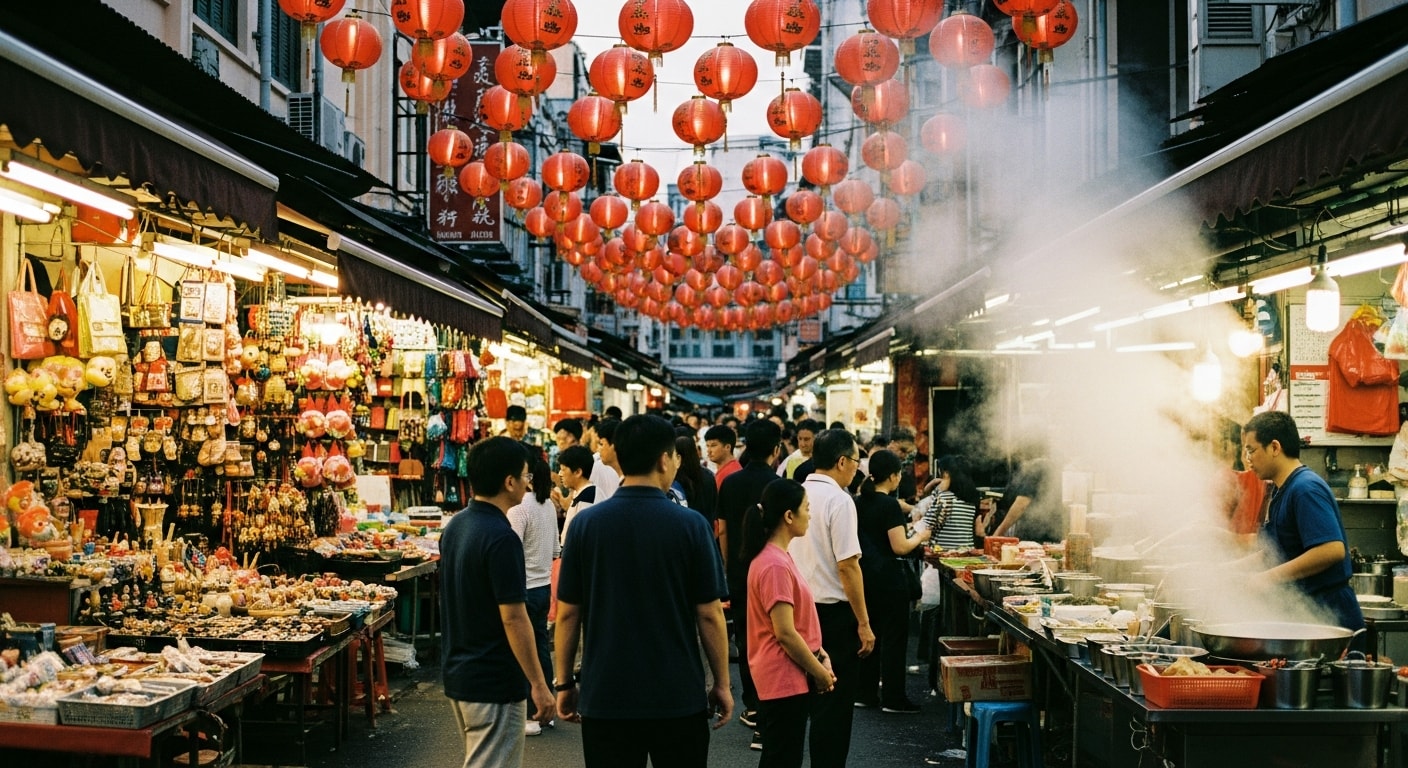
The bustling heart of KL's Chinatown, lined with stalls selling watches, bags, clothing, and dried goods under green tarpaulin canopies. Haggling is expected — start at half the asking price and work from there. Best visited after dark when the night market comes alive.
Every Friday and Saturday night, Jonker Street transforms into a 500-metre stretch of food stalls, antique shops, and craft vendors. Pick up Nyonya beadwork, handmade leather sandals, or vintage collectibles. The pineapple tarts and coconut candy stalls are not to be missed.
Gurney Plaza is Penang's largest mall with a good mix of international and local brands. Across the road, the Gurney Drive hawker centre is one of the most famous food destinations in the country. Combine shopping with a seafood dinner along the waterfront promenade.
The entire island is a duty-free zone. Alcohol, chocolate, tobacco, and cosmetics are significantly cheaper than the mainland. The Kuah town area has the highest concentration of duty-free shops. Stock up on Toblerone, whisky, and perfume before you leave.
This rechargeable card works on all toll roads, public transport (MRT, LRT, monorail, buses), parking, and even 7-Eleven purchases. Pick one up at any convenience store, LRT station, or Touch 'n Go hub. An absolute must if you're driving or using public transport in KL.
Grab works everywhere in Malaysia — ride-hailing, food delivery, and even payments. Fares are metered and transparent, so you'll never get overcharged. It's especially useful in KL where taxis have a reputation for refusing meters and inflating fares for tourists.
Skip hotel restaurants. The best food in Malaysia comes from hawker stalls, kopitiam coffee shops, and mamak restaurants. If a place is packed with locals at an odd hour, that's your sign. Meals at hawker centres cost RM5–15, a fraction of what you'd pay at a sit-down restaurant.
Malaysia is a Muslim-majority country. Cover your shoulders and knees when visiting mosques — most provide free robes at the entrance. Remove shoes before entering any mosque, temple, or traditional Malay home. This also applies at Batu Caves and Buddhist temples.
Card payments are common at malls and chain restaurants, but hawker stalls, night markets, and small shops still run on cash. ATMs are everywhere and most accept international cards. Withdraw in larger amounts to avoid repeated transaction fees.
Humidity regularly exceeds 80% and temperatures sit between 28–35°C year-round in the lowlands. Drink more water than you think you need. Coconut water from street vendors is cheap (RM3–5) and genuinely refreshing. Tap water is treated but most locals drink filtered or bottled water.
Tropical rainstorms hit like clockwork between 3–5pm, especially from October to March. They're intense but rarely last more than an hour. Duck into a mall or kopitiam, order a teh tarik, and wait it out. Always carry a compact umbrella or poncho.
English is widely spoken in cities, but a few Malay words go a long way in smaller towns. "Terima kasih" (thank you), "berapa" (how much), and "sedap" (delicious) will earn you smiles everywhere. Malaysians genuinely appreciate the effort.
Malaysia is the only country in the world that has territory on both the Asian mainland (Peninsular Malaysia) and the Malay Archipelago (Sabah and Sarawak on Borneo).
The Petronas Twin Towers held the title of world's tallest building from 1998 to 2004 and remain the tallest twin towers on earth.
Malaysia is one of 17 megadiverse countries, home to roughly 20% of the world's animal species including orangutans, pygmy elephants, and the Malayan tiger.
The Rafflesia arnoldii — the world's largest flower at up to 1 metre across — grows in the rainforests of Sabah and Sarawak.
Taman Negara in Pahang is estimated to be 130 million years old, making it one of the oldest tropical rainforests in the world.
Malaysia has three federal territories (Kuala Lumpur, Putrajaya, and Labuan) and 13 states, nine of which have hereditary rulers who take turns serving as king every five years.
George Town in Penang is a UNESCO World Heritage Site, recognised for its unique multicultural architectural and cultural townscape.
Malaysia produces about 40% of the world's palm oil, making it the second-largest producer after Indonesia.
The Sepang International Circuit has hosted the Malaysian Grand Prix (Formula 1) from 1999 to 2017.
Malaysia's national car brand, Proton, was founded by former Prime Minister Mahathir Mohamad in 1983 and was the first car manufacturer in Southeast Asia.
The country has over 65,000 kilometres of roads but only 1,849 kilometres of railway — most intercity travel happens by car or bus.
Malaysian Borneo's Mulu Caves contain the world's largest cave chamber by area — the Sarawak Chamber could fit 40 Boeing 747s end to end.
Malaysia offers visa-free entry to citizens of over 160 countries. Most visitors from ASEAN nations, the EU, US, UK, Canada, Australia, Japan and South Korea receive a 90-day or 30-day visa exemption stamp upon arrival, and Indian citizens receive 30 days — no prior application needed.
Indian citizens receive a 30-day visa-free entry for tourism. The exemption is valid until 31 December 2026, so check the Immigration Department of Malaysia before booking travel after that date. No eVisa or prior application is required — just a valid passport, return ticket, hotel booking and the MDAC submitted online within 3 days before arrival. Extensions are not permitted; you must exit and re-enter for a new stamp.
Citizens of Bangladesh, Pakistan, Sri Lanka, Nepal, Myanmar, and several African and Middle Eastern nations must apply for a visa before travelling. Applications can be submitted online via the Malaysia eVisa portal or through the nearest Malaysian embassy. Processing typically takes 3–5 working days.
Sabah and Sarawak have their own immigration controls, separate from Peninsular Malaysia. When flying from KL to Kota Kinabalu or Kuching, you will pass through immigration again. Your passport will be stamped with a separate Sabah/Sarawak entry permit. The visa-free duration may differ — most tourists receive 90 days for Sarawak and follow their peninsular stamp duration for Sabah.
Dorm beds in hostels start at RM40. Clean guesthouses and budget hotels average RM80–150. Mid-range hotels in KL, Penang, and Langkawi run RM150–300. Five-star resorts like The Datai Langkawi or Mandarin Oriental KL start around RM600.
Hawker food and mamak restaurants serve full meals for RM5–12. A decent restaurant lunch with a drink costs RM20–40. Fine dining in KL runs RM80–200 per head. Street food snacks like roti canai, apam balik, and cendol cost RM2–5 each.
KL's MRT/LRT costs RM1–6 per ride. Grab rides within KL average RM8–20. Intercity buses (KL to Penang, KL to Malacca) cost RM25–50. Renting a car starts at RM80/day with petrol significantly cheaper than in Singapore or Europe (around RM2.05/litre for RON95).
Batu Caves, most temples, and street art walks are free. Petronas Twin Towers Skybridge costs RM80. Penang Hill funicular is RM30 for tourists. National parks charge RM1–5 entry. Island snorkelling trips average RM50–80 per person.
Prepaid SIM cards from Celcom, Maxis, or Digi are available at airports and convenience stores. A tourist SIM with 20–40GB data for 7–30 days costs RM15–40. Free Wi-Fi is widely available at malls, chain cafés, and hotels.
Hostel dorm, hawker centre meals, public transport, and free attractions. Malaysia is one of the most affordable countries in Southeast Asia for budget travellers — your money stretches much further here than in Singapore or Thailand's resort areas.
A comfortable 3–4 star hotel, mix of hawker and restaurant meals, Grab rides, and paid attractions. This covers most travellers who want air-conditioned comfort, decent food variety, and the freedom to explore without watching every ringgit.
Browse our curated packages and find your perfect trip.