

Laos & Myanmar Travel Guide from India: SE Asia's Last Untouched Frontiers
In this guide (18)
- Why Laos Deserves Your Attention
- Laos Visa and Entry for Indians
- Getting to Laos from India: Laos Myanmar Travel Guide Logistics
- Luang Prabang: Your Laos Myanmar Travel Guide Starting Point
- Vientiane: The Sleepy Capital
- Vang Vieng: Adventure Base
- 4000 Islands (Si Phan Don): Mekong Magic
- Lao Food: A Pleasant Surprise
- Myanmar: The Complicated Beauty (2026 Reality Check)
- Bagan: Temple Overload
- Yangon and Inle Lake
- Myanmar Visa for Indians
- Combining Laos with Northern Thailand
- Laos Myanmar Travel Guide: Sample 10-Day Itinerary
- Best Time to Visit: Laos Myanmar Travel Guide Season Tips
- Laos Myanmar Travel Guide Budget Breakdown
- Safety and Practical Tips for This Laos Myanmar Travel Guide
- Final Thoughts: Why These Destinations Matter
I was sitting in a guesthouse in Luang Prabang, watching monks collect alms at dawn, when a fellow traveler from Delhi asked me why more Indians don't come here. "Because they don't know," I said. "And maybe that's the point." This Laos Myanmar travel guide from India is for those ready to discover Southeast Asia before the crowds arrive.
While Indians flock to Thailand, Singapore, and Bali by the millions, Laos receives fewer than 5,000 Indian visitors annually. Myanmar even fewer. These are countries where your rupee stretches impossibly far, where ancient temples outnumber tourists, and where the pace of life hasn't been corrupted by overtourism. If you've done the SE Asia greatest hits and crave something rawer, more authentic, and genuinely off the beaten path, this guide is your roadmap.
Why Laos Deserves Your Attention
Laos is what Thailand was 30 years ago. That's not marketing speak — it's the honest assessment of every backpacker who crosses the Mekong from Thailand and feels time slow down. The French colonial architecture, the saffron-robed monks, the Mekong sunsets, the complete absence of shopping malls and Starbucks. It's Southeast Asia unplugged.
But here's what makes Laos genuinely special for Indian travelers: it's the most affordable country in mainland Southeast Asia. We're talking ₹1,000-2,000 per day for comfortable travel. Guesthouses for ₹500, incredible meals for ₹100, beer for ₹60. The infrastructure is basic in places, but the experiences are priceless.
The Lao people practice Theravada Buddhism similar to Sri Lanka and Myanmar, so you'll see familiar spiritual traditions — morning alms ceremonies, temple festivals, meditation retreats. There's a gentleness to daily life here that feels refreshing after the chaos of Indian cities.
Laos Visa and Entry for Indians
Good news in this Laos Myanmar travel guide: Indians get visa on arrival in Laos. No advance application, no embassy visits, no stress. Here's exactly how it works.
You can get a 30-day tourist visa on arrival at Wattay International Airport (Vientiane), Luang Prabang International Airport, Pakse International Airport, and all major land borders. The fee is $40 USD (cash only, crisp bills preferred). Bring two passport-sized photos, though they can take a digital photo for an extra $1-2 if you forget.
Processing takes 15-30 minutes depending on queue length. You'll need to show proof of onward travel (flight booking or border crossing reservation) and at least 6 months passport validity. Some travelers report being asked to show $500 USD equivalent in funds, but this is rarely enforced for Indians.
Pro tip: Carry exact change in USD. Lao kip is the local currency (roughly ₹0.004 per kip, or about 23,000 kip to 1 USD), but USD is accepted everywhere for larger transactions. Thai baht also works in border areas.
Getting to Laos from India: Laos Myanmar Travel Guide Logistics
No direct flights connect India and Laos — you'll always transit through a hub city. Bangkok is the most convenient option with multiple daily connections on Thai Airways, Bangkok Airways, and Lao Airlines. Typical routing: Delhi/Mumbai/Bangalore to Bangkok (4-5 hours), then Bangkok to Luang Prabang (1.5 hours) or Vientiane (1 hour).
Return flights cost ₹18,000-30,000 depending on season and how far in advance you book. November-February commands premium prices; shoulder season (October, March) offers better deals. I've seen flash sales drop Bangkok-Luang Prabang flights to ₹3,500 one-way on Bangkok Airways.
Alternative routings through Hanoi (Vietnam Airlines, VietJet) or Kuala Lumpur (AirAsia) can sometimes be cheaper. The Hanoi-Luang Prabang flight is just 1 hour and often underpriced.
The overland option deserves mention for adventurous travelers. You can fly to Bangkok, take an overnight train to Chiang Mai, bus to Chiang Rai, cross the border at Huay Xai, and take the legendary two-day slow boat down the Mekong River to Luang Prabang. It's one of Southeast Asia's most iconic journeys — slow, scenic, and unforgettable. Budget ₹5,000-7,000 for this entire overland segment including accommodation.
Luang Prabang: Your Laos Myanmar Travel Guide Starting Point
If you visit only one place in Laos, make it Luang Prabang. This UNESCO World Heritage city sits at the confluence of the Mekong and Nam Khan rivers, surrounded by mountains and packed with more temples than you can count. The entire old town is a museum piece — French colonial buildings painted in faded yellows and pinks, monks in saffron robes, wooden boats bobbing on the river.
Morning Alms Ceremony (Tak Bat)
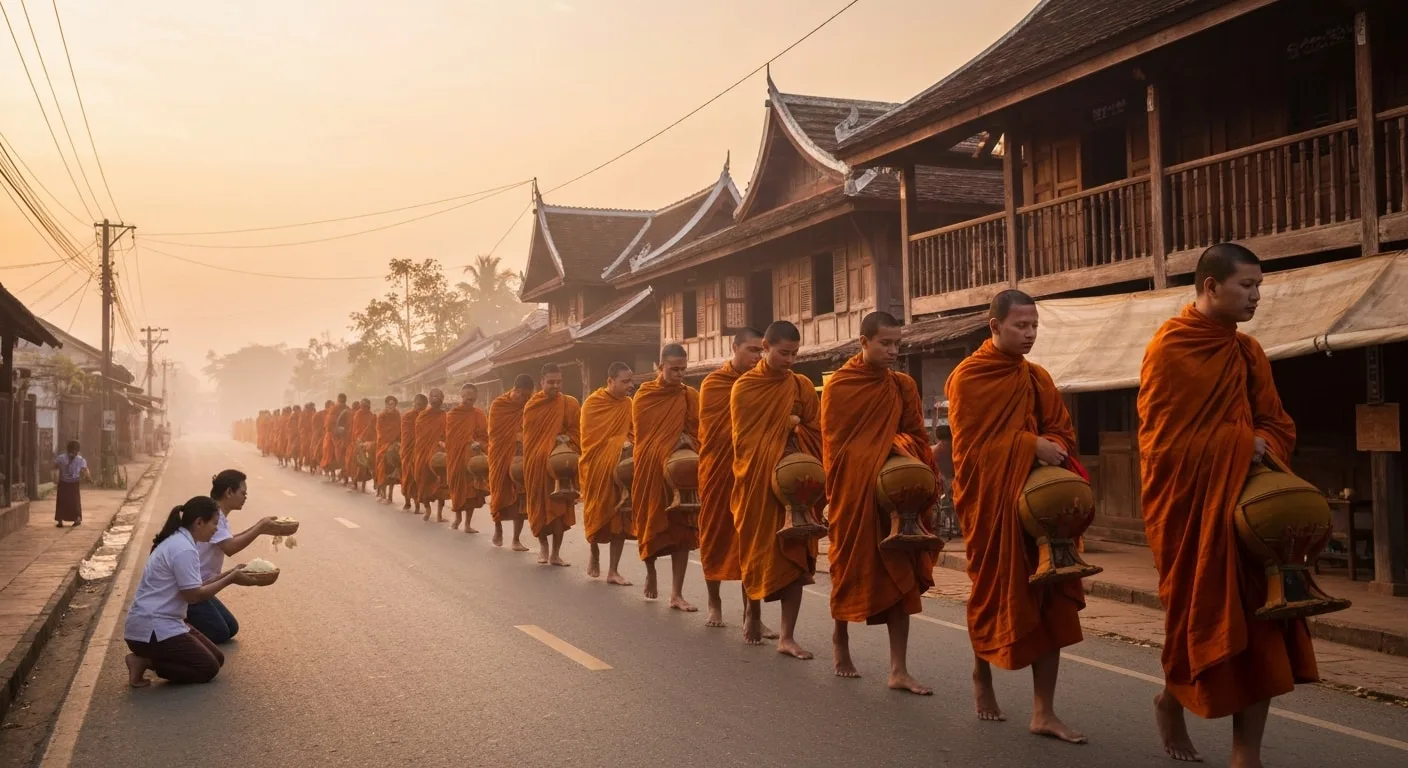
Wake up at 5:30 AM to witness the daily alms ceremony. Hundreds of monks in orange robes walk silently through the streets while locals kneel with offerings of sticky rice. It's been happening for centuries and remains one of Southeast Asia's most spiritual experiences.
Important etiquette: Don't use flash photography. Don't touch the monks. Stay at least 3 meters away. If you want to participate by giving alms, buy sticky rice from local vendors (not tourist stalls) and kneel with locals, not in the middle of the street. Better yet, just observe respectfully from a distance.
Kuang Si Falls
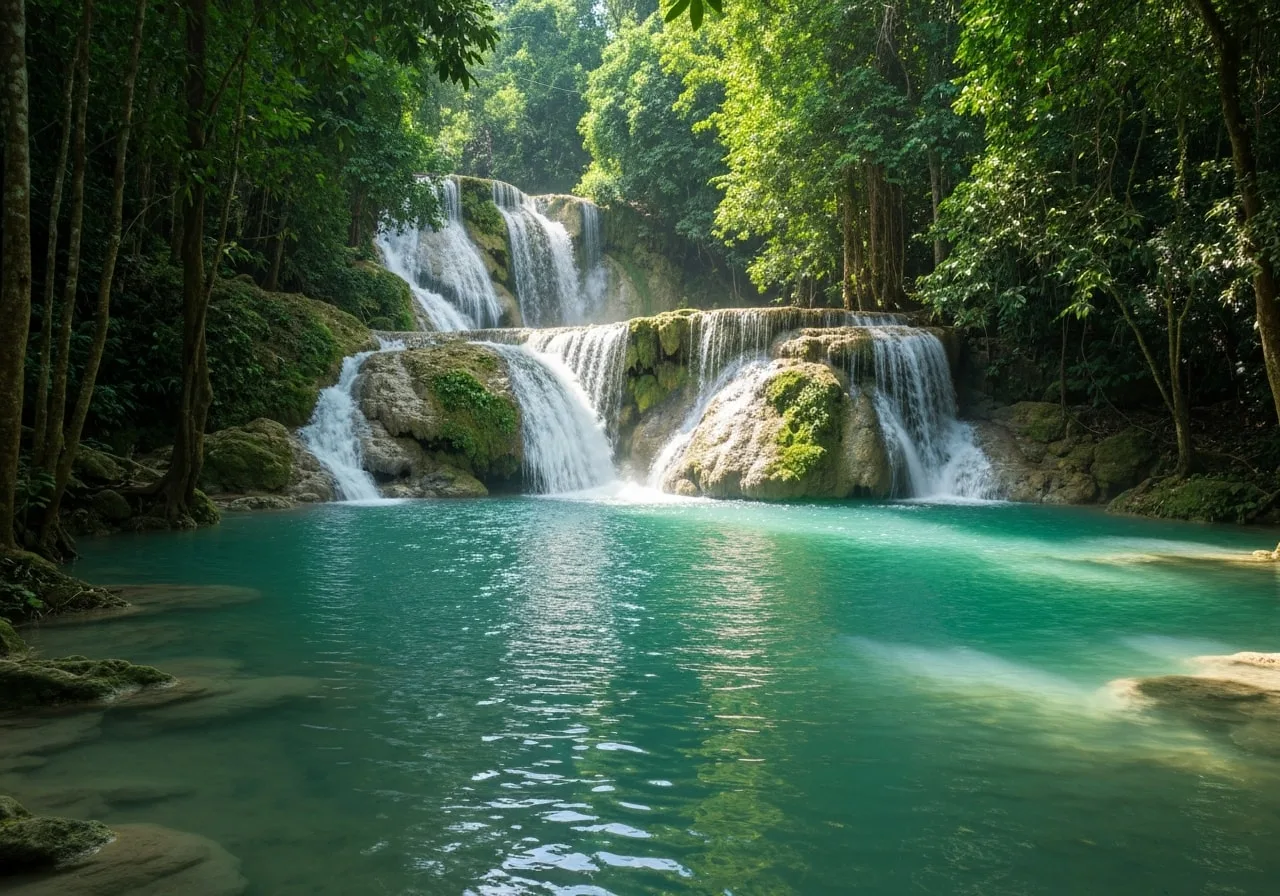
These turquoise waterfalls 30km south of Luang Prabang are ridiculously photogenic — calcified limestone pools cascade down multiple tiers, creating natural infinity pools surrounded by jungle. The water really is that blue. I've had visitors accuse me of Photoshopping my pictures.
Hire a tuk-tuk (₹800-1,000 return with 2-3 hours waiting time) or join a minivan tour (₹300-400). Entry fee is ₹350. Go early (open at 8 AM) to avoid crowds and have the pools to yourself. Bring swimwear — the middle pools are perfect for swimming.
Pak Ou Caves
Two hours upstream from Luang Prabang by slow boat, these caves are stuffed with thousands of Buddha statues deposited over centuries by devotees. The boat journey through dramatic limestone karst scenery is half the experience. Budget ₹500-800 for a shared boat tour including cave entry.
Night Market
Every evening, the main street transforms into a handicraft market. Hmong textiles, mulberry paper products, silk scarves, handmade soaps. Quality is high, prices are reasonable (start bargaining at 30% of asking price), and the atmosphere is relaxed. For dinner, hit the side-street food stalls serving 25,000 kip (₹90) buffet plates with grilled meats, sticky rice, and Lao sausage.
Vientiane: The Sleepy Capital
Vientiane may be Southeast Asia's most laid-back capital city. Check the Laos Tourism Board for current events and festivals. No skyscrapers, no metro, no traffic jams (mostly). It feels like a large provincial town rather than a national capital. French colonial architecture, tree-lined boulevards, sunset beers on the Mekong — Vientiane rewards those who embrace its slow pace.
Patuxai (Victory Gate) looks like the Arc de Triomphe's slightly chunkier cousin. Climb to the top for views over the city (entry ₹50). Pha That Luang, the national symbol, is a massive gold-covered stupa considered the most important Buddhist monument in Laos. Buddha Park (Xieng Khuan) sits 25km outside the city — a surreal sculpture garden of Buddhist and Hindu statues built by a mystical shaman in 1958. Creepy, weird, fascinating.
Budget 1-2 days for Vientiane according to this Laos Myanmar travel guide. It's not a must-see, but it's pleasant, and the COPE Visitor Centre offers a powerful, free exhibition about UXO (unexploded ordnance) — Laos remains the most heavily bombed country per capita in history, courtesy of the American "Secret War" in the 1960s-70s.
Vang Vieng: Adventure Base
Vang Vieng had a rough reputation in the 2000s as a backpacker party zone where tubing the river meant drunk tourists, loud bars, and occasional drownings. That era is firmly over. Today's Vang Vieng is a genuine adventure destination surrounded by stunning karst limestone mountains.
Tubing still exists but is now regulated and safer. Hot air balloon rides over the karsts at sunrise cost ₹8,000-12,000 and are genuinely spectacular. Blue Lagoons (there are multiple) offer swimming in turquoise pools, rope swings, and lazy afternoons. Kayaking and rock climbing are popular. Cave exploration ranges from easy walks to serious spelunking.
Stay 2-3 days. The town itself is touristy but the scenery is jaw-dropping, and accommodations are better value than Luang Prabang.
4000 Islands (Si Phan Don): Mekong Magic
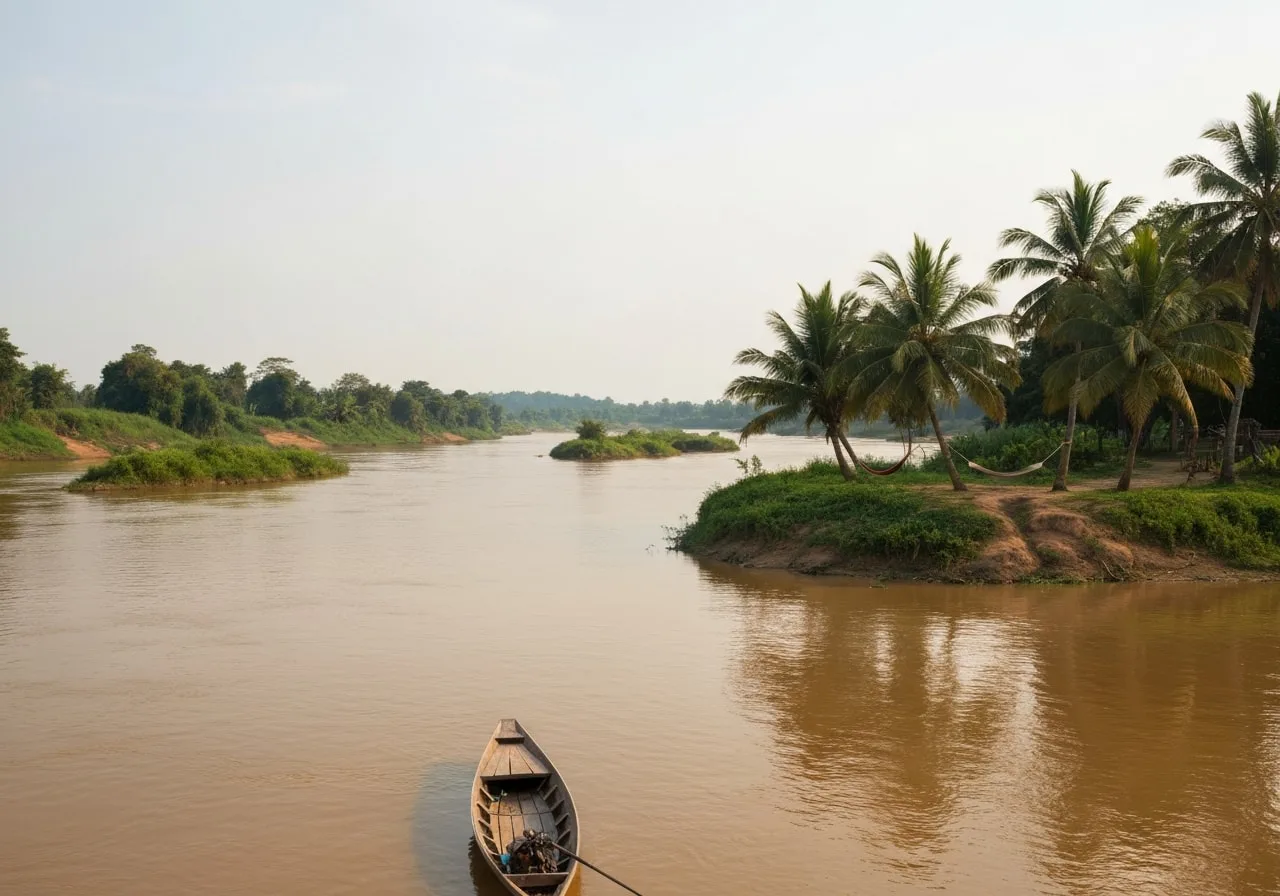
In southern Laos, the Mekong River widens into a maze of islands, channels, and waterfalls. This is Si Phan Don — the 4000 Islands — and it's where Laos reaches peak serenity. The backpacker hub of Don Det and its quieter neighbor Don Khon offer bamboo bungalows for ₹300-500, hammock time measured in days, and absolutely nothing to do except exist.
Rent a bicycle and explore the French colonial railway bridge, watch the sunset from the western tip, take a boat to see Irrawaddy dolphins (if you're lucky — they're endangered with fewer than 100 remaining), and visit Khon Phapheng Falls, mainland Southeast Asia's largest waterfall. The falls are impressive in monsoon season (September-November), less so in dry months.
Getting to 4000 Islands requires commitment — it's an 8-10 hour bus ride from Vientiane or Luang Prabang. Most travelers arrive from Cambodia (the border is just 15km south) as part of a multi-country itinerary. Budget 2-4 nights for proper island time.
Lao Food: A Pleasant Surprise
Lao cuisine shares DNA with Isan (northeastern Thai) food but has its own character. Sticky rice is the staple — you'll get a bamboo basket of it with every meal, rolling balls with your fingers to scoop up dishes. Laap (minced meat salad with herbs, lime, fish sauce) comes in chicken, pork, duck, and buffalo varieties. Ping kai (grilled chicken) is ubiquitous and delicious.
The French colonial legacy means excellent baguettes everywhere. Lao-style baguette sandwiches with pate, vegetables, and chili sauce make perfect travel breakfasts. Coffee is strong and sweet, often served with condensed milk.
Vegetarians will find basics available (sticky rice, morning glory, tofu laap) but options are limited outside tourist areas. Learn "baw sai sin" (no meat) and "jay" (vegetarian). Indian restaurants exist in Vientiane and Luang Prabang for backup.
Street food costs ₹40-80 per dish. Restaurant meals run ₹150-300. Beerlao, the national lager, is excellent and costs ₹60-80 everywhere.
Myanmar: The Complicated Beauty (2026 Reality Check)
I need to be honest here. Myanmar in 2026 is not a straightforward destination. The military coup of February 2021 triggered ongoing civil conflict, economic collapse, and a humanitarian crisis. Tourism effectively stopped for three years.
As of early 2026, some tourism has cautiously resumed in limited areas. Yangon, Mandalay, Bagan, and Inle Lake have seen independent travelers return. The e-visa system is operational again. But this comes with significant caveats that every Indian traveler must understand.
Current Situation Assessment
The military (Tatmadaw) controls major cities and tourist infrastructure. Resistance forces control large swathes of the countryside. Active fighting continues in Shan State, Kachin State, Chin State, and other regions. The ethical question of whether tourism supports the junta or helps local people remains deeply contested.
Practical concerns: Banking infrastructure collapsed — bring USD cash for everything. ATMs don't work for foreign cards. Mobile internet faces frequent blackouts. Domestic flights sometimes cancel without notice. Power cuts affect even Yangon.
My honest recommendation: Check MEA (Ministry of External Affairs) travel advisories before booking anything. Buy travel insurance with explicit evacuation coverage. Stick to main tourist areas only. Avoid all border regions and anywhere with active conflict. Be prepared for trip disruptions.
If you decide to go, here's what awaits in the accessible areas.
Bagan: Temple Overload
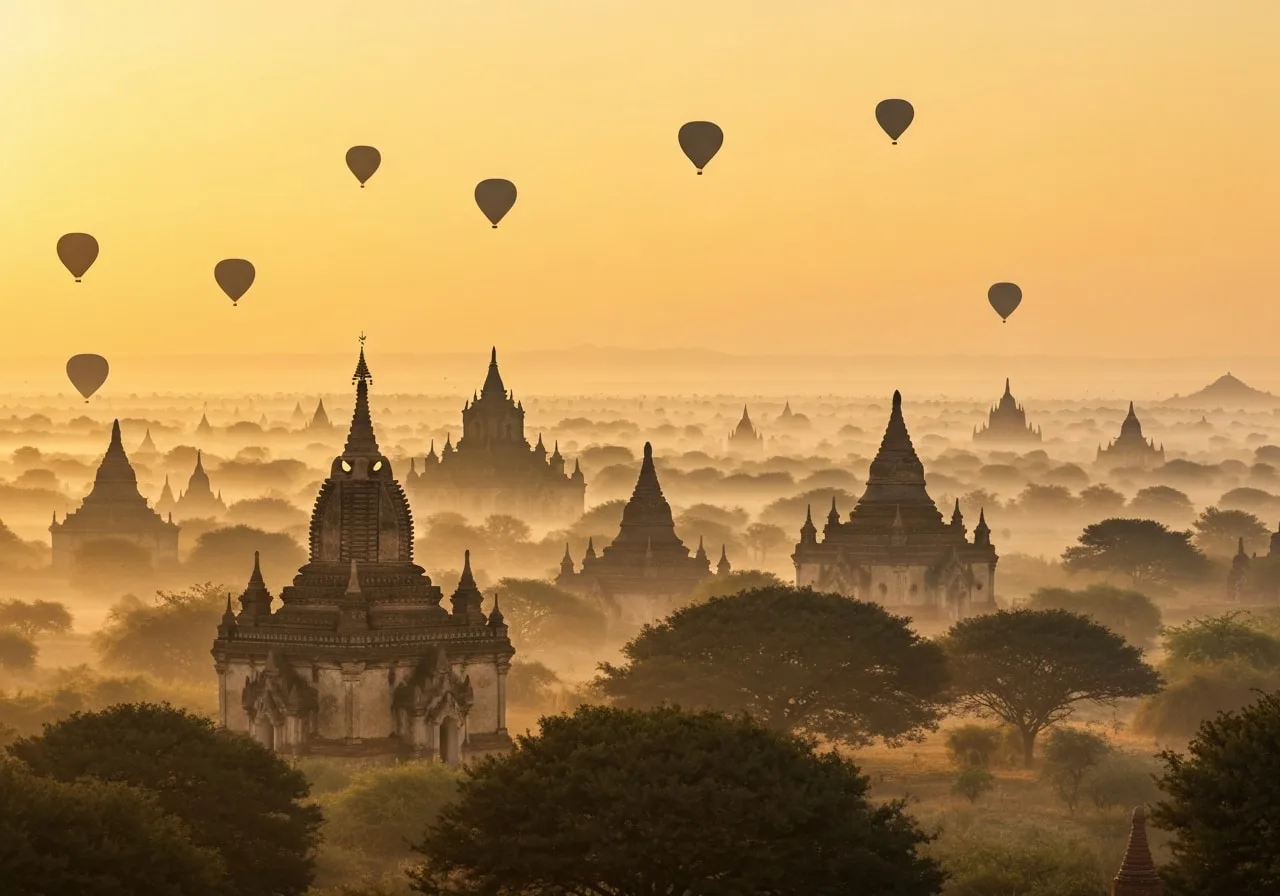
Bagan is why people endure the complications of Myanmar travel. Over 2,000 Buddhist temples, pagodas, and monasteries scatter across a dusty plain, built between the 9th and 13th centuries. It's like Angkor Wat spread across a larger area, with fewer tourists and more temples.
Rent an e-bike (₹400-600 per day) and explore at your own pace. Sunrise and sunset are magical as temples emerge from the mist or glow gold in the fading light. Shwesandaw Pagoda and Bulethi Temple were popular viewpoints; check locally for current access as some have been closed for preservation.
Hot air balloon rides over Bagan are legendary (₹25,000-35,000 per person, October-March only). Book well in advance — operators are limited and seats fill fast.
Budget 2-3 full days for Bagan. Entry is $25 USD for a 5-day pass. Stay in New Bagan (backpacker budget) or Old Bagan (mid-range to luxury).
Yangon and Inle Lake
Yangon (formerly Rangoon) is Southeast Asia's most chaotic yet charming colonial city. The Shwedagon Pagoda, a 99-meter golden stupa, is Myanmar's most sacred Buddhist site and genuinely awe-inspiring at sunset. Downtown's crumbling British colonial buildings, many still occupied, feel like a film set. The street food scene, particularly around 19th Street in Chinatown, is excellent.
Inle Lake in Shan State offers a different experience — leg-rowing fishermen, floating gardens, silk-weaving villages, and a laid-back atmosphere. Boat tours explore the lake's highlights over a full day (₹1,500-2,500 per person). The surrounding hills offer trekking to Pa-O villages.
Note: Shan State has areas of active conflict. Stick to the Inle Lake tourist zone and Kalaw trekking routes. Don't venture independently into remote areas.
Myanmar Visa for Indians
Indians can apply for an e-visa at the official Myanmar e-Visa portal. The tourist visa costs $50 USD, processes in 3-5 working days, and is valid for 28 days single entry. You'll need a passport scan, photo, and confirmed hotel booking for at least the first night.
Visa on arrival was previously available at Yangon, Mandalay, and Nay Pyi Taw airports but verify current status before travel — policies change frequently.
Combining Laos with Northern Thailand
The classic Southeast Asia backpacking route connects northern Thailand with Laos seamlessly. Here's the typical flow as covered in our Southeast Asia backpacking route guide.
From Chiang Rai, take a bus to the border town of Chiang Khong. Cross the Friendship Bridge to Huay Xai in Laos (visa on arrival here). Board the slow boat for a two-day journey down the Mekong to Luang Prabang, overnighting in the village of Pak Beng. The boat costs ₹2,500-3,500 and the scenery is stunning.
Alternatively, fly Bangkok to Luang Prabang directly (1.5 hours, ₹5,000-8,000) and save time for more exploration.
From Laos, you can continue to Vietnam via the Dien Bien Phu border crossing, or south to Cambodia's 4000 Islands border at Dom Kralor.
Laos Myanmar Travel Guide: Sample 10-Day Itinerary
Days 1-2: Fly to Bangkok, connect to Luang Prabang. Evening arrival, night market dinner, early sleep.
Days 3-4: Luang Prabang — morning alms ceremony, temple hopping (Wat Xieng Thong is essential), Kuang Si Falls day trip, Pak Ou Caves boat excursion.
Days 5-6: Minivan to Vang Vieng (5-6 hours). Blue Lagoon swimming, tubing, hot air balloon if budget allows.
Days 7-8: Bus to Vientiane (4 hours). Buddha Park, Patuxai, COPE Centre, Mekong sunset, catch up on laundry.
Days 9-10: Fly Vientiane to Bangkok, connect home. Or extend to 4000 Islands if time allows (add 3-4 days).
Total budget for 10 days: ₹45,000-65,000 including international flights, comfortable guesthouses, all activities, and eating well.
Best Time to Visit: Laos Myanmar Travel Guide Season Tips
The cool, dry season from November to February is ideal for both countries. Temperatures range 20-28°C, rain is minimal, and the scenery is lush from the recently ended monsoon. This is peak season with slightly higher prices and more tourists (though "crowded" in Laos still means wonderfully quiet by Thai standards).
October and March shoulder months offer good weather with fewer tourists and better deals. October has beautiful post-monsoon scenery; March starts getting hot.
April-May is brutal — temperatures exceed 40°C in both countries. Avoid unless you enjoy heatstroke. June-September brings monsoon rains, flooded roads, some attractions closed, but also dramatic scenery and rock-bottom prices. The 4000 Islands waterfalls are most impressive in September-November.
Laos Myanmar Travel Guide Budget Breakdown
Laos (per day): Budget ₹1,000-1,500 (dorm, street food, local transport), Mid-range ₹2,000-3,500 (private room, restaurants, activities), Comfortable ₹4,000-6,000 (boutique hotels, all activities).
Myanmar (per day): Budget ₹1,500-2,500, Mid-range ₹3,000-5,000, Comfortable ₹6,000-10,000. Myanmar is slightly more expensive due to less developed tourist infrastructure and cash economy complications.
Both countries are significantly cheaper than Thailand, Malaysia, or Indonesia. Your rupees stretch further here than almost anywhere else in Asia. This Laos Myanmar travel guide pricing reflects early 2026 rates.
Safety and Practical Tips for This Laos Myanmar Travel Guide
Laos is generally very safe for travelers. Petty theft exists in tourist areas but violent crime against tourists is rare. The biggest risks are road accidents (drive carefully, buses are often old) and UXO in rural areas — never walk off marked paths in the countryside, especially in Xieng Khouang province.
Myanmar's safety situation is more complex due to the ongoing conflict. In tourist areas of Yangon, Mandalay, Bagan, and Inle Lake, personal safety for tourists has been reasonable. But situations change rapidly. Register with the Indian embassy, keep copies of documents, and have exit plans ready.
Both countries require cash — USD and Thai baht are useful to carry. ATMs exist but often have low limits or high fees. Credit cards work in upmarket hotels and restaurants only.
Pharmacies are basic. Bring all medications you might need. Vaccinations recommended: Hepatitis A/B, Typhoid, Tetanus. Malaria prophylaxis if visiting rural southern Laos or Myanmar borderlands.
Final Thoughts: Why These Destinations Matter
Laos and Myanmar represent something increasingly rare in Southeast Asia — destinations that haven't been smoothed over for mass tourism. Yes, Laos is developing, and yes, Myanmar's situation is complicated. But both offer experiences that feel genuine, unscripted, and memorable in ways that the Balis and Bangkoks of the world struggle to match.
Go to Laos before it inevitably changes. Consider Myanmar carefully, with eyes open to the political realities. And remember that sometimes the best travel experiences happen in places where the infrastructure is imperfect but the humanity shines through.
The monks collecting alms at dawn, the temple spires emerging from morning mist, the Mekong flowing endlessly toward the sea — these images will stay with you long after the flight home.