
Loading
Mauritius is the Indian Ocean's most complete island destination — a place where turquoise lagoons meet volcanic mountains, sugar cane fields stretch to the horizon, and a unique blend of Indian, African, French, and Chinese cultures creates something found nowhere else on earth. Our Mauritius tour packages deliver the full spectrum of this island nation, from luxury overwater experiences and world-class diving to rum distillery tours, street food markets, and hikes through ancient forests — all visa-free for Indian passport holders.
Mauritius feels like a second home for Indian travellers, and for good reason. Nearly 70% of the population traces its ancestry to India — Hindi, Bhojpuri, Tamil, Telugu, and Marathi are spoken alongside French, English, and Creole. Hindu temples dot the landscape, Diwali is a national holiday, and vegetarian food is available everywhere. The rupee is even the local currency (Mauritian Rupee), though at a different value. This cultural familiarity, combined with visa-free entry and direct flights from multiple Indian cities, makes Mauritius the most comfortable tropical island experience for Indians.
Direct flights from Mumbai and Delhi take approximately 6 hours, with Air Mauritius flying nonstop from Mumbai, Delhi and Chennai, and IndiGo flying daily from Bengaluru. Fares start from INR 18,000 return during off-season sales. Once on the island, the compact size (a little larger than Delhi) means no destination is more than 90 minutes away by car. Our packages pair beach relaxation with cultural exploration, adventure activities, and the kind of natural beauty that photographs struggle to capture.
Mauritius is ringed by coral reefs that create calm, crystal-clear lagoons perfect for swimming, snorkelling, and water sports. Trou aux Biches on the northwest coast is consistently rated among the world's best beaches — a long stretch of white sand shaded by casuarina trees with calm, shallow waters ideal for families. Flic en Flac offers the island's best sunset views and the nearby Casela Nature Park combines adventure (zip-lining, quad biking) with wildlife encounters.
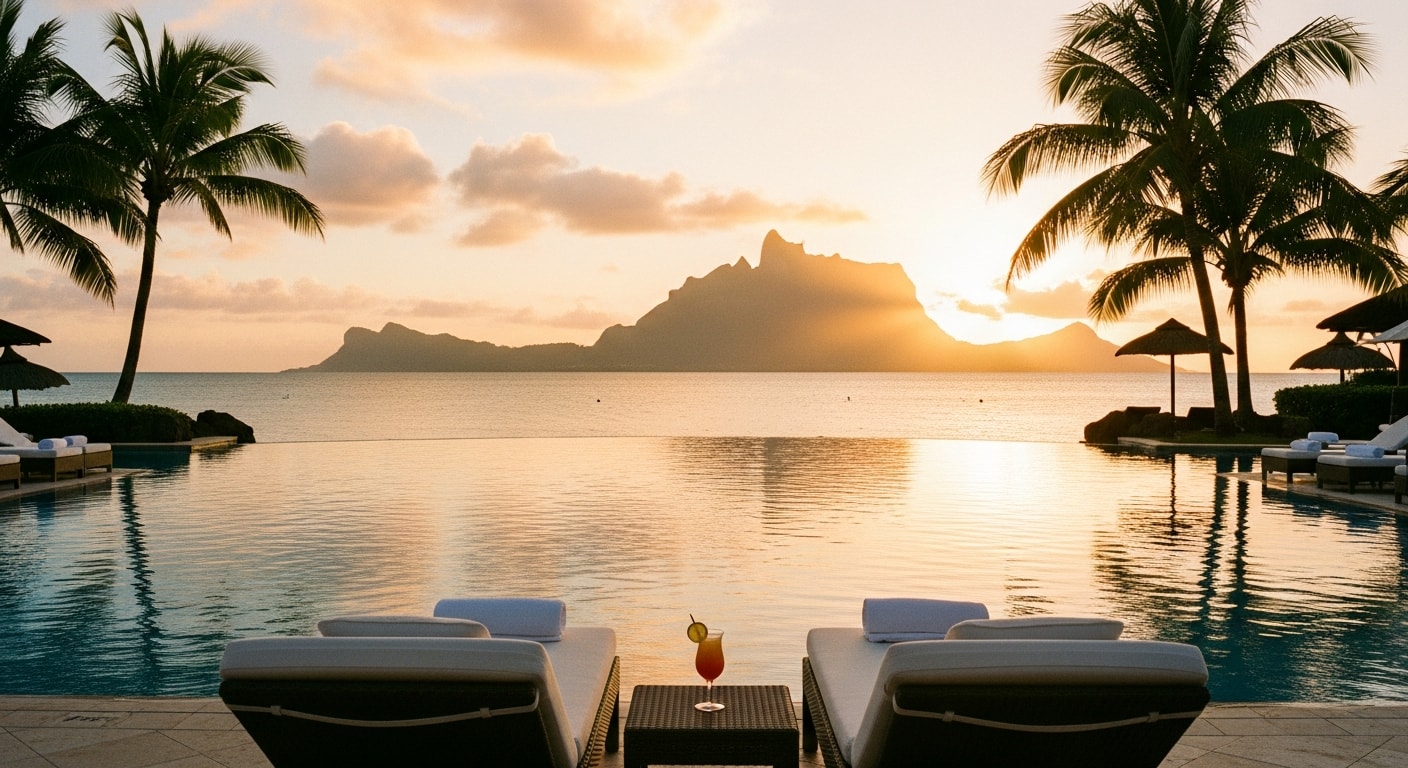
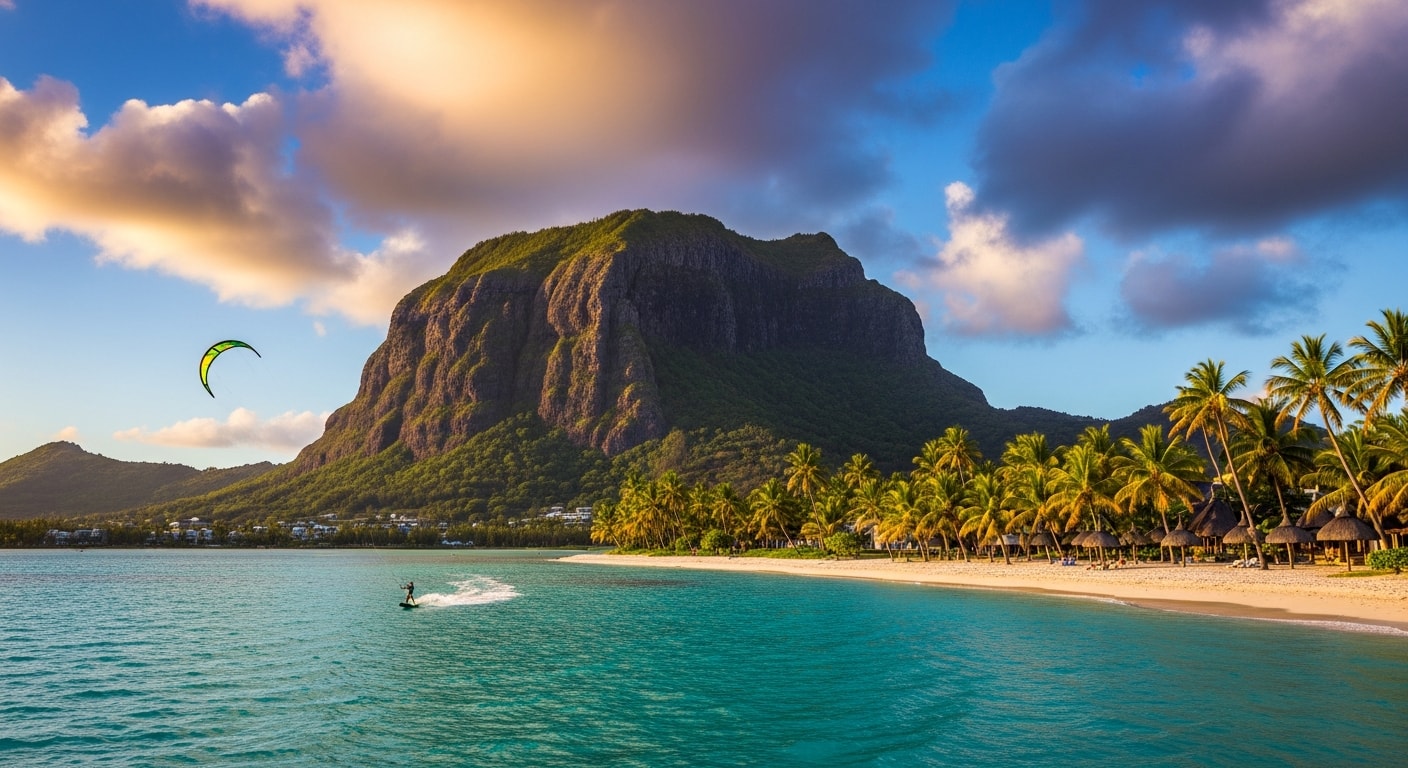
Le Morne in the southwest is dominated by the dramatic Le Morne Brabant mountain — a UNESCO World Heritage Site that was a refuge for escaped slaves in the 18th and 19th centuries. The beach here is world-famous for kitesurfing and the "underwater waterfall" optical illusion visible from helicopter tours, where sand and silt runoff create the appearance of a waterfall plunging into the ocean depths. Île aux Cerfs, reached by speedboat or catamaran from the east coast, is a private island paradise with white sand beaches, a golf course, and excellent snorkelling.
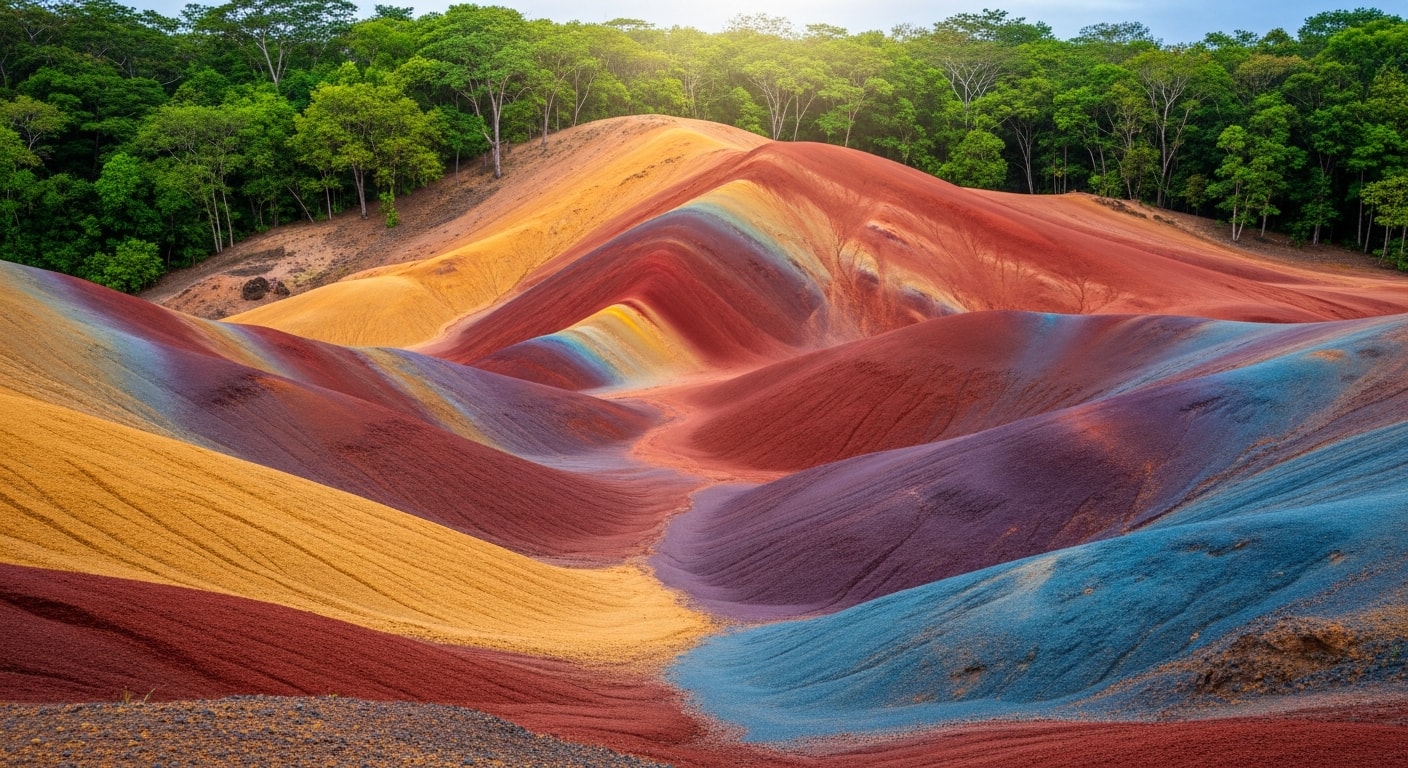
Chamarel is home to two of Mauritius's most extraordinary natural wonders. The Seven Coloured Earths — undulating sand dunes in seven distinct colours formed by volcanic minerals — defy geological explanation. Nearby, the Chamarel Waterfall plunges 100 metres into a gorge surrounded by lush forest. The area is also home to the Rhumerie de Chamarel, where you can taste award-winning rum produced from local sugarcane.
Black River Gorges National Park covers 2% of the island and protects its last remaining native forest. Hiking trails wind through ebony groves where you might spot the Mauritius Kestrel (once the world's rarest bird, saved from extinction by conservation efforts), pink pigeons, and echo parakeets. The viewpoint at the gorge edge offers one of the most dramatic vistas on the island.
Port Louis, the capital, is a compact city of markets, museums, and colonial architecture. The Central Market sells spices, tropical fruits, souvenirs, and local street food including dholl puri (Mauritius's national street food — flatbread stuffed with yellow split pea curry). The Blue Penny Museum houses one of the world's rarest stamps, and the Aapravasi Ghat — a UNESCO World Heritage Site — tells the story of Indian indentured labourers who arrived in Mauritius from 1834, the ancestors of today's Indo-Mauritian majority.
Grand Bassin (Ganga Talao) is a crater lake sacred to Hindus, with a 33-metre statue of Lord Shiva overlooking the water. The Maha Shivaratri pilgrimage to Grand Bassin is one of the largest Hindu gatherings outside India. For Indian visitors, this site adds a profound spiritual dimension to what might otherwise be purely a beach holiday. Browse our packages below for the perfect Mauritius itinerary.
What each package costs in total, twin sharing, before flights and the visa fee.
| Package | Duration | Per person | Couple | Family of 4 |
|---|---|---|---|---|
| Mauritius Honeymoon Bliss - 6 Nights 7 Days Romantic Beach & Island Package | 6 Nights 7 Days | ₹89,999 | ₹179,998 | ₹313,998 |
City-specific flights, fares and itineraries from your home airport
Tell us roughly when and how many — our travel expert sends you a custom quote, usually within a few hours.
The best time to visit Mauritius. Dry, cool season with temperatures of 20-26°C — perfect for sightseeing, hiking, and water sports. The southeast trade winds make the west coast (Flic en Flac, Le Morne) calmer for swimming while creating ideal kitesurfing conditions.
Warm and humid with temperatures of 27-33°C. January to March can bring cyclones, though direct hits are rare. The sea is warmest and best for diving and snorkelling. Tropical fruits are in season. Prices are lower except around Christmas and New Year.
The transition from cool to warm season. Temperatures rise to 24-28°C with minimal rainfall. Whale watching season peaks (humpback whales pass through Mauritius waters). Spring flowers bloom across the island. Excellent value with fewer tourists than peak season.
Sir Seewoosagur Ramgoolam International Airport (MRU) near Mahébourg is the only international airport. Direct flights from Mumbai (6 hours), Delhi (7.5 hours) and Chennai on Air Mauritius, and daily from Bengaluru on IndiGo. Connecting flights via Dubai, Doha, and Nairobi on Emirates, Qatar Airways, and Kenya Airways.
No regular passenger ferry service connects India to Mauritius. Cruise lines including MSC, Costa, and Ponant include Mauritius on Indian Ocean itineraries. Port Louis is the main cruise terminal. Cargo-passenger ships occasionally sail between Mumbai and Port Louis but are not a practical option for tourists.
Mauritius has an excellent road network with well-maintained highways. The island is small — no destination is more than 90 minutes from the airport. Car rental (left-hand driving, like India) costs MUR 1,200-3,000/day. Taxis are metered in Port Louis but negotiate fares elsewhere. Uber is not available; use the myCab app.
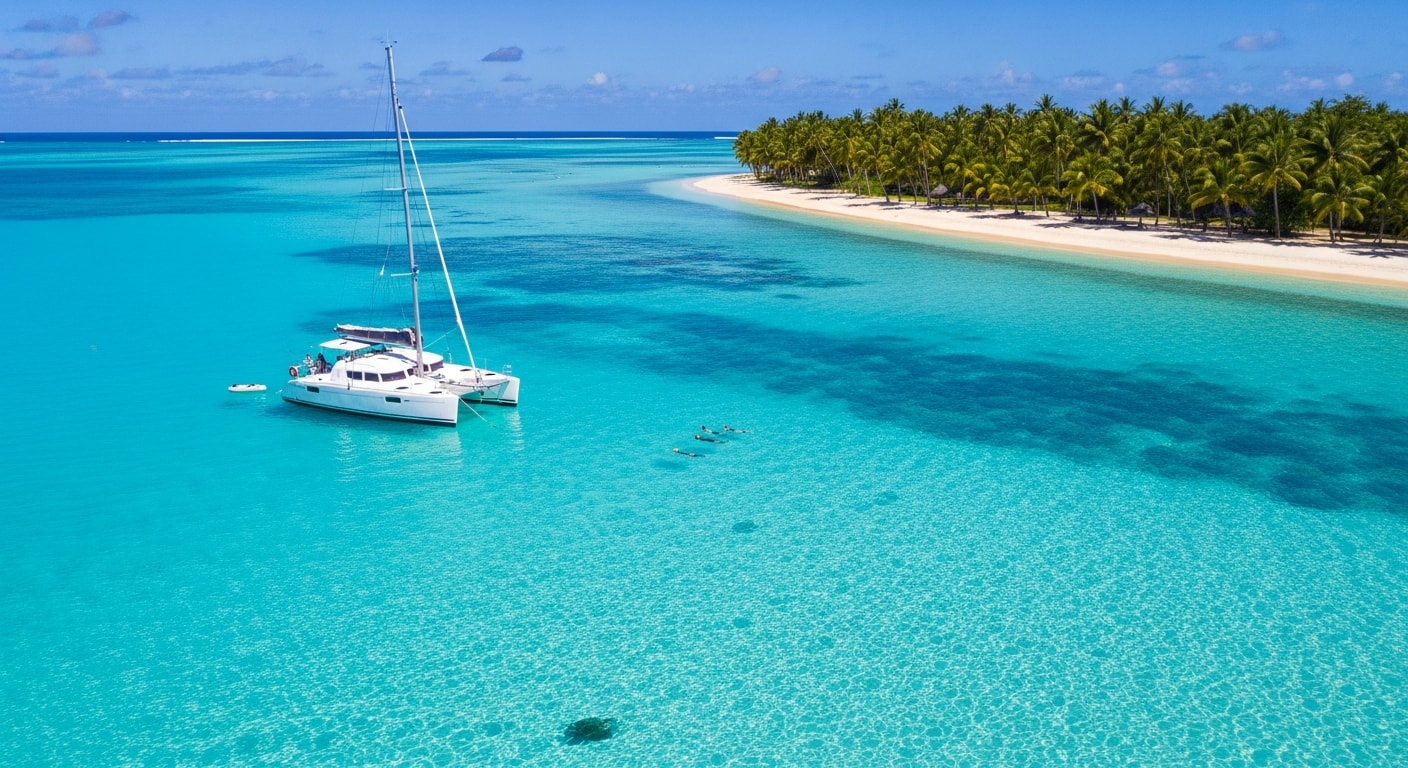
Catamaran and speedboat trips run from the mainland to offshore islands — Île aux Cerfs (east coast), Île aux Aigrettes (nature reserve), and Île Gabriel (snorkelling paradise). Full-day catamaran cruises with BBQ lunch, snorkelling, and island hopping are one of the most popular activities on the island.
Take a speedboat or catamaran to this private island paradise off the east coast. White sand beaches, turquoise lagoons, parasailing, glass-bottom boat rides, and an 18-hole golf course designed by Bernhard Langer. Full-day trips include BBQ lunch on the beach.
Visit the surreal geological formation where volcanic earth displays seven distinct colours — red, brown, purple, green, blue, violet, and yellow. The 100-metre Chamarel Waterfall is a short walk away. Complete the visit with rum tasting at Rhumerie de Chamarel distillery.
See the stunning optical illusion of an "underwater waterfall" near Le Morne — sand and silt runoff creates a dramatic visual effect visible only from the air. 10-minute helicopter tours also fly over turquoise lagoons, coral reefs, and the dramatic Le Morne Brabant mountain.
Blue Bay Marine Park has the best snorkelling on the island — glass-bottom boats glide over colourful coral gardens teeming with tropical fish. Certified divers can explore deeper sites including shipwrecks and wall dives. Flic en Flac and Trou aux Biches also offer excellent diving.
Hike through Mauritius's largest native forest — 60km of trails wind through ebony groves and past waterfalls. Spot endangered Mauritius Kestrels, pink pigeons, and echo parakeets. The Black River Gorge viewpoint is the island's most dramatic panorama. Entry is free.
Visit the sacred crater lake with its 33-metre Lord Shiva statue. Hindu temples surround the lake, and the Maha Shivaratri pilgrimage in February-March is one of the largest Hindu gatherings outside India. A deeply meaningful stop for Indian visitors.
Explore the Central Market's colourful stalls selling spices, vanilla, model ships, and tropical fruits. Try dholl puri (split pea flatbread), gateaux piments (chilli cakes), alouda (rose-flavoured milk drink), and mine frite (fried noodles). The best street food is near the Jummah Mosque.
Full-day sailing trips from Grand Baie cruise to Flat Island, Gabriel Island, and Coin de Mire. Swim with wild dolphins in the morning, snorkel over coral reefs, sunbathe on deserted island beaches, and enjoy a BBQ lunch with rum punch on board.
Mauritius's national street food — thin flatbread stuffed with ground yellow split peas (dholl), served with tomato rougaille, pickled vegetables, and chilli paste. Sold by street vendors across the island for MUR 10-15 each. The most beloved breakfast and lunch snack. Buy from the queues — long lines mean better puri.
A refreshing milk-based drink with basil seeds, agar-agar jelly, rose syrup, and ice cream. Similar to falooda but uniquely Mauritian. Available at street stalls and the Central Market in Port Louis. The perfect thirst-quencher in Mauritius's tropical heat. Best from the vendors near Caudan Waterfront.
A Creole tomato-based sauce that's the foundation of Mauritian cooking. Made with tomatoes, onions, garlic, ginger, and thyme, served with fish, sausage, or chicken over rice. Every family has their own recipe. The fish rougaille at seaside restaurants uses the morning's catch.
Deep-fried split pea fritters spiced with chilli, onion, and fresh herbs — crispy outside, soft inside. Sold by street vendors for MUR 5-10 each, usually wrapped in newspaper. The Mauritian equivalent of Indian vada but with its own distinctive flavour profile.
A Mauritian-Indian fusion dish — fish marinated in mustard seeds, turmeric, vinegar, garlic, and ginger, then fried and served cold or at room temperature. The tangy, pungent flavour is unique to Mauritius. Often prepared a day ahead as the flavours improve overnight.
Mauritian biryani has evolved distinctly from its Indian roots — fragrant rice with chicken, beef, or prawn, cooked with local herbs, potatoes, and a generous amount of saffron and fried onions. Served at celebrations and weekend gatherings. Often comes with tomato-chilli chutney on the side.
Chinese-Mauritian stir-fried noodles with vegetables, egg, soy sauce, and your choice of chicken, prawns, or tofu. Sold at virtually every street food stall and Chinese-Mauritian restaurant. A quick, satisfying meal that reflects the island's multicultural food heritage.
Mauritius produces exceptional rum from fresh sugarcane juice (not molasses). Rhumerie de Chamarel and New Grove are the most popular distilleries offering tours and tastings. Aged rums rival premium Caribbean labels at a fraction of the price. The vanilla rum is a popular souvenir.
The island's most vibrant market — a maze of stalls selling spices (vanilla pods are a must-buy), tropical fruits, Mauritian rum, model ships, textiles, and herbal remedies. The food section has the best street food in the country. Bargaining is expected — start at 50-60% of asking price.
A modern waterfront shopping complex with international brands, local boutiques, craft shops, a Blue Penny Museum, and restaurants overlooking the harbour. Less chaotic than the Central Market and useful for branded souvenirs, clothing, and duty-free shopping.
The main shopping mall in the tourist hub of Grand Baie. International brands, a Monoprix supermarket (great for gifts like local chocolates, teas, and rum), cinema, and food court. Air-conditioned respite from the tropical heat.
Famous for factory outlet shops selling knitwear and textiles — Mauritius produces high-quality clothing for European brands. Ship-model workshops in the area create intricate handcrafted replicas of historic sailing ships. Factory prices are 50-70% below retail.
The island's largest weekly market takes over the waterfront town every Monday. Locals sell fresh produce, seafood, clothing, household goods, and street food. A far more authentic experience than tourist shops. Arrive early (6-7am) for the best selection.
Duty-free shops at the airport offer competitive prices on vanilla, rum, and local products. Village craft markets in Chamarel, Goodlands, and Quatre Bornes sell handmade items directly from artisans. The Goodlands fabric market is popular for sari and textile shopping.
Indian passport holders get visa-free entry to Mauritius for up to 60 days. Simply present your passport (6+ months validity), return ticket, proof of accommodation, and evidence of sufficient funds at immigration. No advance application, no fees — just arrive and enter.
Mauritius drives on the left (like India), making it comfortable for Indian drivers. Car rental costs MUR 1,200-3,000/day. An international driving permit is recommended but Indian licences are usually accepted. The island is small — nowhere is more than 90 minutes away. Google Maps works well for navigation.
Mauritius is close to the Tropic of Capricorn — UV levels are intense even on cloudy days. Apply SPF 50+ waterproof sunscreen every 2 hours, especially when snorkelling or on boat trips. Reef-safe sunscreen is increasingly required at marine parks and lagoons.
While English is the official language, French and Creole are more widely spoken daily. Basic French goes a long way — "Bonjour" (hello), "Merci" (thank you), "Combien?" (how much?). Most tourism professionals speak English, but market vendors and taxi drivers may prefer French or Creole.
May-June and September-November offer the best value — pleasant weather, fewer tourists, and lower hotel rates. Peak season (December-January) sees prices double at many resorts. Avoid February-March when cyclone risk is highest, though direct hits are rare.
Mauritius has an extensive public bus network covering the entire island. Fares are MUR 15-40 per trip — the cheapest transport option. Buses run from 5:30am to 8pm (limited service after 6pm). The routes are scenic and a great way to experience local life.
Popular activities like dolphin swimming, underwater walks, parasailing, and submarine tours sell out during peak season. Book through your hotel or a reputable operator at least a day in advance. Catamaran cruises and helicopter tours should be booked a week ahead.
Credit cards work at hotels, restaurants, and shops. But markets, street food vendors, and small businesses are cash-only. ATMs are available in all towns. The Mauritian Rupee (MUR) exchanges at approximately 1 INR = 0.50 MUR. Withdraw MUR 5,000-10,000 at a time.
Mauritius is the only known home of the dodo bird — the flightless bird that became extinct around 1681 and remains the island's national symbol.
Nearly 70% of the Mauritian population is of Indian origin, making it the country with the highest proportion of Indian diaspora in the world.
The island has no indigenous population — it was uninhabited until the Dutch settled in 1598, followed by the French (1715) and British (1810).
Mauritius issued some of the British Empire's earliest postage stamps in 1847 — the famous "Blue Penny" and "Red Penny" stamps of 1847 are among the world's rarest.
Mark Twain wrote: "Mauritius was made first, and then heaven; and heaven was copied after Mauritius."
The "underwater waterfall" near Le Morne is an optical illusion caused by sand and silt runoff on the ocean floor — visible only from the air.
The dodo lived only on Mauritius; its closest relative, the Rodrigues solitaire, lived on the Mauritian island of Rodrigues and is also extinct.
The Chamarel Seven Coloured Earths never erode despite heavy rainfall — the differently coloured sands always settle back into distinct layers.
Mauritius has one of the highest GDP per capita figures in Africa (second to Seychelles) and is considered the most competitive economy on the continent.
Ganga Talao (Grand Bassin) hosts the largest Hindu festival celebration outside of India during Maha Shivaratri.
Mauritius sits in the South-West Indian Ocean cyclone belt; the official cyclone season runs from 1 November to 15 May and peaks in February-March.
Mauritian Creole is understood by virtually everyone on the island and blends French vocabulary with African and Indian grammatical structures.
Mauritius offers visa-free entry for Indian passport holders for stays up to 60 days — making it one of the easiest tropical island destinations to visit from India.
Guesthouses and Airbnbs MUR 2,000-4,000. Budget hotels MUR 4,000-8,000. Mid-range beachfront hotels MUR 8,000-15,000. Luxury all-inclusive resorts MUR 15,000-25,000+. Mauritius has excellent value guesthouses that include breakfast.
Street food (dholl puri, gateaux) MUR 10-50. Local restaurants MUR 200-500. Mid-range restaurants MUR 500-1,500. Fine dining MUR 2,000+. Hotel restaurants are significantly more expensive than eating out — venture beyond the resort for authentic food and savings.
Public bus MUR 15-40 per trip. Taxi rides MUR 500-2,000. Car rental MUR 1,200-3,000/day. myCab app for taxi booking. Full-day private driver MUR 2,500-4,000. Fuel costs MUR 65-75/litre. The island is small enough that transport never takes long.
Beaches and Black River Gorges are free. Chamarel entry MUR 350. Catamaran cruise MUR 2,500-4,000. Undersea walk MUR 2,000-3,500. Helicopter tour MUR 10,000-15,000. Dolphin swim MUR 2,000-3,000. Parasailing MUR 1,500-2,500.
Tourist SIM cards from my.t (Mauritius Telecom) or Emtel available at the airport. A 7-day plan with 5GB data costs MUR 300-500. 30-day plans with more data cost MUR 600-800. Free Wi-Fi is available at most hotels, restaurants, and shopping centres.
Guesthouses, local restaurant meals, public buses, and free or low-cost attractions. Budget travellers can enjoy Mauritius for INR 6,000-10,000/day — significantly cheaper than Maldives for a similar tropical island experience.
Beachfront hotel, mix of local and resort dining, car rental, water activities, and guided excursions. INR 16,000-30,000/day covers a very comfortable Mauritius holiday with all major experiences.
Browse our curated packages and find your perfect trip.