
Loading
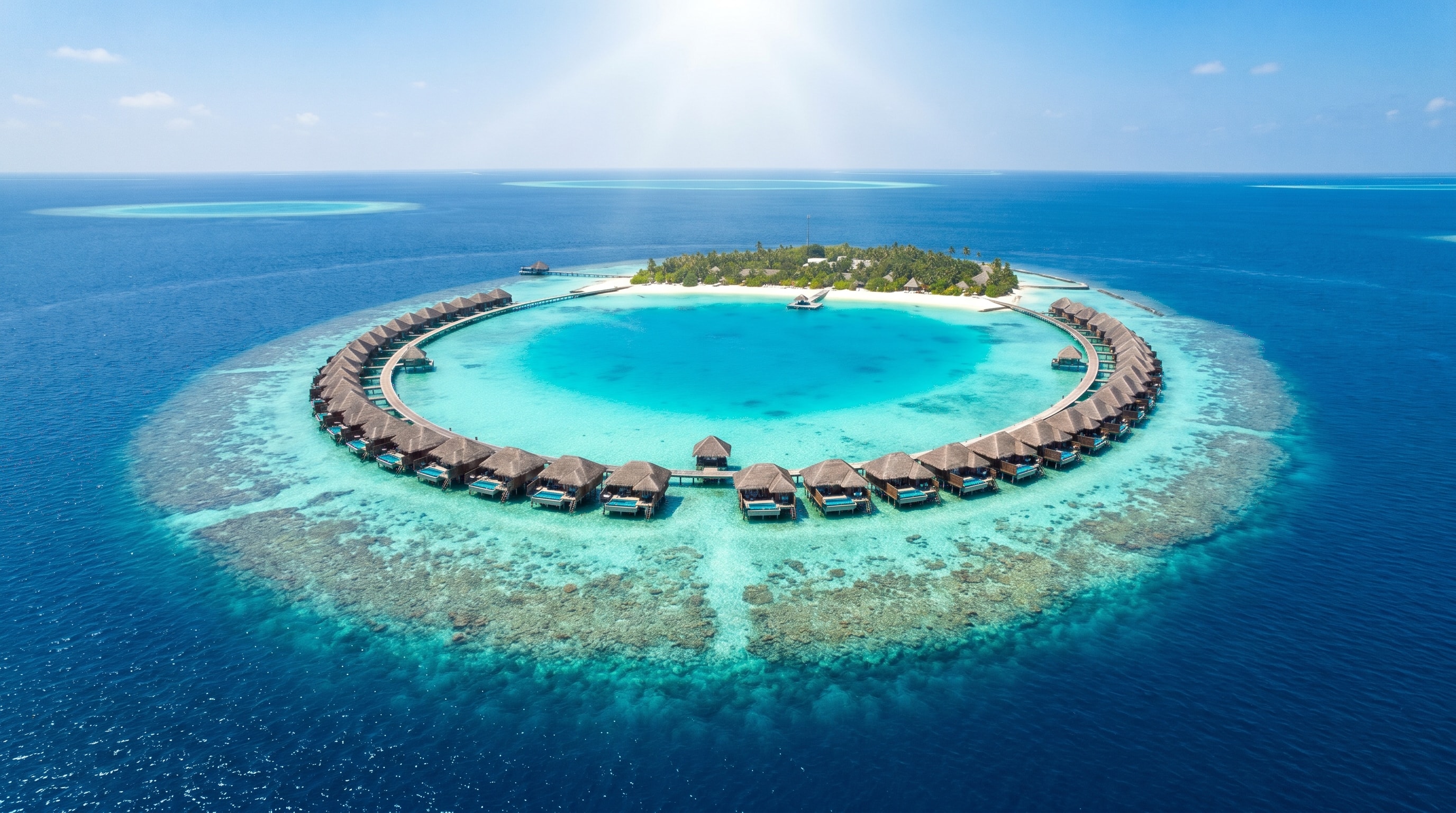
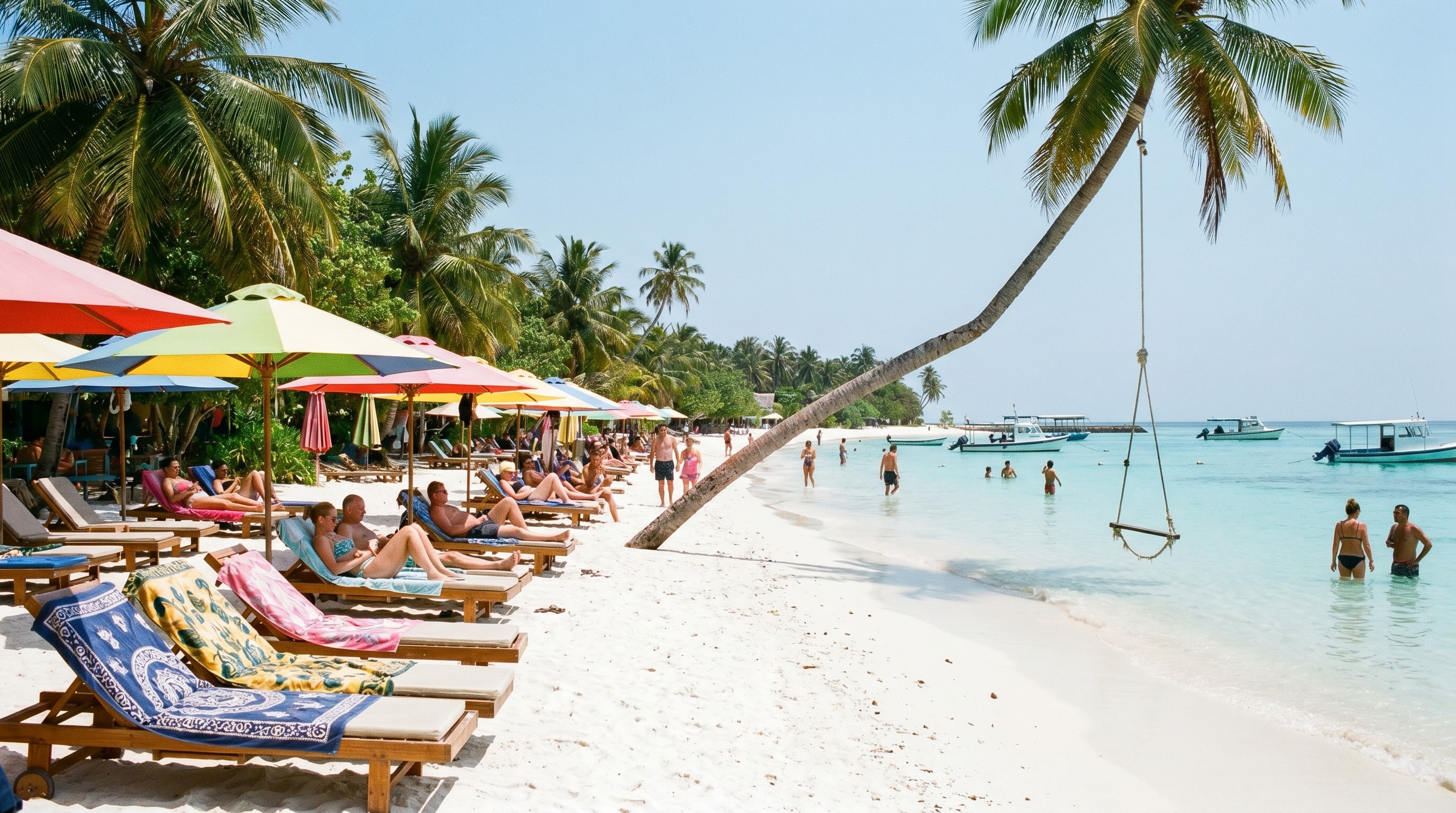
The Maldives is what happens when nature decides to show off. Scattered across the Indian Ocean like a broken pearl necklace, this nation of 1,192 coral islands offers the kind of beauty that photographs cannot fully capture — water so clear you can count the fish from your overwater villa deck, sand so white it squeaks underfoot, and coral reefs so vibrant they look artificially painted. Our Maldives tour packages from India make this bucket-list destination accessible for honeymooners, families, divers, and even budget travellers who thought the Maldives was beyond reach.
India is the Maldives' closest major neighbour, and getting here is easier and cheaper than most people realise. Direct flights from Mumbai, Delhi, Bangalore, Kochi, and Trivandrum reach Male in 2-4 hours — Kochi and Trivandrum are under two hours, making the Maldives closer than most domestic Indian destinations. Budget airlines like IndiGo now operate direct routes, with return fares starting around INR 12,000 during sales.
The Maldives offers free visa on arrival for all nationalities, including Indian passport holders. There is no fee, no prior application, and no paperwork beyond your passport, return ticket, and hotel booking. You simply land, clear immigration in minutes, and step into a world that feels impossibly far from reality. The only advance requirement is completing the online IMUGA traveller declaration form 24-96 hours before arrival.
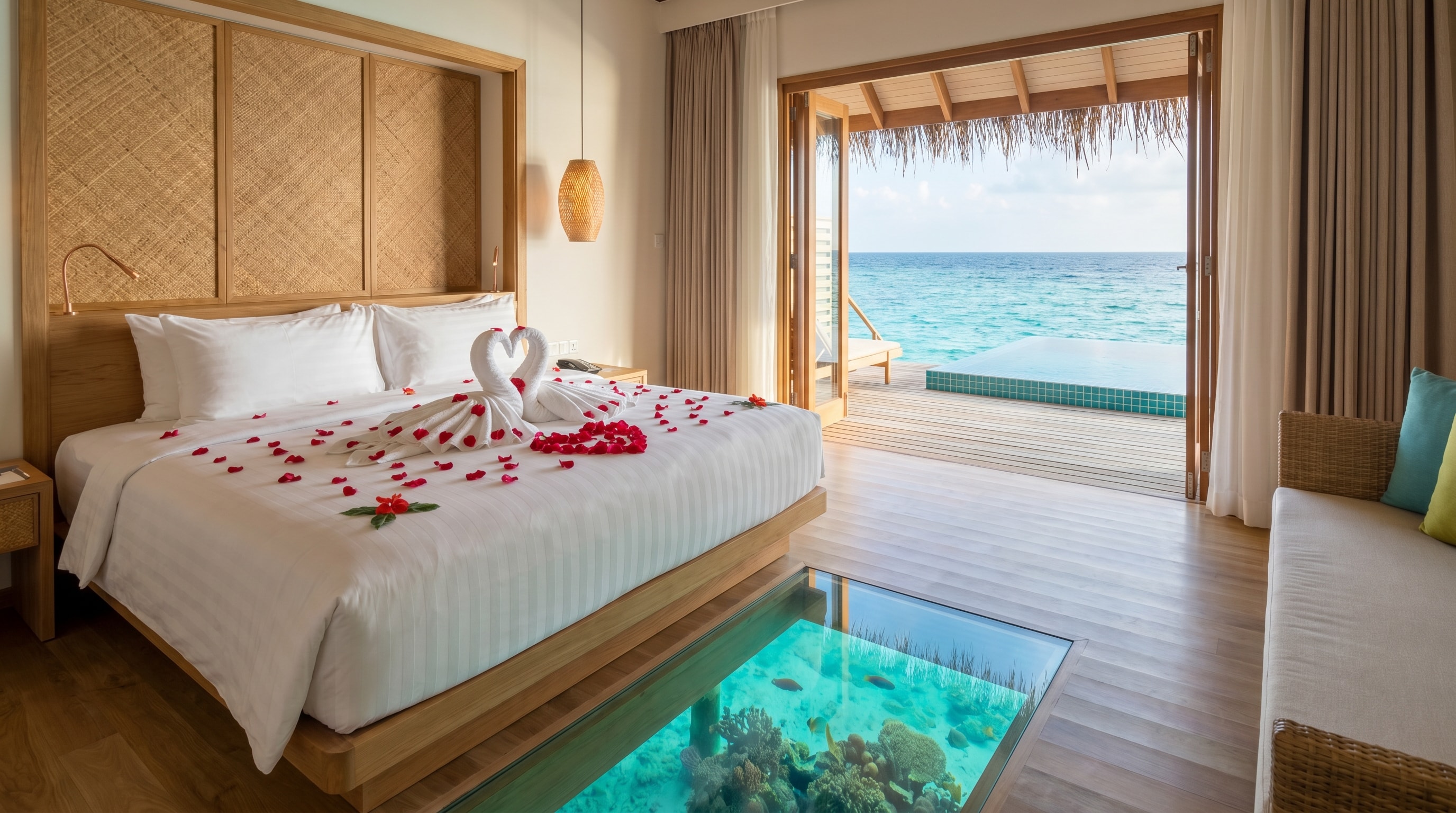
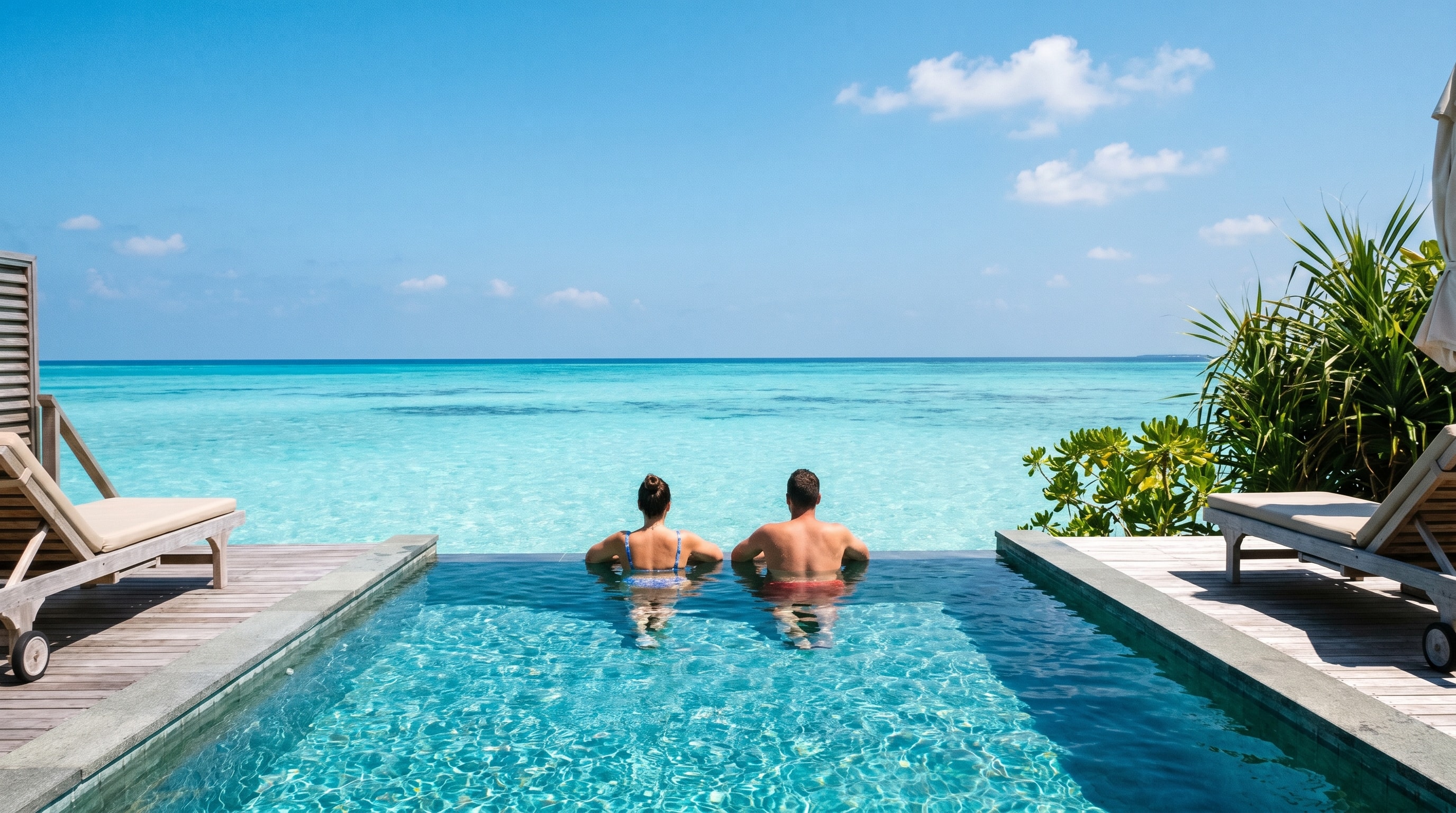
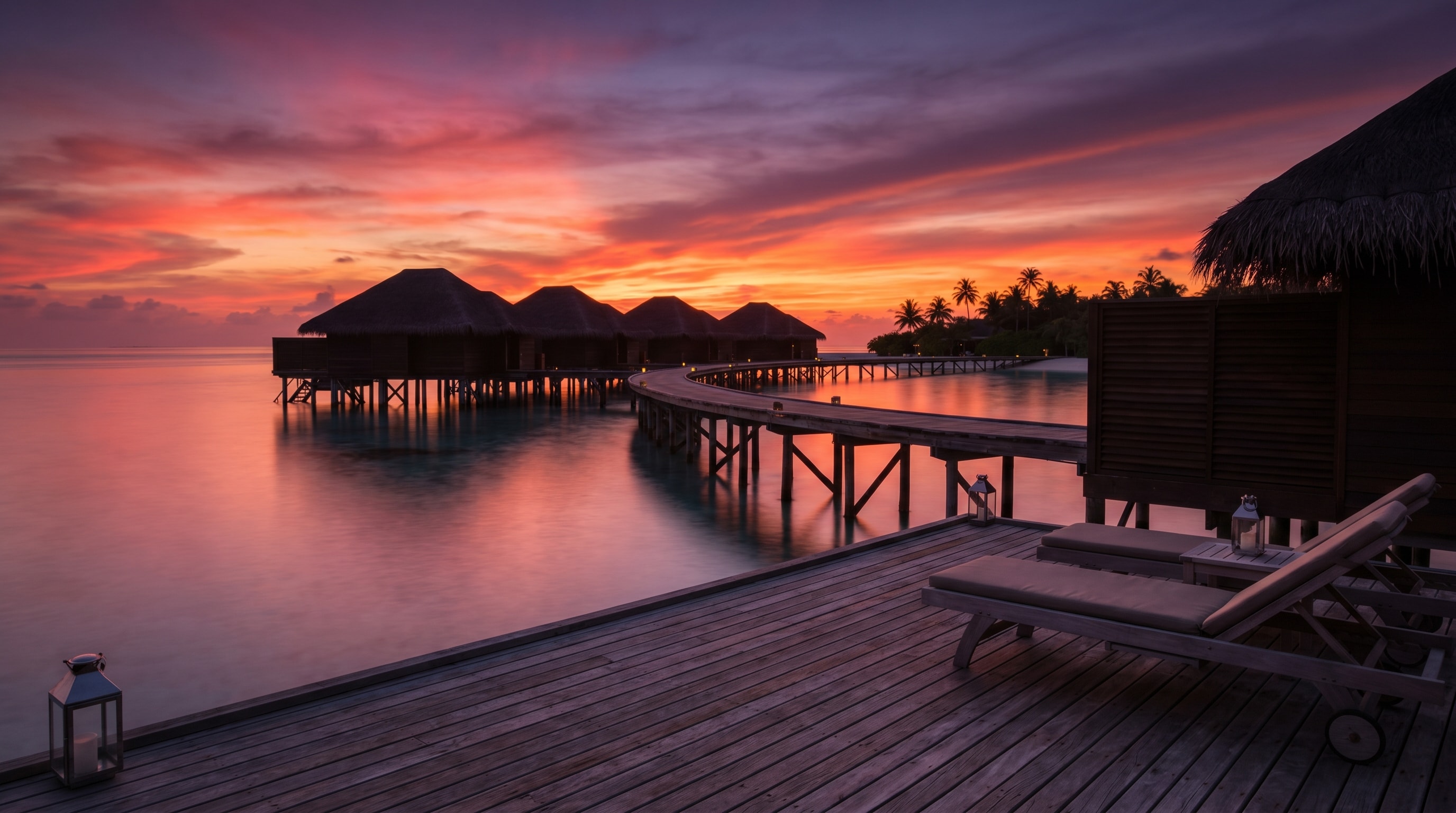
The overwater villa is the image that defines the Maldives, and experiencing one is genuinely transformative. Imagine waking up to the sound of waves lapping beneath your glass floor, stepping from your bedroom directly into warm turquoise water, and watching reef sharks cruise past your deck while you drink morning coffee. What once cost INR 1,00,000+ per night is now available at mid-range resorts from INR 15,000-25,000 — still a splurge, but one that delivers a memory no other holiday can match.
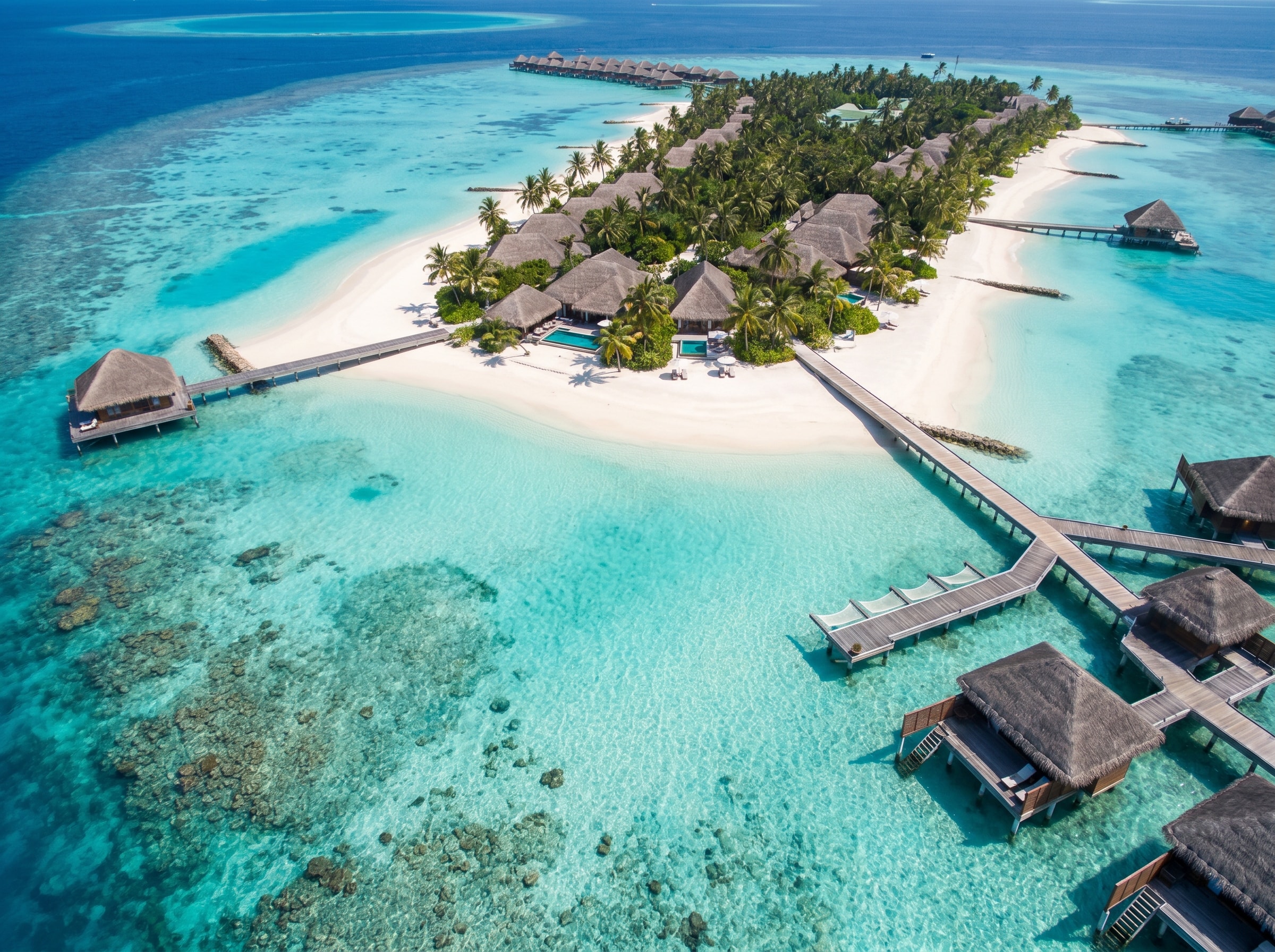
Our Maldives tour packages include overwater villa options at resorts across multiple atolls, each offering a slightly different experience. North Male Atoll resorts are closest to the airport with speedboat transfers. South Ari Atoll is famous for whale shark encounters. Baa Atoll — a UNESCO Biosphere Reserve — hosts the world's largest gathering of manta rays. And remote southern atolls like Laamu and Addu offer the most pristine, untouched reef systems.
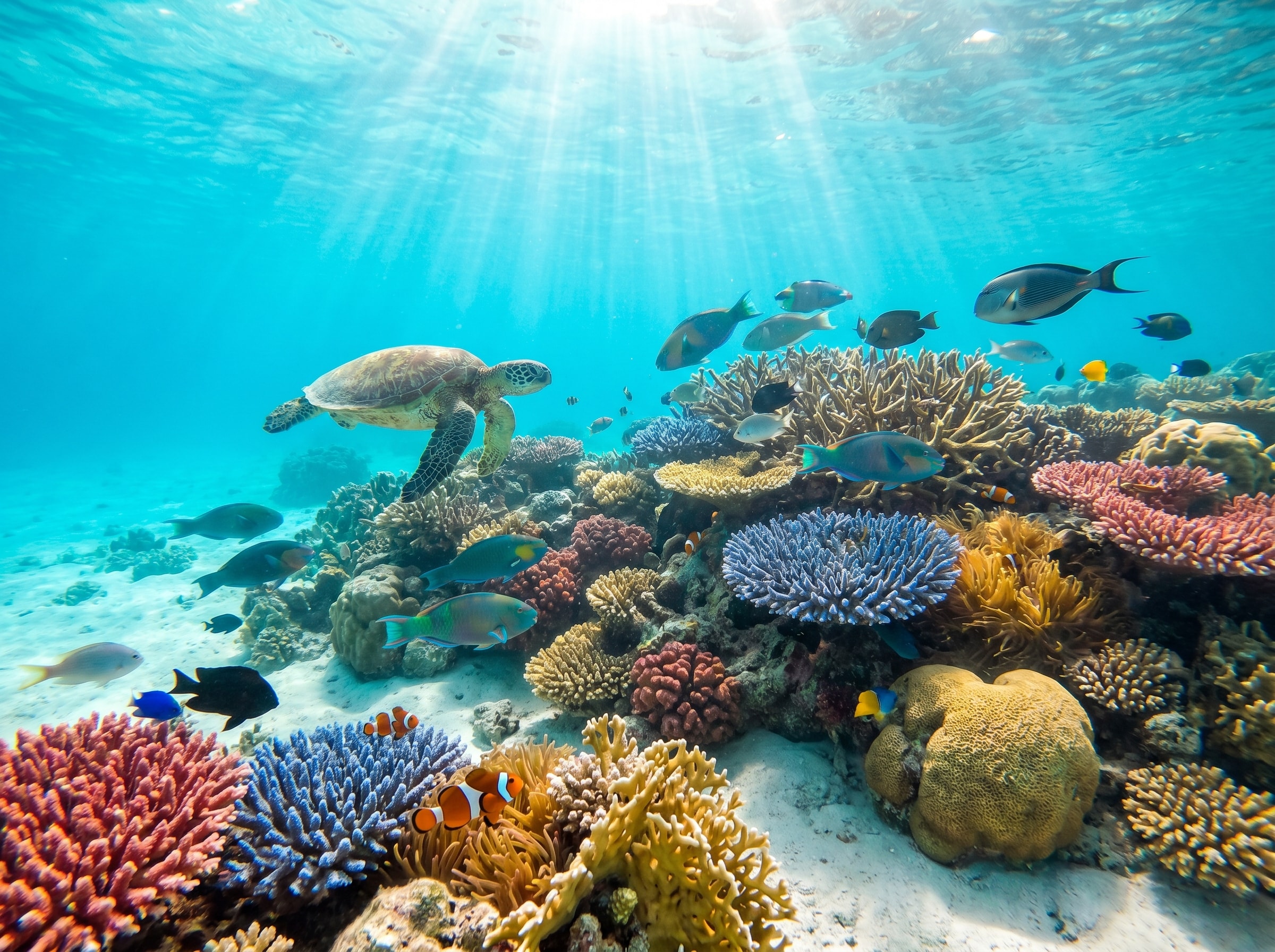
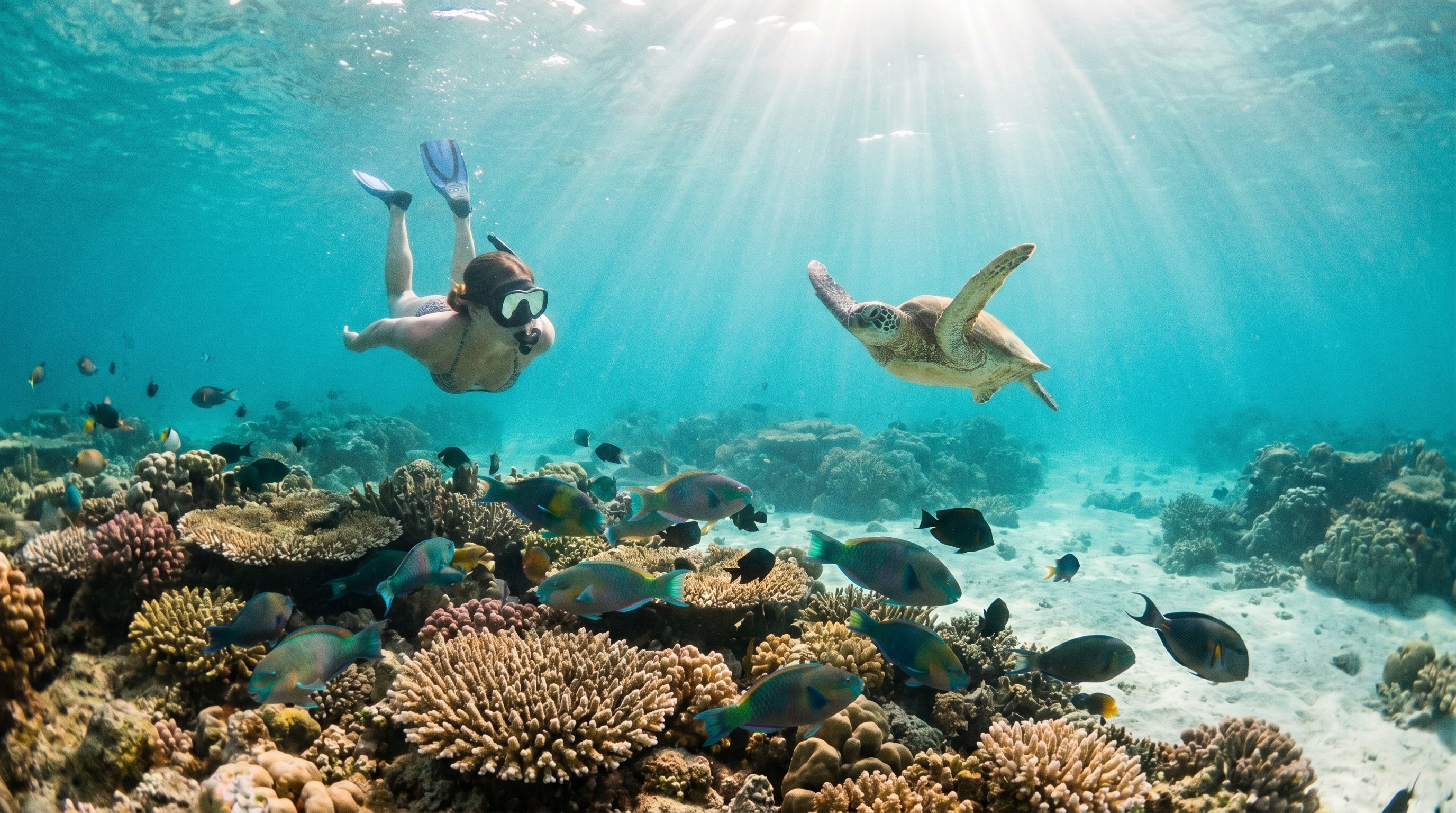
The Maldives sits atop one of the most biodiverse marine ecosystems on the planet, and the underwater world here is the real attraction. Over 1,000 species of fish, 200 species of coral, five species of sea turtle, manta rays with wingspans exceeding four metres, whale sharks the length of a bus, hammerhead sharks in the deep channels, and reef sharks so common they become background scenery by day three.
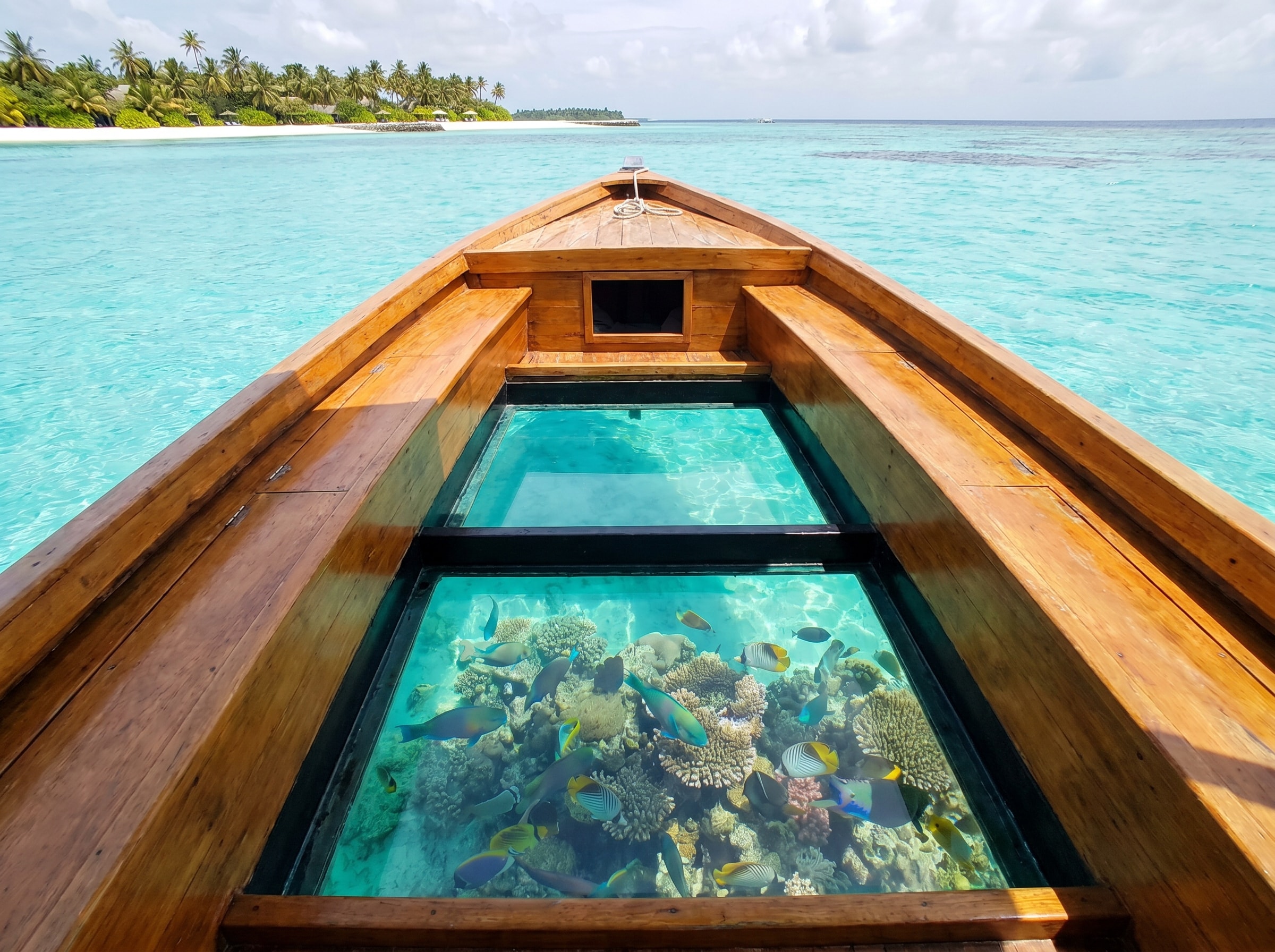
You do not need to be a certified diver to experience this. Many resorts have house reefs accessible directly from the beach or villa — grab a mask and snorkel, wade in, and within minutes you are floating above parrotfish, anemonefish, moray eels, and coral formations that have been growing for centuries. Our packages include snorkelling excursions to the best reef sites, and PADI certification courses are available at virtually every resort for those who want to go deeper.
Sunset dolphin cruises are the most popular excursion across every resort, and the success rate exceeds 95%. Pods of spinner dolphins — sometimes numbering 200 or more — leap, spin, and race alongside traditional wooden dhoni boats while the Indian Ocean turns gold and crimson around you. It costs USD 50-80 per person and is worth every rupee.
The Maldives pioneered underwater dining — Ithaa at Conrad Rangali Island was the world's first all-glass undersea restaurant, and the experience of eating a five-course meal surrounded by coral gardens and passing marine life is surreal in the best possible way. Several resorts now offer similar experiences, plus underwater spas, underwater hotel suites, and even an underwater nightclub.
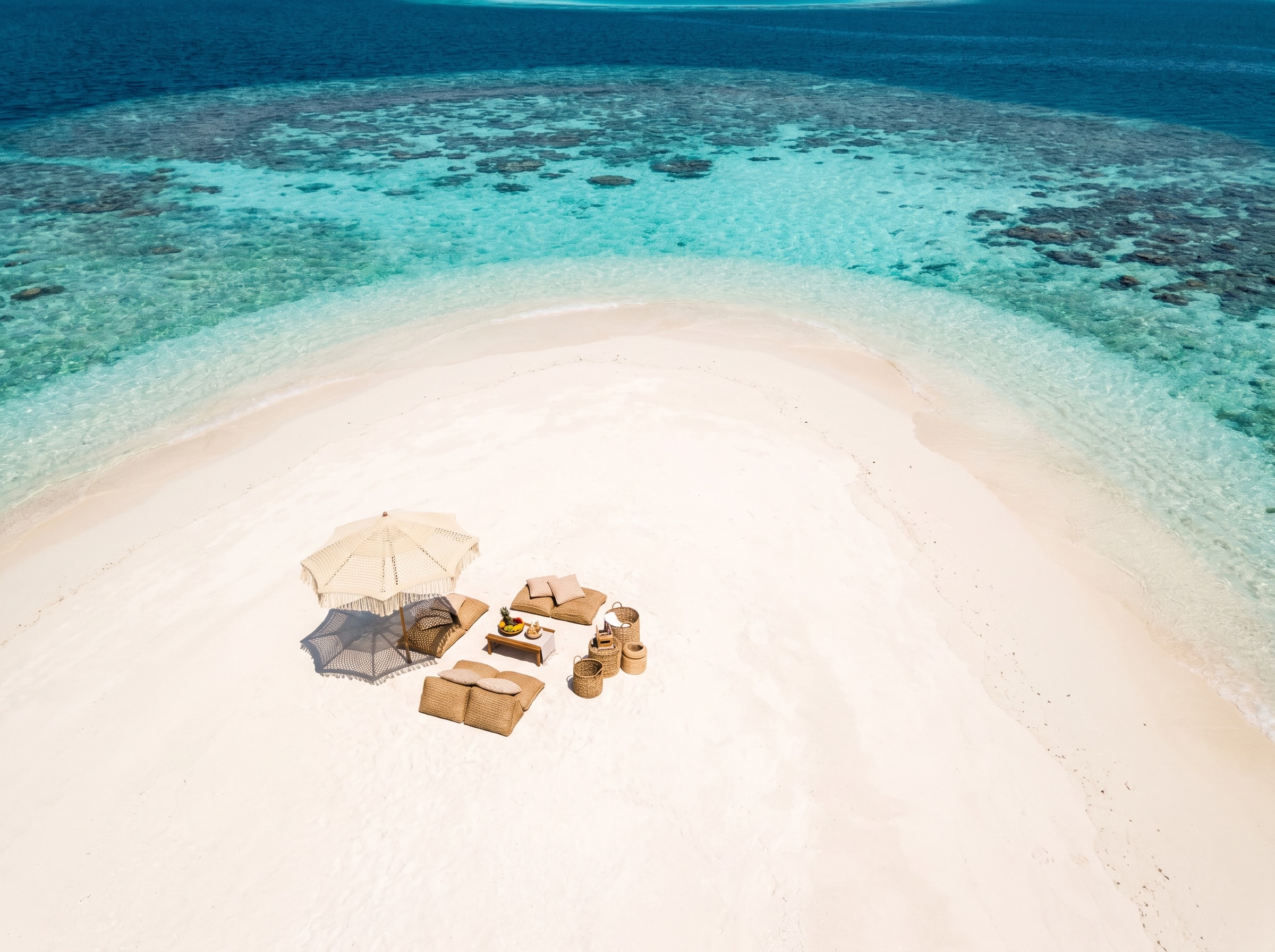
Sandbank picnics drop you on a tiny strip of white sand rising from the middle of the ocean — nothing but water in every direction, a gourmet lunch, and complete privacy. Night fishing on a traditional dhoni connects you to the Maldivian fishing heritage that sustained these islands for millennia. And on moonless nights between June and February, certain beaches glow electric blue with bioluminescent plankton — one of nature's most magical phenomena.
The biggest myth about the Maldives is that it is only for the wealthy. Since 2009, guesthouses on inhabited local islands have been permitted, and this has opened the Maldives to budget travellers from India. Islands like Maafushi, Thulusdhoo, Dhigurah, and Fulidhoo offer clean, air-conditioned guesthouses from INR 3,000-6,000 per night — including breakfast and often including snorkelling trips and dolphin excursions in their packages.
The trade-off is clear: local islands follow Islamic law, so alcohol is not available and bikinis are restricted to designated beach areas. But the diving, snorkelling, marine life, and sandbank experiences are identical to what resort guests pay ten times more for. A week on a local island including flights can cost under INR 60,000-80,000 from India — roughly what a Goa holiday costs. Our budget packages make this accessible with pre-arranged guesthouse bookings and activity schedules.
Our Maldives tour packages from India cater to honeymooners, families, divers, and budget adventurers. Every package includes flights assistance, airport-to-resort transfers, accommodation, and meal plans.
The best time to visit is December through April for guaranteed sunshine, though the shoulder months of November and May offer better value with still-pleasant weather. Browse our available packages below and start planning the most beautiful holiday of your life.
What each package costs in total, twin sharing, before flights.
| Package | Duration | Per person | Couple | Family of 4 |
|---|---|---|---|---|
| Maldives Budget Package - 3 Nights 4 Days Maafushi Local Island | 3 Nights / 4 Days | ₹58,000 | ₹116,000 | — |
| Maldives Family Package - 4 Nights 5 Days All-Inclusive Island Resort | 4 Nights / 5 Days | ₹110,000 | ₹220,000 | ₹358,000 |
| Maldives Honeymoon Package - 4 Nights 5 Days Overwater Villa Escape | 4 Nights / 5 Days | ₹175,000 | ₹350,000 | — |
City-specific flights, fares and itineraries from your home airport
Tell us roughly when and how many — our travel expert sends you a custom quote, usually within a few hours.
This is the Maldives at its absolute best. Clear skies, calm turquoise waters, minimal rainfall, and visibility exceeding 30 metres for diving and snorkelling. January through March are the driest months with warm temperatures around 28-31°C. This is peak tourist season, so expect premium pricing at resorts and book well in advance. Perfect for honeymooners, water sports enthusiasts, and anyone wanting guaranteed sunshine.
The transition months offer a sweet spot between weather and value. November marks the end of the wet season with decreasing rain, while April-May sees the tail end of the dry season. Seas are generally calm, prices are lower than peak months, and resorts are less crowded. You might experience occasional showers, but they rarely last more than an hour. Excellent time for budget-conscious travellers who still want good weather.
The southwest monsoon brings more rainfall, stronger winds, and occasionally rough seas. However, "wet season" in the Maldives still means warm temperatures (27-30°C) and plenty of sunny spells between showers. Surfing conditions are actually at their best during this period, particularly in the southern atolls. Resort prices drop by 30-50%, making luxury properties significantly more accessible. Diving visibility decreases but manta ray sightings peak on the western side of atolls.
Christmas and New Year in the Maldives is the most expensive and sought-after period globally. Resorts charge peak supplement rates and many require minimum stay bookings of 7-10 nights. The weather is stunning — warm, clear, and perfect for every water activity. If budget allows, this is a magical time to visit with special gala dinners, fireworks over the lagoon, and the most Instagram-worthy conditions year-round. Book 6-12 months ahead.
Velana International Airport (MLE) in Male is the main gateway to the Maldives. From India, direct flights operate from Mumbai, Delhi, Bangalore, Kochi, and Trivandrum on airlines including IndiGo, Air India, and Maldivian Airlines. Flight time is 2-4 hours depending on departure city. Kochi and Trivandrum offer the shortest routes at under 2 hours. International carriers like Emirates (via Dubai) and SriLankan Airlines (via Colombo) also serve the route with convenient connections.
Many resorts in the Maldives are not accessible by road or regular boat from Male airport. Trans Maldivian Airways (TMA) operates the world's largest seaplane fleet, transferring guests from the airport to remote atolls. Seaplane transfers cost USD 300-600 per person round trip and operate only during daylight hours (approximately 6:00 AM to 3:30 PM). If your flight arrives after dark, you will need to overnight in Male or at an airport hotel. The seaplane ride itself — flying over endless shades of blue — is an unforgettable experience.
Resorts located in North and South Male Atoll are typically accessible by speedboat transfer from the airport, taking 20-90 minutes depending on distance. Speedboat transfers cost USD 100-250 per person round trip and operate at all hours, making them convenient for late arrivals. Some resorts in nearby atolls like Ari and Baa also offer speedboat options, though the ride can be bumpy during monsoon season.
For resorts in distant southern or northern atolls, the transfer involves a domestic flight from Male to a regional airport (Gan, Dharavandhoo, Ifuru, etc.) followed by a speedboat ride to the resort island. Domestic flights on Maldivian Airlines take 30-60 minutes and cost USD 200-400 round trip. This combination makes remote atolls like Addu, Laamu, and Haa Alifu accessible without the daylight restrictions of seaplanes.
The Maldives offers some of the world's most accessible snorkelling — many resorts have vibrant house reefs just steps from your overwater villa. Swim among parrotfish, butterflyfish, moray eels, baby reef sharks, and sea turtles without needing a boat trip. The best house reefs are found at resorts like Vilamendhoo, Lily Beach, Bandos, and Mirihi. No certification needed, just a mask and fins — most resorts provide them free of charge.
With over 1,000 dive sites across 26 atolls, the Maldives is a bucket-list diving destination. Channel dives in North Male Atoll bring you face-to-face with grey reef sharks, eagle rays, and Napoleon wrasse. Hanifaru Bay in Baa Atoll hosts the world's largest gathering of manta rays from June to November. South Ari Atoll is famous for year-round whale shark encounters. PADI certification courses are available at virtually every resort, starting from USD 500 for Open Water.
One of the most popular excursions across all resorts, the sunset dolphin cruise takes you into the open ocean on a traditional dhoni boat to spot pods of spinner dolphins. These playful creatures often leap and spin alongside the boat in groups of 50-200. The experience is paired with watching the sun melt into the Indian Ocean in shades of gold and crimson. Success rates for dolphin sightings exceed 95% year-round. Most cruises cost USD 50-80 per person.
The Maldives pioneered underwater restaurants, and the experience is unlike anything else on earth. Ithaa at Conrad Rangali Island was the world's first all-glass underwater restaurant, sitting 5 metres below sea level. Subsix at Niyama and 5.8 at Hurawalhi offer similar experiences with multi-course meals surrounded by coral gardens and marine life. Reservations are essential and prices start at USD 200-350 per person for dinner.
Resorts arrange private picnics on uninhabited sandbanks — tiny strips of white sand rising from the middle of the ocean with nothing but turquoise water in every direction. You get a few hours of complete isolation with a packed gourmet lunch, champagne, and snorkelling gear. It is one of the most romantic and photogenic experiences in the Maldives, popular for proposals and honeymoon celebrations. Prices range from USD 150-500 per couple.
Join local fishermen on a traditional dhoni for a night fishing trip using handlines — no rods, just string, hooks, and bait dropped into the dark ocean. Red snapper, grouper, and barracuda are common catches, and the resort chef will cook your catch for dinner the next day. It is a wonderfully authentic experience that connects you to the Maldivian way of life, as fishing has been the backbone of the island economy for centuries.
On moonless nights between June and February, certain beaches in the Maldives glow with electric blue light caused by bioluminescent phytoplankton (Dinoflagellates). Vaadhoo Island is the most famous location, but many resort beaches experience the phenomenon. Each footstep in the wet sand triggers a burst of blue-green light, creating a surreal, starry effect. The experience depends on natural conditions and cannot be guaranteed, but when it happens, it is absolutely magical.
While most visitors skip the capital, Male offers a fascinating glimpse into real Maldivian life. Visit the 17th-century Hukuru Miskiy (Old Friday Mosque) built from coral stone, browse the colourful Male Fish Market where the day's tuna catch is sold, explore the National Museum, and wander through the bustling local markets. The entire city fits on an island of just 6 square kilometres, making it walkable in half a day. It provides an important contrast to the resort bubble.
The national dish of the Maldives is a clear, fragrant fish broth made from skipjack tuna simmered with curry leaves, pandan, chilli, and onion. Served in a bowl with steamed rice, lime wedges, fresh chilli, and sliced onion on the side, it is simple yet deeply satisfying. Every Maldivian household has their own recipe, and it is eaten at least once daily across the islands. The best versions are at local cafes (hotaa) in Male rather than resort restaurants.
The quintessential Maldivian breakfast combines shredded smoked tuna, freshly grated coconut, finely diced onion, chilli, and lime juice, mixed together and eaten with warm roshi (flatbread). It is protein-rich, flavourful, and perfectly suited to island life. Resorts often serve it at breakfast buffets as a "local corner" option, but the most authentic versions are made in local island kitchens where the tuna is hand-shredded and the coconut freshly scraped.
Maldivian tea time (around 4 PM) revolves around hedhikaa — a spread of savoury and sweet snacks served with black tea. Popular items include bajiya (samosa-like pastries filled with tuna and coconut), gulha (fried dough balls stuffed with smoked fish), keemia (fish rolls similar to spring rolls), and boakibaa (a sweet rice cake). Every local cafe serves these in the afternoon, and they offer the best window into everyday Maldivian food culture.
Whole reef fish marinated in a paste of chilli, garlic, turmeric, ginger, curry leaves, and lime, then grilled over coconut husk coals until charred and smoky. The Maldives is surrounded by some of the richest tuna and reef fishing grounds in the Indian Ocean, and fihunu mas showcases this bounty at its simplest and most delicious. Every resort barbecue night features some version, but the best is cooked by fishermen on uninhabited islands.
These crispy fried parcels filled with cabbage, hard-boiled egg, onion, and spiced tuna wrapped in thin pastry sheets are one of the most popular street snacks across the Maldives. Lighter than Indian samosas but equally addictive, they are sold at every local cafe and corner shop for just a few rufiyaa each. The filling varies by island — some add noodles, others use smoked fish instead of fresh tuna.
This thick, intensely flavoured fish paste is made by boiling tuna for hours until it reduces to a dark, concentrated spread with the consistency of Marmite. It is used as a condiment with rice, spread on roshi, or mixed into curries for depth of flavour. Making rihaakuru is a communal activity in outer islands where entire catches are processed over days. The taste is powerfully umami and an acquired one for visitors, but it is central to Maldivian cuisine.
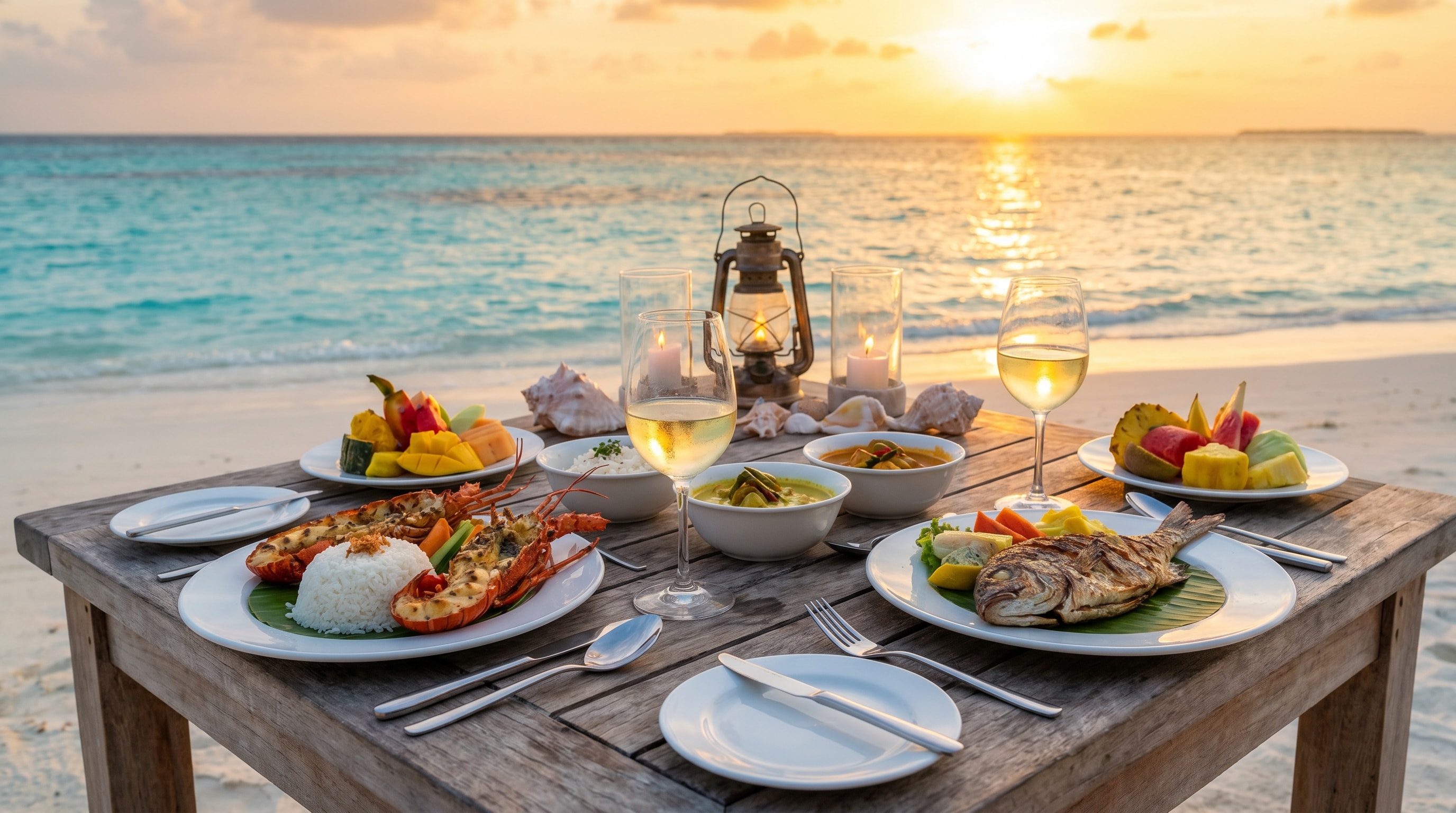
Maldivian resorts are home to some of the most spectacular dining settings on the planet. Beyond underwater restaurants, many resorts offer treetop dining, overwater deck restaurants, sandbank dinners, and in-villa private chef experiences. International cuisines from Japanese to Italian are executed at a remarkably high level thanks to chefs recruited from top restaurants worldwide. All-inclusive packages typically cover 3-4 restaurant options per resort.
Black tea prepared strong and sweet, sometimes with a splash of condensed milk, is the social lubricant of the Maldives. Every meeting, every visit, and every afternoon break revolves around sai served in small cups alongside hedhikaa snacks. In local islands, the tea shop (hotaa) functions as the community gathering place where news is shared, politics discussed, and friendships maintained. Joining locals for afternoon sai is one of the most authentic cultural experiences available.
The Male Fish Market is more of a cultural experience than a shopping destination, but the adjacent local market (Majeedi Magu area) sells Maldivian souvenirs including lacquerware, woven mats (thundu kunaa), miniature dhoni boats, coconut shell crafts, and local spices. Prices are far lower than resort gift shops. Visit in the morning when the market is most active and fishermen are unloading the day's catch of yellowfin tuna and reef fish.
Male's main commercial street is lined with shops selling electronics, clothing, perfumes, and souvenirs. Duty-free prices on electronics and fragrances can be competitive, though the selection is limited compared to Dubai or Singapore. Local shops here sell Maldivian black coral jewellery (check legality for export), traditional medicines, and imported fabrics. The street comes alive in the evenings after the heat subsides.
Every resort has at least one boutique selling souvenirs, resort wear, jewellery, and branded merchandise. Prices are significantly marked up (200-400% above Male prices), but the convenience factor and quality of curated items make them worthwhile for last-minute gifts. Many resorts stock locally made items like coconut oil products, traditional Maldivian lacquerware, handwoven textiles, and coral-inspired jewellery made from sustainable materials.
The reclaimed island of Hulhumale, connected to the airport by bridge, has a growing commercial district with supermarkets, local restaurants, and souvenir shops at prices lower than both Male and resorts. If you have a layover or an overnight stay near the airport, Hulhumale is worth exploring for affordable shopping, good local food, and a glimpse of modern Maldivian urban life away from the tourist bubble.
Maldivian lacquerware (laajehun) is the country's most distinctive handicraft — wooden containers, vases, and decorative boxes are turned on a lathe and coated with layers of coloured lacquer in intricate geometric patterns. Red, black, yellow, and green are the traditional colours. The craft originated in Baa Atoll, and the finest pieces are still made there by skilled artisans. Look for authentic handmade pieces rather than mass-produced copies.
If staying at a local island guesthouse, the small shops and market stalls sell authentic Maldivian products at genuine local prices — dried fish, coconut oil, betel nut, local sweets, woven palm leaf bags, and handmade rope. These are not tourist-oriented shops, so the items are practical and culturally authentic. Buying from local island shops directly supports the island economy and offers a much more genuine souvenir than resort boutiques.
The Maldives operates on a unique one-island-one-resort concept. Each resort occupies its entire island, meaning you cannot walk to another resort, restaurant, or shop. Everything — dining, activities, spa — is provided by your resort. This makes choosing the right resort critical since you will spend your entire holiday there. Research thoroughly: compare house reef quality, food options, excursion offerings, and transfer type before booking.
Resort prices rarely include the transfer from Male airport to the resort island, and this hidden cost can be substantial. Seaplane transfers cost USD 300-600 per person return, speedboat transfers USD 100-250, and domestic flight combinations USD 300-500. Factor this into your total budget from the start. Some resorts in North Male Atoll are just 20 minutes by speedboat and offer the cheapest transfers.
Since 2009, guesthouses on inhabited local islands have been permitted, offering a dramatically cheaper alternative to resorts. Islands like Maafushi, Thulusdhoo, Dhigurah, and Fulidhoo have excellent guesthouses from USD 50-150 per night with bikini beaches, diving, and excursions. You get a more authentic Maldivian experience, support local communities, and save 70-80% compared to resorts. The trade-off is less luxury and no alcohol (local islands follow Islamic law).
The Maldivian coral reefs are among the most biodiverse and fragile ecosystems on earth. Standard sunscreens containing oxybenzone and octinoxate cause coral bleaching and damage marine life. Many resorts now require reef-safe sunscreen, and some provide it complimentary. Bring your own mineral-based sunscreen with zinc oxide or titanium dioxide. Rash guards and UV-protective clothing are even better — they reduce sunscreen use entirely.
The Maldives is a 100% Muslim country with conservative values on inhabited islands. When visiting Male or local islands, dress modestly — cover shoulders and knees. Bikinis and swimwear are only appropriate on designated bikini beaches (clearly marked) and resort islands. Alcohol is strictly prohibited on all local islands and is only available at resorts. Public displays of affection should be minimal on local islands. During Ramadan, avoid eating or drinking in public during daylight hours.
Medical facilities in the Maldives are limited. Male has the best hospitals (ADK and IGMH), but resort islands have only basic clinics. Serious medical emergencies require evacuation to Male, Colombo, or Singapore, which can cost USD 10,000-50,000 without insurance. Ensure your policy specifically covers emergency medical evacuation, diving accidents (if you plan to dive), and trip cancellation. DAN (Divers Alert Network) insurance is recommended for divers.
Food and drinks at Maldivian resorts are expensive due to the remote island logistics — a bottle of water can cost USD 8, a cocktail USD 20, and a dinner entree USD 40-80. All-inclusive packages that cover meals, drinks, and sometimes excursions usually offer much better value than pay-as-you-go. Compare half-board, full-board, and all-inclusive carefully. For honeymoons and celebrations, premium all-inclusive packages that include spa credits and excursions are often the best deal.
If your resort requires a seaplane transfer, your flight must land in Male before approximately 3:00 PM for a same-day transfer (seaplanes only fly in daylight). Late arrivals will need to spend a night in Male or at an airport hotel. Speedboat resorts in nearby atolls accept arrivals at any hour. Plan your international flight timing around your transfer type to avoid wasting a vacation day stuck near the airport.
The Maldives is the lowest country on Earth with an average ground level of just 1.5 metres above sea level — the highest natural point is only 2.4 metres, making it the flattest country in the world.
The nation consists of 1,192 coral islands grouped into 26 atolls, but only about 200 are inhabited. Of these, roughly 160 are resort islands where each island is exclusively one resort.
The word "atoll" itself comes from the Maldivian (Dhivehi) language — "atholhu" — making it one of very few English words borrowed from Dhivehi.
Despite being 99.9% ocean, the Maldives has no rivers, lakes, streams, or any other bodies of freshwater. All freshwater comes from rainfall collected in underground aquifers or desalination plants.
The Maldives was the first country to hold a cabinet meeting underwater — in 2009, President Mohamed Nasheed and his ministers wore scuba gear and signed documents 6 metres below the surface to highlight the threat of rising sea levels.
Maldivian cuisine revolves almost entirely around tuna. The country is one of the world's largest exporters of skipjack tuna, and fish appears in virtually every meal — breakfast, lunch, dinner, and snacks.
The Maldives has one of the highest divorce rates in the world per capita. Under Islamic law practiced in the Maldives, divorce proceedings can be relatively straightforward, which partly explains the statistic.
The currency is the Maldivian Rufiyaa (MVR), but US Dollars are accepted everywhere in resorts and many places in Male. You can actually complete an entire Maldives holiday without touching local currency if staying at resorts.
The Maldives only became a republic in 1968, after being a sultanate for most of its recorded history spanning over 800 years. It was also a British protectorate from 1887 to 1965.
Bioluminescent plankton creates the famous "Sea of Stars" effect on Maldivian beaches — the phenomenon occurs when dinoflagellates in the water are disturbed by waves, producing an ethereal blue glow. Vaadhoo Island is the most photographed location for this.
The Maldives is home to the world's first underwater hotel room (The Muraka at Conrad Rangali), the first underwater restaurant (Ithaa), and the first underwater nightclub (Subsix at Niyama) — pioneering underwater architecture.
Friday is the weekly holiday in the Maldives (not Sunday), in accordance with Islamic tradition. Government offices and many businesses close on Friday and Saturday, with Sunday being a regular working day.
The Maldives offers one of the world's most generous visa policies — all nationalities receive a free 30-day visa on arrival, including Indian passport holders. There is no visa fee, no prior application, and no sponsorship required. You simply arrive at Velana International Airport (Male), clear immigration, and receive a 30-day tourist stamp in your passport.
Since 2023, the Maldives requires all travellers to submit a Traveller Declaration via the IMUGA online portal before departure. This replaces the old paper arrival/departure cards. Complete it online 96 hours to 24 hours before your flight, upload your passport details and booking confirmations, and save the QR code generated. Present this QR code at immigration in Male for faster processing.
The 30-day visa can be extended to up to 90 days by applying at the Maldives Immigration office in Male. You will need proof of accommodation and sufficient funds for the extended period. Extensions are generally straightforward for tourists. For stays beyond 90 days, a different visa category is required.
Round-trip flights from major Indian cities. Direct flights from Mumbai, Delhi, Bangalore, Kochi, and Trivandrum are available on IndiGo, Air India, and Maldivian Airlines. Kochi and Trivandrum offer the cheapest fares with flight times under 2 hours. Book 2-3 months ahead for best prices.
Budget resorts and guesthouses from INR 5,000-15,000/night. Mid-range resorts (4-star) INR 15,000-40,000/night. Luxury resorts (5-star) INR 40,000-1,50,000/night. Overwater villas command premium pricing at all levels. All-inclusive packages offer better value than room-only rates.
Guesthouses on inhabited islands like Maafushi, Thulusdhoo, and Dhigurah offer dramatic savings. Clean, air-conditioned rooms with breakfast from INR 3,000/night. Many include excursions and meals in packages. No alcohol or bikini beaches (except designated areas), but authentic Maldivian culture and 70-80% savings versus resorts.
Speedboat transfers (nearby atolls): INR 8,000-20,000 return. Seaplane transfers (remote atolls): INR 25,000-50,000 return. Domestic flight + speedboat combo: INR 20,000-35,000. Transfers to local island guesthouses via public ferry: INR 200-500 (budget option, but slow and limited schedules).
Local island cafe meals: INR 300-600. Resort buffet meals: INR 3,000-6,000. Resort a la carte dining: INR 4,000-8,000. Underwater restaurant experience: INR 15,000-25,000 per person. All-inclusive packages typically cover meals and house beverages, offering much better value than pay-as-you-go.
Dolphin cruise: INR 4,000-6,000. Snorkelling trip: INR 3,000-5,000. Single dive: INR 5,000-8,000. PADI Open Water certification: INR 35,000-45,000. Sandbank picnic for two: INR 12,000-40,000. Sunset fishing: INR 4,000-6,000. Spa treatments: INR 8,000-25,000.
Budget (local island guesthouse, public ferry): INR 50,000-80,000 including flights. Mid-range (4-star resort, all-inclusive): INR 1,50,000-2,50,000 including flights and transfers. Luxury (5-star overwater villa, premium all-inclusive): INR 3,00,000-5,00,000+. Honeymoon splurge packages at top resorts can exceed INR 10,00,000 for a week.
Browse our curated packages and find your perfect trip.