

Greek Islands from India: Santorini, Mykonos & Crete Island-Hopping Guide
In this guide (10)
- Why Greek Islands from India Just Got Real
- Santorini: The One That Broke Instagram
- Mykonos: Beautiful, Expensive, and Loud
- Crete: The Real Greece (and the Best Value)
- Island-Hopping Logistics: Ferries, Flights, and Planning
- The 10-Day Greek Islands Itinerary from India
- Budget Breakdown: What Greek Islands from India Actually Cost
- Eating in Greece: A Vegetarian's Paradise (Seriously)
- Practical Tips for Indian Travelers in Greece
- Frequently Asked Questions
I was sitting in a cramped departure lounge at Delhi T3 last January when I saw the IndiGo announcement flash across my phone — direct flights to Athens. Visiting the Greek islands from India just became a real thing, not a fantasy. No layover in Dubai, no 14-hour slog through Istanbul. Just six and a half hours, and you're standing in the cradle of Western civilization with the Aegean breeze hitting your face. My jaw literally dropped into my masala chai.
That one announcement changed everything for Indian travelers dreaming about the Greek islands from India. What used to be a 15-20 hour ordeal with connections through the Gulf suddenly became a direct hop. And at ₹21,999 one-way? That's less than what some people pay for Goa in December. Greece isn't the distant European fantasy it once was — it's now genuinely accessible, and I'm going to walk you through exactly how to do Santorini, Mykonos, and Crete without losing your mind or your savings.
Why Greek Islands from India Just Got Real
Here's what happened. IndiGo launched direct service from Delhi (DEL) and Mumbai (BOM) to Athens (ATH) in January 2026, flying the brand-new Airbus A321XLR — their first long-haul narrow-body. Six flights a week, roughly 6.5 hours gate to gate. The introductory fare? ₹21,999 one-way, though expect that to settle around ₹25,000-35,000 as the novelty fades.
But it doesn't stop there. AEGEAN Airlines — Greece's flag carrier — announced direct flights from India starting spring 2026. That means competition, which means prices stay sharp. A year ago, reaching Athens meant routing through Abu Dhabi or Doha, adding 5-8 hours and ₹15,000-20,000 to your ticket. Now? You board in Delhi after dinner, and you're eating spanakopita in Athens for a late breakfast.
You'll still need a Schengen visa, of course. Apply at the Greek consulate (VFS Global handles appointments) at least 4-6 weeks before travel. The process is straightforward if you've done any European visa before — bank statements, cover letter, confirmed bookings. Greece has one of the higher approval rates among Schengen countries for Indian applicants, which helps calm those pre-application nerves.
Santorini: The One That Broke Instagram
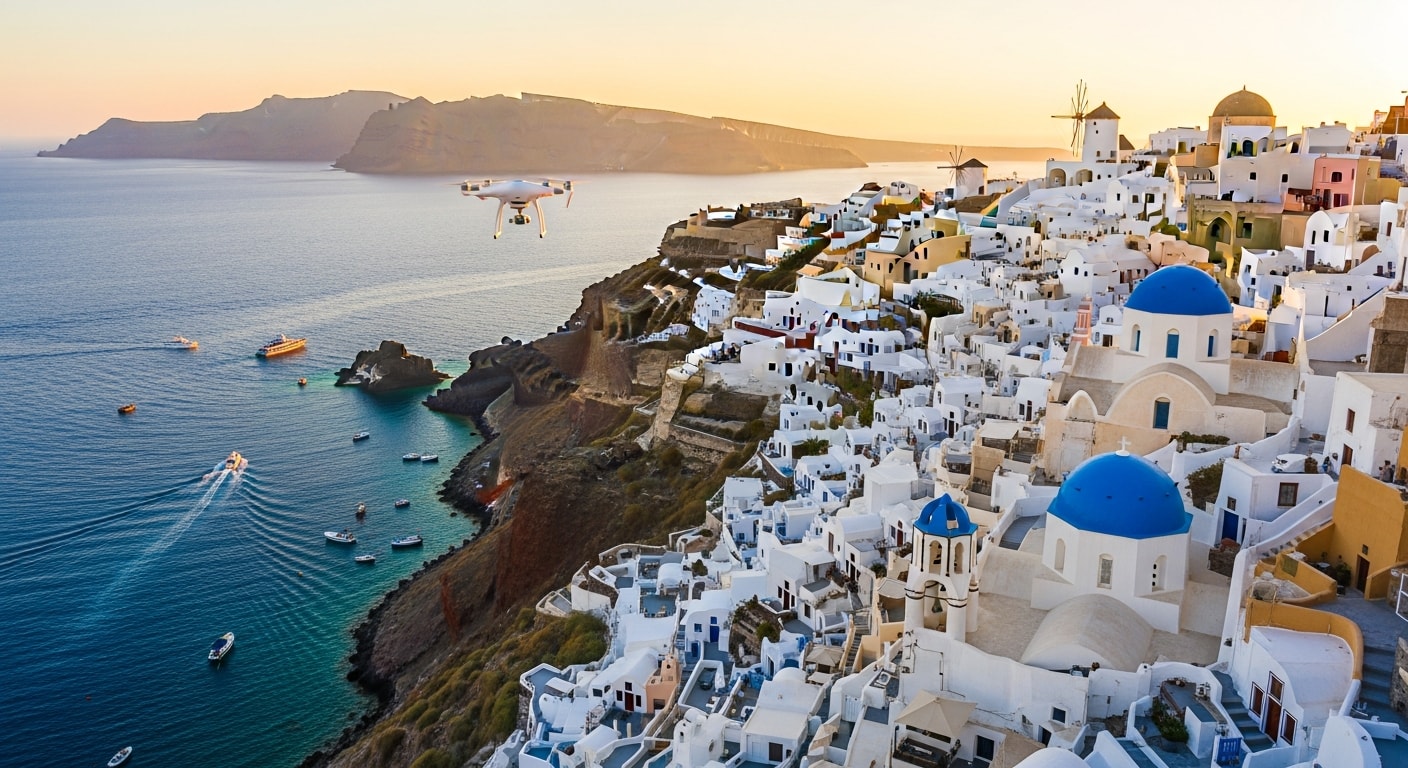
Let's be honest. You've seen Santorini a thousand times on reels and Pinterest boards. Blue domes, white walls, sunset with a glass of wine. But here's what nobody tells you: the real Santorini is both better and worse than the photos suggest.

Better because the caldera views genuinely stop you in your tracks. I've traveled to 30+ countries, and nothing prepares you for that first glimpse of the volcanic cliffs dropping into impossibly blue water. Worse because Oia — the famous sunset village — gets so packed between 6-8 PM that you're basically watching the sunset through someone else's selfie stick. My tip: walk 10 minutes past the main castle viewpoint toward the Amoudi Bay steps. Same sunset, a fraction of the crowd.
Fira is the island's capital, and honestly, I preferred it to Oia for daily exploration. It's got more character, better restaurant variety, and the cable car ride down to the old port is genuinely fun (₹500 one-way). From Fira, you can walk the caldera trail to Oia — about 10 km, takes 2-3 hours, and the views are absolutely unmatched. Do it in the morning before the heat murders you.
Beaches and Wine
Santorini's beaches are volcanic, so forget Goa-style golden sand. Red Beach near Akrotiri has dramatic crimson cliffs but is tiny and overcrowded. Better bet: Perissa or Kamari black sand beaches. They're long, have proper beach bars, and the sand gets hot enough to fry an egg. Bring flip-flops or suffer.
Wine tasting is a must. Santorini's Assyrtiko grape variety is world-class, and wineries like Santo Wines and Venetsanos offer tastings with caldera views for ₹1,500-3,000 per person. I'm not a wine snob by any stretch, but drinking crisp white wine while staring at a volcanic crater feels appropriately dramatic.
One controversial topic: the donkey rides. Traditionally, donkeys carried people up the steep steps from the port to Fira. But animal welfare groups have documented serious abuse — overloading, no water, working in 40-degree heat. Take the cable car or walk. Seriously. The donkeys deserve better.
Where to Stay in Santorini
Cave hotels are the signature Santorini experience — rooms literally carved into volcanic rock with plunge pools overlooking the caldera. But they come at a price. Budget cave rooms in Fira or Firostefani start around ₹8,000/night in shoulder season, while Oia's luxury cave suites easily hit ₹25,000-40,000/night in summer. My sweet spot: Firostefani. It's a 10-minute walk from Fira, has the same caldera views as Oia, but costs 30-40% less. Smart money stays here.
Mykonos: Beautiful, Expensive, and Loud
I need to say this upfront: if you're traveling on a tight budget, consider skipping Mykonos entirely. It's the most expensive Greek island by a wide margin, and the party culture means prices get inflated to Dubai levels during peak season. A basic cocktail at a beach bar costs ₹1,200-1,500. A sunbed at Paradise Beach? ₹3,000 for the day. A mid-range hotel room in July? ₹15,000-30,000 per night.
That said, Mykonos earns its reputation for a reason. Little Venice — the row of 18th-century houses with balconies hanging over the sea — is genuinely one of the most photogenic spots in Europe. Go at sunset with a cocktail from one of the bar-restaurants along the waterfront. The famous windmills are right next door. It's touristy, sure, but it works.
What to Actually Do in Mykonos
Beyond the beach-and-party circuit, the Delos island day trip is the real highlight. Delos is a UNESCO World Heritage Site — the mythological birthplace of Apollo and Artemis. Boats leave from the old port, the trip takes 30 minutes, and you get about 3 hours to explore ancient ruins that rival anything in mainland Greece. Tickets are around ₹1,500 for the boat plus ₹1,000 for site entry. Go early morning — there's zero shade on Delos, and the afternoon heat is brutal.
Matoyianni Street in Mykonos Town is the main shopping drag. Expect designer boutiques mixed with souvenir shops selling evil eye everything. The narrow marble lanes are beautiful for wandering, but keep your wallet cautious. Nightlife kicks off late — restaurants fill up around 10 PM, clubs don't get going until midnight, and things wind down around sunrise. If that's your scene, Mykonos delivers. If not, two nights here is plenty.
For beaches, Super Paradise is the famous party beach (loud music, expensive drinks, international crowd). Agios Sostis on the north side is the opposite — quiet, no beach bars, bring your own snacks. I preferred Agios Sostis by a mile, but I'm also the person who falls asleep at parties, so take that with a grain of salt.
Crete: The Real Greece (and the Best Value)
After the Santorini spectacle and Mykonos flash, Crete feels like exhaling. It's the largest Greek island — bigger than some countries — and it has a depth that the Cycladic poster islands simply can't match. Anyone planning a Greek islands from India trip should give Crete at least three nights. If you only have time for one island, make it this one. I'm not joking. Crete alone could fill two weeks and you'd still leave things undone.

Heraklion is where most ferries and flights arrive. Don't rush past it — the Archaeological Museum holds Minoan treasures that predate most of what you'll see on the mainland. And Knossos Palace, just 5 km south, is the legendary labyrinth of the Minotaur. Whether or not you buy the mythology, walking through a 3,500-year-old palace complex that had running water and multi-story buildings is genuinely mind-bending. Entry is ₹1,250 — worth every paisa.
Chania and the West Coast
Chania is where I lost my heart. The Venetian harbor — built in the 14th century — glows golden at sunset, with a lighthouse that's been guiding ships since the Ottomans. The old town's narrow lanes have leather workshops, tiny bakeries selling bougatsa (custard-filled pastry), and enough character to make you forget the century you're in. This is also your base for western Crete's big attractions.
Balos Lagoon looks like someone Photoshopped a Caribbean beach into the Mediterranean. The water is so shallow and turquoise that your brain refuses to accept you're in Europe. Getting there is half the adventure — a 12 km dirt road (rental car needed) followed by a 20-minute downhill scramble. Or take a boat from Kissamos port. Either way, bring water and sunscreen. There's nothing at Balos except nature at its most ridiculous.
Elafonisi is the other showstopper — a pink sand beach on the southwestern tip. Yes, actually pink, from crushed shells. It's shallow enough for kids to wade out hundreds of meters. The 75-minute drive from Chania winds through gorgeous mountain gorges. Go before 10 AM or after 4 PM to avoid peak crowds.
Samaria Gorge: The Big Walk
If you've got hiking legs, the Samaria Gorge is a 16 km one-way trek through Europe's longest canyon. It takes 5-7 hours, drops 1,200 meters, and ends at a tiny coastal village where you catch a ferry back. It's challenging but not technical — think of it as a very long, very beautiful staircase. Open May through October only. Start early (before 8 AM) and bring at least 2 liters of water. I did it in September, and it was hotter than Chennai in May — but absolutely worth the sweat.
Crete's accommodation is where the value shines. A lovely guesthouse in Chania old town runs ₹4,000-6,000/night. A beachfront apartment near Rethymno? ₹5,000-8,000. Even a nice boutique hotel rarely exceeds ₹10,000 in shoulder season. Compare that to Mykonos and try not to laugh.
Island-Hopping Logistics: Ferries, Flights, and Planning
Right, the practical stuff. Getting between islands is either by ferry or short domestic flight, and the choice depends on your budget, time, and tolerance for the sea. Sorting out ferry logistics is honestly the trickiest part of any Greek islands from India trip — but once you understand the system, it's straightforward.
Ferries are the classic way to island-hop. The main operators are Blue Star Ferries (slower, cheaper, comfortable), SeaJets (fast catamarans, pricier), and Hellenic Seaways. All depart from Athens' Piraeus port — easily reached by metro from the city center (Line 1, about 40 minutes). Book through the FerryHopper app — it compares all operators and lets you book with a card. Prices vary wildly by season and speed.
Sample ferry costs (economy class, one-way):
- Athens to Santorini: ₹3,000-5,000 (5-8 hours slow, 2-3 hours fast)
- Santorini to Mykonos: ₹2,500-4,000 (2-3 hours)
- Mykonos to Crete (Heraklion): ₹3,000-5,000 (4-5 hours fast)
- Crete to Athens: ₹2,500-4,500 (9 hours overnight or 6 hours fast)
If ferries make you queasy or you're short on time, Sky Express and Aegean Airlines run inter-island flights. Athens to Santorini is just 45 minutes by air, and fares start around ₹4,000-7,000 one-way if booked early. Not massively more expensive than the fast ferry, and you save half a day.

The 10-Day Greek Islands Itinerary from India
Here's the route I'd recommend for a first timer. It flows geographically and balances pace with coverage. This itinerary works perfectly for Indian travelers doing the Greek islands from India on direct IndiGo flights. Adjust nights based on your style — beach loungers can add a day in Crete, party people might want an extra night in Mykonos.
Day 1: Arrive in Athens
Land at Athens International. If your IndiGo flight arrives by afternoon, you've got time for the Acropolis and a souvlaki dinner in the Plaka neighborhood. One night here is enough for transit — save a proper Athens exploration for a separate trip. Stay near Syntagma or Monastiraki for easy metro access to Piraeus next morning.
Days 2-4: Santorini (3 Nights)
Morning ferry or flight to Santorini. Base yourself in Fira or Firostefani. Day 2: caldera trail walk to Oia, sunset. Spend the third day at Perissa beach, then wine tasting at Santo Wines. On your last morning, hit the Akrotiri archaeological site (the "Pompeii of the Aegean"), Red Beach, relax before evening ferry to Mykonos.
Days 5-6: Mykonos (2 Nights)
Two nights gives you one full day — enough for Little Venice, the windmills, Delos day trip OR a beach day, and one night of Mykonos nightlife if that's your thing. Don't over-allocate budget here.
Days 7-9: Crete (3 Nights)
Ferry to Heraklion. Day 7: Knossos Palace, Heraklion Archaeological Museum, drive to Chania. Next morning, tackle Balos Lagoon or Elafonisi (pick one, you can't do both in a day). Your final full day is all about Chania old town exploration, Venetian harbor sunset, and a farewell Cretan dinner with raki.
Day 10: Return to Athens, Fly Home
Morning flight from Chania or Heraklion to Athens (1 hour). Connect to your IndiGo evening flight back to Delhi or Mumbai. Done.
Budget Breakdown: What Greek Islands from India Actually Cost
I always appreciate when travel writers give real numbers instead of vague "affordable" claims. So here's an honest breakdown for 10 days, per person, from India. For a more detailed cost analysis, check our Greece trip cost breakdown.
- Return flights (India-Athens): ₹44,000-70,000 (IndiGo direct, book 3+ months ahead)
- Inter-island ferries (3 hops): ₹8,000-14,000 total
- Accommodation (9 nights): ₹45,000-1,50,000 (budget to mid-range)
- Food (10 days): ₹15,000-30,000 (₹1,500-3,000/day eating at tavernas)
- Activities and entries: ₹8,000-15,000
- Local transport: ₹5,000-10,000 (buses, taxis, one rental car day in Crete)
- Schengen visa: ₹6,800 (approximately)
Total: ₹1,30,000-3,00,000 per person depending on your comfort level and booking timing. The budget end is very doable if you stay in hostels and guesthouses, eat street food, and take slow ferries. The upper range gets you cave hotels in Santorini and proper seafood dinners with wine every night.
For tips on getting the best exchange rates, read our forex guide for Indian travelers. Quick tip: carry a multi-currency forex card loaded with EUR. ATMs in Greece charge ₹200-400 per withdrawal, and some islands have limited ATM access.
Eating in Greece: A Vegetarian's Paradise (Seriously)
This surprised me more than anything. Greek food is shockingly vegetarian-friendly — probably the most veg-accommodating cuisine in Europe outside of Italy. The Mediterranean diet here leans heavily on vegetables, legumes, cheese, and olive oil. You won't struggle at all.
Dishes to order everywhere: Greek salad (tomato, cucumber, onion, olives, feta — it's a meal), spanakopita (spinach-feta pie in flaky phyllo), fava (yellow split pea puree with lemon and onion — addictive), briam (roasted vegetable medley, essentially Greek ratatouille), dolmades (grape leaves stuffed with rice and herbs), gigantes plaki (giant baked beans in tomato sauce), and melitzanosalata (smoky eggplant dip).
For non-vegetarians, the gyros (₹300-500 from street stands) is the Greek equivalent of our vada pav — cheap, filling, available on every corner. Moussaka is the comfort food benchmark. And fresh grilled octopus at a seaside taverna? One of the great eating experiences of my life. Pair everything with a cold Mythos beer or a glass of local wine.
One cultural note: Greeks eat late. Lunch is 2-3 PM, dinner rarely before 9 PM. Many restaurants don't even open for dinner until 7. Plan accordingly, or you'll be that confused tourist rattling locked restaurant doors at 6 PM. Been there.
Practical Tips for Indian Travelers in Greece
Best time to visit: April through June and September through October. Avoid July and August entirely if you can — temperatures hit 38-40 degrees (worse than a Delhi summer in some spots), every island is packed to capacity, and prices spike 40-60%. May and October are my personal sweet spot: warm enough for swimming, thin enough crowds to actually enjoy things, and shoulder-season pricing on hotels.
Siesta culture: Between 2 and 5 PM, many shops, museums, and smaller restaurants simply close. This is not a suggestion — it's deeply embedded in Greek culture. Use these hours for your beach time, hotel pool, or an afternoon nap. Trying to sightsee during siesta hours will leave you staring at locked doors.
Water: Tap water is safe in Athens and most of Crete. In Santorini and Mykonos, it's desalinated and technically safe but tastes odd — most people buy bottled water (₹80-120 per 1.5L). Carry a reusable bottle regardless.
Currency tip: Load EUR on a forex card before leaving India. The INR-to-EUR rate fluctuates around ₹90-95 per euro (as of early 2026). Airport exchange counters in Athens are terrible — 5-8% markup. If you must exchange cash, do it at a bank in Athens, not at the airport. If you're planning a broader first-time Europe trip from India, Greece pairs beautifully with Italy or Turkey.
Language: English is widely spoken on all three islands and in Athens tourist areas. Learn "efharisto" (thank you) and "yassas" (hello) — Greeks genuinely appreciate the effort, and it opens doors that money can't. Download Google Translate's Greek offline pack for menus at rural tavernas.
SIM and connectivity: Buy a Cosmote or Vodafone Greece SIM at Athens airport (₹1,500-2,000 for 10GB data, 30 days). Island coverage is generally solid, though remote beaches and gorges have spotty signal. WhatsApp calls work fine for staying in touch back home.
Greece is also one of the most affordable European countries to visit from India, especially now that direct flights have slashed the airfare barrier. The combination of reasonable food prices, public ferry transport, and shoulder-season accommodation deals makes it far more accessible than Western Europe.
Pro tip: If TripCabinet handles your Greek islands from India trip, we sort the Schengen visa paperwork, ferry bookings, and accommodation across all three islands so you don't lose half your holiday to logistics. Our team books everything — flights, ferries, hotels, even the Delos day trip — so your only job is showing up and eating souvlaki.
Honestly, planning Greek islands from India felt impossible two years ago. The flight connections were exhausting, the costs were prohibitive, and the logistics of hopping between islands seemed like too much effort. But 2026 changed the equation entirely. With direct flights, decent ferry infrastructure, and the euro holding steady against the rupee, this trip is now as achievable as a Southeast Asia run. Pack light, bring good walking shoes, and prepare for sunsets that make even the most cynical traveler reach for their phone camera.
Frequently Asked Questions
Is there a direct flight from India to Greece?
Yes. IndiGo launched direct Delhi and Mumbai to Athens flights in January 2026 using the A321XLR aircraft. Flights operate 6 times per week with one-way fares starting at ₹21,999. AEGEAN Airlines is also starting direct India-Athens service in spring 2026. Before these routes, the only options were connecting flights through Dubai, Doha, or Istanbul adding 5-8 extra hours.
How much does a Greek islands trip cost from India?
A 10-day Greek islands trip from India costs approximately ₹1,30,000-3,00,000 per person. This includes return flights (₹44,000-70,000), inter-island ferries (₹8,000-14,000), accommodation (₹45,000-1,50,000 for 9 nights), food (₹15,000-30,000), activities (₹8,000-15,000), and the Schengen visa (₹6,800). Budget travelers staying in hostels can manage the lower end, while cave hotels in Santorini push costs higher.
Which Greek island is best for first-time visitors from India?
Santorini is the iconic first-timer pick for its dramatic caldera views and photo-worthy villages, but Crete offers the best overall value with diverse landscapes, rich history (Knossos Palace), stunning beaches (Balos, Elafonisi), and accommodation 40-60% cheaper than Santorini or Mykonos. For the full experience, combine all three on a 10-day island-hopping route.
Do I need a Schengen visa to visit Greece from India?
Yes, Indian passport holders need a Schengen visa to enter Greece. Apply through VFS Global at the Greek consulate in Delhi, Mumbai, Kolkata, or Chennai. The fee is approximately ₹6,800, processing takes 15-20 working days, and you'll need confirmed flight bookings, accommodation proof, travel insurance, and bank statements showing sufficient funds. Apply at least 4-6 weeks before your travel date.
Is Greek food vegetarian-friendly for Indian travelers?
Surprisingly yes. Greek cuisine is one of the most vegetarian-friendly in Europe. Staple dishes like Greek salad, spanakopita (spinach pie), fava (split pea puree), briam (roasted vegetables), dolmades (stuffed grape leaves), and gigantes plaki (giant beans) are all vegetarian. Most tavernas have multiple veg options on every menu. However, strict vegans may find it trickier since feta cheese and honey appear in many dishes.
What is the best time to visit Greek islands from India?
April to June and September to October are ideal. These shoulder months offer warm weather (22-30 degrees Celsius), swimming-friendly seas, manageable crowds, and hotel prices 30-40% lower than peak season. Avoid July and August when temperatures hit 38-40 degrees, islands are overcrowded with European holidaymakers, and prices spike dramatically.