
Loading
Bali is the kind of destination that rewrites your expectations. This small Indonesian island — roughly the size of Goa — manages to contain active volcanoes, thousand-year-old rice terraces, surf breaks that draw riders from every continent, Hindu temples perched on ocean cliffs, and a wellness culture so embedded that yoga retreats and healing ceremonies feel as natural as the sunrise. Our Bali tour packages from India are built for travellers who want more than a beach holiday — they want an experience that stays with them long after the tan fades.
There is a reason Bali feels different from other Southeast Asian destinations for Indian visitors. This is a Hindu island in a Muslim-majority country, and the cultural parallels are striking. Balinese temples honour gods familiar from Indian mythology — Brahma, Vishnu, Shiva, Ganesh — though the rituals, architecture, and offerings have evolved into something uniquely Balinese over fifteen centuries. Daily flower offerings (canang sari) line every doorstep, incense smoke drifts through stone temple corridors, and gamelan music fills the humid evening air. For Indian travellers, it feels simultaneously foreign and ancestral.
Bali also happens to be one of the most affordable luxury destinations on the planet. A private pool villa that would cost lakhs per night in Goa or the Maldives is available from INR 4,000-8,000. A full-body Balinese massage costs INR 500-800. A warung meal of nasi goreng with a fresh coconut is under INR 200. And getting here is easier than ever — nonstop flights from Delhi (Air India, IndiGo) and Bengaluru (IndiGo) take about 7-8 hours, and Indians get a 30-day e-Visa on Arrival for IDR 500,000.
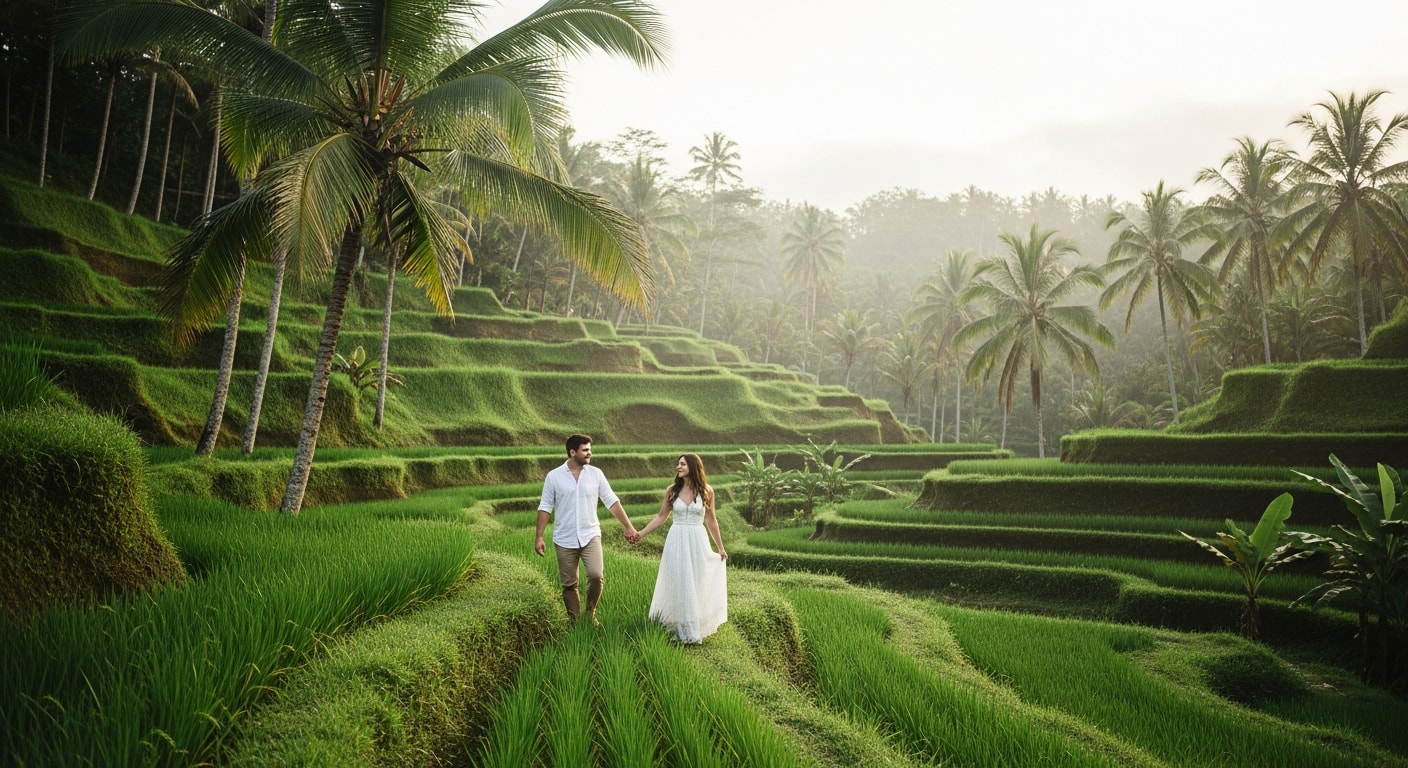
No Bali tour package is complete without Ubud, the town that put Bali on the global wellness and art map. The Tegallalang Rice Terraces are the island's most photographed landscape — centuries-old stepped paddies cascading down a jungle valley using the ancient Subak irrigation system, now a UNESCO World Heritage Site. Walking through these terraces in the early morning mist, with no sound but birdsong and the trickle of water through stone channels, is a meditative experience that no photograph can capture.
Ubud's Sacred Monkey Forest Sanctuary shelters over 1,200 long-tailed macaques among ancient banyan trees and moss-covered stone temples. The Ubud Palace hosts traditional Legong and Kecak dance performances every evening. And the town's art market, galleries, and workshops showcase everything from traditional Balinese painting to contemporary sculpture. For Indian visitors, the morning ceremony at Tirta Empul water temple — where devotees purify themselves under sacred spring fountains — resonates deeply with familiar bathing rituals at home.
Seminyak is Bali's most sophisticated beach town — boutique hotels, designer shops, beach clubs with infinity pools overlooking the Indian Ocean, and restaurants that have earned international acclaim. Potato Head Beach Club's sunset sessions, with live DJs and cold Bintang beers, have become a Bali rite of passage. Canggu, just north, is the surfer and digital nomad capital, with a laid-back energy, excellent cafes, and uncrowded breaks that beginners and intermediate surfers love.
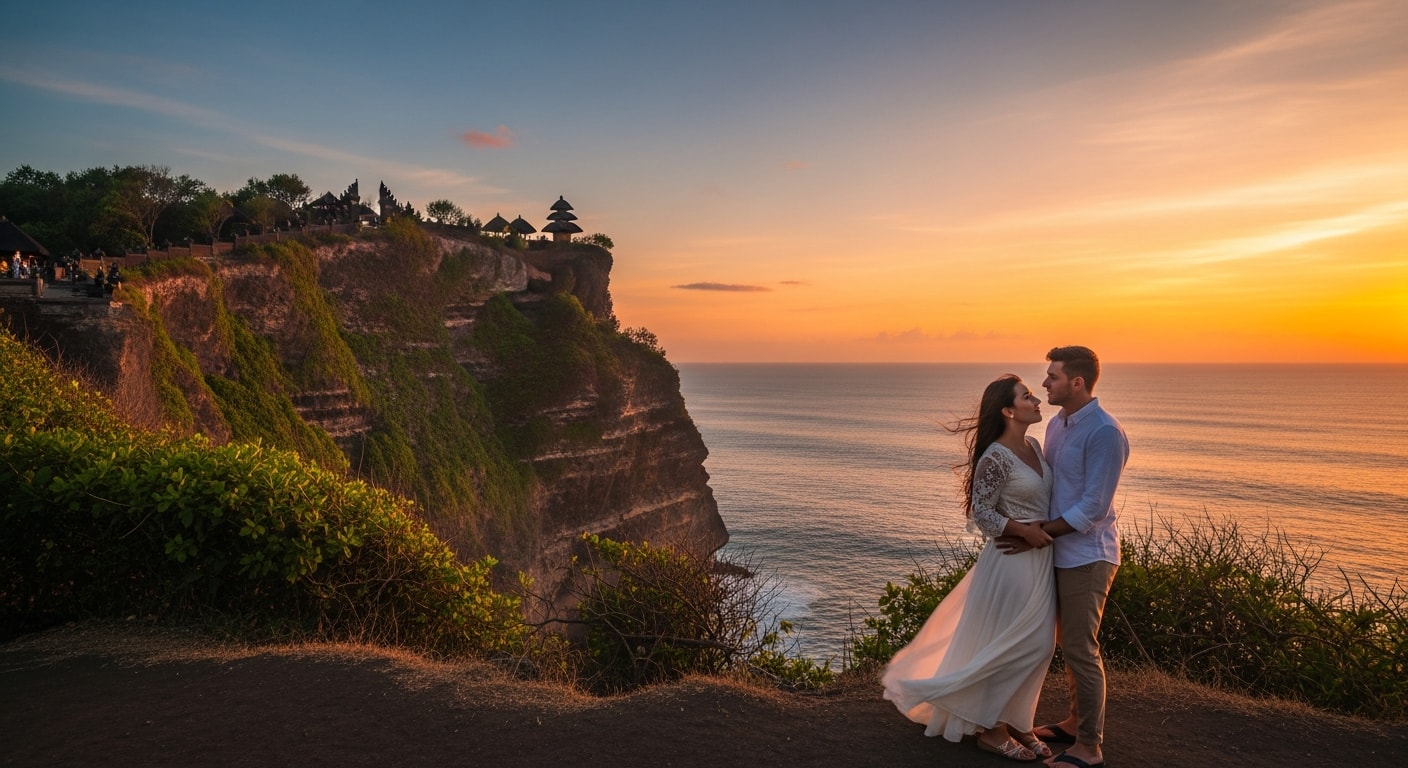
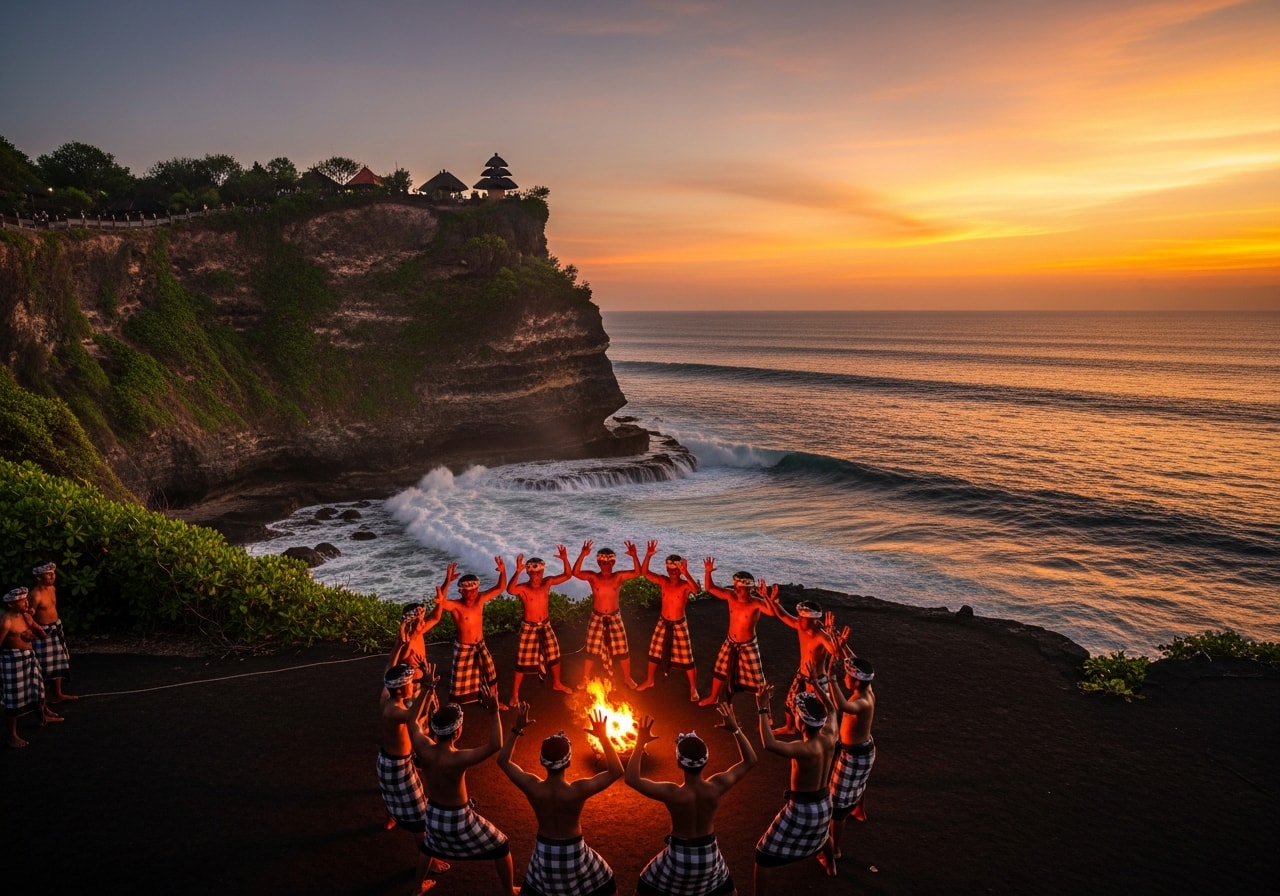
The Uluwatu peninsula on Bali's southern tip is where the island gets dramatic. Limestone cliffs drop hundreds of feet into the crashing Indian Ocean, and the Uluwatu Temple (Pura Luhur Uluwatu) sits at the very edge, silhouetted against some of the most spectacular sunsets on earth. The Kecak fire dance performed at the temple amphitheatre at dusk — with fifty bare-chested men chanting in concentric circles as the sun disappears — is one of the most powerful cultural performances you will ever witness.
For quieter beaches, Nusa Dua offers calm, clear waters ideal for families and swimming. Sanur on the east coast is traditional, peaceful, and the departure point for day trips to the Nusa islands — Nusa Penida's Kelingking Beach (the famous T-Rex cliff) is an Instagram icon for good reason.
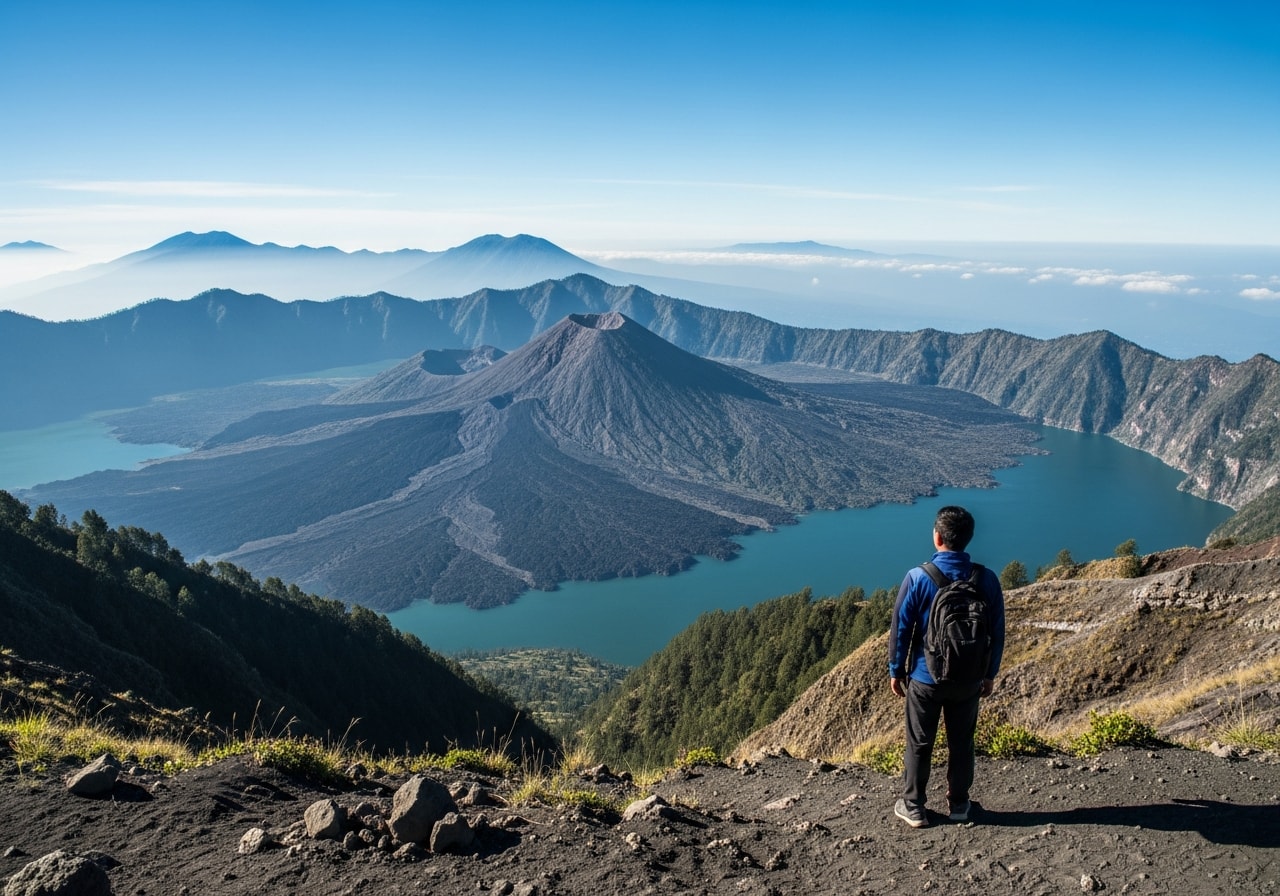
The Mount Batur sunrise trek is one of Bali's most rewarding experiences. You start climbing at 3:30 AM in darkness, reach the 1,717-metre summit before dawn, and watch the sun rise over Lake Batur and the neighbouring peaks with breakfast eggs cooked in volcanic steam. It is moderately challenging but achievable for most fitness levels, and the memory is priceless.
Bali's waterfalls are scattered through the highland jungles of the north and east. Sekumpul is widely considered the island's most beautiful — a twin cascade plunging 80 metres through dense tropical forest. Tegenungan near Ubud is the most accessible. Gitgit and Aling-Aling in the north offer natural slides and cliff jumps for the adventurous.
Balinese cuisine is distinct from the rest of Indonesia, built on bold spice pastes (bumbu), coconut, lemongrass, galangal, and fresh turmeric. Babi guling (suckling pig) is the ceremonial showpiece, bebek betutu is duck slow-cooked for 24 hours in banana leaves, and sate lilit wraps minced fish around lemongrass stalks before grilling. Warung meals cost INR 150-300 and are consistently delicious.
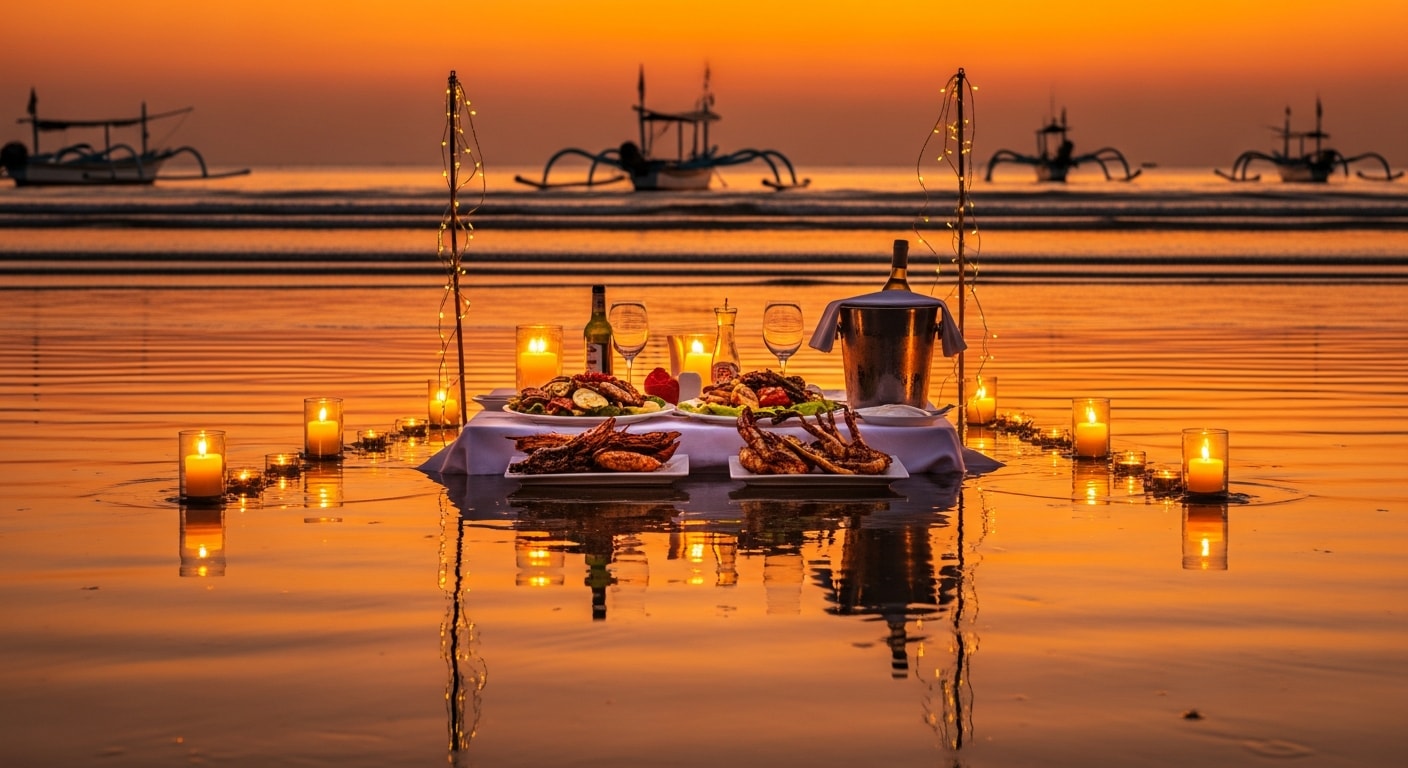
For Indian travellers, vegetarian options are plentiful — Ubud in particular has dozens of plant-based restaurants, raw food cafes, and organic eateries. Nasi campur (mixed rice plate) at any warung can be ordered vegetarian, and tempeh (fermented soybean) and tofu appear on almost every menu. The Jimbaran Bay seafood restaurants — where you eat grilled fish with your feet in the sand at sunset — are a must for non-vegetarians.
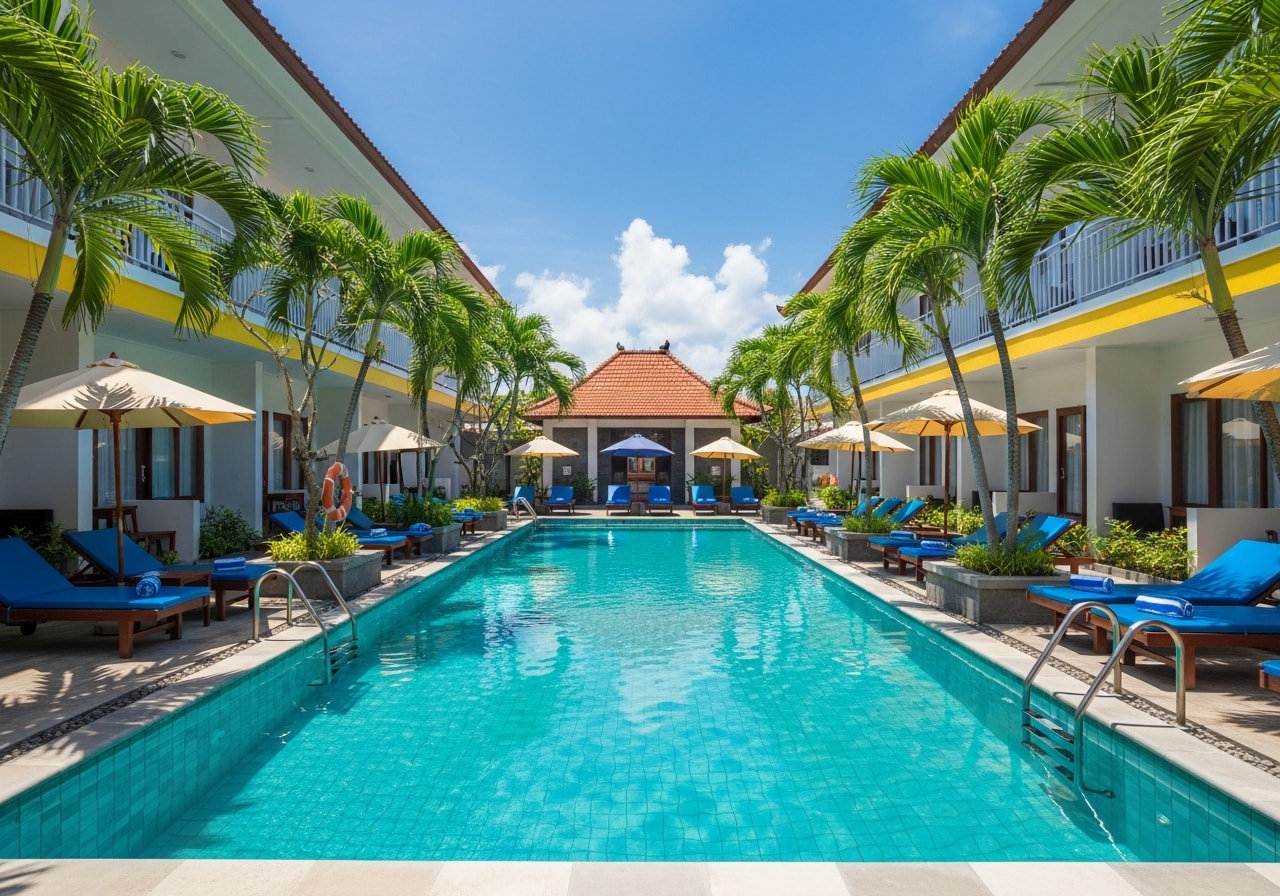
Our Bali tour packages from India start at INR 35,000 per person and are tailored to different travel styles. Every package includes airport transfers, accommodation, and guided tours of key attractions.
Browse our available packages and discover why Bali has earned its reputation as the Island of the Gods. Whether you come for the temples or the surf, the rice terraces or the beach clubs, the volcano treks or the spa treatments — Bali has a way of giving you exactly what you need.
What each package costs in total, twin sharing, before flights and the visa fee.
| Package | Duration | Per person | Couple | Family of 4 |
|---|---|---|---|---|
| Bali Budget Package - 4 Nights 5 Days Kuta & Ubud Highlights from India | 4 Nights / 5 Days | ₹40,000 | ₹80,000 | ₹154,000 |
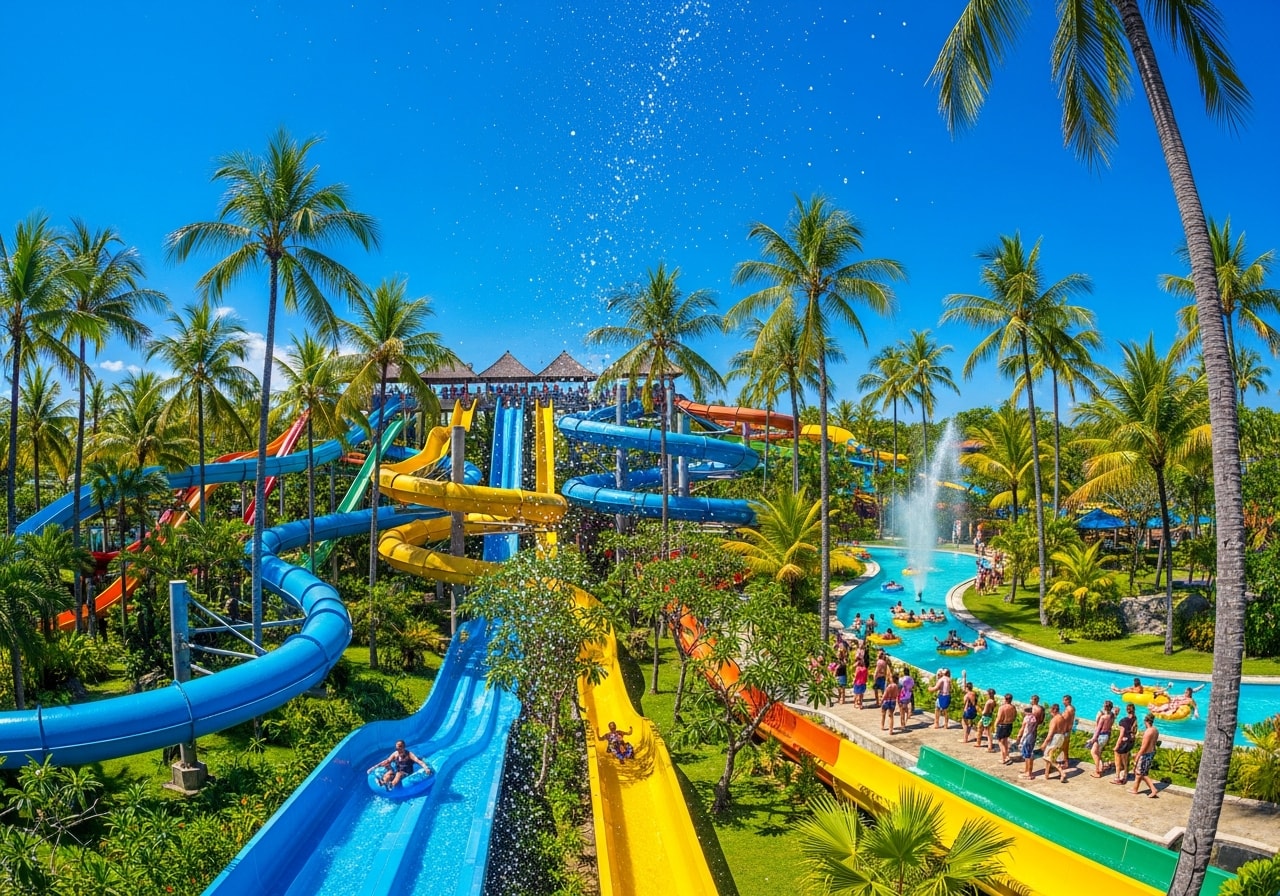
| Bali Family Package - 5 Nights 6 Days Nusa Dua Beach & Theme Parks | 5 Nights / 6 Days | ₹60,000 | ₹120,000 | ₹224,000 |
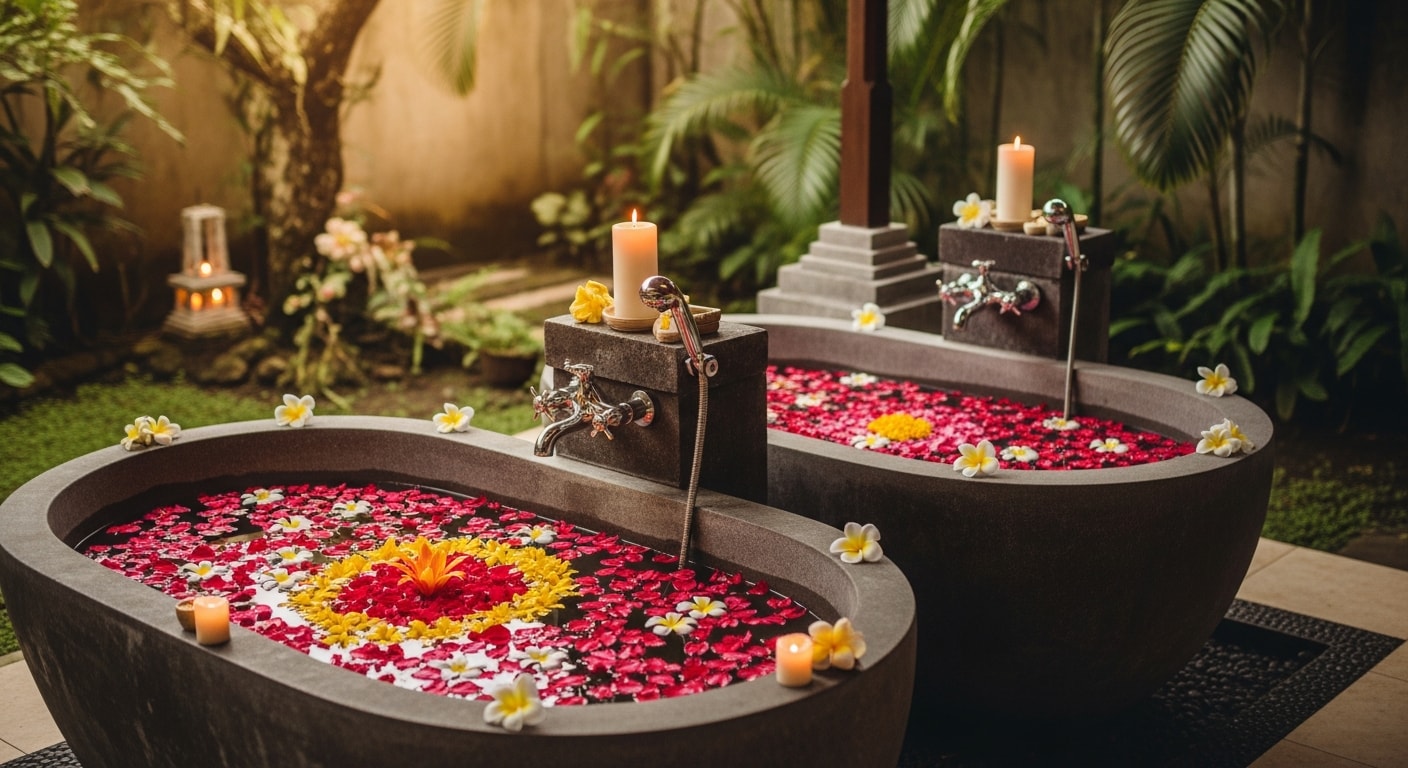
| Bali Honeymoon Package - 6 Nights 7 Days Ubud & Jimbaran Romance | 6 Nights / 7 Days | ₹79,000 | ₹158,000 | — |
City-specific flights, fares and itineraries from your home airport
Tell us roughly when and how many — our travel expert sends you a custom quote, usually within a few hours.
Dry season and peak tourist months. Expect clear skies, low humidity, and ideal conditions for hiking, temple visits, and beach days. July and August are the busiest — book flights and villas well in advance. Surf season is in full swing on the west coast.
The tail end of the wet season transitions into dry weather. Crowds thin out, hotel rates drop, and the rice terraces are at their greenest after months of rain. One of the best times to visit if you want good weather without peak-season prices.
Wet season with daily afternoon downpours, but mornings are often clear and sunny. Christmas and New Year bring a surge of Australian and European holidaymakers. Accommodation prices spike in the last two weeks of December despite the rain.
The shift from dry to wet season: October is often still fairly dry, while afternoon showers become more frequent through November. The wettest months are December to February. This is Bali at its quietest and cheapest. Surfing shifts to the east coast (Keramas, Sanur Reef), and indoor activities like cooking classes and spa days become the go-to.
Ngurah Rai International Airport (DPS) in southern Bali handles flights from Singapore, Kuala Lumpur, Tokyo, Sydney, Dubai, Doha, and dozens of other cities. Nonstop flights from India operate from Delhi (Air India, IndiGo) and Bengaluru (IndiGo); other Indian cities connect via Singapore, Kuala Lumpur or Jakarta. AirAsia, Garuda Indonesia, Singapore Airlines, and Scoot operate frequent services. The airport is 20 minutes from Kuta and 90 minutes from Ubud.
Fast boats connect Bali to the Gili Islands (1.5–2 hours from Padang Bai or Serangan) and Nusa Penida/Nusa Lembongan (30–45 minutes from Sanur). Public ferries cross from Gilimanuk in west Bali to Java (Ketapang) every 30 minutes — the crossing takes about an hour and costs almost nothing.
Once on the island, motorbikes and cars are the primary transport. Scooter rental costs IDR 60,000–80,000/day and is the fastest way to get around, especially in congested south Bali. Private drivers cost IDR 500,000–700,000 for a full day and handle the chaotic traffic for you.
The Tegallalang terraces north of Ubud are the most photographed, but for a quieter experience head to Jatiluwih — a UNESCO World Heritage Site that spans 600 hectares of subak (traditional irrigation) rice paddies. Walk the trails early morning before the heat sets in.
Perched on a 70-metre limestone cliff above the Indian Ocean, Pura Luhur Uluwatu is one of Bali's six key spiritual temples. Arrive by 5pm to secure a spot for the Kecak fire dance performed on the cliff edge as the sun drops — it's one of those once-in-a-lifetime scenes.
Bali is a world-class surf destination at every level. Kuta Beach is perfect for beginners (board and lesson from IDR 200,000). Canggu's Echo Beach and Batu Bolong suit intermediate riders. Uluwatu's reef breaks — Padang Padang, Impossibles, Bingin — draw advanced surfers from around the globe.
A 30-minute boat ride from Sanur takes you to crystal-clear waters where manta rays glide through cleaning stations at Manta Point. Crystal Bay has excellent reef snorkelling, and the underwater Buddha Temple statues off the north coast are surreal. Day trips cost IDR 400,000–600,000.
A 2am pickup, a 2-hour hike in the dark, and then the reward — sunrise over the caldera lake with Mount Agung silhouetted in the distance. Guides are mandatory and cost IDR 400,000–600,000 per person including transport and breakfast eggs cooked in volcanic steam.
This holy spring temple near Ubud has been used for ritual purification for over 1,000 years. Visitors can join the Balinese in walking through the fountains, each one believed to cleanse a different aspect of the spirit. Bring a sarong (or rent one for IDR 15,000) and go early to beat the tour buses.
Potato Head, Ku De Ta, and Mrs Sippy define Bali's sunset cocktail scene. Daybeds, infinity pools, international DJs, and Instagrammable everything. Expect to spend IDR 200,000–500,000 on a minimum spend. Arrive by 4pm for sunset — after that, good luck finding a spot.
The Bali that existed before tourism found it. Rolling rice fields, Mount Agung views, silent villages, and barely a souvenir shop in sight. Stay a few nights in a bamboo homestay, take a guided trek through the plantations, and remember what quiet actually sounds like.
The iconic Indonesian fried rice is Bali's ultimate comfort food. Each warung puts its own spin on it, but the best versions come with a perfectly fried egg on top, crispy shallots, prawn crackers, and a side of sambal that hits you with sweet, spicy, and smoky notes all at once. Street-side versions often taste better than restaurant plates.
Bali's most famous ceremonial dish features a whole pig stuffed with a paste of turmeric, lemongrass, galangal, and chillies, then spit-roasted for hours until the skin turns impossibly crispy. Ibu Oka in Ubud made this dish internationally famous, but locals will tell you the best versions are at Pak Malen in Seminyak or warung Babi Guling Chandra in Denpasar.
This traditional Balinese mix of minced meat, grated coconut, spices, and vegetables is served at almost every temple ceremony and family gathering. The green version uses young jackfruit and long beans, while the red version includes fresh blood for a richer, more complex flavour. It is deeply tied to Balinese Hindu culture and best experienced at local warungs.
Unlike regular satay threaded onto bamboo sticks, sate lilit features minced fish or chicken mixed with coconut, lime leaves, and a fragrant spice paste, then wrapped around lemongrass stalks or flat bamboo sticks before grilling. The lemongrass infuses a subtle citrus aroma into the meat. You will find this at beach warungs and night markets across the island.
Slow-cooked duck wrapped in banana leaves and buried in rice husks for up to 24 hours, this dish requires extraordinary patience to prepare. The result is impossibly tender meat infused with a complex bumbu spice paste of shallots, garlic, ginger, turmeric, and chillies. Traditionally reserved for ceremonies, several restaurants in Ubud now serve it daily.
Stir-fried egg noodles tossed with vegetables, chicken or prawns, sweet soy sauce, garlic, and chilli create this satisfying dish found at every warung and street cart. The noodles develop a slight char from the high-heat wok cooking that gives them an addictive smoky sweetness. Best enjoyed late at night from a roadside cart after a day of temple-hopping.
Deep-fried banana fritters are Bali's favourite snack, sold from morning to evening at street stalls everywhere. Ripe plantains are coated in a light rice flour batter and fried until golden and crispy outside while remaining soft and caramelized inside. Modern cafes drizzle them with chocolate, honey, or serve with ice cream, but the classic plain version remains unbeatable.
The stretch of beach restaurants in Jimbaran Bay offers one of Bali's most memorable dining experiences. Fresh-caught fish, prawns, squid, clams, and lobster are grilled over coconut husks and served with multiple sambal varieties, plecing kangkung (water spinach salad), and steamed rice. Eating with your feet in the sand as the sun sets over the Indian Ocean is quintessentially Bali.
Open daily from early morning, this two-storey market in central Ubud overflows with handcrafted goods — silk scarves, woven bags, wooden carvings, batik clothing, rattan baskets, and silver jewellery. Morning is best for serious shopping with fewer crowds. Bargaining is expected and part of the fun; start at about 40% of the asking price and work toward a fair middle ground.
Jalan Laksmana (Eat Street) and Jalan Kayu Aya in Seminyak feature Bali's most curated boutiques, designer swimwear shops, homeware stores, and concept spaces. Brands like Magali Pascal, Sundancer, The Bali Tailor, and Bamboo Blonde showcase resort wear that blends Balinese craftsmanship with international design. Prices are higher than markets but quality and originality are guaranteed.
About 30 minutes from Ubud, Sukawati is where many of the items sold at tourist markets actually originate. Prices here are significantly lower for the same handcrafted goods — paintings, wood carvings, ceremonial umbrellas, kites, and traditional costumes. It is less polished than Ubud but far more authentic and a favourite among long-term residents who know where to find real value.
This open-air shopping mall near Kuta Beach combines international brands like Zara, Pull & Bear, and Sephora with Indonesian labels and a cinema. The architecture features cascading gardens and ocean views from upper floors. It is air-conditioned, family-friendly, and a welcome retreat from the midday heat. The food court on the top floor serves everything from sushi to local nasi campur.
The village of Celuk, just south of Ubud, has been the centre of Balinese silver and goldsmithing for generations. Dozens of workshops line the main road where you can watch artisans create intricate jewellery using traditional techniques, then purchase directly at workshop prices. Custom orders are common — bring a design or photo and skilled craftsmen will recreate it in silver or gold within days.
The road through Tegallalang, famous for its rice terraces, is also lined with woodcarving workshops and handicraft stores. Enormous carved doors, furniture, Garuda statues, and decorative panels are produced here and shipped worldwide. If you are furnishing a home or want a statement piece, this is where interior designers source their Balinese pieces. Shipping can be arranged directly.
Bali has over 20,000 temples, and you will encounter them everywhere. Always wear a sarong and sash when entering temple grounds — most temples provide rentals for a small donation. Never stand higher than a priest, point your feet at offerings, or touch sacred objects. Women who are menstruating are traditionally not permitted to enter temples. Remove your shoes before stepping onto temple platforms.
While English is widely spoken in tourist areas, learning a few phrases in Bahasa Indonesia earns enormous goodwill. "Terima kasih" (thank you), "Selamat pagi" (good morning), "Berapa harganya?" (how much?), and "Permisi" (excuse me) go a long way. Balinese people genuinely appreciate the effort and you will often receive warmer service and better prices.
Metered taxis are only reliable with Blue Bird Group (look for the blue cars with the bird logo). For all other transport, agree on a price before getting in. Ride-hailing apps like Grab and Gojek offer the best rates but are banned from entering some tourist areas due to local taxi driver agreements. In these zones, walk a few minutes outside the area to book your ride.
While Seminyak and Ubud have plenty of ATMs and card-accepting restaurants, many warungs, market stalls, temples, and rural areas are cash-only. Keep a stash of smaller notes (10,000 to 50,000 rupiah) for offerings donations, parking attendants, toilet fees, and small purchases. ATMs sometimes run out of cash on weekends and holidays, especially in remote areas.
Bali has ceremonies almost daily, and on major holy days like Nyepi (Day of Silence), Galungan, and Kuningan, roads may be blocked for processions, shops may close, and traffic can be chaotic. Nyepi is especially unique — the entire island shuts down for 24 hours with no flights, no driving, no lights, and no outdoor activity. Plan around these dates or embrace the cultural experience.
Scooters are the most practical way to explore Bali independently, costing around 70,000-100,000 rupiah per day. However, traffic in southern Bali is genuinely dangerous with narrow roads, no sidewalks, and aggressive driving. Get an International Driving Permit before you arrive, always wear a helmet, avoid driving at night, and never drive under the influence. Your travel insurance likely does not cover scooter accidents without a valid licence.
Bali sits 8 degrees south of the equator, and the tropical sun is fierce even on cloudy days. Drink at least 3 litres of water daily, apply reef-safe sunscreen frequently, and wear a hat during midday. Tap water is not safe to drink anywhere in Bali — always use sealed bottled water, including for brushing teeth. Most hotels provide complimentary water bottles. Bring reusable bottles and use refill stations to reduce plastic waste.
Bali's traffic means your base location matters enormously. Seminyak and Canggu suit beach clubs and nightlife. Ubud is ideal for rice terraces, yoga, and culture. Uluwatu offers dramatic cliffs and world-class surfing. Sanur is quiet and family-friendly. Amed and Lovina are off the beaten path for diving and dolphins. Do not try to "see all of Bali" from one base — the island is bigger than you think and roads are slow.
Bali is home to over 20,000 temples — so many that the island is often called the "Island of a Thousand Temples" (though the actual number is twenty times that).
The Balinese calendar has 210 days instead of 365, and temples hold anniversary ceremonies (odalan) every 210 days, meaning celebrations happen constantly across the island.
Nyepi, the Balinese Day of Silence, is the only day in the world where an entire island's airport shuts down — no flights land or depart for 24 hours, and even the internet is restricted.
Balinese names follow a simple four-name cycle regardless of gender: Wayan (firstborn), Made (second), Nyoman (third), and Ketut (fourth). The fifth child starts the cycle again as Wayan.
The famous Kecak fire dance was actually created in the 1930s by German artist Walter Spies and Balinese dancer Wayan Limbak — it is a relatively modern art form inspired by traditional Sanghyang trance rituals.
Bali's rice terraces use a 1,000-year-old irrigation system called Subak, which is so culturally significant that UNESCO declared it a World Heritage Site in 2012.
The island has no major rivers or natural lakes suitable for large-scale water supply — the Subak system channels water from volcanic springs and rainfall through an intricate network of canals, tunnels, and dams.
Bali is the only Hindu-majority island in Indonesia, a country of over 17,000 islands that is predominantly Muslim. About 87% of Bali's population practices Balinese Hinduism.
Mount Agung, Bali's highest peak at 3,142 metres, is considered the spiritual centre of the island. The Balinese believe it is a fragment of Mount Meru, the cosmic mountain of Hindu mythology.
Every Balinese household makes daily offerings called canang sari — small palm leaf baskets filled with flowers, rice, incense, and sometimes sweets — placed on the ground, on shrines, and even on motorbikes and computers.
The Balinese concept of Tri Hita Karana teaches harmony between humans and God, humans and other humans, and humans and nature — it governs everything from temple architecture to village social structure.
Bali produces some of the world's most expensive coffee, Kopi Luwak, made from beans that have been eaten and excreted by Asian palm civets. Ethical concerns have led many farms to shift toward wild-sourced or certified production.
Indonesia is not visa-free for Indian passport holders (the July 2026 visa-free expansion did not include India). Indian tourists use the e-Visa on Arrival (e-VOA), bought online at evisa.imigrasi.go.id before travel, or the Visa on Arrival at the counter at Ngurah Rai International Airport (Bali), Soekarno-Hatta (Jakarta) and other major entry points. It is valid for 30 days and can be extended once.
The e-VOA or VOA costs IDR 500,000 (approximately INR 2,700) and is valid for 30 days, extendable once for another 30 days at an immigration office in Bali. Payment can be made in Indonesian Rupiah, US Dollars, or by card at the airport counter.
Since 1 October 2025 every arriving traveller must complete the All Indonesia arrival card online (allindonesia.imigrasi.go.id) within 3 days before arrival. It combines the immigration, customs and health declarations and replaces the old e-CD form. Bali also charges a tourist levy of IDR 150,000 per trip, payable online at lovebali.baliprov.go.id.
Round-trip flights from major Indian cities. Nonstop flights are available from Delhi (Air India, IndiGo) and Bengaluru (IndiGo). One-stop options via Kuala Lumpur or Singapore often offer the cheapest fares. Book 2-3 months ahead for best rates.
Budget guesthouses and hostels in Ubud or Canggu from INR 1,500. Mid-range villas with private pools from INR 4,000-8,000. Luxury resorts and cliff-top villas in Uluwatu from INR 15,000+. Bali offers exceptional value compared to other tropical destinations.
Local warung meals (nasi goreng, mie goreng) cost INR 150-300. Mid-range restaurant meals INR 800-1,500. Fine dining at places like Locavore or Mozaic INR 3,000-8,000. Street food snacks like pisang goreng cost as little as INR 50.
Scooter rental INR 200-350/day (most economical). Grab/Gojek rides INR 100-500 per trip. Private car with driver for full-day tours INR 2,000-2,500. Airport transfer to Ubud INR 800-1,200 by private car.
Temple entrance fees INR 200-500. Tegallalang Rice Terrace INR 350. White water rafting INR 2,000-3,000. Mount Batur sunrise trek INR 2,500-3,500. Diving certification courses INR 15,000-20,000. Many beaches and viewpoints are free.
Indians need a 30-day e-Visa on Arrival: IDR 500,000 (approximately INR 2,700), plus Bali's tourist levy of IDR 150,000 (about INR 810). Comprehensive travel insurance with medical evacuation INR 1,500-3,000 for a 2-week trip. The All Indonesia arrival card is free.
Budget traveller (hostels, warungs, scooter): INR 35,000-50,000 excluding flights. Mid-range (private villa, mix of dining, activities): INR 70,000-1,00,000. Luxury (resort, fine dining, private tours): INR 1,50,000+. Bali remains one of the most affordable tropical destinations for Indian travellers.


Browse our curated packages and find your perfect trip.