

UNESCO World Heritage Sites Near India: Weekend & Short Trip Guide
In this guide (6)
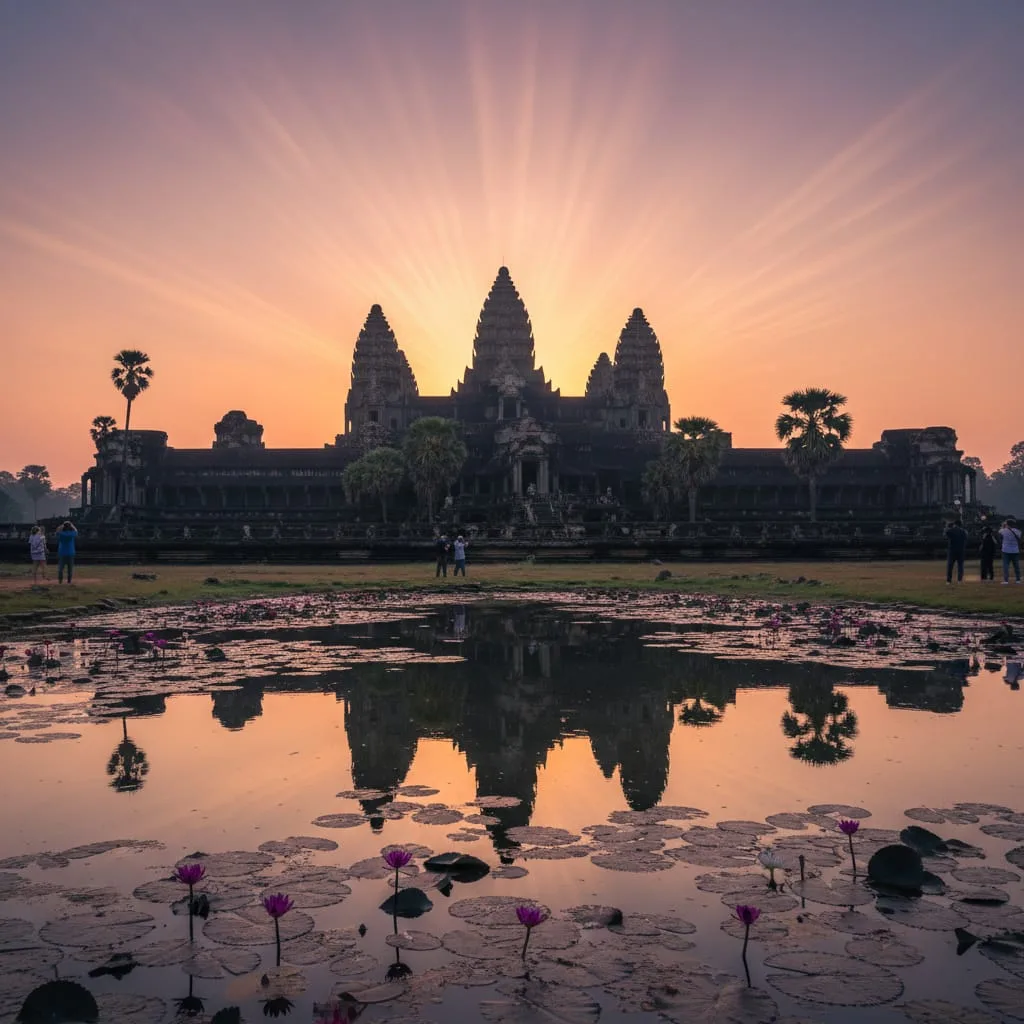
I stood on the eastern terrace of Angkor Wat at 5:14 AM, watching the sun crack open behind those iconic towers, and realized something absurd: one of the world's greatest UNESCO sites was closer to my Delhi apartment than Goa. Three and a half hours on a direct flight. That's it. The world's largest religious monument, a thousand-year-old Khmer masterpiece, and I'd been ignoring it for beach trips that took longer to reach.
Here's the thing about UNESCO sites accessible from India — we're sitting at the crossroads of some of humanity's most significant monuments, and most of us have no idea how accessible they are. This guide covers the UNESCO sites travelers from India can actually visit on weekend getaways and short trips, organized by flight time so you can plan around your leave balance.
Why Chase UNESCO Sites from India? (Beyond Instagram)
Look, I get it. "UNESCO World Heritage Site" sounds like something your history teacher droned about. But here's what that designation actually means: a committee of experts from 195 countries agreed this place is so culturally or naturally significant that losing it would be a loss for all of humanity. The UNESCO World Heritage List contains 1,199 sites — and dozens are within a short flight from India.
From a practical standpoint, UNESCO sites offer:
- Photography gold — These places are preserved, maintained, and photogenic by definition
- Historical depth — You're not just seeing old rocks; you're walking through stories that shaped civilizations
- Infrastructure — Tourist facilities, guides, accessibility. UNESCO status brings international attention and funding
- Bragging rights — There are 1,199 sites globally. Collecting them becomes addictive
Now let's get into the sites you can actually reach without burning all your annual leave.

UNESCO Sites Under 4 Hours: True Weekend Destinations
These sites are genuinely weekend-able from most Indian metros. Friday night flight out, Sunday evening return. No lying to your boss required.
Sigiriya Rock Fortress, Sri Lanka (2.5-3 hours)
A fifth-century palace built on top of a 200-meter volcanic rock plug. King Kashyapa was either a paranoid genius or completely unhinged — maybe both. He murdered his father, feared his brother's revenge, and decided the safest home was on an inaccessible boulder in the jungle. The frescoes of the "cloud maidens" painted on the rock face have survived 1,500 years. The mirror wall still holds ancient graffiti from visitors a millennium ago.
UNESCO significance: Outstanding example of ancient urban planning, hydraulic engineering, and art. The water gardens at the base still function using the original fifth-century systems.
Best time: January to April. Arrive at 7 AM before the heat makes the 1,200-step climb unbearable.
Cost from India: Return flights from Chennai/Bengaluru start at ₹12,000-18,000. Entry fee is $30 (~₹2,500) for foreigners. Budget ₹25,000-35,000 for a 3-day trip including Colombo.
Days needed: 2-3 days (combine with Dambulla Cave Temples, another UNESCO site 20 minutes away)
Visa: ETA online, $50, approved within 24 hours. Our Sri Lanka guide covers the full visa process.
Photography tip: The lion's paw staircase at the base photographs best in morning light. Bring a telephoto for the frescoes — you can't get close.
Kathmandu Valley, Nepal (1.5-2 hours)
Seven monument zones in one UNESCO listing. Durbar Squares in Kathmandu, Patan, and Bhaktapur. The Swayambhunath and Boudhanath stupas. Pashupatinath Temple. Changu Narayan. You could spend a week here and not see everything, but a long weekend hits the highlights.
UNESCO significance: The valley contains the largest concentration of heritage monuments in the Himalayan region, spanning 2,000 years of religious and architectural evolution.
Best time: October-November (post-monsoon, clear Himalayan views) or March-April (spring, pleasant temperatures)
Cost from India: Delhi-Kathmandu flights from ₹8,000 return. Budget ₹15,000-25,000 for a 3-4 day trip. Entry fees are minimal (₹200-500 per site).
Days needed: 3-4 days minimum. Honestly, you'll want more.
Visa: No visa required for Indians. Just carry your passport. Check our Nepal budget guide for crossing by land too.
Photography tip: Boudhanath at dusk when pilgrims circumambulate with butter lamps. Patan Durbar Square in early morning when locals outnumber tourists 10:1.
Lumbini, Nepal (Land border or 2-hour flight)
The birthplace of Buddha. A pilgrimage site for 2,600 years. The Maya Devi Temple marks the exact spot where Siddhartha Gautama was born, with archaeological evidence dating to the sixth century BCE.
UNESCO significance: One of the holiest places of Buddhism, with an unbroken tradition of veneration since the Buddha's time.
Best time: November-February (cool, dry). Avoid summer — the Terai plains hit 45°C.
Cost from India: Reachable by road from Gorakhpur (3 hours) or Varanasi (6 hours). Flight+drive from Delhi costs ₹12,000-18,000. Budget ₹10,000-20,000 for a 2-3 day trip.
Days needed: 1-2 days. Combine with Kathmandu for a longer trip.
Photography tip: The Ashoka Pillar in morning light. The Japanese Peace Pagoda at sunset. Bring a wide-angle for the temple interiors.
Historic Mosque City of Bagerhat, Bangladesh (Land border + 4-hour drive)
Most Indians don't know this exists. A fifteenth-century city of mosques and mausoleums built by a Turkish general, abandoned after his death, and reclaimed by the jungle until rediscovery. The Sixty Dome Mosque (Shait Gumbad) is the largest medieval mosque in Bangladesh — 77 domes covering a prayer hall that held thousands.
UNESCO significance: Exceptional example of medieval mosque architecture, with unique terracotta ornamentation and innovative structural techniques.
Best time: October-February (winter, comfortable for exploring)
Cost from India: Cross at Petrapole-Benapole border, hire car to Khulna. Total budget ₹15,000-25,000 for 3-4 days including Sundarbans visit.
Days needed: 1 day for Bagerhat. Combine with Sundarbans (another potential UNESCO site on tentative list).
Visa: Visa-on-arrival for Indians, 15 days, $51.
Photography tip: The Sixty Dome Mosque interior in afternoon light filtering through the multiple windows. Bring a tripod — interiors are dim.
UNESCO Sites in 4-6 Hours: Long Weekend Sweet Spot
These destinations need Thursday-Sunday or a strategic use of one extra leave day. Worth it. Every single one.
Angkor Wat & Angkor Archaeological Park, Cambodia (4-5 hours)
The largest religious monument ever built. Period. The Khmer Empire at its peak created something that still defies comprehension — a thousand-square-kilometer complex with over a thousand temples, channels, reservoirs, and communication routes. Angkor Wat is the centrepiece, but Ta Prohm (the "Tomb Raider temple" with strangler figs consuming the stones) and Bayon (216 massive stone faces) are equally mind-blowing.
UNESCO significance: Represents the entire range of Khmer art from the ninth to fourteenth centuries, including many masterpieces.
Best time: November-February (dry season, comfortable temperatures around 25-30°C)
Cost from India: Flights via Bangkok or Ho Chi Minh from ₹20,000-35,000 return. 3-day temple pass $62 (~₹5,200). Budget ₹40,000-60,000 for 4-5 days. Read our Cambodia travel guide for detailed itineraries.
Days needed: Minimum 3 days for temples. 4-5 to explore properly without temple fatigue.
Visa: E-visa online, $36, processed in 3 business days.
Photography tip: Angkor Wat sunrise from the north reflection pool. Ta Prohm in early morning or late afternoon when crowds thin. Bayon faces at golden hour. Rent an e-bike to move between temples at your own pace.
Ha Long Bay, Vietnam (5-6 hours)
Nearly 2,000 limestone karsts and islands rising from emerald waters. The geology alone took 500 million years. Floating fishing villages. Caves with formations that look like they belong in fantasy novels. This is the landscape that made Vietnam tourism explode.
UNESCO significance: Outstanding example of karst landscape evolution in tropical humid conditions, with exceptional aesthetic value.
Best time: October-December (cool, clear, minimal rainfall). Avoid June-August (typhoon season).
Cost from India: Flights to Hanoi from ₹18,000-30,000 return. Day cruise from $35 (~₹2,900), overnight junk boat from $150 (~₹12,500). Budget ₹45,000-70,000 for 5 days including Hanoi.
Days needed: 2-3 days (one night on the bay is highly recommended)
Visa: E-visa online, $25, up to 90 days.
Photography tip: Sunrise from the boat deck. Kayak into smaller lagoons for intimate shots without other tourists. The floating villages photograph best in soft light.
Luang Prabang, Laos (5-6 hours via Bangkok/Hanoi)
The best-preserved traditional town in Southeast Asia. French colonial architecture meets Lao Buddhist temples meets mountain scenery. Every morning, saffron-robed monks collect alms from kneeling residents — a tradition unchanged for centuries.
UNESCO significance: Outstanding fusion of traditional architecture and nineteenth-twentieth century European urban planning.
Best time: November-February (dry, cool). Pi Mai (Lao New Year) in April is chaotic but culturally fascinating.
Cost from India: Flights via Bangkok from ₹25,000-40,000. Budget ₹35,000-55,000 for 4-5 days.
Days needed: 3-4 days. Don't rush this one.
Visa: Visa-on-arrival for Indians, $40, 30 days.
Photography tip: The alms-giving ceremony at 6 AM (observe respectfully — this is religious, not a photo op). Kuang Si Falls in morning light. Temples at sunset when locals worship.
Historic City of Ayutthaya, Thailand (4-5 hours)
The capital of Siam for 417 years before the Burmese burned it in 1767. What remains is haunting — Buddha heads wrapped in tree roots, headless statues, temple ruins that hint at former glory. You can reach it as a day trip from Bangkok, but staying overnight lets you explore without tour bus crowds.
UNESCO significance: Represents one of the most powerful kingdoms in Southeast Asian history, with architectural remains that influenced Thai art for centuries.
Best time: November-February (cool season). Ayutthaya is brutally hot March-May.
Cost from India: Flights to Bangkok from ₹12,000-20,000. Train to Ayutthaya ₹50. Entry fees ₹150-300 per site. Budget ₹25,000-40,000 for 4-5 days including Bangkok.
Days needed: 1-2 days for temples. Combine with Bangkok for a longer trip.
Visa: Visa-on-arrival for Indians, free, 30 days.
Photography tip: The Buddha head in tree roots at Wat Mahathat in soft morning light. Rent a bicycle to cover the sprawling site. Wat Chaiwatthanaram at sunset from across the river.
Melaka and George Town, Malaysia (5-6 hours)
Historic Straits Settlements where Portuguese, Dutch, British, Chinese, Indian, and Malay influences collided and fused. The street art of George Town has become Instagram-famous, but the real draw is the living heritage — families running the same businesses for generations, temples beside mosques beside churches.
UNESCO significance: Exceptional multicultural trading towns on the Straits of Malacca, showcasing 500 years of Asian and European commercial exchange.
Best time: Year-round. December-February slightly cooler. Avoid monsoon peaks November-January in Penang.
Cost from India: Flights to Kuala Lumpur from ₹10,000-18,000. Budget ₹30,000-45,000 for 5-6 days covering both cities. Our Malaysia packages often include both heritage cities.
Days needed: 2 days each for Melaka and George Town (Penang)
Visa: No eNTRI or eVISA needed. Indians get 30-day visa-free entry until 31 December 2026 (check current status).
Photography tip: George Town street art in early morning before crowds. Melaka River at dusk with the lit-up colonial buildings. The temples of Jonker Street at night.
Borobudur Temple, Indonesia (6 hours)
The world's largest Buddhist temple, built in the ninth century and abandoned when the Javanese kingdoms converted to Islam. Volcanic ash buried it. Jungle reclaimed it. The Dutch rediscovered it in 1814. Today, 2,672 relief panels tell the story of Buddhist cosmology across nine stacked platforms.
UNESCO significance: Outstanding example of Indonesian Buddhist architecture, representing the Sailendra dynasty's devotion and engineering prowess.
Best time: April-October (dry season). Sunrise visits require booking in advance.
Cost from India: Flights to Yogyakarta via Jakarta/Singapore from ₹25,000-40,000. Sunrise ticket $55 (~₹4,600). Budget ₹45,000-65,000 for 5 days including Prambanan (Hindu temple complex, also UNESCO).
Days needed: 2 days (one for Borobudur, one for Prambanan and Yogyakarta)
Visa: Visa-on-arrival for Indians, $35, 30 days.
Photography tip: Sunrise from the top level looking over the Buddha statues towards Merapi volcano. The bell-shaped stupas with seated Buddhas inside photograph best with side lighting.
UNESCO Sites in 6-8 Hours: Bucket List Heavyweights
These need a proper week off, but they're the sites that define "once in a lifetime." The kind of places where you stand there and can't quite believe you're actually seeing it.
Petra, Jordan (6-7 hours)
A city carved into rose-red sandstone cliffs by the Nabataean Arabs 2,000 years ago. The Treasury (Al-Khazneh) is the iconic shot, but Petra is a sprawling archaeological park with tombs, temples, and a monastery that requires 800 steps to reach. Indiana Jones filmed here for good reason.
UNESCO significance: One of the world's most valuable cultural properties, representing exceptional human creative genius in a dramatic geological environment.
Best time: March-May, September-November. Summer exceeds 40°C. Winter can be cold at night.
Cost from India: Flights via Dubai/Abu Dhabi from ₹30,000-50,000. Jordan Pass (includes visa + Petra) $103-113 (~₹8,500-9,400). Budget ₹70,000-100,000 for 5-7 days including Wadi Rum and Dead Sea. Our Jordan guide breaks down all costs.
Days needed: 2 full days for Petra alone. 5-7 for Jordan highlights.
Visa: Jordan Pass waives visa fee and includes attractions. Apply online.
Photography tip: The Treasury at sunrise before crowds arrive (7 AM entry). Petra by Night (Monday, Wednesday, Thursday) for candlelit shots. The Monastery in late afternoon when western light hits the facade.
Samarkand, Uzbekistan (4-5 hours direct from Delhi)
The crossroads of the Silk Road. Timur (Tamerlane) made this his capital and filled it with mosques, madrasas, and mausoleums tiled in impossible shades of blue. The Registan Square — three massive madrasas facing each other — is genuinely one of the most beautiful urban spaces on Earth.
UNESCO significance: Outstanding example of Islamic architecture, with Timurid-era monuments that influenced development throughout the Muslim world.
Best time: April-May, September-October. Summers are hot (40°C+). Winters cold but fewer tourists.
Cost from India: Direct flights Delhi-Samarkand from ₹20,000-35,000. Budget ₹40,000-60,000 for 5-6 days including Bukhara.
Days needed: 2-3 days for Samarkand. Add 2 days for Bukhara (another UNESCO city).
Visa: Visa-free for Indians, 30 days. Just show up with your passport.
Photography tip: Registan at blue hour when the tiles glow. The Shah-i-Zinda necropolis in morning light. Bring a polarizing filter to cut reflections and deepen that turquoise.
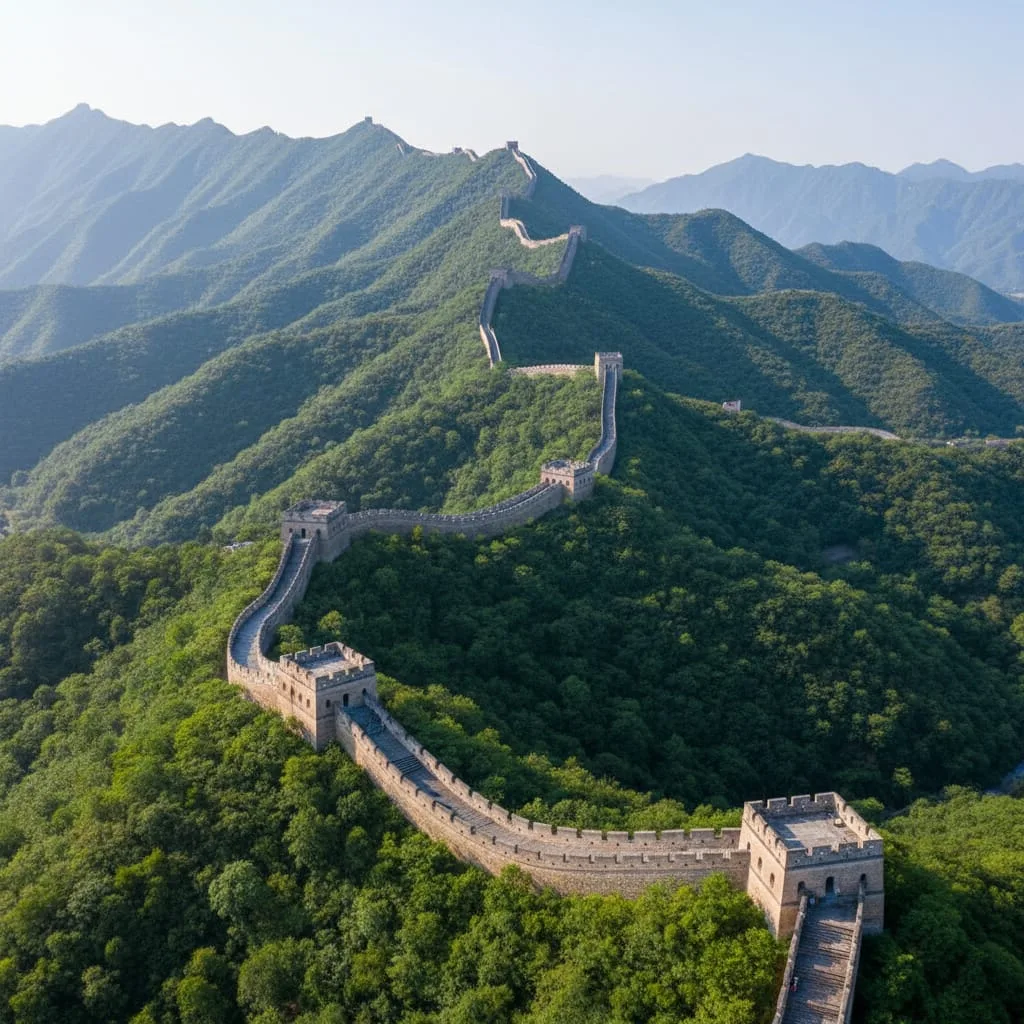
The Great Wall of China (7-8 hours)
You know what it is. What you don't know until you're standing on it is the scale — not just length but height, width, the way it snakes over mountain ridges into the distance, the sheer audacity of building it across terrain where even walking is difficult. Multiple sections are accessible from Beijing. Skip Badaling (overcrowded tourist trap). Go to Mutianyu, Jinshanling, or Jiankou for fewer crowds and better photography.
UNESCO significance: The world's largest military structure, representing the historical importance of China's defense strategy and the capability of ancient Chinese engineering.
Best time: April-May, September-October. Autumn foliage at Mutianyu is spectacular. Avoid Chinese public holidays — the crowds are staggering.
Cost from India: Flights to Beijing from ₹25,000-45,000. Budget ₹60,000-90,000 for 5-7 days including Beijing and the Wall.
Days needed: 1-2 days for the Wall itself. 4-5 days for a proper Beijing + Wall trip.
Visa: Visa required, apply at Chinese Visa Application Centre. 144-hour transit visa-free now available.
Photography tip: Jinshanling at sunrise — fewer tourists, better light, mist in the valleys. Bring a telephoto to compress the wall sections into dramatic shots. The watch towers photograph best with people for scale.
Persepolis, Iran (6-7 hours)
The ceremonial capital of the Achaemenid Empire — Darius, Xerxes, the guys who fought the Greeks at Thermopylae. Built 2,500 years ago, burned by Alexander, and left to the desert until rediscovery. The bas-reliefs showing tribute-bearers from 23 nations are some of the finest examples of ancient Persian art.
UNESCO significance: Outstanding example of Achaemenid architecture, representing the zenith of a civilization that created the first true world empire.
Best time: March-May, October-November. Summers exceed 40°C. Nowruz (March 21) is culturally fascinating but crowded.
Cost from India: Flights via Dubai/Doha from ₹30,000-50,000. Iran is surprisingly affordable on the ground. Budget ₹50,000-75,000 for 7 days including Shiraz and Isfahan.
Days needed: 1 day for Persepolis. 7-10 for Iran highlights.
Visa: Visa-on-arrival for Indians, $30-75 depending on duration. Apply online for easier processing.
Photography tip: The Gate of All Nations at sunrise. The Apadana reliefs in raking afternoon light that brings out the carved details. Bring a wide-angle for the site's scale.
Practical Planning Tips for UNESCO Sites Trips
After visiting 40+ UNESCO sites from Indian cities, here's what actually matters:
- Book flights early — Low-cost carriers to Southeast Asia book out during Indian holidays. Set price alerts 3 months ahead.
- Combine nearby sites — Don't fly to Cambodia just for Angkor. Add Preah Vihear. Don't go to Jordan without hitting Wadi Rum.
- Morning is everything — UNESCO sites get crowded. Arrive at opening. Eat breakfast after.
- Hire local guides — The stories bring these places alive. Budget ₹1,500-3,000 for a half-day guide.
- Travel insurance — These aren't beach resorts. You're climbing rocks and hiking ruins. Cover yourself.
- Let TripCabinet handle logistics — Multi-destination UNESCO trips involve complex routing, visas, and timing. Our team plans everything so you focus on experiencing the sites.
Frequently Asked Questions
Which UNESCO World Heritage Site is closest to India?
The Kathmandu Valley in Nepal is the closest UNESCO World Heritage Site to India, reachable in just 1.5-2 hours by flight from Delhi. For those in eastern India, Bagerhat in Bangladesh is accessible via the land border. Sigiriya in Sri Lanka takes 2.5-3 hours from South Indian cities.
Can I visit Angkor Wat from India on a weekend trip?
A pure weekend trip is tight but possible with Friday night and Monday morning leave. Angkor Wat is 4-5 hours from India via connecting flights. However, a long weekend (Thursday-Sunday) is recommended to avoid temple fatigue and actually appreciate the complex. The 3-day temple pass costs $62.
Do Indians need visas for UNESCO sites in Southeast Asia?
Visa requirements vary by country. Nepal requires no visa for Indians. Thailand offers visa-on-arrival (free, 30 days). Cambodia has e-visa ($36). Vietnam has e-visa ($25). Malaysia currently offers visa-free entry for Indians (30 days). Indonesia has visa-on-arrival ($35). Always check current policies before booking.
How much does a UNESCO site trip from India typically cost?
Budget trips to nearby sites (Nepal, Sri Lanka) cost ₹15,000-35,000 for 3-4 days. Mid-range Southeast Asia trips (Cambodia, Vietnam, Thailand) run ₹40,000-70,000 for 5-6 days. Premium destinations (Jordan, China) cost ₹60,000-100,000 for a week. These estimates include flights, accommodation, entry fees, and basic meals.
What is the best time to visit UNESCO sites in Asia from India?
October-February is optimal for most Asian UNESCO sites — it's dry season in Southeast Asia, winter in Central Asia and the Middle East, and comfortable for temple exploration. Avoid March-May (extreme heat) and June-September (monsoons) for most destinations. Jordan and Iran are exceptions, best visited in spring (March-May) or autumn (September-November).