

Nepal Trip from India: No-Visa Budget Guide 2026
In this guide (14)
- Nepal Trip from India: The Quick Cost Summary
- Nepal Trip Cost for 3 Days and 5 Days
- No Visa Needed: What Documents Indians Actually Need
- How to Reach Nepal from India: Road vs Flight
- Kathmandu: 2-3 Days of Controlled Chaos
- Pokhara: Where You'll Want to Stay Forever
- Nepal Trip from India: Trekking Options and Costs
- Money Matters: Currency, ATMs, and Costs
- Food in Nepal: Yes, There's Indian Food Everywhere
- Best Time for Your Nepal Trip from India
- Packing List: What to Actually Bring
- A Sample 7-Day Nepal Trip from India Itinerary
- Final Thoughts: Is Nepal Worth It for Indians?
- Frequently Asked Questions
Planning a Nepal trip from India can look complicated from a desk in Delhi or Bengaluru, but for Indian citizens it is one of the simplest international trips there is. There is no visa, no visa fee and no forms: you carry a valid Indian passport or an original Election Commission voter ID card, and at land crossings such as Sunauli most Indian travellers simply walk across.
Indians need zero visa paperwork for Nepal — one of the few international borders Indian citizens can simply walk across. Yet many travellers still assume Nepal means expensive flights and complicated permits.
So here's the truth: you can do a solid week in Nepal for under INR 20,000. Or spend INR 50,000 and live like royalty. Here is exactly what each version costs — no fluff, no "it depends," just actual numbers from 2025-26.
Nepal Trip from India: The Quick Cost Summary
Before we get into the details, here's the honest breakdown. These numbers assume you're traveling from North India (Delhi/UP/Bihar). South Indians, add INR 3,000-5,000 for reaching the border or airport.
| Category | Budget (INR) | Mid-Range (INR) | Comfort (INR) |
|---|---|---|---|
| Transport (round trip) | 2,000-3,500 | 8,000-12,000 | 15,000-20,000 |
| Accommodation (6 nights) | 3,000-4,500 | 9,000-15,000 | 24,000-36,000 |
| Food (7 days) | 3,500-5,000 | 7,000-10,000 | 12,000-18,000 |
| Sightseeing & Activities | 2,000-3,000 | 5,000-8,000 | 10,000-15,000 |
| Miscellaneous | 1,500-2,000 | 3,000-5,000 | 5,000-8,000 |
| Total (7 days) | 12,000-18,000 | 32,000-50,000 | 66,000-97,000 |
The budget tier is very doable if you're comfortable with basic guesthouses, dal bhat twice a day, and local buses. Plenty of Indian backpackers in Thamel travel exactly this way. The mid-range sweet spot suits most first-timers who want comfort without blowing their savings.

Nepal Trip Cost for 3 Days and 5 Days
Not everyone has a full week. Using the same per-day rates as the 7-day table, here is what shorter trips cost per person. The ground cost (room, food, sightseeing and extras) works out to roughly INR 1,400-2,100 a day on a budget and INR 3,400-5,400 a day mid-range; add return transport on top.
| Trip length | Budget (by road) | Mid-range (with flights) |
|---|---|---|
| 3 days (Kathmandu only) | INR 6,500-10,000 | INR 18,000-28,000 |
| 5 days (Kathmandu + Pokhara) | INR 9,000-14,000 | INR 25,000-39,000 |
| 7 days (full table above) | INR 12,000-18,000 | INR 32,000-50,000 |
Some practical points before you pick a length:
- 3 days by road only works from the border states. From Delhi, the train to Gorakhpur plus the 8-10 hour bus from the border uses up most of two days each way. For a 3-day trip from farther away, fly to Kathmandu.
- 5 days is the minimum for Pokhara. The Kathmandu-Pokhara bus takes about 7 hours each way, so Pokhara needs at least two nights to be worth it.
- There is no train to Kathmandu. "By train" means a train to Gorakhpur (for Sunauli) or towards Raxaul, then a bus onwards. Budget travellers from South India should add the INR 3,000-5,000 mentioned above for reaching the border or the airport.
- Entry fees are low for Indians. Pashupatinath is free for Indian nationals, and SAARC rates apply at the Durbar Squares and stupas, so sightseeing costs stay modest on short trips.
No Visa Needed: What Documents Indians Actually Need
This is the part that confuses people. Let me be crystal clear.
Indians do NOT need a visa for Nepal. Period. The 1950 Treaty of Peace and Friendship between India and Nepal allows citizens of both countries to travel, work, and live in each other's territory without restrictions.
What you DO need:
- Valid Indian Passport — the cleanest option, works everywhere
- OR your original voter ID card with photograph, issued by the Election Commission of India. Aadhaar, PAN cards and driving licences are not accepted, and a downloaded print of the voter ID does not count
- Passport-size photographs — not on the Embassy of India's list of travel documents for Nepal (Indians get no visa or entry permit), but a couple are handy as a backup
- For children and seniors: travellers under 15 and over 65 are exempt from the approved document list but should carry a photo document confirming age and identity. Those aged 15 to 18 can travel on an identity certificate from their school principal
Both a passport and an original voter ID are valid. A passport is the safer choice because every official and airline recognises it. Aadhaar is not on the approved list at all, so do not plan a trip around it.
For flights too, the Embassy of India in Kathmandu recognises only two documents, a valid Indian passport or an original Election Commission voter ID card. Aadhaar is not accepted. Carry your passport if you're flying. For the official entry requirements, check the Nepal Immigration Department website.
How to Reach Nepal from India: Road vs Flight
You have three realistic options, and each has trade-offs.
Option 1: Sunauli Border (via Gorakhpur) — The Classic Route
This is the most popular land crossing for Indians. Gorakhpur is well-connected by train from Delhi, Lucknow, Varanasi, and Kolkata.
The route: Your city → Gorakhpur (train) → Sunauli border (bus/shared jeep, 3 hours) → Bhairahawa (Nepal side) → Kathmandu (bus, 8-10 hours)
Cost breakdown:
- Delhi to Gorakhpur train: INR 400-1,800 (sleeper to AC)
- Gorakhpur to Sunauli: INR 150-300 (local bus) or INR 400 (shared jeep)
- Sunauli to Kathmandu: NPR 1,200-1,800 (INR 750-1,100) for tourist bus
The Sunauli crossing itself is... chaotic. Touts everywhere. Money changers offering terrible rates. Porters grabbing your bags. Stay calm and ignore everyone. Indian citizens need no visa, so there is no visa counter to queue at; just keep your passport or voter ID handy in case officials ask to see it.
Pro tip: Cross early morning (6-8 AM) to catch the direct tourist buses to Kathmandu that leave from Bhairahawa around 7-8 AM. Miss these, and you're stuck with cramped local buses or waiting until the next morning.
Option 2: Raxaul Border (via Patna) — For East India
If you're coming from Bihar, Jharkhand, or eastern UP, Raxaul makes more sense than backtracking to Gorakhpur.
The route: Patna → Raxaul (bus, 5 hours) → Birgunj (Nepal side) → Kathmandu (bus, 6-7 hours)
This crossing is less touristy, which means fewer hassles but also fewer English-speaking helpers if you need directions. The road from Birgunj to Kathmandu is actually better maintained than the Sunauli route — the highway was upgraded in 2024.
Option 3: Fly Direct to Kathmandu
If time matters more than money, or you're traveling with parents who can't handle 14-hour bus rides, fly. Direct flights operate from Delhi, Kolkata and Varanasi.
Typical flight costs (one way):
- Delhi to Kathmandu: INR 5,000-9,000
- Kolkata to Kathmandu: INR 4,500-7,500
- Varanasi to Kathmandu: INR 4,000-6,500 (Buddha Air)
- Bangalore to Kathmandu: INR 8,000-14,000 (usually via Delhi)
Book 6-8 weeks ahead for the best fares. Check our guide to finding cheap international flights from India — the same tricks work for Nepal routes.
Kathmandu: 2-3 Days of Controlled Chaos
Kathmandu hits you like a wall of incense, diesel fumes, and temple bells. It's overwhelming in the best way. Here's a good way to spend your time.
Day 1: Thamel and Durbar Square
Stay in Thamel — yes, it's touristy, but it's also where everything is. Guesthouses, trekking gear shops, restaurants, and travel agencies line every narrow alley. Budget hotels run NPR 1,500-2,500 (INR 950-1,550) per night. Try Hotel Florid or Kathmandu Peace Home for clean rooms under INR 1,000.
Walk to Kathmandu Durbar Square (NPR 500 entry for SAARC nationals including Indians, NPR 1,000 for other foreigners). The earthquake damage from 2015 is still visible, but reconstruction is ongoing. The Kumari House, where the living goddess resides, is the highlight. If you're lucky, she'll appear at the window around 4 PM.
Dinner at Thakali Kitchen in Thamel. Order the thali — NPR 450, enough food to knock you out.
Day 2: Boudhanath and Pashupatinath
These two sites are non-negotiable.
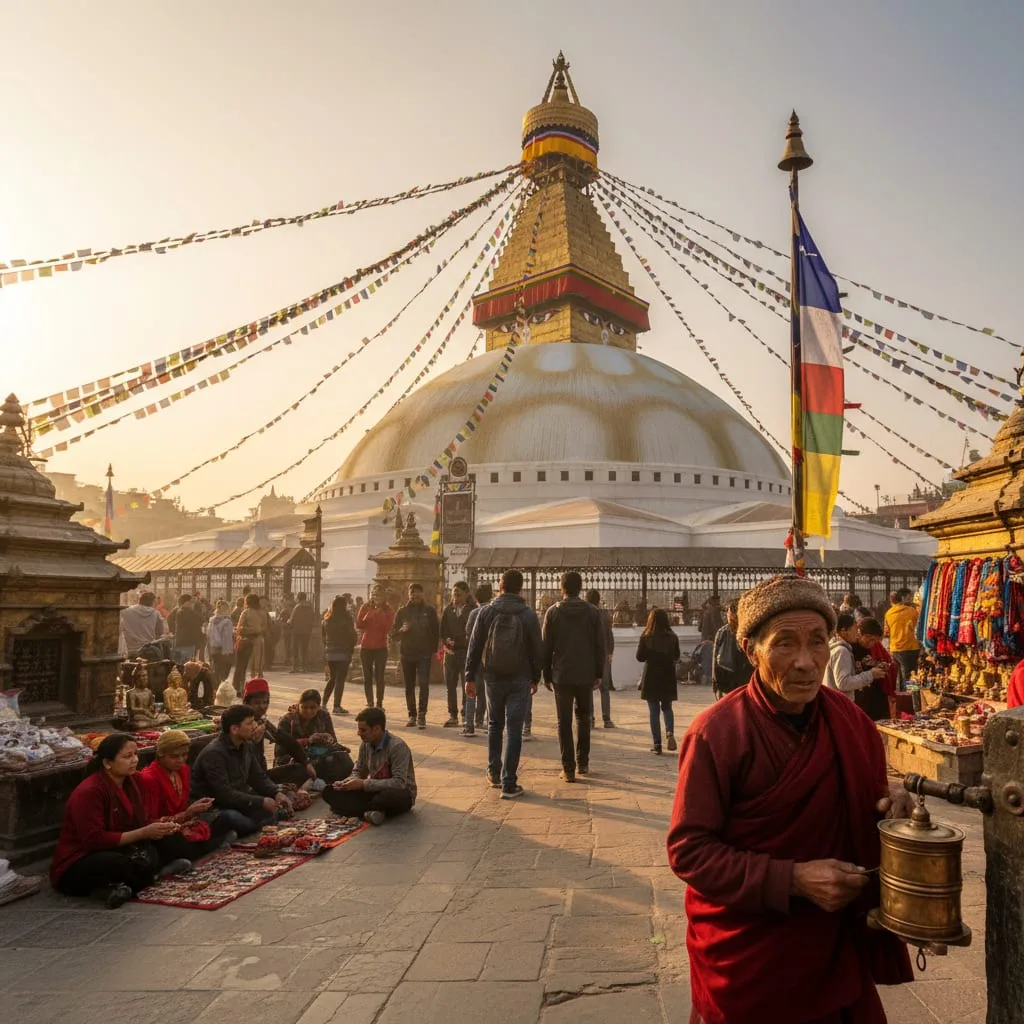
Boudhanath Stupa is the largest stupa in Nepal, and walking around it at dawn with monks chanting and butter lamps flickering is genuinely moving. Entry: NPR 100 for SAARC nationals including Indians (NPR 400 for other foreigners); carry ID to show your nationality.
Pashupatinath Temple is one of the holiest Shiva temples outside India. Entry is free for Indian nationals (other foreigners pay NPR 1,000), and the main temple is open only to Hindus. The cremation ghats along the Bagmati River are sobering — bodies burn in the open, families grieve, sadhus smoke chillums nearby. It's intense, raw, and very real.
Both sites are about 6 km east of Thamel. Grab a taxi (NPR 400-500) or take the local microbus from Ratna Park for NPR 25.
Day 3: Swayambhunath (Monkey Temple) and Shopping
Climb the 365 steps to Swayambhunath early morning for sunrise views over the valley. The monkeys are aggressive — don't carry food openly. Entry: NPR 50 for SAARC nationals including Indians (NPR 200 for other foreigners).
Afternoon: shop for pashmina shawls, singing bowls, and trekking gear. Thamel prices are 30-40% inflated. Bargain hard. For authentic pashmina, check Nepal Pashmina Industries (fixed price, but quality guaranteed). For fake North Face gear that's actually decent, try the shops near Mandala Street.
Pokhara: Where You'll Want to Stay Forever
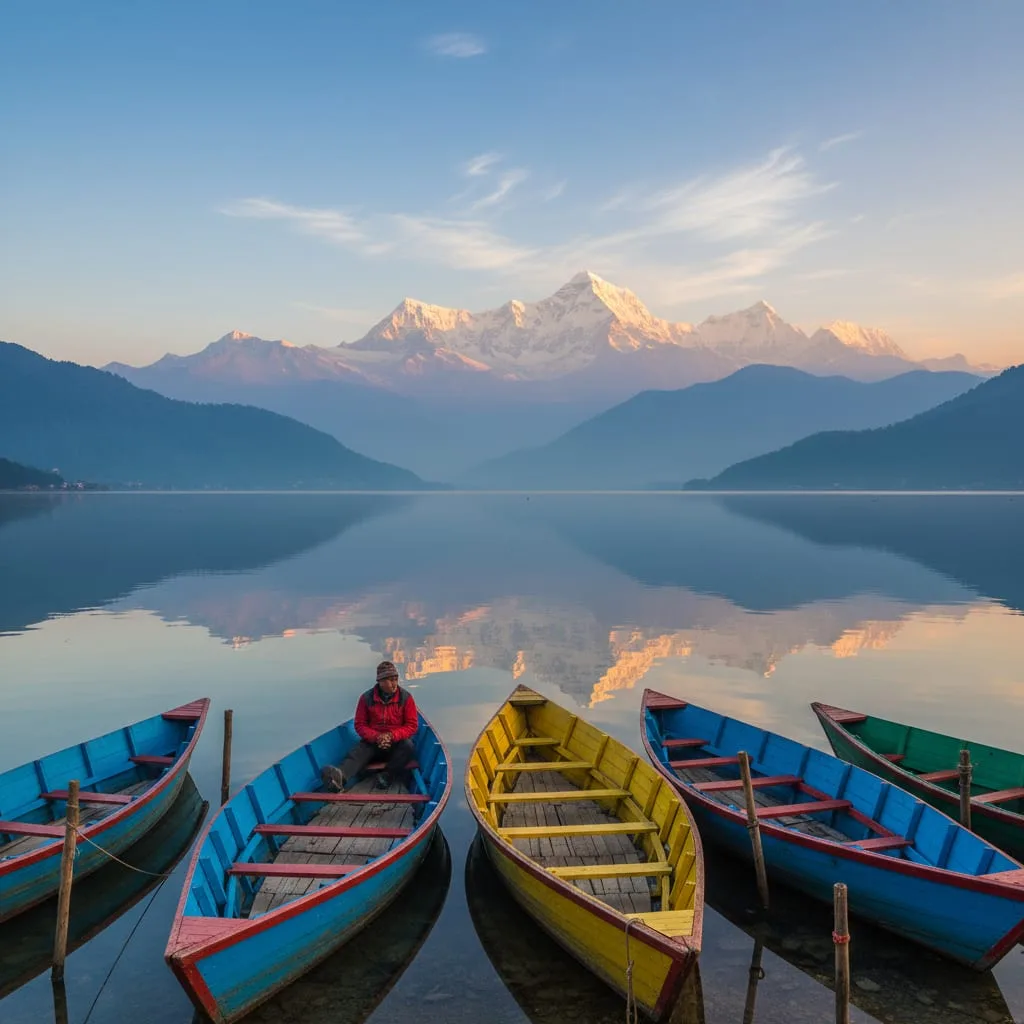
The 7-hour bus ride from Kathmandu to Pokhara is uncomfortable. The road twists through hills, your stomach churns, and the driver honks every 4 seconds. But then you arrive at Lakeside, see the Annapurna range reflected in Phewa Lake, and forget everything.
Pokhara is Nepal's chill counterpart to Kathmandu's chaos. Stay here at least 2-3 nights.
What to Do in Pokhara
Sarangkot Sunrise: Wake up at 4:30 AM, take a taxi (NPR 1,500 round trip with waiting) to Sarangkot viewpoint, and watch the sun light up Machapuchare (Fishtail) and Annapurna. This is the moment everyone comes to Nepal for. Bring a jacket — it's freezing before dawn.
Phewa Lake Boating: Rent a colorful wooden boat (NPR 600/hour) and row to the Tal Barahi Temple on the island. Peaceful, scenic, and surprisingly good arm workout.
Paragliding: This is the splurge activity. Tandem paragliding from Sarangkot costs USD 80-100 (INR 7,700-9,600) for a 30-minute flight with Himalayan views. Worth every rupee. Book with licensed operators like Frontiers Paragliding or Blue Sky — cheaper operators exist, but this isn't where you want to save money.
World Peace Pagoda: Hike up (1.5 hours) or take a boat + hike combo for panoramic views. Free entry.
Nepal Trip from India: Trekking Options and Costs
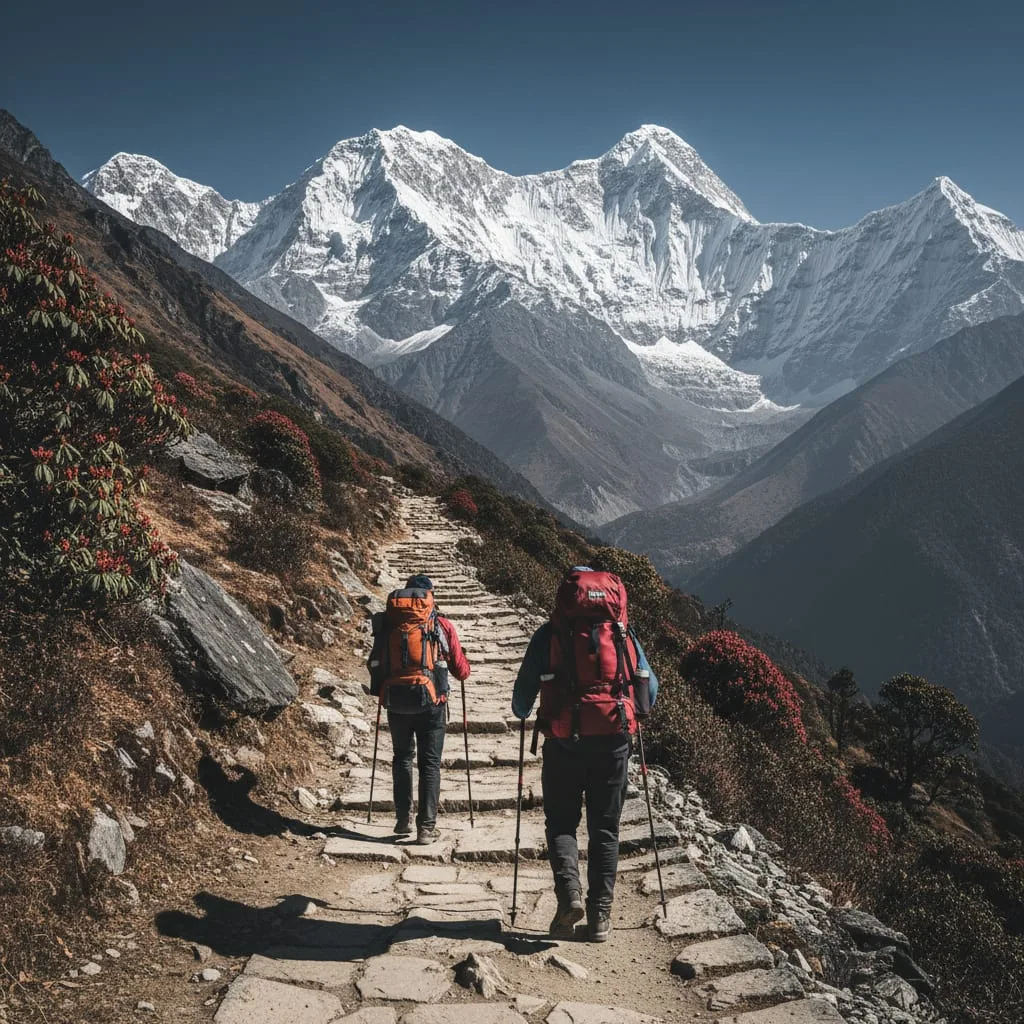
Nepal is trekking paradise, and you don't need to be a mountaineer to experience it. Here are the most accessible options for Indian travelers.
Poon Hill Trek (4-5 Days) — Best for Beginners
The easiest real trek in Nepal. Maximum altitude: 3,210 meters. No technical skills needed, just reasonable fitness.
Route: Pokhara → Nayapul → Tikhedhunga → Ghorepani → Poon Hill → Tadapani → Ghandruk → Nayapul → Pokhara
Costs:
- ACAP permit: NPR 1,000 (about INR 625) for SAARC nationals including Indians, plus a TIMS card (NPR 1,000, about INR 625, for SAARC nationals) issued through a registered trekking agency
- Teahouse accommodation: NPR 500-800/night
- Food: NPR 1,500-2,000/day (dal bhat, tea, snacks)
- Licensed guide (mandatory on the Poon Hill route under the revised TIMS rules effective 31 March 2023): USD 25-30/day
- Total: about INR 19,000-24,000 for 5 days for a solo trekker, including the guide (shared if you trek as a group); add road transport between Pokhara and Nayapul
The sunrise from Poon Hill is arguably better than Sarangkot — you're higher, closer to the peaks, and surrounded by trekkers who've earned the view.
Annapurna Base Camp Trek (7-10 Days) — The Classic
This is THE trek most Indians dream about. You walk into the heart of the Annapurna massif and stand at 4,130 meters, surrounded by 8,000-meter giants.
Costs:
- Permits: ACAP NPR 1,000 for Indians, plus a TIMS card (NPR 1,000 for SAARC nationals) through your trekking agency
- Accommodation + food: NPR 3,000-4,000/day
- Guide + porter (a licensed guide is mandatory on this route): USD 50-60/day combined
- Total: about INR 55,000-67,000 for 8 days for a solo trekker, including the guide and porter
The altitude is real. Above Machhapuchhre Base Camp, you'll feel it. Walk slow, drink water, don't be a hero. Acute Mountain Sickness ruins more treks than anything else.
Everest Base Camp Trek (12-14 Days) — The Bucket List
Yes, Indians can do EBC. No, you don't need to be super fit — just determined.
You'll fly from Kathmandu to Lukla (one of the world's scariest airports, and I mean that literally — the runway ends at a cliff). From there, it's 8-9 days of walking to EBC at 5,364 meters.
Costs:
- Kathmandu-Lukla flight: USD 180-200 each way
- Permits: Sagarmatha National Park NPR 1,500 for SAARC nationals including Indians, plus the Khumbu Pasang Lhamu Rural Municipality entry fee
- Accommodation + food: NPR 4,000-5,000/day
- Guide + porter: USD 60-70/day
- Total: about INR 1,51,000-1,77,000 for 14 days for a solo trekker, including the Lukla flights, guide and porter; add the Khumbu municipality fee
If EBC is on your list, check our senior travel guide — the altitude makes this trek unsuitable for most travelers over 60 unless they've acclimatized before.
Money Matters: Currency, ATMs, and Costs
Nepal runs on Nepali Rupees (NPR), but Indian Rupees are almost as widely accepted — with one critical caveat.
Indian INR 200 and INR 500 notes are now accepted in Nepal, up to INR 25,000 per person. Nepal Rastra Bank lifted the post-demonetisation ban in 2026 for notes issued on or after 9 November 2016, while the INR 2,000 note and the old pre-2016 INR 500 and INR 1,000 notes stay banned. Small notes are still the easiest to spend. Shopkeepers in Thamel, Pokhara, and tourist areas happily take Indian currency at roughly 1.6 NPR = 1 INR.
ATMs are everywhere in Kathmandu and Pokhara. Nabil Bank and Himalayan Bank ATMs work reliably with Indian cards. Withdrawal limit: NPR 25,000-35,000 per transaction. Fees: NPR 500 per withdrawal. Withdrawing larger amounts (around NPR 30,000) at a time keeps per-withdrawal fees down.
On treks, ATMs disappear. Carry enough cash for your entire trek plus 20% buffer. Teahouse payments are cash only.
Food in Nepal: Yes, There's Indian Food Everywhere
Nepali food is heavily influenced by Indian cuisine, so you won't starve if you're vegetarian or have specific dietary needs.
Dal Bhat — The national dish. Rice, lentils, vegetable curry, pickle, and sometimes meat. Served twice daily in teahouses, and refills are usually free. Expect to pay NPR 350-500 in cities, NPR 600-900 on treks.
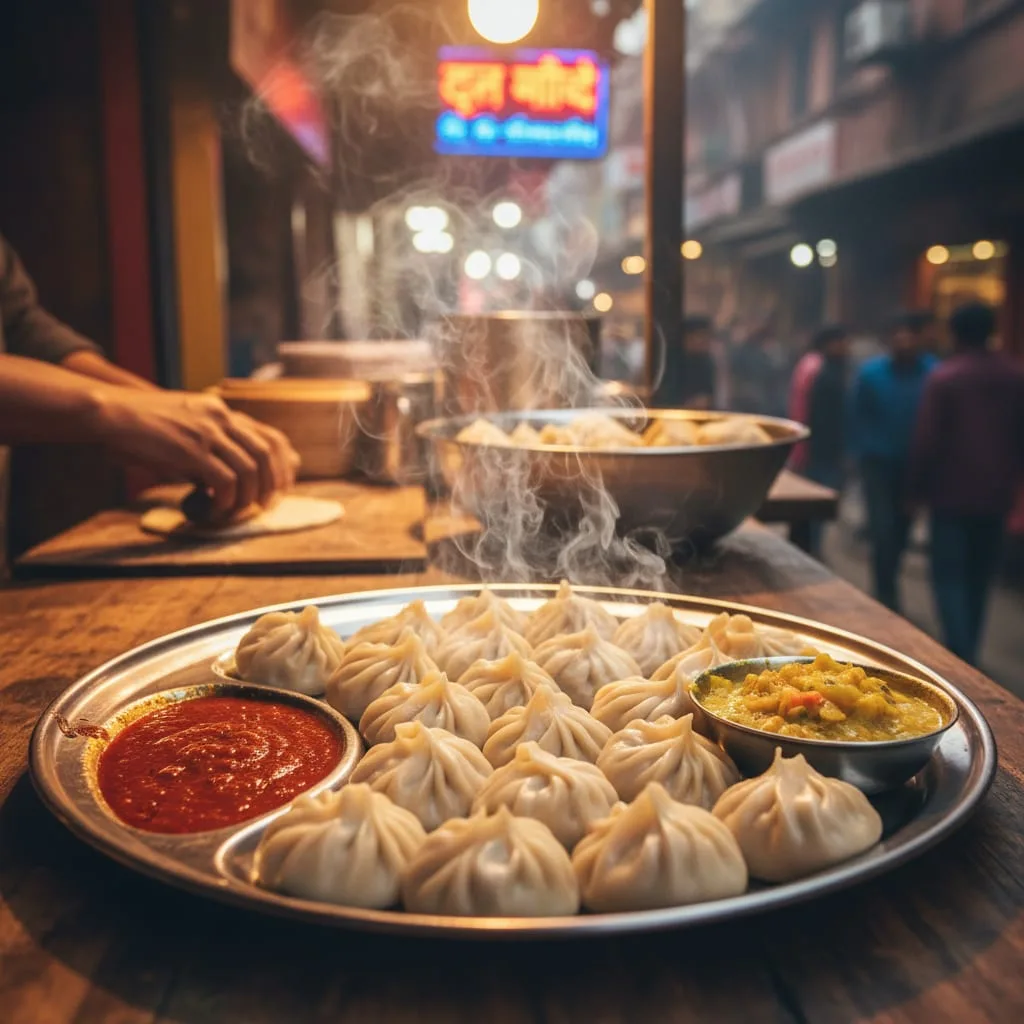
Momos — Tibetan dumplings that Nepal has perfected. Veg, buff (buffalo), or chicken. NPR 150-250 for a plate. The ones at Thamel's New Everest Momo Center are overhyped — locals go to Yangling in Durbarmarg instead.
Newari Food — If you want something unique, try Newari cuisine in Kathmandu. Bara (lentil pancake), choila (spiced grilled meat), and samay baji (a platter of beaten rice with various accompaniments). Newa Lahana in Kirtipur is worth the 30-minute drive from Thamel.
Indian restaurants are everywhere. Every tourist area has at least three serving butter chicken, paneer, and dosa. Quality varies wildly. Third Eye Restaurant in Thamel does decent North Indian food if you're desperate for something familiar.
Best Time for Your Nepal Trip from India
October-November: The absolute best. Post-monsoon skies are crystal clear, Himalayan views are guaranteed, and the weather is perfect for trekking (15-20°C days, 5-10°C nights in Kathmandu). Downside: peak tourist season means crowded trails and higher hotel prices.
March-April: Second best. Spring brings rhododendron blooms to the trekking trails. Slightly hazier than October, but still excellent visibility most days.
December-February: Cold but cheap. Kathmandu and Pokhara are pleasant (10-15°C days), but high-altitude treks become serious expeditions. Poon Hill is still doable if you pack proper layers.
June-September: Monsoon. Avoid unless you enjoy landslides, leeches, and zero mountain views. The one exception is Upper Mustang, which lies in a rain shadow and stays dry.
Packing List: What to Actually Bring
Many first-timers overpack for Nepal as if they're going to Antarctica. Here's what you actually need:
- Layers: T-shirts, a fleece jacket, a light down jacket (buy fake North Face in Thamel for NPR 2,000 if needed)
- Trekking shoes: Broken-in hiking boots if trekking, regular walking shoes for cities
- Rain jacket: Even in dry season, mountain weather is unpredictable
- Sunscreen and sunglasses: The high-altitude sun is brutal
- Basic meds: Diamox for altitude sickness (buy at any Kathmandu pharmacy without prescription)
- Power bank: Charging points on treks cost NPR 200-300 per device
- Photocopies of ID: Keep passport or voter ID copies separate from originals
Don't pack: heavy jeans (useless for trekking), too many clothes (laundry is cheap), expensive gear (theft happens).
A Sample 7-Day Nepal Trip from India Itinerary
Here's a sensible way to structure a week, assuming you're entering by road from Sunauli:
Day 1: Cross Sunauli border early morning, take tourist bus to Kathmandu (8-10 hours), check into Thamel hotel. Rest. Evening walk around Thamel.
Day 2: Kathmandu Durbar Square, Swayambhunath (Monkey Temple). Evening: Thamel shopping and dinner.
Day 3: Boudhanath (sunrise), Pashupatinath (morning cremations are most active), afternoon free. Optional: Patan Durbar Square.
Day 4: Morning bus to Pokhara (7 hours). Check into Lakeside hotel. Evening: Lake walk, dinner with mountain views.
Day 5: Sarangkot sunrise (4:30 AM taxi). Breakfast with views. Afternoon: Phewa Lake boating, World Peace Pagoda hike.
Day 6: Paragliding (morning, if weather permits). Afternoon: Explore Lakeside cafes, shopping, or rent a cycle around the lake.
Day 7: Morning flight from Pokhara to Kathmandu (30 minutes, INR 6,000-8,000) or bus (7 hours, NPR 1,000). Fly back to India or cross border by road.
Final Thoughts: Is Nepal Worth It for Indians?
Absolutely. Compared with Singapore, Thailand or Bali, Nepal offers something quite different. It's the closest international trip from India that actually feels like another world. The mountains, the temples, the momos, the friendly people calling you "dai" or "didi"... it gets under your skin.
The no-visa policy makes it embarrassingly easy. The costs are manageable on any budget. And unlike more polished destinations, Nepal has rough edges that make travel feel like actual travel — not a curated Instagram experience.
Pack light. Bring INR 100 notes. Cross that border. The Himalayas are waiting.
Adding a trek? Our Nepal trekking permits cost guide for Indians lists each permit fee in INR. Readers who want a custom Nepal quote can use the enquiry form on this page.
Nepal is also a top destination for paragliding in Pokhara and white water rafting. See our full adventure travel destinations from India guide for costs and booking tips.
The Kathmandu Valley is one of several UNESCO sites near India perfect for weekend trips.Frequently Asked Questions
How much does a Nepal trip cost from India?
A 7-day Nepal trip from India costs about ₹12,000-18,000 for budget travelers going by train and bus, ₹32,000-50,000 mid-range and ₹66,000-97,000 for comfort travel, including transport, accommodation, food and activities. Pokhara and Chitwan add ₹5,000-8,000 to a Kathmandu-only trip.
Do Indians need a visa for Nepal?
No. Indians do not need a visa for Nepal, and a passport is optional. You need a valid Indian passport or an original Election Commission voter ID card; Aadhaar, PAN cards and driving licences are not accepted. There is no immigration stamp — you just walk through at the Sunauli or Kakarbhitta border, or show ID at Kathmandu airport.
What is the best time to visit Nepal from India?
October-November (post-monsoon) is the best time with clear skies, perfect trekking weather, and Dashain festival vibes. March-April is the second-best window with rhododendron blooms. Avoid June-September monsoon unless you want landslide surprises.
Can I use Indian Rupees in Nepal?
Yes, Indian Rupees are widely accepted in Nepal. Since 2026 Nepal Rastra Bank allows ₹200 and ₹500 notes issued on or after 9 November 2016, up to ₹25,000 per person, while the ₹2,000 note stays banned. UPI also works at Fonepay QR merchants through apps such as PhonePe, Google Pay and Paytm. Carry small denomination notes and exchange the rest for Nepalese Rupees.
How do I reach Nepal from India by road?
The most popular route is Delhi/Gorakhpur to Sunauli border, then bus to Kathmandu or Pokhara. From Kolkata, take the Panitanki-Kakarbhitta crossing. Buses from Sunauli to Kathmandu take 8-10 hours and cost ₹800-1,200. For a detailed breakdown of specific trekking routes, check out our Nepal trekking guide covering Annapurna and Everest Base Camp.
Planning a trip to Nepal?
Tell us roughly when and how many — our travel expert sends you a custom quote, usually within a few hours.