

Sri Lanka from India: The 2026 Comeback Guide After the Economic Crisis
In this guide (12)
- Sri Lanka Travel Guide From India 2026: The Post-Crisis Reality
- Getting There: Chennai to Colombo in Under Two Hours
- The Classic Route: Colombo to Ella to Galle
- The Ella Train: Why Everyone Loses Their Minds Over a Train Ride
- The Southern Coast: Galle, Mirissa, and Blue Whales
- The Road Less Traveled: Jaffna and the Tamil North
- Budget Reality for Sri Lanka from India 2026
- Practical Stuff Nobody Mentions
- When to Visit Sri Lanka from India: Monsoons and Windows
- Is Sri Lanka Safe for Indians in 2026?
- A Week in Sri Lanka: Sample Itinerary
- Why 2026 Specifically
If you're reading a sri lanka travel guide from india 2026, you're probably wondering: is it safe now? Is it worth it? Sri Lanka broke my heart in 2022. The images on TV were unbearable — fuel queues stretching for kilometers, protestors storming the presidential palace, a country that had once felt like a slightly more organized version of South India collapsing in real time. I had been there just six months before the crisis hit, eating kottu roti in Colombo's Pettah market and watching fireflies in Ella's tea gardens. When it all fell apart, I wondered if I'd ever go back.
I went back in late 2025. And Sri Lanka broke my heart again — but for entirely different reasons. This is about what I found: a country that's picked itself up, dusted off the crisis, and quietly become the most underpriced destination within three hours of India. The tourist crowds haven't fully returned yet. The prices haven't caught up either. Right now, in 2026, there's a window that won't stay open forever.
Sri Lanka Travel Guide From India 2026: The Post-Crisis Reality
Let me be honest about what you'll find. Sri Lanka in 2026 isn't the Sri Lanka of 2019, and that's both good and complicated.
Good news first: power cuts are rare now. Fuel is available everywhere. The LKR stabilized around 320-330 to the USD (roughly 3.8 LKR to 1 INR) after the IMF deal. Tourist infrastructure never really collapsed — hotels kept operating, trains kept running, and the people who depend on tourism kept their skills sharp even when visitors disappeared.
The complicated: Some prices have risen. A bottle of water that cost LKR 50 in 2019 now costs LKR 100. But your INR goes much further than before because the LKR devalued significantly. So in real terms, for Indians, Sri Lanka is cheaper now than it was five years ago. That's the math that makes 2026 the sweet spot.
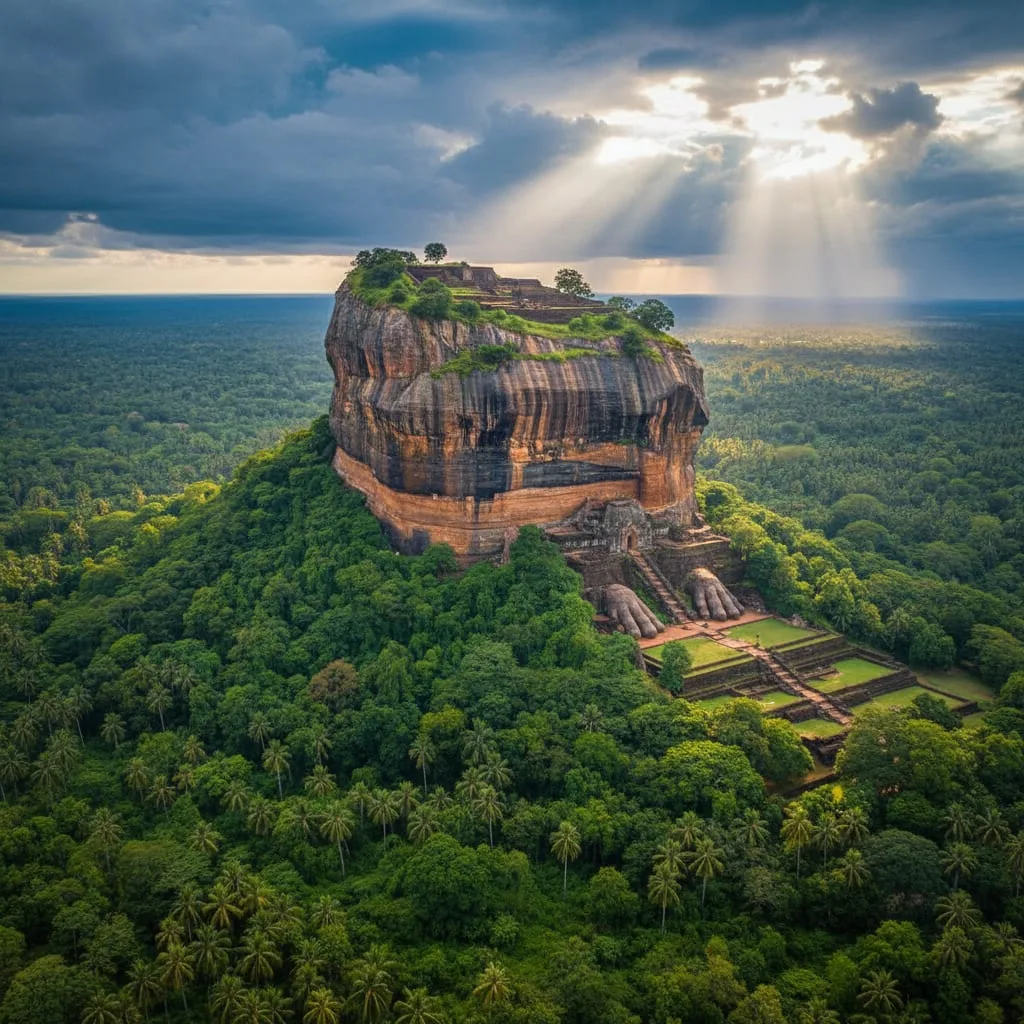
Tourism arrivals are at about 65% of pre-crisis levels. Enough to keep everything running smoothly, not enough to make Ella's Nine Arch Bridge feel like Mumbai's Dadar station. You'll find yourself at Sigiriya with maybe forty other people instead of four hundred. That matters.
Getting There: Chennai to Colombo in Under Two Hours
From India, Sri Lanka is almost embarrassingly close. Chennai to Colombo is 80 minutes by air — shorter than Chennai to Bangalore on a bad traffic day. Bengaluru, Mumbai, and Delhi also have direct flights, though Chennai has the most frequency and usually the best prices.
Expect to pay INR 8,000-12,000 for return flights if you book 6-8 weeks ahead. I've seen them as low as INR 6,500 during sales. SpiceJet, IndiGo, and SriLankan Airlines all fly the route. My preference is SriLankan — slightly pricier but the service feels different the moment you board. Hot towels, decent food, and staff who seem genuinely happy that tourism is back.
There's talk of the India-Sri Lanka ferry service restarting between Nagapattinam and Kankesanthurai (Jaffna), but as of early 2026, it's still not operational for regular passengers. When it does happen, it'll be a game-changer for Tamil Nadu travelers heading to Jaffna directly. Keep an eye on that.
Visa situation is excellent: Indians get 30-day visa-free entry as of 2024. Just show up with a passport valid for six months, proof of onward travel, and a hotel booking for your first night. No ETA application, no fees. This alone makes Sri Lanka easier to visit than Thailand or Indonesia.

The Classic Route: Colombo to Ella to Galle
Most first-timers do a version of this loop, and for good reason. It covers beaches, hills, history, and wildlife without requiring domestic flights or exhausting drives.
Colombo: Don't Skip It
Yes, I know — you didn't fly to Sri Lanka to see another South Asian capital with traffic and malls. But Colombo deserves a full day, maybe two. Pettah market is proper chaos in the best way, with everything from electronics to spices to gold stacked in shops that feel unchanged since the 1970s. Galle Face Green at sunset has the best isso wadai (prawn fritters) I've eaten anywhere, served from carts with views of cargo ships heading to port.
For food, skip the hotel restaurants and find Upali's for proper rice and curry, or Ministry of Crab if you're willing to splurge (budget INR 4,000 per person for a truly obscene amount of crab). Street food is safe and excellent. The kottu roti at Hotel de Pilawoos at 2 AM is a Colombo institution.
Stay in Kollupitiya or Bambalapitiya for good guesthouses around INR 2,500-4,000/night. Avoid Pettah for accommodation — great to visit, chaotic to sleep in.
Sigiriya: The Rock That Justifies Everything
You've seen the photos. You think you know what to expect. You don't.
Sigiriya is a 200-meter rock fortress that a paranoid fifth-century king built because he murdered his father and feared his brother's revenge. The climb is 1,200 steps in tropical heat, past frescoes of women that scholars have debated for centuries, through the remains of mirror walls and water gardens, to a palace on top of a flat rock that shouldn't geologically exist.
Go at 7 AM when gates open. By 10 AM it's hot. By noon it's unbearable. Entry costs LKR 7,500 (about INR 2,000) for foreigners — yes, the dual pricing stings, but this is the single most impressive thing I've seen in the subcontinent and I've been to Hampi, Ellora, and Angkor Wat. Sigiriya is in that league.
Stay in Dambulla (20 minutes away) for cheaper guesthouses, or splurge on Jetwing Vil Uyana for rice paddy views and serious luxury. Budget guesthouses in the area run INR 1,500-2,500/night.
Kandy: Mountains, Temples, and the Train
Kandy sits in the hills, noticeably cooler than the lowlands, centered around a lake and the Temple of the Sacred Tooth Relic — which houses, allegedly, an actual tooth of the Buddha. The evening puja ceremony is worth attending regardless of your religious inclinations. Just dress appropriately (white is traditional, but any modest clothing works).
But honestly, Kandy is mostly a staging point for the train to Ella. And that train is the reason you came to Sri Lanka.
The Ella Train: Why Everyone Loses Their Minds Over a Train Ride
I was skeptical. How good can a train be? I've been on the Nilgiri Mountain Railway, the Darjeeling Himalayan Railway, the Konkan route along India's western coast. I know scenic trains.
The Kandy to Ella train (or the Ella to Kandy direction, which some prefer for the afternoon light) is different. For seven hours, you snake through tea country — not just views of tea plantations, but through them, around them, above them. Tamil women picking leaves wave at the train. The track crosses viaducts that seem too old and narrow to hold the carriage. You pass through British-era stations that haven't changed since the 1920s.
Booking matters. Reserve your ticket 30 days ahead at www.railway.gov.lk. First class observation seats (LKR 1,500/INR 400) have the best windows but sell out within hours of release. Second class reserved (LKR 600/INR 160) is comfortable enough. If you miss reservations, show up at Ella station at 6 AM and queue for unreserved second class — you'll stand for the first hour but seats open up as the train empties.
The 6:39 AM train from Ella is packed with tourists doing the same thing you are. The 9:13 AM is slightly emptier. Both have the same route.
Ella: Stay Longer Than You Planned
Every traveler I met extended their Ella stay. The town itself is a one-street affair with restaurants, hostels, and shops selling elephant pants to backpackers. But the surrounding hills are why you're here.
The Nine Arch Bridge is Instagram-famous for a reason — a colonial-era stone viaduct set in a valley so green it hurts your eyes. Time your visit for when trains cross (check schedules, roughly 9 AM and 5 PM). Little Adam's Peak is an easy morning hike with panoramic views. Ravana Falls is close but crowded; better to find the smaller waterfalls that guesthouses can point you to.
For a couple days, Ella is perfect. Guesthouses range from INR 1,200 (basic) to INR 4,500 (boutique). Food is cheap and caters to every diet — I ate better vegetarian meals here than anywhere else in the country, which makes sense given the Sri Lankan Tamil influence.
The Southern Coast: Galle, Mirissa, and Blue Whales
From Ella, it's about four hours by bus or private car to the southern coast. The landscape drops from tea hills to palm-fringed beaches. This is where Sri Lanka does tropical properly.
Galle: Where History Has Better Lighting
Galle Fort is a UNESCO site and possibly the most photogenic square kilometer in South Asia. The Dutch built it in the 1600s, the British expanded it, and modern Sri Lanka has turned it into a tasteful blend of boutique hotels, cafes, art galleries, and sunset spots. Walk the ramparts at golden hour. Eat at one of the courtyard restaurants. Wander the narrow streets without a plan.
Critics call Galle over-touristified, and they're not wrong — this is the most manicured, least "authentic" part of Sri Lanka. But I don't care. Sometimes you want a beautifully restored colonial building serving excellent coffee with ocean views. Galle delivers that without apology.
For budget travelers, stay in Unawatuna (10 minutes south) where guesthouses are half the price and the beach is more swimmable than Galle's rocky shore.

Mirissa: Whales and Chill
Mirissa is where Colombo's young professionals come for weekend beach breaks. It's also one of the world's best places to see blue whales — the largest animals that have ever existed on Earth, larger than any dinosaur, passing within a few hundred meters of small boats.
Whale season runs from November to April. Book a morning tour (around LKR 10,000-15,000 per person, INR 2,600-4,000) and expect 5-6 hours at sea. Sightings aren't guaranteed, but success rates are around 90% in peak season. I've done whale watching in Iceland, Hawaii, and Mexico — Mirissa offers the best combination of price, sighting probability, and overall experience.
When you're not chasing whales, Mirissa beach is good for swimming and decent for surfing. Nightlife exists but isn't crazy. Food is fresh seafood at reasonable prices. A lazy couple of days here is easy to justify.

The Road Less Traveled: Jaffna and the Tamil North
For Indians, especially Tamil-speaking Indians, the north of Sri Lanka hits differently. This was the heart of the civil war zone. The scars are still visible — bullet-pocked buildings, war memorials, land still being de-mined in some areas. But Jaffna is also thriving again, and the Tamil culture here is unmistakably connected to Tamil Nadu while being distinctly Sri Lankan.
The food is spectacular if you like South Indian flavors: crab curry that's worth traveling for, jaffna rice (a biryani variant), and kool — a seafood and vegetable soup that's completely unique to the region. The kovils (temples) are dramatic, especially Nallur Kandaswamy with its towering gopuram.
Any sri lanka travel guide from india 2026 should mention that getting there takes commitment — it's 400 km from Colombo, about 6-7 hours by train or bus. But for Indians interested in the shared Tamil heritage, or in understanding the full complexity of Sri Lanka's history, Jaffna is essential. I'd recommend at least two nights.
Budget Reality for Sri Lanka from India 2026
Let me give you real numbers from my 2025 trip, converted at roughly 3.8 LKR = 1 INR:
Accommodation: Hostels LKR 3,000-6,000 (INR 800-1,600). Guesthouses LKR 7,000-15,000 (INR 1,800-4,000). 3-star hotels LKR 20,000-40,000 (INR 5,200-10,500). Boutique hotels and resorts LKR 50,000+ (INR 13,000+).
Food: Street meal LKR 500-800 (INR 130-210). Sit-down local restaurant LKR 1,500-3,000 (INR 400-800). Tourist restaurant LKR 3,000-6,000 (INR 800-1,600). Fine dining LKR 10,000+ (INR 2,600+).
Transport: Local bus per kilometer LKR 2 (INR 0.5 — absurdly cheap). Tuk-tuk per kilometer LKR 80-100 (INR 21-26). Private car with driver per day LKR 12,000-18,000 (INR 3,100-4,700). Train second class reserved LKR 300-600 (INR 80-160).
Activities: Sigiriya entry LKR 7,500 (INR 2,000). Whale watching LKR 10,000-15,000 (INR 2,600-4,000). Temple of the Tooth LKR 2,500 (INR 650). Surfing lesson LKR 5,000 (INR 1,300).
For a week in Sri Lanka, I'd budget INR 35,000-50,000 per person for a comfortable backpacker trip (hostels, trains, local food, main attractions). For mid-range comfort (3-star hotels, mix of private transport and trains, sit-down restaurants), budget INR 80,000-1.2 lakh. Add INR 8,000-12,000 for flights.
Compared to what you'd spend in Bali or Thailand for similar experiences, Sri Lanka represents exceptional value right now.
Practical Stuff Nobody Mentions
Currency: Carry USD and exchange on arrival at Colombo airport (rates are actually good there). ATMs work but charge LKR 500 per withdrawal. UPI doesn't work yet — this is a common question from Indian travelers. Credit cards accepted at upmarket places, cash everywhere else.
SIM cards: Dialog and Mobitel both have tourist SIM packages at the airport. Expect to pay LKR 1,500-2,500 (INR 400-650) for unlimited data for a week. Coverage is surprisingly excellent even in hill country.
Temple dress code: Both genders need covered knees and shoulders. Many temples also require you to remove shoes and hats. White is traditional but not required. This applies even at Buddhist sites — the rules are stricter than India in some ways.
Cricket: Sri Lanka and India share a cricket obsession that transcends borders. Catch a match at Galle stadium if timing works out — it's consistently rated one of the most scenic cricket grounds in the world. Even without tickets, watching at a local bar with Lankan fans is an experience.
The "Sri Lanka is like India 30 years ago" thing: You'll hear this from other Indian travelers and it's... complicated. There's shared heritage, similar foods, related languages in the Tamil areas. But Sri Lanka's development path has been different, and the country has its own distinct identity. Don't go expecting a cleaner version of home. Go expecting somewhere new that happens to feel familiar in interesting ways.
When to Visit Sri Lanka from India: Monsoons and Windows
Sri Lanka's weather is split by monsoon systems. The west and south coasts (Colombo, Galle, Mirissa) are driest December to March. The east coast (Trincomalee, Arugam Bay) is best May to September. The hill country (Kandy, Ella) can be visited year-round but is wettest October to January.
For Indians escaping monsoon season, June to August works well — you avoid India's heaviest rains and catch Sri Lanka's east coast at its best. December to March coincides with India's pleasant winter, making the competition for flights tighter and prices slightly higher.
I've been in April and November — both "shoulder seasons" — and found them perfectly fine. Occasional rain, yes, but also fewer tourists and better hotel rates. Unless you're specifically planning a beach-focused trip, don't stress too much about timing.
Is Sri Lanka Safe for Indians in 2026?
Sri Lanka in 2026 is safe for tourists. The political situation stabilized after the 2022 crisis. There are no active travel advisories against visiting from any major government. Common crime exists (pickpocketing, tourist scams) at similar levels to India — standard precautions apply.
The civil war ended in 2009. The north and east, which were conflict zones, are fully accessible. You'll see military presence in some areas, but it's routine, not threatening. I traveled alone through Jaffna and the east coast without any concerns.
If you've been reading about potential instability, here's the honest take: Sri Lanka went through a genuine crisis and came out the other side. The IMF deal is keeping things stable. Tourism is a critical part of the recovery and the country is trying hard to get travelers back. This creates an unusual dynamic where you're welcomed more warmly than in destinations that take tourists for granted.
For anyone nervous about international travel in general, check out our first international trip anxiety guide — a lot of those concerns apply here and there are practical ways to address them. And if you're traveling with older parents who might worry, our senior citizens travel guide covers the specific considerations worth thinking about.
A Week in Sri Lanka: Sample Itinerary
Day 1: Arrive Colombo. Explore Pettah market, Galle Face Green sunset, street food dinner. Stay Colombo.
Day 2: Early car to Sigiriya (4 hours). Climb the rock. Evening at Dambulla Cave Temple. Stay Dambulla/Sigiriya area.
Day 3: Morning drive to Kandy (2.5 hours). Temple of the Tooth afternoon visit and evening puja. Stay Kandy.
Day 4: 6:39 AM train to Ella (7 hours through tea country). Evening walk and dinner. Stay Ella.
Day 5: Nine Arch Bridge sunrise, Little Adam's Peak hike, lazy afternoon. Stay Ella.
Day 6: Morning car to Mirissa/Galle (4 hours). Afternoon at Galle Fort, sunset on ramparts. Stay Galle or Unawatuna.
Day 7: Optional early whale watching (return by noon) OR beach morning. Afternoon drive to Colombo airport (2.5 hours). Fly home.
This itinerary is tight but doable. With more days, I'd add a night in Jaffna, time in Trincomalee for diving, or extend Mirissa for proper beach relaxation. For a first trip from India though, this covers the highlights efficiently.
Why 2026 Specifically
The window I mentioned at the start is real. Sri Lanka is in recovery mode, which means infrastructure is functioning, prices haven't fully rebounded, and tourist numbers are manageable. This won't last. By 2027 or 2028, as arrivals return to pre-crisis levels, the experience will change — more crowds at Sigiriya, fully booked trains, higher prices.
Right now, for Indians, Sri Lanka offers something rare: a destination that's culturally familiar, geographically close, genuinely affordable, and still uncrowded. You can visit Sigiriya with space to breathe. You can book the Ella train without fighting for tickets. You can feel like you're discovering something rather than following a well-worn path.
That's what the comeback looks like from the ground. Not back to normal — better than normal, if you're a traveler who cares about the quality of the experience rather than just ticking boxes.
Before you book, make sure you've sorted the essentials — our international travel checklist covers everything from documents to packing. And if you're considering alternatives for monsoon season escapes, we've compared options that make sense for different budgets.
Sri Lanka is back. And in 2026, it might just be the smartest destination decision you make.
Planning a Sri Lanka trip and want help with the logistics? TripCabinet handles flight bookings, hotels, internal transfers, and itinerary planning — so you can focus on the experience rather than the spreadsheets.
Sri Lanka is just one of many countries Indians can visit easily. For the full list, see our indian passport visa free countries 2026 guide.
How to Plan a Sri Lanka Trip from India in 2026
Step-by-step planning guide for Indians traveling to Sri Lanka after the economic crisis recovery.
Check visa requirements
Indians get 30-day visa-free entry. Ensure your passport has 6 months validity and carry return tickets plus hotel bookings.
Book flights early
Fly from Chennai, Bengaluru, or Delhi. Chennai has the most frequency with flights under 90 minutes. Book 6-8 weeks ahead for prices around INR 8,000-12,000 return.
Plan your route
Classic 7-day route: Colombo (1 day) → Sigiriya (1 day) → Kandy (1 day) → Ella (2 days) → Galle (1 day) → Colombo (fly out). Add Mirissa for whales or Jaffna for Tamil heritage.
Book the Ella train in advance
Reserve seats 30 days before at railway.gov.lk. First class observation car sells out fast. Have a backup plan for unreserved second class if needed.
Arrange currency
Carry USD cash to exchange on arrival at Colombo airport. The LKR rate fluctuates, so check xe.com before traveling. ATMs work but charge fees. UPI does not work in Sri Lanka yet.
Pack appropriately
Temple visits require covered knees and shoulders (both genders). Bring mosquito repellent, sunscreen, and a light rain jacket for hill country. Modest swimwear for beaches.