

Georgia for Indians: Europe on a Bali Budget (And Nobody Knows About It Yet)
In this guide (12)
- Why This Georgia Country Travel Guide for Indians Matters
- Tbilisi: A City That Doesn't Make Sense (In the Best Way)
- Kazbegi: The Mountain Trip Everyone Does (For Good Reason)
- Georgian Food: What Indians Actually Need to Know
- The Wine Situation
- Beyond Tbilisi and Kazbegi: More Georgia Country Travel Guide for Indians
- The E-Visa Process for Indian Passport Holders
- Budget Breakdown: What This Georgia Country Travel Guide for Indians Reveals
- When to Go (And When to Skip)
- Safety and Practical Concerns
- The Not-So-Great Parts (Being Honest)
- Final Thoughts: Why This Matters for Indian Travelers
I told my colleagues I was going to Georgia. Half of them thought I meant the US state. This georgia country travel guide for indians exists because of those blank stares. "Georgia? The country? Where even is that?" Somewhere between Turkey and Russia, I said. And then I showed them photos. Cobblestone streets that looked like Prague. Mountains taller than anything in Switzerland. Wine older than European civilization itself. And prices? Cheaper than Goa in December.
That was two years ago. I have since been back three times. Every single trip, I meet maybe four or five other Indians. At a Georgian supra (feast), I was the first Indian the host family had ever met. They made me drink homemade chacha (grape vodka) and taught me Georgian toasts until 2 AM. This georgia country travel guide for indians is everything I wish someone had told me before that first bewildering, beautiful trip.
Why This Georgia Country Travel Guide for Indians Matters
Let me give you the elevator pitch for any georgia country travel guide for indians. Georgia offers European architecture, Caucasus mountains that make Ladakh look flat, eight thousand years of winemaking history, and food that will genuinely remind you of home. All of this for roughly 40% of what you would spend in Western Europe. Direct flights from Delhi run twice a week. The e-Visa takes five days. And unlike Schengen countries, nobody is going to interrogate you about your bank statements.
The Georgian hospitality reminded me of Punjabi culture. They won't let you leave the table hungry. Actually, they won't let you leave the table at all. Every meal becomes an event. Every stranger becomes a friend after two glasses of wine. I once asked for directions in Tbilisi and ended up having dinner at the guy's house.
But here's the thing nobody mentions in those Instagram reels. Georgia isn't perfect. The winter is brutal. Indian food is almost nonexistent outside Tbilisi. English is hit-or-miss once you leave the capital. And the marshrutka (shared minibus) system will test your patience and your spine. This guide covers all of it. The magic and the mess.
Tbilisi: A City That Doesn't Make Sense (In the Best Way)
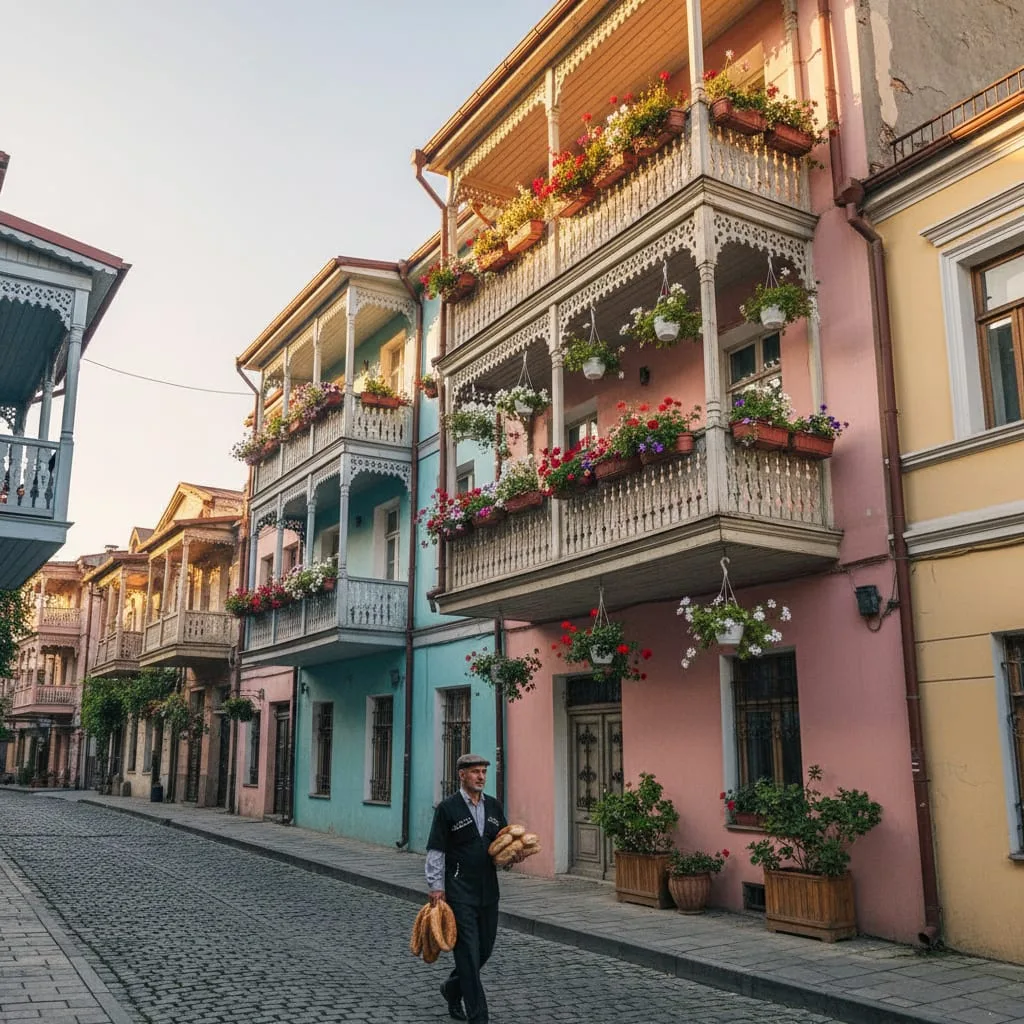
Tbilisi is what happens when Persian, Soviet, European, and Orthodox Christian influences collide in a valley. Carved wooden balconies hang over cobblestone alleys. A brutalist Soviet-era ministry building looms next to a 5th-century church. The new glass Bridge of Peace looks like it landed from a sci-fi movie. None of it should work together. All of it does.
Start in the Old Town. The area around Shardeni Street has the tourist infrastructure without being overly touristy. Cafes spill onto narrow lanes. Wine bars serve glasses for ₹150. The sulfur baths at Abanotubani are worth the slight egg smell — a full private room bath costs around ₹1,500 for an hour. Meidan Bazaar is where locals actually shop.
Where to Stay in Tbilisi
Skip the Marriott. Tbilisi's boutique hotels and guesthouses offer far better value and character. Rooms Hotel Tbilisi (₹6,000-8,000/night) is stunning if you have the budget. For mid-range, Fabrika Hostel has private rooms from ₹2,500 that feel more like a design hotel. Budget backpackers can find dorm beds for ₹800-1,000.
My personal recommendation? Rent an apartment in Vera or Mtatsminda districts. A full one-bedroom with kitchen runs ₹2,000-3,500/night on Airbnb. You'll feel like a local. And you can store your leftover khachapuri in the fridge.
Getting Around the City
Tbilisi Metro costs ₹4 per ride. Four rupees. For a system that actually works. Two lines cover the central areas. Buy a Metromoney card (₹15 deposit, refundable) and load it with credit. The same card works on buses.
Taxis are cheap by Indian standards but can rip you off. Use Bolt or Yandex apps. A ride across the city rarely exceeds ₹200. Never take a taxi without the meter or app — airport taxi scams exist here too.
Kazbegi: The Mountain Trip Everyone Does (For Good Reason)
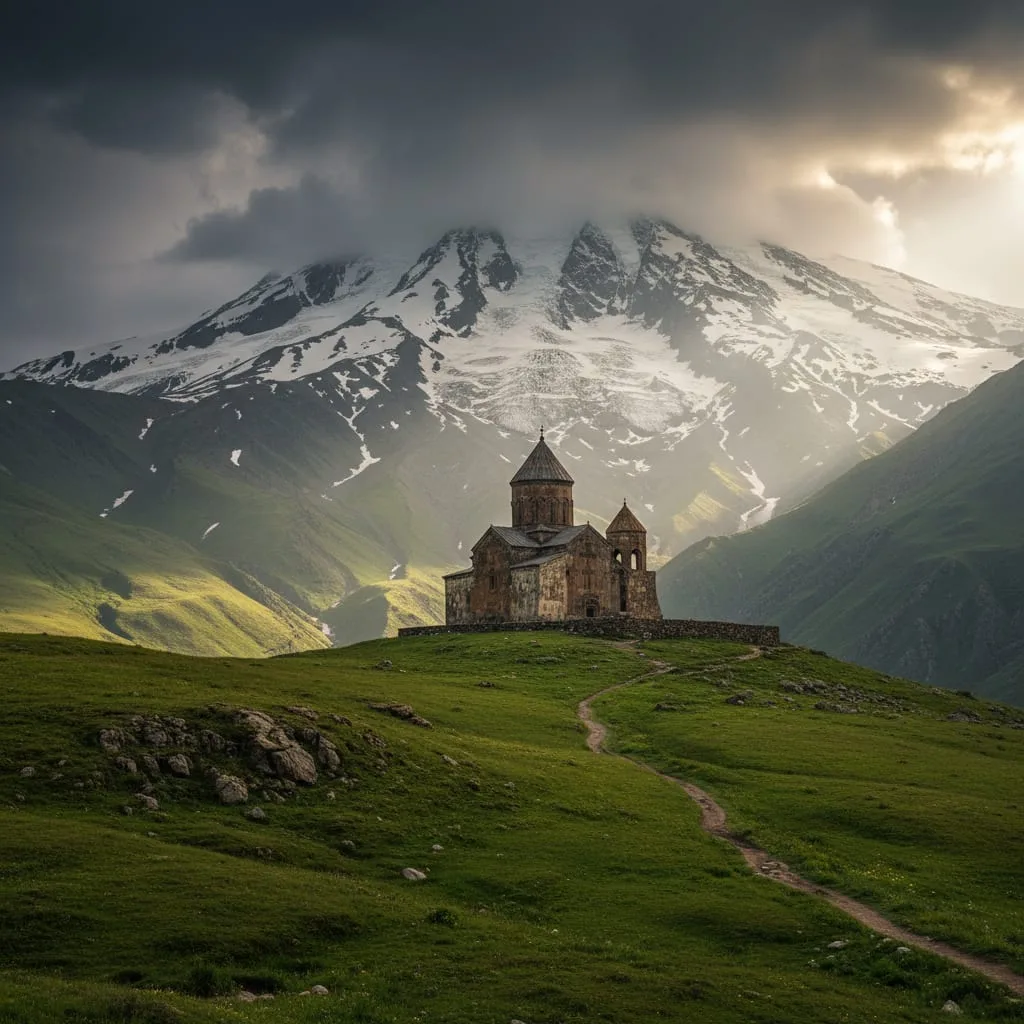
The Gergeti Trinity Church photo. You've seen it. A stone church perched impossibly on a green hill, Mount Kazbegi's 5,047-meter peak looming behind it, clouds swirling around the summit. Every Georgia article has this photo. I was determined to be cynical about it. Then I actually went.
The drive from Tbilisi takes three hours via the Georgian Military Highway. This isn't a highway by Indian standards — it's a winding mountain road through jaw-dropping scenery. The Ananuri Fortress appears about an hour in, overlooking a turquoise reservoir. Worth a 30-minute stop. The road climbs through Gudauri (ski resort town, dead in summer) and over the Cross Pass at 2,379 meters before dropping into Stepantsminda (the actual town name, but everyone calls it Kazbegi).
How to Reach Gergeti Trinity Church
You have three options. Walk uphill for 1.5-2 hours (free, good workout, spectacular views). Hire a 4x4 Delica van from the town square (₹600-800 per vehicle, 20 minutes each way). Or go with an organized tour from Tbilisi (₹2,500-3,500 per person including transport and lunch).
I recommend spending a night in Kazbegi. The evening light on the mountains is unreal. Rooms at Kazbegi Hotel start around ₹3,000 and offer mountain-view balconies. For budget options, guesthouses in town run ₹1,200-1,800 with home-cooked dinners included. The Georgian grandmas who run these places will feed you until you beg for mercy.
Georgian Food: What Indians Actually Need to Know
Georgian cuisine is a meat-lover's paradise. But vegetarians, don't panic. This country runs on bread and cheese, and that's not an exaggeration.
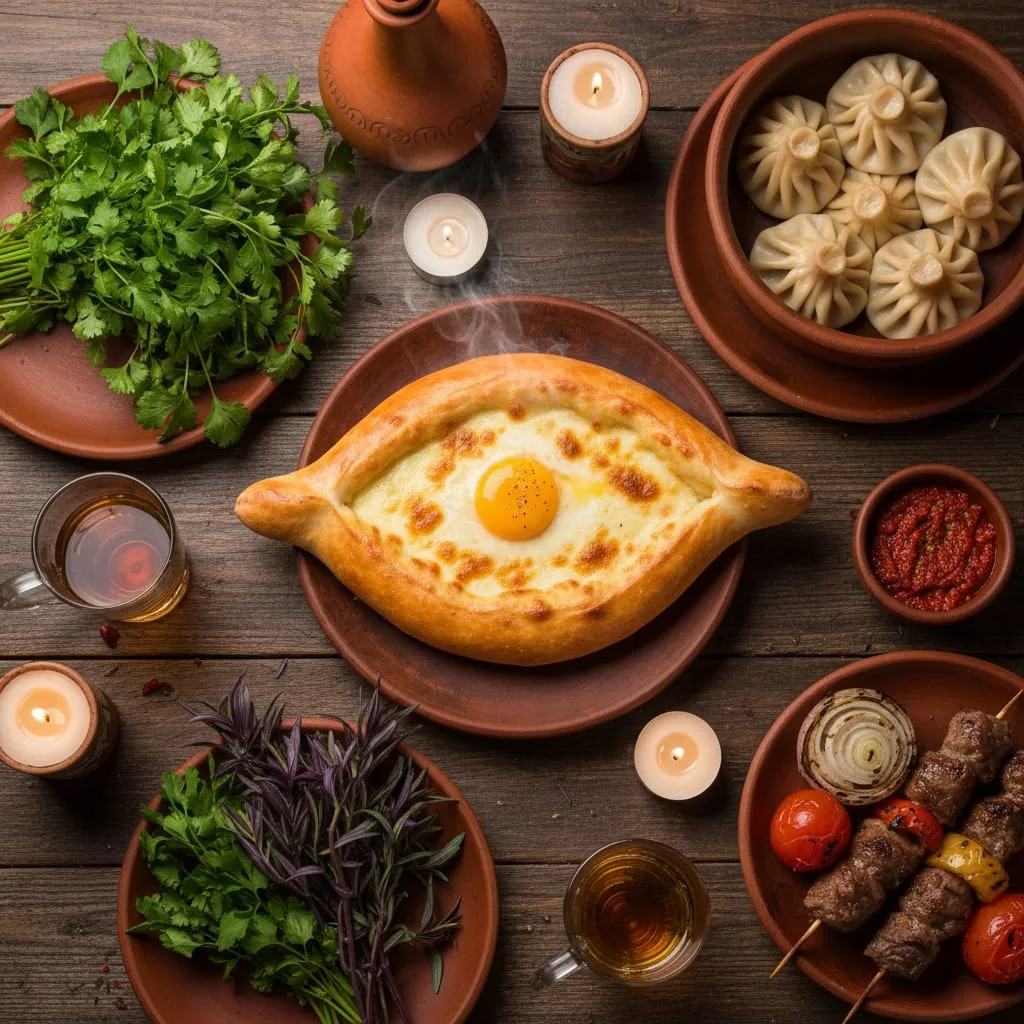
Khachapuri is the national dish. Think of it as a cheese-stuffed bread boat. The Adjarian version has a runny egg and butter in the center that you mix together. Every region has its own style — Imeretian is round, Mingrelian is topped with more cheese. One khachapuri (₹150-250) is a full meal. I ate it for breakfast, lunch, and sometimes dinner.
Lobiani is bean-filled bread. Less famous than khachapuri but equally good. The beans are spiced and mashed, almost like rajma without the gravy. ₹100-150 at any bakery.
Khinkali are Georgian dumplings. The meat ones are soup dumplings — you bite a hole, suck out the broth, then eat the rest. Locals count how many you can eat (anything under five is embarrassing). Vegetarian fillings include potato, cheese, or mushroom. ₹80-120 for five pieces.
Badrijani — fried eggplant rolls stuffed with walnut-garlic paste — are completely vegetarian and addictive. Pkhali is a spinach-walnut spread served on bread. Ajapsandali is ratatouille with Georgian spices.
Vegetarian Warnings
Georgian vegetable dishes sometimes include meat broth. Always ask "sakhortso ar aris?" (without meat?) or show Google Translate. Cheese is in everything — no lactose-free options outside upscale Tbilisi restaurants. Pure vegans will struggle. Our guide to vegetarian-friendly countries for Indian travelers ranks Georgia as "manageable with effort."
Missing Indian food desperately? Namaste India in Tbilisi serves passable North Indian dishes. Chai Khana does decent biryani. Prices are higher than you'd pay at home (₹400-600 for a main course), but when you need dal, you need dal.
The Wine Situation
Georgia claims eight thousand years of winemaking history. This isn't marketing fluff — archaeological evidence backs it up. They make wine in qvevri (large clay pots buried underground), a method UNESCO has recognized. The resulting amber wines taste unlike anything from France or Italy.
Wine is cheap. A bottle of solid local wine costs ₹150-300 at a supermarket. Restaurant glasses run ₹100-200. The famous Kindzmarauli (sweet red) or Mukuzani (dry red) are everywhere. Do a proper wine tour in Kakheti (the wine region, two hours from Tbilisi) — day trips run ₹2,500-4,000 including tastings at multiple wineries and lunch.
Beyond Tbilisi and Kazbegi: More Georgia Country Travel Guide for Indians
Batumi (Black Sea Coast)
Batumi is Georgia's beach city and gambling capital. It's got a weird Dubai-meets-Soviet vibe. Casinos line the waterfront. A Ferris wheel spins next to Ali and Nino, a moving sculpture of two figures eternally approaching and passing through each other. The beach itself is pebbles, not sand — painful on bare feet.
Summer in Batumi is packed with Russian and Turkish tourists. The nightlife is loud. I personally found two days more than enough, but if you want beach time, it's your only option. Direct trains from Tbilisi take five hours (₹400-800 depending on class).
Sighnaghi (The City of Love)
A tiny hilltop town in Kakheti wine country. Terracotta roofs, views of the Alazani Valley, and a ridiculous density of wine shops. The 24-hour wedding palace lets couples marry at any hour (residency requirements are minimal, which is why it's popular). One of the most photogenic villages I've seen anywhere.
Mestia and Ushguli (Svaneti Region)
For serious mountain scenery, Svaneti blows Kazbegi away. Mestia is a mountain town famous for medieval stone towers. Ushguli, further up, is one of the highest continuously inhabited settlements in Europe. The journey is rough — either an eight-hour marshrutka from Tbilisi or a scenic flight that runs twice weekly (weather permitting). Budget three to four days minimum.
The E-Visa Process for Indian Passport Holders
Good news: Georgia's e-Visa is straightforward. No appointment. No interview. No proof of massive bank balances. The process takes 5-7 working days in normal circumstances.
Apply at evisa.gov.ge (the official portal). You'll need passport scans, a passport-sized photo, confirmed hotel bookings, return flight tickets, and travel insurance covering Georgia. Single-entry visa costs USD 20 (approximately ₹1,700). Multiple-entry costs USD 50.
One catch: land border crossings from Turkey or Azerbaijan technically allow visa-on-arrival for some nationalities, but Indians should always have the e-Visa ready. Don't risk it. The international travel checklist for Indians covers all the documents you'll want.
Budget Breakdown: What This Georgia Country Travel Guide for Indians Reveals
Here's my real spending from a seven-day trip (solo traveler, comfortable but not luxurious):
- Flights (Delhi-Tbilisi round trip): ₹28,000 (Air Arabia via Sharjah)
- Accommodation (6 nights): ₹15,000 (mix of guesthouses and one boutique hotel)
- Food: ₹7,500 (eating out for every meal, plus wine)
- Transport (in-country): ₹4,000 (day trip to Kazbegi, metro, occasional taxis)
- Activities and entries: ₹2,500 (sulfur baths, wine tasting, museum entries)
- E-Visa: ₹1,700
- Travel insurance: ₹800
- Total: ₹59,500
This is for someone who isn't counting every rupee but isn't splurging either. You could do it cheaper — dorm beds, cooking your own food, skipping activities — and spend ₹40,000-45,000. Or go upscale with five-star hotels and guided tours and hit ₹1,20,000+. The point is: even "comfortable" Georgia costs less than "budget" Western Europe. Compare this with our guide to using UPI abroad for payment tips.
When to Go (And When to Skip)
Best months: May-June and September-October. Mild weather, fewer crowds, everything green. Wine harvest happens in September-October, making Kakheti visits especially festive.
Summer (July-August): Tbilisi hits 38°C. Brutal. But the mountains are perfect — Kazbegi and Svaneti are at their best. If you're doing a beach-and-mountain combo, this works.
Winter (December-February): Cold. Very cold. Tbilisi sees snow. But Gudauri becomes a ski destination (surprisingly good, surprisingly cheap), and Tbilisi has cozy wine-cellar vibes. Pack serious winter gear.
Avoid: March-April. The snow melts, turning mountain roads into mud rivers. Many highland routes close. Tbilisi is grey and rainy. Nothing is at its best.
Safety and Practical Concerns
Georgia is generally safe. Violent crime against tourists is rare. Tbilisi feels safer at night than most Indian cities. I walked home at 1 AM through Old Town multiple times without concern.
That said, some honest notes. A few Indian travelers report occasional stares or curiosity in rural areas — more ignorance than hostility. One friend mentioned a comment about skin color in a village bar, though it was isolated. Solo female travelers from India have mostly reported positive experiences. Our solo female travel guide discusses Georgia's safety record.
Driving yourself is possible but intense. Mountain roads have no guardrails. Georgian drivers are... creative. Buses and shared taxis are cheap and remove that stress.
If you're nervous about your first international trip, this guide to first international trip anxiety might help put things in perspective.
The Not-So-Great Parts (Being Honest)
The language barrier outside Tbilisi is real. Younger Georgians often speak English. Anyone over 40 probably speaks Russian and minimal English. Google Translate and gestures go a long way, but frustrating moments happen.
Marshrutkas (shared minibuses) are the main inter-city transport. They're cheap (₹200-400 for most routes) but uncomfortable. Fixed schedules are suggestions. AC is rare. Bring a cushion for your back.
Finding Indian food is a challenge. The diaspora is tiny. Outside those two Tbilisi restaurants, you're adapting to local cuisine or cooking yourself. If you absolutely need Indian food daily, Georgia may not be your destination.
The airport is small and slightly chaotic. Immigration is fast, but baggage claim can take forever. Flying through Sharjah or Istanbul adds layover fatigue. Direct flights are rare and expensive.
Planning to compare options? Check out our detailed Almaty vs Georgia comparison to see how these two offbeat destinations stack up for Indian travelers.
Georgia's straightforward e-visa, or visa-free entry for up to 90 days in any 180-day period if you hold a valid US, UK or Schengen/EU visa or residence permit, makes it one of the best digital nomad visa destinations for Indians — no income proof, just land and work.
Final Thoughts: Why This Matters for Indian Travelers
We've normalized Singapore, Thailand, Dubai, and Bali as Indian travel destinations. Nothing wrong with that. But Georgia offers something different. It's Europe before the Instagram crowds found it. It's mountains without the Himachal traffic. It's food and wine culture that rivals Italy at a fraction of the cost.
I came to Georgia expecting a budget alternative to Europe. I left genuinely loving the place. The chaos of Tbilisi markets. The silence of Kazbegi mornings. The way strangers become friends over a table of food.
This georgia country travel guide for indians covers the logistics. The actual experience? You'll have to go discover that yourself.
If Georgia whets your appetite for the region, consider adding Turkey to your list — our Turkey trip cost breakdown shows how affordable Cappadocia and Istanbul can be from India.
If Georgia has whet your appetite for offbeat destinations, check out our Uzbekistan travel guide from India — another budget-friendly Silk Road adventure that most Indian travelers overlook.
Planning to extend your Caucasus trip? Armenia makes a perfect pairing with Georgia — just 5-6 hours by bus from Tbilisi. Check our complete Armenia travel guide from India for budget tips, visa info, and itinerary suggestions.
Georgia's Gudauri resort is also one of the cheapest ski destinations for Indians. See our beginner ski trip guide for costs and tips.