

UPI Abroad in 2026: Every Country Where It Works and What Actually Happens at the Counter
In this guide (16)
- UPI Abroad Countries 2026: The Current Reality
- Singapore: The Gold Standard (Mostly)
- UAE (Dubai, Abu Dhabi): Hit or Miss
- Bhutan: UPI Abroad Countries 2026 Surprise Winner
- Nepal: Works for Small Stuff
- Sri Lanka: Newly Added, Still Spotty
- Mauritius: Limited but Growing
- France: Tourist Spots via Lyra Network
- Qatar: Select Locations Only
- Japan: Coming in April 2026 (Maybe)
- Malaysia: Agreement Signed, Implementation Pending
- The OTP Problem Nobody Talks About
- UPI Exchange Rate: Better or Worse Than Forex Cards?
- Which UPI App Should You Use Abroad?
- My UPI Abroad Survival Kit
- The Honest Verdict on UPI Abroad Countries 2026
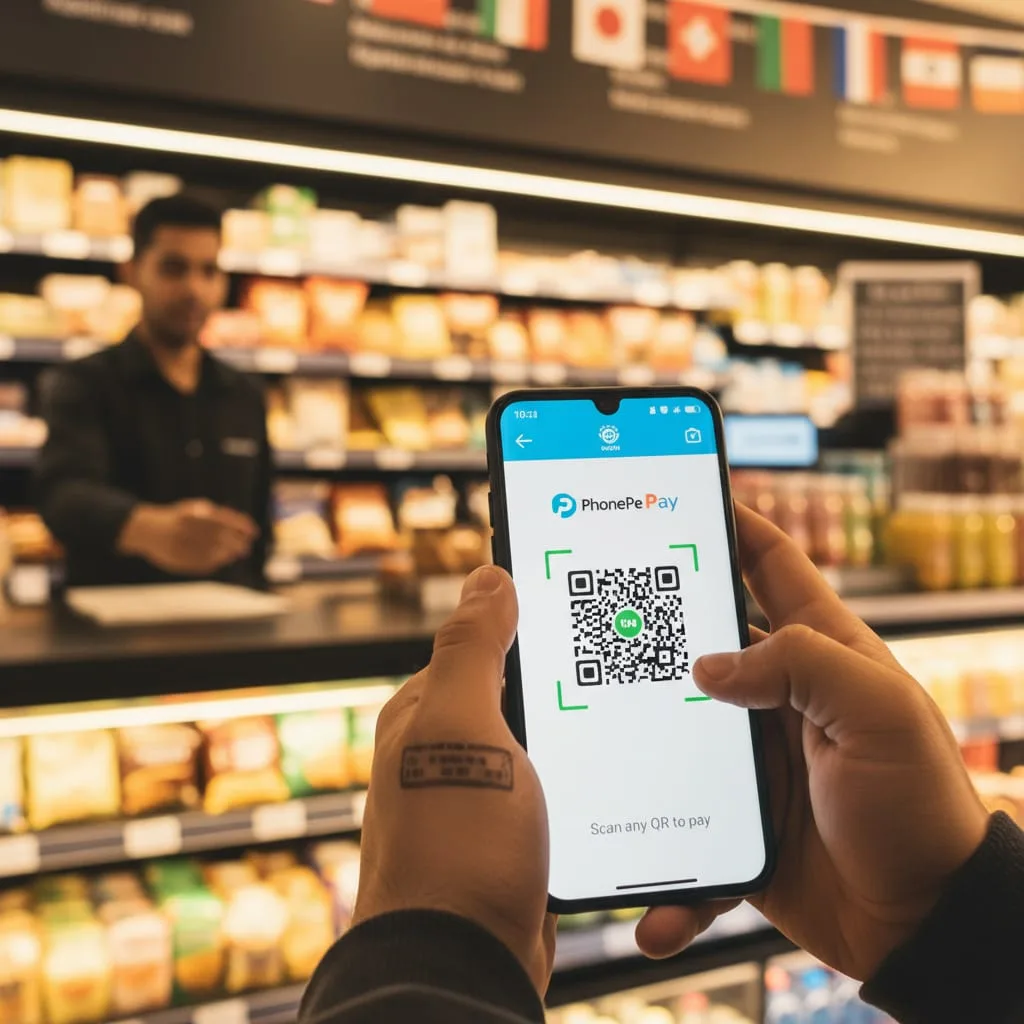
UPI abroad countries 2026 — let me tell you what that actually looks like. Picture this: I am standing at a 7-Eleven in Singapore, confidently holding my phone up to the QR code. The cashier watches. I watch the spinning wheel on PhonePe. "Processing..." Five seconds. Ten seconds. The guy behind me sighs. Fifteen seconds. "Transaction failed." The cashier gives me that look — the one that says "another Indian tourist trying this UPI thing."
I ended up paying with my forex card. Classic.
If you are researching UPI abroad countries 2026, here is the thing — the press releases make it sound like you can waltz into any store from Dubai to Tokyo and pay in rupees. The reality is messier, funnier, and occasionally infuriating. I have tried UPI in eight countries over the past two years. Sometimes it works beautifully. Sometimes it fails spectacularly. Sometimes the merchant has the QR code but has literally never seen anyone use it.
This is not another "UPI is now available in X countries" article. This is your real guide to UPI abroad countries 2026 — what actually happens when you stand at that counter, phone in hand, hoping the transaction gods are on your side.
UPI Abroad Countries 2026: The Current Reality
NPCI — the folks who run UPI — have been aggressively expanding. As of early 2026, they have partnerships in over a dozen countries. But here is what nobody tells you: having a partnership and having working payment infrastructure are two very different things.
Some countries have excellent UPI acceptance. Others have it "officially" but good luck finding a merchant who knows what to do when you show them a QR code. And then there is the app situation — PhonePe, GPay, and BHIM do not all work equally well abroad. I learned this the hard way in Dubai when GPay kept failing but PhonePe worked fine at the same store.
Let me break down each country where UPI abroad works in 2026, based on my experiences and reports from other Indian travelers who have actually tested this stuff.

Singapore: The Gold Standard (Mostly)
Singapore is where UPI abroad actually works like it should. NPCI partnered with PayNow years ago, and the infrastructure is mature. I have successfully paid at hawker centres, convenience stores, and even that fancy bar at Clarke Quay where cocktails cost more than my daily food budget back home.
Success rate: About 85% in my experience. The 15% failures are usually network issues or the specific merchant not being enrolled despite having a QR code displayed.
Which app works best: PhonePe is king here. GPay works but I have had more timeouts. BHIM? Tried it twice, failed twice, gave up.
Pro tip: Hawker centres are surprisingly good for UPI. The younger stall owners have embraced it. The older uncles running traditional stalls? Bring cash.
I have written a detailed guide on UPI payments in Singapore with specific merchant lists and troubleshooting tips. Check that out if Singapore is your main destination.
UAE (Dubai, Abu Dhabi): Hit or Miss
Ah, Dubai. Where everything is shiny and expensive and my UPI transactions work about 60% of the time.
The partnership with NEOPAY went live in 2023, but coverage is inconsistent. Lulu Hypermarket? Works great. I paid for groceries without any drama. That shawarma place in Deira? The guy looked at me like I had asked him to accept seashells as currency.
Success rate: 60% at best. Highly dependent on the merchant.
Which app works: PhonePe has the best UAE integration. GPay is catching up but still flaky. I would not bother with BHIM here.
The weird thing: Some merchants have the UPI QR code but their staff have never processed a UPI transaction. I once had to walk a cashier through accepting my payment. We got there eventually, but it took five minutes and a small crowd formed.
Backup plan: UAE is card-friendly everywhere. Your forex card or even international debit card will work fine. I use UPI for the novelty and small purchases, but anything above AED 100, I switch to card.
Bhutan: UPI Abroad Countries 2026 Surprise Winner
Plot twist: tiny Bhutan has better UPI acceptance than Dubai.
Seriously. The India-Bhutan payment corridor works remarkably well. It helps that Bhutan is small, the Royal Monetary Authority pushed adoption hard, and frankly, Indians are a huge chunk of their tourist population.
I paid for everything from my hotel in Thimphu to momos in Paro using UPI. The only place it did not work was a remote farmstay that had no internet anyway.
Success rate: 90% in towns and tourist areas. Drops off in very rural areas.
Which app works: All three work well here. Even BHIM. I know, I was shocked too.
Exchange rate: This is where it gets interesting. The Ngultrum is pegged to INR, so you are essentially paying in rupees anyway. No conversion markup. This makes UPI genuinely cheaper than forex cards here.
My favourite moment: A cafe owner in Paro saw me pull out PhonePe and said "Ah, Google Pay also works!" Turns out he uses GPay for his own purchases when visiting India. The cross-border integration is real.
Nepal: Works for Small Stuff
Nepal and India share a complicated history, a long border, and now, UPI connectivity.
The NPCI-Nepal linkage is operational, but there are quirks. Transaction limits are lower than domestic — you cannot do large payments. And acceptance is concentrated in Kathmandu and Pokhara. Venture into smaller towns and it is cash-only territory.
Success rate: 70% in major cities, near 0% in rural Nepal.
Transaction limit: NPR 50,000 per transaction (roughly ₹31,000). Fine for meals and shopping, not for hotel bills.
Which app works: PhonePe is most reliable. GPay has connectivity issues in areas with weak internet.
The OTP problem: This is where Nepal gets tricky. If you have swapped your Indian SIM for a local Nepali one to save on roaming, you will not receive bank OTPs. Either keep your Indian SIM active or use an app that supports in-app OTP (more on this later).

Sri Lanka: Newly Added, Still Spotty
Sri Lanka came online in late 2024, and honestly, it shows. The infrastructure is there. Merchants are enrolling. But day-to-day reliability? Not there yet.
I tried UPI at five places in Colombo last December. It worked at exactly two — a supermarket chain and a tourist restaurant in Galle Face. The other three had QR codes displayed but transactions failed.
Success rate: 40% currently. Give it another year.
Which app works: PhonePe only, in my testing. GPay did not even recognise the Sri Lankan QR format.
My advice: Treat UPI as a backup here, not your primary payment method. Sri Lanka still runs heavily on cash, and their card infrastructure has also been shaky since the economic crisis. Bring dollars or rupees to exchange.
Mauritius: Limited but Growing
Mauritius signed up with UPI primarily for the Indian tourist market. Makes sense — we flood their beaches every year.
Acceptance is concentrated in Port Louis and tourist areas. Grand Baie has a few places that take UPI. Go anywhere outside the main tourist corridor and nobody knows what you are talking about.
Success rate: 50% in tourist zones, near 0% elsewhere.
Which app works: PhonePe. I did not try others extensively here.
Exchange rate situation: The Mauritian Rupee is not pegged to INR, so you are getting currency conversion. The rate I got through UPI was about 1.5% worse than my forex card. Not terrible, but not great either.
France: Tourist Spots via Lyra Network
France is an interesting case. UPI works through Lyra Network, which primarily serves tourist-heavy locations in Paris and other major cities.
Think: Galeries Lafayette, duty-free shops at Charles de Gaulle, some restaurants near the Eiffel Tower. Basically, places where Indian tourists congregate and spend money.
Success rate: 75% at enrolled merchants. But finding enrolled merchants is the challenge. There is no good directory.
Which app works: PhonePe has the Lyra integration. GPay reportedly works but I have not personally tested it in France.
The psychological win: There is something deeply satisfying about paying for a croissant in Paris and seeing "₹287 debited" on your phone. Currency conversion anxiety, gone.
Reality check: France is card-country. Contactless payments are everywhere. Unless you specifically want to use UPI for the experience or the (marginally) better exchange rate, just tap your card.
Qatar: Select Locations Only
Qatar added UPI support around the 2022 World Cup. Smart move — millions of Indian fans were there.
Coverage remains limited to select malls and stores in Doha. Villaggio Mall has good UPI acceptance. Random shops in Souq Waqif? Not so much.
Success rate: 55% at listed merchants.
The catch: Qatar uses its own payment network that does not always play nice with Indian UPI. I had transactions fail citing "network incompatibility" which is a new error I had never seen before.
Japan: Coming in April 2026 (Maybe)
NPCI announced a trial partnership with JCB for UPI in Japan, starting April 2026. I am skeptical but hopeful.
Japan is notoriously cash-dependent. Even their own mobile payment systems have struggled with adoption. Whether Indian UPI can succeed where Japanese solutions have not... we will see.
Current status: Not operational yet. Do not expect to pay with UPI in Tokyo this spring.
My prediction: It will work at specific tourist shops in Tokyo and Osaka initially. Maybe some 7-Elevens because Lawson and 7-Eleven are usually early tech adopters. General acceptance? Years away.
Malaysia: Agreement Signed, Implementation Pending
Malaysia signed a UPI integration agreement in February 2026. Indians were excited. But as of today, it is not actually working.
If you are planning a Malaysia trip, pack your forex card. By late 2026 or 2027, UPI might be a real option. Right now, it is just press releases.
Current status: Not operational. PayNet Malaysia and NPCI are "working on integration." Corporate-speak for "maybe next year."

The OTP Problem Nobody Talks About
Here is a scenario that has ruined UPI for many Indian travelers abroad:
You land in a country. Indian SIM has no signal or roaming is too expensive. You buy a local SIM because data is cheap. You try to pay with UPI. Bank sends OTP to your Indian number. You cannot receive it. Transaction fails.
Game over.
Solutions that actually work:
- Keep your Indian SIM active: Get an international roaming pack. Jio's ₹575 pack gives you basic connectivity in many countries. You do not need data, just the ability to receive SMS.
- Dual-SIM phones: Keep Indian SIM in one slot, local SIM in the other. Best of both worlds.
- In-app OTP: Some banks (ICICI, HDFC) now support generating OTP within their app. No SMS needed. Check if your bank offers this before traveling.
- Raise transaction limits: Call your bank before traveling and ask to enable international transactions with higher OTP thresholds. Some banks allow OTP-free transactions up to ₹5,000.
UPI Exchange Rate: Better or Worse Than Forex Cards?
Before we dive in, if you want the full breakdown of all your payment options abroad, check out our forex for Indian travelers comparison which covers cards, cash, and UPI side by side.
The honest answer: it depends on the amount and country.
UPI uses your bank's exchange rate plus a conversion fee (typically 1-2%). Forex cards usually have a fixed rate locked in when you load money, plus a small markup.
For purchases under ₹5,000: UPI often wins. The convenience factor and real-time conversion mean fewer surprises.
For purchases over ₹10,000: A good forex card (Niyo, BookMyForex) usually gives better rates. The difference can be ₹200-500 on a ₹20,000 transaction.
Bhutan exception: Since the Ngultrum is pegged 1:1 with INR, there is zero conversion. UPI is the cheapest option there.
My approach: I use UPI for small daily expenses (meals, transport, small shopping) and forex card for bigger purchases (hotels, shopping sprees, adventure activities). The mental peace of seeing INR on my screen for small stuff is worth any marginal extra cost.
Which UPI App Should You Use Abroad?
Not all UPI apps are created equal when it comes to international payments.
PhonePe: Clear winner. Best international partnerships, most reliable connectivity, fewest random failures. If you only install one UPI app for international travel, make it PhonePe.
Google Pay: Works but inconsistent. I have had it fail in countries where PhonePe worked fine at the same merchant. The interface is cleaner though, and error messages are more helpful.
BHIM: The government's own app, ironically, has the worst international support. It works in Bhutan. Beyond that, I have had very limited success. Maybe NPCI should focus on their own app.
Paytm: Separate category because Paytm uses its own wallet plus UPI. The wallet does not work abroad. The UPI portion theoretically should, but I have never successfully completed an international Paytm transaction. YMMV.
My UPI Abroad Survival Kit
After multiple trips and countless payment attempts, here is what I pack:
- PhonePe: Primary UPI app, linked to my main bank account.
- GPay: Backup UPI app, linked to a different bank. Sometimes one fails and the other works.
- Forex card: Niyo Global or similar. For bigger purchases and when UPI inevitably fails.
- Indian debit card: International transactions enabled, as emergency backup.
- Cash: Always carry local currency equivalent of ₹5,000. Some places just do not accept cards or UPI.
- Indian SIM with roaming: For those crucial OTPs.
The Honest Verdict on UPI Abroad Countries 2026
UPI international expansion is real progress. Two years ago, I could not have paid for laksa in Singapore with my Indian bank account. Now I can. That is genuinely amazing.
But let us not pretend it is seamless. Press releases claim UPI works in a dozen countries. Reality says it works reliably in maybe three or four. The infrastructure is there for others, but adoption, training, and actual merchant enrollment lag behind.
After testing UPI abroad countries 2026 extensively, here is my honest ranking by reliability:
- Bhutan — 90% success, near-INR parity, works everywhere tourists go
- Singapore — 85% success, excellent infrastructure, wide acceptance
- Nepal — 70% success in cities, good for small transactions
- UAE — 60% success, patchy but improving
- France — 75% at enrolled merchants, but finding them is hard
- Qatar — 55% success, limited coverage
- Mauritius — 50% in tourist areas only
- Sri Lanka — 40% and inconsistent, needs time
- Japan — Trial starting April 2026
- Malaysia — Agreement only, not yet operational
The key is managing expectations. UPI abroad is not a replacement for your forex card yet. It is a convenient supplement for small purchases, a conversation starter ("Wait, you can pay in rupees from India?"), and occasionally, a source of entertainment when it fails spectacularly.
Keep your backup payment methods ready. Embrace the occasional failure as part of the adventure. And when it does work — that moment of seeing "₹" instead of foreign symbols on your screen while standing in another country — it really does feel like the future.
Planning your international trip? Check out our destination guides or let TripCabinet plan everything so you can focus on the important stuff. Like figuring out whether UPI will work at that street food stall.
Planning your connectivity abroad? See our complete breakdown of international SIM vs eSIM options to ensure you can receive OTPs and use UPI smoothly while travelling.