

Uzbekistan: Silk Road on a Budget from India
In this guide (14)
- Why Uzbekistan Should Be on Your Radar (Right Now)
- Uzbekistan Travel Guide from India: Getting Your E-Visa
- Flights from India: Direct vs Connections
- Tashkent: More Than a Transit Stop
- Samarkand: The Reason You Came
- Bukhara: The Medieval Maze
- Khiva: The Walled City Frozen in Time
- The Food Situation: Better Than Expected
- Money Matters: Som, Dollars, and Cards
- 7-10 Day Budget Breakdown for Indian Travelers
- Is Uzbekistan Safe for Indians? What to Know Before You Go
- Practical Info Box
- Final Thoughts: Why Now Is the Time
- Frequently Asked Questions
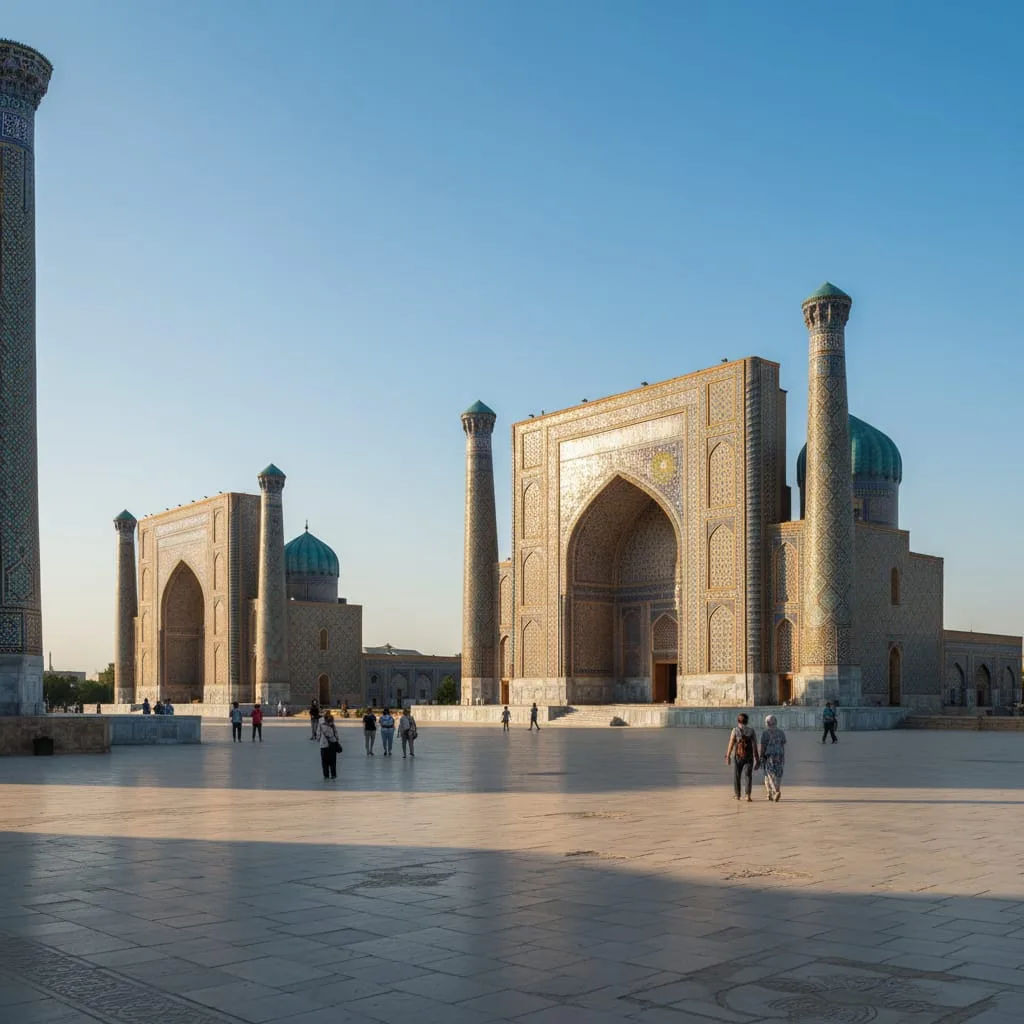
Uzbekistan is easy to overlook. The name sounds vague, the location confusing (Central Asia? Where exactly?), and few Indian travellers know anyone who has been. Then you see photos of Registan Square in Samarkand at sunset. This Uzbekistan travel guide from India covers what first-time visitors from India need to know before they go.
Picture a centuries-old madrasa courtyard in Bukhara, tea with a carpet seller who has picked up some Hindi from Bollywood films, a plate of plov for about Rs 150 and a boutique hotel with hand-carved wooden ceilings for around Rs 1,800 a night, all under turquoise domes that look like they belong in a dream sequence from a Shah Jahan epic.
This guide covers everything: practical stuff like e-visas and train bookings, the money stuff like how ridiculously cheap everything is, and the stuff nobody tells you — like which restaurants locals actually eat at, why you need to carry small dollar bills, and the one mistake every first-timer makes in Khiva.
Why Uzbekistan Should Be on Your Radar (Right Now)
Uzbekistan is having a moment, but most Indian travelers have not caught on yet. While everyone chases the same tired Thailand-Bali-Dubai circuit, the Silk Road cities are sitting there practically empty, absolutely stunning, and costing a fraction of what you would spend anywhere else.
The architecture alone is worth the trip. We are talking about buildings that make the Taj Mahal look like a warm-up sketch. Massive madrasas covered floor-to-ceiling in blue tilework. Minarets that have stood since Genghis Khan passed through. Cities where the entire old town is a UNESCO World Heritage Site. Not a building. The entire town.
But here is what surprises many Indian visitors: the cultural connection. Uzbek and Hindi share words. The food has familiar flavors — cumin, coriander, dill. People know about India, respect India, and genuinely light up when they meet Indian tourists. Expect to hear "Hindustan" a lot once people learn where you are from.
Uzbekistan Travel Guide from India: Getting Your E-Visa
Forget everything you know about visa stress. Uzbekistan rolled out an e-visa system a few years ago and it actually works. Like, properly works.
Head to e-visa.gov.uz, the official portal, fill out the form (takes 15 minutes), upload a passport photo and a scan of your passport info page, pay the $20 consular fee (approximately Rs 1,900), and wait. The e-visa arrives by email as a PDF, usually within 2-3 working days.
The visa is valid for 30 days, single entry. More than enough for a 10-day trip. Carry it printed or on your phone to show at immigration.
Visa-free if you already hold certain visas: since 1 September 2026, Indian citizens with a valid multiple-entry business or tourist visa for the USA, UK, a Schengen country, Canada, Australia, New Zealand, Japan or South Korea, plus an air ticket onward to India or a third country, can enter Uzbekistan visa-free for up to 30 days (presidential decree of 29 August 2026). Everyone else still needs the e-visa, so re-check the rules before you book.
Compared to the Schengen nightmare or even the visa-free countries where documentation is still complicated, Uzbekistan feels refreshingly straightforward. No interview, no bank statements, no invitation letter. Just apply and go.
Flights from India: Direct vs Connections
The golden route is nonstop from Delhi to Tashkent on Uzbekistan Airways or Centrum Air. About three hours, no layovers, and usually Rs 25,000-35,000 round trip if you book 6-8 weeks ahead. Uzbekistan Airways also flies nonstop from Mumbai (about four hours). The airline is not fancy but it gets the job done. Decent legroom, food that tastes like home-cooked Uzbek meals, and staff who smile.
From Bangalore and other cities, you are looking at connections. The best options:
- Via Dubai — flydubai or Emirates. Usually the cheapest combined route from non-Delhi cities.
- Via Istanbul — Turkish Airlines. Slightly longer but Istanbul airport is excellent for layovers.
- Via Almaty — Air Astana. If you want to combine Kazakhstan into the trip.
Check our flight booking guide for tricks on finding deals. Delhi-Tashkent fares can drop to around Rs 18,000 return during sales.

Tashkent: More Than a Transit Stop
Most people treat Tashkent as an arrival/departure point. That is a mistake. Give it at least a full day — the city has layers that reward exploration.
Chorsu Bazaar
This is not a touristy market. This is where Tashkent actually shops. Under a massive turquoise dome, hundreds of vendors sell everything: pomegranates the size of softballs, dried apricots in every variety, fresh non (bread) straight from clay ovens, horse meat sausages (yes, that is a thing), mountains of spices, and handmade ceramics. Go hungry. Leave heavier.
The bread alone is worth 30 minutes of your time. Each region of Uzbekistan makes its own style — some soft and fluffy, others crispy and stamped with intricate patterns. At Rs 20-30 per loaf, you can try them all.
Amir Timur Square and the Soviet Metro
The city center has this fascinating mix of Soviet grandeur and Timurid ambition. The square features a massive Tamerlane statue (Amir Timur was his title), surrounded by fountains and government buildings that look straight out of Moscow.
But the real Soviet treasure is underground. Tashkent Metro was designed during the Cold War to double as a bomb shelter, so they made the stations absolutely beautiful. Marble columns, chandeliers, mosaics glorifying cosmonauts and cotton farmers. A ride costs 1,700 som (about Rs 13) paid electronically, and the city has proposed raising it to 2,500 som from October 2026. Spend an hour just riding between stations and photographing.
Where to Stay in Tashkent
Skip the expensive international hotels. The boutique guesthouse scene is excellent and cheap. Spotless rooms with breakfast near Chorsu start around Rs 1,500. Airbnb also works well here — apartments for Rs 1,200-2,000 in central locations.
Samarkand: The Reason You Came
Samarkand is where this trip goes from interesting to unforgettable — the city that launched a thousand Instagram posts. Uzbekistan also serves as a key waypoint on the India to Europe overland train journey via the Trans-Siberian route.
Registan Square
Three massive madrasas facing each other across a public square, each covered in tilework that changes color with the sunlight. Visit at dawn, midday, and sunset for three completely different experiences. The dawn light turns the blue tiles green. Midday makes them almost purple. Sunset? Pure gold fading to deep indigo.
Entry for foreign visitors is about 100,000 som (roughly Rs 750). There is a tour you can pay extra for but honestly, just wander. Go inside the madrasas. Climb to the viewpoints. Sit in the courtyard and watch the light change.
Evening sound-and-light show runs most nights. Not essential but enjoyable if you are staying overnight anyway.
Shah-i-Zinda Necropolis
This one is deeply moving. A narrow avenue lined with mausoleums, each one more elaborately tiled than the last, ascending a small hill toward a shrine. The tilework here is older and more intricate than Registan — 14th century craftsmanship that looks fresh.
Go early morning. By 10 AM, tour groups flood in and the magic diminishes. There is something about having those narrow corridors to yourself, watching how the light filters through the intricate screens. Entry is about 80,000 som (roughly Rs 600).
Bibi-Khanym Mosque and Siyob Bazaar
The mosque was the largest in Central Asia when Tamerlane built it for his wife. It collapsed from ambition — the structure was too big for the technology of the time. What remains is a magnificent ruin being slowly restored.
Siyob Bazaar sits right next to it. Smaller than Chorsu but more photogenic. The bread section here is famous — look for the ornately stamped Samarkand non that locals give as gifts for weddings and births.
Ulugh Beg Observatory
A 15th-century astronomical observatory built by Tamerlane grandson. The guy calculated the length of a year to within 58 seconds. All using instruments carved from stone. The museum and remnants of his massive sextant are surprisingly interesting even if astronomy is not your thing. Entry about 75,000 som (roughly Rs 560).
Getting to Samarkand: The Afrosiyob Train
This is the best way to travel between cities in Uzbekistan. The Afrosiyob (sometimes spelled Afrosyab) is a high-speed Spanish-built train that connects Tashkent-Samarkand-Bukhara. Tashkent to Samarkand takes about 2 to 2.5 hours, costs around 311,000 som (about Rs 2,300) in economy class, and runs multiple times daily. Booking opens 60 days ahead and Afrosiyob seats sell out fast.
Book at eticket.railway.uz, the official Uzbekistan Railways booking site (switch the language to English at the top right), or use the Uzbekistan Railways app.
Bukhara: The Medieval Maze
If Samarkand is the showstopper, Bukhara is where you want to linger. The old town is compact, walkable, and feels genuinely ancient. No Disney-fied restoration here — these are real alleys where people live, pray, and sell things their families have sold for centuries.

Poi Kalon Complex
The Kalon Minaret dominates the Bukhara skyline — a 47-meter tower that has survived earthquakes and Mongol invasions. Legend says Genghis Khan looked up at it, was impressed, and spared it. Everything else he burned.
The complex includes a mosque and a madrasa. The tilework is more geometric than Samarkand, older and subtler. Entry to the mosque is free. Madrasa costs Rs 150.
Ark Fortress
This was the royal residence for a thousand years. Emirs ruled, ambassadors visited, and occasionally prisoners were thrown from the walls (Bukhara had a dark side). The museum inside covers the full sweep of Bukhara history. Entry about 60,000 som (roughly Rs 450).
Lyabi-Hauz
A mulberry-shaded pool surrounded by cafes and madrasas. This is where Bukhara relaxes. Grab a table, order tea and shashlik, watch the world pass by. Evenings are particularly lovely when fairy lights come on and local families come out to stroll.
Carpet Shopping (The Real Deal)
Bukhara is famous for carpets. Not tourist-trap carpets but actual handmade pieces that collectors fly in to purchase. If this interests you, prepare to spend hours drinking tea with dealers, learning about knot counts and natural dyes, and negotiating. A small carpet suitable for wall-hanging costs Rs 8,000-15,000. Larger pieces can be whatever your budget allows.
The dealers know Indians appreciate textiles. Expect animated conversations comparing Uzbek weaving traditions to Kashmiri craftsmanship.
Khiva: The Walled City Frozen in Time
Khiva is further west and takes more effort to reach (about 7.5 hours on the high-speed train, which runs three days a week, an overnight sleeper, or a domestic flight to Urgench). But if you have 9-10 days, include it. The entire inner city — Itchan Kala — is a UNESCO site. Every building is old. Every alley is photogenic. It feels like stepping into a movie set except it is all real.
Practical Khiva Tips
- Buy the combined ticket (about 250,000 som, roughly Rs 2,000, valid two days) — covers most monuments inside the walls; a few towers cost extra.
- Stay INSIDE Itchan Kala. Hotels are former madrasas or merchant houses. Costs Rs 2,000-3,500/night. Worth every rupee for the experience of sleeping in a 400-year-old building.
- Sunrise from the walls is magical. The watchtowers are climbable. Go before 6 AM to have it to yourself.
- The restaurant scene inside is limited. Best food is actually outside the walls at local chaikhanas (tea houses).
The Food Situation: Better Than Expected
If you are bracing for bland Soviet cafeteria food, think again. This is a cuisine that Indians will instantly connect with. Cumin, dill, coriander — these are their base spices too.
Must-Try Dishes
Plov — The national dish. Rice cooked with meat, carrots, onions, and spices in massive communal pots. Every region makes it differently. Samarkand plov is oilier. Bukhara plov has more chickpeas. Tashkent plov is lighter. A plate costs Rs 100-200.
Somsa — Essentially samosas. Triangular pastries filled with lamb and onions, baked in clay ovens. Best eaten fresh from the oven with tea. Rs 30-50 each.
Lagman — Hand-pulled noodles in a spiced tomato-meat broth. The noodles are made fresh in front of you. Watch the chef stretch and fold the dough into impossibly thin strands. Rs 150-250.
Shashlik — Grilled meat skewers. Nothing fancy but consistently excellent. Lamb is best. Served with raw onion and flatbread. Rs 200-400 for a full portion.
Vegetarian Reality Check
Be warned — Uzbekistan is meat country. Vegetarian options are limited. What works: eggs everywhere, excellent fresh salads, cheese, dried fruits and nuts from bazaars, bread, and specifically requesting dishes bez myasa (without meat).
Tashkent has a few vegetarian-friendly restaurants. In other cities, stick to bazaars and adapt. Carrying instant noodles or Indian snacks helps for backup meals. Nothing like eating Maggi in a 15th-century caravanserai.
Money Matters: Som, Dollars, and Cards
The Uzbek Som is the local currency. In September 2026, 1 USD is about 12,800 Som (Rs 1 = roughly 133 Som). The numbers feel absurd — a nice meal might cost 150,000 Som. But that is about Rs 1,100.
What Actually Works
Cash is king — Bring USD in small denominations ($1, $5, $10, $20). Banks and exchange offices are everywhere. Rates are standardized (unlike some countries). Bring crisp notes: official exchange booths refuse damaged or marked notes and US dollars issued before 2013, and changing money on the black market is illegal. Some hotels quote in dollars directly.
Cards — Mastercard and Visa work at ATMs and nicer restaurants in Tashkent. Outside the capital, card acceptance drops dramatically. Always have cash backup. Check our forex guide for the best ways to carry money abroad.
UPI — Does not work. Not yet anyway. Maybe in the future.
7-10 Day Budget Breakdown for Indian Travelers
Here is what a well-traveled but budget-conscious trip typically costs:
| Expense | 10 Days Total |
|---|---|
| Flights (Delhi round trip) | Rs 28,000-35,000 |
| Accommodation (boutique hotels) | Rs 15,000-20,000 |
| Food (local restaurants + bazaars) | Rs 6,000-8,000 |
| Transport (trains + taxis) | Rs 8,000-11,000 |
| Entry tickets | Rs 4,500-6,000 |
| SIM card + misc | Rs 1,500-2,000 |
| Total | Rs 63,000-82,000 |
Budget travelers staying in hostels (yes, they exist) and eating primarily from bazaars can do this under Rs 50,000. Comfort seekers who want nicer hotels and restaurants might spend Rs 90,000 or more. Still absurdly cheap for what you get.
Is Uzbekistan Safe for Indians? What to Know Before You Go
Uzbekistan is a relaxed country to travel in, and Indian visitors are usually welcomed warmly. The risks are mostly petty theft and paperwork rather than violence. These are the points the UK government's travel advice for Uzbekistan (updated March 2026) highlights, and they apply equally to Indian passport holders:
- Pickpockets: pickpocketing and bag-snatching are common in crowded places like bazaars (Chorsu, Siyob) and on public transport. Keep your phone and passport in a zipped inner pocket and do not carry all your cash in one place.
- Registration: every foreign visitor must be registered within 3 days of arrival. Hotels and guesthouses do this for you, with the tourist tax in the bill. Keep the registration slips, because officials can ask for a full record of where you stayed when you leave, and missing days can mean a fine per day. If you stay in a private home, your host must register you through the E-mehmon system.
- Medicines: carry a doctor's prescription for prescription medicines and declare them on your customs form. Some common cold and cough medicines that contain codeine can cause problems on entry, so check the customs list before you pack.
- Photography: check before taking photos near government buildings, airports, border posts, military sites, bridges and police stations.
- Money: change cash only at banks and official booths. Black-market exchange is illegal, and there are very few ATMs outside the main cities that accept foreign cards.
- Taxis: use official airport taxis or app-booked rides (Yandex Go or MyTaxi) rather than unlicensed cars.
- Overstaying: border guards check your exit stamp against the 30-day limit, and even a short overstay can mean a fine or deportation.
Terrorist attacks cannot be ruled out, as in most countries, so stay alert in crowded places. Dress modestly at mosques and madrasas (knees and shoulders covered).
Practical Info Box
Best Time to Visit: April-May or September-October. Pleasant temperatures (15-25 degrees Celsius), manageable crowds, blooming or golden landscapes. Avoid June-August (extreme heat, 40 degrees Celsius plus) and December-February (cold, limited hours at some sites).
Getting Around: Afrosiyob high-speed train between major cities. Shared taxis for shorter routes. Domestic flights to Khiva/Urgench if time is tight. No need for a car.
SIM Card: Beeline, Ucell, or Mobiuz (formerly UMS) available at airports and in cities. Rs 500 gets you unlimited data for a month. English-speaking help at airport counters.
Safety: Generally safe for visitors, but watch for pickpockets in bazaars and on public transport (see the safety section above). Solo female travelers report feeling comfortable. Police are visible but unobtrusive.
Language: Uzbek is official. Russian is widely spoken by older generations. English is limited but growing among youth. Google Translate offline pack is essential. Learn rahmat (thank you) and necha pul (how much).
What to Pack: Comfortable walking shoes (cobblestones everywhere), sunscreen (high altitude sun), layers (desert temperature swings), modest clothing for mosque visits (knees and shoulders covered), small gifts from India (appreciated when meeting locals).
Final Thoughts: Why Now Is the Time
Uzbekistan is changing fast. New hotels are opening. Prices are slowly rising. The Instagram crowd is discovering Registan. In five years, this might be the next Georgia — brilliant but overrun.
Right now, you can visit when the cities are still quiet, the prices still ridiculous, and the experience still feels like discovery rather than tourism. If Georgia was your introduction to offbeat destinations, Uzbekistan is the next chapter.
Most visitors come expecting old buildings and leave with something harder to describe — walking through history, eating food that tastes like home, and meeting people who seem genuinely happy you found their corner of the world.
Pack light. Bring small dollar bills. And go soon.
While exploring Central Asia, consider extending your journey to Kyrgyzstan. The Kyrgyzstan travel guide for Indian travelers covers yurt stays with nomads, horse treks, and stunning alpine lakes — a perfect adventure complement to Uzbekistan's architectural wonders.
Frequently Asked Questions
Do Indians need a visa for Uzbekistan?
Most Indians need a visa, but Uzbekistan offers an easy e-visa for $20 (approximately Rs 1,900). The process is entirely online through e-visa.gov.uz, takes 2-3 working days, and requires no embassy visit. You get a 30-day single entry tourist visa. Since 1 September 2026, Indians holding a valid multiple-entry US, UK, Schengen, Canadian, Australian, New Zealand, Japanese or South Korean visa plus an onward air ticket can enter visa-free for up to 30 days.
How much does a 10-day Uzbekistan trip cost from India?
A comfortable 10-day Uzbekistan trip costs approximately Rs 63,000-82,000 per person including flights (Rs 25,000-35,000 round trip), accommodation (Rs 1,200-2,500/night), food (Rs 500-800/day), transport (Rs 8,000-11,000 total), and entry tickets (Rs 4,500-6,000). Budget travelers can do it for under Rs 50,000.
Is Uzbekistan safe for Indian tourists?
Uzbekistan is generally safe for Indian tourists. Pickpocketing and bag-snatching do happen in crowded bazaars and on public transport, but people are genuinely friendly, and Indians often receive warm welcomes due to cultural similarities. Solo female travelers also report feeling very safe. Standard precautions apply, but overall safety is better than most tourist destinations.
What is the best time to visit Uzbekistan from India?
The best time to visit Uzbekistan is April-May or September-October. Spring brings blooming gardens and pleasant weather (15-25°C). Autumn offers golden landscapes and comfortable temperatures. Avoid June-August (extreme heat 40°C+) and December-February (cold, some sites partially closed).
Is vegetarian food available in Uzbekistan?
Vegetarian food is challenging but manageable in Uzbekistan. Look for non (bread), salads, lagman without meat (request "bez myasa"), fried eggs, cheese, and fruits. Bazaars have excellent dried fruits and nuts. Tashkent has some vegetarian-friendly restaurants. Carrying instant noodles and snacks from India helps.
Which Indian cities have flights to Uzbekistan?
Uzbekistan Airways and Centrum Air fly nonstop from Delhi to Tashkent (about 3 hours), and Uzbekistan Airways also flies nonstop from Mumbai (about 4 hours). From other Indian cities, connections via Dubai (flydubai, Emirates), Istanbul (Turkish Airlines), or Almaty (Air Astana) are available. Delhi remains the most convenient departure point with the best prices.
Planning this trip?
Tell us roughly when and how many — our travel expert sends you a custom quote, usually within a few hours.