

Armenia Trip from India: The Oldest Christian Country on a Budget
In this guide (12)
- Getting to Armenia from India: Flights and Visa
- Yerevan: A Capital That Punches Above Its Weight
- Armenia Travel Guide From India: Must-See Historical Sites
- Lake Sevan and Dilijan: Armenia's Natural Beauty
- Armenian Food: A Vegetarian Paradise
- Wine Country: Older Than France
- Getting Around Armenia: Transport Tips
- Combining Armenia with Georgia
- 7-Day Armenia Budget Breakdown (Per Person)
- Best Time to Visit Armenia
- Practical Information
- Frequently Asked Questions
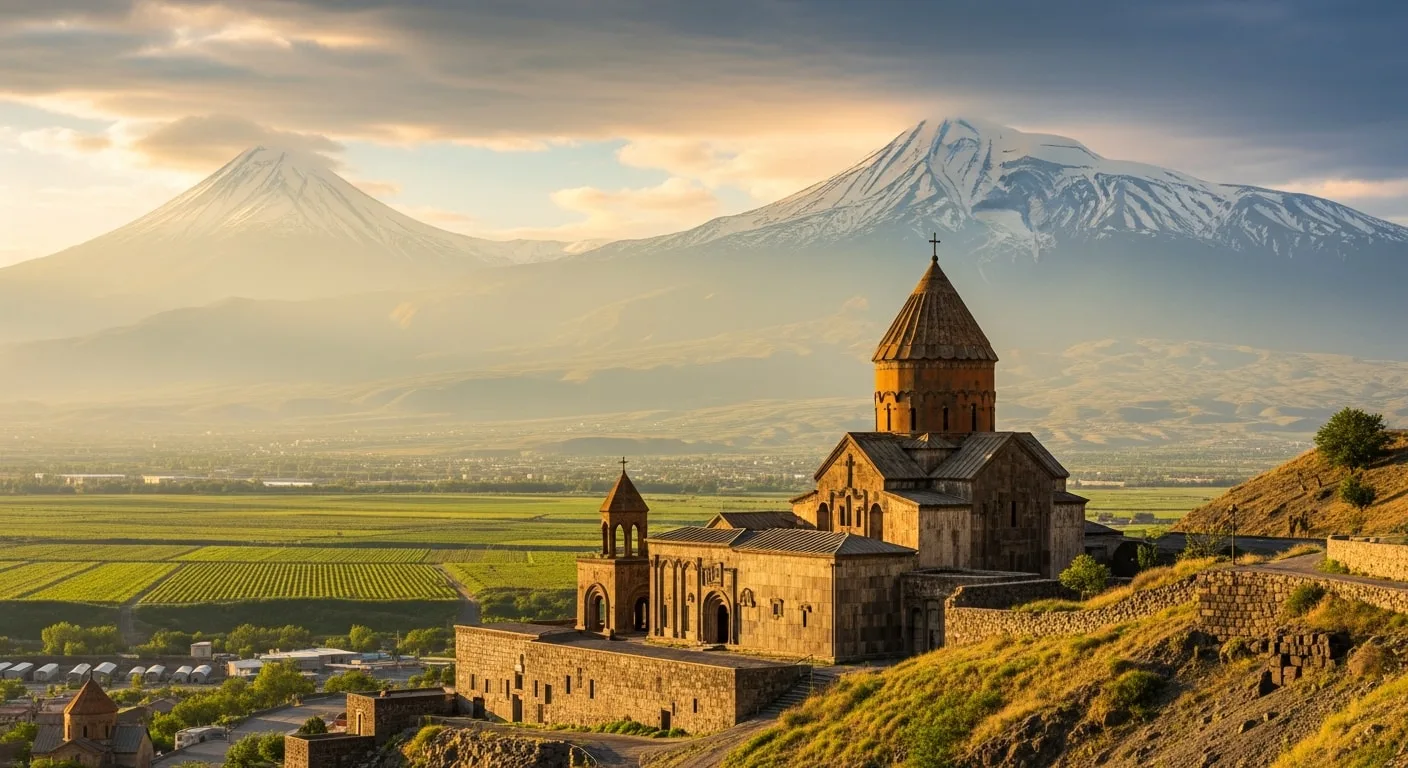
At Khor Virap monastery, Mount Ararat rises through the morning mist behind the walls: the mountain where, by tradition, Noah's Ark came to rest, seen from the world's first Christian nation. Armenia doesn't try to impress you. It doesn't have the marketing budget of Dubai or the Instagram clout of Bali. But this small South Caucasus country packs in a remarkable amount of history, stunning landscapes and genuine hospitality. And here's the headline for this Armenia travel guide from India: you can do a week-long trip, flights included, for under ₹70,000.
Most Indian travellers haven't even considered Armenia. That's a mistake. While everyone's queuing at Singapore or fighting for space in Thailand, Armenia offers ancient monasteries carved into cliffsides, a culinary scene that's outrageously vegetarian-friendly, wine country older than Bordeaux (the world's oldest known winery was found here), and some of the warmest people you'll meet anywhere. Here's everything you need to know to plan your trip.
Getting to Armenia from India: Flights and Visa
There are no direct flights from India to Armenia, but that's not the hassle it sounds like. The most common routings are through Dubai (flydubai), Sharjah (Air Arabia) or Doha (Qatar Airways), with a brief layover before landing at Yerevan's Zvartnots International Airport. Flight prices from major Indian cities typically range from ₹25,000 to ₹40,000 return, depending on when you book and which airline you choose. Pro tip: flying via Tbilisi, Georgia is sometimes cheaper, and you can easily combine both countries — more on that later.
Now, the visa. Most Indians apply for an e-visa for Armenia at evisa.mfa.am: USD 8 (about ₹770) for a stay of up to 21 days or USD 39 (about ₹3,740) for up to 120 days, processed within 3 working days. Indian applicants must upload travel medical insurance plus either a valid visa or residence permit from the US, UK, EU/Schengen, Canada, Australia, New Zealand, Japan, South Korea or Russia (or a GCC residence permit), or a return ticket, an invitation from an Armenian host such as a local tour agency, and proof of funds such as 3 months of bank statements. There is no ordinary visa on arrival for Indians: a visa at the border is issued only to holders of those qualifying visas or permits. And from 1 July 2026 to 1 July 2027, Indians with a US, EU/Schengen or GCC residence permit valid for at least six more months can enter visa-free for up to 180 days a year. Check our guide on finding cheap international flights from India for more booking strategies.

Yerevan: A Capital That Punches Above Its Weight
Yerevan isn't just Armenia's capital — it's the heart and soul of the country. Built from pink and orange volcanic tuff stone, the city glows differently at every hour of the day. Locals call it the "Pink City," and once you see sunset hit the buildings around Republic Square, you'll understand why.
Start your exploration at Republic Square. It's not just a square — it's Armenia's living room. Families stroll here after dinner, children chase pigeons, couples hold hands around the singing fountains (the light and music show runs every evening from May to October). The National Gallery of Armenia sits on one side, and several excellent cafes line the perimeter. Grab a table, order Armenian coffee — thick, strong, served in tiny cups with grounds settling at the bottom — and watch the city go by.
From there, walk to the Cascade Complex. This massive limestone stairway climbs up Yerevan's hillside, filled with sculptures, gardens, and art installations. Inside the hill itself is the Cafesjian Center for the Arts, a world-class contemporary art museum that's free to enter (paid exhibitions are around ₹400). Climb to the top for panoramic views of Yerevan with Mount Ararat looming in the distance. Yes, the mountain is technically in Turkey now, but Armenians still consider it theirs — don't bring that up unless you want a history lesson.
For shopping, skip the tourist traps and head straight to the Vernissage Flea Market (weekends only). It's chaos in the best way — Soviet memorabilia, hand-carved chess sets, traditional carpets, obsidian jewelry, and antique coins spill out across hundreds of stalls. Bargaining is expected. A beautifully carved backgammon board that vendors might quote at ₹4,000 can usually be negotiated down to ₹2,500 with some friendly persistence.
And if you like brandy, Armenia's Ararat Brandy Factory offers tours and tastings for around ₹1,200. Churchill famously loved Armenian brandy — Stalin used to send him cases — and after tasting a 20-year XO, you'll understand the obsession.
Armenia Travel Guide From India: Must-See Historical Sites
Armenia adopted Christianity in 301 AD — the first country in the world to do so. That 1,700+ years of Christian history means monasteries everywhere, many in locations that seem impossible. These aren't dusty museum pieces; they're living places of worship where incense still burns and priests still chant.
Khor Virap: The Instagram Shot
Forty kilometres from Yerevan, Khor Virap sits against the backdrop of Mount Ararat. The monastery marks the spot where Gregory the Illuminator was imprisoned in a pit for 13 years before converting the Armenian king to Christianity. The mountain dominates the frame so completely that your photos will look Photoshopped. Visit early morning for the best light and fewer crowds. A taxi day trip from Yerevan costs around ₹2,500-3,000.
Garni Temple: Greece in the Caucasus
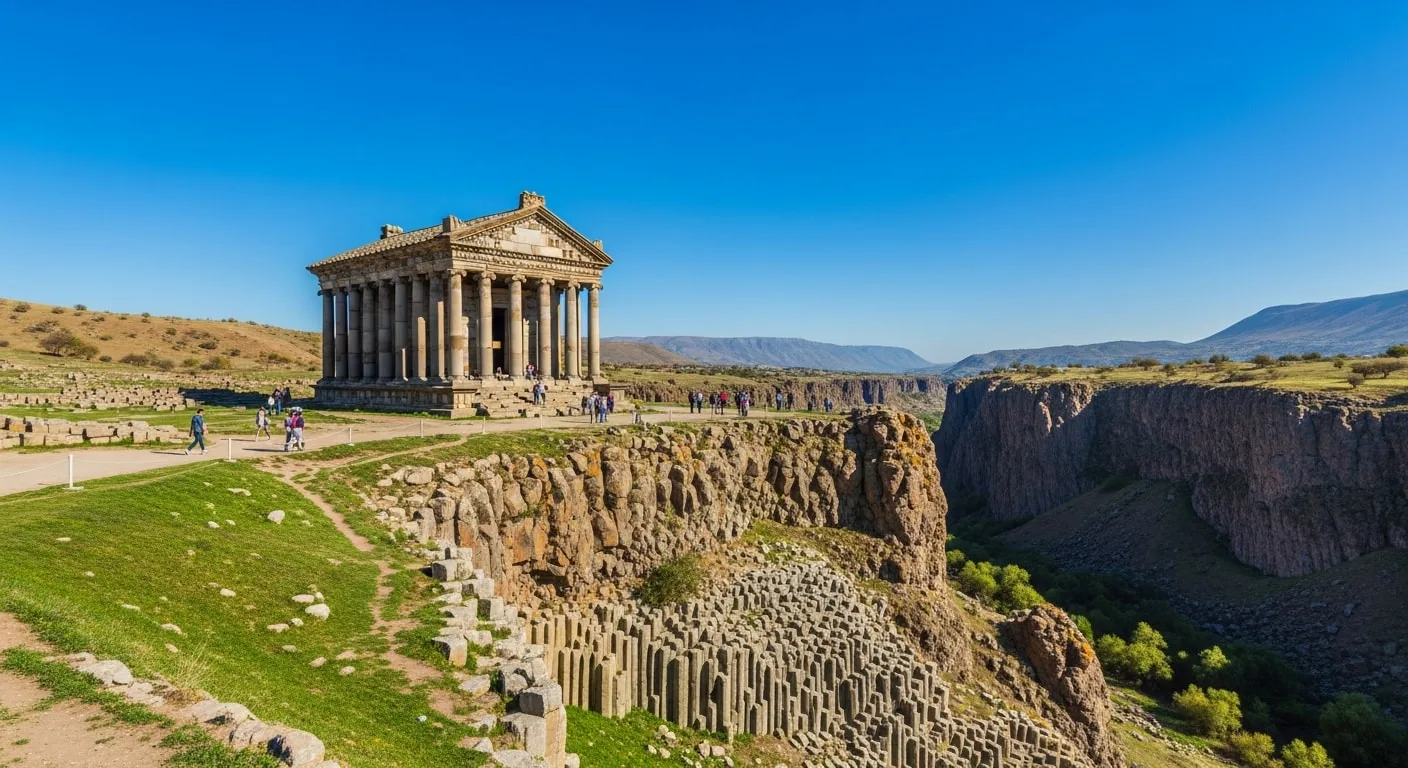
A Greco-Roman temple? In Armenia? Garni is the only standing pagan temple in the entire Caucasus region, dating to the 1st century AD. Built in classical Ionic style, it looks like it was teleported from Athens. The temple survived because after Armenia converted to Christianity, the royal family protected it as a "rest house" rather than admitting it was a pagan shrine. Smart people, those ancient Armenians. The surrounding gorge — called the "Symphony of Stones" — features hexagonal basalt columns that look like giant organ pipes carved by nature. Entry is AMD 1,500 (about ₹375).
Geghard Monastery: Carved Into a Cliff
Just 9 kilometres from Garni (combine them in one trip), Geghard Monastery is a UNESCO World Heritage Site that genuinely deserves the designation. Parts of this 4th-century complex are carved directly into the mountainside — chapels, chambers, and intricate stone carvings emerging from living rock. The acoustics inside the main chapel are supernatural. When monks chant here, the sound resonates through the stone in ways that feel almost otherworldly. Even non-religious visitors often find Geghard moving.
Tatev Monastery and the Wings of Tatev
To reach Tatev, you'll take the Wings of Tatev cable car — at 5.7 kilometres, it's the longest reversible cable car in the world (Guinness certified). The 12-minute ride swoops you over the Vorotan Gorge, 320 metres above the river below. Tatev Monastery itself is a 9th-century complex perched on a cliff edge, once a centre of philosophy, science, and theology that housed 1,000 monks and students. The cable car plus monastery entry costs around ₹1,500. It's a long day trip from Yerevan (about 4 hours each way), so consider spending a night in Goris town nearby.
Lake Sevan and Dilijan: Armenia's Natural Beauty
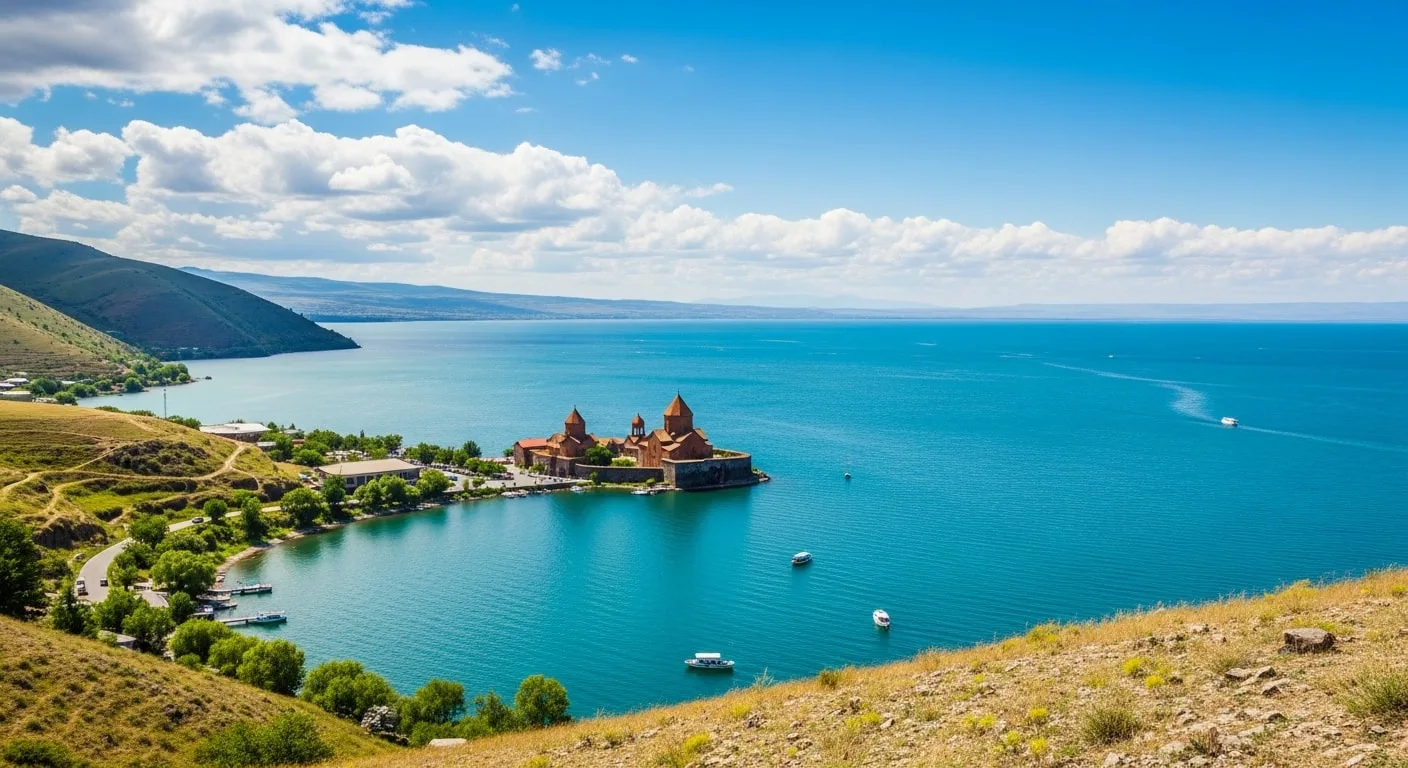
Lake Sevan is one of the largest high-altitude freshwater lakes in the world, sitting at 1,900 metres above sea level. The water changes colour throughout the day — turquoise in the morning, deep blue at noon, silvery at sunset. The Sevanavank Monastery on a peninsula (originally an island before Soviet engineers lowered the water level) is the obvious photo spot, but the real joy is simply being by the water.
Freshwater fish crayfish (khetsok) and trout (ishkhan) are local specialities. You'll find simple lakeside restaurants serving them grilled or fried for ₹400-600 per dish. In summer, locals swim and sunbathe; the water's cold but manageable.
Dilijan, about 40 kilometres from Lake Sevan, is called "Armenia's Switzerland" — and for once, that's not tourist board exaggeration. Thick forests cover rolling hills, mineral springs bubble up throughout the region, and the air smells like pine. The town itself has a charming old quarter with traditional wood-and-stone houses, many now converted to craft workshops. Dilijan National Park offers hiking trails ranging from easy 2-hour loops to serious full-day treks. The adventure travel destinations guide covers more options if you're into trekking.
Armenian Food: A Vegetarian Paradise
Here's something Indian travellers will appreciate: Armenian cuisine is incredibly vegetarian-friendly. Not by accident — centuries of fasting traditions (Orthodox Christians fast more than 200 days a year) created a culture of creative meatless cooking.
Dolma comes in two forms: meat-filled grape leaves and a vegetarian version called pasuts dolma using lentils, chickpeas, and beans wrapped in cabbage leaves. Both are delicious. Lavash, the thin flatbread baked in underground clay ovens, is a UNESCO-listed cultural element and accompanies every meal. Ghapama is a pumpkin stuffed with rice, dried fruits, and nuts — find it mainly in autumn but some restaurants serve it year-round.
Khorovats is Armenia's answer to BBQ — skewered meats and vegetables grilled over open flames. Even vegetarians can enjoy khorovats tomatoes, peppers, eggplant, and mushrooms. A full meal at a mid-range restaurant in Yerevan costs ₹600-900. Street food is even cheaper — ₹100-200 for lahmajun (Armenian pizza) or zhingalov hats (herb-stuffed flatbread).
Armenian coffee deserves its own paragraph. Forget espresso machines — Armenian coffee is made by simmering finely ground coffee in a special pot called a jazzve. It's thick, aromatic, and served with the grounds settling at the bottom. Legend says fortune tellers can read your future in those grounds. Whatever you make of that, the coffee itself is genuinely excellent.
Wine Country: Older Than France
In 2011, archaeologists discovered the world's oldest known winery in Armenia — 6,100 years old. Let that sink in. While the French were still figuring out fermentation, Armenians had already been making wine for millennia. The Areni region produces Armenia's most famous wines, particularly from the indigenous Areni grape variety. Visit the Areni-1 cave complex (where the ancient winery was discovered) and then stop at any of several wine cellars offering tastings for ₹500-800. The wines lean red and dry, with an earthiness that's distinctive.
Getting Around Armenia: Transport Tips
Armenia is small — you can cross the entire country in 4-5 hours by car. That makes Yerevan an excellent base for day trips.
Marshrutkas (shared minivans) are the budget option. They depart from various stations around Yerevan to destinations throughout the country. Fares are cheap — ₹150-400 for most routes — but schedules are flexible (read: they leave when full). Google Maps doesn't track them accurately; ask locals or your hotel for current information.
Taxis are affordable for day trips. Negotiate a full-day rate (₹3,000-5,000 depending on distance) and the driver will wait while you explore each site. Many drivers speak basic English and moonlight as informal guides.
Rental cars are the freedom option. Rates start around ₹1,500-2,000 per day for a basic car. Roads are generally decent, though mountain routes can be challenging. Carry an International Driving Permit along with your Indian licence: it is required by law in Armenia. Driving is on the right side, and outside Yerevan traffic is minimal.
Combining Armenia with Georgia
Many travellers extend their trip to Georgia.
Yerevan to Tbilisi is just 5-6 hours by bus or marshrutka (around ₹1,500). The two countries share a lot culturally but feel distinctly different. Georgia is bigger, louder, and more famous; Armenia is quieter, older, and more intensely concentrated. A combined 10-14 day trip covering both is one of the best value propositions in travel. Read our complete Georgia travel guide for Indians to plan the Georgian leg.
You can also extend to Azerbaijan, though note that Armenia and Azerbaijan have a complicated relationship. You cannot cross directly between them — you'll need to transit via Georgia. And if you have an Armenian visa stamp, some travellers report extra questioning at the Azerbaijan border (though it's usually fine).
7-Day Armenia Budget Breakdown (Per Person)
Here's what a week in Armenia actually costs for an Indian budget traveller:
- Flights: ₹25,000-35,000 (from major Indian cities via Gulf carriers)
- E-visa: ₹770 (21-day e-visa, USD 8)
- Accommodation (6 nights): ₹6,000-12,000 (hostels ₹800-1,200/night; mid-range hotels ₹2,000-3,000/night)
- Food: ₹4,000-6,000 (₹600-900/day eating at local restaurants)
- Transport & Day Trips: ₹4,000-6,000 (marshrutkas + taxi day trips to Khor Virap, Garni/Geghard)
- Activities & Entry Fees: ₹2,000-3,000 (monasteries, museums, cable car)
- Wine Tastings & Brandy: ₹1,500-2,500
Total: ₹43,000-70,000 depending on your comfort level. That's remarkable value for a week in Europe (yes, technically the South Caucasus, but culturally closer to Europe than anywhere else).
Best Time to Visit Armenia
Avoid winter unless you're prepared for serious cold (December-February sees temperatures well below freezing in Yerevan, and mountain roads may close). May-June and September-October are ideal — pleasant temperatures, clear skies, and Mount Ararat visible more often. July-August gets hot in Yerevan (35°C+) but is perfect for Lake Sevan and mountain areas. Spring brings wildflowers; autumn brings wine harvest and golden light.
Practical Information
- Currency: Armenian Dram (AMD). ₹1 ≈ 4 AMD approximately (1 AMD ≈ ₹0.25). ATMs everywhere in Yerevan; carry cash for rural areas.
- Language: Armenian (unique alphabet!). English is spoken widely in Yerevan's tourist areas, less so in villages. Russian is a common second language for older Armenians.
- SIM Cards: Viva-MTS and Beeline offer tourist SIMs at the airport. Around ₹400-600 for a week of data.
- Safety: Armenia is extremely safe for tourists. Violent crime is rare; petty crime is minimal. Solo female travellers report few issues.
- Plugs: European two-pin (Type C). Bring an adapter if you don't have one.
Frequently Asked Questions
Do Indians need a visa for Armenia?
Yes, for most Indians, but it is straightforward. Apply for an e-visa online through the official Armenia e-visa portal for USD 8 (about ₹770) for up to 21 days or USD 39 (about ₹3,740) for up to 120 days. Processing takes up to 3 working days. You need travel medical insurance plus either a valid US, UK, Schengen or similar visa or residence permit, or a return ticket, an invitation from an Armenian host such as a tour agency, and bank statements. Indians cannot get a visa on arrival unless they hold one of those qualifying visas or permits, and Indians with a US, EU/Schengen or GCC residence permit can enter visa-free until 1 July 2027.
Is Armenia expensive for Indian travellers?
Not at all. Armenia offers excellent value compared to Western Europe or even Southeast Asian destinations. Budget travellers can manage on ₹4,000-5,000 per day including accommodation, food, and transport. Mid-range travellers spending ₹7,000-10,000 daily will live very comfortably. The USD 8 e-visa helps make it one of the cheapest European-adjacent destinations accessible from India.
What is the best time to visit Armenia from India?
May-June and September-October offer the best weather with clear skies and pleasant temperatures (20-28°C in Yerevan). These months also provide the clearest views of Mount Ararat. Summer (July-August) is hot but perfect for Lake Sevan. Avoid December-February unless you enjoy cold weather — Yerevan can drop to -10°C.
How many days are enough for Armenia?
A minimum of 5-7 days allows you to explore Yerevan properly and take day trips to major sites like Khor Virap, Garni, Geghard, and Lake Sevan. For a comprehensive visit including Tatev Monastery, Dilijan, and wine country, plan 10-12 days. Many travellers combine Armenia with neighbouring Georgia for a 2-week Caucasus trip.
Is Armenian food suitable for vegetarians?
Absolutely. Armenian cuisine has strong vegetarian traditions due to Orthodox Christian fasting practices. Dishes like pasuts dolma (lentil-stuffed cabbage), ghapama (stuffed pumpkin), various bean stews, lavash bread, cheese, and grilled vegetables are widely available. Even at traditional BBQ restaurants, vegetarian options exist. Indian vegetarians will find Armenia far easier than most European destinations.
How far is Armenia from India and how long is the flight?
Yerevan is about 3,250 km from Delhi and 3,600 km from Mumbai in a straight line. There are currently no nonstop flights from India, so most travellers connect in the Gulf: Delhi to Dubai takes about 4 hours 20 minutes and Mumbai to Dubai about 3 hours 25 minutes, then flydubai's Dubai to Yerevan flight takes about 4 hours. With a layover, plan on 9-12 hours in total. Air Arabia via Sharjah and Qatar Airways via Doha are the other common options, and fares typically run ₹25,000-40,000 return.
Can I combine Armenia with Georgia or Azerbaijan?
Yes, combining with Georgia is straightforward — buses run daily between Yerevan and Tbilisi (5-6 hours, ₹1,500). Many travellers do a 10-14 day trip covering both countries. Azerbaijan is trickier due to political tensions — there's no direct border crossing, so you'd need to transit via Georgia. Having Armenian stamps doesn't bar entry to Azerbaijan but may invite extra questioning.
Armenia surprises most first-time visitors. Come for the churches and history and you also get incredible food, genuinely kind people, and landscapes that stop you mid-sentence. The country doesn't shout for attention like bigger tourist destinations, and maybe that's why it feels so authentic. At ₹40,000-70,000 for a week including flights, it's also one of the best value trips you can take from India. Sort out that e-visa and go. Your future self will thank you.
Planning this trip?
Tell us roughly when and how many — our travel expert sends you a custom quote, usually within a few hours.