

Kyrgyzstan Travel from India: Central Asia's Adventure Paradise
In this guide (17)
- Your Kyrgyzstan Travel Guide from India: Essential Planning
- Getting to Kyrgyzstan from India: Flights and Routes
- Kyrgyzstan Visa for Indians: E-Visa and Group Options
- Bishkek: Your Gateway to the Mountains
- Issyk-Kul Lake: Central Asia's Sea
- Song Kul Lake: The Life-Changing Yurt Experience
- Ala Archa National Park: Day Trip from Bishkek
- Karakol: Trekking Base Camp
- Horse Riding and Eagle Hunting
- Kyrgyz Food: What to Expect (and Fear)
- Sample 10-Day Kyrgyzstan Itinerary from India
- 10-Day Kyrgyzstan Budget: What Indians Actually Spend
- Adding Tajikistan: The Pamir Highway from Osh
- Best Time to Visit Kyrgyzstan
- Practical Tips and Safety for Your Kyrgyzstan Trip
- Is Kyrgyzstan Worth It from India?
- Frequently Asked Questions
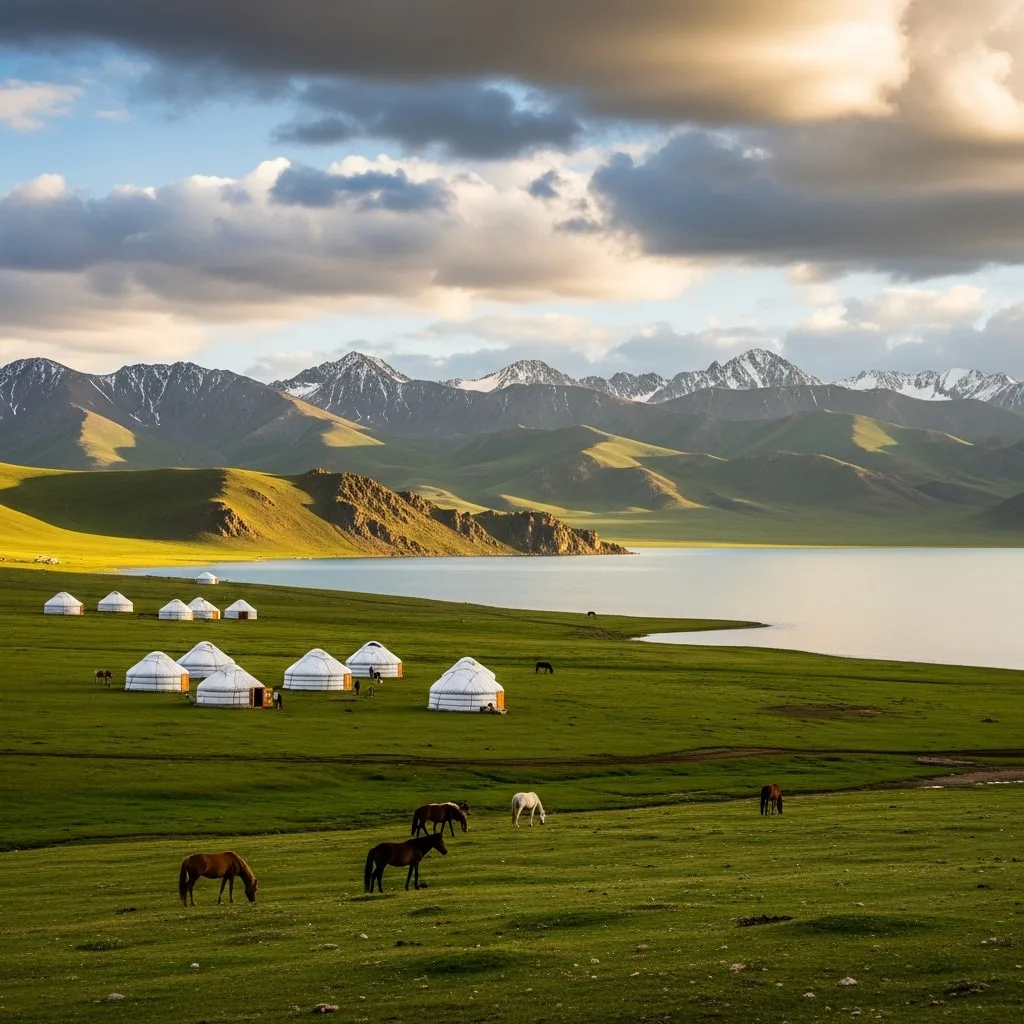
Kyrgyzstan is a country of high mountain lakes, felt yurts and summer pastures, where herding families still move their animals up to the mountains each June. This Kyrgyzstan travel guide from India covers what you need to plan the trip: flights, the e-visa, the main places to visit, a sample 10-day route, costs in rupees and the best time to go.
Kyrgyzstan sits in the heart of Central Asia, sandwiched between Kazakhstan, China, Tajikistan, and Uzbekistan. For Indian travelers, it's still largely under the radar — which is exactly why you should go now. The landscapes rival Switzerland and Ladakh combined, the costs are laughably low, and you'll meet nomads living exactly as their ancestors did centuries ago. No Disney-fied cultural performances here. Just real people, real yurts, real horses, and really strong vodka.
Your Kyrgyzstan Travel Guide from India: Essential Planning
Planning a Kyrgyzstan trip from India comes down to three things: most flights connect through another city, the visa is applied for online, and the country rewards slow travel. Rush through Kyrgyzstan and you miss everything that makes it special. Budget at least 10 days, ideally two weeks, to properly experience the nomadic culture.
Getting to Kyrgyzstan from India: Flights and Routes
Aero Nomad flies Delhi to Bishkek nonstop twice a week (about 3 hours 40 minutes, as listed in September 2026), which is the quickest option when the dates suit. Otherwise most Indian travellers connect, usually through either Almaty or Istanbul.
With the Delhi-Almaty-Bishkek route, you can explore Kazakhstan's incredible Almaty as a bonus. Air Astana flies Delhi to Almaty several times weekly, then a quick one-hour hop to Bishkek. Total travel time around 8-10 hours including the layover. Return fares from Delhi to Bishkek, nonstop or via Almaty, were roughly Rs.40,000-60,000 when checked in September 2026. Treat this as indicative: fares rise in peak summer and when you book late.
For the Istanbul route via Turkish Airlines, fares are often cheaper but significantly longer — you're looking at 15+ hours total.
It is also worth reading our guide on finding the cheapest international flights from India for booking strategies.
Kyrgyzstan Visa for Indians: E-Visa and Group Options
Indians need a visa for Kyrgyzstan. The tourist e-visa is valid for up to 30 days, and the fee depends on the visa type and length of stay. Apply only through the official Kyrgyz e-visa portal — don't use third-party sites that charge extra. Allow at least a few working days for processing.
You'll need a passport scan, photo, and proof of accommodation (any hotel booking works, even a refundable one). The tourist e-visa is usually single entry. If you plan to pop into Uzbekistan or Tajikistan and come back, check whether your visa allows more than one entry, or ask the Kyrgyz Embassy in New Delhi about a multiple-entry visa.
One thing to check before you book flights: several visa services report that Indian applicants must first get a letter of invitation from a Kyrgyz tour company registered with the country's tourism department. If the portal asks for one during your application, a licensed operator or CBT office can issue it.

Bishkek: Your Gateway to the Mountains
Bishkek won't win any beauty contests. It's a Soviet-planned city with wide boulevards, brutalist architecture, and a surprising number of oak trees. But it grows on you after a day or two — there's a relaxed, almost sleepy vibe despite it being the capital.
Ala-Too Square is where everything happens. Giant Lenin statue (relocated to the back), the State History Museum, and flag-raising ceremonies that draw crowds. Wander through in the evening when families come out for ice cream and teenagers practice skateboard tricks.
Osh Bazaar is where you go to overwhelm your senses. As the largest market in Central Asia, it sprawls across several buildings — spices in one section, dried fruits in another, questionable meat products hanging from hooks everywhere. This is where locals shop, not tourists. Get lost. Buy too many dried apricots (Rs.200/kg). Watch a grandmother haggle a vendor into submission.
For food in Bishkek, skip the tourist restaurants along Chuy Avenue and head to Navat for Uzbek plov or Supara Ethno Complex for a proper Kyrgyz feast in yurt-style seating. Budget around Rs.300-500 for a massive meal with bread and tea.
Accommodation in Bishkek is cheap. Hostels run Rs.400-600/night for a dorm bed, and you can find entire Airbnb apartments for Rs.1,500-2,000. Apple Hostel, a family-run hostel near Osh Bazaar, is a popular budget base and can help arrange tours and airport transfers.
Issyk-Kul Lake: Central Asia's Sea
They call Issyk-Kul the "Pearl of Central Asia" and for once the marketing isn't lying. It's the world's second-largest alpine lake, sitting at 1,600 meters with snow-capped peaks on all sides. Because the water is slightly saline, it never freezes, even in brutal Kyrgyz winters.
The lake is massive (you could fit Singapore into it about eight times), so you need to decide: north shore or south shore?
North shore is touristy and developed. Cholpon-Ata has Soviet-era sanatoriums converted into beach resorts, water parks, and plenty of Russian holidaymakers. It's fine for a night, but not why you came to Kyrgyzstan. However, the petroglyphs museum just outside town is genuinely worth seeing — thousands of Bronze Age rock carvings scattered across an open-air site.
South shore is where the magic happens. Smaller villages, fewer tourists, and access to the stunning Jeti-Oguz canyon (the "Seven Bulls" — red rock formations that glow at sunset). The village of Bokonbaevo hosts eagle hunters who demonstrate traditional falconry. Watching a golden eagle return to its handler's arm is one of those travel moments you don't forget.
Budget Rs.1,000-1,500 for a guesthouse on the south shore, meals included. The families genuinely enjoy hosting and will stuff you with fresh bread, jam, and endless tea whether you want it or not.
Song Kul Lake: The Life-Changing Yurt Experience
If you do one thing in Kyrgyzstan, make it Song Kul. This high-altitude lake (3,016 meters) is only accessible from June to September, and during those months, nomadic families move up with their livestock to summer pastures. You stay with them. You eat with them. You help them (badly) with their chores.
Expect basic conditions at Song Kul: usually no mains electricity, no plumbing and no phone signal. What you get instead is open pasture, horses, sheep and, on clear nights, a sky full of stars. The families belong to the CBT network — Community Based Tourism Kyrgyzstan — which ensures money goes directly to local communities.
Getting to Song Kul requires a 4x4 or serious hiking commitment. Most people arrange transport through CBT offices in Kochkor (the main access town) or Bishkek. Expect to pay around Rs.3,000-4,000 for a jeep transfer that takes 3-4 hours of switchbacks. The road is... memorable. Hold onto something.
Yurt stays cost Rs.1,500-2,500 per night, including all meals. The food is heavy — lots of bread, butter, and mutton stew — but after a day of hiking at altitude, you'll eat everything placed in front of you. Pro tip: bring snacks. Chocolate, nuts, dried fruit. The families won't be offended, and you'll be grateful at 2 AM when your body wonders why dinner was six hours ago.
Keep in mind that altitude hits hard if you're not acclimatized. Spend at least a night in Kochkor (1,800m) or around Issyk-Kul before heading up. Drink water obsessively. Don't plan any strenuous activity for your first day at Song Kul.

Ala Archa National Park: Day Trip from Bishkek
Only 40km from Bishkek, Ala Archa offers accessible alpine scenery without multi-day commitments. The park sits in the Tian Shan range, with peaks reaching 4,800 meters and glaciers visible from the trailhead.
Two main hikes dominate: the Ak-Sai Waterfall trail (4-5 hours return) is the most popular, following a river valley to a 40-meter waterfall. It's steep in places but doable for anyone moderately fit. Meanwhile, the Ak-Sai Glacier extension adds another 2-3 hours and requires basic scrambling — only attempt this if you're comfortable with exposed sections.
Getting there is easy. Shared taxis leave from Bishkek's Osh Bazaar when full — Rs.150-200 per person. Or hire a private taxi for Rs.800-1,000 return with waiting time. Park entry is Rs.250 for foreigners.
For more adventure travel destinations accessible from India, this is an excellent starter experience before tackling the bigger multi-day treks.
Karakol: Trekking Base Camp
Karakol is where serious trekkers set up base. This Russian-era town near the Chinese border has excellent CBT infrastructure, mountain guides, and access to some of the country's most dramatic trails.
The Ala-Kul Lake trek (3-4 days) is the classic route — crossing a pass of about 3,860m to reach a bright turquoise alpine lake surrounded by glaciers. You don't need technical skills, but you need fitness and proper gear. CBT can arrange guides, donkeys, and camping equipment for around Rs.8,000-12,000 for the full trek.
Karakol itself has quirky attractions worth a half-day. The Dungan Mosque looks like a Chinese pagoda (built by Chinese Muslim immigrants), while the Russian Orthodox Church is constructed entirely of wood without any nails. The Sunday animal bazaar is chaotic, loud, and completely authentic — shepherds trading livestock, haggling over horses, and generally ignoring tourists.
Food in Karakol includes ashlan-fu, a cold noodle soup unique to this town. It's... an acquired taste. Refreshing on a hot day, confusing on any other day. Also try the Uyghur restaurants for proper hand-pulled noodles and laghman.
Horse Riding and Eagle Hunting
Kyrgyzstan is horse country. The breed — the Kyrgyz horse — is small, sturdy, and apparently capable of traversing mountain paths that would terrify a goat. Multi-day horse treks are the best way to experience the country as nomads have for centuries.
Expect to pay Rs.2,500-4,000 per day for a horse, guide, and camping equipment. Popular routes include Kochkor to Song Kul (2-3 days), around Issyk-Kul's south shore, or into the Jyrgalan Valley near Karakol. Prior riding experience isn't required for most treks — the horses know the trails better than the guides.
Eagle hunting (berkutchi) is the other iconic Kyrgyz tradition. Trained golden eagles hunt foxes and rabbits across the winter steppes. During summer, you won't see actual hunts, but demonstrations show the bond between hunter and bird. Find them around Bokonbaevo village or through CBT offices. A demonstration costs Rs.500-800 per person.
Kyrgyz Food: What to Expect (and Fear)
Let's be honest: Kyrgyz cuisine won't make any "world's best food" lists. It's heavy, meat-focused, and designed for people who spend their days herding sheep across mountains. But it's authentic and you should try everything at least once.
Beshbarmak literally means "five fingers" because you eat it with your hands. Boiled mutton on flat noodles, swimming in broth. It's the national dish, served at every celebration. The meat includes parts you don't normally eat. Just chew and swallow.
Laghman — hand-pulled noodles in tomato-based broth with vegetables and meat. This is your safe option. Every restaurant serves it, and it's consistently good.
Manti — steamed dumplings filled with spiced mutton. Similar to Tibetan momos but larger and juicier. Usually served with sour cream.
Kumis — fermented mare's milk. It's... challenging. Slightly fizzy, alcoholic (around 2%), and tastes like yogurt left in the sun. Nomads drink it daily. Tourists take one sip and reach for something else. But try it — it's a cultural experience.
Vegetarian warning: Kyrgyzstan is not vegetarian-friendly. Meat is in everything. Even "vegetable" dishes often have meat stock. If you're vegetarian, bring protein bars and communicate your restrictions clearly. Phrases like "bez myasa" (without meat) help but aren't foolproof. For hostels with kitchen access, you can self-cater in major towns.
Sample 10-Day Kyrgyzstan Itinerary from India
This route strings together the places covered above and works from June to September, when the Song Kul yurt camps are open:
- Day 1: Arrive in Bishkek. Ala-Too Square and Osh Bazaar.
- Day 2: Day trip to Ala Archa National Park for the Ak-Sai Waterfall hike.
- Day 3: Drive to the south shore of Issyk-Kul. Eagle-hunting demonstration near Bokonbaevo.
- Day 4: Jeti-Oguz canyon, then on to Karakol.
- Day 5: Karakol: the Dungan Mosque and the wooden Orthodox church, plus the animal bazaar if it is a Sunday.
- Day 6: Travel to Kochkor and stay a night to acclimatise.
- Days 7–8: Jeep to Song Kul for two nights in a yurt.
- Day 9: Return to Bishkek.
- Day 10: Fly home.
Outside June to September, swap days 6 to 8 for more time around Issyk-Kul or Ala Archa. The budget below assumes roughly this route.
TripCabinet does not sell a fixed Kyrgyzstan package. If you want this trip planned around your dates, share your travel month and group size in the form at the end of this guide and our team will get back to you.
10-Day Kyrgyzstan Budget: What Indians Actually Spend
This Kyrgyzstan travel guide from India focuses on budget because costs on the ground are low. A 10-day trip costs about Rs.70,000-98,000 including flights. Here's the breakdown:
Flights: Rs.40,000-60,000 return (indicative, checked September 2026; book 4-6 weeks ahead)
Accommodation: Rs.400-600/night hostels, Rs.1,500-2,500/night yurt stays, Rs.1,000-1,500/night guesthouses. Average Rs.1,200/night over 10 days = Rs.12,000
Food: Rs.300-500 per meal at restaurants, less at markets. Budget Rs.800/day = Rs.8,000
Transport: Shared taxis between cities Rs.300-600, Song Kul jeep Rs.3,500, marshrutkas (minibuses) Rs.50-150. Total Rs.5,000-8,000
Activities: Park entries Rs.250 each, CBT treks Rs.3,000-5,000, horse riding Rs.2,500/day. Budget Rs.5,000-10,000
Total: Rs.70,000-98,000 for 10 days, mid-range comfort
The Kyrgyz som was worth about Rs.1.10 in September 2026, so treat the rupee prices in this guide as approximate. ATMs work in Bishkek, Karakol, and Cholpon-Ata. Elsewhere, bring cash. Nobody accepts cards outside major hotels.
Adding Tajikistan: The Pamir Highway from Osh
Southern Kyrgyzstan is the northern gateway to the Pamir Highway (the M41), one of the highest roads in the world. From Osh it climbs through the Alay Valley, crosses into Tajikistan at the Kyzyl-Art pass (4,280 m) and runs across the high Pamir plateau to Karakul Lake and Murghab. If you are already flying to Kyrgyzstan, you can add the Pamirs as a one-way trip that ends in Dushanbe, or as a shorter out-and-back from Osh.
Visa and GBAO permit for Indians
Indian passport holders can apply for a Tajikistan e-visa on the official portal, evisa.tj, run by Tajikistan's Ministry of Foreign Affairs. The Pamir Highway runs through the Gorno-Badakhshan Autonomous Region (GBAO), which needs a separate permit. You add it as an option on the same e-visa application.
- Fee: the portal lists about US$50 for the e-visa and about US$70 with the GBAO permit (roughly Rs.4,800 and Rs.6,700). The permit is the extra US$20.
- Validity: the e-visa is valid for 60 days. The GBAO permit is single entry and is not refunded if you don't use it.
- Checks: border guard patrols inside GBAO can ask to see the permit, especially near the Afghan border, so carry a printout as well as a copy on your phone.
- Coming back to Kyrgyzstan: if you plan to return to Osh, make sure your Kyrgyz visa allows a second entry before you apply.
The route and how long it takes
There is no public transport along this road that you can plan around. Most visitors hire a 4x4 (usually a Land Cruiser, Pajero or Patrol) with a driver, often through a guesthouse or operator in Osh. One Osh-based operator lists these driving days:
| Stage | Distance / time | Altitude |
|---|---|---|
| Osh → Sary-Tash → Kyzyl-Art border → Karakul | 285 km, 6–7 hours | Sary-Tash 3,170 m; Karakul 3,960 m |
| Karakul → Ak-Baital pass → Murghab | 135 km, 3–4 hours | Ak-Baital 4,655 m; Murghab 3,650 m |
| Murghab → Khorog (via the Wakhan Valley) | 3 days | Khorog 2,120 m |
| Khorog → Kalaikhumb → Dushanbe | 2 days | Dushanbe about 820 m |
A full Osh-to-Dushanbe crossing takes about 7 to 8 driving days. Long sections on the Tajik side are gravel or broken tarmac, and snow, landslides and spring flooding can close parts of the road. Build in at least one spare day.
Kyzyl-Art was closed or permit-only for foreigners for several years after the 2022 border conflict. Travel sources report that the Kyrgyz border permit was dropped in summer 2025 and that the crossing is now open to foreigners 24 hours a day. Snow can still block the pass early or late in the season, so ask your driver to confirm the border's status the week you travel.
Altitude
This is a much higher trip than anything in the Kyrgyzstan itinerary above. Driving from Osh (about 960 m) to Karakul in one day means sleeping almost 3,000 m higher than where you woke up. The CDC recommends that above 3,000 m you raise your sleeping altitude by no more than 500 m a day. A night in Sary-Tash or Sary-Mogol before crossing the border helps, and even more so if you arrive after Song Kul. If a headache, nausea or breathlessness gets worse, go down. Talk to your doctor before the trip, and buy travel insurance that covers altitudes above 4,500 m.
Safety: the Afghan border
The Osh–Karakul–Murghab section is well away from Afghanistan. Beyond Murghab, both the Wakhan Valley and the Khorog–Kalaikhumb road to Dushanbe follow the Panj River, which forms the border with Afghanistan. The Embassy of India in Dushanbe's advisory of 15 July 2026 tells Indians to avoid sensitive border areas, particularly near Afghanistan, unless absolutely necessary. The UK government's travel advice (updated 19 August 2026) reports armed clashes across the border in the Darvoz district, around Kalaikhumb, in August 2026. It also mentions a risk of unrest in Khorog. If you want the high plateau without the border stretch, do Osh → Karakul → Murghab and come back the same way (4 to 5 days). Check the embassy's latest advisory before you book.
What it costs
- 4x4 with driver: one operator charges US$1,320 per vehicle for a 7-day Osh–Dushanbe trip, covering fuel, the driver's costs and permits. Another quotes from US$1,800 per vehicle. That is about Rs.1.27–1.73 lakh per vehicle, or roughly Rs.32,000–43,000 each when four people share. Out-and-back trips from Osh cost less because the distance is shorter.
- Homestays: a bed plus dinner and breakfast usually costs US$12–30 per person (about Rs.1,150–2,900). Rooms are basic and shared. Outside Khorog, expect outdoor toilets and limited running water.
- Getting there and back: Aero Nomad flies nonstop from Delhi to Bishkek (twice a week at the time of writing), with several daily flights from Bishkek to Osh taking about an hour. At the far end, Somon Air flies nonstop from Dushanbe to Delhi twice a week, so an open-jaw ticket works well. Schedules change, so check them before you book.
Cash and food
Carry all the cash you need from Osh in clean US dollar notes. There are no ATMs between Osh and Khorog, cards are almost never accepted, and you can change money in Murghab and Khorog, though often at poor rates. In the homestays, dinner is usually soup, bread, plov and tea, with little variety. Vegetarians should bring their own protein snacks, as advised for Kyrgyzstan above.
TripCabinet does not sell a fixed Pamir Highway package. If you want to add the Pamirs to a Kyrgyzstan trip, share your dates and group size in the form at the end of this guide and our team will help you plan a custom route.
Best Time to Visit Kyrgyzstan
The sweet spot is June to September. Mountain passes open, yurt camps operate, and hiking conditions are ideal. July-August brings peak tourist season (relatively — nothing like Bali crowds) and the warmest weather.
June is wildflower season. The high pastures explode with color, and Song Kul's yurts just start opening. Some passes might still have snow.
July-August is warm (25-30°C in valleys), completely accessible, and crowded by Kyrgyz standards. Book Song Kul yurts ahead.
September brings cooler temperatures and golden autumn colors. Fewer tourists, yurt camps start closing mid-month.
Avoid winter unless you're specifically chasing eagle hunting (December-February) or skiing. Most of the country becomes inaccessible, and it gets properly cold (-20°C in mountains).
Practical Tips and Safety for Your Kyrgyzstan Trip
Kyrgyzstan is safe for tourists. Violent crime against foreigners is rare. The main risks are altitude sickness, bad roads, and drinking too much vodka with hospitable locals.
Altitude: Much of the country sits above 2,000m. Song Kul at 3,000m+ will affect you. Acclimatize gradually, hydrate constantly, and know the symptoms of altitude sickness (headache, nausea, breathlessness). Descend if they worsen.
Roads: Terrifying. Seriously. Mountain passes are narrow, unpaved, and driven by people who believe in destiny over brake pads. Budget extra time for transfers and don't travel after dark.
Language: Russian is widely spoken, Kyrgyz in rural areas. Almost nobody speaks English outside tourist hotels. Download Google Translate's offline Russian pack. Learn basic phrases: "Rakhmat" (thank you), "Da/Net" (yes/no), "Skol'ko?" (how much?).
Connectivity: Buy a SIM card at Bishkek airport (Beeline or MegaCom, Rs.300-500 for 10GB). Signal exists in towns but disappears in mountains. Tell someone your route before remote treks.
What to pack: Layers — temperature swings 30°C between day and night. A warm sleeping bag helps since yurts provide blankets but extra warmth is welcome. Sunscreen and sunglasses are crucial because high altitude UV is brutal. Toilet paper. Snacks. A headlamp. Patience.
Is Kyrgyzstan Worth It from India?
If you want sanitized tourism, air-conditioned buses, and Instagram-perfect infrastructure — go somewhere else. However, if you want raw adventure, encounters with nomadic culture that hasn't been theme-parked for tourists, and landscapes that genuinely stop you in your tracks — Kyrgyzstan delivers.
Many travellers say the hospitality is what they remember most. In homestays and yurt camps, hosts tend to treat you as a guest rather than a customer and will insist that you eat, and drivers often stop at viewpoints along the way.
For about Rs.70,000-98,000 over 10 days, you get mountain lakes, yurt stays and multi-day treks for less than many comparable trips. Pack for cold nights, rough roads and a meat-heavy diet.
Frequently Asked Questions
Do Indians need a visa for Kyrgyzstan?
Yes, Indian passport holders need a visa. Apply for the tourist e-visa, valid for up to 30 days, only on the official portal (evisa.e-gov.kg); the fee depends on the visa type and length of stay. Check whether the portal asks for a letter of invitation from a registered Kyrgyz tour company before you book flights.
How much does a 10-day trip to Kyrgyzstan cost from India?
Budget about Rs.70,000-98,000 for a comfortable 10-day trip including flights (Rs.40,000-60,000 return, indicative as of September 2026), accommodation (Rs.12,000), food (Rs.8,000), transport (Rs.5,000-8,000), and activities (Rs.5,000-10,000). Kyrgyzstan is one of the cheapest adventure destinations accessible from India.
What is the best time to visit Kyrgyzstan?
June to September is ideal for most travelers. Mountain passes are open, yurt camps operate at Song Kul, and hiking conditions are best. July-August is peak season with warmest weather. June offers wildflowers while September brings autumn colors.
Is Kyrgyzstan safe for Indian tourists?
Kyrgyzstan is generally safe for tourists. Violent crime against foreigners is rare. Main concerns are altitude sickness at high elevations, challenging road conditions in mountains, and limited medical facilities in remote areas. Travel insurance is essential.
Can vegetarians travel in Kyrgyzstan?
Kyrgyzstan is challenging for vegetarians. Traditional cuisine is heavily meat-based, and even vegetable dishes may contain meat stock. Bring protein bars and snacks. In Bishkek and Karakol, some international restaurants offer vegetarian options. Self-catering is possible in towns with markets and hostels with kitchens.
Can I visit Tajikistan's Pamir Highway from Kyrgyzstan?
Yes. The Pamir Highway starts in Osh in southern Kyrgyzstan and crosses into Tajikistan at the Kyzyl-Art pass (4,280 m). Travel sources report the crossing has been open to foreigners without a Kyrgyz border permit since summer 2025. Most travellers hire a 4x4 with a driver and take 7 to 8 days to reach Dushanbe, or do a 4 to 5 day return trip from Osh to Karakul and Murghab. Confirm the border's status with your driver before you set off.
Do Indians need a GBAO permit for the Pamir Highway?
Yes. Indians need a Tajikistan e-visa plus a GBAO (Gorno-Badakhshan) permit for the Pamir Highway. Add the permit to the same application on the official portal, evisa.tj. The portal lists about US$50 for the e-visa and about US$70 with the permit. The e-visa is valid for 60 days, and the permit is single entry.
Planning this trip?
Tell us roughly when and how many — our travel expert sends you a custom quote, usually within a few hours.