

Indian Food Abroad: 12 Countries Where You Will Never Go Hungry
In this guide (7)
- The Tier System: Ranking Indian Food Abroad Countries
- Tier 1: Basically an Extension of India
- Tier 2: Solid Options Among Indian Food Abroad Countries
- Tier 3: Indian Food Exists, But Pack Your Theplas
- The Indian Traveler's Survival Guide: Finding Food Anywhere
- Final Thoughts on Indian Food Abroad Countries
- Frequently Asked Questions
Four days in rural Japan surviving on 7-Eleven rice balls and the single vegetarian bento I could identify by the tofu picture on the wrapper. That was my introduction to travel without proper food. By day three, I would have traded my return ticket for a plate of dal chawal. That trip taught me the most important lesson about indian food abroad countries: not all destinations are created equal when it comes to feeding Indians properly.
I'm not one of those travelers who eats "local" everything and posts about their "authentic street food journey." As a picky Gujarati who needs his roti, wants his sabzi, and absolutely requires something that tastes like home at least once every three days - I take food seriously. Having visited 23 countries across four continents, I've mapped out exactly where finding indian food abroad countries is easy and where you'll cry into your bland pasta wishing you'd packed more theplas.
My ranking of these 12 indian food abroad countries is based on real criteria that matter: how easy is it to find vegetarian food, does the "Indian" restaurant actually taste Indian, what's the price situation, and can your mummy-daddy survive there without complaint.
The Tier System: Ranking Indian Food Abroad Countries
Before we start, here's my honest ranking system for indian food abroad countries. Tier 1 means you could live there permanently and never miss home food. For Tier 2 destinations, you'll find good desi food but might need to search a bit. The Tier 3 countries have Indian options but you'll definitely want backup snacks in your suitcase.
Vegetarian friendliness gets noted separately because as any pure veg traveler knows, "Indian restaurant" doesn't automatically mean "safe for vegetarians" - plenty of places abroad mix their cooking equipment or use fish sauce in everything.
Tier 1: Basically an Extension of India
1. Malaysia - The Undisputed Champion for Indian Food Abroad
Our guide on vegetarian friendly countries for Indian travelers ranks Malaysia at the top, and there's good reason for that. Among indian food abroad countries, Malaysia wins by a wide margin. The Tamil population here has been established for over a century, which means the food isn't some watered-down "Indian-inspired" nonsense - it's the real deal.

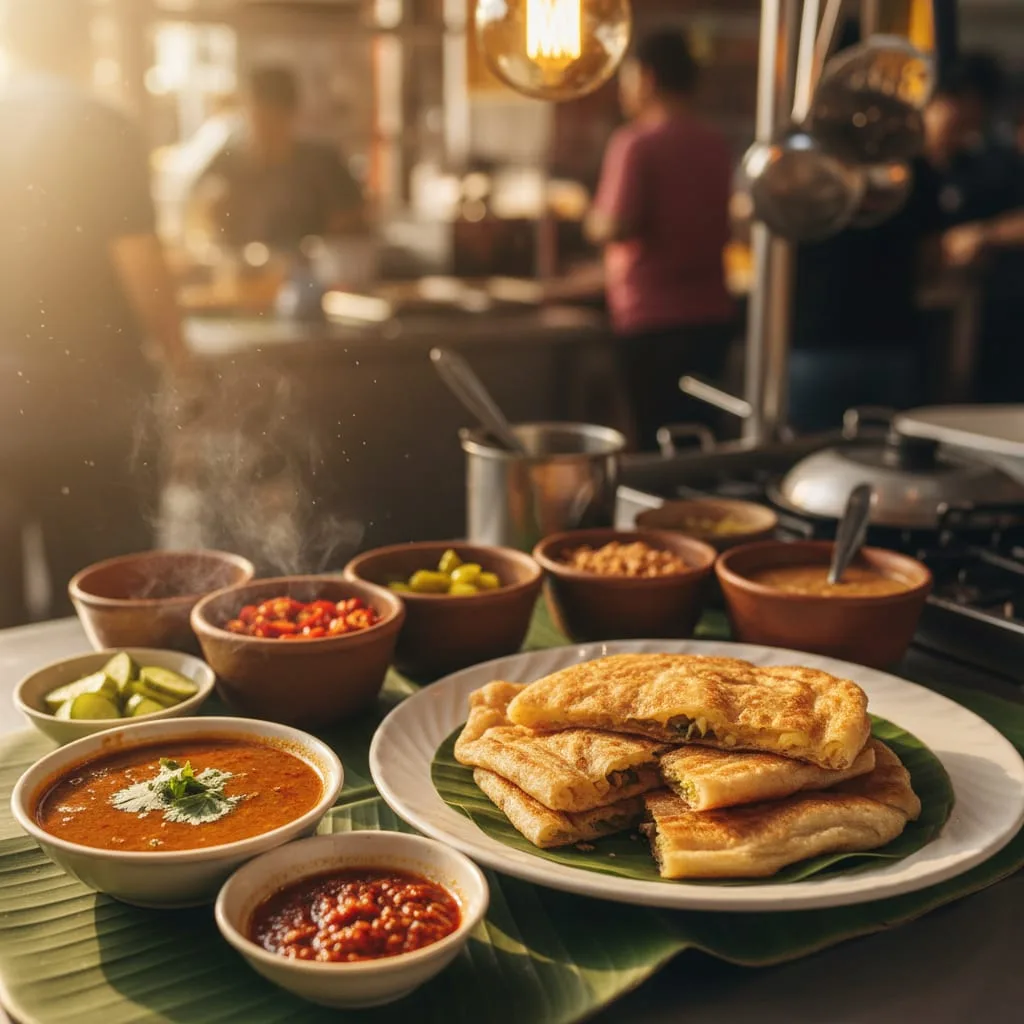
Roti canai is everywhere. And I mean everywhere - petrol stations, shopping mall food courts, random street corners at 2 AM. Basically paratha's cooler Malaysian cousin, it's served with dal or curry for around RM 2-3 (roughly ₹47-70). Banana leaf rice is a religious experience - unlimited rice, multiple vegetables, rasam, papad, and pickles for about RM 8-12 (₹190-280).
Must-try dishes: Banana leaf rice at any place called "Sri" something (Sri Ananda Bahwan is a safe bet), roti canai for breakfast, thosai at Little India in KL or Penang, and mamak stalls at night for mee goreng if you eat eggs.
Veg-friendly rating: South Indian vegetarian restaurants are genuinely vegetarian. Mamak stalls (Muslim-Indian fusion) might cook veg and non-veg on the same griddle though. Ask "ada telur?" (got egg?) and "ada ikan?" (got fish?) to confirm.
Budget: RM 5-15 per meal (₹120-350). You can eat like a king for under ₹500 a day.
2. Singapore - Malaysia's Pricier, Cleaner Cousin
Singapore is Malaysia if Malaysia went to finishing school and started charging accordingly. Among indian food abroad countries in Southeast Asia, Singapore offers excellent quality - large Tamil and North Indian populations mean you get everything from Chettinad curry to butter chicken that doesn't taste like tomato soup.
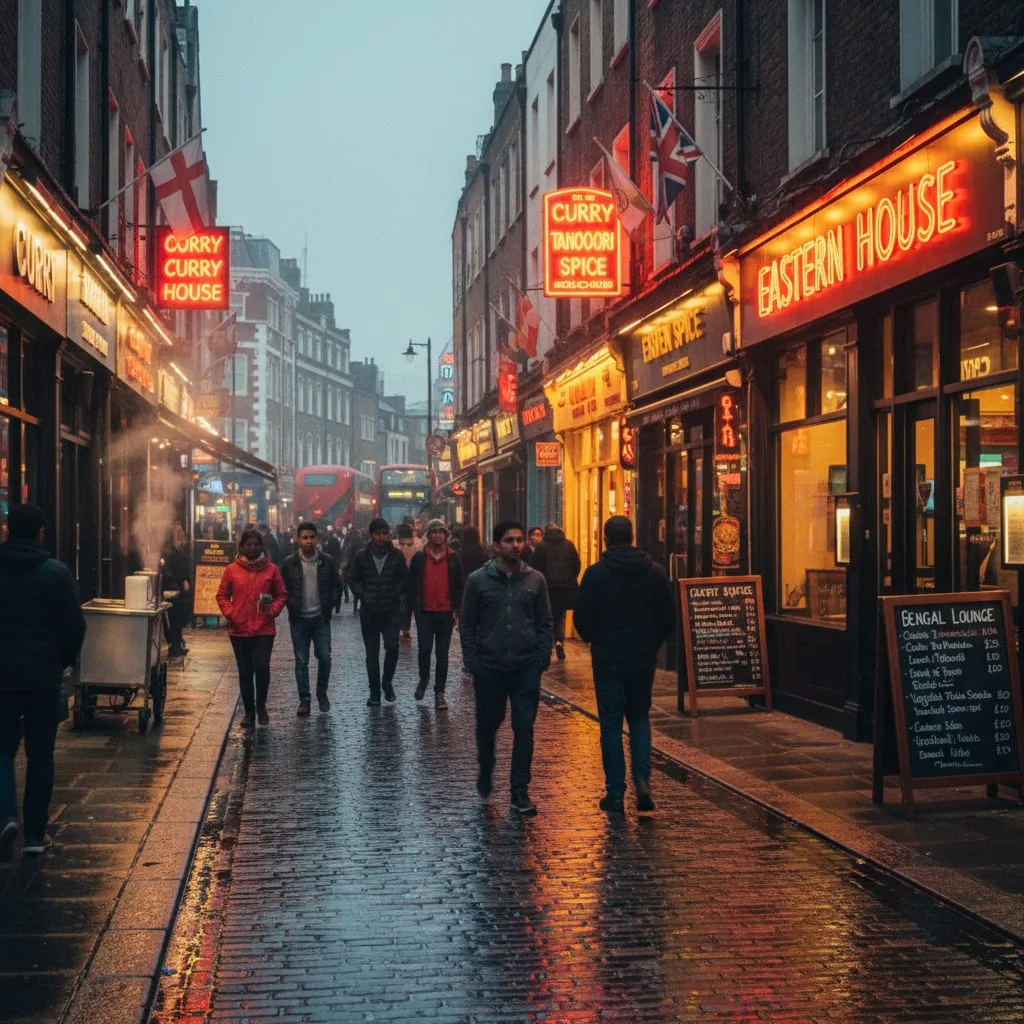
Little India (Tekka area) is your base camp here. The Tekka Centre hawker has some of the best fish head curry I've avoided and equally good vegetarian thalis I've devoured. Komala Vilas has been serving pure vegetarian South Indian food since 1947 - their filter coffee alone is worth the trip. For a detailed breakdown, check our Singapore travel guide for first time visitors.
Must-try dishes: Vegetable biryani at Tekka Centre, masala dosa at Komala Vilas, prata (Singapore's roti canai) at any 24-hour prata shop, and if you're homesick - MTR has an outlet in Little India.
Veg-friendly rating: Excellent. Singapore has clear food labeling and many certified vegetarian restaurants. Chinese vegetarian ("zhai") restaurants are also everywhere.
Budget: SGD 5-15 per hawker meal (₹375-1,130), SGD 15-30 for restaurant meals (₹1,130-2,260). Expensive but not unmanageable.
3. United Arab Emirates - Where India Moved for Tax Benefits
Dubai and Abu Dhabi have so many Indians that finding desi food is actually harder to avoid than to find. According to Visit Dubai tourism data, Indians are the largest tourist group visiting the emirate - and the food scene reflects it. Karama in Dubai is basically Lajpat Nagar with better air conditioning. Vegetarian restaurants outnumber non-veg ones in certain neighborhoods because of the massive Gujarati and Marwari business community.
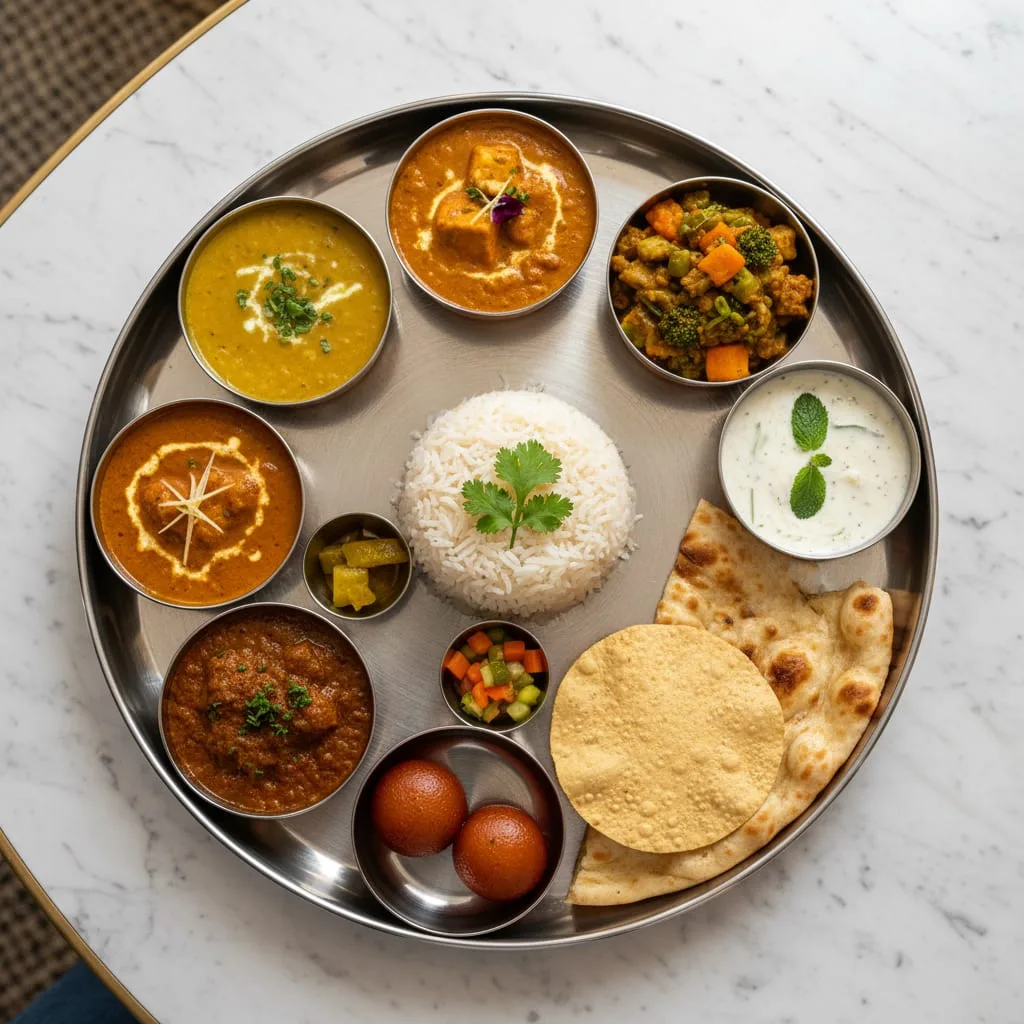
Quality varies wildly though. Some places serve authentic regional food that'll make you weep with joy - Calicut Paragon for Kerala food, Ravi Restaurant for Pakistani-Punjabi, Govinda's for pure Sattvic vegetarian. Others serve bland "Indian" food designed for non-Indian tourists that tastes like disappointment with extra cream.
Must-try dishes: Unlimited thali at Chhappan Bhog or Bikanervala (both Jain-friendly), Kerala meals at Calicut Paragon, chaat at any of the dozen Haldiram's outlets, and proper Gujarati food at Maharaja Bhog.
Veg-friendly rating: Outstanding. Dedicated vegetarian restaurants everywhere, clear labeling in supermarkets, and the staff usually understand exactly what "no onion no garlic" means.
Budget: AED 20-50 per meal (₹520-1,300). Mid-range for Dubai, which is saying something.
Tier 2: Solid Options Among Indian Food Abroad Countries
4. United Kingdom - The Colonial Hangover That Benefits Your Stomach
British Indian food is its own category entirely. Chicken Tikka Masala was literally invented in Glasgow, and dishes like Balti are British creations. Want "authentic" Indian food? You need to know where to look carefully. Want tasty Indian-ish food? Literally any high street curry house will do the job.
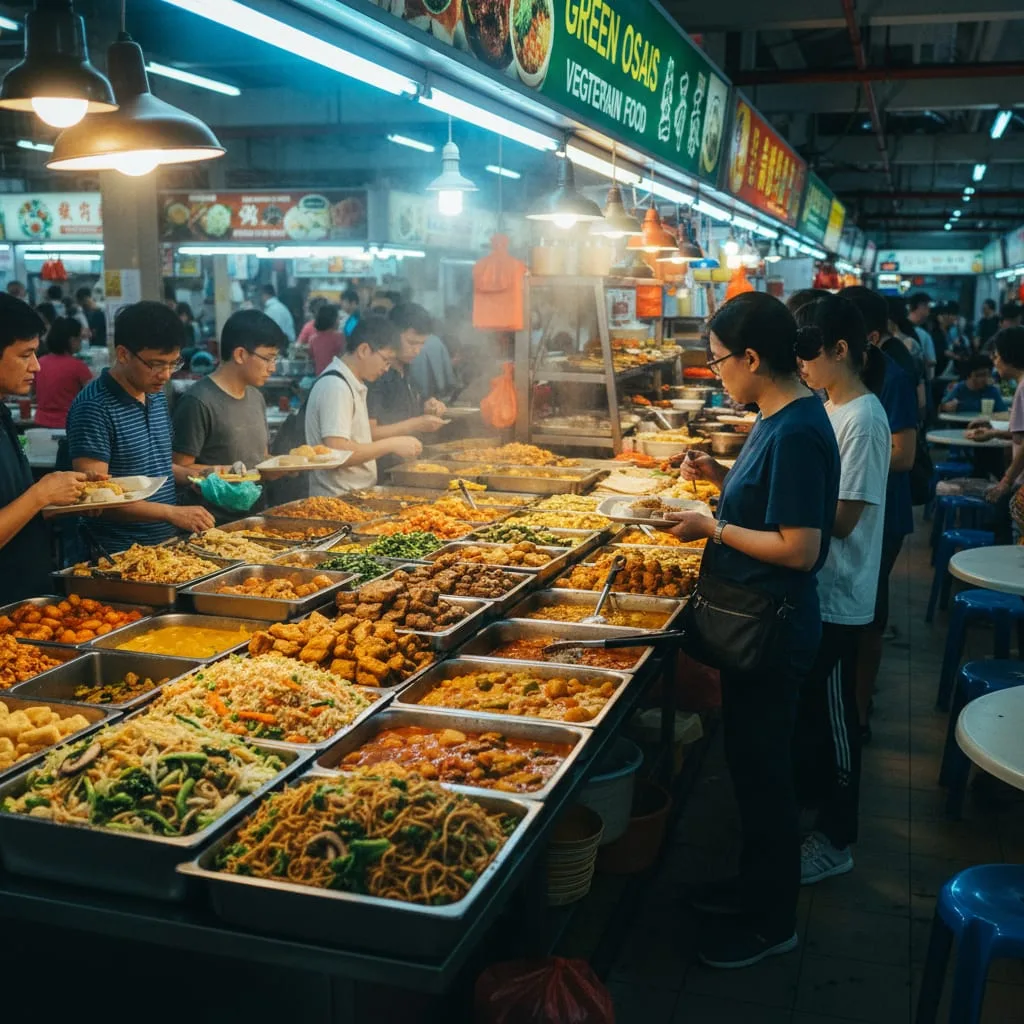
Southall in West London is essentially Punjab with worse weather. Tooting has brilliant South Indian options - Dosa n Chutney and Apollo Banana Leaf are consistently good. Brick Lane in East London is famous but honestly overrated - it's more Bangladeshi than Indian, and the aggressive touts outside every restaurant should tell you something about the food quality.
Order these: Sunday curry buffet at any Southall restaurant (unbeatable value), dosa at Tooting's South Indian places, Gujarati thali at Sakonis in Wembley, and if you must do Brick Lane - Tayyabs for Pakistani-style grilled meats.
Vegetarian score: Good in Indian restaurants, challenging elsewhere. British cuisine isn't naturally vegetarian-friendly, but dedicated Indian veggie restaurants are common in areas with Indian populations.
Costs: £8-20 per meal (₹1,030-2,570). London is expensive, but curry houses offer good value compared to other cuisines.
5. Mauritius - Little India in the Indian Ocean
Mauritius is roughly two-thirds Indo-Mauritian, primarily descended from indentured laborers who came in the 1800s. This makes it one of the most reliable indian food abroad countries in the Southern Hemisphere. Dholl puri (a flatbread stuffed with ground yellow lentils) is the national street food and Ganesh Chaturthi is a public holiday here.
The Indian food has evolved interestingly - it's recognizably Indian but with Creole and Chinese influences mixed in. You'll find farata (paratha), mine frit (hakka noodles with an Indian twist), and proper vegetarian restaurants in most towns across the island.
Order these: Dholl puri from any street vendor (₹30-40 for two), seven curry at traditional restaurants, gateaux piment (chilli cakes), and proper vegetarian thali at restaurants in Port Louis.
Vegetarian score: Very good. Hinduism is the majority religion, so vegetarianism is well understood and accommodated.
Costs: MUR 150-400 per meal (₹300-810). Affordable, especially street food.
6. Sri Lanka - India's Neighbor with Tamil Roots
Given the geographical and cultural proximity, Sri Lanka naturally has good Indian food - particularly South Indian. The Tamil population in the north and east, plus the general South Indian influence throughout, means you'll find hoppers, string hoppers, kottu, and proper vegetarian options easily throughout the country.
Colombo has dedicated vegetarian restaurants, and even non-vegetarian places understand "no fish, no meat, no egg" without you having to mime a dying chicken. Local Sri Lankan food is also quite accessible for Indian palates - similar spices, similar preparations throughout.
Order these: Egg hoppers (or plain for vegetarians), string hoppers with curry, vegetarian kottu (specify clearly), and proper meals at Saravanaa Bhavan outlets in Colombo.
Vegetarian score: Good, but be careful with fish. Sri Lankan cooking uses Maldive fish (dried tuna) in many dishes that look vegetarian. Always ask about dried fish specifically.
Costs: LKR 500-1,500 per meal (₹145-435). Very affordable overall.
7. Thailand - Surprisingly Manageable for Vegetarians
Thailand surprised me completely. Going in expecting to struggle, I ended up eating incredibly well. The secret is the word "jay" (เจ) - it indicates vegan Buddhist food, and you'll see yellow flags with this symbol outside restaurants during the vegetarian festival (and year-round at dedicated shops).
Bangkok has several excellent Indian restaurants in Pahurat (Little India) and Sukhumvit. For authentic tips on surviving Thailand as a vegetarian Indian, see our detailed guide on vegetarian food in Thailand for Indian travelers.
Order these: Jay food from marked stalls, Indian food in Pahurat (Royal India is solid), vegetarian pad thai (confirm no fish sauce), and green curry without shrimp paste (rare but available at tourist-friendly places).
Vegetarian score: Moderate to good overall. Fish sauce and oyster sauce are in almost everything Thai, but jay restaurants are completely plant-based. Indian restaurants in Bangkok are safe.
Costs: THB 50-200 per meal (₹145-575). Cheap and excellent value.
Tier 3: Indian Food Exists, But Pack Your Theplas
8. Nepal - Close But Not Quite Indian
Nepal should theoretically be easy - it's literally next to India, shares cultural ties, and has similar food traditions. But here's the thing: Nepali food is its own distinct cuisine. Dal bhat is everywhere but it's distinctly Nepali (different spicing, more mustard oil). Momos are the national obsession everywhere you go.
Indian restaurants exist in Kathmandu's Thamel area, but they're mostly catering to Indian tourists and the quality is inconsistent at best. Vegetarian dal bhat is your reliable friend - available at every local restaurant, cheap, filling, and genuinely tasty.
Go for: Dal bhat everywhere, vegetable momos, thukpa (noodle soup), and Indian food at places like Third Eye Restaurant in Thamel when you need something familiar.
Veg status: Good for basic food, challenging for variety. Nepal is Hindu-majority, so vegetarianism is understood, but the cuisine is less diverse than India's.
Spend: NPR 300-800 per meal (₹190-500). Very affordable overall.
9. Fiji - Pacific Island Curry Culture
Fiji is 38% Indo-Fijian, descendants of indentured laborers from India (mostly from Bihar and eastern UP). Genuine Indian food exists here - curry shops serving roti and tarkari (curry) are common throughout the islands, and vegetarian options are available in most restaurants.
Over generations, the Indian food has evolved into its own Fiji-Indian cuisine. Recognizable but different - less complex spicing, more coconut milk, influences from the Pacific region. Don't go expecting Delhi-quality biryani, but you won't starve either.
Go for: Roti and curry from local shops, vegetarian options at Indo-Fijian restaurants, and surprisingly good vegetarian samosas at random bakeries across the islands.
Veg status: Decent overall. Hinduism is common among Indo-Fijians, so vegetarianism is understood widely. Fish is considered vegetarian by some locals though, so specify clearly.
Spend: FJD 10-25 per meal (₹430-1,080). Moderate overall.
10. South Africa - Rainbow Nation, Dosa Nation
South Africa has a significant Indian population, concentrated in Durban and Johannesburg primarily. Durban actually has the largest Indian population outside of India, primarily South Indian and Gujarati origin. The famous Durban bunny chow - curry served in a hollowed-out bread loaf - is a must-try local invention.
Quality in Durban is excellent for indian food abroad countries on the African continent. Cape Town has fewer options but still manageable. Outside major cities, Indian food becomes scarce and you'll rely on your packed supplies heavily.
Go for: Bunny chow in Durban (vegetarian versions available), proper South Indian meals on Florida Road, Gujarati farsan and snacks at Indian-owned shops throughout.
Veg status: Good in Durban, moderate elsewhere. The Indian community is established enough that vegetarianism is well understood in relevant areas.
Spend: ZAR 80-200 per meal (₹470-1,180). Reasonable value overall.
11. Trinidad and Tobago - Caribbean Doubles, Indian Origins
Trinidad has a 35% Indo-Trinidadian population, primarily descended from laborers from Bihar and Eastern UP. Their national street food - doubles - is basically two bara (fried bread) with channa (chickpea curry). Roti shops serving dhalpuri and paratha are everywhere across the island.
Caribbean influences have shaped the Indian food here - more pepper, different techniques - but it's authentically rooted in Indian traditions. Many Indians are Hindu, so vegetarian options are standard at most places serving the community.
Eat this: Doubles from any street vendor, dhalpuri roti with pumpkin talkari, vegetable pelau (rice dish), and proper curry at Indian-Trinidadian restaurants.
Pure veg options: Good overall. Hinduism is prevalent, so vegetarianism is common and understood widely.
Budget: TTD 30-120 per meal (₹425-1,700). Reasonable overall.
12. Kenya - East African Desi Community
Kenya has a small but established Indian community, primarily in Nairobi and Mombasa. The community is largely Gujarati, which means proper vegetarian restaurants exist and Indian groceries are available throughout the city. Food here is authentic because it's made by and for Indians, not tourists.
Outside Nairobi, options drop dramatically though. Safari lodges sometimes have Indian options on request, but don't count on it for consistent quality. Pack supplies for any travel outside major cities.
Eat this: Gujarati thali at restaurants in Nairobi's Westlands area, Indian street food in downtown Nairobi, and proper vegetarian options at established restaurants like Haandi.
Pure veg options: Good in Nairobi among Indian restaurants, limited elsewhere significantly. Kenyan cuisine itself is very meat-heavy overall.
Budget: KES 500-1,500 per meal (₹370-1,110). Moderate overall.
The Indian Traveler's Survival Guide: Finding Food Anywhere
The Google Maps Hack for Indian Food Abroad Countries
Wherever I travel, first thing I do is open Google Maps, search "Indian restaurant" or "vegetarian restaurant," filter by 4+ stars, and read reviews specifically from Indian names. Comments like "tastes like home" or "proper South Indian" are gold. Anything saying "interesting fusion" is a warning sign to avoid.
Also search for "Saravanaa Bhavan" - they have outlets worldwide and maintain consistent quality everywhere. MTR and Haldiram's are other safe bets in certain indian food abroad countries.
The Thepla Tradition: What to Pack Always
Every experienced Indian traveler packs food without fail. Not embarrassing - it's practical wisdom. Here's my standard packing list:
- Theplas or khakhra: They last for days, don't need refrigeration, and are perfect with pickle
- Pickle: Goes in checked baggage only due to liquids rule - aam ka achaar is my comfort food
- MTR/Gits ready-to-eat packets: Upma, poha, dal fry - just need hot water or microwave access
- Maggi or Top Ramen: Universal backup meal since most hotels have kettles available
- Dry snacks: Mixture, chivda, chakli - essential for airport layovers and emergencies
- Instant coffee/tea bags: Hotel coffee is consistently terrible without exception
Check destination customs rules first - Australia and New Zealand are strict about food items. Most countries allow sealed packaged foods without issues.
Useful Apps for Finding Desi Food Abroad
Happy Cow app is essential for vegetarians - it maps vegetarian and vegan restaurants worldwide with reviews. TripAdvisor's "vegetarian friendly" filter actually works decently in practice. Zomato is really only useful in India now, plus restaurant listings in the UAE.
If you are strictly vegetarian, our comprehensive vegetarian guide abroad for Indian travelers covers 15+ countries with survival phrases and essential apps.
Final Thoughts on Indian Food Abroad Countries
After 23 countries, here's my honest summary of indian food abroad countries ranked. Malaysia is unbeatable - I've seriously considered relocating just for the roti canai. Singapore is Malaysia with better hygiene and higher prices. UAE is home away from home for anyone from Gujarat or Rajasthan. UK has options if you know where to look carefully. Beyond that, you're into "Indian food exists but bring backups" territory.
Countries I deliberately didn't include - Japan, Korea, China, most of Europe, South America - have Indian restaurants in major cities but the density is low and quality is inconsistent. You'll survive, but you'll also spend half your trip searching for food instead of enjoying your destination properly.
My advice? Match your destination to your dietary flexibility level. Strict vegetarian? Stick to Tier 1 indian food abroad countries or pack heavily. Flexible eater? The world opens up considerably more. And regardless of where you go, pack those theplas. Your future hungry self will thank you sincerely.
Planning a trip to any of these destinations? TripCabinet handles the bookings and can specifically arrange for hotels with Indian food options or proximity to Indian restaurants. Because we get it - sometimes the difference between a good trip and a great trip is knowing where your next proper meal is coming from.
Planning to bring your own desi food stash from India? Check out our complete guide to carrying Indian food abroad — what to pack, customs rules by country, and how to cook dal in an Airbnb kitchen.
Frequently Asked Questions
Which country has the best Indian food outside India?
Malaysia tops the list — mamak stalls serve roti canai, banana leaf rice, and teh tarik that rivals Indian originals. Singapore (Little India), UAE (Karama area), UK (Brick Lane, Southall), and Thailand (Pahurat area in Bangkok) all have excellent Indian food scenes.
Can strict vegetarians find food abroad easily?
It depends on the country. Easy: Singapore, Malaysia, Thailand, UK, UAE, Nepal. Moderate: Japan, South Korea, Europe (most cities). Hard: Central Asia, South America, Africa. Always learn "no meat, no fish, no egg" in the local language. Download HappyCow (featured in our best travel apps guide) app for vegetarian restaurant finder.
Should I carry Indian food when traveling abroad?
Yes, always carry emergency snacks. Thepla, khakhra, ready-to-eat MTR meals, instant poha/upma, pickle sachets, and chai bags are Indian traveler essentials. Most countries allow packaged food through customs. Avoid fresh fruits, vegetables, and dairy which are restricted at many borders.
Is halal food available in non-Muslim countries?
Major cities worldwide have halal options. London, Tokyo, Seoul, Bangkok, and Singapore have many halal restaurants. Use the HalalTrip or Zabihah apps to find nearby halal food. In smaller European towns, Turkish kebab shops are usually the safest halal option.
Which countries are hardest for Indian food lovers?
Japan (heavily seafood-based, limited Indian options outside Tokyo), China (very different palate, language barrier), and Eastern Europe (limited spice use, heavy meat focus) are the hardest. In these countries, book accommodations with kitchen access and cook your own meals.