

Hidden Charges on International Trips That Indians Miss in 2026: I Lost ₹25,000 Learning These the Hard Way
In this guide (17)
- Hidden Charges International Travel India: The Forex Markup Scam
- Dynamic Currency Conversion: The Sneakiest Trap at Every POS Machine
- Tourist Tax Across Europe: The Charge Not Included in Your Booking
- ATM Withdrawal Fees: Triple Charging You Never Expected
- International Roaming: Why Your Rs 500/Day Pack is a Ripoff
- Visa Service Center Fees: VFS Charges You for Forms
- Budget Airline Baggage: Your "Cheap" Flight is Not Cheap
- Travel Insurance Exclusions: What Your Policy Does Not Cover
- Hotel Resort Fees: The American Special
- Tipping Culture Shock: The Unwritten 20% Tax in America
- UPI Abroad: The Free Lunch That is Not Entirely Free
- Duty-Free is Not Always Cheaper: The Airport Trap
- European Train Reservation Fees: Your Rail Pass is Not All-Inclusive
- Uber Surge Pricing Abroad: The Multiplier You Did Not See Coming
- What I Actually Lost: My Real Expense Breakdown
- The Checklist Before Your Next Trip
- Frequently Asked Questions
I got slapped with a Rs 4,500 "city tax" at my Prague hotel checkout last September. Nobody warned me. Not Booking.com, not my travel agent, not a single travel blog I read. Hidden charges international travel India faces are countless — and I learned about this particular one at the worst possible moment. The receptionist handed me the bill like it was the most normal thing in the world — "tourist tax, sir, two euros per night per person, fourteen nights, two people." I stood there doing mental math while my wife pretended not to notice my face turning red.
That Prague incident was just one of many sneaky fees Indians discover too late. Over six international trips in the past three years, I have personally lost over Rs 25,000 to charges that never appeared on any booking confirmation. And I am supposedly a "frequent traveler." If someone who researches destinations for weeks can get caught, what chance does a first-timer have?
This is the guide I wish someone had handed me before my first trip abroad. Real charges, real amounts in Rupees, real solutions. No fluff about "doing your research" — actual numbers and tactics to keep your money where it belongs: in your wallet. The hidden charges international travel India visitors encounter can drain thousands from your budget if you are unprepared.
Hidden Charges International Travel India: The Forex Markup Scam
Here is something your bank never mentions in those glossy credit card brochures. Every single international transaction on your Indian credit or debit card gets hit with a forex markup of 2.5% to 3.5%. This is separate from — and in addition to — the Visa or Mastercard network fee of about 1%.
When you buy a Rs 5,000 dinner in Bangkok, you are actually paying Rs 5,225. Every. Single. Time. Over a 10-day trip with Rs 80,000 in card expenses, that is Rs 3,600 vanishing into your bank's pocket.
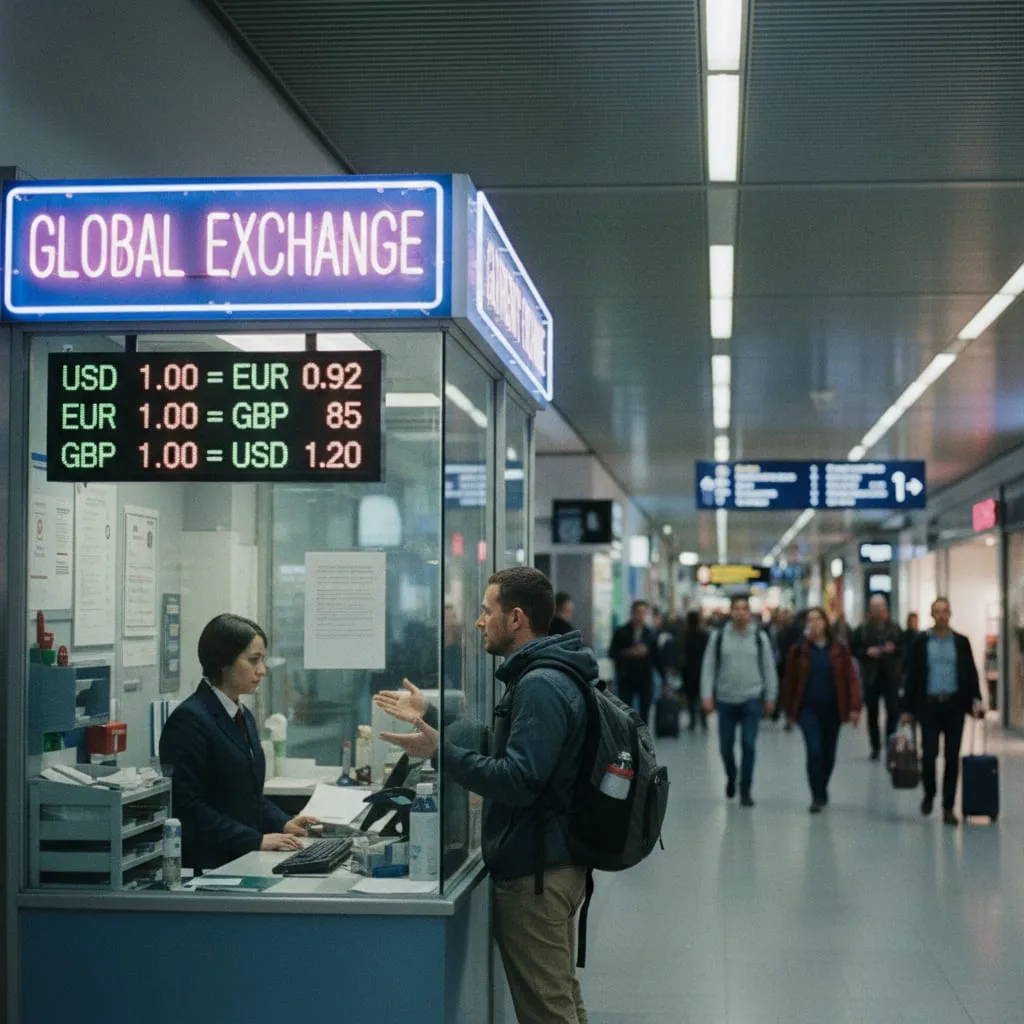
Some cards are worse than others. HDFC charges 3.5% on most cards. ICICI sits around 3.5% too. SBI cards hover at 3.5%. The only exceptions are travel-specific cards like the HDFC Infinia or Axis Atlas — but those require astronomical spending to qualify.
Your best move? Get a forex card or multi-currency card loaded with the local currency before you leave. BookMyForex, Niyo, or Thomas Cook forex cards charge around 1.5-2% — still not free, but half the bleeding. Alternatively, carry more cash than you think you need and exchange at competitive rates abroad.
Dynamic Currency Conversion: The Sneakiest Trap at Every POS Machine
This one made me genuinely angry when I finally understood it. You are at a shop in Rome, and you hand over your card. The machine asks: "Pay in INR or EUR?" You think, "Oh nice, they support Rupees! Let me pay in my home currency so I know the exact amount."
Wrong. Terribly wrong. This is among the most common hidden charges international travel India tourists fall for repeatedly.
That "helpful" option is called Dynamic Currency Conversion, and it is designed to rob you. The merchant — or more accurately, the payment processor — uses an exchange rate 5-8% worse than actual market rates. On a Rs 10,000 purchase, you just donated Rs 500-800 to some random European payment company.
I fell for this in Switzerland. A Rs 12,000 purchase became Rs 12,900 because I chose "INR" instead of letting my Indian bank handle the conversion. The payment processor showed me a "guaranteed" exchange rate of 91 INR per CHF. The actual rate that day? 84 INR per CHF. I paid Rs 7 extra per Franc.
The rule is simple: ALWAYS choose local currency. Always. Even though your bank charges forex markup, their rates are still better than DCC rates. Say "Euro please" or "Baht please" or whatever the local currency is. Never let them convert to Rupees.
Tourist Tax Across Europe: The Charge Not Included in Your Booking
Back to my Prague nightmare. City tax, tourist tax, accommodation tax — Europeans have invented many names for the same thing: money they collect from you at checkout that was never mentioned during booking.
Here is what various European cities charge you, per person, per night according to the European Tour Operators Association:
- Rome, Italy: EUR 3-7 depending on hotel rating. My five-night stay cost an extra EUR 35 per person.
- Barcelona, Spain: EUR 0.65-2.48 plus a regional tax of EUR 1-2.50. Total up to EUR 5 per night in peak season.
- Paris, France: EUR 0.25-5 based on hotel stars. Surprisingly cheaper than Italy.
- Prague, Czech Republic: CZK 50 (about EUR 2) per person per night.
- Amsterdam, Netherlands: 7% of room rate. On a EUR 150 room, that is EUR 10.50 per night.
- Berlin, Germany: 5% of room rate.
- Vienna, Austria: 3.2% of room rate.
For a couple spending two weeks across Italy and Czech Republic, tourist tax alone can cross Rs 8,000-10,000. This money is not optional, not negotiable, and not shown on any booking site. You pay it in cash at checkout.
ATM Withdrawal Fees: Triple Charging You Never Expected
Need cash abroad? Using your Indian debit card at a foreign ATM means getting charged three separate times. These hidden charges international travel India visitors face at ATMs are particularly painful.
Charge 1: Your Indian bank charges a flat fee of Rs 125-200 per international withdrawal. SBI charges Rs 150, HDFC charges Rs 150, and ICICI charges Rs 125 plus 3.5%.
Charge 2: The foreign ATM operator charges their own fee. US ATMs charge USD 2.50-4. European machines take EUR 2-5. Thailand is particularly brutal at 220 Baht (about Rs 550) for most ATMs.
Charge 3: Your bank applies forex markup of 3-3.5% on the withdrawn amount.
When you withdraw the equivalent of Rs 10,000 from a Thai ATM, you actually pay about Rs 10,550 (Thai fee) + Rs 150 (SBI fee) + Rs 350 (forex markup) = Rs 11,050. That is an 11% effective charge on your cash withdrawal.
The workaround: withdraw larger amounts less frequently. That Rs 150 flat fee hurts less on Rs 30,000 than on Rs 5,000. Or better — get a forex card pre-loaded before your trip and withdraw from that. Most forex cards charge zero or minimal ATM fees abroad.
International Roaming: Why Your Rs 500/Day Pack is a Ripoff
Jio International, Airtel IR packs, Vi international — they all advertise "stay connected abroad!" The rates look reasonable at first glance. Around Rs 575 per day with unlimited calls and 100MB data.
Then you actually use it.
My Jio pack in Thailand lasted about 2 hours of normal usage. Google Maps, WhatsApp photos, one Instagram scroll — 100MB gone. The connection was patchy in rural areas. Incoming calls kept dropping. I ended up buying a local SIM anyway, making the Rs 575 completely wasted.
The smarter approach in 2026 is an eSIM for international travel. Providers like Airalo, Holafly, or Nomad offer regional eSIMs — Southeast Asia packages, Europe packages — starting at Rs 800-1,500 for 7-15 days with 3-10GB data. That is less than what Jio charges for 2-3 days.
No physical SIM swapping needed. Works instantly after download. Your Indian number stays active for OTPs (important for banking). Plus you get actually usable data amounts.
Visa Service Center Fees: VFS Charges You for Forms
Getting a Schengen visa through VFS Global? The actual visa fee is EUR 80 (about Rs 7,200). But your total payment will be much higher.
VFS charges a "service fee" of Rs 2,100-2,400 on top of the visa fee. Then they offer "premium services" — SMS updates for Rs 75, courier return for Rs 350, premium lounge access for Rs 3,200, prime time appointment for Rs 3,500.
For many applicants, the total VFS charges cross Rs 12,000 for a Rs 7,200 visa. You cannot really avoid VFS — they have exclusive contracts with most embassies. The only savings: avoid the premium add-ons. Track your application online (free), collect passport in person if possible, and book appointments as early as possible to avoid "prime time" premiums.
Budget Airline Baggage: Your "Cheap" Flight is Not Cheap
AirAsia, Scoot, IndiGo international — their base fares look incredible. Delhi to Singapore for Rs 6,000? Bangkok for Rs 4,500? Yes, but those prices include zero checked baggage, no meals, and seats with legroom designed for children.
Add a 20kg checked bag: Rs 2,500-4,000. Meal: Rs 400-700. Seat selection (window or aisle): Rs 500-1,200. Priority boarding: Rs 300-500.
That Rs 6,000 Singapore flight quickly becomes Rs 10,000-11,000 once you add what full-service airlines include for free. Sometimes Vistara or Singapore Airlines all-inclusive fares are actually cheaper than budget carriers plus add-ons. Always compare the final total, not the advertised base fare. Hidden charges international travel India flyers encounter on budget airlines can easily double your ticket cost.
Also watch out for cabin baggage weight limits. AirAsia allows only 7kg cabin baggage — and they do weigh it. I have seen fellow Indians frantically wearing three jackets at check-in to make weight.
Travel Insurance Exclusions: What Your Policy Does Not Cover
You bought travel insurance. Good. But have you read the exclusions? Because most Indian travel insurance policies do not cover:
- Adventure sports: Scuba diving, bungee jumping, paragliding, skiing — "hazardous activities" excluded unless you bought the premium adventure rider.
- Pre-existing conditions: That knee problem, those back issues — claims denied if the insurer traces it to a prior condition.
- Electronics: Your laptop, camera, phone — either excluded entirely or capped at Rs 10,000-15,000.
- Pandemic-related claims: Still excluded by many policies or buried under layers of conditions.
- Trip cancellation for "change of mind": Only covered if you have documented medical emergencies or specific covered reasons.
My friend filed a claim for a lost camera worth Rs 90,000 in Barcelona. The insurer paid Rs 12,000 — the policy cap for single electronic items. He assumed "baggage loss" meant full replacement value. It did not.
Read your policy document. Study the actual PDF, not just the brochure. Understand what "covered" actually means.
Hotel Resort Fees: The American Special
This is mainly a US problem, but it is spreading. You book a Las Vegas hotel for USD 89 per night. Great deal. Then at checkout, you discover a USD 45 "resort fee" per night that was mentioned in tiny grey text somewhere on page 17 of the booking terms.
Resort fees supposedly cover "amenities" — WiFi, pool access, gym, business center printing. Things that should be included with any hotel room. But hotels separate these charges to advertise lower nightly rates while collecting the same total.
Hawaii hotels charge USD 25-40 resort fees. Miami Beach runs USD 30-50. Las Vegas is shameless at USD 40-55 per night. On a seven-night Vegas trip, that is USD 280-385 extra — Rs 23,000-32,000 in hidden charges.
Some booking sites now show "total with fees" options. Use those filters. Or book directly with hotels that explicitly state "no resort fee" — they exist, but require more searching to find.
Tipping Culture Shock: The Unwritten 20% Tax in America
Coming from India where tipping is optional and 10% feels generous, American tipping culture is a financial shock. The "expected" tip in the US is now 18-25% on restaurant bills. Not including it is considered rude and can get you confronted by staff.
Breakfast for two: Rs 2,500. Expected tip: Rs 500. Dinner for two: Rs 6,000. Expected tip: Rs 1,200. Bellhop carrying bags: Rs 150-250 per bag. Valet parking: Rs 200-400. Housekeeping: Rs 200-300 per day.
Over a two-week US trip, tips add up to Rs 15,000-25,000 depending on your spending. This is not optional — it is factually how service workers earn their income there. Budget for it explicitly.
Many restaurants now add "suggested tip" lines on bills with pre-calculated amounts. Some sneakily calculate that 20% on the post-tax total, making it actually 22% of your food cost. Check the math before signing.
UPI Abroad: The Free Lunch That is Not Entirely Free
The hype around UPI acceptance abroad is real — Singapore, UAE, Bhutan, Nepal, and several other countries now accept Indian UPI payments. But there are catches.
UPI international transactions still incur forex markup — typically 1.5-2%. Lower than credit card markup, yes, but not zero as many people assume. The "RuPay on UPI" international feature charges 1.75% markup on most transactions.
Also, UPI acceptance abroad is patchy. Yes, it works at the Marina Bay Sands gift shop. No, it does not work at the hawker centre uncle selling chicken rice. You still need backup payment methods — cash or cards — for the majority of small purchases.
Duty-Free is Not Always Cheaper: The Airport Trap
The Dubai duty-free shop looks like a wonderland. Watches, electronics, chocolates, perfumes — all "duty-free" so obviously cheaper, right?
Not necessarily. Duty-free means no import duties — but shops still price items with healthy margins. That "duty-free" whisky might be cheaper than MRP in India but more expensive than the same bottle at a Mumbai wine shop. That "duty-free" camera is often pricier than Amazon India prices.
Chocolates and cosmetics tend to be genuinely cheaper at duty-free. Electronics almost never are. Watches depend heavily on brand and model. Liquor is usually cheaper, but only compared to official Indian retail, not grey market.
Before your trip, price-check items you plan to buy at duty-free. Screenshot the Indian prices. Compare at the airport. You will be surprised how often "keeping your wallet closed" is the right choice.
European Train Reservation Fees: Your Rail Pass is Not All-Inclusive
Got a Eurail pass? Congratulations, you can board most European trains. Except you cannot board certain trains without additional reservation fees.
High-speed trains like the TGV in France, AVE in Spain, and Freccia in Italy require mandatory seat reservations. These cost EUR 10-35 per journey, on top of your rail pass. Cross-border trains like Thalys (Brussels-Amsterdam-Paris) charge EUR 25-35 reservation fees.
A two-week Eurail trip hitting major cities easily accumulates EUR 100-200 in reservation fees — Rs 9,000-18,000 that the Eurail brochure does not mention upfront. Slower regional trains are usually reservation-free, but then your "high-speed European train adventure" becomes a slow local stopping service.
Uber Surge Pricing Abroad: The Multiplier You Did Not See Coming
Uber works similarly worldwide, but surge multipliers hit differently when you do not understand local pricing. A "normal" Uber in Bangkok costs 150-200 Baht (Rs 375-500) for most city rides. During surge — rain, rush hour, tourist areas at night — that becomes 3x or 4x: Rs 1,500-2,000 for the same distance.
London Uber surge is brutal. Standard GBP 15 rides become GBP 45 when theatre lets out or tubes close. Singapore charges "dynamic pricing" that is just Uber surge under a different name.
Check surge multipliers before confirming. If it is above 2x, consider waiting 15-20 minutes or walking to a less busy pickup area. The Grab app in Southeast Asia shows surge clearly before booking — use that transparency.
What I Actually Lost: My Real Expense Breakdown
Across my Europe and Southeast Asia trips in the last two years, here is where my money silently disappeared:
- Forex markup on cards: Rs 11,200 (across Rs 3,20,000 in transactions)
- Dynamic currency conversion mistakes: Rs 1,900 (three transactions before I learned)
- Tourist tax across four European cities: Rs 7,800
- ATM withdrawal fees: Rs 2,400 (eight withdrawals)
- International roaming packs that failed: Rs 1,725 (three wasted day packs)
- Resort fees in one Las Vegas hotel: Rs 9,800
- Tips I did not budget for in the US: Rs 18,500
- Train reservation fees with Eurail: Rs 8,400
- Surge pricing on late night rides: Rs 3,200
Total hidden charges: approximately Rs 64,925.
That is essentially an extra domestic vacation worth of money that evaporated without me buying a single souvenir, meal, or experience. Just... fees. Charges. Markups. The invisible tax on international travel that nobody tells you about until you are staring at your credit card statement back home. Understanding hidden charges international travel India encounters is the first step to avoiding them.
The Checklist Before Your Next Trip
Print this, screenshot it, or just mentally bookmark these action items:
- Get a forex card and load 60-70% of your expected expenses before leaving. The remaining 30-40% can go on credit cards as backup.
- Research tourist tax for every city you are visiting. Budget separately for it.
- Enable international transactions on your cards but set strict limits to avoid fraud exposure.
- Download an eSIM before departure. Do not rely on Indian roaming packs.
- ALWAYS pay in local currency when machines offer a choice. Never choose INR conversion.
- Compare total flight costs including baggage, not base fares.
- Read your travel insurance exclusions. If you plan adventure activities, buy the rider.
- Budget 20% extra for tips if visiting the US.
- Price-check duty-free items against Indian retail before buying.
- Check train reservation requirements if using a rail pass.
International travel is expensive enough with flights, hotels, and experiences. Do not let hidden charges steal your holiday budget. Every Rupee you save on fees is a Rupee you can spend on an actual memory — a better meal, an extra day trip, a spontaneous adventure.
Now you know what hidden charges international travel India visitors face. Go forth, and keep your money where it actually matters.
Tipping is another expense that catches Indians off guard — the rules change dramatically from country to country, and getting it wrong can range from embarrassing to genuinely offensive. Check out our tipping guide abroad for Indian travelers so you know exactly what to leave (and when to leave nothing).
Frequently Asked Questions
What hidden charges do Indian travelers face abroad?
The biggest hidden charges are: forex markup (1-3.5% on cards), dynamic currency conversion (4-5% extra), tourist tax (€1-7/night in Europe), international roaming (₹500-2,000/day), resort fees, city tax, and baggage fees on budget airlines. These can add ₹15,000-30,000 to a week-long trip.
How do I avoid forex markup charges on international trips?
Use a zero-forex credit card (HDFC Infinia, Axis Atlas, IDFC First Wealth) for all international purchases. Always pay in local currency when given the choice — never accept INR conversion at POS machines. For cash, use a Niyo or Fi card for fee-free ATM withdrawals.
What is dynamic currency conversion and how to avoid it?
Dynamic currency conversion (DCC) is when a merchant offers to charge you in INR instead of local currency. It sounds convenient but adds 4-5% markup with terrible exchange rates. Always choose "charge in local currency" when the terminal asks. This alone saves thousands per trip.
Do I have to pay tourist tax in Europe?
Yes, most European cities charge a tourist tax of €1-7 per person per night. It is not included in hotel booking prices. Cities like Venice, Amsterdam, Paris, and Barcelona charge the highest. Budget ₹500-1,500 per night for a couple. Some hotels collect it at check-in.
How much does international roaming cost for Indian travelers?
Jio and Airtel international roaming packs cost ₹500-2,500 for 7-14 days with limited data. The smarter option: buy a local eSIM (₹300-600 for 5-10GB) or use Airalo, which works in 190+ countries. Hotel and cafe WiFi is free almost everywhere in tourist areas.