

Kuala Lumpur Travel Guide for Indian Travelers: Everything I Learned in 8 Trips
I stepped off the plane at KLIA, groggy from a red-eye flight from Chennai, and the first thing I saw was a sign in Tamil. Then another. Then a man selling murukku at a kiosk. For a moment, I wondered if I had boarded the wrong flight and landed back home. That disorientation — that sense of the familiar wrapped in the exotic — is what makes Kuala Lumpur travel guide content so tricky to write for Indian audiences. Because KL is not quite foreign, not quite home, and that is precisely its magic.
Over eight trips spanning budget backpacking to business travel, I have eaten my way through Little India, gotten lost in the labyrinthine alleys of Chinatown, stood slack-jawed at the Petronas Towers, and climbed the 272 steps to Batu Caves more times than my knees would like. This Kuala Lumpur travel guide is the honest, detailed resource I wish existed before my first trip — written specifically for travelers coming from India.
First Impressions: Why KL Feels Like a Second Home
Let me be direct: if you are an Indian traveler nervous about venturing abroad for the first time, Kuala Lumpur is your gateway drug. The culture shock is minimal. You will find Tamil on street signs, hear Hindi in shopping malls, and discover that the local mamak stall serves better roti canai than most restaurants back home.
The city pulses with a multicultural energy that Indians instinctively understand. Malays, Chinese, and Indians have coexisted here for generations, creating a society where your neighbor might celebrate Hari Raya, your colleague observes Chinese New Year, and everyone joins in for Diwali. The food reflects this beautiful chaos — you can have nasi lemak for breakfast, dim sum for lunch, and banana leaf rice for dinner without anyone thinking it odd.
But do not mistake familiarity for sameness. KL has world-class infrastructure that will make you weep if you have ever navigated Indian metro systems. The streets are cleaner. The public transport actually runs on time. And the efficiency of everything — from immigration to restaurant service — might initially feel almost unsettling.
Planning your 2026 trip? Great timing — Malaysia is now visa-free for Indians, at least until 31 Dec 2026, when the current exemption is due to end. The 30-day visa exemption means you can skip the eVisa process entirely.
Kuala Lumpur Travel Guide: Must-See Attractions
Petronas Twin Towers: More Than Just a Photo Op
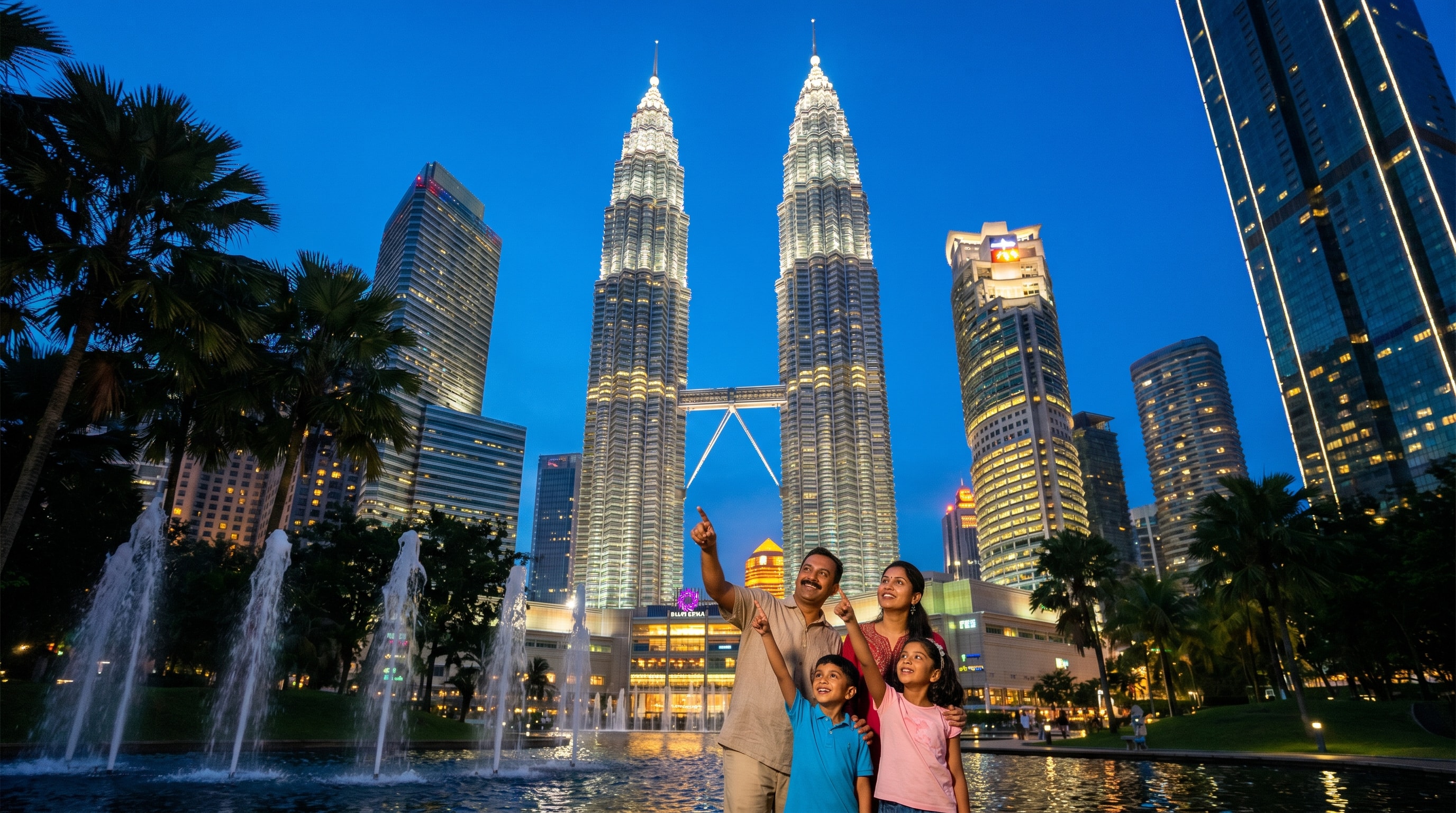
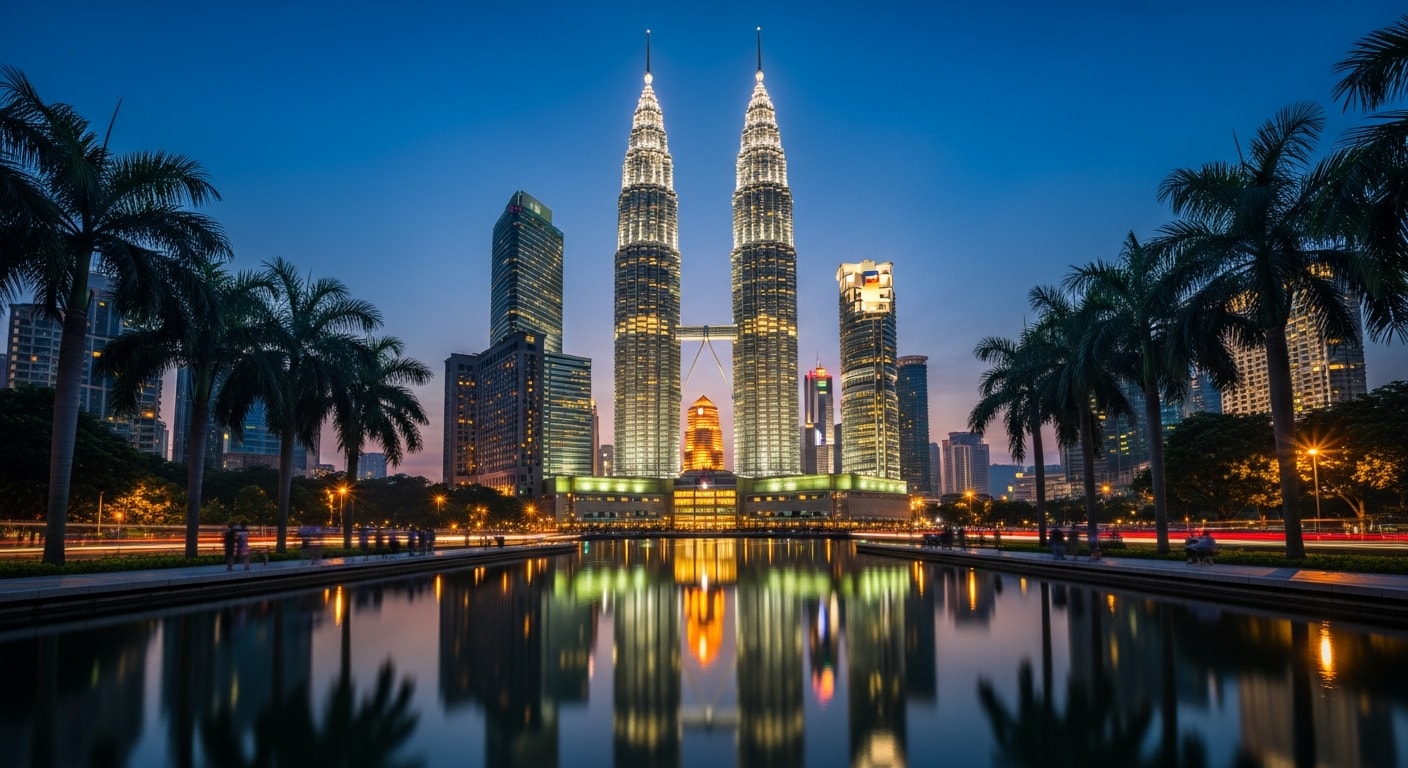
Yes, everyone visits the Petronas Towers. Yes, it is touristy. Go anyway. These 452-meter giants are architectural poetry, and seeing them lit up at night genuinely moves something in your chest. I have stood at the KLCC Park fountain show at 8 PM more times than I can count, and it never gets old.
The Skybridge and Observation Deck tickets cost MYR 98 (approximately INR 1,750). Book online at least a day ahead — walk-up tickets sell out by noon. The 86th floor observation deck offers 360-degree views, but honestly, the best free views are from the park below at sunset.
Practical tip: the Suria KLCC mall at the base has a food court with vegetarian options, air conditioning that feels like a blessing after KL's humidity, and clean toilets. You will spend more time here than planned.
Batu Caves: A Hindu Temple That Will Leave You Speechless
This is non-negotiable for any Kuala Lumpur travel guide aimed at Indian travelers. Batu Caves is not just a tourist attraction — it is one of the most important Hindu pilgrimage sites outside India. The 42.7-meter golden statue of Lord Murugan at the entrance is the tallest Murugan statue in the world. The main Cathedral Cave houses Hindu shrines that are over a century old.
Those 272 steps? They are real and they are steep. Start early (before 9 AM) to avoid the afternoon heat. Wear comfortable shoes and modest clothing — no shorts or sleeveless tops in the temple areas. The resident monkeys are cheeky thieves who will snatch your sunglasses, so keep belongings secure.
Visit during Thaipusam (usually January/February) if you want an experience that will redefine your understanding of devotion. Over a million pilgrims converge here in a celebration that makes your hometown temple festivals look subdued. But be prepared for massive crowds and book accommodation months in advance.
Getting there: Take the KTM Komuter train from KL Sentral to Batu Caves station (MYR 2.60, approximately INR 47). The station is right at the base of the steps.
KL Tower: The Underrated Alternative
Everyone obsesses over the Petronas Towers, but KL Tower (Menara KL) offers arguably better views because you can actually see the Petronas Towers from here. The observation deck ticket costs MYR 52 (INR 930), and there is a glass Sky Box where you can stand on a transparent floor 300 meters above the ground. My palms still sweat remembering it.
The tower sits on Bukit Nanas, the last remaining tropical rainforest in the city center. A short nature trail lets you walk through actual jungle before emerging at a telecommunications tower. Only in KL.
Merdeka Square: Where Malaysia Was Born
This is where the British flag came down and the Malaysian flag went up in 1957. The history is palpable. The Sultan Abdul Samad Building — that gorgeous Moorish architecture with the copper domes — looks like something from a dream, especially lit up at night.
Spend an hour here in the early morning when it is quiet. The National Textile Museum and KL City Gallery are nearby and worth a quick visit. The whole area is walkable and connects to Chinatown, making it easy to combine with lunch at Petaling Street.
Chinatown and Petaling Street: Controlled Chaos
Petaling Street is a sensory assault in the best way. Fake designer bags, knock-off watches, and surprisingly good street food compete for your attention under a canopy of green tarpaulin. Bargain hard — start at 30% of the asking price and settle around 50%.
The real gems are the Chinese temples and coffee shops tucked into the side streets. The Guan Di Temple (dedicated to the God of War) is a serene contrast to the market madness. And if you want the best Hokkien mee in KL, find the stall at the corner of Jalan Hang Lekir and Jalan Sultan — they have been there for decades and the wok-charred noodles are transcendent.
Central Market: Souvenirs Without the Chaos
If Petaling Street is too chaotic, Central Market offers a more civilized shopping experience. This Art Deco building from 1888 houses curated Malaysian crafts, batik textiles, and local artwork. Prices are higher than street markets but quality is reliable. The food court upstairs serves decent Malaysian food with air conditioning.
KL Neighborhoods: Where to Base Yourself
Bukit Bintang: First-Timer Central
If this is your first KL trip, stay in Bukit Bintang. Full stop. The area is walkable, connected to everything by monorail and MRT, and stuffed with restaurants, malls, and nightlife. Jalan Alor transforms into the city's best street food stretch after dark — rows of plastic tables and hawker stalls serving everything from grilled stingray to frog porridge (yes, really, and no, I did not try it).
Pavillion KL and Lot 10 are the big malls here, with Lot 10 having an excellent food court in the basement. Budget hotels cluster around Jalan Bukit Bintang, while fancier options line Jalan Sultan Ismail.
KLCC: Splurge Territory
The area around the Petronas Towers is where you stay if budget is not a concern. The Mandarin Oriental, Grand Hyatt, and Traders Hotel offer direct views of the towers. KLCC Park is at your doorstep, and Suria KLCC means you never need to leave air conditioning. But the neighborhood is sterile — all glass and marble with little street-level character.
Brickfields (Little India): Home Away From Home
This is where I always return. Brickfields is officially called Little India, and it earns the name. The streets smell of jasmine and incense. Vegetarian restaurants serve thali meals for MYR 8 (INR 145). Indian grocery stores stock everything from Maggi noodles to MTR ready-to-eat packets. Temple bells ring in the morning.
Accommodation is cheaper here than in Bukit Bintang, and you are right next to KL Sentral — the city's main transport hub. The trade-off is less nightlife and a grittier vibe, but for Indian travelers seeking comfort food and familiar sounds, nowhere else compares.
Sri Kandaswamy Kovil temple on Jalan Scott is beautiful and usually empty of tourists. Visit early morning for the calming rituals.
Bangsar: The Hipster Quarter
If you want to see where educated young KL-ites hang out, come to Bangsar. Third-wave coffee shops, organic brunch spots, independent bookstores, and craft cocktail bars line Jalan Telawi. It is more expensive than other neighborhoods but feels less touristy. The LRT connects Bangsar to central KL in about 15 minutes.
Bangsar Village and Bangsar Shopping Centre are pleasant mid-range malls without the overwhelming crowds of Bukit Bintang.
Kuala Lumpur Travel Guide: Food for Indian Visitors
Mamak Stalls: Your New Obsession
Mamak stalls are KL's greatest gift to humanity. These 24-hour Indian-Muslim eateries serve the best roti canai you will ever taste — flaky, buttery flatbread torn and dipped into lentil curry. Order it with egg (roti telur) or go wild with roti tissue, a massive paper-thin cone dusted with sugar.
Teh tarik (pulled tea) is the mandatory accompaniment — watching the teatime theatrics of pulling hot milk tea between two cups is half the experience. Mee goreng mamak (fried noodles Indian-Muslim style) and nasi lemak (coconut rice with sambal) complete the mamak trinity.
My favorite mamak: Restoran Mahbub in Bangsar. Go late at night when it is packed with locals — that is when you know it is good.
Banana Leaf Rice: A Ritual
If you have never eaten off a banana leaf, KL will initiate you. Rice is served on a fresh leaf with an array of vegetable curries, papadum, pickle, and rasam poured tableside. Add mutton curry or fried fish if you eat non-veg. Tear a piece of papadum, mix it with rice and curry using your right hand, and understand why this method of eating exists.
Sri Nirwana Maju in Bangsar is legendary — expect a 30-minute wait on weekends. Saravana Bhavan in Brickfields is the reliable vegetarian chain you know from India. Devi's Corner in Bangsar serves banana leaf until late night.
Vegetarian Options: Better Than Expected
KL surprised me with its vegetarian scene. Beyond Little India's obvious options, most mamak stalls serve vegetarian roti and dosa. Chinese vegetarian restaurants use mock meat convincingly. Even Malay food has vegetarian options if you know to ask — tempeh (fermented soybean) and tofu feature heavily.
Annalakshmi in Mid Valley serves buffet-style vegetarian food on a pay-what-you-wish basis. The food is excellent, and the concept supports charitable causes. Dharma Realm Guan Yin Sagely Monastery has a vegetarian canteen open to the public that monks frequent — simple food, pure intentions.
Halal Indian Food
For Muslim travelers or those preferring halal options, KL is paradise. All mamak food is halal. Most Indian restaurants in Brickfields and Bangsar are halal-certified. The extensive Malay food scene is entirely halal. You will never struggle to find halal food here.
Nasi Kandar Pelita is a chain with reliable halal Indian-Muslim food — their butter chicken rivals any you have had in India.
Getting Around KL: Transport in This Kuala Lumpur Travel Guide
KL's public transport is excellent once you understand the overlapping systems. Here is the breakdown:
LRT, MRT, and Monorail
Three rail systems serve the city. The MRT is the newest and cleanest, running from Kajang through the city center. The LRT has two lines (Kelana Jaya and Ampang/Sri Petaling) covering different areas. The Monorail loops through Bukit Bintang and connects to KL Sentral.
Buy a Touch n Go card from any station (MYR 10 plus stored value). It works on all rail systems and saves money versus single tickets. Trains run from 6 AM to midnight, with frequencies of 3-7 minutes during peak hours.
Grab: The Indian Traveler's Best Friend
Forget about regular taxis — they will try to overcharge you. Grab (the Southeast Asian Uber) is your solution. Download the app before arriving, link your Indian credit card or pay cash, and enjoy metered, air-conditioned rides without negotiation. A Grab from KL Sentral to Bukit Bintang costs about MYR 12-15 (INR 215-270).
GrabFood also delivers from most restaurants, useful when you are too tired to leave the hotel.
KL Hop-On Hop-Off Bus
The tourist bus covers 40+ stops including all major attractions. A 24-hour pass costs MYR 55 (INR 990). It is worth it on your first day to get oriented, but after that, the rail system is more efficient. The open-top deck is brutal in midday heat — bring water and sunscreen.
Day Trips: Extending Your Kuala Lumpur Travel Guide
Batu Caves (Half Day)
Already covered above, but worth repeating: this is essential. Combine with a visit to the Malaysian food scene that starts right at the caves' entrance with local hawker stalls.
Genting Highlands (Full Day)
Escape KL's heat at this hill resort 1,800 meters above sea level. The cable car ride (MYR 10 one way, INR 180) offers stunning views. The casino attracts gamblers, but even non-gamblers enjoy the theme park, outlet mall, and cooler temperatures. Buses leave from KL Sentral every 30 minutes (MYR 11, INR 200).
Cameron Highlands (Overnight Trip)
If you want even cooler temperatures and a more authentic hill station experience than Genting, Cameron Highlands is 3.5 hours north. Stay overnight to explore tea plantations, do a mossy forest trek, and enjoy steamboat dinners. The Tamil tea worker communities make it feel surprisingly familiar for Indian visitors.
Putrajaya (Half Day)
Malaysia's administrative capital is 25 km south of KL — a planned city with dramatic modern architecture, wide boulevards, and artificial lakes. The Putra Mosque (pink mosque) is photogenic. The Prime Minister's office building looks like something from a sci-fi film. It is eerily quiet compared to KL, which is either peaceful or unsettling depending on your perspective.
Sunway Lagoon (Full Day)
If you are traveling with kids or want a break from sightseeing, this theme park has water slides, a wave pool, and an amusement park section. Tickets cost MYR 180 (INR 3,240) for adults. It gets crowded on weekends and school holidays.
Kuala Lumpur Travel Guide: Budget Breakdown
Here is honest budgeting for Indian travelers based on current 2026 prices (1 MYR = approximately INR 18):
Budget Tier (MYR 150-200/day or INR 2,700-3,600):
- Hostel dorm or budget hotel: MYR 50-80 (INR 900-1,440)
- Food at hawker stalls and mamak: MYR 40-50 (INR 720-900)
- Public transport: MYR 15-20 (INR 270-360)
- One attraction: MYR 30-50 (INR 540-900)
Mid-Range (MYR 350-500/day or INR 6,300-9,000):
- 3-star hotel: MYR 150-250 (INR 2,700-4,500)
- Mix of restaurants and street food: MYR 80-120 (INR 1,440-2,160)
- Transport including some Grabs: MYR 40-60 (INR 720-1,080)
- Two attractions: MYR 80-100 (INR 1,440-1,800)
Comfort (MYR 700+/day or INR 12,600+):
- 4-5 star hotel: MYR 400+ (INR 7,200+)
- Restaurant meals: MYR 150+ (INR 2,700+)
- Grab everywhere: MYR 80+ (INR 1,440+)
- Premium attractions and experiences: MYR 150+ (INR 2,700+)
Where to Stay by Budget
Budget (Under MYR 100/night): Reggae Mansion in Chinatown has private rooms from MYR 80. BackHome Hostel in Bukit Bintang is clean and social. Hotel Sentral in Brickfields is basic but well-located.
Mid-Range (MYR 150-300/night): Travelodge Bukit Bintang offers excellent value. Aloft KL Sentral has a rooftop pool. Dorsett Kuala Lumpur in Bukit Bintang is consistently reliable.
Splurge (MYR 400+/night): Traders Hotel for Petronas views. Mandarin Oriental for luxury. The Majestic Hotel for colonial charm. If you are booking a Malaysia tour package, many include quality 4-star hotels in Bukit Bintang.
Safety Tips for Indian Travelers
No Kuala Lumpur travel guide is complete without safety tips. KL is genuinely safe. I have walked the streets at 2 AM without concern. That said, be sensible:
- Petty theft exists in crowded areas — do not flash expensive phones or cameras in Chinatown
- Keep bags zippered on the monorail during rush hour
- Avoid unmarked taxis — use Grab exclusively
- Traffic does not stop for pedestrians — use designated crossings
- Tap water is technically drinkable but tastes terrible — buy bottled water
Indian women traveling solo will find KL comfortable. The city is used to tourists, and harassment is rare compared to many destinations. Dress modestly in religious areas (mosques and temples), but otherwise KL is relaxed about clothing.
Cultural Notes: Fitting In
Malaysians are warm and genuinely curious about Indians from India versus Malaysian Indians. Expect friendly questions about Bollywood — Shah Rukh Khan references will happen. The local Indian community speaks Tamil predominantly, so Tamil speakers have an advantage, but Hindi is understood in tourist areas.
Remove shoes before entering homes and temples. Use your right hand for eating and handing things to people. Pointing with your finger is considered rude — use your thumb instead. Tipping is not expected but appreciated.
Practical Information Box
Getting There: Direct flights from Chennai, Mumbai, Delhi, Hyderabad, Bengaluru, and Kolkata. Flight time is 3.5-5 hours. AirAsia, Malindo Air, IndiGo, and Malaysia Airlines operate regular routes.
Visa: Indian passport holders get visa-free entry for 30 days. Need valid passport (6 months validity), return ticket, and accommodation proof.
Best Time to Visit: March-September for driest weather. December-February is monsoon season with afternoon storms. Thaipusam (January/February) is spectacular but crowded.
Currency: Malaysian Ringgit (MYR). 1 MYR = approximately INR 18-19. ATMs everywhere. Credit cards accepted in malls and hotels. Carry cash for street food and small shops.
Language: Malay (Bahasa Malaysia) is official. English is widely spoken. Tamil signs and speakers are common.
Power: 240V, UK-style three-pin plugs. Indian two-pin plugs need an adapter.
SIM Card: Get a tourist SIM at KLIA arrival hall. Hotlink, Digi, and Celcom offer tourist packages with data from MYR 30 (INR 540).
KL is also a shopping paradise — for a complete breakdown of malls, markets, and bargain spots, see our Kuala Lumpur shopping guide.
If you are planning a broader Southeast Asian trip, KL pairs perfectly with Singapore — the two cities are just a 1-hour flight apart, and many travelers combine them. Check out our Malaysia destination guides for more detailed regional information.
For deeper insight into the cultural connections between India and Malaysia, read our Malaysian culture guide for Indian travelers — it explains why KL feels so familiar yet distinctly foreign.
Kuala Lumpur has a way of exceeding expectations. You arrive thinking it is just a stopover or a safe first international destination, and you leave planning your return. If you're weighing Malaysia against Thailand, our detailed comparison helps you decide. But if you're leaning toward KL, that first glimpse of Tamil script at the airport is not a glitch — it is an invitation. Take it.
How to Plan a Kuala Lumpur Trip from India
Step-by-step guide to planning your perfect KL vacation
Book flights early
Book 2-3 months ahead for best prices. AirAsia, Malindo Air, and IndiGo fly direct from major Indian cities. Expect INR 8,000-15,000 return.
Get travel insurance
While not mandatory, travel insurance is recommended. Costs INR 500-1,000 for a week-long policy.
Plan your itinerary
4-5 days is ideal for KL. Add 2 days for day trips to Batu Caves and Genting Highlands.
Book accommodation
Stay in Bukit Bintang for first-timers (central location, good transport). Budget hotels from MYR 80/night, mid-range from MYR 200/night.
Download essential apps
Get Grab (ride-hailing), Google Maps (offline KL map), Touch n Go (metro card app), and Google Translate.
Exchange currency
Exchange some MYR in India for arrival. Better rates at KL money changers in Bukit Bintang. 1 MYR = approximately INR 18-19.
Pack appropriately
Light cotton clothes, comfortable walking shoes, umbrella (sudden rain), and modest clothing for temple visits.