

Tanzania Trip from India: Complete Cost Guide for Serengeti Safari, Kilimanjaro & Zanzibar
In this guide (10)
- Tanzania Trip from India: Flights and Visa Requirements
- Serengeti National Park: The Heart of Any Tanzania Trip
- Ngorongoro Crater: The World's Largest Wildlife Prison
- Mount Kilimanjaro: Can Indians Actually Climb It?
- Zanzibar: Where Safari Dust Meets Indian Ocean
- Tanzania Trip from India Cost: Budget Breakdown by Tier
- Arusha: Your Safari Base Town
- Best Time to Visit Tanzania from India
- Practical Tips from Experience
- Combining Safari, Kilimanjaro, and Zanzibar
I watched a lioness stalk a wildebeest at sunrise in the Serengeti, her amber eyes fixed on prey while our jeep sat motionless maybe thirty meters away. Nobody breathed. When she finally pounced — unsuccessful, as it turned out — our driver Moses simply grinned and said, "Karibu Tanzania." Welcome to Tanzania. Planning a Tanzania trip from India was the best decision I made that year, and I've returned twice since.
Your Tanzania trip from India cost might seem daunting at first glance. African safaris carry a reputation for being expensive, and yes, luxury options can absolutely wreck your budget. But here's what most travel blogs won't tell you: Tanzania offers legitimate budget options that put you in the same national parks as those paying five times more. The wildebeest don't check your accommodation tier before crossing the Mara River.
This guide breaks down exactly what you'll spend — from flights and visas to safari tiers and Zanzibar beach time. I'll share real costs from my trips, the mistakes that cost me money, and how to build an itinerary that maximizes every dollar. Whether you're dreaming of the Great Migration, summiting Africa's highest peak, or floating in Zanzibar's turquoise waters, the numbers are about to get very specific.
Tanzania Trip from India: Flights and Visa Requirements
Let's tackle the logistics first, because they're surprisingly straightforward. Flying from India to Tanzania typically means routing through Addis Ababa (Ethiopian Airlines) or Doha (Qatar Airways). Both offer solid connections to Kilimanjaro International Airport (JRO) for safari-bound travelers, or Julius Nyerere International (DAR) in Dar es Salaam if you're heading straight to Zanzibar.
Ethiopian Airlines usually wins on price — expect ₹35,000-45,000 return during shoulder season (April-May or November). Qatar Airways costs more at ₹50,000-60,000 but offers better layover facilities and newer aircraft. I've flown both. Ethiopian's Addis Ababa transit can feel chaotic, but their direct routing shaves hours off total travel time. Book 3-4 months ahead for the best fares. Peak season (July-October) bumps everything up 20-30%.
The Tanzania e-visa process is genuinely painless. Apply at the official Tanzania Immigration website, pay $50, upload your passport photo and yellow fever certificate, and receive approval within 3-5 business days. I've never heard of an Indian passport being rejected for a standard tourist visa. Print the approval letter — some immigration officers at JRO still prefer paper.
Yellow fever vaccination isn't just recommended; it's required. Get vaccinated at an authorized center (most major Indian cities have them), obtain your yellow International Certificate of Vaccination, and guard it like your passport. Tanzania enforces this strictly. While you're at the clinic, discuss malaria prophylaxis — the entire mainland is a malaria zone. Malarone or doxycycline are standard options; consult your doctor based on your health history.
Serengeti National Park: The Heart of Any Tanzania Trip
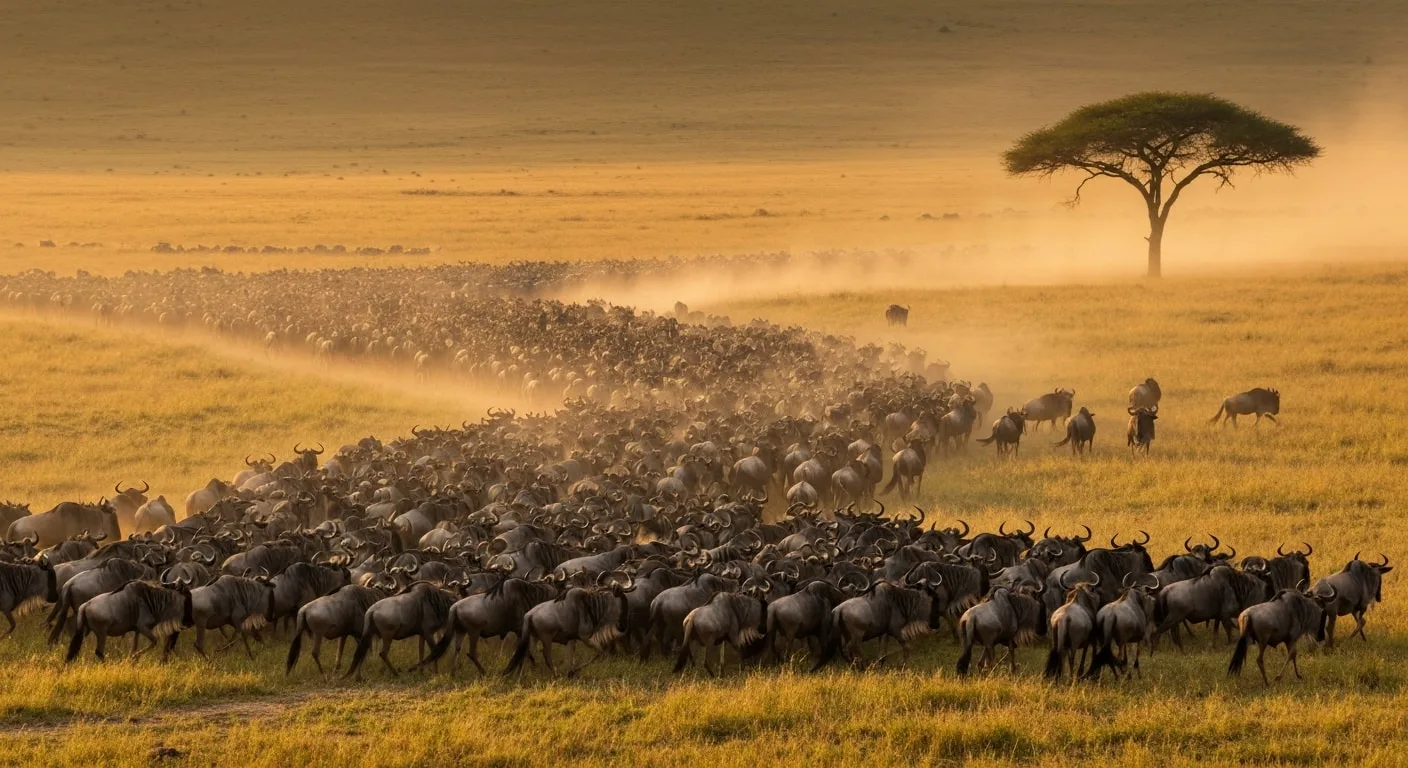
Serengeti means "endless plains" in Maasai, and standing on those golden grasslands, you'll understand why. This isn't a zoo. It's 14,750 square kilometers of uninterrupted wilderness where two million wildebeest, hundreds of thousands of zebras, and tens of thousands of gazelles complete an annual migration that's been called the greatest wildlife spectacle on Earth.
Timing matters enormously for your Tanzania trip from India. The Great Migration follows rain patterns, but generally: January-March finds the herds in the southern Serengeti (calving season — baby wildebeest everywhere, plus predators hunting them). April-May means long rains and fewer tourists (also muddier roads and some camps close). June-July sees the herds moving northwest toward the Grumeti River. July-October is peak season — river crossings, crocodile attacks, and dramatic predator action. Prices peak too.
A standard Serengeti game drive runs 4-6 hours. Your driver-guide knows where lions were spotted yesterday, which cheetah has cubs, where the leopard likes to nap. They communicate constantly via radio. Morning drives start before sunrise (5:30-6:00 AM) when predators are active. Afternoon drives catch the golden hour light and evening hunts. You'll cover maybe 100-150 kilometers daily, stopping whenever something interesting appears.
The hot air balloon safari deserves its own mention. At ₹25,000-40,000 per person (roughly $300-500), it's expensive. But floating silently over the Serengeti at dawn, watching the savanna wake up from 500 feet, then landing for a champagne breakfast in the bush — that's a once-in-a-lifetime experience. Book well in advance; balloon safaris sell out, especially during migration season. If you've read our hot air balloon rides abroad from India guide, you'll know this ranks among the world's best.
Ngorongoro Crater: The World's Largest Wildlife Prison
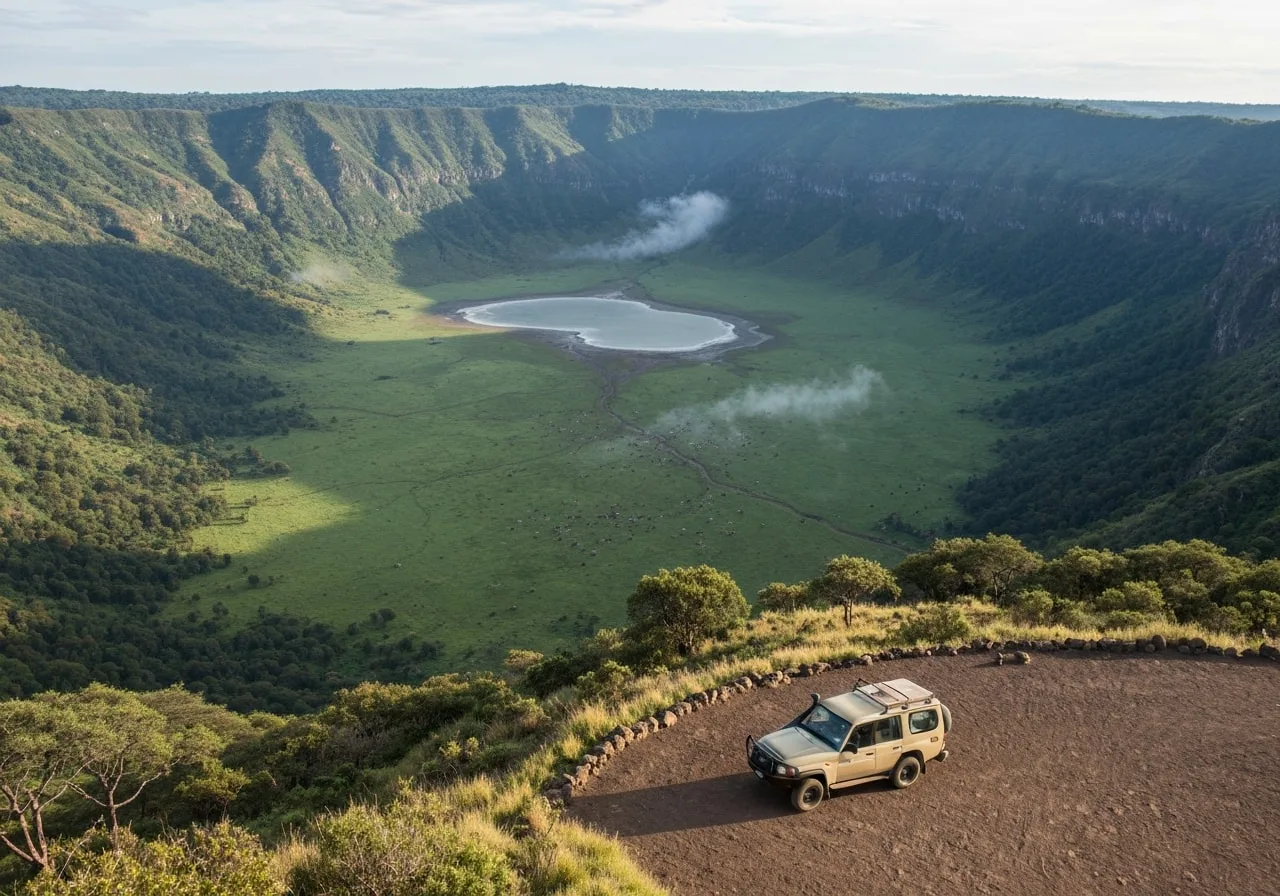
I call it a prison lovingly. The Ngorongoro Crater is a collapsed volcanic caldera 600 meters deep and 260 square kilometers wide. The steep walls keep most animals inside year-round, creating one of Africa's densest wildlife concentrations. You could see the Big Five in a single morning game drive here — I did, on my second visit, though the rhino was a distant black blob even through binoculars.
The crater floor hosts around 25,000 large animals: lions, elephants, buffalo, leopards, hippos, hyenas, wildebeest, zebras, and roughly 25 critically endangered black rhinos. The flamingo-lined Lake Magadi adds splashes of pink. Because the crater is relatively small and enclosed, wildlife sightings are almost guaranteed. It's less about "will we see something?" and more about "how many lions will we count today?"
According to the Tanzania National Parks Authority, Ngorongoro Conservation Area charges $70 per person for 24 hours (plus $295 per vehicle for crater descent). Yes, those fees add up. But they also fund conservation efforts that have increased the rhino population from near-extinction. Most safari itineraries include one full day here, which is enough. Stay at a crater rim lodge for sunrise views that'll permanently occupy space in your memory.
Mount Kilimanjaro: Can Indians Actually Climb It?
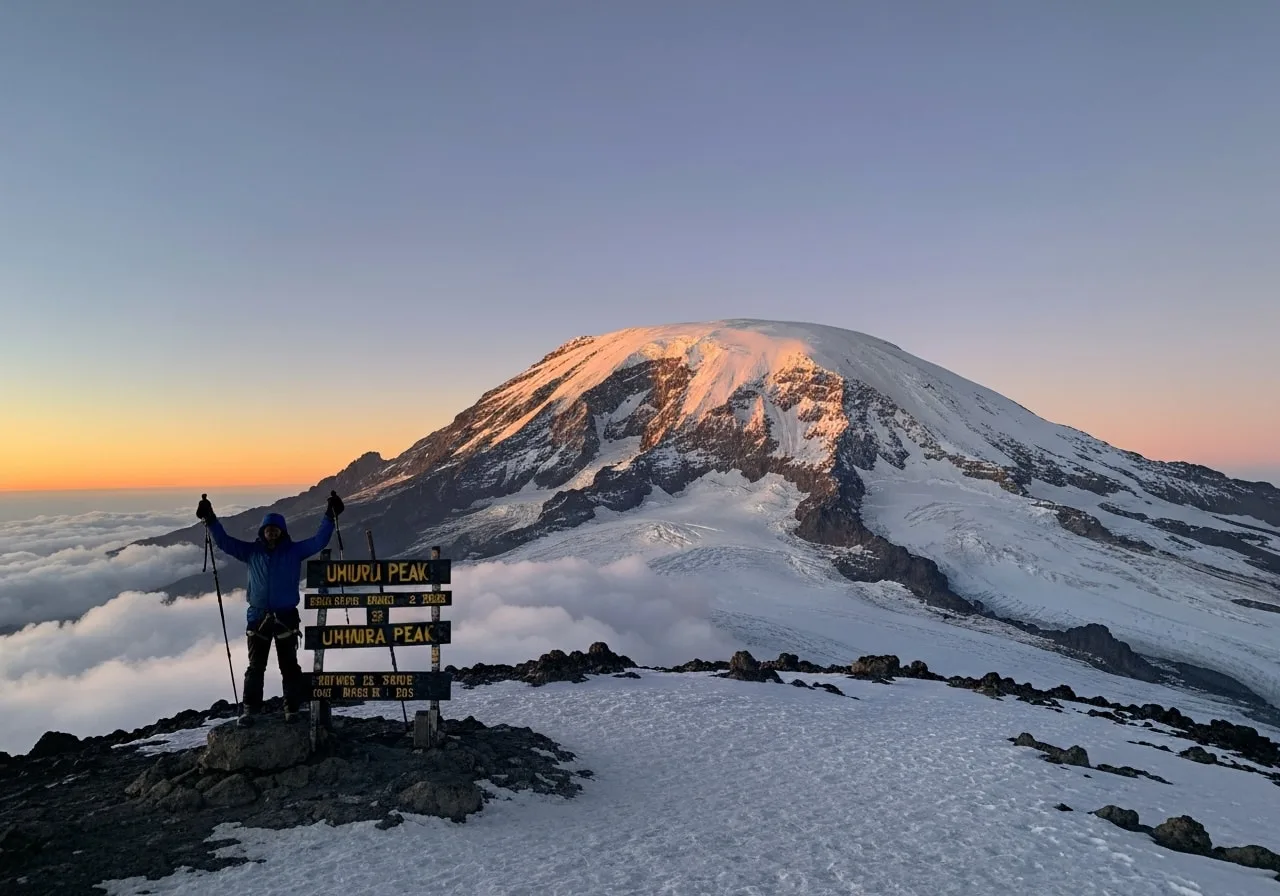
Absolutely. Kilimanjaro is a non-technical climb, meaning you don't need ropes, ice axes, or mountaineering experience. You need functional legs, decent cardiovascular fitness, mental resilience, and respect for altitude. At 5,895 meters, Uhuru Peak is Africa's highest point and the world's tallest free-standing mountain. About 35,000 people attempt the summit annually; 65-85% succeed depending on the route.
Seven routes ascend Kilimanjaro. The most popular for Indian climbers:
- Marangu (5-6 days): Called the "Coca-Cola route" because you sleep in huts, not tents. Easiest terrain but lower success rates (65%) due to faster ascent.
- Machame (6-7 days): The "Whiskey route" — more challenging terrain, tent camping, but better acclimatization and 85%+ success rates.
- Lemosho (7-8 days): Scenic western approach, lower initial crowds, highest success rates. My recommendation for first-timers with budget flexibility.
Kilimanjaro trek cost from India runs ₹1.5-3 lakhs all-inclusive (park fees, guides, porters, accommodation, meals). Park fees alone hit $70-100 per day depending on the route. Budget operators at $1,200-1,500 total exist but often underpay porters or cut corners on safety. Mid-range operators ($2,000-2,500) offer better guide ratios and equipment. Luxury options ($3,500+) add private toilets and better food.
Altitude is the real challenge, not fitness. I've seen marathon runners fail at 4,500 meters while middle-aged office workers summited comfortably. The difference? Acclimatization pace and hydration. Drink 3-4 liters daily. Ascend slowly (pole pole, the guides say). Consider Diamox for altitude sickness prevention — discuss with your doctor beforehand. The summit push starts around midnight for a sunrise arrival at Uhuru Peak. Those final hours are brutal: freezing temperatures, thin air, headlamp-lit scree slopes. But watching the sun rise over Africa from the roof of the continent? Transformative.
Zanzibar: Where Safari Dust Meets Indian Ocean
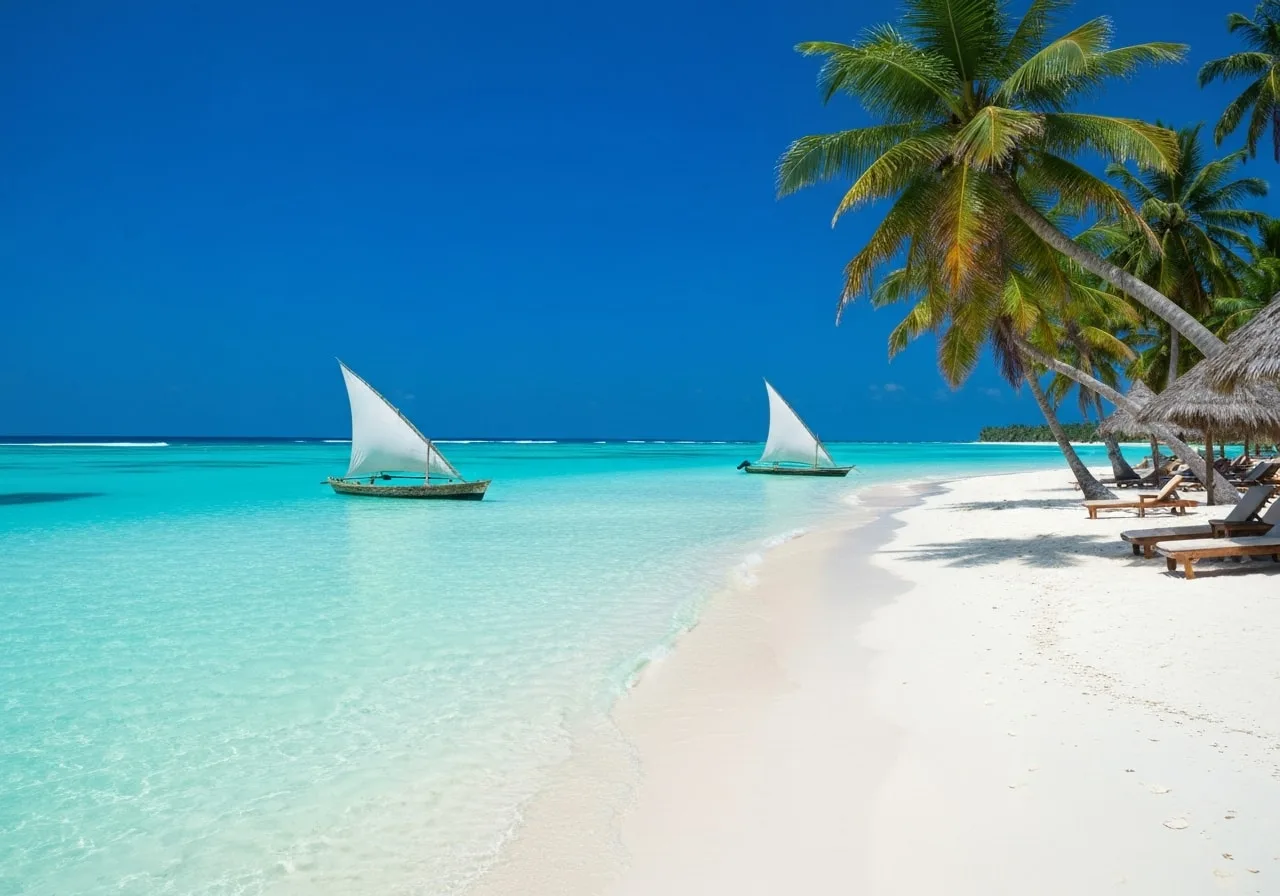
After days of bumpy safari roads and pre-dawn game drives, Zanzibar feels like a fever dream. The Spice Islands sit 25 kilometers off the mainland coast, offering turquoise waters, white sand beaches, and a Swahili culture that blends African, Arab, Indian, and Portuguese influences. Stone Town, the historic heart, is a UNESCO World Heritage Site of narrow alleys, carved wooden doors, and rooftop restaurants.
Getting there is easy: Coastal Aviation and Precision Air run multiple daily flights from Arusha (45 minutes) and Serengeti airstrips (1-2 hours). Expect $150-250 one-way. Alternatively, ferries from Dar es Salaam take 2 hours and cost $35-50. The ferry terminal chaos in Dar is an adventure itself, though not necessarily one you'll enjoy.
Stone Town deserves two days minimum. Wander the labyrinthine streets without a map (you'll get lost anyway). Visit the former slave market and Anglican Cathedral — a sobering reminder of Zanzibar's dark history. The Forodhani Gardens night food market serves fresh-grilled seafood, Zanzibar pizza (basically a stuffed crepe), and sugarcane juice. It's touristy now, yes, but still genuinely delicious.
The spice tour is more interesting than it sounds. Zanzibar was once the world's clove capital, and spice farms still grow cloves, nutmeg, cinnamon, black pepper, vanilla, and cardamom. Guides crack open pods, crush leaves, and let you smell the concentrated aromas. You'll buy spices at the end — that's the point — but the quality genuinely beats anything in Indian supermarkets.
For beaches, head north to Nungwi or northeast to Kendwa. Both offer powder-white sand and year-round swimming (no seaweed issues like the eastern coast). Dhow sunset cruises cost ₹1,500-3,000 and involve sailing on traditional wooden boats while dolphins occasionally make appearances. Prison Island, a short boat ride from Stone Town, houses giant Aldabra tortoises — some over 100 years old — and offers decent snorkeling.
Tanzania Trip from India Cost: Budget Breakdown by Tier
Here's where your Tanzania trip from India cost gets detailed. Safari prices vary enormously based on accommodation style, vehicle exclusivity, and inclusions. I've broken it into three tiers based on per-person daily rates (excluding international flights):
Budget Camping Safari: $200-400/day (₹17,000-33,000)
You'll sleep in basic tents at public campsites, share vehicles with 6-7 other travelers, eat simple meals prepared by a safari cook, and use shared bathroom facilities. The wildlife experience is identical to luxury options — you're in the same parks, on the same roads. What you sacrifice: comfort, privacy, and sometimes vehicle flexibility. Perfect for backpackers, students, and anyone who'd rather spend money on extra days than thread-count. If you've done Kenya safari from India, the budget tier works similarly here.
Mid-Range Lodge Safari: $400-800/day (₹33,000-66,000)
This tier books proper lodges or permanent tented camps with en-suite bathrooms, hot showers, and electricity. Vehicles are shared with 4-6 people (or private at higher end). Meals are buffet-style at lodges. Most Indian travelers targeting the ₹3-5 lakh total budget end up here. You get wildlife immersion without roughing it. Recommended operators include Easy Travel Tanzania, Tanzania Odyssey, and Shadows of Africa.
Luxury Fly-In Safari: $1,000-2,500+/day (₹83,000-2L+)
Charter flights between camps eliminate road travel. Think private butler service, gourmet dining under stars, infinity pools overlooking watering holes, walking safaris with armed guides, and rooms that cost more per night than most apartments cost per month. Brands like Singita, andBeyond, and Four Seasons operate at this tier. If you're comparing South Africa trip costs from India, Tanzania's luxury options run comparable or slightly higher.
Sample Budget for 10-Day Safari + Zanzibar Trip
| Expense | Budget Tier | Mid-Range | Luxury |
|---|---|---|---|
| Return flights (India-Tanzania) | ₹40,000 | ₹50,000 | ₹1,20,000 |
| Safari 5 days | ₹85,000 | ₹2,00,000 | ₹6,00,000 |
| Zanzibar 4 nights | ₹12,000 | ₹32,000 | ₹1,20,000 |
| Internal flights/transfers | ₹15,000 | ₹25,000 | ₹60,000 |
| Visa + vaccinations | ₹6,000 | ₹6,000 | ₹6,000 |
| Tips + extras | ₹10,000 | ₹20,000 | ₹40,000 |
| Total per person | ₹1,68,000 | ₹3,33,000 | ₹9,46,000 |
Arusha: Your Safari Base Town
Almost every northern Tanzania trip from India starts in Arusha. This bustling city sits between Mount Meru and Mount Kilimanjaro, serving as the jumping-off point for Serengeti, Ngorongoro, Tarangire, and Lake Manyara. You'll likely spend a night here before or after safari — either recovering from your flight or preparing for departure.
Arusha itself is chaotic, dusty, and filled with touts trying to sell safaris at suspiciously low prices. Ignore them. Legitimate operators work through proper channels, not street corners. That said, the Arusha Coffee Lodge offers a peaceful garden café serving excellent Tanzanian coffee. The Cultural Heritage Centre sells (overpriced) Maasai crafts and has an impressive art gallery. Mount Meru climbs (4-5 days, 4,566 meters) make an excellent Kilimanjaro warm-up and see far fewer tourists.
Budget accommodation in Arusha runs ₹1,500-3,000/night (Outpost Lodge, Arusha Backpackers). Mid-range options like African Tulip Hotel cost ₹5,000-10,000. Safari packages usually include Arusha accommodation, so confirm what's covered before booking extra nights.
Best Time to Visit Tanzania from India
Tanzania is a year-round destination, but timing affects both experience and cost:
- June-October (dry season): Peak wildlife viewing, Great Migration river crossings, minimal rain, highest prices. Book 6+ months ahead.
- January-February (short dry): Calving season in southern Serengeti, fewer tourists than peak season, good weather.
- November-December: Short rains begin, green landscapes, baby animals, lower prices. Rain usually falls in brief afternoon showers.
- March-May (long rains): Wettest months, some camps close, significant discounts (30-50% off), challenging road conditions but rewards for adventurous travelers.
For Kilimanjaro, January-March and June-October offer the clearest summit weather. April-May and November see more cloud cover and precipitation. Zanzibar follows similar patterns — June-October and December-February are driest and most popular.
Practical Tips from Experience
Some things I learned the expensive way about a Tanzania trip from India:
- USD cash is king: Bring crisp, post-2006 bills. Older notes get rejected. ATMs exist but often run empty or charge heavy fees.
- Tip expectations: Budget $10-15/day for your driver-guide, $5-10/day for camp staff, $20-30/day total for Kilimanjaro porters and guides. Tipping is expected and forms significant income.
- Pack dust masks: Dry season roads kick up incredible amounts of dust. Your camera sensors will hate you without protection.
- Binoculars matter: Rent or buy quality optics. A distant lion through naked eyes disappoints; through 10x42 binoculars, it's magnificent.
- Yellow fever certificate: Officials at JRO airport actually check. Don't try to enter without it.
- Malaria precautions: Take your prophylaxis, use DEET repellent, sleep under treated nets. Malaria is real and dangerous.
- Travel insurance: Get coverage that includes emergency evacuation. The flying doctors (AMREF) can airlift you from remote areas, but it costs thousands of dollars without insurance.
Combining Safari, Kilimanjaro, and Zanzibar
The ultimate Tanzania trip from India runs 14-18 days and combines all three experiences. Here's a realistic 14-day version:
Days 1-2: Fly into Kilimanjaro Airport, overnight Arusha, safari briefing and equipment check.
Days 3-7: Northern Circuit Safari — Tarangire (elephant herds, baobabs), Ngorongoro Crater (Big Five), Serengeti (3 nights, extensive game drives, optional balloon safari).
Day 8: Fly from Serengeti to Zanzibar (1.5-2 hours via small aircraft).
Days 9-12: Stone Town exploration (2 nights), spice tour, then transfer to beach resort (Nungwi/Kendwa, 2 nights). Dhow cruise, snorkeling, pure relaxation.
Days 13-14: Beach morning, afternoon flight Zanzibar to Dar es Salaam, connect to international departure.
Adding Kilimanjaro requires 7-8 additional days before or after the safari portion. Most climbers prefer tackling Kilimanjaro first when they're freshest, then rewarding themselves with safari and beaches. Total trip length: 20-23 days. If that sounds like more adventure than a single vacation can hold, you're right. But Tanzania is worth the time investment.
For those seeking adventure travel destinations from India, Tanzania ranks among the most rewarding options on the planet. The costs are significant but not unreasonable for the experiences delivered. Start planning 6-12 months ahead, book reputable operators, and prepare for a trip that'll fundamentally shift your perspective on what travel can be.
I've watched sunrises over Serengeti, sunsets over Stone Town, and stars over Kilimanjaro's glaciers. Each time I leave Tanzania, I'm already planning my return. That's the hold this country has. The wildebeest don't care about your spreadsheet — they're crossing the Mara River regardless. The only question is whether you'll be there to witness it.