

South Africa Trip from India: Cape Town, Safari & Budget Guide
In this guide (15)
- Understanding the South Africa Visa Process for Indians
- Flights from India to South Africa: The Real Options
- Cape Town: Where You'll Want to Spend Most of Your Time
- Kruger Safari: The Main Event
- The Garden Route: If You Have Time
- Johannesburg: Gateway City
- Food and the Indian Connection
- Indian and Vegetarian Food in South Africa: What to Expect
- Transport: You Need a Car
- Complete South Africa Trip from India Cost Breakdown
- Best Time to Visit South Africa from India
- Safety: The Honest Assessment
- Practical Info Box
- Frequently Asked Questions
- Final Thoughts
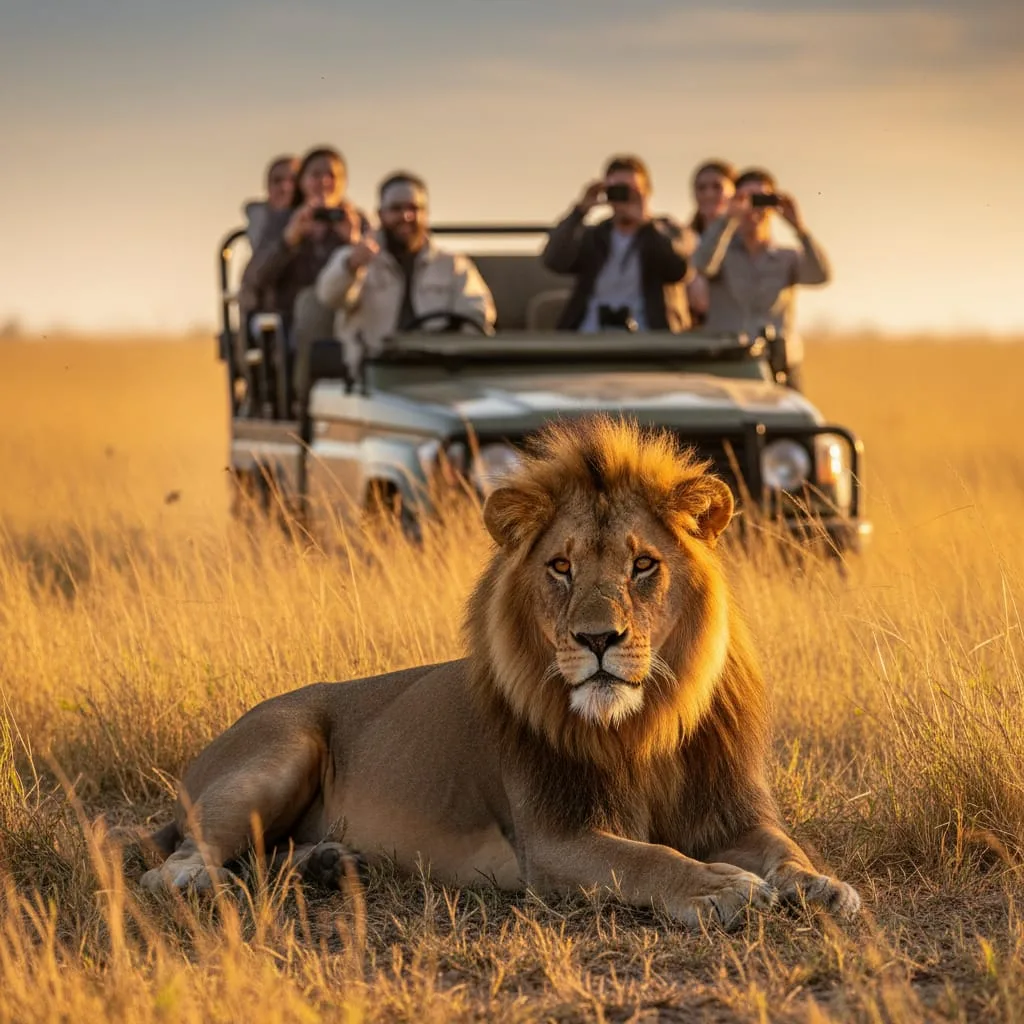
Working out what a South Africa trip from India costs can feel overwhelming at first. The pull is easy to understand: in Kruger National Park a lion can pass a few metres from your vehicle with no fence or glass between you, and Cape Town puts mountains, ocean and wine country within an hour of each other. The practical side needs more thought, starting with the fact that South African winters (June to August) are colder than Delhi winters.
If you're an Indian traveler researching the South Africa trip from India cost, you've landed in the right place. This guide breaks down a realistic 10-day budget, where you can save, where cutting corners backfires, and everything practical you need to plan the journey yourself. No fluff about "rainbow nations" or "bucket list experiences" — just the real numbers and honest opinions.
Planning a romantic wine-focused trip? Our wine country trips for Indian couples guide compares Stellenbosch with Tuscany, Napa, and other top wine regions.
Understanding the South Africa Visa Process for Indians
Let's get the paperwork done first. Indian passport holders need either an Electronic Travel Authorisation (ETA) or a visitor visa. It's not as painful as a US visa, but it's not visa-on-arrival easy either.
Option 1: ETA (online). South Africa's ETA opened to Indian travellers in a pilot from October 2025 and was officially launched on 12 August 2026. You apply at eta.dha.gov.za with a photo of your passport, a live selfie and your trip details, and it allows multiple visits during its validity for stays of up to 90 days. Since 17 August 2026 it carries a processing fee of ZAR 500. The catch: you must land at OR Tambo (Johannesburg), Cape Town International, Lanseria or King Shaka (Durban) airport.
Option 2: Visitor visa through VFS Global. Use this if you enter anywhere else or prefer a conventional visa. Here's what you need:
- Passport valid for 30+ days beyond your return date with at least 2 blank pages
- Completed DHA-84 form (download from VFS website)
- Confirmed return flight tickets — they want to see you're leaving
- Hotel bookings or an invitation letter if staying with someone
- Bank statements for last 3 months showing sufficient funds
- Yellow fever certificate if you're transiting through endemic countries
- Travel insurance covering the duration of your trip
The visa fee itself is waived for Indian nationals; you pay only the VFS service charge, INR 2,040 in Delhi and Mumbai and INR 2,301 at centres such as Bangalore, Kolkata and Pune. Processing takes 5-10 working days, so apply at least 3 weeks before your trip. VFS centers exist in Delhi, Mumbai, Chennai, Kolkata, Bangalore, Hyderabad, and a few other cities. Book your appointment online — walk-ins aren't allowed anymore.
If you include an employment letter, give a real contact number that someone answers, not some random landline, in case it is checked. Getting proper travel insurance that covers adventure activities is essential — especially if you're doing safari drives or Table Mountain hikes.
Flights from India to South Africa: The Real Options
Here's the hard truth: no direct flights connect India to South Africa. You'll always have a layover somewhere. But some connections are significantly better than others, and flight choice massively affects your total budget.
Ethiopian Airlines consistently offers the cheapest fares. Delhi or Mumbai to Johannesburg via Addis Ababa runs INR 45,000-55,000 return during off-peak months. The layover in Addis is usually 2-4 hours, and the Bole airport has decent lounges if you have Priority Pass.
Emirates via Dubai is more comfortable but pricier at INR 60,000-75,000. The Dubai connection is smoother, and you get the Emirates service. Worth it if you find a sale.
Qatar Airways via Doha — similar price range to Emirates. Doha airport is excellent for long layovers.
Kenya Airways via Nairobi — sometimes the cheapest, but the Nairobi layover can be long and the airport isn't great. I'd avoid unless the price difference is massive.
Book 8-10 weeks ahead for the best prices. Use Google Flights to set price alerts. Check our detailed guide on finding cheapest international flights from India for more booking strategies.
Cape Town: Where You'll Want to Spend Most of Your Time
Give Cape Town at least 5 days; many visitors find even that isn't enough. The mountains meeting the ocean, the wine country an hour away, the food scene that rivals European capitals — it's easy to see why people call it one of the world's most beautiful cities.
Table Mountain and the Cableway
Do this first, preferably on a clear morning. A return cable car ticket costs ZAR 475 for adults booked online, or ZAR 530 at the ticket office. You can hike up and cable down if you're fit — the Platteklip Gorge route takes about 2-3 hours.
Clouds often roll in over the top in the afternoon. Go early. Like, first-cable-car early. The views of the city, the harbor, and Robben Island are worth waking up for.
Bo-Kaap and the Colorful Streets
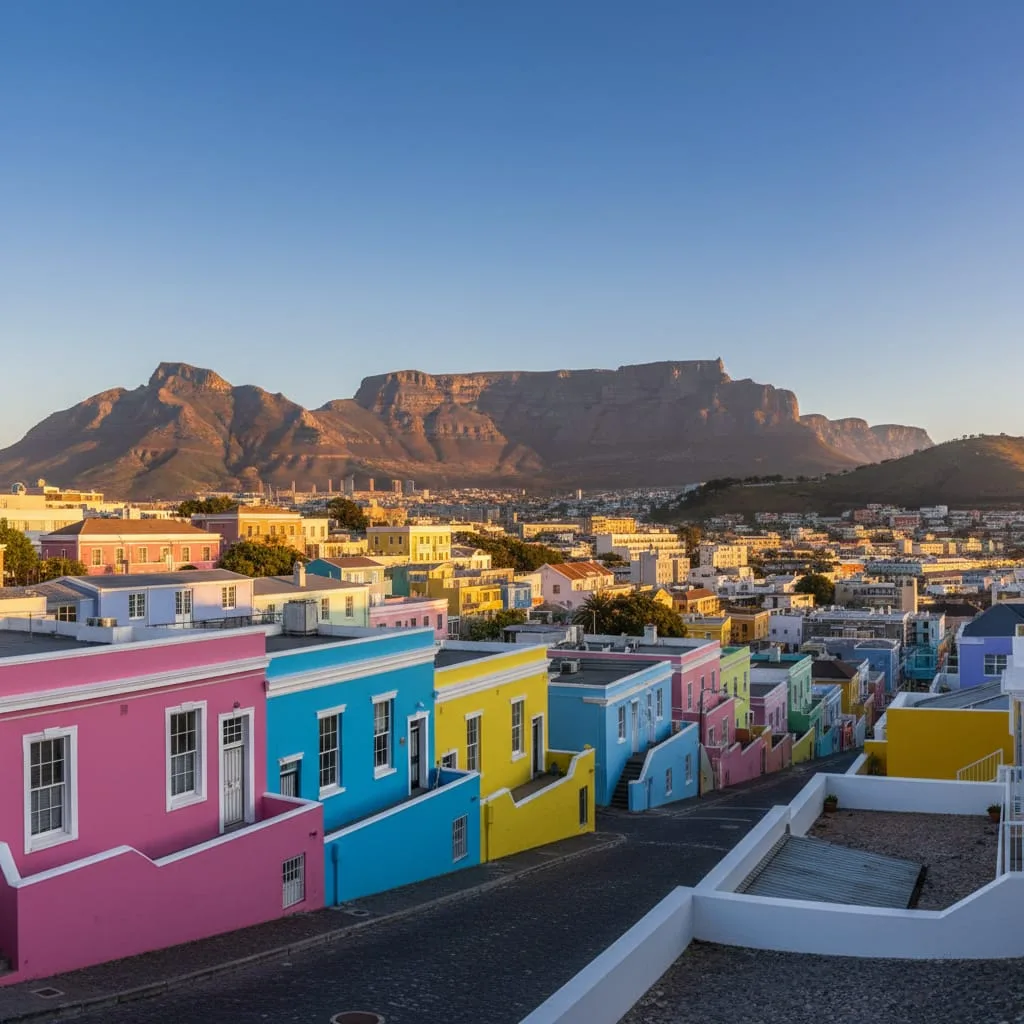
Those Instagram-famous rainbow houses? They're in Bo-Kaap, the historic Cape Malay neighborhood. Free to walk around, obviously. But do more than snap photos — the community has a fascinating history. The spice shops and Cape Malay cooking classes are worth exploring. Home-hosted classes teach dishes like bobotie, which tastes a little like keema with sweet undertones.
V&A Waterfront
Yes, it's touristy. Yes, you should still go. The aquarium is excellent (ZAR 220 for adults), the food halls have everything from sushi to bunny chow, and the sunset views with Table Mountain in the background are spectacular. It's easy to spend an entire evening just wandering, eating, and people-watching.
Cape Peninsula Day Trip
This is non-negotiable. Rent a car (more on this later) and drive the most scenic coastal road you'll ever experience. Hit these spots:
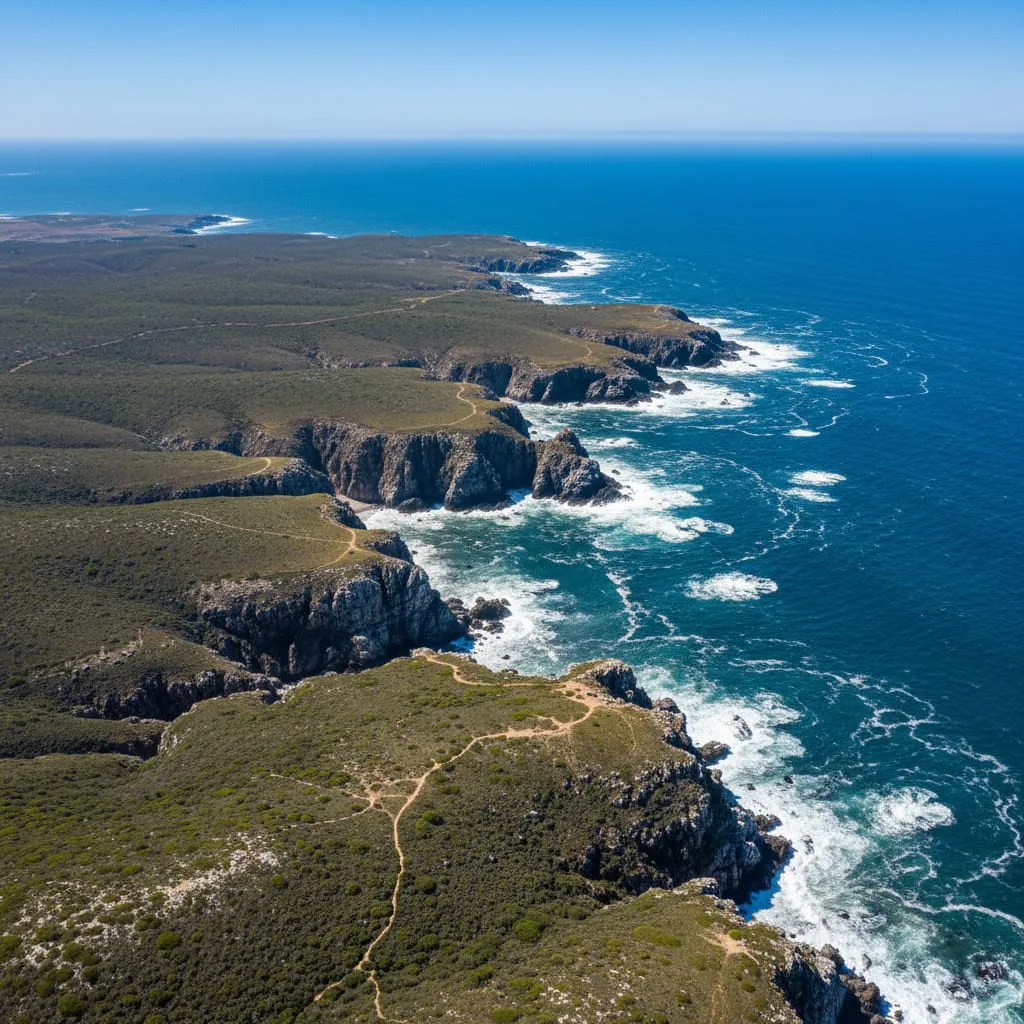
- Chapman's Peak Drive — possibly the most dramatic coastal road on Earth. ZAR 68 toll for a car, worth every rand.
- Boulders Beach — yes, you'll see African penguins. They're hilarious and extremely unbothered by humans. ZAR 245 entry for international adults (ZAR 282 from 1 November 2026).
- Cape Point — the actual "tip of Africa" (technically, but we'll let it slide). ZAR 515 entry for international adults (ZAR 592 from 1 November 2026); the Flying Dutchman funicular is extra, ZAR 115 return.
- Simon's Town — cute naval town for lunch. Try the calamari at Seaforth Restaurant.
Give this trip a full day. Start early, pack snacks, and don't rush it.
Cape Winelands
Stellenbosch and Franschhoek are under an hour from Cape Town. The wine is world-class and significantly cheaper than equivalent quality in Europe. Most estates charge ZAR 80-150 for a tasting of 5-6 wines. Three estates in a day is plenty, and Uber is the sensible way back.
Don't drive if you're serious about tasting. Book a day tour (around ZAR 1,200-1,500) that handles transport and includes lunch. Your liver and license will thank you.
Kruger Safari: The Main Event
For most Indian travelers, this is why you're coming. And it delivers. Kruger National Park is massive — larger than Israel — and genuinely wild. The Big Five (lion, elephant, buffalo, leopard, rhino) all live here, along with hundreds of other species.
You have two main options: self-drive safari or guided safari. Here's how they compare.
Self-Drive Safari at Kruger
This sounds intimidating but it's surprisingly manageable. Kruger has excellent paved roads, clear signage, and strict speed limits (50 km/h on tar, 40 km/h on gravel). You stay in your car, and animals have right of way — literally.
Costs:
- Daily conservation fee: ZAR 460 per person (about INR 2,100)
- Car rental: ZAR 400-600/day for a basic sedan (INR 1,800-2,700)
- Accommodation inside the park: ZAR 1,200-2,500 for a basic bungalow (INR 5,500-11,500)
Stay at Skukuza or Lower Sabie camps — both have decent amenities, shops, and fuel stations. Book SANParks accommodation 11 months ahead during peak season (June-September).
The magic of self-drive? You control your schedule. Be at the gate when it opens at dawn: the first hours of the day are when predators are most active, and the early birds genuinely get the cats.
Private Safari Lodges
If budget isn't a constraint, private reserves adjacent to Kruger (Sabi Sands, Timbavati, Thornybush) offer a more luxurious experience. Expect to pay ZAR 8,000-25,000 per person per night (INR 36,000-1,15,000) — but this includes all meals, game drives in open vehicles, and expert guides who know exactly where the animals hang out.
Even one night at a private lodge, rather than a whole stay, adds guided open-vehicle drives with trackers who know where the animals are. For serious adventure travel from India, this ranks among the top experiences globally.
The Garden Route: If You Have Time
The Garden Route stretches from Mossel Bay to Storms River — roughly 300 km of coastal beauty. Honestly? It's gorgeous but optional if you're short on time. Cape Town and Kruger should take priority.
But if you have 2-3 extra days:
- Knysna — lagoon town with excellent oysters. The heads (two cliffs guarding the lagoon entrance) are dramatic.
- Tsitsikamma National Park — the suspension bridge over Storms River mouth is stunning. Entry ZAR 367 for international adults (ZAR 422 from 1 November 2026).
- Oudtshoorn — slightly inland, famous for ostrich farms and the Cango Caves. Quirky but fun.
You'll need a rental car for this route. Factor in ZAR 400-500/day plus fuel.
Johannesburg: Gateway City
Most international flights land in Joburg, so you'll pass through. Give it a day.
Must-do: The Apartheid Museum is one of the best-curated museums anywhere. Plan 3-4 hours. It's emotionally heavy but essential for understanding South Africa.
Skip: Downtown Joburg unless you're with a local guide. It's not tourist-friendly. Sandton City and Rosebank are safe, modern areas with great food and shopping.
Don't leave valuables visible in your car. Use Uber everywhere. Joburg's safety reputation is earned, but tourists who stay aware have no issues.
Food and the Indian Connection
Here's something most Indian travelers don't realize: South Africa has a massive Indian diaspora. Durban has the largest Indian population of any city outside India. This means excellent Indian food when you miss home.
Bunny chow — born in Durban, this is a hollowed-out loaf of bread filled with curry. It's magnificent. Get it at any bunny shop in Durban or at Indian restaurants in Cape Town and Joburg.
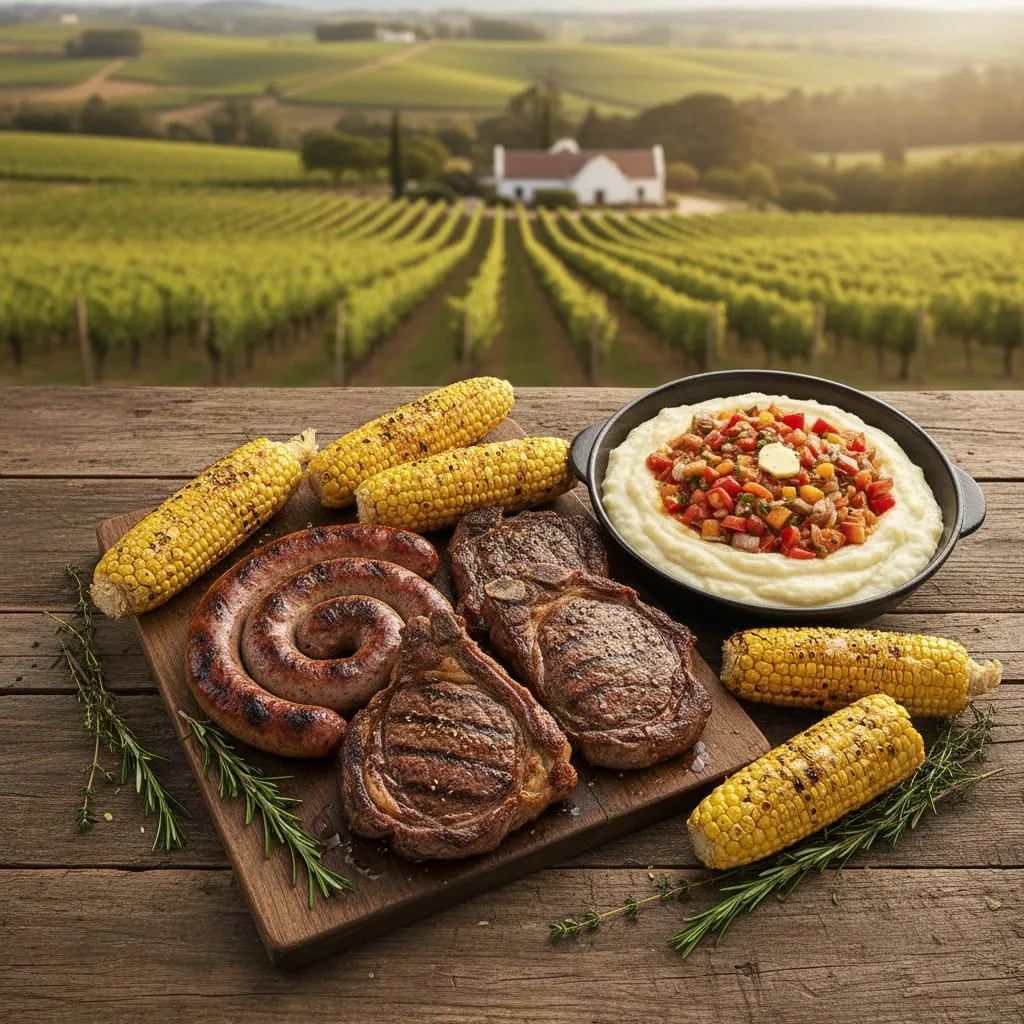
Braai — South African barbecue. Every accommodation with a garden will have a braai pit. Buy boerewors (spiral sausage) and try it. It's like nothing you've had before.
Biltong — dried, cured meat. Different from jerky. Available everywhere, and easy to get hooked on.
Cape Malay cuisine — influenced by Malaysian and Indonesian workers brought to Cape Town centuries ago. Bobotie, bredie, koeksisters — all worth trying.
Budget meal: ZAR 80-120 (INR 360-550). Mid-range restaurant: ZAR 200-350 (INR 900-1,600). Fancy dinner: ZAR 500+ (INR 2,300+).
Indian and Vegetarian Food in South Africa: What to Expect
Vegetarian travellers eat well in South Africa's cities, and Indian food is easy to find thanks to the large Indian-origin community, most of it around Durban. Safari lodges and long driving days are where planning matters.
Durban
In Durban, the Victoria Street Market, whose history goes back to 1890, sells spices, masalas and Indian groceries across two floors in the old Grey Street area. For a vegetarian bunny chow, Patel's Vegetarian Refreshment Room on Dr Yusuf Dadoo Street (formerly Grey Street) has served only vegetarian food since 1911; sugar bean and potato fillings are the classics. It keeps morning-to-early-afternoon hours, so plan it as breakfast or lunch.
Johannesburg and Cape Town
In Johannesburg, Fordsburg and neighbouring Mayfair form the city's Indian quarter around the Oriental Plaza. Most restaurants there are halal and serve meat, so vegetarians should head to Shayona at 74 Church Street, Mayfair, a pure vegetarian restaurant, deli and spice shop run by the BAPS Swaminarayan organisation serving thalis, chaat and sweets. Its menu is sattvic; Jain diners should still confirm onion, garlic and root vegetables. In Cape Town, Prashad Café is a fully vegetarian and vegan Indian kitchen with branches on Wandel Street in Gardens, in Rondebosch and in Constantia.
Kruger and safari lodges
Private lodges in the Sabi Sand and other reserves bordering Kruger serve set menus and adjust them for vegetarian, vegan and religious diets when told in advance. Sabi Sabi, for example, states that all its meals can be adjusted to dietary requirements. Expect good vegetarian food rather than Indian food; whether the kitchen will cook dal or a sabzi depends on the lodge. On a self-drive trip, the main SANParks rest camps have restaurants and shops selling basic provisions, and self-catering units come with a kitchen, so a bag of masalas, rice and dal is enough for simple Indian meals. Small bushveld and satellite camps have no shop.
Jain and no onion-garlic diets
Strict Jain food is the hardest diet to guarantee: kitchens use onion, garlic and potatoes daily, and a standard vegetarian meal may include eggs. Send a written list of everything excluded, and whether you avoid eating after sunset, at booking, then reconfirm about a week before arrival. Remote lodges need time to bring in supplies.
What to pack, and what to leave at home
South Africa requires a permit from its Department of Agriculture for meat, dairy, honey, eggs and fresh produce carried in by travellers, and undeclared items can be confiscated or fined. Leave ghee, paneer, fresh fruit and homemade sweets at home. Sealed, commercially packed dairy-free food, such as ready-to-eat meals, instant poha or masala sachets, is the practical backup. Declare anything you are unsure about.
Booking a South Africa package with Indian food
When comparing South Africa tour packages with Indian food, ask the operator to confirm in writing which meals are Indian (every meal, or only dinners in the cities), where they come from (Indian restaurants, the lodge kitchen, or a travelling Indian cook on group tours), whether vegetarian and Jain meals are cooked separately, and what is provided on long driving days and inside Kruger, where the choice is limited to rest-camp restaurants and lodge kitchens.
Transport: You Need a Car
Public transport outside cities is essentially nonexistent. Uber works in Cape Town, Joburg, and Durban. But for Cape Peninsula, the Winelands, Garden Route, and Kruger self-drive — you need a rental.
International chains such as Hertz (their website) operate at the main airports. Budget around ZAR 450/day for a basic sedan with basic insurance, and around ZAR 150/day more for full coverage — absolutely worth it given South African road conditions.
Driving tips:
- South Africa drives on the left (like India, so no adjustment needed)
- Fuel costs more than in India: 95 petrol was ZAR 26-27/litre in September 2026
- N1, N2, and N7 are toll roads. Keep small notes ready
- Don't drive at night outside cities — animals on roads and higher crime risk
Complete South Africa Trip from India Cost Breakdown
Here's my actual spend for a 10-day trip, converted to INR:
| Item | Cost (INR) |
|---|---|
| Flights (Delhi-Joburg-Delhi via Addis Ababa) | 52,000 |
| Visa fee + VFS service charge | 4,200 |
| Travel insurance (12 days) | 1,800 |
| Accommodation (9 nights avg ZAR 1,500) | 62,000 |
| Car rental (8 days @ ZAR 600 incl. insurance) | 22,000 |
| Fuel | 6,500 |
| Kruger conservation fees (3 days) | 6,300 |
| Activities (Table Mountain, Boulders, Cape Point, etc.) | 12,000 |
| Food (10 days @ ZAR 500/day avg) | 23,000 |
| Wine tastings and miscellaneous | 8,000 |
| TOTAL | 1,97,800 |
Round it to INR 2 lakh per person for a comfortable mid-range trip. Budget travelers sharing accommodation and eating cheaply can manage at INR 1.5 lakh. Luxury travelers with private safari lodges will easily cross INR 4 lakh.
Best Time to Visit South Africa from India
South Africa's seasons are opposite to India's:
- September-November (Spring) — My top pick. Wildlife is active, weather is pleasant (15-25C), jacaranda trees bloom purple in Pretoria. Shoulder season pricing.
- December-February (Summer) — Peak season. Great beach weather, but crowded and expensive. Cape Town is heaving.
- March-May (Autumn) — Excellent value. Weather still good, crowds thin out. Wine harvest season in the Winelands.
- June-August (Winter) — Cold (5-15C in Cape Town), but best for whale watching at Hermanus. Safari lodges offer deals.
January (summer) costs more but usually brings spectacular weather. If budget is your priority, September or April offer the best balance.
Safety: The Honest Assessment
South Africa has a reputation for crime, and it's not entirely unearned. But context matters. Tourist areas in Cape Town, the Winelands, and Kruger are very safe.
Basic precautions:
- Use Uber, not walking, after dark
- Keep phones and cameras close in crowded areas
- Don't flash expensive jewelry or watches
- Lock car doors while driving in urban areas
- Stay in well-reviewed accommodations, not random guesthouses
V&A Waterfront, Camps Bay, and Stellenbosch are comfortable to walk around during the day with ordinary common sense. South Africa wants your tourism money — locals in tourist areas are genuinely helpful and friendly.
Compare this with our Kenya safari from India guide — similar precautions apply to both African safari destinations.
Practical Info Box
Currency: South African Rand (ZAR). 1 INR approx 0.22 ZAR. Carry USD or EUR to exchange. ATMs everywhere.
Language: 12 official languages (South African Sign Language was added in 2023), but English works everywhere. Afrikaans is common in Cape Town.
Power: Type M plugs (big 3-prong). Carry an adapter.
SIM Card: Vodacom or MTN. Available at airports. 10GB data costs around ZAR 150 (INR 690).
Time Zone: GMT+2 (same as IST minus 3.5 hours).
Health: No special vaccinations required unless transiting through yellow fever zones. Tap water is safe in major cities.
More Info: Check the official South Africa tourism website for updated entry requirements.
Frequently Asked Questions
How much does a South Africa trip from India cost for 10 days?
A 10-day South Africa trip from India costs approximately INR 1.8-2.5 lakh per person including flights, accommodation, activities, and food. Budget travelers can manage at INR 1.5 lakh, while luxury trips with private safari lodges can exceed INR 4 lakh.
Do Indians need a visa for South Africa?
Yes. Indian passport holders can apply online for an Electronic Travel Authorisation (ETA) at eta.dha.gov.za, which carries a ZAR 500 processing fee and is valid only for arrival at OR Tambo, Cape Town, Lanseria or King Shaka airports. Otherwise apply for a visitor visa at VFS Global with your passport, hotel bookings, return flight tickets, bank statements, and travel insurance. The visa fee is waived for Indians; only the VFS service charge of about INR 2,040-2,301 applies, and processing takes 5-10 working days.
What is the best time to visit South Africa from India?
September to November (South African spring) is ideal for wildlife safaris and pleasant weather. December to February is peak summer with excellent beach weather but higher prices. June to August is winter, perfect for whale watching at Hermanus and lodge deals.
Which airlines fly from India to South Africa?
No direct flights exist. Ethiopian Airlines (via Addis Ababa), Emirates (via Dubai), Qatar Airways (via Doha), and Kenya Airways (via Nairobi) offer the best connections. Ethiopian is usually cheapest at INR 45,000-55,000 return.
Is South Africa safe for Indian tourists?
South Africa is generally safe for tourists who take normal precautions. Stick to tourist areas, avoid walking alone at night, use Uber instead of walking, and keep valuables hidden. Cape Town and safari lodges are very tourist-friendly.
Can I find Indian food in South Africa?
Yes! South Africa has a large Indian diaspora, especially in Durban which has the largest Indian population outside India. Cape Town and Johannesburg also have excellent Indian restaurants. Bunny chow, a Durban invention, is a must-try fusion dish.
Can a South Africa tour package include Indian vegetarian or Jain meals?
Yes, but confirm the details in writing. Indian meals are easy in Durban, Johannesburg and Cape Town, which all have pure vegetarian Indian restaurants. Safari lodges near Kruger adjust menus for vegetarian and religious diets when told in advance, but Indian dishes are not guaranteed. For Jain meals, send a written list of excluded ingredients, including onion, garlic and root vegetables, at booking and reconfirm about a week before arrival.
Final Thoughts
Many travellers come for the safari and leave talking about Cape Town. The combination of raw wilderness, sophisticated cities, world-class wine, and surprisingly good Indian food makes this an unexpectedly complete destination.
Is it worth the journey from India? Absolutely. Budget properly (INR 2 lakh minimum), allow enough time (10 days bare minimum, 14 ideal), and go during spring if you can.
Planning this trip?
Tell us roughly when and how many — our travel expert sends you a custom quote, usually within a few hours.