
Spiritual & Wellness Retreats Abroad for Indians: Bali, Thailand, Japan & Beyond
In this guide (12)
- Why Indians Choose Wellness Retreats Abroad Over Domestic Options
- Bali: The Yoga Retreat Capital of Southeast Asia
- Thailand: Free Vipassana and Ancient Healing
- Japan: Zen, Forest Bathing, and Hot Springs
- Sri Lanka: Authentic Ayurveda Without the Indian Crowds
- Bonus: Unexpected Wellness Destinations
- What to Expect at Wellness Retreats Abroad
- Booking Platforms for Wellness Retreats Abroad
- Combining Retreats with Sightseeing
- What to Pack for Your Retreat
- When NOT to Go on a Wellness Retreat
- The Return: Integration Is Everything
I spent three days crying at a silent retreat in Ubud. Not because anything was wrong — because everything was finally quiet enough for me to hear what I had been avoiding for years. That is what happens when you strip away WhatsApp notifications, Netflix queues, and the comforting chaos of Indian daily life. Wellness retreats abroad are booming right now for Indians, and honestly? I understand why.
We Indians have yoga, Ayurveda, and meditation baked into our cultural DNA. But here is the paradox: sometimes you need to leave home to find what was always there. A yoga class in Rishikesh comes with traffic noise and your aunt calling. The same practice in a Balinese jungle, surrounded by strangers who do not know your family history, hits differently. This guide covers where to go, what it costs, and whether it is actually worth spending INR 40,000 to 1.5 lakh on wellness retreats abroad.
Why Indians Choose Wellness Retreats Abroad Over Domestic Options
The obvious question first: why leave India, the birthplace of yoga and Ayurveda, to practice them elsewhere?
Three reasons keep coming up in conversations with fellow retreat-goers. First, anonymity. At an Iyengar centre in Pune, you might run into your colleague. In Bali, you are just another seeker. There is freedom in being unknown. Second, complete disconnection. An ashram in India still has your mother on speed dial. A retreat centre in Thailand with no phone policy? Your family genuinely cannot reach you, and sometimes that boundary is what you need to actually go inward.
Third — and this surprised me — the teaching quality can be more personalised abroad. Indian retreat centres often handle massive volumes. Popular Vipassana centres in India have 800+ students per course. The same tradition in Thailand? Fifty students maximum. Your practice at wellness retreats abroad gets individual attention that is simply impossible at scale.
Plus, combining a spiritual journey with international travel makes the whole experience feel like a proper reset, not just a long weekend. You return transformed, not just rested.
Bali: The Yoga Retreat Capital of Southeast Asia
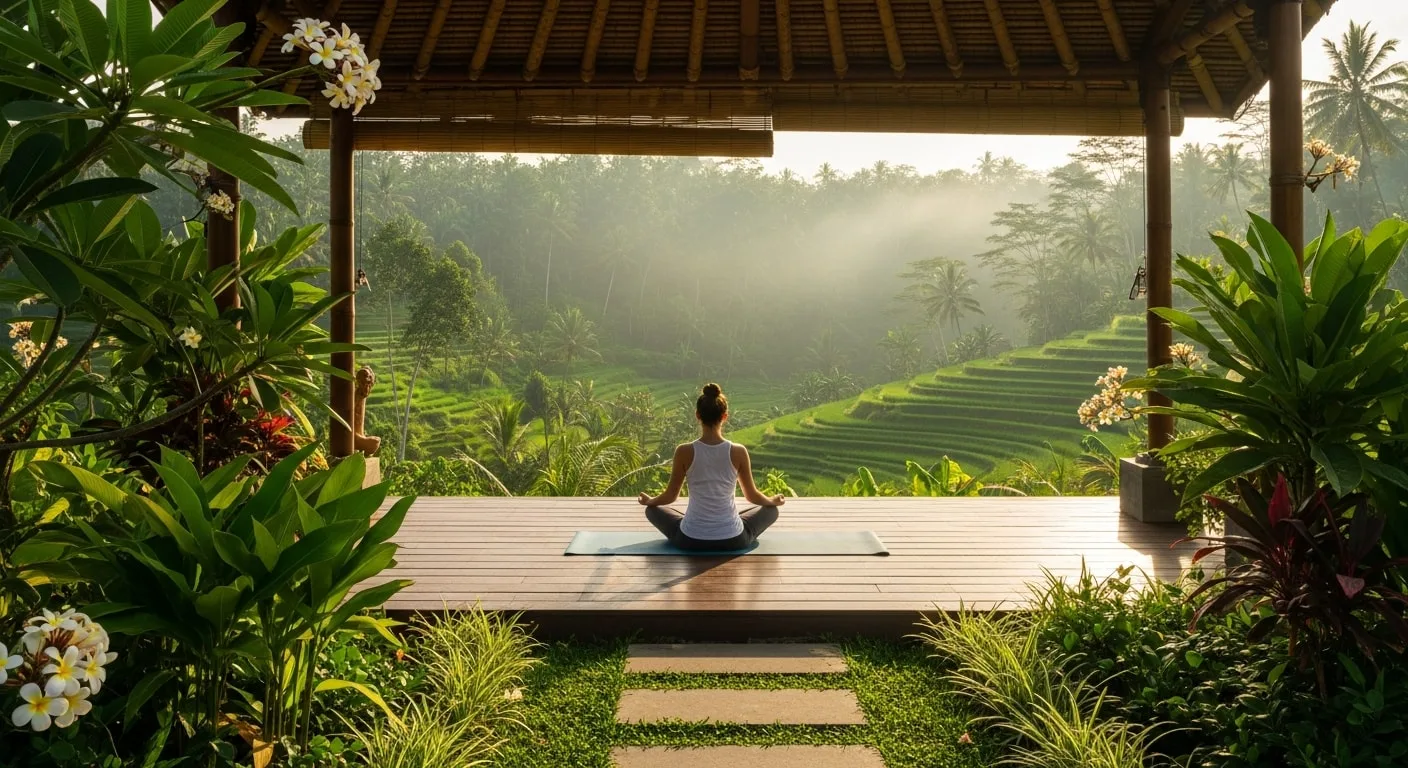
Ubud has earned its reputation as the wellness capital of Asia. Every second building seems to be a yoga shala, healing centre, or cacao ceremony space. But strip away the Instagram-filtered version, and you will find genuine transformative experiences here. According to the Bali Tourism Board, wellness tourism accounts for nearly 20% of the island's international visitors.

What Makes Bali Different for Indians
The Balinese approach to spirituality shares surprising parallels with Hinduism — same gods, different interpretations. Temples honour Brahma, Vishnu, and Shiva. Daily offerings (canang sari) feel familiar yet foreign. For Hindu Indians, Bali feels like visiting a spiritual cousin rather than a completely alien tradition.
But here is what Bali adds: sound healing, breathwork, and ecstatic dance. These neo-spiritual practices are less common in traditional Indian settings. A typical Ubud week might combine morning yoga, afternoon sound bath, and evening kirtan — an East-meets-West fusion that works remarkably well.
Retreat Options and Real Costs
Budget tier (INR 40,000-60,000 per week): Basic accommodation, two daily yoga classes, communal vegetarian meals. Think shared rooms with fans, not AC. Places like Radiantly Alive and Yoga Barn offer drop-in classes if you want to self-assemble your retreat.
Mid-range (INR 80,000-1.2 lakh per week): Private rooms, daily healing sessions (massage, reiki, or sound therapy), three meals, and structured programming. The Yoga Barn's residential retreats and Fivelements (though pricier) fall here.
Premium (INR 1.2-1.5 lakh per week): Villa accommodation, personalised programming, private sessions with healers, airport transfers, all meals. COMO Shambhala Estate operates at this level — expect perfection.
For a deeper understanding of overall costs, check our Bali trip cost breakdown from India which covers flights, visas, and day-to-day expenses.
Silent Retreats in Bali
Several centres offer 3-7 day silent retreats, though they are harder to find than talking ones. Bali Silent Retreat near Tabanan runs week-long programmes combining silence, meditation, and nature immersion. Expect to pay around INR 70,000-90,000 for a week, meals included.
My recommendation: do at least one silent day even within a regular retreat. The transformation happens in the quiet.
Thailand: Free Vipassana and Ancient Healing
Thailand offers something no other country matches for wellness retreats abroad: completely free, world-class Vipassana meditation courses. Yes, free. Food, accommodation, teaching — everything. You donate what you can at the end, but there is zero obligation.
Vipassana Centres Worth Knowing
Wat Suan Mokkh (Southern Thailand): The most famous international centre, founded by Buddhadasa Bhikkhu. Runs monthly 10-day silent retreats starting on the 1st of each month. Wake-up at 4 AM, sleep on concrete beds, eat two meals before noon. It is austere. It works. The Suan Mokkh International Dharma Hermitage website has booking details.
Wat Doi Suthep (Chiang Mai): More accessible for first-timers. Offers 10-day, 21-day, and even shorter retreat options. The mountain setting is stunning, and the teaching style is gentler than Suan Mokkh.
Wat Pa Tam Wua (Mae Hong Son): Remote forest monastery near the Myanmar border. Less structured, more individual practice. You can stay as long as you want — some people stay months.
The Catch with Free Retreats
Nothing is hidden, but you should know: these are Buddhist monastery experiences. You will follow eight precepts (no eating after noon, no entertainment, no lying on luxurious beds). Wake-up is 4-5 AM. The schedule is non-negotiable. And you must book 2-3 months in advance because demand from international seekers is intense.
If you want Vipassana without the monastic strictness, paid centres like Dhamma Kancana run Goenka-style courses (the same tradition popular in India) for around INR 8,000-15,000 for 10 days — still incredibly affordable compared to other wellness retreats abroad.
Thai Massage Training as Wellness
Here is an unconventional wellness retreat: learn Thai massage. Chiang Mai has schools like ITM (International Training Massage) offering 5-day certification courses for around INR 25,000-35,000. You spend a week giving and receiving bodywork, learning energy lines (sen), and understanding how physical touch becomes spiritual practice. I came for the certification; I left with a completely different relationship to my body.
Japan: Zen, Forest Bathing, and Hot Springs
Japan approaches wellness through discipline and nature. The experience is radically different from Bali's flowing, sensual spirituality. Here, there are rules. And somehow, freedom within those rules. Japan offers some of the most unique wellness retreats abroad for those seeking structured practice.
Shukubo: Temple Stays
Shukubo (temple lodging) lets you live like a Buddhist monk for a night or a week. Koyasan, the sacred mountain monastery complex, has over 50 temples offering overnight stays. You sleep on futons, eat shojin ryori (Buddhist vegetarian cuisine), and wake at 6 AM for morning prayers with chanting monks.
Costs: INR 8,000-15,000 per night including two meals. Ekoin and Rengejoin are particularly welcoming to international guests.
Zazen Meditation
Zen meditation is not comfortable. You sit in lotus or half-lotus on a zafu cushion, face a wall, and focus on breath. If your mind wanders and your posture slumps, a monk might tap your shoulder with a kyosaku stick. It is startling. It works.
Kyoto's Shunkoin Temple offers English-language Zen meditation experiences (INR 3,000 for a morning session). For deeper immersion, consider multi-day sesshin (intensive practice periods) at Antaiji or Sogenji monasteries — expect early wake-ups, work practice, and minimal comfort.
If Japan intrigues you, our Japan trip cost guide for Indians breaks down how the weak yen makes this surprisingly affordable.
Shinrin-Yoku: Forest Bathing
The Japanese invented the term "forest bathing" (shinrin-yoku) in the 1980s. It is not hiking. It is slow, mindful walking through forests, engaging all senses. Research shows it reduces cortisol, lowers blood pressure, and boosts immune function.
The Okutama and Kumano Kodo regions have certified forest therapy trails with guides (INR 5,000-8,000 for half-day guided sessions). Or do it yourself: any Japanese forest works. Walk slowly. Touch bark. Listen. Breathe.
Onsen Culture
Hot spring bathing is Japan's accessible wellness. For INR 500-2,000, you can soak in mineral-rich waters at public onsen. Kinosaki, Beppu, and Kusatsu are famous onsen towns. The ritual matters: scrub clean first, then soak. Repeat. Feel your muscles unknot and your mind empty. This is meditation through water.
Sri Lanka: Authentic Ayurveda Without the Indian Crowds
India and Sri Lanka share Ayurvedic traditions, but Sri Lankan centres feel different — smaller, less commercial, more personal attention. If you have tried panchakarma in India and felt like a number, Sri Lanka might restore your faith in traditional medicine. Wellness retreats abroad for Ayurveda are increasingly pointing toward Sri Lanka.
What Sri Lankan Ayurveda Offers
Expect 2-4 week programmes (Ayurveda does not work in weekend doses). A proper panchakarma detox includes daily oil treatments, herbal medicines, dietary restrictions, and rest. Lots of rest. The Kerala tradition dominates here, so if you know Indian Ayurveda, the herbs and practices will feel familiar.
Cost range: INR 1.5-4 lakh for a 2-3 week residential programme, including accommodation, all treatments, three meals, and doctor consultations. Siddhalepa Ayurveda Resort and Barberyn Beach Resort are well-established; smaller retreats like Jetwing Ayurveda Pavilions offer more personalised care.
For the complete picture of visiting Sri Lanka, see our Sri Lanka travel guide from India covering visas, transport, and post-crisis travel realities.
Bonus: Unexpected Wellness Destinations
Portugal: Surf and Yoga
Not spiritual in the traditional sense, but hear me out. Portugal's Algarve coast has surf-and-yoga retreats that combine physical challenge with mindfulness. Morning surf session (pure presence in the waves), afternoon yoga, evening meditation. Week-long retreats run INR 80,000-1.2 lakh including accommodation and meals. The vibe is young, active, and community-focused.
Costa Rica: Jungle Wellness
Central America is far from India, but Costa Rica's "pura vida" lifestyle attracts wellness seekers globally. Nosara and Santa Teresa have excellent yoga retreat centres surrounded by jungle and beach. Expect more plant medicine integration here (legal in Costa Rica) and a Latin American spiritual fusion. Budget INR 1-1.5 lakh for a week.
What to Expect at Wellness Retreats Abroad
Regardless of destination, certain patterns repeat. Knowing these helps set realistic expectations for your first wellness retreats abroad experience.
A Typical Daily Schedule
5:30-6:30 AM: Wake up, personal practice or meditation
7:00-8:30 AM: Morning yoga or movement
8:30-9:30 AM: Breakfast (always vegetarian, often vegan)
10:00 AM-12:30 PM: Workshop, healing session, or free time
12:30-2:00 PM: Lunch and rest
3:00-5:00 PM: Afternoon activity (sound healing, nature walk, talk)
5:30-7:00 PM: Evening yoga or meditation
7:00-8:00 PM: Dinner
8:30-9:30 PM: Optional evening circle, then lights out
Food and Dietary Adjustments
Retreats serve vegetarian or vegan food. This is easy for most Indians. But portions are often smaller, meals earlier, and snacking discouraged. Some programmes eliminate caffeine. If you are a four-chai-a-day person, the first two days might hurt. Push through. Your energy stabilises.
Digital Detox
Most serious retreats enforce phone-free policies or at least phone-limited hours. This is harder than you expect. The urge to check messages peaks around day two, then disappears by day four. When you return to your phone after a week, its pull has weakened. This alone is worth the trip.
Booking Platforms for Wellness Retreats Abroad
Where to Find Retreats
BookRetreats.com and RetreatGuru.com aggregate thousands of retreats globally with reviews and direct booking. Filter by destination, practice type, and budget. Both accept INR payments through Indian cards.
Directly through centres often gets you better rates. Once you identify a retreat you like, check if they have a website with direct booking. You might save 10-15% by avoiding platform fees.
Cost Comparison at a Glance
- Thailand Vipassana: Free (donation-based)
- Bali yoga week: INR 40,000-1.5 lakh
- Japan temple stay: INR 8,000-15,000/night
- Sri Lanka Ayurveda: INR 1.5-4 lakh for 2-3 weeks
- Portugal surf-yoga: INR 80,000-1.2 lakh/week
- Costa Rica yoga: INR 1-1.5 lakh/week
Add flights to these costs. Bali and Thailand are cheapest from India (INR 15,000-25,000 return); Japan adds INR 35,000-50,000; Portugal and Costa Rica push to INR 60,000-80,000 return.
Combining Retreats with Sightseeing
Here is a mistake I made early on: I booked sightseeing after my retreat. Terrible idea. You leave a silent retreat in a soft, open state. The last thing you want is Bali traffic or Bangkok touts.
Better approach: Arrive 3-4 days early. Do your sightseeing, temples, adventures. Then enter the retreat grounded by travel fatigue and ready to rest. After the retreat, build in 1-2 quiet days before flying home. Your integration matters as much as the practice itself.
For those who want adventure before the quiet, our adventure travel destinations guide covers skydiving, bungee, and scuba options that pair well with wellness retreats abroad.
What to Pack for Your Retreat
Clothing: Loose, modest pieces. Shoulders and knees covered for temple visits. Layers for early morning meditation (it gets cold). White or muted colours for some traditions.
Comfort items: A small cushion if you have a favourite meditation seat. Earplugs (snoring roommates happen). Eye mask for early sleep. Your own toiletries if you have preferences — retreat centres provide basics but not specifics.
Minimal electronics: Leave the laptop home. One phone is enough for emergencies. Bring a journal instead; you will want to write what arises.
Leave behind: Books (you will not read), fancy clothes, excess baggage. The less you bring, the more space for inner change.
When NOT to Go on a Wellness Retreat
I have seen people go on retreats at wrong times and return more confused. Consider staying home if:
You are running away from a problem. Retreats do not fix relationships, careers, or grief. They give you space to process, but the processing still hurts. If you expect a week in Bali to solve your marriage, you will be disappointed.
You have untreated mental health conditions. Deep meditation can surface buried trauma. Without professional support, this can be destabilising. If you are managing depression, anxiety, or PTSD, work with a therapist first. Some retreats exclude people with active mental health conditions — this is responsible, not discriminatory.
You expect a quick fix. One retreat is not enlightenment. It is a seed. The growth happens through daily practice back home. If you want transformation without ongoing effort, save your money.
You cannot handle discomfort. Early mornings, simple food, no phone, sitting with your thoughts — this is uncomfortable. If you need comfort to function, start with a spa week instead. Graduate to wellness retreats abroad when you are ready to be challenged.
The Return: Integration Is Everything
The real retreat begins when you come home. How do you maintain morning practice when your commute starts at 7 AM? How do you keep eating mindfully when work stress returns?
Most retreat centres offer post-programme support: follow-up calls, alumni communities, suggested practices. Use these. Build one small habit from your retreat into daily life. Just one. A five-minute morning meditation. Eating one meal without your phone. Walking somewhere instead of ordering a cab.
I have done seven wellness retreats abroad across four countries. What stuck was never the dramatic stuff. It was the habit of pausing before reacting. Of noticing when I am breathing shallow. Of choosing silence sometimes. These tiny shifts compound. That is the real return on investment.
And when life gets loud again — because it will — you know where to go. The retreat is always there, waiting, whenever you need to remember who you are underneath the noise.
For those seeking a more skin-focused wellness experience, our guide to glowcation wellness destinations covers thermal spas, K-beauty clinics, and beauty-focused travel across Asia and Europe.