

Glow-cation & Wellness Destinations for Indians: Skin, Spa & Thermal Springs Guide 2026
In this guide (14)
- Why Glowcation Wellness Destinations Matter for Indian Skin
- South Korea: The K-Beauty Capital Among Glowcation Wellness Destinations
- Japan: Onsen Hot Springs and Mineral Therapy
- Hungary: Budapest's Thermal Bath Culture
- Iceland: Blue Lagoon and Beyond
- Turkey: Hammam and Pamukkale Thermal Pools
- Bali: The Ubud Spa Circuit for Indian Wellness Seekers
- Thailand: Massage Training and Spa Weeks
- How Top Glowcation Wellness Destinations Compare to Kerala
- Treatment Cost Comparisons by Country
- Wellness Resort vs DIY Spa Hopping
- What to Bring Back: The Skincare Haul
- Sample 5-7 Day Itineraries for Glowcation Wellness Destinations
- Planning Your Trip to Glowcation Wellness Destinations
My skin was staging a full rebellion after three years of pandemic stress, pollution-fueled breakouts, and the kind of dullness that no amount of sheet masks could fix. When my dermatologist mentioned that a week in Korea might do more for my skin than six months of clinic visits, I thought she was joking. She wasn't. That trip to Seoul — involving a jjimjilbang spa marathon, a K-beauty clinic consultation, and approximately forty-seven skincare purchases — taught me something profound: the best glowcation wellness destinations genuinely transform your skin in ways that stay-at-home routines simply cannot.
Welcome to the glow-cation era. If you haven't heard the term yet, you will — it's 2026's breakout travel buzzword, describing vacations designed specifically around skin health, spa therapies, and returning home looking like you've discovered some kind of youth elixir. For Indian women (and increasingly, men) between 25 and 45, this isn't vanity tourism. Instead, it's strategic self-care combined with adventure, and the destinations that do it best offer treatments, climates, and beauty traditions that simply don't exist back home.
Why Glowcation Wellness Destinations Matter for Indian Skin
Here's something most travel guides won't tell you: Indian skin has specific needs that certain climates address remarkably well. Our skin tends toward higher melanin content, which provides fantastic sun protection but means we're more prone to hyperpigmentation and uneven tone. The humid, polluted environments most of us live in — Delhi, Mumbai, Bangalore, Chennai — create a perfect storm for congested pores, excess sebum, and that frustrating dullness that expensive serums can't quite fix.
Mineral-rich thermal waters in Japan and Hungary literally change your skin's pH balance. Meanwhile, the cold, clean air of Iceland lets your skin breathe in ways it hasn't since childhood. Korean jjimjilbang sessions deep-clean pores through sustained heat exposure that Mumbai humidity never allows. Spending a week in a low-pollution environment visibly reduces inflammation. This isn't pseudoscience — it's why Korean women have glass skin despite brutal winters, why Hungarian women in their sixties have fewer wrinkles than some Indian thirty-somethings, and why Japanese onsen towns have been pilgrimage sites for skin ailments for centuries.
According to the Global Wellness Institute, wellness tourism is projected to reach $1.3 trillion globally by 2027, with skin-focused travel driving significant growth. These glowcation wellness destinations offer therapeutic benefits unavailable anywhere in India.
South Korea: The K-Beauty Capital Among Glowcation Wellness Destinations
If you're serious about a skincare-focused trip, Seoul is probably where you should start. The city has built an entire infrastructure around beauty tourism. Indians are increasingly discovering what Singaporeans and Chinese travelers figured out years ago: professional K-beauty treatments cost a fraction of what you'd pay in the West, the technology is cutting-edge, and the results are genuinely impressive.
K-Beauty Clinics and Dermatology
Gangnam isn't just a catchy song — it's Seoul's medical tourism district, packed with dermatology clinics that offer consultations in English (and sometimes Hindi, if you book through the right agencies). A typical session might include skin analysis using devices that photograph your pores at 50x magnification, followed by a customized treatment plan with procedures like aqua peels, LED therapy, or laser toning.
Expect to pay Rs 8,000-15,000 for a comprehensive facial treatment that would cost Rs 25,000+ at premium Indian clinics. Laser toning runs Rs 15,000-25,000 per session. Many clinics offer package deals for multiple visits — smart if you're staying a week. Check out our complete South Korea cost breakdown to budget your trip properly.
Myeongdong Skincare Shopping
Myeongdong is sensory overload for skincare addicts. Every major K-beauty brand has a flagship here — Innisfree, Laneige, Sulwhasoo, COSRX, Some By Mi — and competition means constant promotions and free samples. Staff literally pile samples into your shopping bag. During my visit, I came back with enough sheet masks to last eight months.
Pro tip: Olive Young is the local drugstore chain where Koreans actually shop. Prices are better than tourist areas, and they stock brands that never make it to India. COSRX snail mucin essence costs Rs 800 here versus Rs 1,800 on Indian e-commerce sites.
Jjimjilbang: The Korean Spa Experience
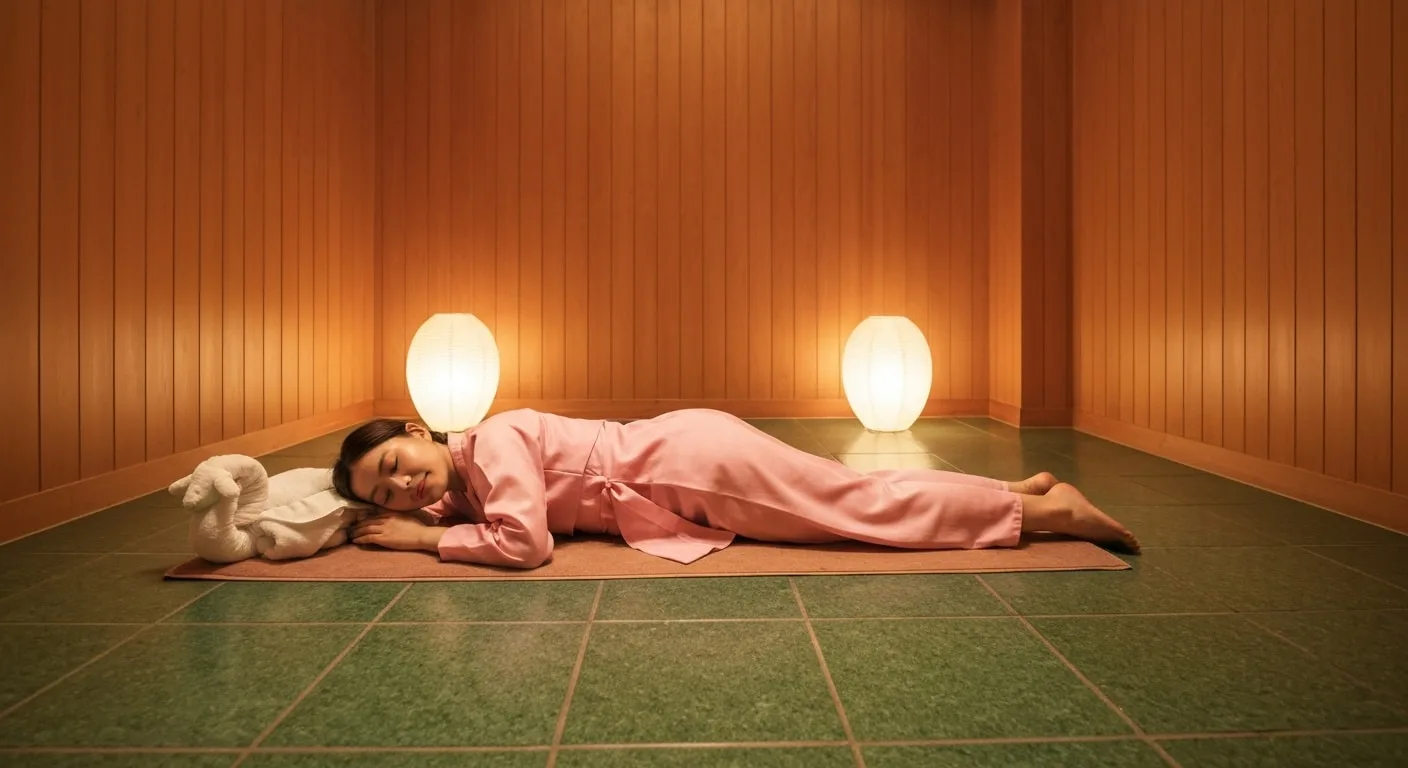
A jjimjilbang is not a spa in the Western sense. Rather, it's a multi-floor wellness complex where Koreans spend entire days — sometimes overnight. You'll find hot and cold pools, steam rooms infused with jade or charcoal, salt rooms, sleeping areas with heated floors, and communal spaces where families hang out in matching pajamas.
Dragon Hill Spa in Yongsan is the most tourist-friendly option in Seoul — seven floors, open 24 hours, entry around Rs 1,200. Siloam Sauna near Seoul Station is where locals go. Body scrub (seshin) performed by fierce ajummas (older Korean women) involves being rubbed down with an exfoliating mitt until layers of dead skin roll off visibly. Sounds horrifying. Actually transformative. Budget Rs 2,500-3,500 including scrub and basic treatments.
Japan: Onsen Hot Springs and Mineral Therapy
Japan's onsen culture is older than most civilizations. Visiting for skin benefits is a tradition that predates modern dermatology by centuries. Mineral composition varies by region — sulphur springs for oily and acne-prone skin, sodium chloride springs for dry skin, iron-rich waters for circulation. Choosing the right onsen town matters significantly for your wellness journey. Among all glowcation wellness destinations, Japan offers the most meditative experience.
Hakone: Accessible from Tokyo
Just ninety minutes from Tokyo by romance car, Hakone makes an easy introduction to onsen culture. Waters here are known as "beauty baths" — silky smooth with minerals that soften skin immediately. Most ryokan (traditional inns) include access to their private onsen with your stay. Budget Rs 15,000-25,000 per night for a quality ryokan with kaiseki dinner included.
For a detailed budget breakdown of what Japan trips actually cost, see our Japan trip cost guide for Indians.
Beppu: Japan's Hot Spring Hell
Beppu on Kyushu island has more hot spring output than anywhere else in Japan — the town literally steams. Famous "hells" (jigoku) are for viewing, not bathing, but hundreds of public baths and ryokan offer waters ranging from mineral-white to rust-red. Beppu specializes in mud baths (fango) and sand baths where you're buried in naturally heated volcanic sand. Deeply weird. Incredibly effective for skin texture and muscle tension.
Kinosaki: Seven Public Baths
This tiny onsen town has maintained its traditional atmosphere better than most. Seven public bathhouses line the main canal, each with different architectural styles and mineral compositions. Tradition involves strolling between them in yukata (cotton robe) and geta (wooden sandals), bathing in several throughout the day. Day passes covering all seven cost around Rs 1,000. For more information on Japan's onsen regions, visit the Japan National Tourism Organization.
Hungary: Budapest's Thermal Bath Culture
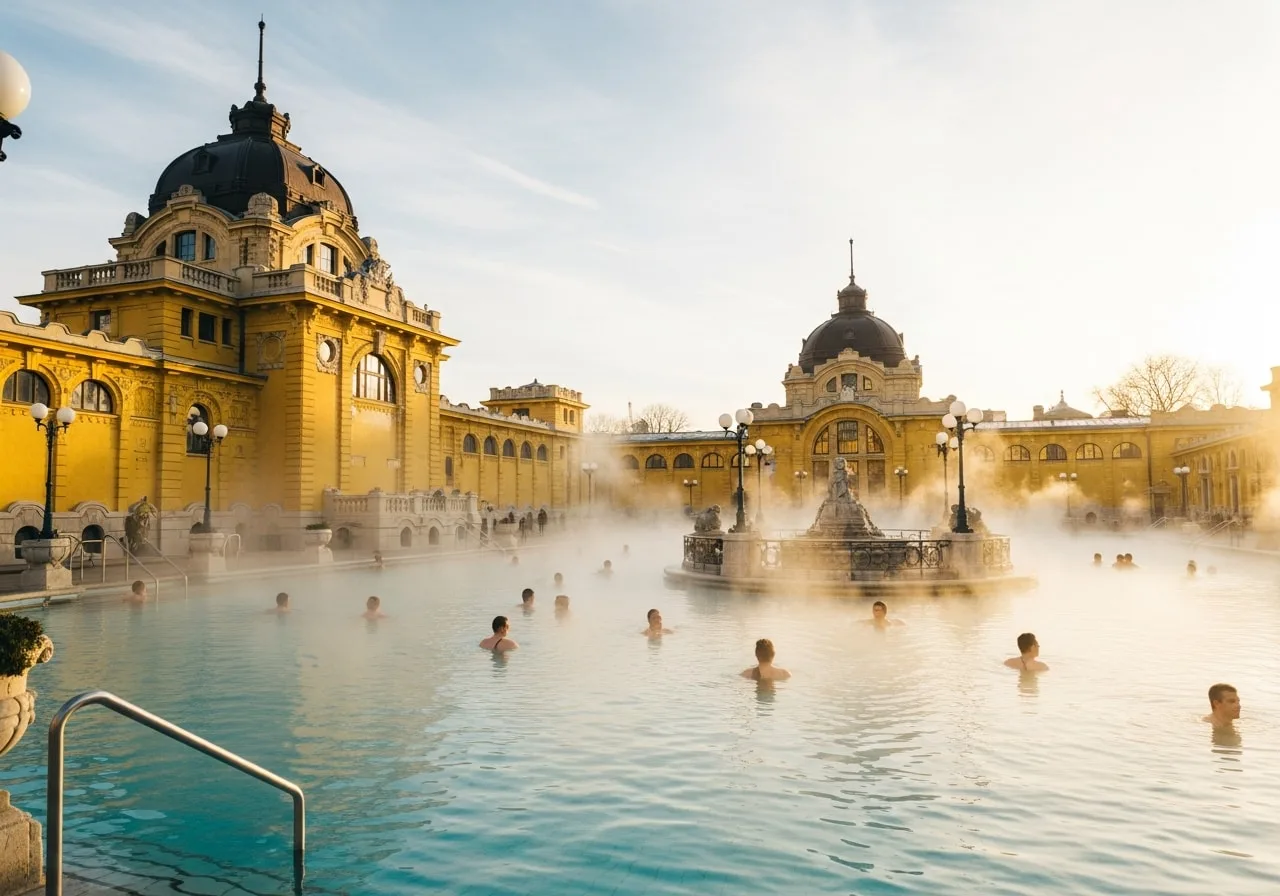
Budapest sits on over 120 natural hot springs, making it the only capital city in the world designated a "spa city." Hungarians have been bathing in these waters since Roman times. Grand thermal bath complexes built in the Ottoman and Art Nouveau eras remain fully operational. Waters are genuinely therapeutic — high in calcium, magnesium, and sulphate — and locals visit for specific skin conditions including eczema, psoriasis, and chronic dryness.
Széchenyi Thermal Bath
Yellow Neo-Baroque palace in City Park houses one of Europe's largest thermal bath complexes. Three outdoor pools stay warm even in winter (steam rising off water while snow falls is peak aesthetic), plus fifteen indoor pools and various saunas. Entry costs Rs 2,500-3,500 depending on whether you want a private cabin. Water temperature in the main outdoor pool sits around 38°C — hot enough to relax but not scalding.
Weekend mornings get crowded with tourists. Go weekday afternoons for a more local experience, or attend famous "sparties" — Saturday night bath parties with DJs and laser shows.
Gellért Thermal Bath
More intimate than Széchenyi, Gellért feels like bathing inside an Art Nouveau museum. Main hall with its marble columns and turquoise tiles is stunning. Water here is slightly cooler and supposedly better for drinking (yes, thermal water drinking is a Hungarian thing). An effervescent pool creates natural massage through rising bubbles.
Rudas Bath
Dating from 1550 during Ottoman rule, Rudas retains its original octagonal pool under a domed roof. Atmosphere is more meditative than the grand baths — fewer tourists, more serious bathers. Rooftop pool added recently offers views over the Danube. Mixed days are Tuesday and weekends; other days are gender-segregated. For skin-conscious Indians exploring glowcation wellness destinations, Budapest offers unmatched historical ambiance.
Iceland: Blue Lagoon and Beyond
Blue Lagoon is probably the world's most photographed thermal bath, and for good reason — milky blue geothermal seawater surrounded by black lava fields creates an otherworldly landscape. Beyond Instagram factor, silica mud naturally present in the water genuinely works wonders on skin. Lagoon has its own skincare line developed from the unique mineral composition.
Premium packages (Rs 12,000-18,000) include in-water treatments, private changing areas, and multiple silica mud applications. Budget entry starts around Rs 6,000. Book months ahead — this place sells out constantly.
Beyond Blue Lagoon, recently opened Sky Lagoon offers similar thermal bathing with a seven-step ritual incorporating sauna, cold plunge, and body scrub. Secret Lagoon in the Golden Circle is the locals' alternative — natural, less developed, and significantly cheaper at Rs 2,500.
Turkey: Hammam and Pamukkale Thermal Pools
Turkish hammam tradition dates back to Roman bathhouses adapted for Islamic culture. Proper hammam experience involves steam rooms, hot marble slabs (göbek taşı), vigorous scrubbing with a kese glove, olive oil soap foam massage, and cold water rinses. It's communal, it's intimate, and it leaves your skin impossibly soft.
In Istanbul, Çemberlitaş Hamamı (built 1584) and Cağaloğlu Hamamı (1741) offer most authentic historical experiences. Expect Rs 3,000-6,000 for a full treatment with massage. Modern luxury hammams in five-star hotels run Rs 8,000-15,000 but with more privacy and fewer crowds.
Pamukkale Thermal Pools
White travertine terraces of Pamukkale — "cotton castle" in Turkish — have been drawing bathers since Greco-Roman times. Naturally cascading thermal pools look surreal, and yes, you can wade in the shallower terraces. Attached Cleopatra Pool claims the Egyptian queen herself bathed here (dubious history, but the mineral water feels special regardless). Water temperatures hover around 36°C with high calcium carbonate content beneficial for joint and skin conditions.
Bali: The Ubud Spa Circuit for Indian Wellness Seekers
Bali has positioned itself as Southeast Asia's wellness capital, and Ubud in particular concentrates an absurd density of spas, healing practitioners, and wellness retreats into one small town. Indonesian spa tradition blends local jamu herbal medicine with influences from Ayurveda and Chinese medicine, creating treatments that feel both exotic and surprisingly effective. Budget-conscious Indians will find this among the most affordable glowcation wellness destinations available.
For complete trip budgeting, check our Bali trip cost guide from India.
Signature Bali Treatments
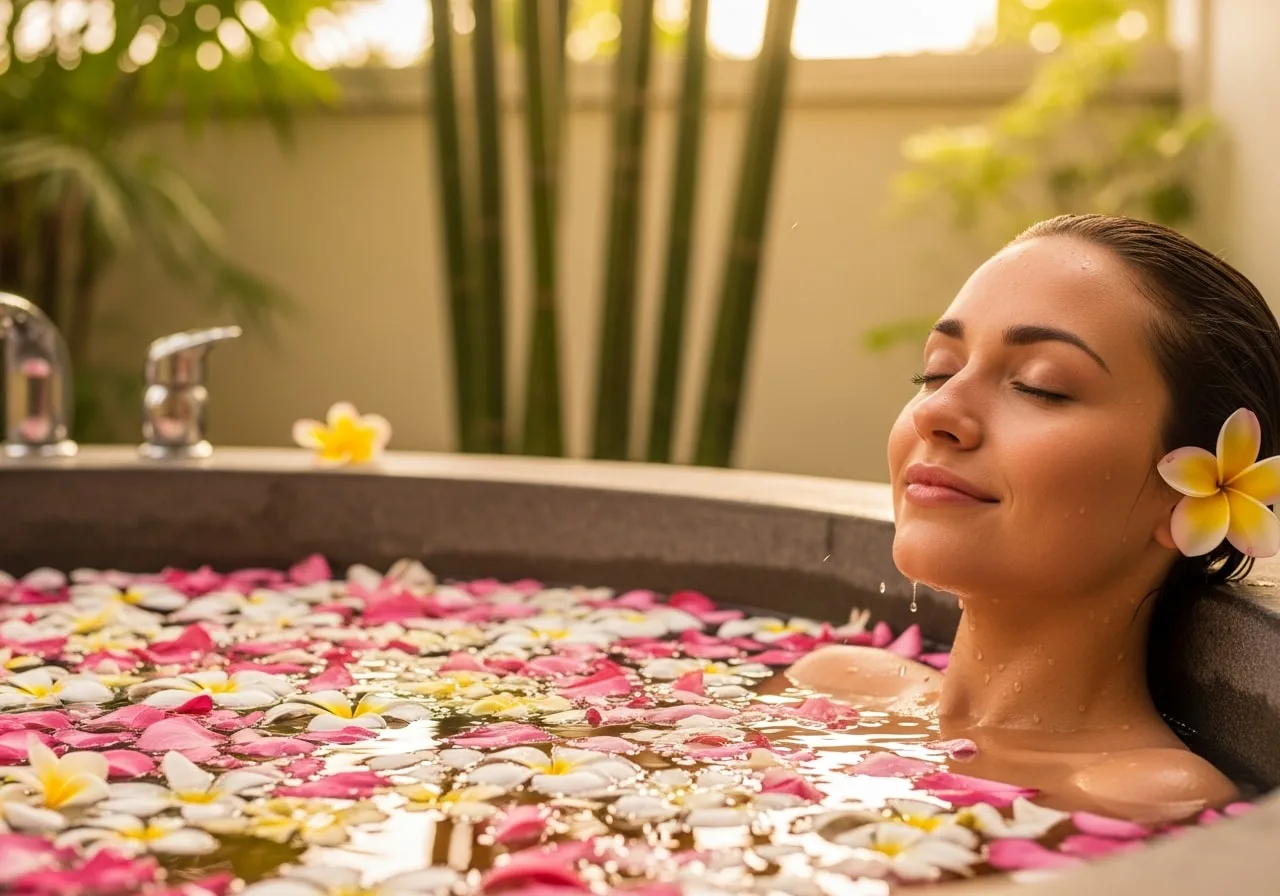
Flower bath is the Instagram staple — and yes, it's genuinely relaxing beyond the photo op. Frangipani, rose petals, and tropical flowers float in warm water infused with essential oils. Most spas offer this as part of a package with massage (Rs 2,500-5,000 for a two-hour session).
Lulur is the traditional Javanese beauty ritual: turmeric and rice powder scrub followed by yogurt application and flower bath. Originally reserved for royal brides, it brightens skin noticeably. Boreh is a warming spice paste treatment — ginger, clove, cinnamon — that stimulates circulation and treats muscle aches.
Tirta Empul Water Purification
Not technically a spa, but spiritually adjacent: Tirta Empul temple offers ritual purification in sacred spring water. Balinese Hindus believe the water has healing properties. Participating (respectfully, with proper sarong attire) in the purification ritual combines cultural experience with genuine reflection. Spring water is cold and shockingly clear.
Where to Book
Karsa Spa hidden in rice paddies offers treatments with genuinely stunning views. Taksu Spa in central Ubud has consistent quality and helpful English-speaking staff. For luxury, Fivelements or COMO Shambhala operate world-class wellness programs with multiple-day packages.
Thailand: Massage Training and Spa Weeks
Thailand offers something unique: you can actually learn the treatments, not just receive them. Thai massage schools in Chiang Mai offer week-long certification courses where you practice techniques daily. Even if you're not pursuing certification, the intensive training means you return understanding your body better and able to perform basic techniques on family.
Wat Pho in Bangkok runs the most famous school — Rs 25,000-35,000 for a 30-hour course. Chiang Mai alternatives include ITM, TMC, and dozens of smaller schools. Learning environment doubles as a wellness retreat: daily practice, vegetarian food, and a community of like-minded travelers.
For pure receiving, Thailand's spa weeks at wellness resorts like Chiva-Som (ultra-premium) or Absolute Sanctuary (mid-range) offer structured programs combining Thai massage, detox diets, yoga, and meditation. Expect Rs 1.5-5 lakhs for a week depending on the level of luxury.
How Top Glowcation Wellness Destinations Compare to Kerala
Indians already have world-class wellness options domestically — Kerala's Ayurvedic traditions are globally respected. When does going abroad make sense? If you've explored spiritual wellness retreats abroad, you'll know that international options add specific value:
- Technology: Korean clinics use devices and procedures not yet available in India
- Climate therapy: Mineral waters in Hungary and Japan simply don't exist here
- Beauty shopping: K-beauty and J-beauty products cost less at source
- Cultural experience: Hammam, onsen, and jjimjilbang are traditions worth experiencing in context
- Environmental reset: Sometimes skin needs a break from Indian pollution and humidity
Kerala remains unbeatable for extended Panchakarma treatments, chronic condition management, and value-for-money wellness stays. Two-week Ayurvedic retreat in Kerala costs what a three-day stay at a Thai wellness resort might. Choose international glowcation wellness destinations for specific treatments, shopping, or when you want the vacation element alongside the wellness.
Treatment Cost Comparisons by Country
Here's what you'll actually pay at mid-range venues (in INR):
- One-hour massage: Thailand Rs 1,200 | Bali Rs 1,500 | Korea Rs 4,000 | Japan Rs 6,000 | Hungary Rs 3,500
- Full spa day: Bali Rs 6,000 | Thailand Rs 5,000 | Korea Rs 12,000 | Budapest Rs 8,000
- Tech facials (laser/LED/aqua peel): Korea Rs 8,000 | Thailand Rs 6,000 | Iceland Rs 15,000
- Thermal bath entry: Japan Rs 600-1,500 | Hungary Rs 2,500-3,500 | Iceland Rs 6,000-12,000
- Traditional rituals: Turkey hammam Rs 3,000-6,000 | Korea jjimjilbang Rs 2,500-4,000 | Bali Lulur Rs 2,500-4,500
Wellness Resort vs DIY Spa Hopping
Structured wellness resort programs work best when you want accountability, don't want to plan anything, have specific health goals requiring professional oversight, or prefer luxury with meals handled. Expect Rs 15,000-50,000 per night at quality wellness resorts.
DIY spa hopping suits those who want variety, are comfortable navigating foreign cities, have a tighter budget, or enjoy the adventure of discovering hidden gems. You'll save 40-60% going independent while accessing more diverse experiences.
My recommendation: combine both approaches. Book two nights at a wellness resort for intensive treatments, then move to a regular hotel and explore local spas independently. This hybrid approach gives you the best of both worlds.
What to Bring Back: The Skincare Haul
From Korea: COSRX snail mucin (under Rs 800), Sulwhasoo ginseng range (splurge), Innisfree volcanic clay masks, Beauty of Joseon serums, Dr.G brightening peels, sheet masks by the dozen.
From Japan: SK-II Facial Treatment Essence (cheaper duty-free), Shiseido Anessa sunscreens (gold standard), DHC cleansing oil, Hada Labo hyaluronic acid products, Melano CC vitamin C.
From Turkey: Rose products from Isparta region, olive oil soaps from traditional hammam suppliers, argan oil if passing through the Grand Bazaar.
From Hungary: Thermal water skincare from local pharmacies — lesser-known but effective. Hungarian paprika also makes excellent face masks (not joking, Google it).
Sample 5-7 Day Itineraries for Glowcation Wellness Destinations
Budget Option: Bali (Rs 60,000-80,000)
Day 1-2: Arrive Ubud, settle in, evening flower bath. Day 3: Morning yoga session, afternoon Lulur treatment, evening rice paddy walk. Day 4: Visit Tirta Empul purification, followed by spa lunch and massage. Day 5: Day trip to beach area with beach club spa. Day 6: Intensive facial plus full body massage combo. Day 7: Final morning spa session before departure.
Mid-Range Option: Seoul (Rs 1.4-1.8 lakhs)
Day 1: Arrive, evening Myeongdong shopping recon. Day 2: Morning K-beauty clinic consultation plus first treatment, afternoon skincare shopping. Day 3: Full day jjimjilbang including body scrub and massage. Day 4: Second clinic visit for follow-up treatment, Gangnam exploration. Day 5: Temple stay morning, traditional Korean spa. Day 6: Final treatments plus serious skincare haul. Day 7: Departure with glowing skin and stuffed suitcase.
Premium Option: Japan + Korea (Rs 2.5-3.5 lakhs)
Day 1-2: Seoul K-beauty clinic intensive with multiple treatments. Day 3: Fly to Tokyo, evening onsen experience. Day 4-5: Hakone ryokan with multiple onsen sessions and kaiseki meals. Day 6: Return Tokyo, Ginza skincare shopping spree. Day 7: Departure with transformed skin.
Planning Your Trip to Glowcation Wellness Destinations
Best time depends on destination. Korea and Japan shine in spring (April-May) and autumn (September-November) when weather is mild and crowds thinner. Budapest's baths are magical in winter — steaming outdoor pools against cold air. Bali works year-round but avoid peak monsoon (January-February). Iceland's thermal baths are best experienced with shoulder-season Northern Lights (September-October).
Visa logistics: Korea and Japan offer e-visas or visa-on-arrival for Indian passport holders under certain conditions (check current requirements). Hungary requires Schengen visa processing. Bali is visa-on-arrival for 30 days. Turkey offers e-visa.
Pack light skincare — you're buying more anyway. Bring one good cleanser, moisturizer, and sunscreen. Leave space for returns. Some treatments cause temporary sensitivity; pack a hat and oversized sunglasses for post-procedure days.
The best glowcation isn't about doing everything — it's about doing the right things for your specific skin concerns, with enough rest to actually relax. Come back glowing, not exhausted.
Whether you're chasing K-beauty innovations in Seoul, soaking in centuries-old Japanese onsen, or steaming in Budapest's grand thermal palaces, these glowcation wellness destinations do something that no amount of at-home skincare can replicate. They give your skin a complete environmental reset while feeding your soul with adventure. And honestly, returning home with skin good enough that coworkers ask what you did differently? That's worth every rupee.
How to Plan Your First Glow-cation from India
Step-by-step guide to planning a wellness-focused trip centered on skincare, spa treatments, and beauty experiences.
Identify your skin goals
Determine what you want to address: anti-aging, acne, pigmentation, relaxation, or general skin health. This helps choose the right destination and treatments.
Choose your glow-cation style
Decide between a structured wellness resort stay or DIY spa hopping. Resorts offer curated programs while independent travel lets you explore multiple venues.
Research destination specialties
Korea excels in technology-driven skincare, Japan offers mineral hot springs, Hungary has therapeutic thermal waters, and Bali provides holistic Ayurvedic-inspired treatments.
Book key treatments in advance
Popular K-beauty clinics and premium Japanese ryokan with private onsen book out weeks ahead. Reserve signature treatments before you fly.
Plan your skincare shopping list
Research products unavailable or expensive in India. Set a budget for skincare hauls and identify authentic shopping locations.
Pack strategically
Bring minimal skincare to leave room for purchases. Pack a basic routine only. Check luggage allowances for liquid items on return.
Schedule recovery time
Intensive treatments like chemical peels need downtime. Plan lighter activities for days after major procedures.