
Saudi Arabia for Indian Tourists: Beyond Hajj & Umrah 2026
I landed in Riyadh at 2 AM expecting a sterile airport and judgmental stares. Instead, I got smooth immigration, a driver cracking jokes about Indian cricket, and a country that felt nothing like the Saudi Arabia Indians imagine from news headlines. That's the thing — almost everything you think you know is either outdated or flat-out wrong. Getting a tourist visa used to be practically impossible.
Hajj or Umrah pilgrims, business travelers with corporate sponsors, or nothing. Then in 2019, Saudi Arabia did something nobody expected: they opened tourist visas to 49 countries, including India. Vision 2030 — the crown prince's ambitious plan to diversify the economy away from oil — suddenly made tourists valuable. And now, in 2026, the country is spending billions to attract visitors with ancient ruins, luxury resorts, and entertainment that would've been unthinkable a decade ago.
Saudi Arabia Indians Tourist Visa: E-Visa Process
Here's the good news: the Saudi Arabia Indians e-visa is one of the easiest Middle Eastern visas to get. No embassy visits, no sponsor letters, no employer NOCs. Just an online application that takes about 15 minutes.
The visa costs approximately $160 (around ₹13,000) and gives you 1-year multiple entry validity. Each stay can be up to 90 days. That's genuinely generous — better than most Schengen visas, honestly. You'll need a passport valid for at least 6 months, a recent photo, and travel insurance (you can buy it during the application or show your own policy). Approval usually comes within 24-48 hours, sometimes faster.
Apply on the official Saudi Tourism Authority portal only. Avoid third-party agents charging "processing fees" — they're just filling out the same form you would. I've seen agents charge ₹25,000 for what's essentially a ₹13,000 transaction with some form-filling. Don't fall for it.
One important note: the tourist visa doesn't allow you to visit Mecca or Medina. Those cities still require Hajj or Umrah visas. But every other part of the country — and there's a lot — is fair game. The Saudi Arabia Indians visa has genuinely revolutionized access.
AlUla: Saudi Arabia's Answer to Petra

If Saudi Arabia has one destination that justifies the entire trip, it's AlUla. This ancient oasis in the northwestern desert has been inhabited for 7,000 years, but until recently, tourists couldn't visit. Now it's the centrepiece of Saudi tourism, and rightfully so.
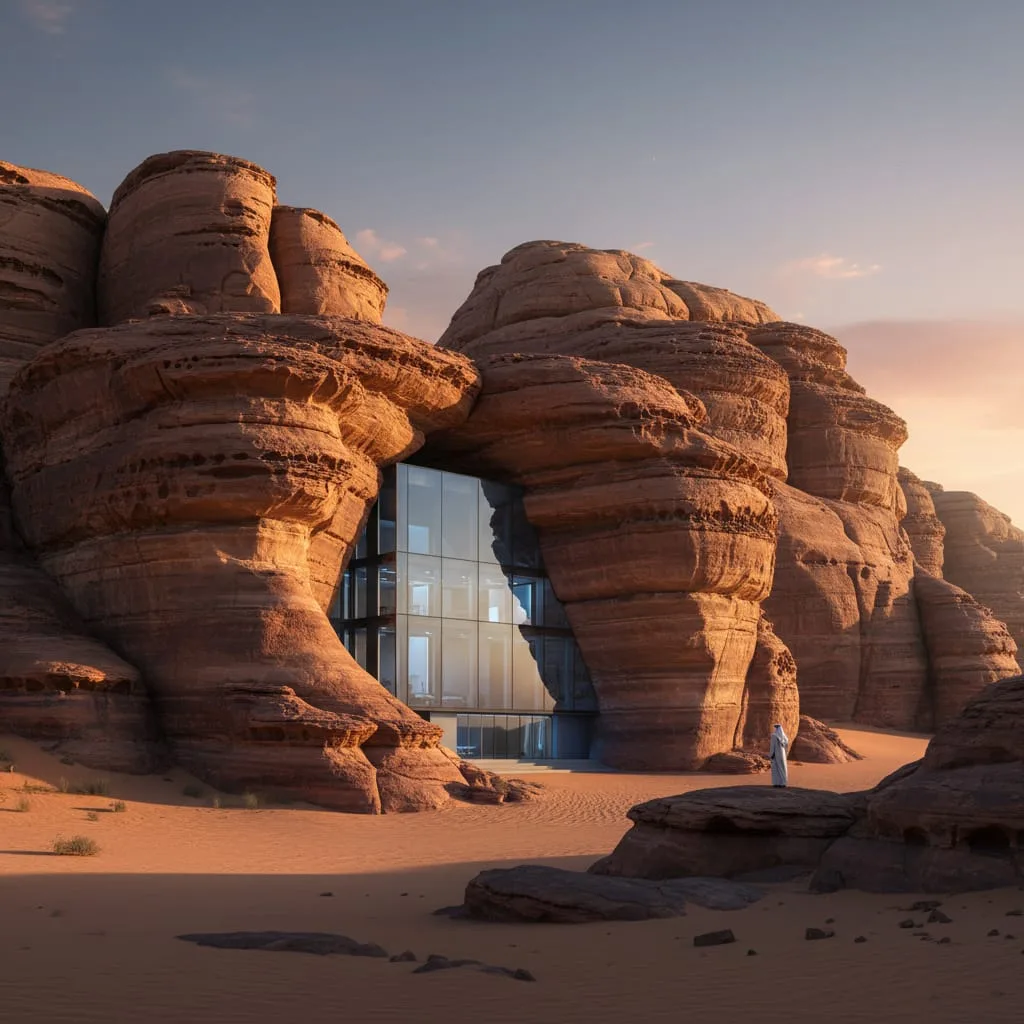
Hegra (also called Madain Saleh) is the showstopper — a 2,000-year-old Nabataean city carved into sandstone cliffs. Same civilization that built Petra in Jordan, same architectural style, same jaw-dropping scale. Except Hegra gets a fraction of Petra's crowds. I spent three hours wandering between 110 monumental tombs without another tourist in sight. The late afternoon light turning the rock faces orange and red? That's the photo you'll frame.
Beyond Hegra, AlUla has Elephant Rock (a natural formation that looks exactly like an elephant), Dadan (an ancient Lihyanite kingdom), and the stunning modern architectural installations scattered through the desert by international artists. The contrast between 3,000-year-old ruins and contemporary art creates something genuinely unique. I haven't seen anything quite like it elsewhere.
AlUla isn't cheap. Guided tours of Hegra run SAR 250-400 (₹5,500-8,800), and the area intentionally limits visitor numbers to protect the sites. You'll need to pre-book everything through the Experience AlUla website. Accommodation ranges from desert glamping (starting SAR 1,500/night) to the ultra-luxury Habitas resort. Budget travelers can base themselves in the nearby town and visit on day trips.
Riyadh: The Capital That Surprises
Most travelers flying to this country land in Riyadh. My honest first impression? It felt like Dubai's cousin — all gleaming towers and wide highways — but with less flash and more genuine local character. This isn't a city built for tourists; it's a city Saudis actually live in. That makes it more interesting, not less.
Kingdom Centre Tower dominates the skyline with its distinctive opening at the top (locals call it "the bottle opener"). The sky bridge observation deck offers 360-degree views and is the obvious first stop. But the real Riyadh experience is Diriyah, a UNESCO World Heritage site just 20 minutes from downtown. This is where the first Saudi state was founded in 1727 — mud-brick palaces, narrow streets, and a history that matters deeply to Saudis. They've restored it beautifully, and it's now surrounded by high-end restaurants and boutiques. It feels a bit like a luxury mall wrapped around an archaeological site, which is either genius or strange depending on your perspective.
The day trip every guidebook mentions is Edge of the World (Jebel Fihrayn). It deserves the hype. Ninety minutes northwest of Riyadh, dramatic cliffs drop 300 meters to an endless plain that stretches to the horizon. On a clear day, you understand why it got that name. Best visited at sunset, when the escarpment glows. Book a 4x4 tour since the access road requires off-roading.
Jeddah: Where Saudi Arabia Meets the Sea

Jeddah has a completely different vibe. This is Saudi Arabia's most cosmopolitan city, gateway to Mecca (though tourists can't enter), and home to a Red Sea coastline that's quietly world-class for diving. The city feels more relaxed than Riyadh — more diverse, more colourful, more chaotic in a good way.
Al-Balad, the historic old town, is the highlight. These aren't sanitized heritage zones — they're crumbling coral-stone buildings with intricate wooden balconies (rawasheen), still inhabited, with narrow streets that smell of oud and coffee. UNESCO listed it, but it retains authenticity that similar old quarters in Dubai or Qatar have lost to renovation. Get lost intentionally. That's how you find the best bits.
The Jeddah Corniche stretches 30 kilometers along the waterfront, and King Fahd's Fountain shoots seawater 312 meters into the air — officially the world's tallest fountain. The Floating Mosque (Al-Rahma Mosque) sits on the water's edge and is particularly beautiful at sunset. Unlike Mecca and Medina, non-Muslims can visit this one.
Red Sea diving is Saudi Arabia's undersold attraction. The coral reefs here are healthier than most of the accessible Indo-Pacific, with abundant sharks, rays, and pelagics. Yanbu and Jeddah have diving operations, and the NEOM developments will eventually add more. If you're planning forex for your trip, factor in SAR 500-800 (₹11,000-17,600) per dive day.
NEOM and The Line: What's Actually Open?
You've probably seen the renders — a 170-kilometer mirrored city in the desert, vertical buildings defying physics. The Line is Saudi Arabia's most ambitious megaproject, part of the NEOM development zone. Reality check: as of early 2026, almost none of it is open to tourists.
What is accessible is Sindalah Island (NEOM's first completed component), a luxury resort island with marinas, beach clubs, and high-end hotels. Expect Monaco prices — SAR 3,000+ per night for hotels, SAR 500+ for dinner. Unless you're specifically seeking ultra-luxury, skip it for now.
The rest of NEOM remains a construction zone. Worth watching for 2027-2028, but not a reason to visit today. Saudi Arabia Indians traveling now will find far more interesting places already open and accessible.
Abha and the Asir Mountains: Saudi Arabia's Coolest Corner
This one surprises every Indian I recommend it to. Saudi Arabia has mountains? Cool weather? Yes — Abha sits at 2,200 meters elevation in the southwestern Asir region, and summer temperatures rarely exceed 25°C. While Riyadh bakes at 45°C, Abha residents wear light jackets.
The landscape feels more like Yemen or Ethiopia than the Arabian Gulf — juniper forests, terraced hillsides, stone villages clinging to slopes. Cable cars connect mountain peaks. Habala, a cliff-hanging village accessible only by cable car, was inhabited by isolated tribes until recently. The Asir National Park offers genuine hiking (rare in Saudi Arabia).
Abha is also the best place to experience traditional Saudi culture without the Riyadh polish. Locals here maintain distinct Asiri traditions — colourful architecture painted by women, different cuisine, a mountain identity. It's about 90 minutes by flight from Riyadh, or a scenic 6-hour drive if you want to see the landscape change.
Entertainment: Vision 2030 Changes
The changes in Saudi entertainment over the past five years are staggering. Cinema was banned until 2018. Now Riyadh has IMAX theatres, multiplexes, and film festivals. Women couldn't drive until 2018. Now they're everywhere on the roads.
For visitors from India, the big events are worth planning around. Riyadh Season runs October to March and transforms the capital with concerts, wrestling events (WWE has become huge here), comedy shows, and themed entertainment zones. The F1 Saudi Arabian Grand Prix happens every March in Jeddah, with the dramatic night-lit Corniche Circuit. Music festivals like MDL Beast draw international DJs and tens of thousands of attendees.
This is genuinely new. A Saudi colleague told me his father still can't believe these events are legal. For tourists, especially where large-scale entertainment is normal, it creates a unique atmosphere — a country catching up on decades of restricted entertainment all at once, with genuine enthusiasm from young Saudis experiencing it for the first time.
Indian Food in Saudi Arabia: You'll Eat Well
Here's something most guides don't mention: Saudi Arabia has phenomenal Indian food. Not adapted for local tastes — proper regional Indian cuisine, because millions have lived here for generations. Riyadh's Al Olaya district alone probably has more quality Indian restaurants than most European capitals.
South Indian food is everywhere. Hyderabadi biryani is excellent (the Saudi palate loves it). North Indian curries, chaat, dosa, Mumbai street food — all represented at reasonable prices. A good meal costs SAR 30-50 (₹660-1,100), which is cheaper than similar quality in Dubai.
Traditional Saudi food is worth trying too. Kabsa (spiced rice with meat) is the national dish. Mandi is similar but with a smokier flavour. Both are served in enormous portions meant for sharing. Arabic coffee (qahwa) and dates appear at every meeting, every meal, every occasion. Accept them graciously — refusing is mildly insulting.
One caution: Saudi Arabia remains dry. No alcohol is sold anywhere, and penalties for possession are severe. Don't try to bring it in, don't ask about it, just accept it. Plenty of excellent fresh juices and Arabic coffee to compensate. Get an eSIM before arrival so you can find restaurant recommendations on local apps.
Getting Around: Transport Options
Saudi Arabia is big — really big. Riyadh to Jeddah is 950 kilometers, about the distance from Delhi to Chennai. Flying is the practical choice for long distances. Saudia, Flynas, and Flyadeal operate domestic routes with reasonable frequency. Riyadh to Jeddah costs SAR 200-400 (₹4,400-8,800) one way.
The new Saudi Railway network is a game-changer for some routes. The Haramain High-Speed Railway connects Jeddah to Mecca and Medina (though tourists can only use the Jeddah station), while the North Railway connects Riyadh to Qassim and beyond. More lines are coming. The Riyadh Metro, opening in phases, will eventually make navigating the capital much easier than the current car-dependent reality.
For AlUla and Abha, renting a car makes sense if you're comfortable driving. Roads are excellent, petrol is absurdly cheap (SAR 2 per litre, about ₹44), and distances require your own wheels. Uber and Careem work well in major cities. When you're comparing this trip with alternatives, our Dubai trip cost guide might help contextualize Middle East travel budgets.
Saudi Arabia Indians Budget Breakdown
Here's realistic 2026 pricing for a 7-day trip:
Budget traveler (₹60,000-80,000 total):
- Flights: ₹20,000-30,000 return (book early with Saudia or Air India)
- eVisa: ₹13,000
- Budget hotels: SAR 150-250/night (₹3,300-5,500) — around ₹25,000 for 7 nights
- Food: SAR 60-80/day (₹1,300-1,750) — around ₹10,000 total
- Transport + activities: ₹10,000-15,000
Mid-range traveler (₹1,20,000-1,60,000 total):
- Flights: ₹30,000-45,000 return
- eVisa: ₹13,000
- 3-4 star hotels: SAR 400-700/night (₹8,800-15,400) — around ₹70,000 for 7 nights
- Food and dining: SAR 150-200/day (₹3,300-4,400) — around ₹25,000 total
- Transport, tours, activities: ₹25,000-35,000
Luxury traveler (₹3,00,000+ total):
- Business class flights: ₹80,000-1,20,000
- eVisa: ₹13,000
- 5-star hotels/resorts: SAR 1,500-5,000/night
- Private guides, luxury experiences: variable
Dress Code and Cultural Tips
The dress code has relaxed significantly for tourists. Women no longer need to wear abayas (though many still choose to for convenience). Shoulders and knees covered is the practical minimum. Men should avoid shorts in formal settings but can wear them casually. Swimming attire at hotel pools and resorts is fine.
That said, respect matters. This is still a conservative Muslim country. Ramadan means no eating, drinking, or smoking in public during daylight hours. Prayer times close shops five times daily for 15-20 minutes. Public displays of affection should be minimal. Photography of people, especially women, requires permission.
Safety for Saudi Arabia Indians travelers is excellent. Indians are familiar faces here — the community numbers in the millions. You'll encounter less racism than in some European countries, honestly. Petty crime is rare. Violent crime against tourists is virtually unheard of. The main safety concerns are aggressive driving (take care crossing roads) and the extreme summer heat.
Best Time to Visit from India
November to March is ideal. Temperatures in Riyadh hover around 20-25°C, perfect for sightseeing. AlUla is magical in winter with cool desert nights. Jeddah remains mild year-round due to sea breezes.
Avoid June to September unless you're heading to Abha. Riyadh regularly exceeds 45°C. Even short walks become unpleasant. The desert sites are unbearable midday. If summer is your only option, focus on the mountains or the Red Sea coast.
Ramadan dates shift annually (Islamic lunar calendar), so check before booking. The experience can be culturally interesting — iftar meals are spectacular — but many restaurants and attractions have reduced hours, and the daytime fasting rules apply to tourists in public spaces. For neighbours with similar appeal, consider our Oman travel guide if you want more flexibility.
Practical Information
Entry requirements: Tourist eVisa ($160/₹13,000), passport valid 6+ months, travel insurance
Currency: Saudi Riyal (SAR). 1 SAR ≈ ₹22. Cards accepted widely. Cash still useful for small purchases.
Language: Arabic official. English widely understood in cities, less so in rural areas.
SIM cards: Mobily, STC, and Zain offer tourist SIMs at airports. Data is cheap. Or use eSIM.
Time zone: GMT+3 (AST). 2.5 hours behind India.
Plugs: Type G (British) most common. Type A/B (American) also found. Bring adapters.
Airlines from India: Saudia, Air India, IndiGo (seasonal), SpiceJet (seasonal). Direct flights from Delhi, Mumbai, Hyderabad, Chennai, Kochi, Lucknow, and more.
Frequently Asked Questions
Can Saudi Arabia Indians tourists visit Mecca and Medina?
No. Tourist visas explicitly exclude Mecca and Medina. Only Hajj or Umrah visas (available only to Muslims with documented religious intent) permit entry to these cities. All other Saudi Arabia destinations are accessible with a tourist visa.
How long does the Saudi eVisa take for Indian passport holders?
Most eVisa applications are approved within 24-48 hours. Some get approved in under an hour. Apply at least a week before travel to be safe. The visa is valid for 1 year with multiple entries, and each stay can be up to 90 days.
Is Saudi Arabia safe for Indian solo female travelers?
Yes, Saudi Arabia is generally safe for solo female travelers. The country has very low crime rates, and harassment is less common than in many other destinations. Women no longer require a male guardian to travel, can drive, and can check into hotels alone. Modest dress is still expected (shoulders and knees covered), but abayas are optional for tourists.
What is the best Saudi Arabia itinerary for 7 days from India?
A good 7-day route: Fly into Riyadh (2 nights) for Diriyah and Edge of the World. Fly to AlUla (2 nights) for Hegra and desert experiences. Fly to Jeddah (3 nights) for Al-Balad old town, the corniche, and Red Sea activities. This covers Saudi Arabia's highlights efficiently without exhausting drives.
Do Saudi Arabia Indians travelers need to speak Arabic?
Not in cities. English is widely spoken in Riyadh, Jeddah, and tourist areas like AlUla. Hotel staff, guides, and restaurant workers generally communicate in English. In smaller towns and rural areas, Arabic helps. Google Translate works well for basic interactions. Hindi speakers will also find many Indian workers throughout Saudi Arabia who can assist.
The Verdict: Should You Visit?
I'll be honest — Saudi Arabia won't suit every traveler. If you want cheap backpacker vibes, abundant nightlife, or the freewheeling atmosphere of Southeast Asia, look elsewhere. But if you're curious about a country genuinely transforming before your eyes, with world-class ancient sites, excellent food (including Indian), and a culture unlike anything you've experienced, it delivers.
For Saudi Arabia Indians travelers specifically, the practical advantages are real: easy tourist visa through the e-visa system, direct flights from multiple cities, Hindi-speaking diaspora everywhere, familiar food, and a genuine welcome. Saudi Arabia Indians access has opened a destination that was impossible a few years ago. Whether that window stays open, and how the country continues to change, nobody knows. But right now? It's worth seeing for yourself.
If you're visiting Saudi Arabia's Eastern Province, consider a side trip across the King Fahd Causeway to Bahrain — the Middle East's most underrated weekend getaway. The tiny island kingdom is just 45 minutes from Al Khobar and costs a fraction of Dubai.