


Hostel Guide for Indians: Everything First-Timers Are Too Shy to Ask
In this guide (15)
- Why This Hostel Guide for Indians Matters: Our Cultural Context
- Types of Hostel Rooms: Choose Your Fighter
- How to Book a Hostel: Booking Tips in This Hostel Guide for Indians
- What to Expect When You Arrive
- Hostel Etiquette: The Unwritten Rules for Indian Travelers
- Safety: Is It Actually Safe to Stay in Hostels?
- Making Friends: The Social Side of Hostels
- Cooking Indian Food in a Hostel Kitchen (Yes, You Can)
- Cost Comparison: Hostels vs Hotels (A Key Part of Any Hostel Guide for Indians)
- Best Hostel Chains for First-Timers
- Party Hostels vs Chill Hostels: Know the Difference
- When NOT to Stay in Hostels
- Packing List: Hostel Essentials for Indian Travelers
- Your First Hostel Stay: A Step-by-Step Plan
- Frequently Asked Questions
I still remember standing outside my first hostel in Prague, suitcase in hand, genuinely wondering if I'd made a terrible mistake. What if my stuff gets stolen? What if I can't sleep? What if the other travelers think I'm weird? I'd grown up in a culture where hotels meant privacy, room service, and a locked door between you and the world. This hostel guide for Indians addresses every awkward question I wished someone had answered before that first night abroad.
That was eight years ago. Since then, I've stayed in over 150 hostels across 40 countries. Now I'm sharing everything I learned—from the practical stuff (how do lockers work?) to the awkward stuff (what if someone snores?) to the cultural adjustments we Indians specifically need to make. Consider this your complete hostel guide for Indians who've never done the dorm life before.
Why This Hostel Guide for Indians Matters: Our Cultural Context
Let's be honest about this. India has a deeply ingrained hotel culture. When our families travel, we book a private room—preferably with attached bathroom, definitely with a door that locks, ideally with room service. The concept of paying money to share a room with complete strangers sounds, frankly, a bit mad.
I get it. The first time I mentioned hostels to my parents, my mother asked if I was "in trouble." My father wanted to know if this was some kind of backpacker cult. Meanwhile, my grandmother just stared at me like I'd announced plans to live on the street.
Common concerns I hear from Indian travelers:
- "What about my privacy?" — Fair point. You won't have much. But you'll have your own bed, your own locker, and after a few nights, you won't even notice
- "Won't my stuff get stolen?" — Possible but rare. Lockers exist. More on this later
- "I need my own bathroom" — Some hostels have en-suite dorms. You pay more, but they exist
- "I'm vegetarian/I have dietary restrictions" — Hostels have kitchens. You cook your own food. Problem solved
- "What if people are... weird?" — Some will be. Most are just normal travelers. You'll probably be the weird one to them too
The reality? Hostels aren't for everyone, and that's okay. But for solo travelers, backpackers, or anyone trying to stretch their budget, they're often the smartest choice. Plus, the social element changes your trip entirely—you'll meet people who become travel buddies, share insider tips, and occasionally become lifelong friends.

Types of Hostel Rooms: Choose Your Fighter
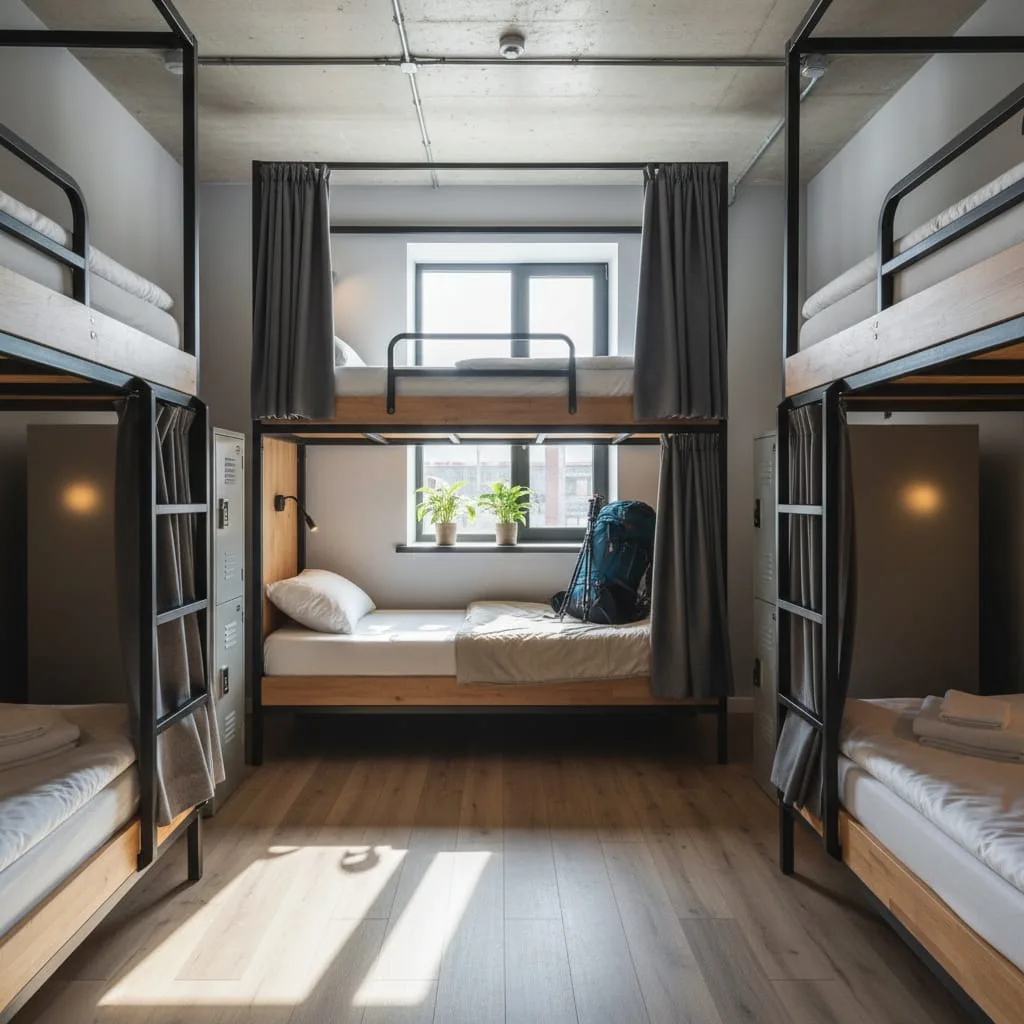
Not all hostel beds are created equal. Here's your cheat sheet:
Mixed Dormitory (4-12 beds)
The classic hostel experience. Bunk beds, shared bathroom, a locker for your stuff. Men and women together. This is the cheapest option, typically ₹800-1,500 per night in Europe, ₹400-800 in Southeast Asia. You'll save money and meet the most people, though you'll also hear the most snoring.
Female-Only Dorm
Same concept, but only women allowed. Many Indian women feel more comfortable starting here—I know several who swore by female dorms on their first few trips before eventually moving to mixed dorms. Prices are usually the same as mixed dorms, sometimes slightly higher. These fill up fast, so book early.
Pod/Capsule Dorms
Japanese innovation meets hostel life. Each bed is enclosed in a private pod with a curtain or door, often with your own light, outlet, and small shelf. Perfect for light sleepers or those who want a bit more privacy. Prices run ₹1,000-2,500 per night. These are increasingly common in modern hostels and worth the extra cost if you're nervous about the whole shared-room thing.
Private Rooms
A regular hotel room inside a hostel. You get the privacy of a hotel with access to hostel common areas, kitchen, and social events. Prices are comparable to budget hotels—₹2,500-5,000 per night. Good for couples, anyone who needs complete silence to sleep, or when you just need a break from socializing.
My Recommendation for First-Timers
Start with a 4-6 bed female-only dorm (if you're a woman) or a pod dorm (if you're male or prefer the extra privacy). Book 2-3 nights. If you love it, great—switch to mixed dorms for the rest of your trip and save money. If you hate it, you've learned something about yourself for about ₹3,000 all-in. That's cheaper than a bad restaurant bill back home.
How to Book a Hostel: Booking Tips in This Hostel Guide for Indians
The booking process is easier than ordering food on Swiggy. Here's where to look:
Hostelworld
The biggest platform, most hostel reviews, best filtering options. I've used this for probably 80% of my bookings. The rating system is detailed—they break down ratings for atmosphere, cleanliness, facilities, security, location, and staff. Pay attention to the written reviews, especially recent ones. A hostel that was great in 2022 might have changed management since. You can browse options at Hostelworld.com.
Booking.com
Yes, the hotel site. They've added hostels over the years. Sometimes you'll find better prices here than Hostelworld, especially if you have Genius status from previous bookings. Worth checking both sites before you book.
Google Maps Reviews
Don't skip this step. Search the hostel on Google Maps and read the reviews. Local travelers often leave reviews here that don't make it to Hostelworld. You'll also get a sense of the neighborhood—is it near public transport? Are there restaurants nearby? Is the street sketchy at night?
Direct Booking
Once you find a hostel you like, check their website. Sometimes they offer a lower price for direct bookings (they don't have to pay Hostelworld's commission). Some hostels also offer loyalty programs or extras for direct bookers—free breakfast, late checkout, that kind of thing.
Red Flags to Watch For
- Reviews mentioning bedbugs (run)
- Complaints about broken lockers or no lockers at all
- Multiple reviews about theft
- Photos that look professionally staged but no real photos from guests
- Location that's too far from public transport
If you're booking for your first solo trip abroad, spend extra time on reviews. A good hostel can make your entire trip, while a bad one can ruin your week.
What to Expect When You Arrive
Walk in. Look for the reception desk. Someone will ask for your passport and booking confirmation. They might take a photo of your passport or make a copy—this is normal and required by law in most countries.
You'll get a key or keycard for your room (and sometimes a separate key for your locker). They'll explain the house rules: quiet hours, checkout time, where the bathroom is, how the kitchen works. Pay attention to this part because every hostel is slightly different.
Then you find your room, claim your bed (if it wasn't pre-assigned), and figure out your locker situation. That's it. The whole process takes five minutes.
The Locker System
Most hostels provide lockers. Some are free, some require a deposit, and some you need to rent separately. The important thing: bring your own padlock. A decent combination lock from Amazon costs ₹300 and will last for years. Don't rely on the hostel having locks available.
Keep your valuables in the locker: passport, cash, electronics, anything you can't replace. Your dirty socks and shampoo can stay under your bed. Some lockers fit a full backpack while others only fit a laptop bag. Check reviews or email the hostel if this matters to you.
Shared Bathrooms
Usually one bathroom per 4-8 beds. Most are cleaner than you'd expect—hostels know bad bathroom reviews kill their business. Bring flip-flops or rubber slippers and never shower barefoot. This is non-negotiable hygiene.
Morning rush hour exists. If you need the bathroom at 8am sharp, set your alarm for 7am. Alternatively, shower at night like a civilized person. Most hostels also have private shower cubicles with hooks and small benches—you're not going to be showering in front of strangers.
Hostel Etiquette: The Unwritten Rules for Indian Travelers
This section is crucial. Our hotels let us get away with things that are absolute no-gos in hostels. Any proper hostel guide for Indians must address our cultural habits directly. Read this carefully.
Noise and Quiet Hours
Most hostels have quiet hours—typically 10pm or 11pm to 7am or 8am. During these hours, conversations happen outside the dorm or in whispers. No phone calls allowed. No video calls to family back home. No watching reels with the volume on.
Indian cultural context: we're used to joint families, bustling households, constant activity. Western hostel etiquette is different. When someone's sleeping, you're quiet. Period. This isn't rudeness—it's respect.
The Alarm Clock Problem
If you're catching an early bus, your phone alarm will wake up the entire room, and everyone will hate you. Here's what you do: use a smartwatch or fitness band with a vibrating alarm. Alternatively, set your phone to vibrate only and keep it under your pillow. Or just stay awake all night watching the ceiling (not recommended).
Never hit snooze multiple times. Set one alarm, wake up, leave. Your roommates didn't sign up for five alarms at 4am.
The Plastic Bag Situation
You know that loud, crinkly plastic bag you're rummaging through at 6am? Everyone can hear it. Every single rustle echoes through the room. Pack your stuff the night before and keep tomorrow's clothes in an accessible spot. If you must access your bag early morning, move it to the hallway or common area first.
Personal Space Exists
Don't sit on someone else's bed. Don't use their charging port or move their stuff. Don't stare. Don't take photos inside the dorm without asking everyone present, and don't start a conversation at midnight when someone's clearly trying to sleep.
In India, personal space is a flexible concept. In hostels, it's sacred. Respect boundaries.
Shower Time Limits
Ten minutes maximum when others are waiting. This isn't a spa. Get in, wash, get out. Long showers are for private rooms.
Safety: Is It Actually Safe to Stay in Hostels?
Short answer: yes. Longer answer: as safe as you make it.
I've stayed in hostels everywhere from Bangkok to Buenos Aires, Lisbon to Ljubljana. Never been robbed. Never felt unsafe. But I also follow basic precautions:
- Use your locker. Every time. No exceptions
- Keep electronics on you when you leave the room (phone, laptop, camera)
- Split your cash. Some in your locker, some in your daypack, some hidden in your luggage
- Trust your instincts. If someone gives you a bad vibe, trust that feeling
- Don't get blackout drunk. You're sharing a room with strangers. Stay aware
Mixed Dorms for Women: The Reality
I know this is a concern for many Indian women considering hostels. Here's my honest take: millions of women stay in mixed dorms every year without incident. Hostels have security measures—key cards, lockers, staff nearby. The other travelers in your room are usually also solo travelers who understand boundaries.
That said, if mixed dorms make you uncomfortable, don't force it. Female-only dorms exist for a reason. Start there if you need to and read reviews specifically from women. Choose hostels with good security ratings, and if something feels off, trust yourself and change hostels. For more practical tips, check out our guide to safe solo travel for Indian women.
Making Friends: The Social Side of Hostels
This is why people actually stay in hostels. The beds aren't that comfortable and the rooms aren't that quiet. But the people—the people are why this lifestyle is addictive.
The Common Room Strategy
Every hostel has a common area. This is where the magic happens. Sit there with a book or your laptop and make eye contact with other solo travelers. Say hi. Ask where they're from. Ask what they've done in the city. That's it. Conversation started.
Indian travelers sometimes feel shy about initiating. Here's the thing: everyone in that common room is also looking for connection. That's why they booked a hostel instead of a hotel. You're not bothering anyone by saying hello.
Hostel Activities
Good hostels organize group activities: pub crawls, walking tours, cooking nights, movie screenings. These are designed for solo travelers to meet each other. Join at least one on your first night, even if you're tired, even if you're introverted. You'll have someone to eat dinner with by the end of it.
The Kitchen Connection
Cooking in a shared kitchen is surprisingly social. You're chopping vegetables, someone asks what you're making, and suddenly you're sharing a meal with three people from three continents. I've had some of my best travel conversations over budget hostel pasta.
Cooking Indian Food in a Hostel Kitchen (Yes, You Can)
The question I get asked most often by Indian travelers: "Can I cook desi food in a hostel kitchen without causing an international incident?"
Answer: absolutely yes. With some consideration.
The Rice Cooker Hack
Invest in a small travel rice cooker (₹1,500-2,500). These things are lifesavers. You can cook rice, heat dal, even make khichdi. Plug it in your dorm room or common area if the kitchen is busy. Many Indian travelers swear by this.
Smell Considerations
Look, I'm not going to tell you not to cook with onions and spices. That's ridiculous. But be aware that shared kitchens are shared spaces. Run the exhaust fan and open a window if possible. Clean up immediately after—don't leave masala residue on the stove. Wipe everything down thoroughly.
Also: many travelers from other countries have never smelled Indian cooking before. Some will be curious, some will be delighted, and some will look mildly confused. All of this is normal. I've converted more people to Indian food in hostel kitchens than any restaurant ever has.
What to Pack for Hostel Cooking
- Small container of essential spices (turmeric, chili powder, cumin)
- Instant rice or microwaveable rice packets
- Ready-to-eat dal/curry pouches (MTR, Haldiram's)
- Maggi noodles (obviously)
- Pickle in a small container
Cost Comparison: Hostels vs Hotels (A Key Part of Any Hostel Guide for Indians)
Let's talk money. This is where hostels truly shine.
A basic hotel room in Europe runs ₹5,000-15,000 per night, and a private Airbnb is similar. A hostel dorm bed? ₹800-2,500. That's 3-10x cheaper.
Let's say you're spending two weeks in Europe. Hotels would cost you approximately ₹1,05,000-2,10,000 for accommodation alone, while hostels would be ₹15,000-35,000. That's a ₹1,00,000+ difference—enough for better food, more activities, another week of travel, or booking cheaper flights from India on flexible dates.
Southeast Asia Math
In Thailand, Vietnam, or Indonesia, the difference is smaller but still significant. Hotels run ₹2,000-5,000 while hostels are ₹400-1,000. Over a month of travel, you save ₹50,000-80,000. That's meaningful money.
Hidden Value
Hostels often include free breakfast, free walking tours, free WiFi, free luggage storage, and free kitchen access. Hotels charge for most of these extras. Factor this into your math.
Best Hostel Chains for First-Timers
When you're nervous about hostels, starting with established chains reduces risk. Here are the ones I recommend:
Generator
Design-focused hostels in major European cities. Clean, modern, excellent locations. Prices run higher than average (₹1,500-3,000 for dorms) but the quality is consistent. Their Barcelona and Amsterdam locations are particularly good.
St Christopher's
Party-friendly chain across Europe. If you want to meet people and don't mind noise, these work well. Great bar culture with organized pub crawls. Not for light sleepers.
Selina
Trendy chain popular with digital nomads and remote workers. Beautiful design, coworking spaces, yoga classes. More expensive than average but worth it for the aesthetic. Popular in South America and Central America.
Zostel
Indian hostel chain with properties abroad and across India. If you want to ease into hostel culture, try a Zostel in Goa or Manali first. The vibe is familiar, the crowd includes other Indians, and the standards are reliable. Good training wheels before you use this hostel guide for Indians on international trips.
Party Hostels vs Chill Hostels: Know the Difference
This matters more than you might think.
Party hostels have bars on-site, organized pub crawls, loud common areas, and late-night activity. If you're 21 and want to meet drinking buddies, perfect. If you're 35 and need to sleep, disaster.
Chill hostels prioritize quiet, cleanliness, and rest. No bar, strict quiet hours, peaceful common areas. Better for older travelers, introverts, or anyone who values sleep.
How to tell the difference: read the reviews and look at the photos. Check the activities they advertise. A hostel with "legendary pub crawl" on the homepage is not a chill hostel, while a hostel with "quiet garden retreat" is not a party hostel.
For your first hostel experience, I'd suggest a middle-ground option: social but not crazy. Read what past guests say about noise levels.
When NOT to Stay in Hostels
Hostels aren't always the right choice. Skip them if:
- You're traveling as a couple — private rooms cost nearly as much as budget hotels. You won't meet people the same way. Get a hotel
- You're traveling with family — kids in dorms don't work. Older relatives won't appreciate shared bathrooms
- You're a very light sleeper — no amount of earplugs will fix some nights. You'll be miserable
- You need to work early mornings — Zoom calls from hostel common rooms are awkward for everyone. Business travelers should book hotels
- You're sick or exhausted — when you need real rest, splurge on a private room
- The destination is already cheap — in some countries (parts of India, for example), hotels are so affordable that hostels don't offer enough savings to matter
Packing List: Hostel Essentials for Indian Travelers
After years of hostel life, here's what I never travel without:
- Padlock — combination lock, not key lock (you will lose the key)
- Quick-dry towel — microfiber, packs small, dries overnight
- Earplugs — foam ones work, silicone are better, moldable wax are best
- Eye mask — some psychopath will turn on the lights at 3am
- Flip-flops — for showers. Non-negotiable
- Headlamp or clip light — find your stuff without waking everyone
- Packing cubes — organize your bag so you're not rummaging at midnight
- Portable charger — outlet access varies wildly
- Universal adapter — obvious but people forget
- Dry bag or ziplock — keeps valuables separate and shower-ready
For more gear recommendations, check out our guides on adventure travel from India and solo male travel tips.
Your First Hostel Stay: A Step-by-Step Plan
If you've read this far and you're still nervous, here's your action plan:
- Choose a destination with good hostels — Lisbon, Bangkok, Budapest, and Melbourne are all excellent starter cities
- Book a 4-6 bed dorm — not too big, not too small
- Pick a hostel rated above 8.5 on Hostelworld — reduces the chance of a bad experience
- Book 2-3 nights only — short enough to handle if you hate it, long enough to adjust
- Arrive in the afternoon — gives you time to settle in before dark
- Join one activity — walking tour, dinner outing, whatever's happening
- Say hi to your roommates — just once, when you first arrive
- Give it time — the first night is always weird. The second is better. By the third, you get it
Hostels changed how I travel. They've introduced me to some of my closest friends and pushed me out of my comfort zone. They've made me a better, more adaptable person. They've stretched my budget so I could travel twice as long as I planned.
You might try one hostel and decide it's not for you. That's valid. But you might also discover a whole new way of seeing the world—one where accommodation is about connection, not just a place to sleep. Either way, now you know what you're getting into.
Frequently Asked Questions
Are hostels safe for Indian solo travelers?
Yes, hostels are generally safe for Indian solo travelers when you follow basic precautions. Always use lockers for valuables, bring your own padlock, keep electronics with you when leaving the room, and choose hostels with good security ratings. Female travelers should consider female-only dorms if mixed dorms feel uncomfortable. Read recent reviews and trust your instincts.
How much do hostels cost compared to hotels?
Hostel dorm beds typically cost ₹800-2,500 per night in Europe and ₹400-1,000 in Southeast Asia. Compare this to budget hotels at ₹5,000-15,000 in Europe. Over a two-week trip, choosing hostels over hotels can save you ₹1,00,000 or more—money you can spend on experiences, food, or extending your trip.
Can I cook Indian food in a hostel kitchen?
Absolutely. Most hostels have fully equipped shared kitchens. Bring a small travel rice cooker for convenience, pack essential spices in small containers, and stock up on ready-to-eat pouches like MTR or Haldiram's. Use the exhaust fan when cooking with spices and clean up immediately. Many fellow travelers will be curious about your cooking.
What should I bring for a hostel stay?
Essential hostel packing items include: a combination padlock for lockers, quick-dry microfiber towel, earplugs and eye mask for sleeping, flip-flops for shared bathrooms, headlamp or clip light, packing cubes for organization, portable charger, and a universal power adapter. These items make hostel life much more comfortable.
Which hostel booking platform is best?
Hostelworld has the largest selection and most detailed reviews for hostels specifically. Booking.com sometimes offers better prices, especially with Genius discounts. Always check both platforms and also look at Google Maps reviews for local perspectives. Once you find a hostel you like, check their direct website—they sometimes offer lower prices for direct bookings.
For Indian students studying abroad in Europe, hostels become an essential part of term break travel. Check out our comprehensive guide for Indian students traveling Europe on a budget for specific hostel chains, booking strategies, and travel tips tailored to the student experience.
Planning this trip?
Tell us roughly when and how many — our travel expert sends you a custom quote, usually within a few hours.