

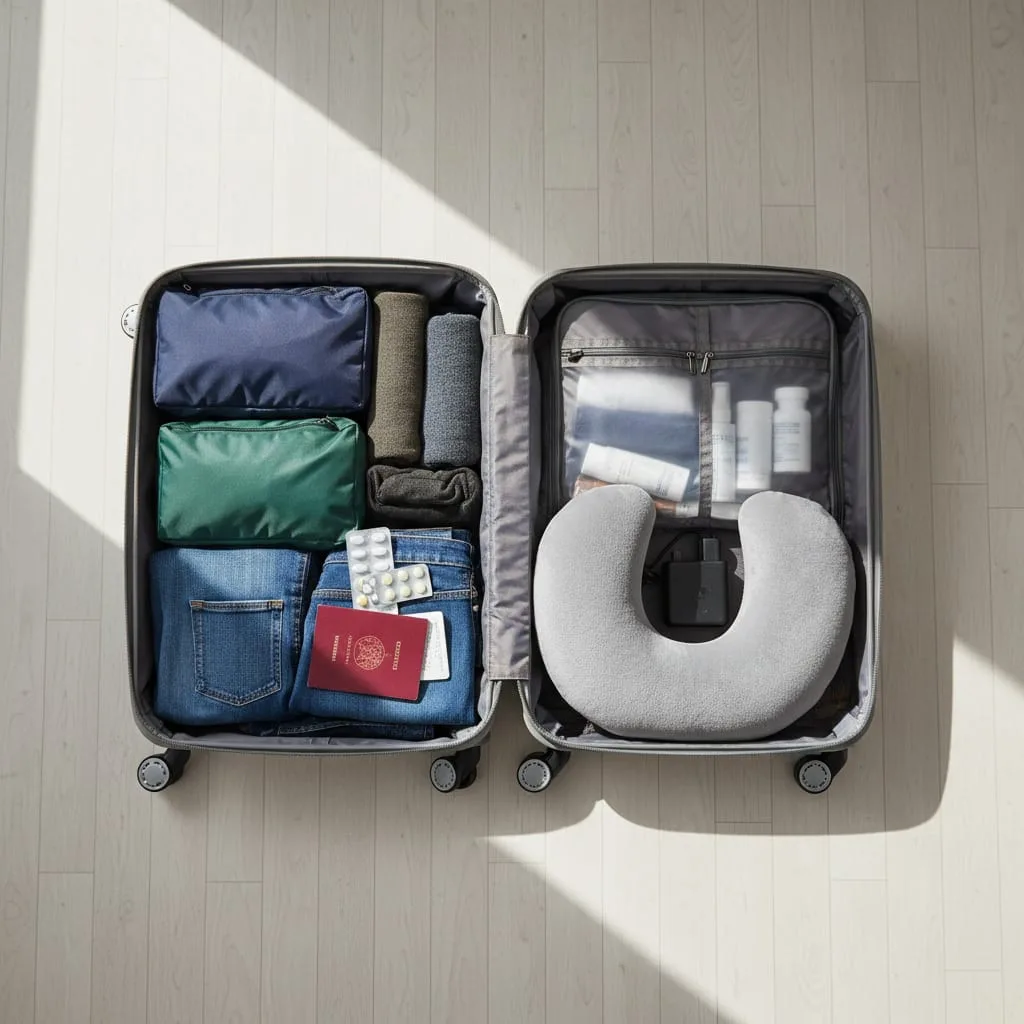
International Travel Packing List for Indians: The Only Checklist You Need
In this guide (12)
- Documents: What Indian Immigration Actually Checks
- International Travel Packing List India: Electronics Essentials
- Clothing Strategy: What Every Indian Over-Packs
- Toiletries: The 100ml Rule and What Is Actually Available Abroad
- Medicines: Prescription Letters and the Indian Medical Kit
- Food: Thepla, Khakhra, and Customs Reality
- Money: Forex Cards, Backup Cards, and Emergency Cash
- Comfort Items: Making Long Flights Bearable
- Indian-Specific Items: What Only We Need
- Complete International Travel Packing List India Checklist
- Final Packing Tips from Experience
- Frequently Asked Questions
I learned packing the hard way. On my first international trip to Thailand, I carried three full-size shampoo bottles (confiscated at security), forgot my universal adapter (bought one at Bangkok airport for triple the price), and stuffed my bag with enough clothes for a month-long expedition. I was gone for five days. After many trips, I finally have the perfect international travel packing list india checklist that actually works.
Ten countries later, I can fit a week's worth of travel into a single cabin bag. This guide is everything I wish someone had told me before that chaotic first trip. No generic advice from people who have never stood in an Indian airport queue or explained to a confused customs officer why they are carrying three packets of MTR Ready-to-Eat.
Documents: What Indian Immigration Actually Checks
Let me be direct about this section because missing even one document can end your trip before it starts. I have seen families turned away at Delhi T3 for not having the right visa printout.
The absolute non-negotiables:
- Passport: Minimum 6 months validity from return date. Most countries reject you otherwise. Two blank pages minimum for stamps
- Visa: Physical printout even if it is an e-visa. Immigration officers sometimes cannot verify electronic versions
- Return tickets: Printed confirmation. Many countries deny entry to Indians without proof of return
- Hotel bookings: All accommodation confirmations printed. Some countries ask for your complete itinerary
- Travel insurance: Policy document with coverage details. Schengen makes this mandatory but carry it everywhere
- Forex receipts: Keep the exchange receipt from your forex dealer. Indian customs can ask for proof of how much currency you are carrying
Here is what most guides do not mention: keep colour photocopies of your passport, visa, and important documents in a separate bag. If your main documents get lost or stolen, these copies make replacement significantly faster. I also email scanned copies to myself - accessible from any device with internet.
First time flying internationally? Our airport immigration guide for first-time Indian travelers covers the entire process from check-in to boarding.

International Travel Packing List India: Electronics Essentials
The adapter situation confuses everyone. Here is the breakdown you actually need:
Plug types by popular destinations:
- Type C (two round pins): Most of Europe, Thailand, Indonesia, Bali
- Type G (three rectangular prongs): UK, Singapore, Malaysia, UAE, Hong Kong
- Type A/B (flat pins): USA, Japan, Canada, Mexico
- Type I (angled flat pins): Australia, New Zealand, China
Stop buying destination-specific adapters. Get one universal adapter with USB-A and USB-C ports. Costs around Rs 800-1200 and handles every country. I use a Syska universal adapter that has survived five years and twelve countries. The ones with built-in surge protection are worth the extra money.
Power bank rules for flights:
This trips up so many Indian travelers. Power banks MUST go in your cabin bag, never checked luggage. Airlines cap them at 100Wh (roughly 27,000mAh) per bank, maximum two per person. Anything between 100-160Wh needs prior airline approval. Above 160Wh? Forget it, not allowed period. Since the DGCA advisory of January 2026 you also cannot use a power bank during the flight, or charge it from the seat USB, and it has to stay in the seat pocket or under the seat instead of an overhead bin.
Pro tip: most budget power banks do not clearly print their Wh rating. Calculate it yourself: (mAh x Voltage) / 1000 = Wh. A 20,000mAh bank at 3.7V equals 74Wh - safely under the limit.
The SIM situation:
You have three options: international roaming (expensive), local SIM (cheap but paperwork), or eSIM (best of both worlds). International roaming from Jio or Airtel costs Rs 575-750 per day for basic data. That adds up to Rs 4000+ for a week.
eSIMs changed everything for me. Airalo, Holafly, and Nomad offer data plans starting at Rs 400-600 for the entire trip. Your Indian number stays active for calls via WiFi, and you get fast local data. Just make sure your phone supports eSIM - most phones from 2019 onwards do. Our complete eSIM guide for Indian travelers explains exactly how to set this up.
Clothing Strategy: What Every Indian Over-Packs
I need to be honest with you. On that first Thailand trip, I packed eight shirts for five days because "what if I need options?" I wore three of them.
The capsule wardrobe concept sounds fancy but it simply means choosing clothes that work together. Pack neutral colours that mix and match. Two pairs of trousers that go with all your shirts. One formal outfit if needed. That is it.
The real clothing formula:
- Rule of threes: Three tops, two bottoms, enough underwear for all days plus one extra
- Layer strategy: Instead of bulky sweaters, pack a light jacket, a cardigan, and a base layer. Works for air conditioning and actual cold
- Fabric matters: Cotton wrinkles and takes forever to dry. Synthetic blends or linen travel better
- Laundry abroad: Every budget hotel has laundry service. A week of laundry costs Rs 500-800 in most Southeast Asian countries. Cheaper than checking extra bags
Quick-dry underwear sounds like overkill until you have washed regular cotton underwear in a hotel sink and realized it needs 24 hours to dry. Quick-dry versions are ready in 4-5 hours.
Shoes are where Indians really overpack. Two pairs maximum: comfortable walking shoes and one dressy option. Nobody needs hiking boots, flip-flops, formal shoes, and "just in case" sneakers for a week in Singapore.
Toiletries: The 100ml Rule and What Is Actually Available Abroad
The 100ml liquid rule for cabin bags applies to everything: shampoo, moisturizer, sunscreen, cologne, even honey if you are that person. All containers must fit in one clear zip-lock bag (roughly 20cm x 20cm).
What to carry in sample sizes:
- Shampoo and conditioner (or buy locally)
- Toothpaste (travel size, 50ml is enough)
- Face wash and moisturizer
- Sunscreen (SPF 50, non-negotiable)
- Deodorant (solid stick avoids liquid rules)
Indian brands available abroad:
Surprised me too, but Himalaya, Patanjali, and Dabur are available in most Middle Eastern countries, Malaysia, Singapore, and parts of Europe. Do not overpack these. However, specific items like Vicco Turmeric, Medimix, and Nycil are harder to find. If you cannot live without them, carry small quantities.
Contact lens users: carry your solution in checked baggage (the full bottle) and keep a small 50ml bottle in your cabin bag for the flight. Airplane air is brutal on lenses.

Medicines: Prescription Letters and the Indian Medical Kit
This section can save you from genuine trouble. Some countries have strict rules about what medicines you can bring, and quantities that seem normal in India raise red flags abroad.
Always carry:
- Prescription letter: Doctor's letter on letterhead listing all medicines with dosages. Mandatory for any prescription medicine, strongly recommended for everything else
- Medicines in original packaging: Loose tablets in unlabeled containers invite questions
- Only what you need: Carrying a year's supply "just in case" looks suspicious
The essential Indian medical kit:
- Crocin/Dolo (paracetamol) - Panadol is available abroad but costs more
- Digene/Eno - antacids for when foreign food disagrees
- ORS sachets - dehydration from travel, food poisoning, or too much exploring
- Imodium/Eldoper - you will thank me
- Avil/Cetirizine - antihistamines for allergies
- Band-aids and antiseptic cream
- Personal prescriptions with enough supply plus 5-day buffer
Country-specific warnings:
UAE has banned several medicines including codeine-based cough syrups and some sleeping pills. Singapore is strict about chewing gum (yes, really) and certain nasal inhalers. Japan bans some ADHD medications. Research your destination's banned medicine list before packing. The WHO maintains guidelines on traveling with medications internationally.
Food: Thepla, Khakhra, and Customs Reality
Okay, let us address the elephant in the room. Every Indian traveling abroad carries food from home. The question is what survives customs.
Generally safe for most countries:
- Thepla (vacuum-sealed lasts 7-10 days)
- Khakhra (sealed packets preferred)
- Chakli and mathri
- Instant noodles (Maggi, Yippee)
- MTR and Gits ready-to-eat meals (sealed)
- Pickle in sealed containers (technically a liquid, put in checked bag)
- Masala chai sachets
- Instant mixes (dhokla, upma, poha)
Countries with strict food rules:
- Australia/New Zealand: Extremely strict. Dried fruits, nuts, and even some spices can be confiscated. Declare everything - the fine for undeclared items is massive
- USA: No meat, no fresh fruits or vegetables. Packed spices and dry snacks generally fine
- UK: Post-Brexit rules changed. Most non-meat products okay, but check current guidelines
- UAE/Middle East: Generally relaxed about vegetarian food
- Southeast Asia: Thailand, Malaysia, Singapore mostly okay with dry foods
Pro tip from experience: pack food items together in one section of your bag. If customs wants to check, you can open just that section instead of having them rummage through everything. Declare items if asked - honesty saves time and avoids fines.
Money: Forex Cards, Backup Cards, and Emergency Cash
Getting money right for international travel requires some planning. Relying on just one payment method is asking for trouble. Your international travel packing list india must include multiple payment options.
The optimal setup:
- Primary: Forex card (Niyo Global, BookMyForex, Thomas Cook) - best exchange rates, works like a local card
- Backup: International debit card enabled for global use (ICICI Coral, SBI Global, HDFC Regalia)
- Emergency: Credit card with no forex markup (Niyo Global Credit, IDFC First Select)
- Cash: USD or destination currency worth Rs 25,000-50,000
Our detailed forex comparison guide breaks down which cards work best for different spending patterns.
Important rules:
- Enable international transactions on all cards before leaving India
- Inform your bank about travel dates to avoid fraud blocks
- Keep cards in different bags - if one bag is lost, you have backup
- Note down card numbers and helpline numbers separately
- Declare foreign currency notes over US$5,000, or foreign exchange of any kind over US$10,000, at Indian customs; Rs 25,000 is the separate limit on Indian currency notes
The RBI lets you buy up to USD 3,000 (or equivalent) in foreign currency notes per trip. Anything more has to be carried on a forex card, prepaid instrument or traveller cheques, inside the USD 250,000 a year overall limit.
Comfort Items: Making Long Flights Bearable
A 14-hour flight to Europe in economy class is a test of endurance. The right comfort items make a real difference.
Actually useful:
- Neck pillow: Memory foam ones that clip to your bag (inflatable ones are trash)
- Eye mask: Contoured ones that do not press on your eyelids
- Compression socks: Reduce swelling on long flights, genuinely helpful
- Noise-canceling earbuds: Worth the investment for regular travelers
- Reusable water bottle: Empty through security, fill inside
- Entertainment: Download shows/movies before leaving. Airplane WiFi is expensive and slow
Read our complete long-haul flight survival guide for more tips on making those 14+ hour flights bearable.
Skip these:
- Full-size blankets (airlines provide them, and they take up space)
- Slippers (socks work fine)
- Multiple books (get a Kindle or download to your phone)
Indian-Specific Items: What Only We Need
There are some items that only make sense if you are Indian. Western packing guides never mention these.
The electric kettle situation:
If you drink chai daily and cannot survive on hotel tea bags, a small travel kettle is worth it. But check first - most hotels above 3-star have kettles in rooms. Budget stays usually do not. A mini travel kettle (0.5L) costs Rs 600-800 and weighs almost nothing.
Spice box:
Small containers of red chilli powder, turmeric, and garam masala if you plan to cook or need them for any ready-to-eat meals. Seal them properly in zip-lock bags inside another bag. Turmeric stains everything.
Prayer items:
- Small idols and framed photos are generally allowed
- Agarbatti (incense) is fine in checked bags but might raise questions in some countries
- Kumkum and sacred threads - no issues usually
- Match boxes and lighters - not allowed in cabin baggage at Indian airports, and lighters are barred from checked baggage too
I carry a small laminated photo of my family mandir deity. Takes no space, provides comfort, and customs has never questioned it.
Complete International Travel Packing List India Checklist
Here is the complete checklist. Screenshot this or print it before your trip.
Documents (Cabin Bag - Always):
- [ ] Passport (6 months validity)
- [ ] Visa printout
- [ ] Flight tickets (printed)
- [ ] Hotel confirmations (printed)
- [ ] Travel insurance policy
- [ ] Forex card + receipts
- [ ] Photocopies of all documents
- [ ] Passport photos (4 extra)
Electronics (Cabin Bag):
- [ ] Phone + charger
- [ ] Universal adapter
- [ ] Power bank (under 100Wh)
- [ ] Earphones/headphones
- [ ] Camera + accessories (if applicable)
- [ ] Laptop (if needed)
- [ ] eSIM installed or local SIM plan
Clothing (Checked Bag):
- [ ] 3-4 tops
- [ ] 2 bottoms (versatile colors)
- [ ] Underwear (days + 2 extra)
- [ ] Socks (3-4 pairs)
- [ ] Sleepwear
- [ ] Light jacket/cardigan
- [ ] Swimwear (if applicable)
- [ ] Walking shoes (worn)
- [ ] Dress shoes/sandals
Toiletries:
- [ ] Toothbrush + travel toothpaste
- [ ] Shampoo (50-100ml)
- [ ] Moisturizer + sunscreen
- [ ] Deodorant (solid preferred)
- [ ] Razor/grooming items
- [ ] Feminine hygiene products
- [ ] Contact lens supplies
Medicines:
- [ ] Prescription medicines + letter
- [ ] Paracetamol (Crocin/Dolo)
- [ ] Antacid (Digene/Eno)
- [ ] ORS sachets
- [ ] Anti-diarrheal (Imodium)
- [ ] Antihistamine
- [ ] Band-aids + antiseptic
Food Items:
- [ ] Thepla/khakhra
- [ ] Instant meals (MTR)
- [ ] Instant noodles
- [ ] Chai sachets
- [ ] Dry snacks
Money:
- [ ] Forex card (loaded)
- [ ] International debit card
- [ ] Credit card (backup)
- [ ] Foreign currency cash
- [ ] Small amount of INR for return
Comfort:
- [ ] Neck pillow
- [ ] Eye mask
- [ ] Compression socks
- [ ] Entertainment (downloaded)
- [ ] Empty water bottle
Final Packing Tips from Experience
A few more things that come from actual experience with international travel packing list india strategies that work:
Weight distribution: Put heavy items (shoes, toiletries bag) at the bottom of your suitcase, closest to the wheels. Keeps your bag balanced and easier to maneuver.
Rolling vs folding: Roll soft items (t-shirts, underwear) to save space. Fold structured items (shirts, trousers) to reduce wrinkles. Packing cubes are genuinely useful if you travel often.
The day-before rule: Pack everything, then remove 3 items. You probably do not need them. If you finish packing and think "I might need this," you almost certainly will not.
Weighing your bag: Invest in a Rs 300 luggage scale. Airlines strictly enforce weight limits, and airport repacking is embarrassing. Most international flights allow 23kg checked and 7kg cabin.
Leave room for souvenirs: Pack your outgoing bag only 80% full. You will buy things abroad. Nobody returns from an international trip with the exact same stuff they left with.
This international travel packing list india checklist has evolved through trial and error across multiple continents. You will develop your own preferences over time, but start here. The goal is not to pack perfectly - it is to pack smart enough that you can focus on the actual trip instead of worrying about what you forgot.
Safe travels. And no, you really do not need that third pair of jeans.
Frequently Asked Questions
Can I carry Indian food like thepla and khakhra on international flights?
Yes, you can carry dry, non-perishable Indian food in checked luggage to most countries. However, Australia, New Zealand, USA and UK have strict rules - some items may be confiscated. Always declare food items at customs. Sealed packets from known brands clear faster.
How many power banks can I carry on a flight?
Airlines allow power banks only in carry-on bags, never in checked luggage. Most airlines permit 2 power banks up to 100Wh (roughly 27,000mAh) each. Power banks between 100-160Wh need airline approval. Anything above 160Wh is banned.
Do I need a prescription letter for carrying medicines abroad?
Yes, always carry a prescription letter from your doctor for all medicines, especially for controlled substances and large quantities. The letter should be on letterhead with dosage details. Some countries like UAE and Singapore have strict medicine rules.
What type of power adapter do I need for international travel?
It depends on your destination. Europe uses Type C/F, UK uses Type G, USA/Japan use Type A/B, Australia uses Type I. A universal adapter with USB ports is the best investment - one device for all countries.
How much forex cash should I carry for international travel?
Carry cash equivalent to Rs 25,000-50,000 for emergencies only. Your primary spending should be via forex card. Always keep USD or local currency - Indian rupees have poor exchange rates abroad. Declare foreign currency notes over US$5,000, or foreign exchange over US$10,000 in total, at customs.
What toiletries can I carry in my cabin bag?
Liquids in cabin baggage must be in containers of 100ml or less, all fitting in one transparent 1-litre zip-lock bag. This includes shampoo, moisturizer, toothpaste, perfume and deodorant sprays. Larger sizes go in checked baggage.