
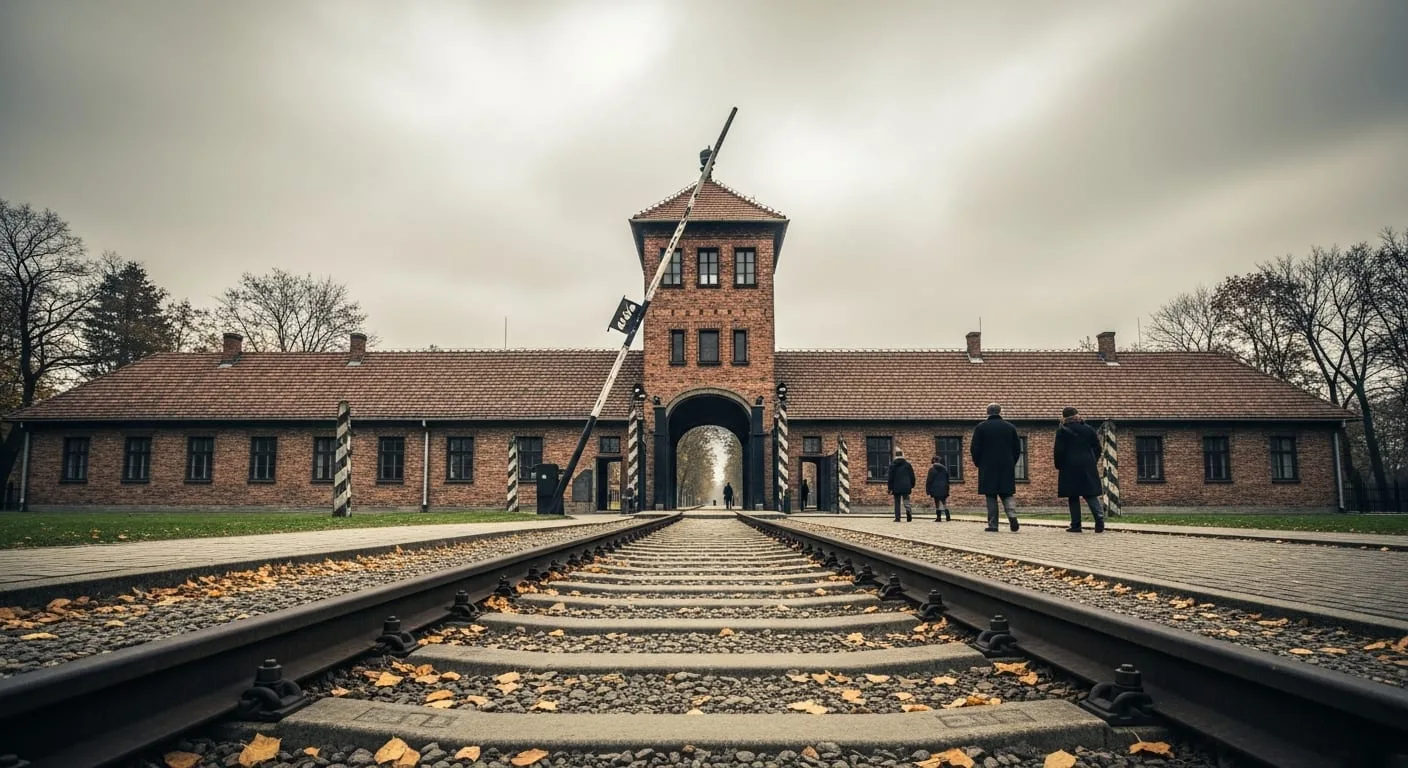
Dark Tourism & Historical Travel from India: Auschwitz, Hiroshima, Chernobyl & the Places That Changed the World
I stood inside the gas chamber at Auschwitz-Birkenau on a freezing November morning in 2024, and my hands wouldn't stop shaking. Not from the cold — from the walls. Scratch marks on concrete, left by people who knew they were dying. School textbooks and two viewings of Schindler's List had convinced me I understood. That was a lie. dark tourism historical travel from India is still a fringe concept — most of us plan trips around beaches, shopping, and Instagram spots. But standing in that chamber, 7,200 km from home, I realized that some places teach you things no amount of reading ever will.
My nani used to tell me about Partition. How her family walked from Lahore to Amritsar in August 1947 with nothing but the clothes they wore. I grew up hearing those stories at the dinner table, and honestly, I think that's why dark tourism started making sense to me. We have our own Jallianwala Bagh. We know what it means when history leaves scars on a place. But somewhere along the way, Indian travelers stopped visiting places that make you feel uncomfortable — and started chasing only places that make you feel comfortable. I think that's a mistake.
This isn't a depressing read, I promise. It's actually the most meaningful kind of travel I've done in eight years of trotting around the globe on an Indian passport. I'm going to walk you through the major dark tourism sites that are accessible from India — how to get there, what it costs, what to expect emotionally, and how to do it without being that tourist who's taking selfies at a genocide memorial. Because yes, those people exist, and we need to talk about that too.
What Is Dark Tourism Historical Travel — and Why Should Indians Care?
Dark tourism historical travel means visiting places associated with death, tragedy, suffering, or historically significant disasters — not for entertainment, but for education and remembrance. The term was coined by researchers at Glasgow Caledonian University in 1996, but the practice is centuries old. People have been visiting battlefields, prisons, and disaster sites since the Roman era.
Here's why I think Indians should care more than most. We're a country that was colonized for 200 years. We survived Partition — one of the largest mass migrations and most violent events of the 20th century. The Jallianwala Bagh massacre happened on our soil. We understand generational trauma better than most nations, even if we don't use that phrase at chai time.
But here's the thing — we rarely extend that understanding beyond our own borders. Most Indian travelers I know can tell you the best place to buy saffron in Dubai but couldn't name a single concentration camp in Europe. That's not a criticism. It's a gap. And filling that gap doesn't just make you a better traveler — it makes you a more informed human being. Trust me on this.
Auschwitz-Birkenau, Poland — The Place That Silences Everyone
I'm starting here because Auschwitz is the single most impactful place I've ever visited. More than the Taj Mahal, more than Machu Picchu, more than any waterfall or mountain. It's a 1.5-hour drive from Kraków, and nearly every traveler combines the two.
The experience takes about 3.5 hours with a guided tour, and I strongly recommend the guided option. Entry to the Auschwitz I museum is free, but you need to book online weeks in advance — especially between May and October. The English-language tours fill up fast. I booked mine 6 weeks ahead and still only got a 7:15 AM slot.
What You'll Actually See
Auschwitz I is the original camp — brick buildings that look almost like a university campus until you walk inside. Block 4 has a room filled floor-to-ceiling with human hair. Two tonnes of it. Block 5 has piles of shoes, glasses, suitcases with names written on them. I had to step outside and sit on a bench for ten minutes after Block 5. A German couple next to me was crying openly. Nobody judges you here.
Birkenau (Auschwitz II) is the larger extermination camp. The railway tracks leading through that red brick gatehouse — you've seen the photo a thousand times. Walking those tracks hits differently. The scale is staggering. 1.1 million people died here. Most were Jewish, but also Roma, Soviet POWs, Polish political prisoners. The gas chambers are partially destroyed — the Nazis blew them up trying to hide evidence before the Soviet army arrived.
Practical Details for Indian Travelers
- Getting there — Fly to Kraków (via Warsaw or any European hub). From India, flights run ₹32,000-55,000 round trip via Turkish Airlines or LOT Polish Airlines
- Auschwitz tour cost — Free entry for individuals (guided tour ₹5,600 / PLN 260). Book at visit.auschwitz.org
- Transport from Kraków — Bus from MDA bus station (₹350 / PLN 16 one way, 90 minutes) or organized day trips (₹2,800-4,200)
- Visa — Schengen visa required. Apply at the Polish VFS center in India. Processing takes 15-21 working days
- Best time — April-May or September-October. Winters are brutal (-10°C) but fewer crowds
- Photography rules — Allowed in most areas except Block 4 (hair room) and Block 5 (personal belongings). No flash anywhere. No selfies. Seriously.
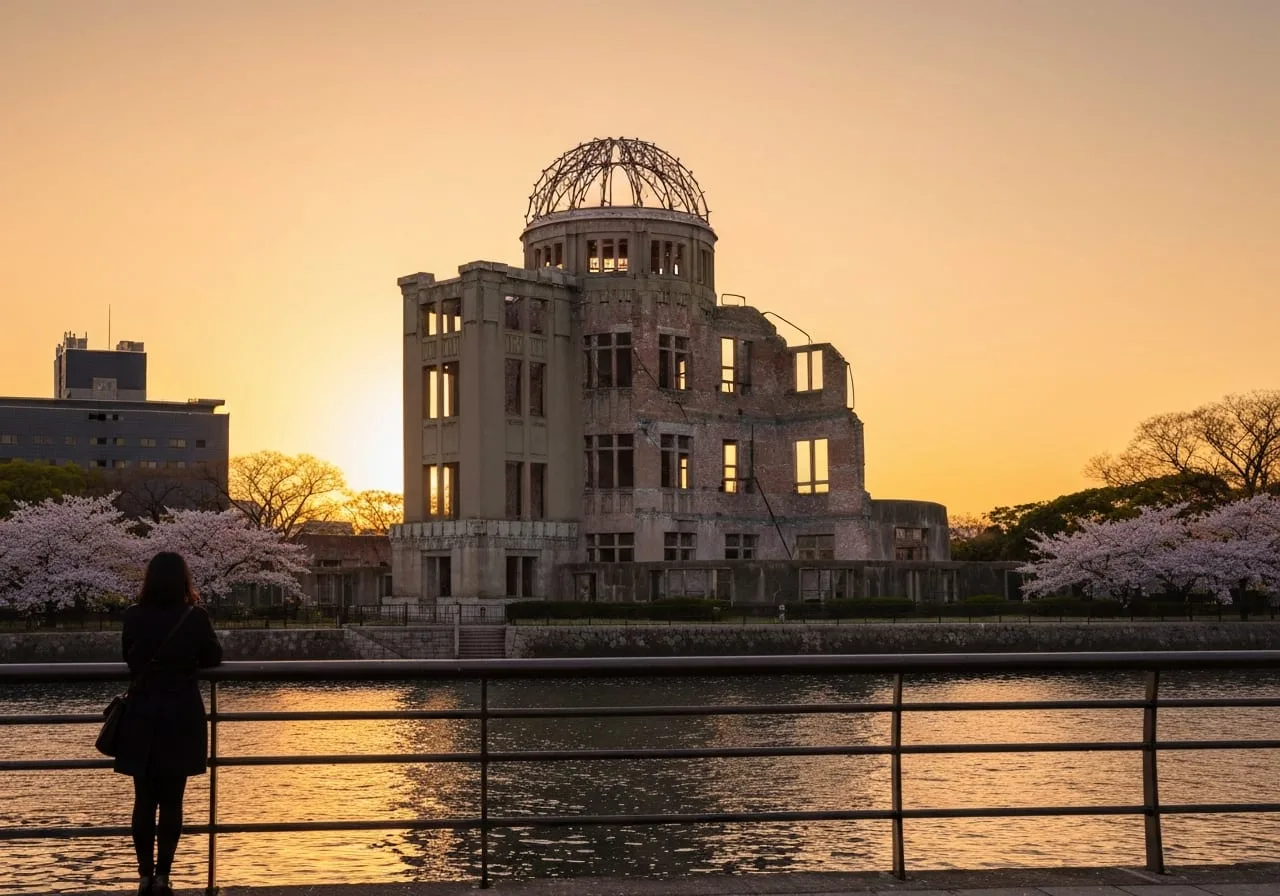
Hiroshima Peace Memorial, Japan — Where a City Rose from Nuclear Ash
If Auschwitz is about horror, Hiroshima is about resilience. My Japan trip in March 2025 included a stop here, and it completely rearranged my priorities for the rest of that itinerary. One afternoon was the original plan. Two full days is what actually happened.
The A-Bomb Dome (Genbaku Dome) stands exactly as it did after the blast on August 6, 1945. The skeletal steel frame against the Hiroshima skyline is genuinely haunting — not in a horror movie way, but in a "humans actually did this to other humans" way. It's free to view from outside (you can't enter the building), and it's right next to the Peace Memorial Park.
The Peace Memorial Museum
₹1,500 (JPY 200) is all it costs. That's less than a coffee at Starbucks Shibuya. And what you get is three floors of the most meticulously documented destruction I've ever seen. Photographs of shadow burns on concrete — where people were standing when the bomb hit, their shadows literally etched into walls by thermal radiation. A child's melted tricycle. A watch stopped at 8:15 AM.
The museum was renovated in 2019 and they deliberately shifted the focus from statistics to individual stories. There's a section about Sadako Sasaki — the girl who tried to fold 1,000 origami cranes believing it would cure her radiation sickness. She died at 12. Visitors leave origami cranes at the Children's Peace Monument outside. I folded one too. Badly. But it's the thought, right?
Getting There and Costs
Hiroshima is a 4-hour shinkansen (bullet train) ride from Tokyo, or 90 minutes from Osaka. If you have a Japan Rail Pass (₹22,500 for 7 days), the trip is covered. The city itself is small and bikeable — rental bikes cost ₹400/day. Accommodation runs ₹3,200-6,500 per night for decent business hotels. I stayed at a hostel near Hondori shopping arcade for ₹1,800/night, which was perfectly fine.
One thing nobody warns you about — the Peace Park is absolutely gorgeous. Cherry blossoms in spring, autumn colors in November. There's an odd beauty to a place that was completely flattened 80 years ago and now has trees, rivers, and laughing children running around. That contrast is what makes Hiroshima powerful. It's not frozen in tragedy. It chose to rebuild.
Berlin Wall and Holocaust Memorials, Germany — History You Can Touch
Germany handles its dark history better than any country I've seen. There's a German word for it — Vergangenheitsbewältigung — which roughly means "coming to terms with the past." They don't hide from it. They build memorials, they teach it in schools, they make sure tourists can see it.
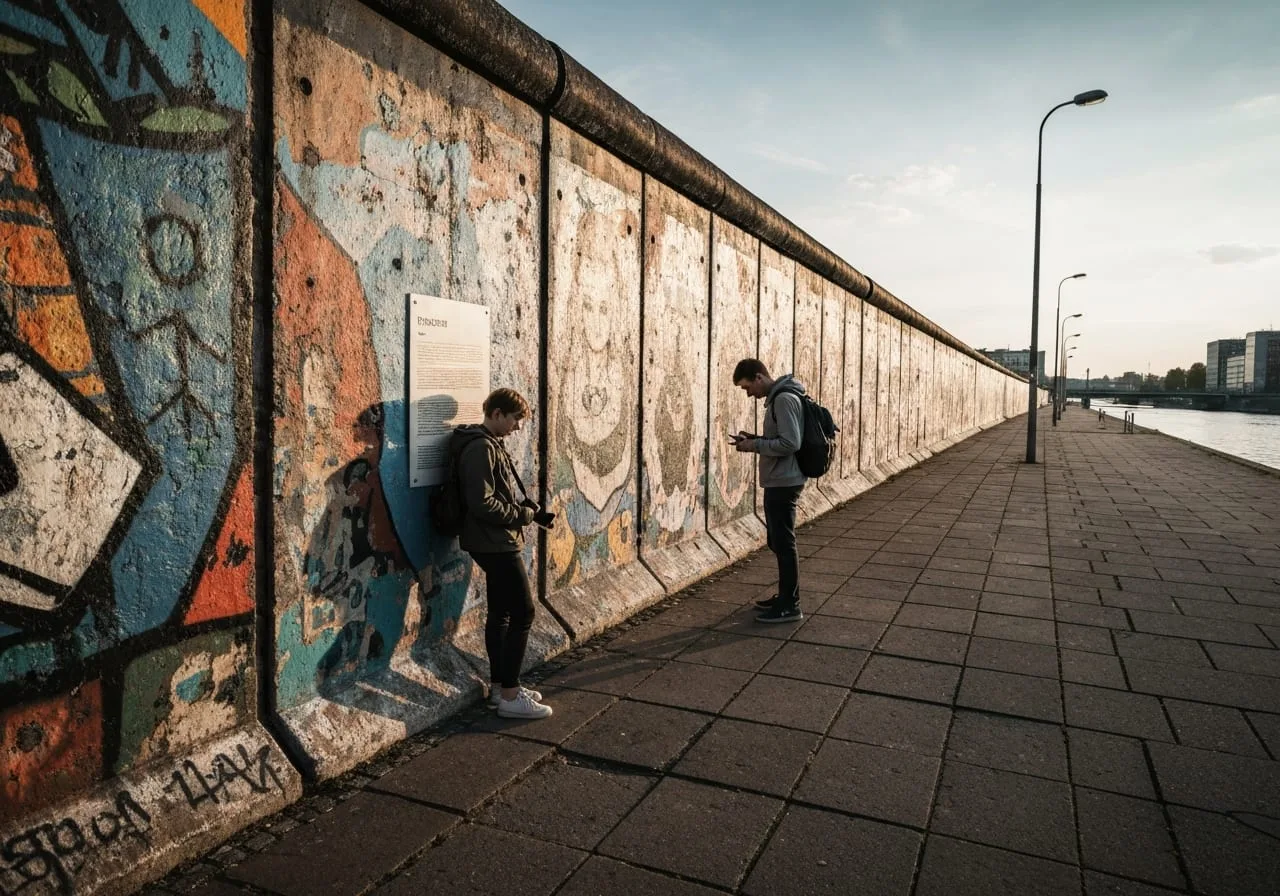
The Berlin Wall fell in 1989, but chunks of it still stand. Its East Side Gallery is a 1.3 km stretch covered in murals — the most famous being the Brezhnev-Honecker kiss painting. It's free, open 24/7, and right along the Spree River. But the real gut-punch is the Topography of Terror — a free museum built on the exact site where the Gestapo and SS headquarters stood. The basement prison cells are still partially intact.
Holocaust Memorial (Memorial to the Murdered Jews of Europe)
2,711 concrete blocks arranged in a grid pattern near Brandenburg Gate. No names, no inscriptions. Zero explanation above ground. Just these grey columns of varying heights that you walk through — and as you go deeper, they get taller, the ground slopes down, you lose sight of the people around you, and suddenly you feel disoriented and slightly claustrophobic. That's the point. It's free. Visit at dusk for the most atmospheric experience.
The underground information center (also free) tells the stories of specific families destroyed by the Holocaust. I spent 90 minutes there and had to leave because I couldn't handle reading about one more child. Sachsenhausen concentration camp is 40 minutes by S-Bahn from Berlin Hauptbahnhof — fewer tourists than Auschwitz, equally devastating, completely free entry.
The Killing Fields, Cambodia — Southeast Asia's Darkest Chapter
Cambodia is one of the most accessible dark tourism historical travel destinations. Choeung Ek (the Killing Fields) and Tuol Sleng prison museum hit me hard during my Cambodia trip, and honestly — doing both in one day was too much. If going again, splitting them across two mornings would be smarter. The afternoon heat in Phnom Penh makes everything harder.
Between 1975 and 1979, the Khmer Rouge regime killed an estimated 1.5-2 million Cambodians — roughly 25% of the country's population. Choeung Ek was one of hundreds of execution sites. An audio guide (₹500 / USD 6) is narrated by a survivor, and his voice cracks at certain points. You walk past mass graves. Bone fragments and fabric scraps still surface after heavy rains. A glass stupa in the center holds 5,000 skulls arranged by age and cause of death.
Tuol Sleng (S-21) was a high school converted into a torture prison. The classrooms still have iron bed frames where prisoners were shackled. Mugshots of every prisoner line the walls — men, women, children, some smiling because they didn't know what was coming. The entry fee is ₹500 (USD 6) for each site.
Cambodia is one of the easiest dark tourism destinations to reach from India. Direct flights from Delhi and Mumbai to Phnom Penh run ₹18,000-28,000. Visa on arrival costs USD 30. And the rest of Cambodia — Angkor Wat, Siem Reap, Koh Rong beaches — offers you the lighter travel that you'll desperately want after visiting these sites.
More Dark Tourism Historical Travel Sites Worth Your Time
DMZ, South Korea
For dark tourism historical travel enthusiasts, the Demilitarized Zone between North and South Korea is the most heavily militarized border on Earth. I did the JSA (Joint Security Area) tour from Seoul during my South Korea trip, and it was surreal. You stand in a blue conference room where half the table is technically in North Korea. You can see North Korean soldiers watching you through binoculars from 30 metres away. The tour costs ₹4,800-7,200 (KRW 70,000-105,000) including transport from Seoul. Book through an authorized operator — you can't just show up.
Chernobyl Exclusion Zone, Ukraine
The 2026 situation is complicated. Ukraine's conflict means Chernobyl tours were suspended in 2022. As of early 2026, some operators are cautiously resuming day trips from Kyiv. Before the war, this was a ₹8,500-12,000 day trip from Kyiv, visiting the abandoned city of Pripyat — frozen in time since April 1986. Radiation levels in tourist-accessible zones are considered safe for day visits (less than a dental X-ray). Check the latest security situation before booking.
9/11 Memorial and Museum, New York
The twin reflecting pools sit in the exact footprints of the World Trade Center towers. Water cascading into what feels like a bottomless void. The museum below is ₹2,500 (USD 30), and the slurry wall — the retaining wall that held back the Hudson River after the towers collapsed — is still standing inside the museum. Even as someone who watched 9/11 on TV as a kid in India, the scale of destruction displayed here shocked me.
Pompeii, Italy
A Roman city buried by Mount Vesuvius in 79 AD. The plaster casts of people frozen in their final moments — a mother shielding her child, a dog straining against its chain — are 2,000 years old and still make your stomach drop. Entry is ₹1,500 (EUR 16). Budget a full day. The site is massive.
Robben Island, South Africa
Nelson Mandela spent 18 of his 27 prison years here. The tour is led by former political prisoners, and standing in Mandela's cell — 2 metres by 2.5 metres — makes you understand the word "sacrifice" in a way no biography can. Ferry from Cape Town's V&A Waterfront costs ₹4,800 (ZAR 400). Book weeks ahead.
Dark Tourism Etiquette — How to Not Be That Tourist
I need to be blunt here because I've seen Indian tourists do some truly cringeworthy things at memorial sites. I watched a group take a jumping photo at the Auschwitz "Arbeit Macht Frei" gate. I saw someone livestreaming at the Killing Fields with background music playing from their phone. Don't be this person.
- No selfies at memorial sites — A photo of the location is fine. A grinning selfie with a gas chamber behind you is not. Read the room
- Dress respectfully — No shorts, no sleeveless tops at most sites. Auschwitz doesn't have a strict dress code, but showing up in beachwear is disrespectful
- Silence your phone — Better yet, put it on airplane mode. Nobody needs to hear your ringtone inside a torture chamber
- Don't touch artifacts — At Pompeii, people try to chip off pieces of wall. At Berlin Wall, people scratch graffiti. Both are illegal and disgusting
- Listen to guides — They're often survivors or descendants of survivors. Their stories matter more than your schedule
- Process your emotions — It's okay to cry. It's okay to sit on a bench for twenty minutes. It's okay to skip a section if it's too much. Nobody is keeping score
How to Plan a Dark Tourism Trip from India — Budget Breakdown
Most dark tourism historical travel sites are in countries you'd visit anyway — Poland, Japan, Germany, Cambodia, South Korea. The trick with dark tourism historical travel is weaving these sites into a broader itinerary so the emotional weight doesn't crush you. I'd never recommend doing Auschwitz AND the Killing Fields in the same week. Space it out. Give yourself time for lighter experiences between heavy ones.
| Destination | Site | Entry Fee | Flight from India (Round Trip) | Best Combined With |
|---|---|---|---|---|
| Poland | Auschwitz-Birkenau | Free (guided ₹5,600) | ₹32,000-55,000 | Kraków, Prague, Budapest |
| Japan | Hiroshima Peace Memorial | ₹1,500 | ₹35,000-60,000 | Kyoto, Osaka, Tokyo |
| Germany | Berlin Wall / Holocaust Memorial | Free | ₹30,000-50,000 | Munich, Amsterdam, Prague |
| Cambodia | Killing Fields + S-21 | ₹1,000 (both) | ₹18,000-28,000 | Angkor Wat, Siem Reap |
| South Korea | DMZ / JSA | ₹4,800-7,200 | ₹25,000-42,000 | Seoul, Busan, Jeju |
| USA | 9/11 Memorial | ₹2,500 | ₹50,000-1,10,000 | New York City, Washington DC |
| Italy | Pompeii | ₹1,500 | ₹30,000-48,000 | Rome, Amalfi Coast, Naples |
| South Africa | Robben Island | ₹4,800 | ₹35,000-55,000 | Cape Town, Garden Route |
Why Dark Tourism Matters — A Personal Take
Look, I get it. You have limited vacation days, a limited budget, and the thought of spending ₹50,000+ to go somewhere that makes you sad sounds absurd when Bali is right there. I used to think the same way.
But here's what changed for me. After visiting Auschwitz, I went home and actually read about the Rwandan genocide. Hiroshima made me start paying attention to nuclear policy discussions instead of scrolling past them. The Killing Fields finally helped me understand why Cambodians my age carry a heaviness that Vietnamese and Thai people of the same generation don't. Dark tourism didn't just make me a more empathetic person — it made me a more informed one.
India has its own dark tourism potential, by the way. Jallianwala Bagh in Amritsar. Cellular Jail in Port Blair. The Partition Museum in Amritsar (opened 2017, excellent). If you've visited any of these, you already understand the value of dark tourism historical travel from India. Now imagine scaling that across the world.
And if TripCabinet can help you plan a trip that includes both the Hiroshima Peace Memorial AND the Fushimi Inari shrine, both the Killing Fields AND Angkor Wat sunrise, both the Berlin Wall AND a currywurst at midnight — that's what we do. We plan trips that have depth, not just distance. Reach out to our team, and we'll build you something that actually means something.
Frequently Asked Questions
Is dark tourism ethical or is it exploiting tragedy?
Dark tourism is ethical when done respectfully. These sites exist specifically to educate visitors and preserve memory. Auschwitz, Hiroshima, and the Killing Fields all operate as memorial museums with the explicit goal of preventing history from repeating. The problem isn't visiting — it's how you behave when you're there. Skip the selfies, listen to the guides, and go with the right intentions.
How much does a dark tourism trip from India cost?
Costs vary wildly by destination. Cambodia is the cheapest option — ₹18,000-28,000 for flights plus ₹1,000 entry for both the Killing Fields and Tuol Sleng. Poland and Germany cost ₹30,000-55,000 for flights, with most memorials being free entry. Japan is ₹35,000-60,000 for flights. Budget ₹80,000-1.5 lakh for a 7-10 day trip combining dark tourism with regular sightseeing.
Are dark tourism sites safe for Indian travelers?
All the sites mentioned — Auschwitz, Hiroshima, Berlin, Cambodia, South Korea DMZ, Pompeii, and Robben Island — are completely safe for Indian tourists. They're well-organized memorial sites with professional guides, security, and infrastructure. The only exception in 2026 is Chernobyl due to the ongoing Ukraine conflict — check the latest situation before planning.
Can I visit Auschwitz without a tour guide?
Yes, but only during limited time slots in the off-season (November-March). From April to October, a guided tour is mandatory for Auschwitz I. Birkenau (Auschwitz II) can always be visited independently and for free. I recommend the guided tour regardless — the context and stories from guides make the experience far more impactful than walking through alone.
What visa do Indians need for dark tourism destinations in Europe?
For Poland, Germany, and Italy, you need a Schengen visa — one visa covers all three countries. Apply at the respective embassy or VFS center in India. Processing takes 15-21 working days. For Cambodia, you get visa on arrival (USD 30). Japan requires a tourist visa (apply at VFS, 5-7 working days). South Korea requires a tourist visa. The Schengen visa is the most versatile — it covers 27 European countries for up to 90 days.