
Germany Trip from India: Berlin, Munich, Bavaria & Complete Budget Guide for 2026
I nearly missed my train from Munich to Neuschwanstein Castle because I was too busy demolishing a pretzel the size of my face at the Hauptbahnhof. It was 6 AM, the pretzel was warm, the mustard was sharp, and honestly? No regrets. That's Germany for you — a country where efficiency meets indulgence, where fairy-tale castles sit next to cutting-edge nightclubs, and where a single meal can swing from a three-euro bratwurst to a fifty-euro michelin-starred tasting menu. Planning your Germany trip from India cost considerations matter, but the experiences you'll collect make every rupee worthwhile.
If you're planning a Germany trip from India cost is probably your first concern. Good news: Germany is more affordable than you'd think, especially compared to Switzerland or Scandinavia. Bad news: you'll want to stay longer than planned because there's simply too much to see. This guide breaks down everything — flights, visas, cities, transport, and a realistic budget that won't require selling a kidney.
Why Germany Deserves Your Next European Holiday
When calculating your Germany trip from India cost, you'll find the country punches way above its weight for Indian travelers. You've got the historic gravitas of Berlin, the beer-soaked revelry of Munich, fairy-tale castles that Disney literally copied, and a Christmas market tradition that'll ruin all other winter holidays for you. The country sits smack in the center of Europe, making it a perfect hub for your first European trip.
The Indian diaspora is strong here. Over 150,000 Indian students study in German universities. Tech hubs in Munich and Berlin employ thousands of Indian professionals. What does this mean for tourists? Indian restaurants everywhere. Familiar groceries. People who understand when you ask for "less spicy" (though German food rarely troubles the heat-sensitive anyway).
Plus, your Schengen visa covers all 27 Schengen countries. Enter through Frankfurt, exit through Paris. Nobody cares. One visa, endless possibilities.
Flights from India to Germany: Routes and Realistic Prices
Lufthansa dominates this route, and for good reason. Direct flights from Delhi and Mumbai to Frankfurt take about 7.5 hours. Munich is slightly shorter at 7 hours. No layovers, no midnight shuffles through Dubai or Doha, no arriving like a zombie.
Direct flight pricing (round-trip):
- Off-peak (January-March, excluding Christmas): ₹35,000-45,000
- Shoulder season (April-May, October): ₹45,000-55,000
- Peak summer and Oktoberfest: ₹55,000-70,000
- Christmas market season: ₹50,000-65,000
One-stop options via Gulf carriers (Emirates, Etihad, Qatar) often cost ₹5,000-10,000 less but add 4-6 hours. Worth it? Depends on your patience and budget. I've done both — direct when I can afford it, connecting when I'm feeling frugal or need those extra rupees for castle tickets.
Pro tip: Frankfurt is Germany's main hub, but Munich works better if Bavaria is your focus. Don't fly into Frankfurt just to take a 4-hour train to Munich. Geography matters.
Berlin: History, Street Art, and Europe's Best Nightlife
Berlin isn't pretty. I'll say it. It's gritty, graffitied, still scarred from war and division. But that's precisely why it's fascinating. This city wears its trauma openly, then throws the best parties Europe has ever seen.
Must-See Berlin Attractions
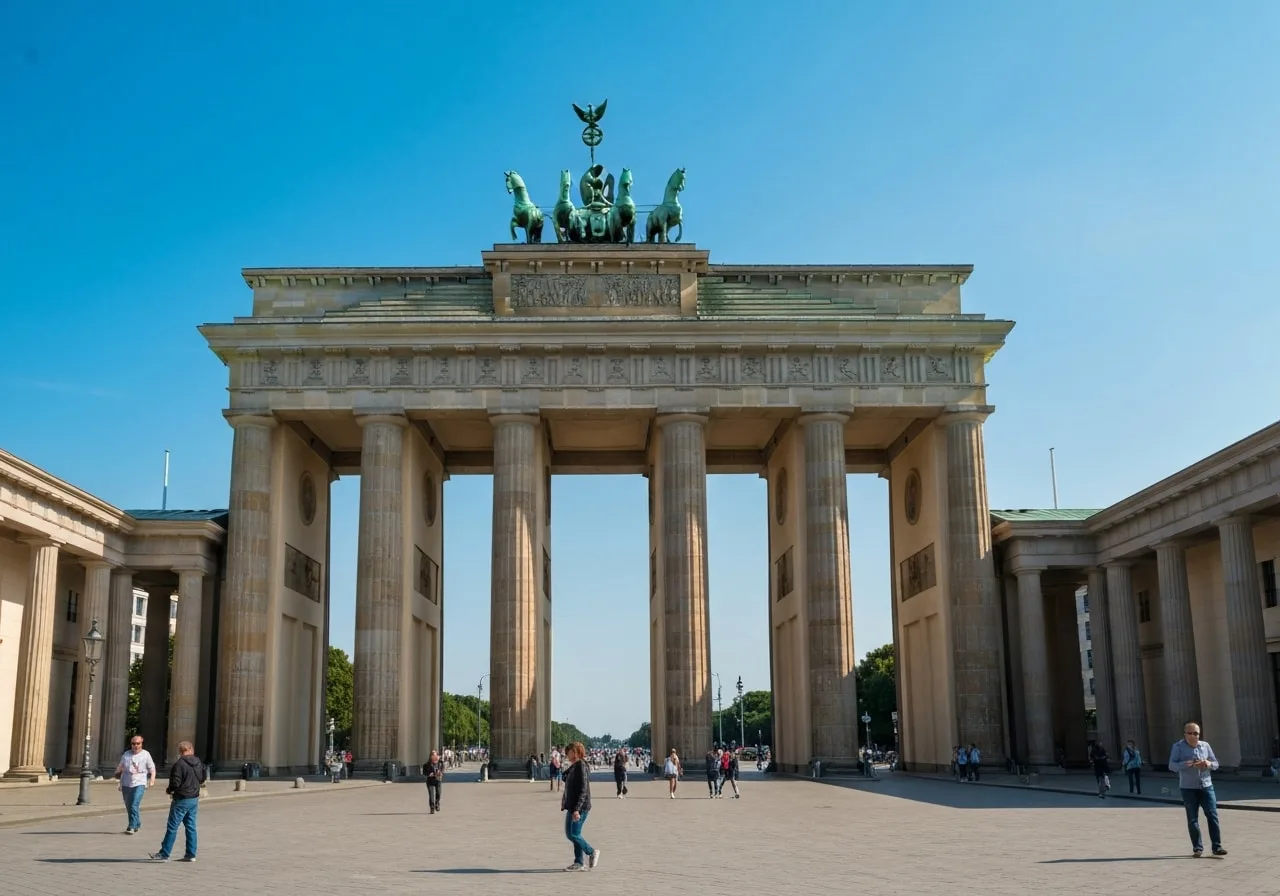
Brandenburg Gate: The obvious starting point. Dawn is magical here — fewer crowds, golden light, that sense of standing at a literal crossroads of history. This gate has seen Napoleon, Nazi parades, Cold War standoffs, and David Hasselhoff singing about freedom. Yes, that actually happened.
Berlin Wall and East Side Gallery: Most of the wall is gone, but the East Side Gallery preserves 1.3 kilometers of it, covered in murals. The famous "Fraternal Kiss" between Brezhnev and Honecker is here. Checkpoint Charlie nearby is touristy but educational — the museum documents escape attempts that'll leave you speechless.
Museum Island: Five world-class museums on one island in the River Spree. The Pergamon Museum houses the actual Ishtar Gate of Babylon. The Neues Museum has Nefertiti's bust. Buy a day pass (€22) and accept you won't see everything. I spent three hours in the Pergamon alone.
Holocaust Memorial: 2,711 concrete slabs of varying heights. No signs. No explanations. Walk through it. The disorientation is intentional. I've never experienced public art that affected me more viscerally.
Berlin's Alternative Side
Street art tours in Kreuzberg reveal murals that rival any gallery. The Mauerpark flea market on Sundays is chaotic perfection — vintage finds, karaoke, currywurst everywhere. And Berlin's nightlife? Berghain is legendary (dress down, don't smile, maybe get rejected anyway), but dozens of smaller clubs deliver until Monday morning.
Budget: 3-4 days in Berlin
- Hostel dorm: ₹1,500-2,500/night
- Budget hotel: ₹4,000-6,000/night
- Museum Island day pass: ₹2,000
- Daily food budget: ₹1,500-2,500
- Public transport day ticket: ₹750
Munich: Beer, BMWs, and Bavarian Charm
Munich is everything Berlin isn't. Clean, orderly, prosperous, traditionally German. If Berlin is a punk rocker, Munich is a banker in lederhosen — but a banker who really knows how to party come October.
Marienplatz and the Old Town
The central square anchors everything. At 11 AM daily (also noon and 5 PM in summer), the Glockenspiel performs its mechanical dance in the Rathaus tower. Tourists crane their necks. Locals ignore it entirely. Nearby, Viktualienmarkt offers the best lunch stop — grab weisswurst (white sausage), pretzels, and sweet mustard at a standing table.
Englischer Garten
One of the world's largest urban parks. People surf — yes, surf — on the artificial wave at Eisbach. In summer, beer gardens fill the green spaces. The Chinese Tower beer garden seats 7,000 people. I've spent entire afternoons here with a stein of Augustiner and absolutely no agenda.
BMW World and Museum
Even if cars bore you, BMW World impresses. Free entry. Gleaming vehicles. Futuristic architecture. The museum next door (€10) traces automotive history. Car enthusiasts will lose hours. I watched a grown man cry at a vintage M3.
Oktoberfest: The Complete Indian Traveler's Guide
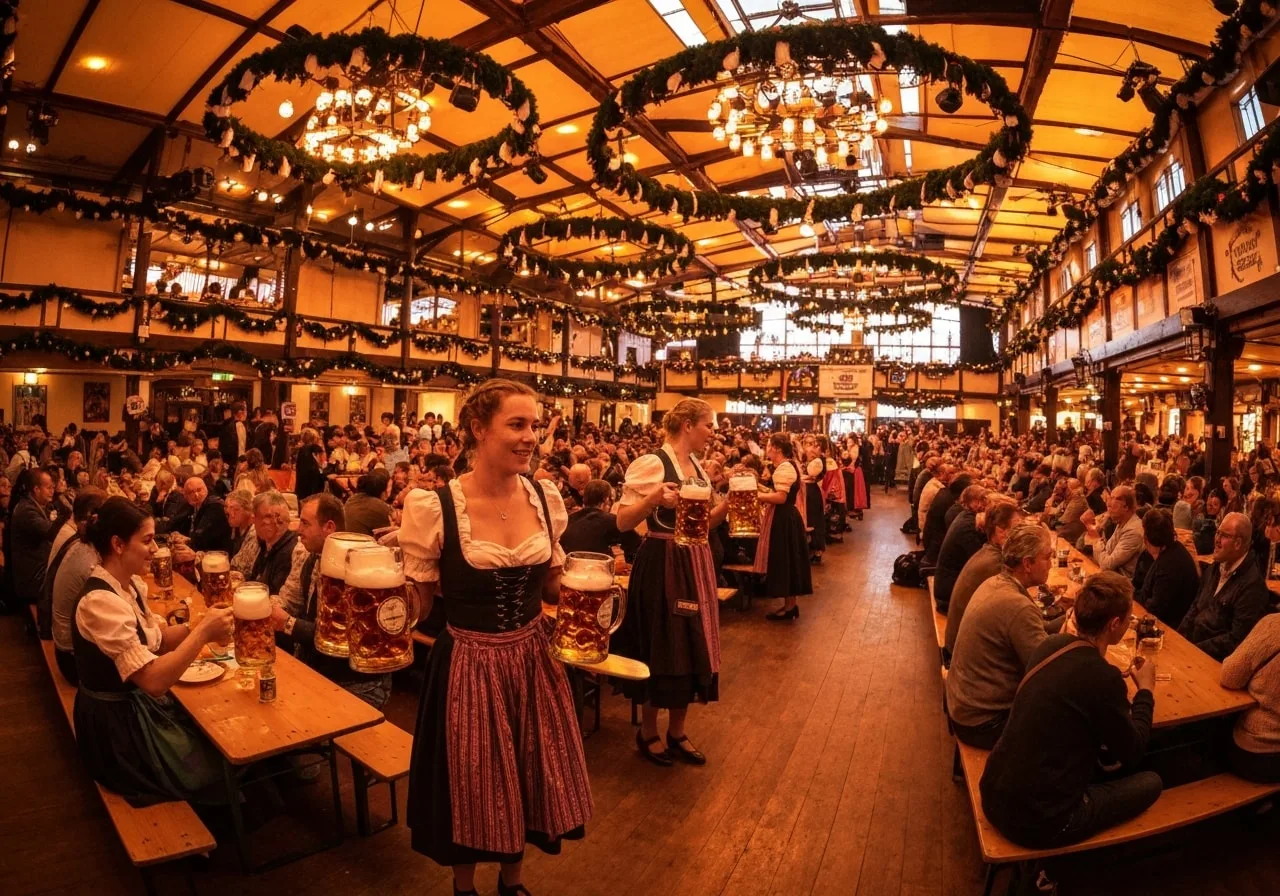
Two weeks. Six million visitors. Seven million liters of beer. Oktoberfest isn't a festival — it's a phenomenon. And contrary to popular belief, it actually happens in September, ending the first weekend of October.
When to Go
2026 dates: September 19 - October 4. Weekdays are manageable. Weekends descend into beautiful chaos. The final Sunday gets emotional — strangers hugging, songs bellowing, beer flowing. I cried once. The beer made me do it.
Getting Into Tents
Here's what nobody tells you: the beer tents fill up fast. By 11 AM on weekends, major tents like Hofbräu and Augustiner reach capacity. Without a reservation (booked months ahead), you're standing outside looking sad.
Strategy: Arrive by 9 AM. Head to smaller tents — Armbrustschützenzelt or Fischer-Vroni. Weekday afternoons are golden. Once seated, you can stay all day. Staff won't kick you out as long as you keep ordering.
What to Expect
A Mass (one-liter stein) costs around €15. Food is extra — half chickens, pork knuckles, giant pretzels. Budget €50-80 per session if you're eating and drinking reasonably. Budget more if you're not.
Lederhosen and dirndls aren't required, but maybe 60% of attendees wear them. Rental shops across Munich offer outfits from €40/day. Buying starts around €150 for lederhosen, €80 for dirndls. I rented the first year. Bought the second. No regrets.
Oktoberfest Accommodation
Here's the brutal truth: Munich hotels triple their prices during Oktoberfest. That ₹6,000 budget hotel? Now ₹18,000. Book six months ahead, or stay in nearby cities like Augsburg (30 minutes by train) and commute.
Neuschwanstein Castle: The Day Trip That's Worth Every Minute
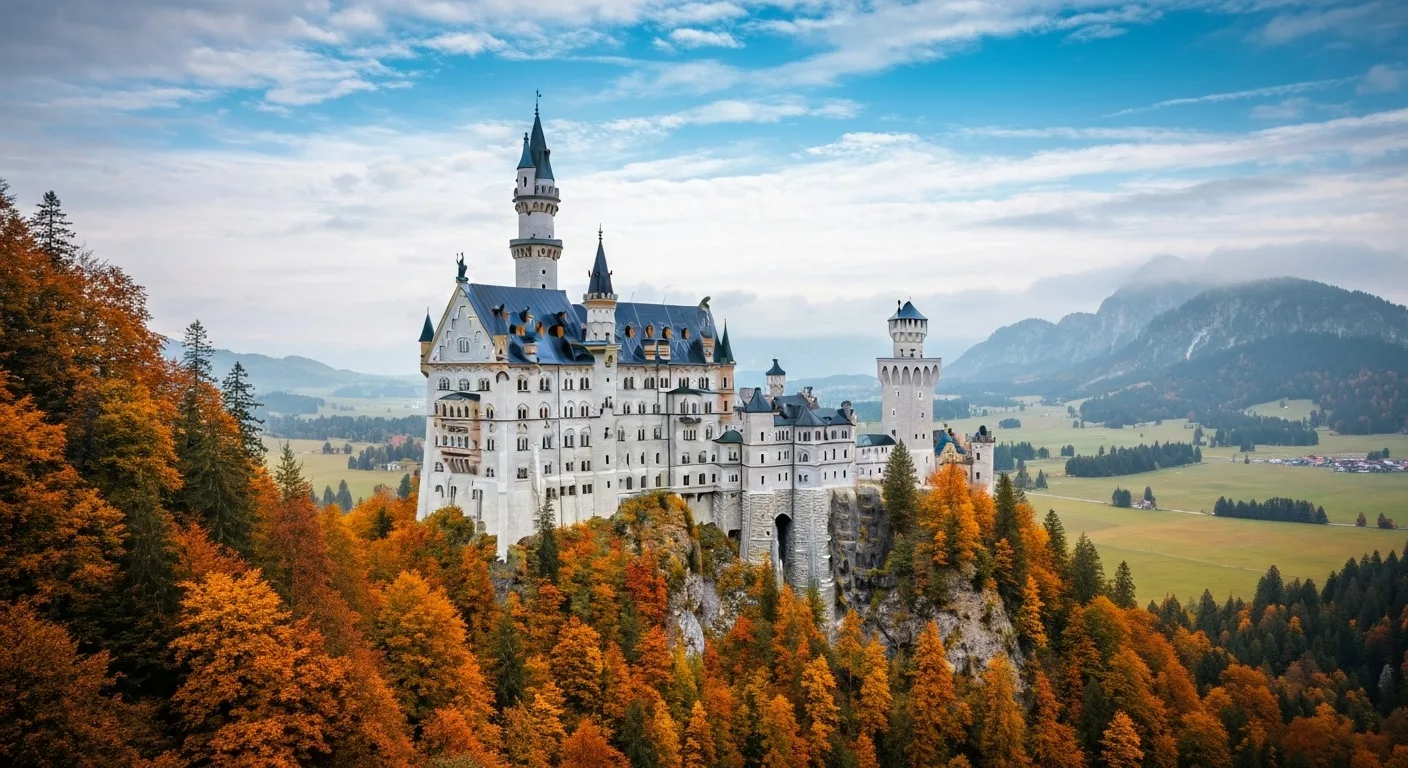
The Neuschwanstein day trip is a highlight of any Germany trip from India. Disney copied this castle for Sleeping Beauty's palace. That's not legend — it's documented fact. Ludwig II built his fairy-tale fantasy in the 1880s, never finished it, and barely lived there before dying mysteriously. The castle clings to a cliff, Alpine peaks behind it, and looks absolutely unreal.
How to Get There
From Munich: Train to Füssen (2 hours, €30 round-trip with Bayern Ticket). Bus from Füssen station to the castle base (10 minutes). Ticket office there, but book online at least a day ahead — slots sell out.
Castle ticket: €18 for timed entry guided tour (35 minutes). Photography inside is forbidden, which is annoying but understandable.
The climb: 30-minute uphill walk, or horse-drawn carriage (€8), or shuttle bus (€3.50). Walk down via Marienbrücke — the bridge with the iconic view. Arrive early for photos without 200 tourists photobombing.
Pro tip: Combine with Hohenschwangau Castle (Ludwig's childhood home) for €26 combo ticket. Completely different vibe, equally interesting.
The Romantic Road and Rhine Valley
Germany's most scenic drive stretches 400 kilometers from Würzburg to Füssen. Without a car, FlixBus runs the route, or stitch together regional trains. The Eurail pass covers most segments.
Rothenburg ob der Tauber
The most photogenic medieval town in Germany. Half-timbered houses, cobblestone streets, a Christmas shop open year-round. Touristy? Absolutely. Worth it anyway? Also absolutely. The night watchman tour (€9, 8 PM daily) entertains while educating. Schneeballen (snowball pastries) are dry and overrated — eat them anyway for the experience.
Rhine Valley Castles
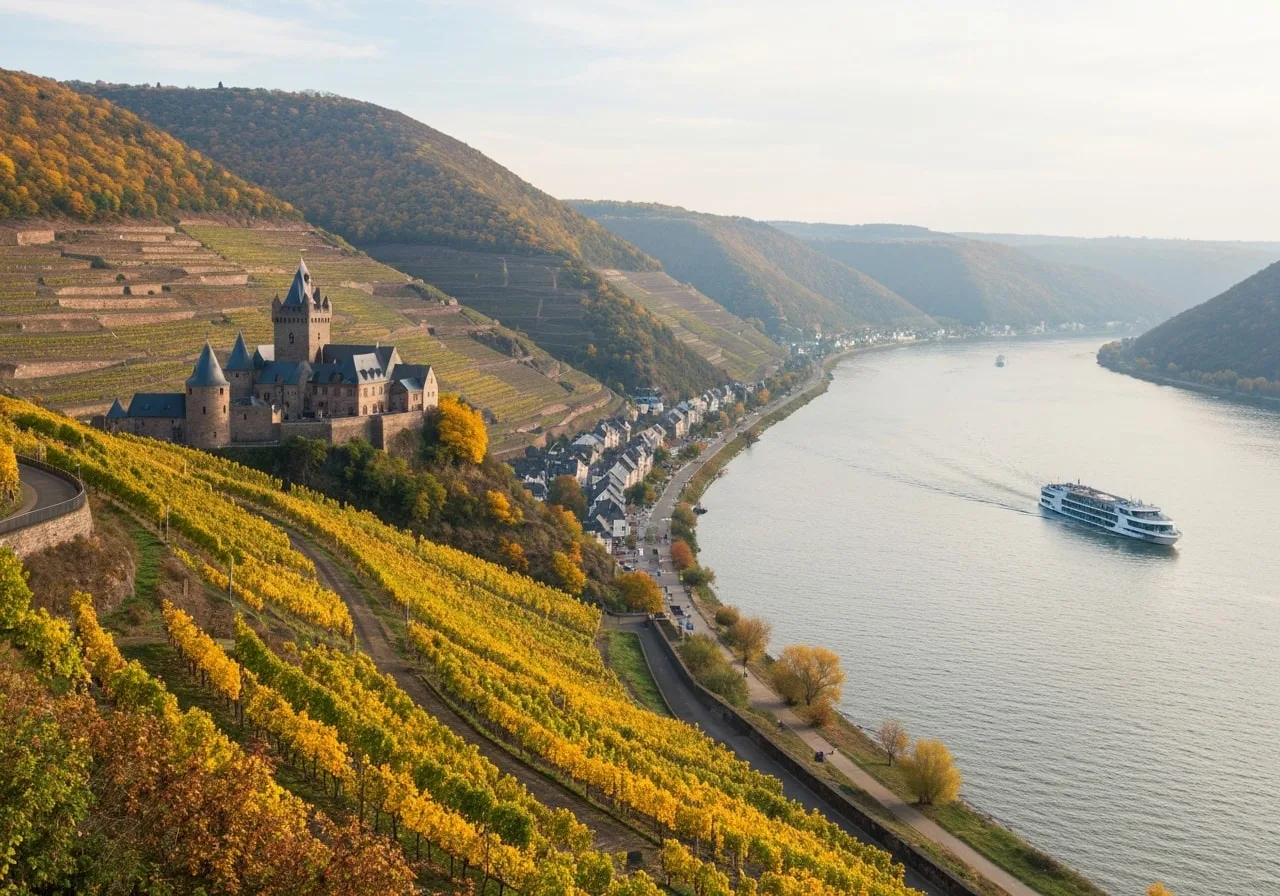
Between Mainz and Koblenz, castles appear every few kilometers. Some ruined, some turned into hotels, all dramatic. Take a river cruise from Bacharach to St. Goar (€20-30, 2 hours). Vineyards cascade down slopes. The Lorelei rock supposedly lured sailors to their doom. Now tourists take selfies there.
Wine Villages
Rüdesheim, Bacharach, Boppard — these towns exist for wine. German Riesling, often dismissed as sweet, produces some of the world's finest dry whites here. €15 buys a tasting flight and an education. I've converted several wine snobs who swore they'd never drink Riesling.
Beyond the Tourist Trail
Hamburg
Germany's second city gets overshadowed but shouldn't. The harbor area (Speicherstadt) is UNESCO-listed. Miniatur Wunderland — the world's largest model railway — sounds childish but captivates adults. The Reeperbahn red-light district has cleaned up significantly but retains edge. Hamburg feels more international than traditionally German.
Black Forest
Cuckoo clocks, dense fir forests, Black Forest cake that tastes nothing like the Indian bakery version. Freiburg makes a good base. Hiking trails suit all fitness levels. Triberg hosts Germany's highest waterfall and enough cuckoo clock shops to induce madness. Buy one anyway. They're charming.
German Transport: Your Options Explained
Germany's train system is efficient when it works, frequently delayed when it doesn't. Deutsche Bahn (DB) runs intercity trains. Regional trains are cheaper but slower. The new Deutschland-Ticket (€49/month) covers all regional and local transport nationwide. For travelers staying 10+ days, it's exceptional value.
Transport Cost Breakdown
- Deutschland-Ticket: ₹4,500/month — unlimited regional transport
- ICE (high-speed) Berlin-Munich: ₹3,500-7,000 depending on booking time
- Bayern Ticket: ₹2,200 for unlimited day travel within Bavaria (includes Neuschwanstein trip)
- FlixBus: 30-50% cheaper than trains, slightly less comfortable
- Car rental: ₹3,000-5,000/day — worth it for Romantic Road freedom
Book ICE trains 3-4 weeks ahead for "Sparpreis" fares. Last-minute pricing is brutal. Regional trains don't require booking — just show up, Deutschland-Ticket in hand.
Food in Germany: Beyond Sausage (But Also, Sausage)
German cuisine is heartier than subtle. Pork dominates. Potatoes appear in every form. But vegetarians survive better than expected, and Indian food availability solves homesickness pangs.
Must-Try Dishes
Bratwurst: Every region has its version. Nürnberger are tiny and perfect. Thüringer are longer and snappier. Street vendors charge €3-4. Beer garden prices hit €6-8.
Schnitzel: The crispy, breaded pork cutlet that's simple but satisfying. Wiener Schnitzel (veal) is Austrian technically, but Germans serve excellent versions.
Currywurst: Berlin's street food contribution — sliced sausage drowning in curry-spiced ketchup. Sounds weird. Tastes addictive. Curry 36 in Kreuzberg runs a famous stand.
Käsespätzle: German mac and cheese. Soft egg noodles, melted cheese, crispy onions. Vegetarian, filling, and deeply comforting.
Vegetarian Survival
Berlin ranks among Europe's most vegetarian-friendly cities. Munich has solid options too. Look for "vegetarisch" on menus. Spätzle, potato dishes, cheese selections, and salads are safe bets. Indian restaurants exist in every German city — quality varies, but you won't starve.
Daily Food Budget
- Budget (bakery breakfast, street food lunch, supermarket dinner): ₹1,200-1,500
- Mid-range (café breakfast, sit-down lunch, restaurant dinner): ₹2,500-3,500
- Comfort (proper restaurants throughout): ₹4,000-6,000
Christmas Markets: Germany's Winter Magic
A winter Germany trip from India cost slightly less during the shoulder Christmas market season. Mid-November through December, German town squares transform into wonderlands. Wooden stalls sell crafts, ornaments, and food. Glühwein (hot mulled wine) warms frozen fingers. The smell of cinnamon, roasted nuts, and grilled sausages hangs everywhere.
Best Markets
Nuremberg Christkindlesmarkt: The most famous. Two million visitors yearly. Traditional, massive, sometimes overwhelming.
Dresden Striezelmarkt: Germany's oldest, since 1434. More regional, slightly less touristy.
Cologne Cathedral Market: The backdrop alone — gothic cathedral, thousands of lights — makes this special.
Munich Marienplatz: Charming if you're already there. A massive tree, mechanical nativity, Bavarian crafts.
Budget €20-40 per market visit for Glühwein, food, and maybe one ornament you definitely don't need but buy anyway.
Complete 10-Day Germany Trip from India Cost Breakdown
Here's what a realistic Germany trip from India cost looks like for 10 days, covering Berlin, Munich, and day trips.
Budget Traveler (₹1.2-1.5 Lakh)
- Flights (connecting): ₹38,000
- Accommodation (hostels/budget hotels): ₹18,000
- Deutschland-Ticket + regional trains: ₹8,000
- Food: ₹15,000
- Activities and entrance fees: ₹10,000
- Schengen visa + insurance: ₹10,000
- Miscellaneous: ₹6,000
- Total: ₹1.05-1.2 Lakh (add buffer for shopping/extras)
Mid-Range Traveler (₹1.5-2 Lakh)
- Flights (direct): ₹50,000
- Accommodation (3-star hotels): ₹35,000
- Transport (mix of ICE and regional): ₹12,000
- Food: ₹25,000
- Activities: ₹15,000
- Visa + insurance: ₹10,000
- Miscellaneous: ₹10,000
- Total: ₹1.55-1.8 Lakh
Comfort Traveler (₹2-2.5 Lakh)
- Flights (direct, premium economy): ₹70,000
- Accommodation (4-star hotels): ₹55,000
- Transport (first-class trains): ₹18,000
- Food: ₹35,000
- Activities + tours: ₹25,000
- Visa + insurance: ₹10,000
- Miscellaneous: ₹15,000
- Total: ₹2.25-2.5 Lakh
Germany sits in the middle tier of European countries by cost for Indian travelers. Not as cheap as Eastern Europe, but significantly more affordable than Switzerland or Scandinavia.
Best Time to Visit Germany from India
Your Germany trip from India cost varies significantly by season. May-September: Pleasant weather (15-25°C). Long days. Beer gardens in full swing. Peak tourist season means higher prices but maximum attractions open.
Late September-Early October: Oktoberfest. Need I say more? Accommodation expensive in Munich, but the experience justifies the cost.
November-December: Christmas market magic. Cold (0-10°C), occasionally snowy, utterly atmospheric. Layer up and embrace hygge.
January-March: Cheapest period. Cold, grey, fewer tourists. Good for museum-heavy itineraries and ski trips to the Bavarian Alps.
Practical Tips for Indian Travelers
These practical tips help optimize your Germany trip from India cost and experience. Language: English works in tourist areas, major cities, and among younger Germans. Smaller towns may require Google Translate or enthusiastic pointing. Learn "Danke" (thank you), "Bitte" (please), and "Ein Bier, bitte" (one beer, please). The last one gets the most use.
Tipping: Service charge isn't automatic like in the US. Round up 5-10% at restaurants. Bartenders appreciate small tips but won't chase you down.
Sundays: Everything closes. Not "reduced hours" closes — genuinely shut. Stock up on Saturday. Restaurants and tourist attractions stay open, but shops don't.
Cash: Germany loves cash surprisingly much for a developed nation. Many smaller shops, bakeries, and even some restaurants don't accept cards. Withdraw euros at ATMs; airport exchange rates are robbery.
Plugs: Type F (European two-pin). Bring an adapter; hotels may not supply them.
Let TripCabinet Handle the Planning
Germany offers so much that planning can overwhelm. Flights, trains, hotels, Oktoberfest reservations, castle tickets, Schengen visa — the logistics multiply fast. Our team specializes in Germany trips for Indian travelers. We handle the bookings, optimize your route, and ensure you don't miss the Glockenspiel because you took the wrong train.
Whether you want the classic Berlin-Munich route, a deep dive into Bavaria's castles, or a Christmas market crawl across half a dozen cities, we build itineraries that actually work. Real timing, real costs, real advice from people who've stood in those beer gardens and hiked to those viewpoints.
Germany surprised me the first time. The history hits differently when you're standing where it happened. The beer tastes better than anything exported. And that pretzel at Munich station? It's still one of my clearest travel memories — warm dough, salt crystals, the anticipation of castles ahead. Some trips you plan. Some trips change you. Germany does both.