

Travel Medical Emergency Abroad: What Every Indian Traveler Should Know 2026
In this guide (10)
- Before You Leave India: Preparation That Actually Matters
- Medical Emergency Abroad: Why Travel Insurance Is Non-Negotiable
- During the Emergency: Step-by-Step What to Do
- Hospital Costs by Country: What to Expect Without Insurance
- Common Medical Issues Indians Face Abroad
- Indian Embassy: When and How to Contact
- Insurance Claim Process: Getting Your Money Back
- Practical Info Box: Quick Reference
- The Reality Check
- Frequently Asked Questions
My wife got food poisoning in Bali so bad we ended up in a ₹45,000 hospital visit — my first real medical emergency abroad. Two nights in BIMC Kuta, IV drips, tests for everything from typhoid to amoebic dysentery. Thank god for travel insurance — we paid ₹1,200 upfront and got cashless treatment within an hour of walking in. The German couple next to us? They were arguing with reception about a ₹80,000 bill for similar treatment because they thought "nothing happens on a beach holiday."
A medical emergency abroad is not like falling sick at home. You cannot call your family doctor. You do not know which hospital is good. The pharmacist does not understand "Crocin" or "Combiflam." And when you are lying in an unfamiliar hospital bed with an IV in your arm, wondering if your travel insurance will actually pay — that is when you realize how unprepared you were.
I have been that unprepared tourist. I have also helped fellow Indians navigate hospital visits in Thailand, handled a friend's altitude sickness evacuation in Ladakh that turned into a medical emergency abroad nightmare, and spent three weeks chasing an insurance reimbursement that "got lost in the system." This guide is everything I wish someone had told me before my first trip went sideways.
Before You Leave India: Preparation That Actually Matters
Everyone talks about packing light and getting the right visa. Nobody talks about the small plastic bag that saved my Bangkok trip — my travel medical kit.
The Medical Kit You Actually Need
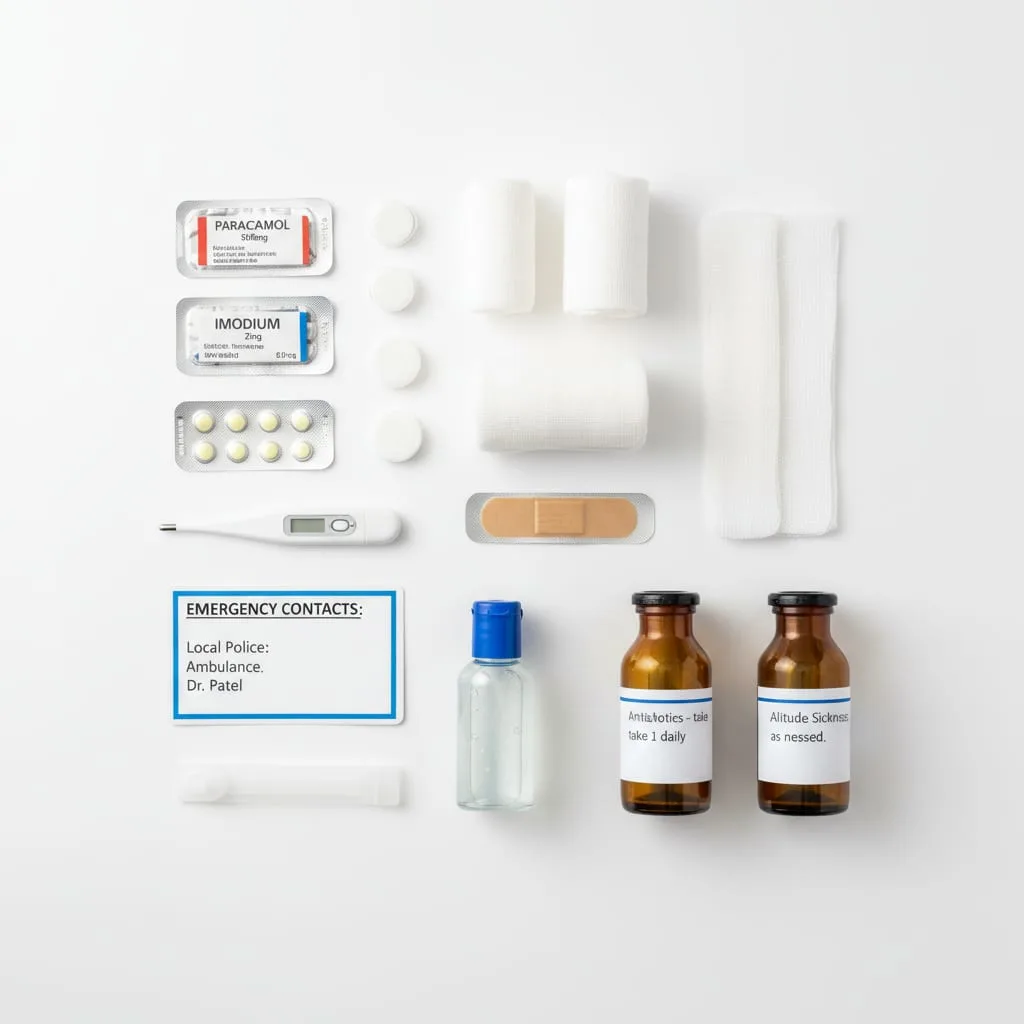
Forget those pre-made "travel first aid kits" on Amazon. Half of them contain things you will never use, and none of them have what you actually need abroad. Here is what I carry after learning the hard way:

Prescription medicines with doctor's letter: Carry a typed letter on your doctor's letterhead listing every prescription medicine you carry, with generic names (not Indian brand names), dosage, and reason. Some countries like UAE and Singapore have strict drug laws — common Indian medicines containing codeine or certain antihistamines are controlled substances there. Without documentation, you could face legal trouble at customs.
Generic names, not brands: "Crocin" means nothing to a pharmacist in Europe. "Paracetamol 500mg" does. Same with Combiflam (Ibuprofen + Paracetamol), Avomine (Promethazine), and Rantac (Ranitidine). Write down generic names before you travel.
What to pack:
- Paracetamol and Ibuprofen — for fever, headache, body pain
- ORS packets — dehydration from food poisoning or diarrhea (more useful than you think)
- Loperamide (Imodium) — when you absolutely cannot have diarrhea on a 6-hour bus ride
- Antihistamine (Cetirizine/Allegra) — allergic reactions happen more abroad with unfamiliar foods
- Antacids — Indian stomachs do not always love foreign cuisine
- Band-aids, antiseptic cream, small scissors
- Thermometer — digital, obviously
- Your regular prescription medicines — carry 20% extra in case of delays
One thing people forget: split your medicines between carry-on and checked baggage. If your checked bag gets lost (hello, European summer travel chaos), you do not want to be without essential medications in a foreign country.
Vaccination Records: The Document Nobody Carries
You got your vaccines before traveling. Great. But do you have proof? Many Indians do not carry their vaccination records abroad, which becomes a problem in exactly two situations:
First, if you need medical treatment abroad and doctors ask about your vaccination history. Second, and more commonly, if you are traveling to countries that require proof of Yellow Fever vaccination (most of Africa, parts of South America) or the destination requires proof of recent vaccinations.
Get your vaccination record digitized. The CoWIN certificate works for COVID, but for other vaccines, get a letter from your doctor or the hospital where you were vaccinated. Keep a photo on your phone and a copy in your email.
Medical Emergency Abroad: Why Travel Insurance Is Non-Negotiable
When the ambulance bill in the US is more than your entire trip budget, you understand why insurance is not optional. An ambulance ride in America costs $1,000-2,500 (₹83,000-2 lakh). Just the ride. Before any treatment.
I see Indians on travel forums asking "Is travel insurance really necessary for a 5-day Singapore trip?" Yes. Absolutely yes. A broken ankle in Singapore will cost you ₹3-5 lakh without insurance. A heart attack? You are looking at ₹30-50 lakh bills that will financially devastate most families.
Here is what to look for in travel insurance — and I have read through dozens of policy documents to figure this out:
Coverage Amount: Do Not Cheap Out
For Southeast Asia: Minimum $50,000 (₹42 lakh) coverage. Thailand, Malaysia, Singapore have good but expensive private hospitals. A dengue hospitalization runs ₹1-3 lakh.
For USA/Canada/Europe: Minimum $100,000 (₹83 lakh), ideally $250,000. American healthcare costs are genuinely insane. A single night in ICU is $5,000-10,000. Appendix surgery is $30,000-40,000. Without insurance, hospitals will still treat you — and then send collection agencies after you for years.
For adventure activities: Check if your policy covers scuba diving, skiing, bungee jumping, or trekking above certain altitudes. Most basic policies exclude these. You need a specific adventure sports add-on, and it costs ₹300-800 extra for a week.
Pre-existing Conditions: The Clause That Rejects Most Claims
Here is the uncomfortable truth: if you have diabetes, hypertension, heart conditions, asthma, or any chronic illness, most standard travel insurance policies will not cover any medical emergency abroad related to those conditions. Even indirectly related.
Had a heart attack abroad? If you have a history of high blood pressure, the claim might be rejected. Got hospitalized for an infection but you are diabetic? They could argue your diabetes complicated the treatment and reject the claim.
What to do:
- Always declare pre-existing conditions honestly. Hiding them voids your entire policy — not just the condition-related claims.
- Look for policies that cover "stable pre-existing conditions" — typically conditions where treatment has not changed in 90-180 days.
- ICICI Lombard and HDFC Ergo offer such policies. They cost 30-50% more but actually cover you.
- Get a "fit to travel" certificate from your doctor before international trips if you have chronic conditions.
I covered travel insurance options in detail in our affordable travel insurance guide — worth reading before your next booking.
Cashless vs Reimbursement: Know the Difference
Cashless treatment: You go to a network hospital, show your insurance card, and the insurer pays the hospital directly. You might pay a small deductible or the difference if treatment exceeds coverage.
Reimbursement: You pay everything upfront, collect all documents, and claim money back after returning to India. This can take 2-8 weeks, and you need to have that money available first.
Most Indian travel insurance policies offer cashless treatment only in specific network hospitals. Before traveling, download your insurer's app and check which hospitals in your destination are on their network. Save that list.
During the Emergency: Step-by-Step What to Do
Your friend is throwing up blood in Phuket. Your father collapsed in Dubai. Your child has a 104°F fever in Bali. What do you actually do?

Step 1: Life-Threatening? Call Local Emergency First
If someone is unconscious, not breathing, having a heart attack, stroke, or severe bleeding — call local emergency services immediately:
- USA/Canada: 911
- UK: 999
- Europe (most countries): 112
- Thailand: 1669
- Singapore: 995
- Malaysia: 999
- UAE: 998 (ambulance)
- Australia: 000
Do not waste time calling insurance first if it is genuinely life-threatening. Stabilize the situation, then deal with paperwork.
Step 2: Call Your Insurance Helpline
Every travel insurance policy has a 24/7 international helpline. This number should be saved in your phone, your travel companion's phone, and written on a paper in your wallet. When you call:
- Give your policy number
- Describe the medical situation clearly
- Share your location (city, hotel name)
- Ask for nearest network hospital
- Ask if cashless treatment is available
- Get a "case number" or "authorization number" — write it down
The helpline can also arrange translators if needed, help coordinate with local hospitals, and contact your family in India on your behalf.
Step 3: Get to the Right Hospital
If your insurance recommends a specific hospital and you can get there safely, go there. Network hospitals have pre-arranged billing with your insurer, which makes cashless treatment smoother.
If you must go to a non-network hospital (emergency, no network hospital nearby), still call your insurance helpline. They can often negotiate with the hospital and authorize direct billing even for non-network hospitals.
At the hospital:
- Tell reception immediately that you have travel insurance
- Show your insurance card and passport
- Ask them to contact your insurer before starting non-emergency treatment
- For emergencies, they will treat first and sort billing later — but still mention insurance early
Step 4: Documentation — Do Not Skip This
I cannot stress this enough: bad documentation is the #1 reason insurance claims get rejected. While you are in the hospital or immediately after:
Get these documents:
- Itemized hospital bill (showing each charge separately, not just a total)
- Doctor's prescription with diagnosis written clearly
- Discharge summary
- Test reports (blood work, X-rays, scans)
- Pharmacy bills with medicine names
- Ambulance receipt if applicable
- Receipt for any cash payments made
Important: If documents are in local language (Thai, Arabic, etc.), ask the hospital for English translations. Most international hospitals provide this. If not, your insurance company can arrange translation later, but it delays claims.
Photograph every single document as backup. Email them to yourself so you have cloud copies.
Hospital Costs by Country: What to Expect Without Insurance
These numbers are from 2025-2026 and reflect what Indians have actually paid or reported in travel forums. Use them to understand why medical emergency abroad situations can become financial nightmares without coverage.
United States:
- Emergency room visit (no admission): $2,500-5,000 (₹2-4 lakh)
- One night hospital stay: $5,000-15,000 (₹4-12 lakh)
- Appendix surgery: $30,000-50,000 (₹25-40 lakh)
- Heart attack treatment: $50,000-150,000+ (₹40 lakh-1.2 crore)
- Ambulance: $1,000-2,500 (₹83,000-2 lakh)
Europe (UK, Germany, France):
- Emergency treatment: €500-2,000 (₹45,000-1.8 lakh)
- Hospital admission per night: €1,000-3,000 (₹90,000-2.7 lakh)
- Surgery: €5,000-30,000 (₹4.5-27 lakh)
- Note: EU citizens get free treatment with EHIC card. Indians pay full price.
Singapore:
- GP consultation: SGD 50-100 (₹3,000-6,000)
- Emergency room: SGD 200-500 (₹12,000-30,000)
- Hospital stay per night: SGD 500-1,500 (₹30,000-90,000)
- Surgery: SGD 5,000-30,000 (₹3-18 lakh)
Thailand:
- Private hospital consultation: ฿1,000-2,000 (₹2,500-5,000)
- Hospital stay per night: ฿5,000-15,000 (₹12,000-37,000)
- Minor surgery: ฿30,000-100,000 (₹75,000-2.5 lakh)
- Government hospital: 50-70% cheaper but longer waits, less English
UAE (Dubai, Abu Dhabi):
- Emergency room: AED 500-1,500 (₹11,000-34,000)
- Hospital admission: AED 2,000-5,000/night (₹45,000-1.1 lakh)
- Note: UAE requires travel insurance for tourist visas now
Malaysia:
- Private hospital consultation: RM 100-200 (₹1,800-3,600)
- Hospital stay: RM 500-1,500/night (₹9,000-27,000)
- Good value compared to Singapore, but still adds up
Common Medical Issues Indians Face Abroad
Food Poisoning and Traveler's Diarrhea
The most common medical issue by far. Indian stomachs are actually quite resilient to many bacteria — we have exposure others do not. But different bacteria in different countries still get us. Southeast Asian raw seafood, Mexican street food, even "safe" European dairy if you are lactose sensitive.
When to see a doctor: Bloody stool, fever above 101°F, symptoms lasting more than 2-3 days, signs of severe dehydration (dark urine, dizziness, confusion), inability to keep any fluids down.
Self-treatment: ORS (oral rehydration salts), rest, BRAT diet (bananas, rice, applesauce, toast), avoid dairy and spicy food. Loperamide can help for symptom control but avoid if you have fever or blood in stool.
Altitude Sickness
Common in Ladakh, Nepal, Tibet, Peru, and anywhere above 2,500 meters. Symptoms: headache, nausea, fatigue, shortness of breath, difficulty sleeping. Usually starts 6-12 hours after reaching altitude.
Prevention: Acclimatize slowly (do not fly directly to high altitude if possible), stay hydrated, avoid alcohol first 1-2 days, Diamox if recommended by doctor (start 1 day before ascent).
Emergency signs: Severe headache not responding to painkillers, confusion, difficulty walking straight, persistent vomiting, coughing up pink frothy sputum. These indicate HACE or HAPE — life-threatening conditions requiring immediate descent and medical evacuation.
Dengue Fever
Endemic in Southeast Asia, parts of Africa, and Latin America. Spread by daytime-biting mosquitoes. Symptoms appear 4-10 days after bite: high fever, severe headache, pain behind eyes, joint and muscle pain, rash.
Important: Do not take Aspirin or Ibuprofen if you suspect dengue — they increase bleeding risk. Paracetamol only. Seek medical attention for proper diagnosis and monitoring.
Injuries and Accidents
Motorbike accidents in Bali and Thailand are extremely common among tourists. Many travel insurance policies have exclusions for two-wheeler accidents or require valid international driving permits. Check your policy before renting that scooter.
Indian Embassy: When and How to Contact
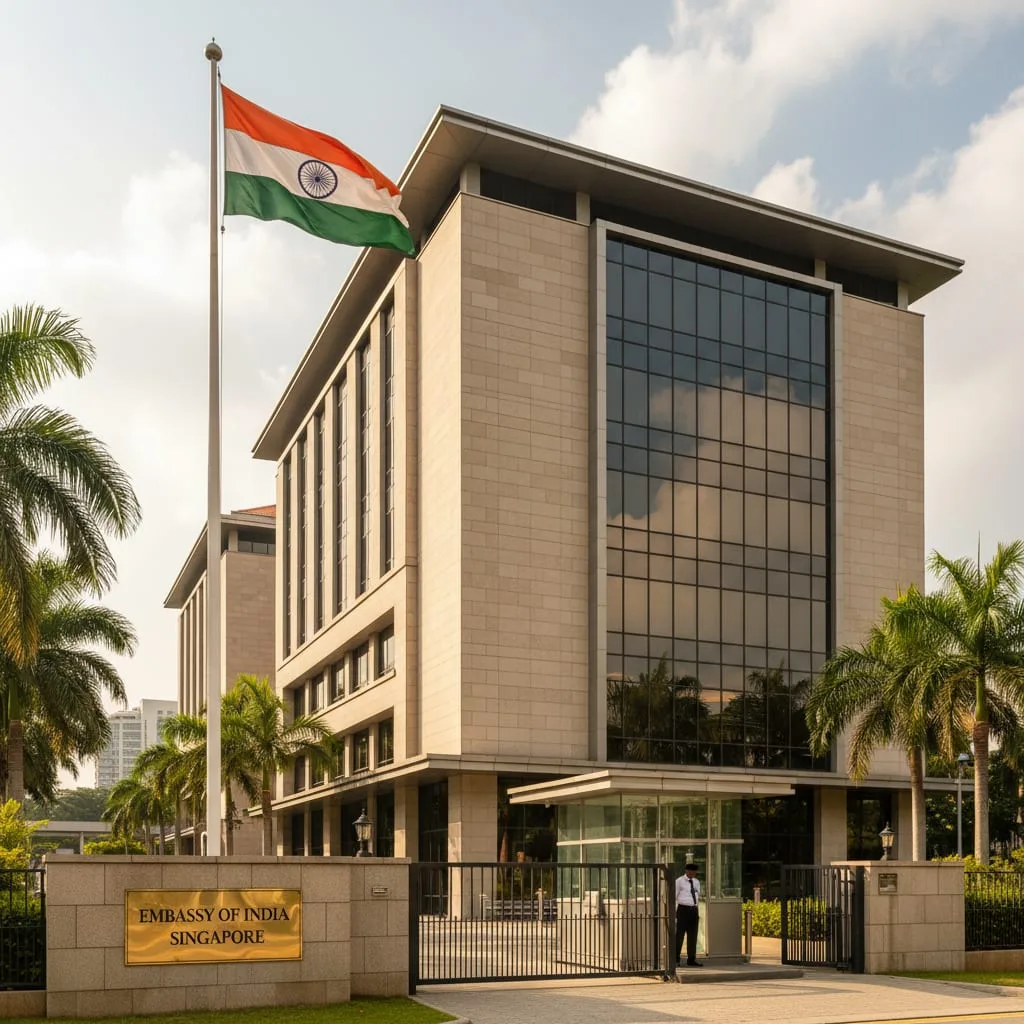
The Indian Embassy cannot pay your hospital bills or replace your insurance. But they can help in several important ways:
- Emergency travel documents: If your passport is lost or stolen during a medical emergency abroad, they can issue emergency certificates to get you home.
- Contact family: If you are unable to contact family yourself, embassy staff can reach out to your emergency contacts in India.
- Local Indian doctors: Many embassies maintain lists of local doctors who speak Hindi or regional Indian languages.
- Medical evacuation coordination: For serious cases requiring return to India, embassies can help coordinate with insurance companies and airlines.
- Legal assistance: If medical negligence is suspected or if there are disputes with hospitals.
MADAD Portal: The MEA (Ministry of External Affairs) has an online portal and app called MADAD where you can register complaints and seek assistance from Indian missions abroad. Register before you travel at the official MADAD portal.
Save your destination's Indian Embassy emergency number before traveling. The MEA website has all contact details.
Also, ensure you have a working phone abroad. I wrote about eSIM options for Indian travelers — being able to make calls and use internet during an emergency is not optional.
Filing insurance claims from abroad can be confusing. For detailed step-by-step instructions on documentation, deadlines, and how to appeal rejected claims, see our travel insurance claim guide for Indians.
Insurance Claim Process: Getting Your Money Back
You survived the medical emergency abroad. You are back in India. Now comes the part that frustrates everyone: actually getting the insurance company to pay.
Claim Timeline
Most policies require you to file claims within 15-30 days of returning to India. Do not miss this deadline. Even if you do not have all documents ready, file a preliminary claim and submit additional documents later.
Documents Checklist for Reimbursement Claims
- Filled claim form (download from insurer website)
- Original hospital bills (itemized)
- Original receipts for all payments
- Doctor's prescription and diagnosis report
- Discharge summary
- Test reports
- Pharmacy bills
- Copy of passport with entry/exit stamps or boarding passes
- Copy of insurance policy
- Cancelled cheque for reimbursement
- FIR copy if accident or injury involved
Pro tip: Make photocopies of everything before submitting. Insurance companies are notorious for "losing" documents.
Common Reasons Claims Get Rejected
- Pre-existing condition not declared: Even if unrelated to the claim, undeclared pre-existing conditions can void your policy.
- Activity exclusion: Injured while riding a motorbike/scuba diving/skiing without proper add-on coverage.
- Alcohol involvement: If medical records mention alcohol consumption at time of accident, claim can be rejected.
- Delay in intimation: Not informing the insurer within specified time (usually 24-48 hours of hospitalization).
- Missing documents: Incomplete paperwork, missing original bills.
- Non-network hospital without authorization: Going to expensive hospital without informing insurer first.
What If Your Claim Is Rejected?
Do not give up immediately. First, request the detailed reason for rejection in writing. Many rejections are due to paperwork issues that can be fixed.
If you believe the rejection is unfair:
- File a written appeal to the insurance company's grievance cell
- If unresolved in 30 days, complain to IRDAI (Insurance Regulatory Authority) via igms.irda.gov.in
- Insurance Ombudsman can hear complaints for claims up to ₹30 lakh
- Consumer court is your final option for larger amounts
Practical Info Box: Quick Reference
Before traveling:
- Buy travel insurance with minimum $50,000-100,000 medical coverage
- Declare all pre-existing conditions honestly
- Download insurer app, save helpline number in phone
- Carry medicines with doctor's letter, vaccination records
- Save Indian Embassy contact for destination
- Register on MADAD portal
During emergency:
- Life-threatening: Call local emergency first
- Then call insurance helpline, get case number
- Go to network hospital if possible
- Collect ALL documents and receipts
- Photograph everything as backup
After returning:
- File claim within 15-30 days
- Submit original documents with photocopies
- Follow up weekly if no response
- Escalate to IRDAI if rejected unfairly
The Reality Check
Nobody wants to think about getting sick or injured on vacation. But medical emergency abroad situations are not hypothetical — they happen every single day. The difference between a scary but manageable experience and a life-ruining financial disaster is often just ₹2,000-3,000 spent on proper travel insurance.
I have seen friends try to negotiate hospital bills in broken English while in pain. I have watched families scramble to wire lakhs of rupees internationally because someone thought "nothing will happen for just one week." I have spent hours on hold with insurance companies, fighting for legitimate claims.
Do the boring preparation. Buy the insurance. Save the numbers. Pack the medicines. And then forget about it and enjoy your trip — because the point of preparation is not to live in fear, but to handle whatever comes with confidence.
Safe travels.
Frequently Asked Questions
What should I do in a medical emergency abroad?
Call local emergency number immediately (112 in Europe, 911 in USA, 999 in UK). Contact your travel insurance 24/7 helpline — they arrange hospital, translation, and cashless treatment. Call the nearest Indian Embassy for assistance. Keep all medical receipts and reports for insurance claims.
Does travel insurance cover medical emergencies abroad?
Yes, most travel insurance policies cover emergency hospitalization, surgery, ambulance, and medical evacuation. Standard coverage is $50,000-100,000 (₹40-80 lakh). Ensure your policy covers the specific country and pre-existing conditions if applicable. Read exclusions carefully — adventure sports and alcohol-related incidents are often excluded.
How do I find a hospital abroad that accepts my insurance?
Call your insurance company's 24/7 helpline — they have network hospitals in most countries. Download your insurer's app before travel which has hospital locators. For cashless treatment, the hospital contacts your insurer directly. In emergencies, go to the nearest hospital first and sort insurance paperwork later.
What medicines should Indians carry when traveling abroad?
Carry: prescription medicines with doctor's letter, paracetamol, ORS packets, anti-diarrheal (Imodium), antihistamine, bandages, antiseptic cream, motion sickness pills, and any allergy medication. Keep medicines in original packaging with labels. Carry a printed prescription for controlled substances.
How much does a medical evacuation cost without insurance?
Medical evacuation without insurance costs $25,000-150,000 (₹20 lakh to ₹1.25 crore) depending on distance and condition severity. Air ambulance from Thailand to India costs ₹30-50 lakh, from Europe ₹60-80 lakh. This is why travel insurance with medical evacuation cover (minimum $100,000) is non-negotiable.
How to Handle a Medical Emergency Abroad as an Indian Traveler
Step-by-step guide for Indian travelers facing medical emergencies in foreign countries, from immediate response to insurance claims.
Assess the Situation
Determine if it is life-threatening. For cardiac arrest, stroke, severe bleeding, or unconsciousness, call local emergency services immediately (911 USA, 999 UK, 112 Europe, 1669 Thailand).
Contact Your Insurance Helpline
Call the 24/7 helpline number on your insurance card. They will guide you to nearby network hospitals, arrange cashless treatment if available, and start documentation.
Get to a Hospital
Go to the hospital recommended by insurance if possible. For network hospitals, carry your insurance card and passport. Inform reception you have travel insurance immediately.
Collect All Documentation
Get itemized bills (not summary), original receipts, doctor notes with diagnosis, prescription copies, and discharge summary. Request English translations if documents are in local language.
Inform Your Emergency Contact
Contact family in India and share your location, hospital name, and insurance claim number. Use the MADAD app or contact Indian Embassy if you need consular assistance.
File Insurance Claim
Submit claim within timeline specified in policy (usually 15-30 days of return). Include all original documents, filled claim form, cancelled cheque, and passport copies. Keep photocopies of everything you submit.
Follow Up Actively
Track claim status online and call weekly if no update. Insurance companies may request additional documents - respond within their deadline to avoid claim rejection.