

Switzerland Trip Cost from India: Realistic Budget Guide 2026
In this guide (15)
- The Real Switzerland Trip Cost from India: Quick Summary
- Flight Costs: Getting to Switzerland from India
- The Swiss Travel Pass: Worth Every Rupee (Mostly)
- Accommodation Costs: Where Your Money Actually Goes
- Food Costs: The ₹3,300 Sandwich Reality
- Mountain Excursions: Jungfraujoch vs Titlis vs Schilthorn
- City-by-City Cost Breakdown: Where to Spend Your Days
- 7-Day Switzerland Itinerary with Daily Costs
- Switzerland Trip Cost from India for a Couple or a Family of Four
- Money Matters: Forex Tips for Indian Travelers
- Visa Requirements for Indian Passport Holders
- Budget Hacks That Actually Save Money
- Common First-Timer Mistakes to Avoid
- Final Verdict: Is Switzerland Worth the Cost for Indian Travelers?
- Frequently Asked Questions
A week in Switzerland can easily cost more than three weeks of backpacking through Southeast Asia, and most people who go still say it was worth it. The switzerland trip cost from india is steep, no question about it. But understanding exactly where your money goes makes the whole experience less painful and way more manageable.
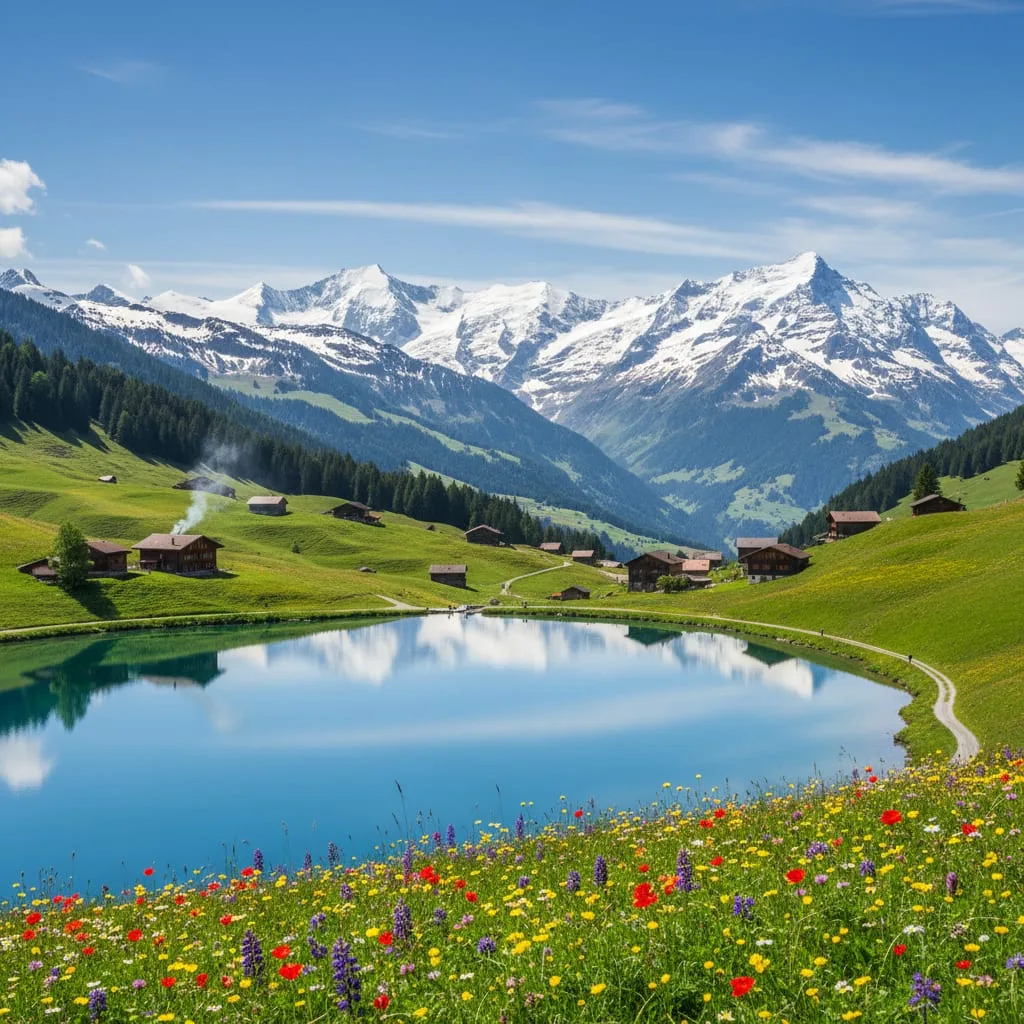
Using the mid-range sample itinerary in this guide, a couple should budget roughly ₹4.8 lakh for a week, everything included. Before you close this tab in horror, here is every rupee broken down, along with the expensive mistakes first-timers make. And yes, those DDLJ meadows in Gstaad? They look exactly like the movie. Some things are worth the price tag.
The Real Switzerland Trip Cost from India: Quick Summary
Let me give you the numbers upfront. No fluff, no "it depends" nonsense. Here is what a 7-day Switzerland trip actually costs for an Indian traveler in 2026:
| Expense Category | Budget (per person) | Mid-Range (per person) | Comfortable (per person) |
|---|---|---|---|
| Return Flights | ₹48,000-55,000 | ₹60,000-75,000 | ₹85,000-1,20,000 |
| Swiss Travel Pass (8 days) | ₹51,000 (2nd class) | ₹81,000 (1st class) | ₹81,000 (1st class) |
| Accommodation (7 nights) | ₹56,000 (hostels) | ₹1,05,000 (3-star) | ₹1,75,000 (4-star) |
| Food & Drinks | ₹21,000 | ₹35,000 | ₹56,000 |
| Mountain Excursions | ₹12,000 | ₹18,000 | ₹25,000 |
| Miscellaneous | ₹8,000 | ₹12,000 | ₹18,000 |
| TOTAL (per person) | ₹1,96,000 | ₹3,11,000 | ₹4,40,000 |
All figures in this table are per person and priced at a higher standard than the sample itinerary below: the mid-range column assumes a first-class Swiss Travel Pass (₹81,000, against ₹51,000 in second class) and about ₹15,000 per person a night for 3-star hotels. The sample 7-day itinerary below, built on a second-class pass and shared double rooms (about ₹10,100 per person a night), comes to about ₹2.4 lakh per person, or roughly ₹4.8 lakh for two.

Flight Costs: Getting to Switzerland from India
Here is where most Indians make their first mistake — booking flights too late. Fares can swing sharply over the three months before departure.
Direct flights do not exist from India to Switzerland. You will always have a layover, usually in Dubai (Emirates), Doha (Qatar), Frankfurt (Lufthansa), or Amsterdam (KLM). The layover city matters more than you think — a 2-hour Dubai connection is infinitely better than an 8-hour Frankfurt wait.
Sample fare: around ₹72,000 per person return for Delhi to Zurich via Dubai on Emirates, booked about 11 weeks ahead for September travel. This is the figure used in the itinerary below. Booking late usually costs more.
Cheaper one-stop options:
- Oman Air via Muscat — ₹48,000-55,000 return (longer layovers but significant savings)
- Turkish Airlines via Istanbul — ₹52,000-60,000 return (decent timing, good service)
- Etihad via Abu Dhabi — ₹55,000-65,000 return (comfortable, often on sale)
Check our detailed guide to finding cheapest international flights from India — the same tricks apply to Zurich and Geneva fares.
Pro tip: Fly into Zurich, fly out of Geneva (or vice versa). Switzerland is tiny — you will cover the whole country anyway. Open-jaw tickets prevent backtracking and sometimes cost less than return flights to the same city.
The Swiss Travel Pass: Worth Every Rupee (Mostly)
Let me settle this debate once and for all. Is the Swiss Travel Pass worth it?
For a 7-day trip covering multiple cities: absolutely yes. For a 3-day trip staying in one place: probably not.
The 8-day consecutive Swiss Travel Pass costs CHF 697 (roughly ₹81,000) for first class and CHF 439 (roughly ₹51,000) for second class in 2026. Here is what it includes:
- Unlimited travel on trains, buses, and boats across Switzerland
- Free entry to 500+ museums (including transport museums, art galleries)
- Scenic train routes — Glacier Express, GoldenPass, Bernina Express (some, including Glacier Express and Bernina Express, need a paid seat reservation or supplement on top of the pass)
- Free travel up Rigi, Stanserhorn and Stoos, and up to 50% off most other mountain railways and cable cars (Jungfraujoch, Titlis, Pilatus, Schilthorn)
Priced as individual tickets, the train journeys in the sample itinerary add up to CHF 580+ (₹67,600), so the second-class pass saves about ₹16,600 per person. Plus, the convenience of just hopping on any train without buying tickets? Priceless when you are tired after a mountain hike.
The catch: Mountain excursions are NOT fully covered. You get discounts (25-50%), but Jungfraujoch still costs CHF 153 (₹17,800) even with the discount. Budget separately for these.
Accommodation Costs: Where Your Money Actually Goes
This is where Switzerland absolutely murders your budget. A basic 3-star hotel room in Zurich runs CHF 180-250 per night (₹21,000-29,000). In Interlaken during peak season? CHF 220-300 (₹25,500-35,000).
A sample mix across 7 nights (room prices for two people sharing):
Zurich (2 nights): Hotel Limmathof, CHF 195/night — decent location near Hauptbahnhof, nothing fancy but clean and quiet. Total: ₹45,500
Lucerne (2 nights): Airbnb apartment near Chapel Bridge, CHF 165/night — a kitchenette saves money on breakfasts. Total: ₹38,500
Interlaken (2 nights): Hotel Rossli, CHF 210/night — a splurge for the mountain views. Total: ₹49,000
Bern (1 night): Hostel private room, CHF 95/night — a budget-friendly option. Total: ₹11,100
Budget alternatives that actually work:
- Swiss Youth Hostels: CHF 45-80/night for dorms, CHF 90-140 for private rooms. Clean, well-located, includes breakfast
- Airbnb outside city centers: CHF 100-150/night for entire apartments. The 15-minute train ride is worth the savings
- Couchsurfing: Free, but competitive in Switzerland. Start requesting hosts 6-8 weeks early
Food Costs: The ₹3,300 Sandwich Reality
At a Zurich Hauptbahnhof café, a basic ham and cheese sandwich with a coffee can come to around CHF 28 (₹3,260).
Restaurant meals in Switzerland are genuinely painful for Indian travelers. A simple lunch (soup, main course, water) runs CHF 35-50 (₹4,100-5,800). Dinner at a decent restaurant? CHF 60-90 (₹7,000-10,500) without alcohol.
How to eat without overspending:
Coop and Migros supermarkets are a traveller's best friends. These are everywhere, and prices are actually reasonable:
- Ready-made sandwiches: CHF 5-8 (₹580-930)
- Salad boxes: CHF 8-12 (₹930-1,400)
- Hot rotisserie chicken: CHF 9 (₹1,050)
- Fresh bread and cheese: CHF 6-10 (₹700-1,170)
- Fruit and snacks: CHF 3-5 (₹350-580)
Supermarket breakfasts and lunches plus one proper restaurant dinner a day brings the daily food cost to around CHF 60-70 per person (₹7,000-8,200) — still expensive, but manageable.
Restaurant meals worth the money:
- Zeughauskeller, Zurich: Traditional Swiss food, huge portions. Rosti with bratwurst CHF 24 (₹2,800)
- Restaurant Fritschi, Lucerne: Cheese fondue for two CHF 58 (₹6,760). Touristy but genuinely good
- Brasserie 17, Interlaken: Pizza and pasta CHF 20-28 (₹2,330-3,260). Affordable by Swiss standards
One more tip: Kebab shops and Asian restaurants are cheaper. A decent döner kebab runs CHF 12-15 (₹1,400-1,750). Not exactly Swiss cuisine, but your wallet will thank you.
Mountain Excursions: Jungfraujoch vs Titlis vs Schilthorn
You cannot visit Switzerland without going up at least one mountain. The views from these peaks are hard to put into words. But each excursion costs serious money, so choose wisely.
Jungfraujoch (Top of Europe) — The Top Pick
Cost: CHF 153 with Swiss Pass (₹17,800), CHF 254 without (₹29,600)
The journey from Interlaken takes about 2 hours each way, and honestly, the train ride is half the experience. You pass through Lauterbrunnen, Wengen, Kleine Scheidegg — each stop more beautiful than the last. Then the cogwheel train climbs through tunnels carved inside the Eiger and Monch mountains. At 3,454 meters, Jungfraujoch is the highest railway station in Europe.
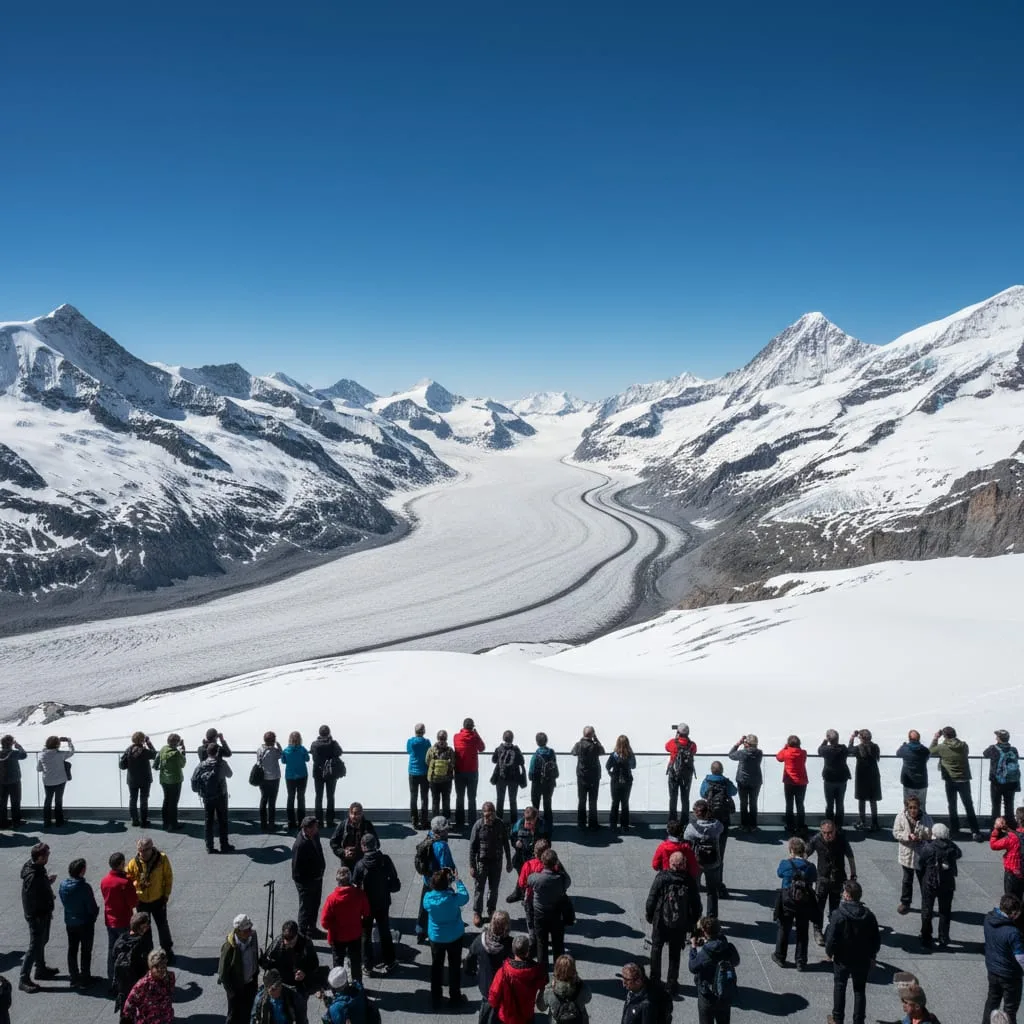
The observation deck offers 360-degree views of the Aletsch Glacier and surrounding peaks. There is an ice palace carved inside the glacier, a snow park (in summer!), and several restaurants. Plan on 3-4 hours at the top.
Verdict: Expensive but absolutely worth it, and the highlight of most first trips.
Titlis — Good But Not Great
Cost: CHF 51 with Swiss Pass (₹5,900), CHF 102 without (₹11,800), return from Engelberg
Titlis is accessible from Lucerne (about 1.5 hours) and features the worlds first rotating cable car. The summit at 3,238 meters has a cliff walk suspension bridge that is genuinely terrifying — in a good way.
But here is the thing: compared to Jungfraujoch, Titlis feels more commercialized and less dramatic. The cable car is impressive, but the train journey to Jungfraujoch is more memorable. If you are doing only one mountain, skip Titlis.
Schilthorn (Piz Gloria) — For Bond Fans
Cost: CHF 45.70 with Swiss Travel Pass (₹5,300), CHF 115 return from Stechelberg without (₹13,400)
This is where they filmed the James Bond movie "On Her Majestys Secret Service." The rotating restaurant at the summit offers incredible views of Eiger, Monch, and Jungfrau. It is significantly cheaper than Jungfraujoch and less crowded.
The cable car ride from Murren is spectacular, passing through tiny mountain villages. If you are on a budget and want one mountain experience, Schilthorn offers the best value.
City-by-City Cost Breakdown: Where to Spend Your Days
Zurich (Expensive, But Skip-Worthy for Most)
Zurich is Switzerland most expensive city, and frankly, it is not the most interesting for tourists. One day is enough — walk along the Limmat River, visit Old Town (Altstadt), maybe pop into the Kunsthaus art museum.
Daily budget: CHF 80-120 (₹9,300-14,000) excluding accommodation
Unless you have specific business or banking interests, the smart plan is to land in Zurich, spend one night recovering from the flight, then move on.
Lucerne (Perfect Base, Must Visit)
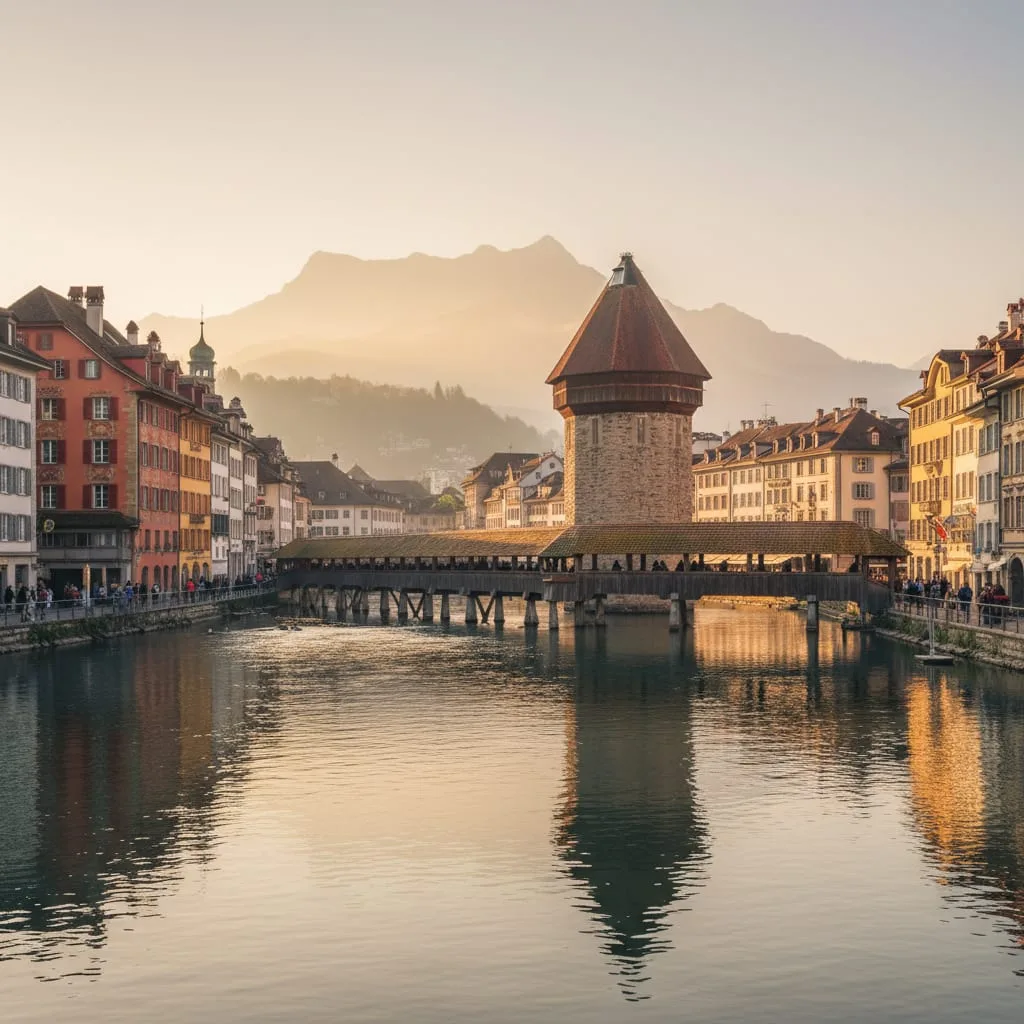
Lucerne is the easiest Swiss city to love. The Chapel Bridge at sunset, Lake Lucerne surrounded by mountains, the compact Old Town with its painted buildings — this is the Switzerland of postcards and dreams.
From Lucerne, you can easily access Mount Pilatus, Mount Rigi, and Titlis as day trips. The city itself is walkable and relatively less expensive than Zurich or Geneva.
Daily budget: CHF 70-100 (₹8,160-11,660) excluding accommodation
Do not miss: Taking the boat across Lake Lucerne to Vitznau, then the cogwheel train up Mount Rigi. The whole journey is covered by Swiss Travel Pass.
Interlaken and the Jungfrau Region (Splurge Here)
This is where a Switzerland budget really adds up — and where it is totally worth it. Interlaken sits between two lakes (hence the name) and serves as the gateway to the Jungfrau region.
Forget Interlaken town itself — it is a tourist trap with overpriced restaurants and adventure sports shops. The real magic is in the surrounding valleys: Lauterbrunnen, Grindelwald, Murren, Wengen.
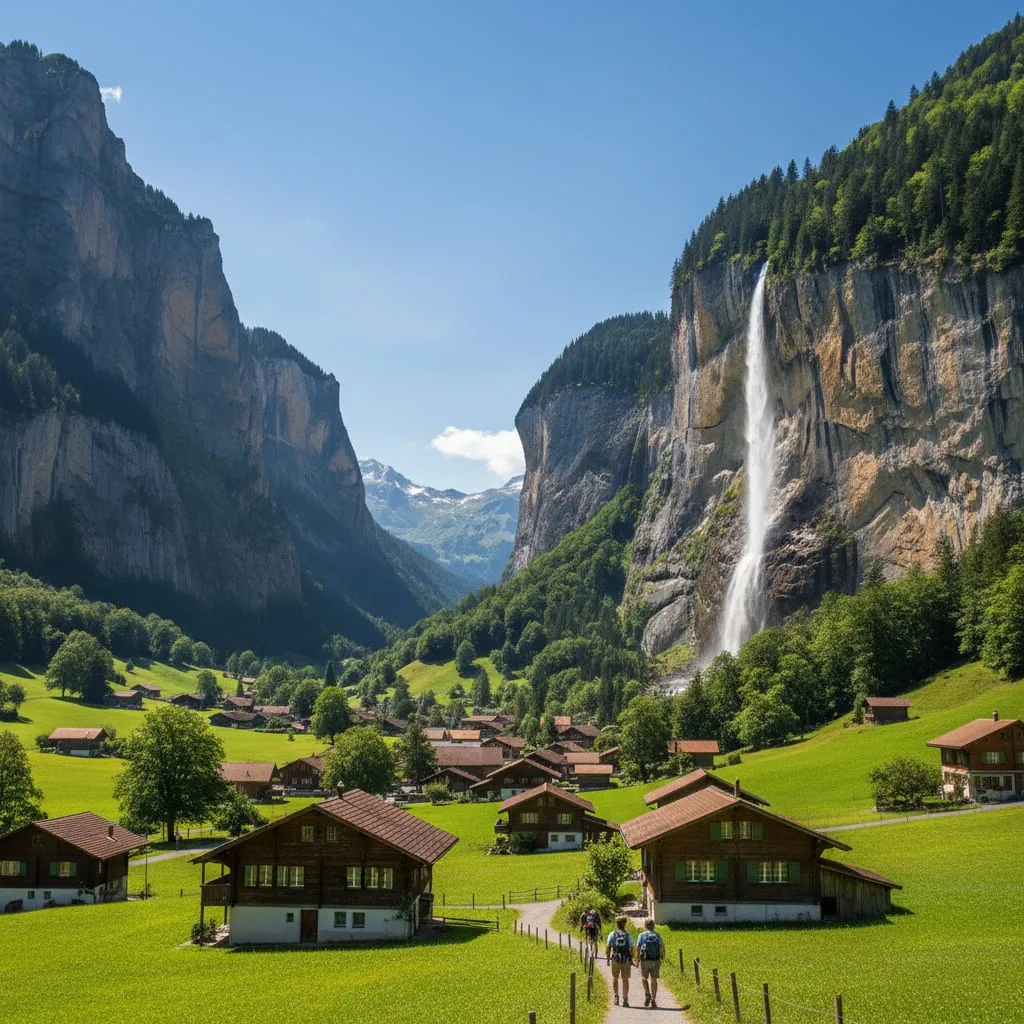
Lauterbrunnen valley, with its 72 waterfalls, is what Rivendell from Lord of the Rings wishes it looked like. Staubbach Falls, right by Lauterbrunnen village, is free to visit.
Daily budget: CHF 100-150 (₹11,660-17,480) excluding accommodation and mountain excursions
Bern (Underrated Capital)
Most Indian tourists skip Bern entirely, which is a mistake. The Swiss capital has a UNESCO World Heritage old town, a quirky bear park, and a gorgeous medieval architecture. It is also noticeably cheaper than other major cities.
One night is the minimum; two is better. The Zytglogge clock tower, the Federal Palace, walking along the Aare River — Bern has a laid-back charm that Zurich lacks completely.
Daily budget: CHF 60-90 (₹6,990-10,490) excluding accommodation
7-Day Switzerland Itinerary with Daily Costs
Here is a sample mid-range itinerary with daily costs (per person, sharing a double room):
Day 1 — Arrive Zurich: Flight lands morning, recover from jet lag, walk around Old Town, early dinner. Costs: Accommodation ₹11,350 + Food ₹4,500 + Transport (from airport) ₹1,100 = ₹16,950
Day 2 — Zurich to Lucerne: Morning in Zurich, train to Lucerne (1 hour), afternoon exploring Chapel Bridge and Old Town. Costs: Accommodation ₹9,600 + Food ₹5,000 + Swiss Pass (day 1) = ₹14,600
Day 3 — Mount Pilatus Day Trip: Golden Round Trip via boat, cogwheel train, and cable car. Stunning views. Costs: Accommodation ₹9,600 + Food ₹4,500 + Pilatus discount ticket ₹4,200 = ₹18,300
Day 4 — Lucerne to Interlaken: Scenic train via GoldenPass line (covered by Swiss Pass), afternoon in Interlaken and Lauterbrunnen. Costs: Accommodation ₹12,250 + Food ₹5,500 = ₹17,750
Day 5 — Jungfraujoch: Full day excursion to Top of Europe. Costs: Accommodation ₹12,250 + Food ₹5,000 + Jungfraujoch ₹17,800 = ₹35,050
Day 6 — Interlaken to Bern: Morning paragliding (optional, not costed), train to Bern, explore capital. Costs: Accommodation ₹5,550 + Food ₹4,000 = ₹9,550
Day 7 — Bern to Geneva, Fly Home: Morning in Bern, train to Geneva, flight home. Costs: Food ₹3,500 + Transport to airport ₹800 = ₹4,300
Total 7 days: ₹1,16,500 (excluding flights and Swiss Pass purchased upfront)
Add flights (₹72,000) and Swiss Pass (₹51,000): Total per person = ₹2,39,500
Switzerland Trip Cost from India for a Couple or a Family of Four
Couples pay less per head than solo travellers because a double room costs the same for one or two people. Using the sample itinerary above (mid-range, 7 days and 6 nights, second-class 8-day Swiss Travel Pass), here is what two people should budget:
| Expense (couple) | Calculation | Total |
|---|---|---|
| Return flights | 2 × ₹72,000 | ₹1,44,000 |
| Swiss Travel Pass, 8 days, 2nd class | 2 × CHF 439 (₹51,000) | ₹1,02,000 |
| Hotels, 6 nights (shared room) | 2 × ₹60,600 | ₹1,21,200 |
| Food, excursions, local transport | 2 × ₹55,900 | ₹1,11,800 |
| Total for two | ₹4,79,000 |
Travelling with children
- Swiss Family Card (free): children aged 6 to 15 travel free on trains, buses and boats when accompanied by a parent holding a Swiss Travel Pass. Children under 6 always travel free. So a family of four on the 8-day pass pays for only the two adult passes (₹1,02,000 in second class).
- Schengen visa fee: €45 (about ₹4,950) for children aged 6-11, and no fee under 6, compared with €90 for adults.
- Travellers aged 16-24: they need their own pass, but the Youth Swiss Travel Pass is about 30% cheaper. The 8-day second-class pass is CHF 311 (about ₹36,300).
- What still adds up: extra flight tickets, a family room or apartment (an apartment with a kitchen also cuts food costs), meals, and children's tickets for mountain excursions not covered by the card.
Money Matters: Forex Tips for Indian Travelers
Swiss Francs (CHF) are expensive to buy in India. The markup at airport exchanges is criminal — often 8-10% above the market rate. Here is what actually works:
Best approach:
- Get a zero forex markup card (Niyo, BookMyForex, IndusInd Pioneer) — check our complete forex card comparison for Indian travelers
- Carry CHF 200-300 (₹23,300-35,000) cash for emergencies — buy from BookMyForex or Thomas Cook (better rates than banks)
- Pay by card everywhere possible (even street vendors accept cards in Switzerland)
Putting most spending on a zero-markup card rather than buying forex cash can save several thousand rupees on a trip of this size.
Visa Requirements for Indian Passport Holders
Switzerland requires a Schengen visa for Indian citizens. You can find official requirements on the Switzerland Tourism official website. Here is the process:
- Where to apply: VFS Global centers (Delhi, Mumbai, Bangalore, Chennai, Kolkata, Hyderabad, Pune, Ahmedabad)
- Processing time: 15 calendar days as standard, up to 45 if extra checks are needed (apply no earlier than 6 months and no later than 15 days before travel; 4-6 weeks ahead is a safe margin)
- Fee: EUR 90 (₹9,900) + VFS service charge (₹2,100)
- Required documents: Confirmed flight bookings, hotel reservations, travel insurance (EUR 30,000 minimum), bank statements (3-6 months), cover letter, employment proof
The Swiss embassy has a high approval rate for Indian applicants with proper documentation.
If you are planning a first-time trip to Europe, check our complete Europe trip planning guide for Indian travelers — it covers visa strategies, itinerary planning, and common mistakes to avoid.
Budget Hacks That Actually Save Money
These are the tips that make a real difference:
- Book accommodation with kitchens — Making your own breakfasts and some lunches can save CHF 100+ (₹11,660) across the week
- Coop and Migros hot food counters — Cheaper than restaurants, better than sandwiches. The hot chicken and salad combos are genuinely good
- Early morning mountain excursions — Better weather, fewer crowds, sometimes early bird discounts
- Skip the scenic train tickets — The regular trains on the same routes are equally beautiful and covered by Swiss Pass. The Glacier Express also needs a paid seat reservation on top of the pass
- Water bottles — Tap water in Switzerland is among the best in the world. Fill your bottle everywhere and save CHF 5-8 per bottled water
- Travel in shoulder season — September and October have better prices and fewer crowds than July-August peak season
Common First-Timer Mistakes to Avoid
The most common regrets after a first Swiss trip:
Skip Zurich entirely: Land, take the train directly to Lucerne. Zurich adds cost without adding much experience.
Add one more night in Interlaken/Lauterbrunnen: Two nights feels rushed; three leaves time for valley hikes.
Book Jungfraujoch tickets online in advance: The lines at Kleine Scheidegg station can be brutal. Online booking saves 30+ minutes of waiting.
Carry more layers: Mountain tops are freezing even in summer. Temperatures at Jungfraujoch can drop below freezing even in September.
Final Verdict: Is Switzerland Worth the Cost for Indian Travelers?
The honest take: at roughly ₹4.8 lakh for a mid-range week for two, Switzerland is expensive, but it delivers on its promise. The mountains, the trains, the villages, the cleanliness, the efficiency — everything works exactly as expected. There is a reason Swiss tourism commands premium prices.
If you are the kind of traveler who counts every rupee and prefers three trips to Thailand over one trip to Switzerland, this country will frustrate you. But if you have been saving specifically for a once-in-a-lifetime European experience, Switzerland delivers that in ways few other destinations can match.
The DDLJ fields exist. The chocolate is as good as advertised. The trains run on time. And standing at 3,454 meters watching the sun hit the Aletsch Glacier — no Instagram photo captures what that actually feels like.
Start planning early, book flights 3 months in advance, get that Swiss Travel Pass, and prepare your bank account. Switzerland is worth it. Your wallet will forgive you eventually.
Planning to ride the Glacier Express or Bernina Express during your Swiss trip? Our guide to the world's most scenic train journeys for Indian travelers covers exact costs, booking tips, and which side of the train to sit on.
Frequently Asked Questions
How much does a 7-day Switzerland trip cost from India?
A 7-day Switzerland trip from India costs approximately ₹2.5-4 lakhs per person including flights (₹55,000-80,000), Swiss Travel Pass (₹51,000-81,000), accommodation (₹8,000-25,000/night), food (₹3,000-6,000/day), and mountain excursions (₹5,000-8,000 each). Budget travelers can manage with ₹2.5 lakhs while comfortable mid-range trips cost around ₹3.5 lakhs.
Is the Swiss Travel Pass worth it for Indian tourists?
Yes, the Swiss Travel Pass is absolutely worth it for most Indian tourists visiting multiple cities over 4+ days. The 8-day consecutive pass costs around ₹51,000 in second class (₹81,000 in first) but covers unlimited train, bus, and boat travel plus free entry to 500+ museums. You also get 25-50% discount on mountain railways like Jungfraujoch.
Which is better - Jungfraujoch or Titlis for first-time visitors?
Jungfraujoch (Top of Europe) is better for first-time visitors despite being more expensive. The train journey through Eiger and Monch mountains is spectacular, and the summit views at 3,454m are unmatched. Titlis has a rotating cable car but the overall experience is less memorable.
What is the cheapest time to visit Switzerland from India?
November to mid-December (excluding Christmas) and January-February offer the cheapest prices. Flight costs drop to ₹45,000-55,000 return, hotels are 30-40% cheaper. However, some mountain excursions may have limited operations.
How much cash should I carry to Switzerland from India?
Carry CHF 200-300 (₹23,300-35,000) in cash for emergencies. Switzerland is highly card-friendly — even small vendors accept cards. Use a zero forex markup card like Niyo or BookMyForex to avoid currency conversion charges on card payments.
Planning this trip?
Tell us roughly when and how many — our travel expert sends you a custom quote, usually within a few hours.