

Street Food Capitals of the World: A Food Trail Guide from India
In this guide (17)
- Why Street Food Capitals Matter for Indian Foodies
- 1. Bangkok — The King of Street Food Capitals
- 2. Penang, Malaysia — Where Indian Flavours Meet Chinese Craft
- 3. Singapore — Street Food Capitals Go Michelin
- 4. Istanbul, Turkey — Where East Literally Meets West
- 5. Ho Chi Minh City, Vietnam — The Pho Phenomenon
- 6. Tokyo, Japan — Premium Among Street Food Capitals
- 7. Seoul, South Korea — Spice Kings Recognise Spice Kings
- 8. Mexico City — Distant but Worth Every Hour of Flight
- 9. Marrakech, Morocco — Sensory Overload in the Medina
- 10. Taipei, Taiwan — Night Market Royalty
- 11-15: More Street Food Capitals Worth Planning
- Best Street Food Capitals for Vegetarian Indian Travelers
- Hygiene Tips: How to Eat Street Food Without Getting Sick
- Budget Guide for Street Food Capitals Worldwide
- Practical Planning for Food-Focused Trips
- The Bottom Line: Start with Bangkok, End Wherever Your Stomach Leads
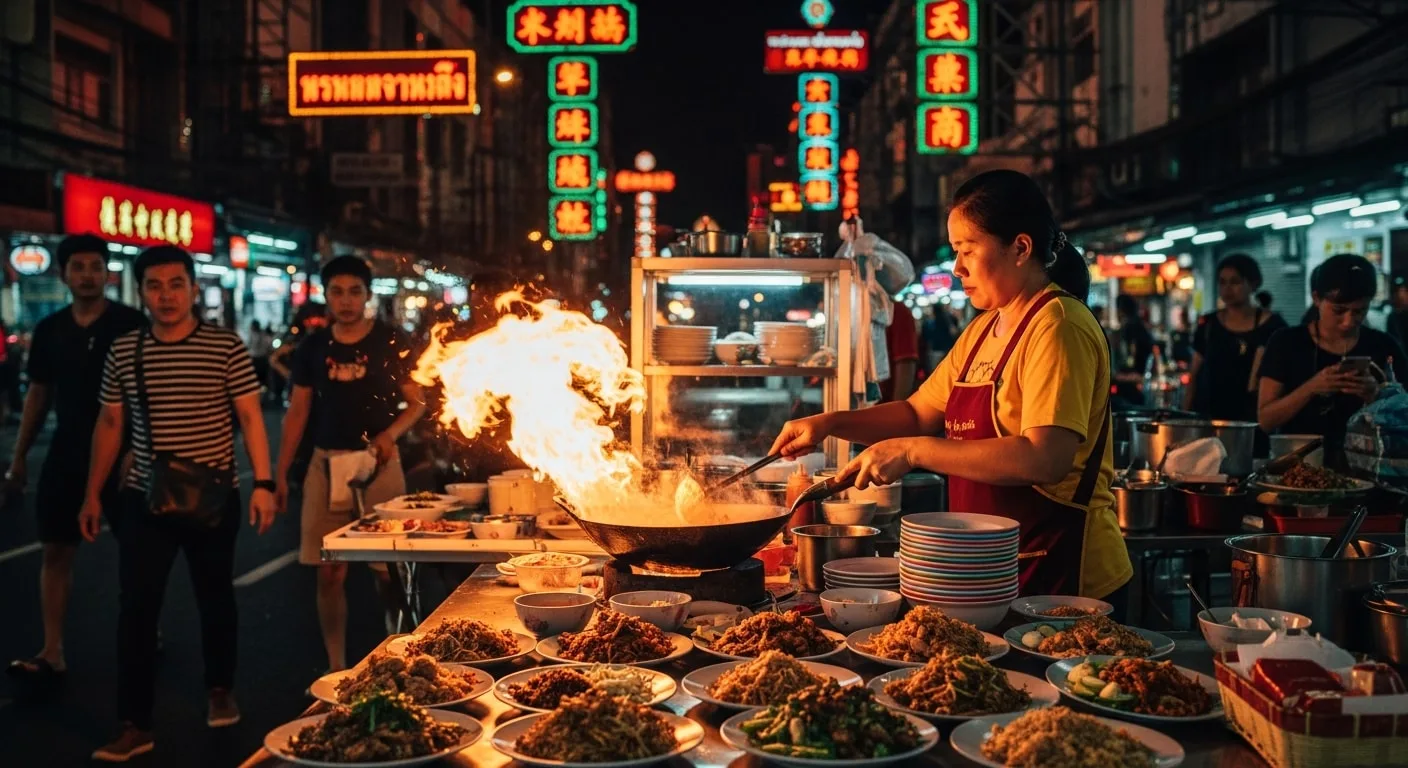
I once spent three hours at a single Yaowarat stall in Bangkok, not because the queue was long, but because I kept ordering more. The street food capitals that Indian travelers dream about aren't Michelin-starred restaurants or fancy food halls—they're the plastic stools, fluorescent lights, and wok-fired chaos that define real culinary adventure. These street food capitals offer the most authentic eating experiences on earth.
Over twelve years of chasing good food across continents, I've learned that the greatest meals often cost less than a fancy coffee. Whether you're hunting for vegetarian options (harder than you'd think outside India), dodging sketchy hygiene, or just trying to figure out what to point at on a menu you can't read—I've made the mistakes so you don't have to. Here's the definitive guide to the world's top street food capitals, complete with real prices in rupees, hygiene ratings, and the honest truth about where vegetarians will thrive versus barely survive.
Why Street Food Capitals Matter for Indian Foodies
Restaurant food tells you what a country wants tourists to eat. Street food tells you what the people actually eat. There's a reason Anthony Bourdain spent more time at market stalls than hotel restaurants. And for Indians specifically, street food culture isn't foreign—we've grown up with chaat walas, dosa carts, and pav bhaji stalls. We understand that the best food often comes from the simplest setup.
But visiting international street food capitals requires adjustment. Spice levels differ. Vegetarian options range from abundant (Taiwan) to nearly non-existent (parts of Mexico). Hygiene standards vary wildly. Payment can be cash-only or surprisingly card-friendly. This guide to the world's street food capitals addresses all of it, ranked specifically for the Indian palate and traveller mindset.
1. Bangkok — The King of Street Food Capitals
No other city comes close for Indian street food travellers. Bangkok wins on every metric that matters: price, variety, accessibility, and the sheer density of options. Walk down any soi (lane) and you'll pass a dozen food carts within a hundred metres. Yaowarat (Chinatown) at night transforms into one long outdoor kitchen, with smoke and steam and the clatter of woks creating a sensory overload in the best possible way. Among all street food capitals worldwide, Bangkok consistently tops every ranking.
What to eat: Pad Thai (₹60-120), mango sticky rice (₹80-150), boat noodles (₹50-80 per bowl—order several), grilled satay (₹100 for 6-8 sticks), som tam papaya salad (₹60-100). The tom yum soup alone justifies the flight. For Indians, the spice level feels familiar without being overwhelming.
Vegetarian verdict: Good, not great. Pad Thai veggie is everywhere. Fresh spring rolls are abundant. But fish sauce hides in many dishes—always ask "mai sai nam pla" (no fish sauce). Buddhist vegetarian stalls exist in markets and near temples.
Hygiene rating: 7/10. High turnover keeps food fresh. Avoid the stuff that's been sitting out.
For a complete Bangkok itinerary including food markets and night walks, check out our Bangkok itinerary for Indian travelers. The Tourism Authority of Thailand also provides excellent food trail recommendations.
2. Penang, Malaysia — Where Indian Flavours Meet Chinese Craft
If Bangkok is the king, Penang is the crown prince that Indians will love even more. The reason? Mamak stalls. These Indian-Muslim hawker joints serve roti canai, murtabak, nasi lemak, and teh tarik—all familiar to the Indian palate but with a Malaysian twist. Add Chinese hawker expertise for char kway teow and Hokkien mee, and you've got one of Asia's most underrated street food capitals.
What to eat: Char kway teow (₹80-120), nasi lemak (₹50-90), roti canai with dhal (₹40-70), Penang laksa (₹70-100), cendol (₹40-60), pasembur (Indian-style salad with peanut sauce). The Mamak stalls are open 24/7—perfect for late-night hunger.
Vegetarian verdict: Excellent. Roti canai is your friend. Multiple vegetarian options at every hawker centre. Indian restaurants scattered throughout George Town serve pure veg meals.
Hygiene rating: 8/10. Malaysia takes food safety seriously. Hawker licences are strictly monitored.
I've written extensively about the Penang food guide with walking trail—it covers specific stalls, addresses, and what to order at each.

3. Singapore — Street Food Capitals Go Michelin
Singapore proved to the world that street food deserves recognition when two hawker stalls earned Michelin stars—and kept their prices under ₹250. The hawker centre system here is extraordinary: government-subsidised food courts where chefs pay low rent and customers pay low prices. Cleanliness is obsessive. Air conditioning exists in many. Singapore stands unique among street food capitals for its regulated excellence.
What to eat: Hainanese chicken rice at Tian Tian (₹180-240), char kway teow, roti prata (Singapore's roti canai), chilli crab (splurge meal, ₹1500+), kaya toast breakfast set (₹150), carrot cake (radish-based, not orange). Visit Maxwell Food Centre, Old Airport Road, and Chinatown Complex for the best concentration.
Vegetarian verdict: Very good. Little India's hawker centres have dedicated vegetarian stalls. Chinese Buddhist vegetarian options are available. Just be careful with oyster sauce in Chinese dishes.
Hygiene rating: 9.5/10. The cleanest street food on earth. Every stall displays a hygiene grade (A, B, C)—stick to A and B.
Singapore makes an excellent first street food destination for nervous travellers. Read our Singapore travel guide for first-time visitors for logistics.
4. Istanbul, Turkey — Where East Literally Meets West
Turkish street food operates on a different frequency. It's heavier, meatier, and built around bread in ways that Indians will immediately appreciate. The simit (sesame bread ring) is Turkey's answer to the vada—cheap, portable, satisfying. And the kebab variations here aren't the greasy British takeaway versions; they're refined, charcoal-grilled perfection. Istanbul deserves its place among the great street food capitals.
What to eat: Doner kebab (₹200-350), balik ekmek (fish sandwich at Galata Bridge, ₹250), simit with cheese and tomato (₹80-120), lahmacun (Turkish pizza, ₹120-180), kunefe for dessert (₹180-250), fresh pomegranate juice (₹150). The Grand Bazaar area has excellent street food concentrated in Eminonu and Kadikoy.
Vegetarian verdict: Moderate. Falafel wraps are everywhere. Pide (Turkish pizza) comes vegetarian. But street food skews heavily meat-focused. You'll survive, but won't thrive.
Hygiene rating: 7/10. Variable. Stick to busy stalls with visible grilling.
5. Ho Chi Minh City, Vietnam — The Pho Phenomenon
Vietnam's food capital operates at ground level—literally. You'll eat on tiny plastic stools that require genuinely flexible knees, hovering inches above sidewalk chaos. But the payoff is some of the freshest, most herbaceous food on earth. Pho at 6 AM is an experience no Indian should miss—it rewires your understanding of breakfast.
What to eat: Pho bo (beef noodle soup, ₹80-150), banh mi (baguette sandwich, ₹60-100), goi cuon (fresh spring rolls, ₹70-100), com tam (broken rice plate, ₹100-150), ca phe sua da (Vietnamese iced coffee, ₹50-80). District 1 and Ben Thanh Market are tourist-friendly; District 4 offers more authentic local scenes.
Vegetarian verdict: Challenging. Fish sauce is in everything. "Chay" (vegetarian) restaurants exist, but street food is tough. Fresh spring rolls can be made vegetarian—specify no meat.
Hygiene rating: 6/10. Lower than Thailand. Look for crowded stalls, hot food, and quick turnover.
6. Tokyo, Japan — Premium Among Street Food Capitals
Japanese street food shatters the cheap-eats stereotype. Prices run higher, but quality is unmatched. The 7-Eleven onigiri alone is better than most restaurants' rice dishes. Tsukiji Outer Market (still operating despite the fish market move) offers the freshest seafood street food on the planet. And yakitori alleys under train tracks are quintessentially Tokyo. As far as street food capitals go, Tokyo represents the premium tier.
What to eat: Ramen from specialist shops (₹500-800), yakitori (₹150-250 for 3 skewers), takoyaki octopus balls (₹250-350), tamagoyaki rolled omelette (₹150-200), convenience store onigiri (₹80-120), melon pan (sweet bread, ₹100-150). Shinjuku's Omoide Yokocho and Shibuya's back alleys are prime hunting grounds.
Vegetarian verdict: Difficult. Fish stock (dashi) is in almost everything. Vegetarian ramen exists but requires research. Temple areas (Kamakura, Kyoto) have better Buddhist vegetarian options.
Hygiene rating: 10/10. Japan doesn't do dirty food. Period.
7. Seoul, South Korea — Spice Kings Recognise Spice Kings
Koreans understand chilli like Indians do. The gochugaru (red pepper flakes) and gochujang (fermented pepper paste) create heat that feels familiar to us. Gwangjang Market is the mothership—Korea's oldest market with rows of vendors serving tteokbokki, bindaetteok, and bibimbap to locals who've been eating here for generations.
What to eat: Tteokbokki spicy rice cakes (₹150-250), Korean fried chicken (₹600-900 for a portion), kimbap (Korean sushi rolls, ₹200-300), hotteok (sweet pancakes, ₹100-150), odeng (fish cake soup, ₹80-120). Myeongdong has tourist-friendly options; Gwangjang and Namdaemun Markets offer the real experience.
Vegetarian verdict: Improving but still difficult. Kimchi often contains shrimp paste. Bibimbap can be vegetarian. Korean temple food (Buddhist vegetarian) is excellent but not strictly street food.
Hygiene rating: 8.5/10. Very clean by Asian standards.
8. Mexico City — Distant but Worth Every Hour of Flight
The taco is overrated in tourist contexts and underrated in its authentic form. Real Mexico City tacos are small, doubled-up corn tortillas with simply grilled meat, onion, cilantro, and salsa. No cheese waterfall. No sour cream flood. Just pure flavour. Tacos al pastor—spit-roasted pork with pineapple—borrows its technique from Lebanese shawarma, creating something entirely unique. Mexico City ranks among the world's essential street food capitals.
What to eat: Tacos al pastor (₹50-80 each, order several), elotes (grilled corn with chilli and lime, ₹100-150), churros (₹80-120), tamales (₹100-150), tortas (Mexican sandwiches, ₹200-300). Roma Norte, Condesa, and Centro Historico have excellent taqueria concentration.
Vegetarian verdict: Moderate. Quesadillas can be cheese-only. Elotes are vegetarian. Vegetable tamales exist. But lard is common in cooking, and vegetarianism isn't well understood.
Hygiene rating: 6/10. Montezuma's revenge is real. Build up slowly, stick to busy stalls, avoid agua fresca (fresh water drinks) from street vendors.
9. Marrakech, Morocco — Sensory Overload in the Medina
Jemaa el-Fnaa square at dusk transforms into Africa's most dramatic street food scene. Smoke rises from dozens of identical-looking stalls (the competition is fierce), vendors shout for attention, and the chaos is magnificent. Tagine isn't strictly street food, but the snail soup and msemen flatbreads are. Marrakech earns its place among the most atmospheric street food capitals anywhere.
What to eat: Msemen (Moroccan flatbread, ₹30-60), snail soup (₹80-120), fresh orange juice (₹50-80), lamb mechoui (slow-roasted lamb, ₹300-500 per portion), merguez sausage (₹150-200), pastilla (sweet-savoury pie). The Medina food stalls open after sunset; daytime belongs to the juice carts.
Vegetarian verdict: Fair. Couscous with vegetables is common. Msemen is vegetarian. Zaalouk (eggplant dip) and harira soup (often meat-free) work. But Morocco is meat-centric overall.
Hygiene rating: 5.5/10. Variable. Tourist-heavy Jemaa el-Fnaa stalls can be dodgy. Follow locals to less theatrical venues.
Planning a Morocco trip? See our Morocco trip cost guide from India for budgeting details.
10. Taipei, Taiwan — Night Market Royalty
Taiwan invented the modern night market as we know it. Shilin, Raohe, and Ningxia markets operate with military precision—organised chaos that somehow feeds thousands every night. The variety is overwhelming: stinky tofu (it's an acquired smell), bubble tea origin stories, and gua bao (the Taiwanese hamburger) compete for attention. Taiwan's night markets make it one of Asia's best street food capitals.
What to eat: Bubble tea at any of ten thousand vendors (₹150-250), gua bao braised pork bun (₹120-180), stinky tofu (₹100-150, if you dare), oyster omelette (₹150-200), scallion pancakes (₹80-120), shaved ice desserts (₹100-180). Shilin is biggest and most famous; Raohe has better quality.
Vegetarian verdict: Excellent. Taiwan has strong Buddhist vegetarian culture. Night markets have dedicated veggie stalls. Look for "素食" (su shi) signs. One of the best destinations for Indian vegetarians.
Hygiene rating: 8/10. Taiwan takes food safety seriously. Night markets are regularly inspected.
11-15: More Street Food Capitals Worth Planning
Lima, Peru: Ceviche and anticuchos (beef heart skewers) define street eating. Fresh seafood at Mercado de Surquillo. Vegetarian options limited but improving. Budget ₹1200-1800/day.
Hong Kong: Dai pai dong (open-air food stalls) serving char siu, egg waffles, and milk tea. Excellent hygiene. Vegetarian options in Buddhist areas. Budget ₹800-1500/day.
Osaka, Japan: The "Kitchen of Japan" does takoyaki, okonomiyaki (savoury pancakes), and kushikatsu better than Tokyo. Dotonbori is food Disneyland. Budget ₹1200-2000/day.
Kolkata, India: Yes, India makes the list. Kathi rolls, phuchka, and mishti doi deserve global recognition. Our street food is world-class—sometimes we need perspective to remember.
Cairo, Egypt: Koshari (carb-bomb of rice, pasta, and lentils) is India-friendly. Ful medames (stewed beans) and falafel are vegetarian staples. Budget ₹600-900/day.
Best Street Food Capitals for Vegetarian Indian Travelers
Vegetarianism abroad requires strategy. Based on genuine experience, here's my ranked list of the best street food capitals for vegetarian Indians:
- Singapore — Little India hawker centres, Buddhist vegetarian stalls, clear labelling
- Taipei, Taiwan — Strong Buddhist vegetarian culture, dedicated night market stalls
- Penang, Malaysia — Roti canai, Indian restaurants, clear Indian-influenced options
- Bangkok, Thailand — Requires fish sauce awareness but manageable with "mai sai nam pla"
- Istanbul, Turkey — Falafel, pide, and cheese-based options work
For a complete guide to eating vegetarian abroad, see our comprehensive vegetarian guide abroad for Indian travelers.
Hygiene Tips: How to Eat Street Food Without Getting Sick
The fear of "Delhi belly abroad" stops too many Indians from exploring street food capitals. Here's how to eat boldly but safely:
- Watch the fire: If your food is cooked fresh in front of you, over high heat, it's safer than sitting in a warming tray.
- Follow the crowds: High turnover means fresh food. Empty stalls mean food sitting longer.
- Skip the ice: In developing countries, ice is often made from tap water. Bottled drinks are safer.
- Avoid pre-cut fruit: The knife and cutting board introduce bacteria. Whole fruits you peel yourself are fine.
- Start slow: Don't go all-out on day one. Let your stomach adjust to local bacteria gradually.
- Carry Imodium: Not for regular use, but emergencies happen. Also pack ORS sachets.
- Check reviews: Google Maps reviews often mention if a place caused stomach issues.
Budget Guide for Street Food Capitals Worldwide
Street food is cheap, but countries vary wildly. Here's a realistic daily food budget per person, eating primarily street food:
- Bangkok: ₹500-700/day (3 meals + snacks + drinks)
- Penang: ₹450-650/day
- Singapore: ₹700-1000/day (slightly pricier but still cheap)
- Vietnam: ₹400-600/day
- Tokyo: ₹1500-2500/day (Japan is expensive)
- Seoul: ₹1200-1800/day
- Istanbul: ₹800-1200/day
- Mexico City: ₹1000-1500/day
- Marrakech: ₹600-900/day
- Taipei: ₹900-1400/day
These budgets assume you're eating like a local, not at tourist-trap restaurants. Add 30-40% if you want occasional sit-down restaurant meals.
Practical Planning for Food-Focused Trips
Visiting street food capitals requires different logistics than standard tourism. Consider these factors:
Best months: Avoid monsoons in Southeast Asia (June-September) when outdoor eating becomes unpleasant. Istanbul summers are hot but street food season peaks then. Night markets operate year-round in Taiwan.
Language: Learn "vegetarian," "no meat," "no fish sauce," and "how much" in local languages. These four phrases solve 90% of ordering issues.
Visas: Thailand, Malaysia, and Taiwan offer visa-free or visa-on-arrival for Indians (check current rules). Turkey has e-visa. Singapore, Japan, Korea, and Mexico require advance visas.
Flights: Budget airlines (AirAsia, Scoot, IndiGo International) make Southeast Asian street food capitals surprisingly affordable. A Bangalore-Bangkok return can cost ₹8,000-15,000 in off-peak seasons.
For adventure-focused food travel, see our guide to adventure travel destinations from India—many overlap with great street food cities.
The Bottom Line: Start with Bangkok, End Wherever Your Stomach Leads
After dozens of countries and hundreds of street meals, my advice is simple: begin in Southeast Asia, build your confidence and stomach bacteria, then expand outward. Bangkok and Singapore are forgiving first destinations among street food capitals. Penang is the vegetarian's paradise. Tokyo is for when you want perfection. Mexico City is for when you want adventure.
The street food capitals aren't hiding from Indian travelers—they're waiting for us. We've grown up understanding that good food doesn't require fancy settings. We know that a dosa from a cart can beat a five-star hotel breakfast. That understanding translates beautifully overseas.
Book a flight. Pack light. Bring antacids just in case. And eat everything.
Quick Reference: Street Food Capitals at a Glance
- Best overall: Bangkok, Thailand
- Best for vegetarians: Singapore / Taipei
- Best value: Vietnam / Penang
- Best hygiene: Tokyo / Singapore
- Most adventurous: Mexico City / Marrakech
- Easiest for first-timers: Singapore
- Best for spice lovers: Seoul / Bangkok