

Slow Travel from India: Why Staying Longer in One Place Beats City-Hopping
In this guide (14)
- What Slow Travel from India Actually Means
- Why Indians Over-Pack Itineraries (And Pay More)
- Real Cost Savings of Extended Stay Travel
- Best Destinations for Slow Travel from India
- What a Typical Slow Travel Day Looks Like
- Slow Travel as Workation: Perfect Combination
- Building Local Connections: The Superpower
- Visa Duration Considerations for Indian Passports
- Slow Travel from India with Family
- Environmental Benefits: Sustainable Exploration
- Packing for Extended Stays
- Two-Week Itinerary Comparison: Fast vs Slow
- Starting Your Slow Travel Journey
- The Slow Travel Revolution
Slow travel from India is the antidote to exhausting vacations. I spent seven days in Europe once. Seven days, four countries, six cities. By day five, I couldn't remember which cathedral was in which city. My Instagram looked impressive. My actual memories? A blur of airport lounges and luggage carousels.
That trip cost me ₹2.4 lakhs. Two years later, I spent three weeks in a single Portuguese fishing village for ₹1.8 lakhs. I learned to cook caldeirada from my landlord's mother. The barista at my favourite café knew my name. Extended stays transformed how I experience the world entirely. One trip gave me content; the other gave me a life chapter.
This guide reveals why slow travel from India is the 2026 mega-trend for burnt-out travellers. If you're tired of returning from vacations more drained than when you left, keep reading. Because the most radical travel statement isn't visiting 10 countries. It's going to one place and actually being there.
What Slow Travel from India Actually Means
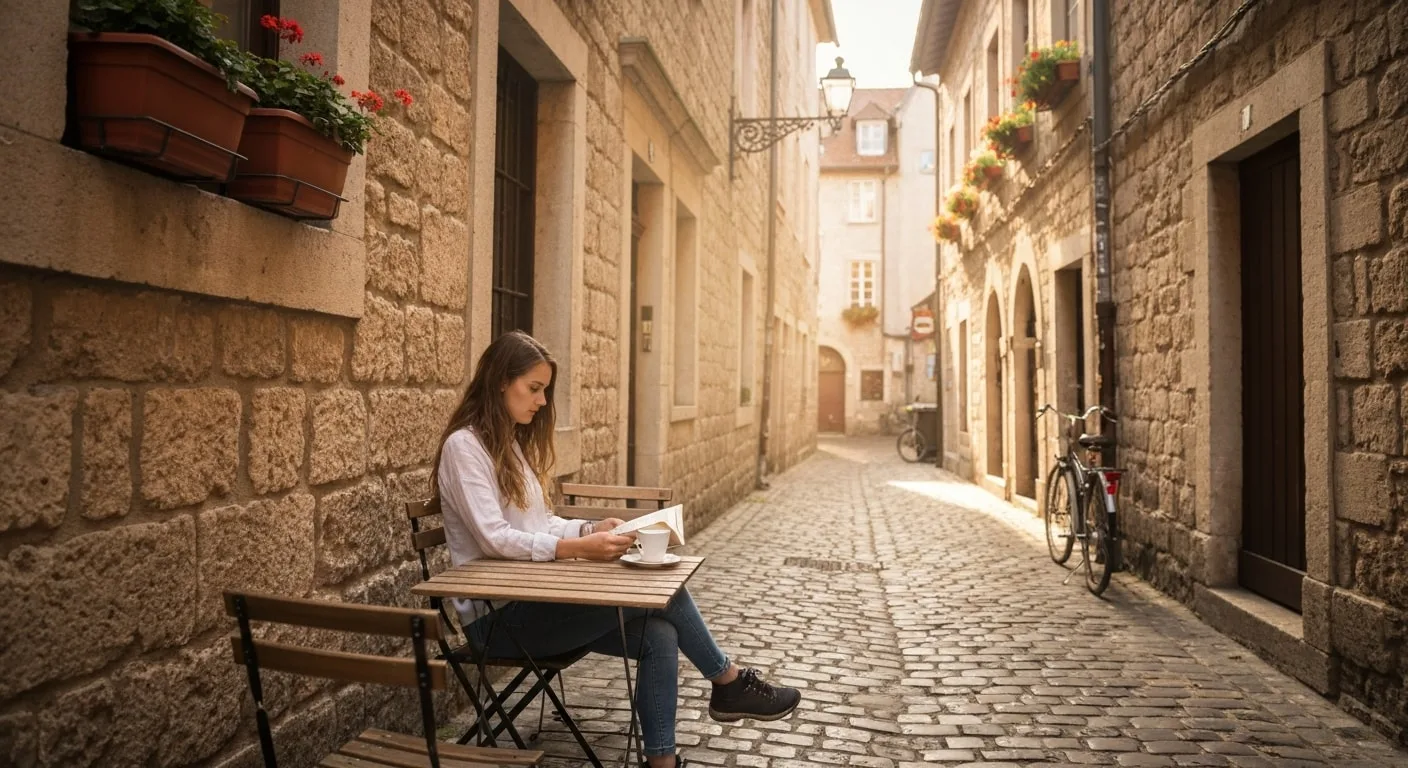
Slow travel isn't about being lazy or seeing less. It's about choosing depth over breadth. Instead of cramming five cities into seven days, you spend two to four weeks in a single destination. You rent an apartment instead of booking hotels. You grocery shop at local markets instead of eating every meal at restaurants. Walking replaces taxis. You return to the same café three times because you liked the owner's stories.
The concept emerged from the Slow Food movement in Italy during the 1980s, a rebellion against fast food culture. Slow travel applies the same philosophy to how we move through the world. Quality over quantity. Experience over checkboxes.
What slow travel is NOT: sitting in your accommodation doing nothing. It's not an excuse to be unambitious with your trip. A slow traveller in Lisbon might take a day trip to Sintra, learn to make pastéis de nata, explore five different neighbourhoods on foot, attend a fado concert, and befriend three local families. They accomplish all this over three weeks instead of three days.
Why Indians Over-Pack Itineraries (And Pay More)
There's a specific Indian travel sickness I've observed. We call it "since we're going so far" syndrome. Since we're flying to Europe anyway, might as well see Paris AND Rome AND Barcelona AND Amsterdam. Since we've taken leave from work, might as well maximize countries per day. Since flight tickets cost so much, might as well see everything.
This thinking is economically backwards. Here's the math nobody does:
A 10-day multi-city Europe trip typically costs ₹3-4 lakhs for a couple. Flights between cities, hotel check-ins and check-outs, rushed meals at tourist spots, guided tours because you don't have time to explore independently, and the sheer exhaustion tax of constant movement.
Slow travel from India to a single European destination costs ₹2.5-3 lakhs for 21 days. One international flight, one monthly Airbnb rental with kitchen, groceries from local supermarkets, time to find the cheap local restaurants, no intercity transport costs, no tourism-speed pricing.
The expensive trip gives you photos of ten landmarks. The cheaper trip gives you a second home somewhere in the world.
Real Cost Savings of Extended Stay Travel
Let me break down why extended stays cost less. This is where slow travel from India becomes genuinely revolutionary for budgets.
Accommodation Discounts
Airbnb offers weekly discounts (typically 10-20% off) and monthly discounts (typically 30-50% off). A ₹5,000 per night apartment becomes ₹2,500 per night for monthly stays. Over three weeks, that's a saving of ₹52,500 on accommodation alone.
Better still, extended stays let you negotiate directly. I've messaged Airbnb hosts asking for longer-term rates and received discounts of 40-60% for 3-4 week bookings. Hosts love guaranteed reservations without turnover hassle.
Cooking Economics
Restaurant meals in tourist destinations average ₹1,500-3,000 per person for lunch and dinner in Europe. Groceries for home-cooked meals? Around ₹400-600 per day for two people. Eating breakfast and lunch at home while dining out for dinner saves ₹2,000-4,000 daily compared to the full restaurant approach.
This isn't about deprivation. Some of my best meals happened while practising slow travel. They were special meals, anticipated and savoured, not rushed tourist-trap feeding between landmarks.
Local Pricing Access
When you stay somewhere for weeks, you find the local spots. The bakery where a pastry costs ₹80 instead of ₹300 at the tourist café. The neighbourhood restaurant with ₹400 lunch sets instead of ₹1,500 tourist menus. The laundromat instead of hotel laundry services. A local SIM card instead of international roaming.
Slow travellers accidentally become temporary locals, and temporary locals pay local prices.
Transport Elimination
Multi-city trips involve flights, trains, buses, taxis to stations, storage lockers, and the mental cost of navigation anxiety. Slow travel from India means one arrival, one departure. During your stay, walking and local public transport replace expensive taxis. No intercity train tickets at ₹8,000 per leg. No domestic flight add-ons at ₹15,000 each.
Best Destinations for Slow Travel from India
Not every destination suits slow travel equally. The ideal slow travel spot has affordable monthly stays, interesting neighbourhood culture, good walkability, visa accessibility for Indians, and enough variety to fill weeks without constant touristing.
Bali, Indonesia (Ubud or Canggu)
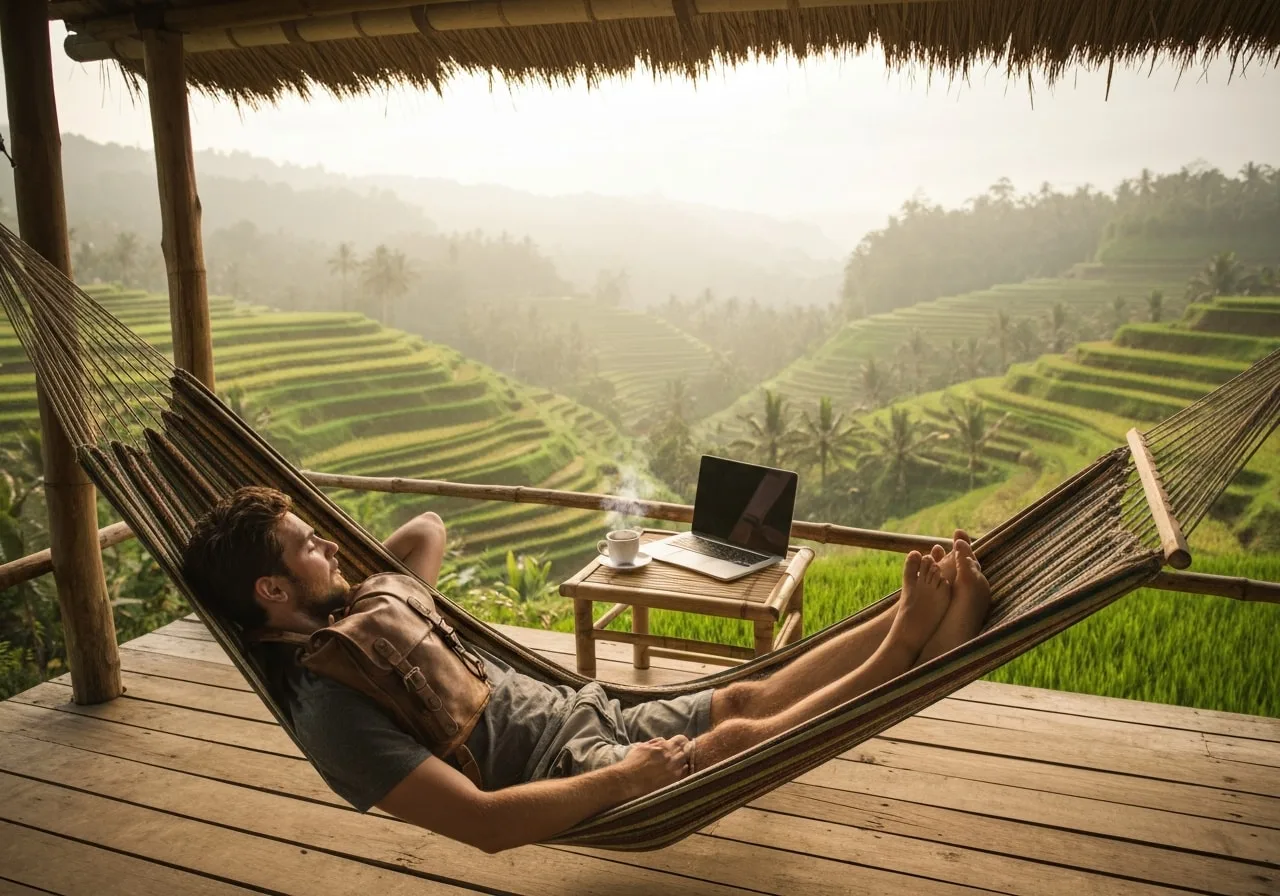
The original digital nomad paradise works beautifully for extended stays. Ubud offers rice terrace walks, yoga studios, and artistic community. Canggu brings beaches and surf culture. Monthly villa rentals with pools start at ₹60,000. Visa on arrival gives 30 days, extendable to 60. Direct flights from major Indian cities make this the most accessible option. Check Indonesia Tourism for current entry requirements. The vibe here is so established that you'll find weekly events, co-working spaces, and communities specifically for long-stay travellers. Our workation abroad from India guide covers combining Bali with remote work.
Chiang Mai, Thailand
Thailand's northern cultural capital has been welcoming extended-stay travellers for decades. Around ₹40,000 gets you a lovely serviced apartment for a month. Street food costs ₹100-200 per meal. The old city is entirely walkable. Temples, cooking classes, coffee culture, and nature are all accessible without rushing. Thailand now offers 30-day visa-free entry for Indians with recent passport validity, making three-week stays simple. The Tourism Authority of Thailand has excellent planning resources.
Tbilisi, Georgia
Georgia's underrated capital might be the world's best slow travel value for Indians. Most Indian passport holders need a Georgian e-visa, though those holding a valid US, UK or Schengen visa or residence permit can stay visa-free for up to 90 days in any 180. Monthly apartments in the charming old town cost ₹35,000-50,000. Wine is ludicrously cheap. The food is hearty and affordable. The city mixes ancient churches with Soviet architecture and hipster cafés. Perfect for travellers who want European aesthetics without European prices.
Lisbon or Porto, Portugal
Portugal has become a slow travel institution. Both cities offer excellent walkability, café culture made for lingering, and monthly apartment options from ₹80,000. The Schengen visa works for 90-day stays. Porto is smaller and cheaper. Lisbon has more variety. Either rewards weeks of exploration with layered discoveries that day-trippers miss entirely.
Hoi An, Vietnam
This UNESCO-listed town on Vietnam's central coast was built for slow absorption. Ancient architecture, tailoring culture, beach access, and cooking traditions that demand participation rather than observation. Monthly rentals from ₹30,000. E-visa gives 90 days. The pace here forces slowness. You can't rush through Hoi An. It makes you sit, watch, and eventually belong.
Medellín, Colombia
South America's most pleasant city has perfect weather, genuine neighbourhoods, and a cost of living that makes extended stays ridiculous value. Monthly apartments from ₹45,000. Visa-free entry for 90 days. The catch is flight cost and time from India. But if you're planning a sabbatical or extended break, three weeks in Medellín delivers more transformation than three days in five cities.
Kotor, Montenegro
This tiny walled town on a fjord-like bay is slow travel perfection. Medieval streets, mountain hikes, Adriatic swimming, and very few tourists outside summer peak. Monthly stays from ₹50,000. Easy Schengen visa access. The town is so small you'll know every shopkeeper within a week.
What a Typical Slow Travel Day Looks Like
Let me give you a real day from my three weeks in Porto last autumn. This is the texture that city-hopping can never offer.
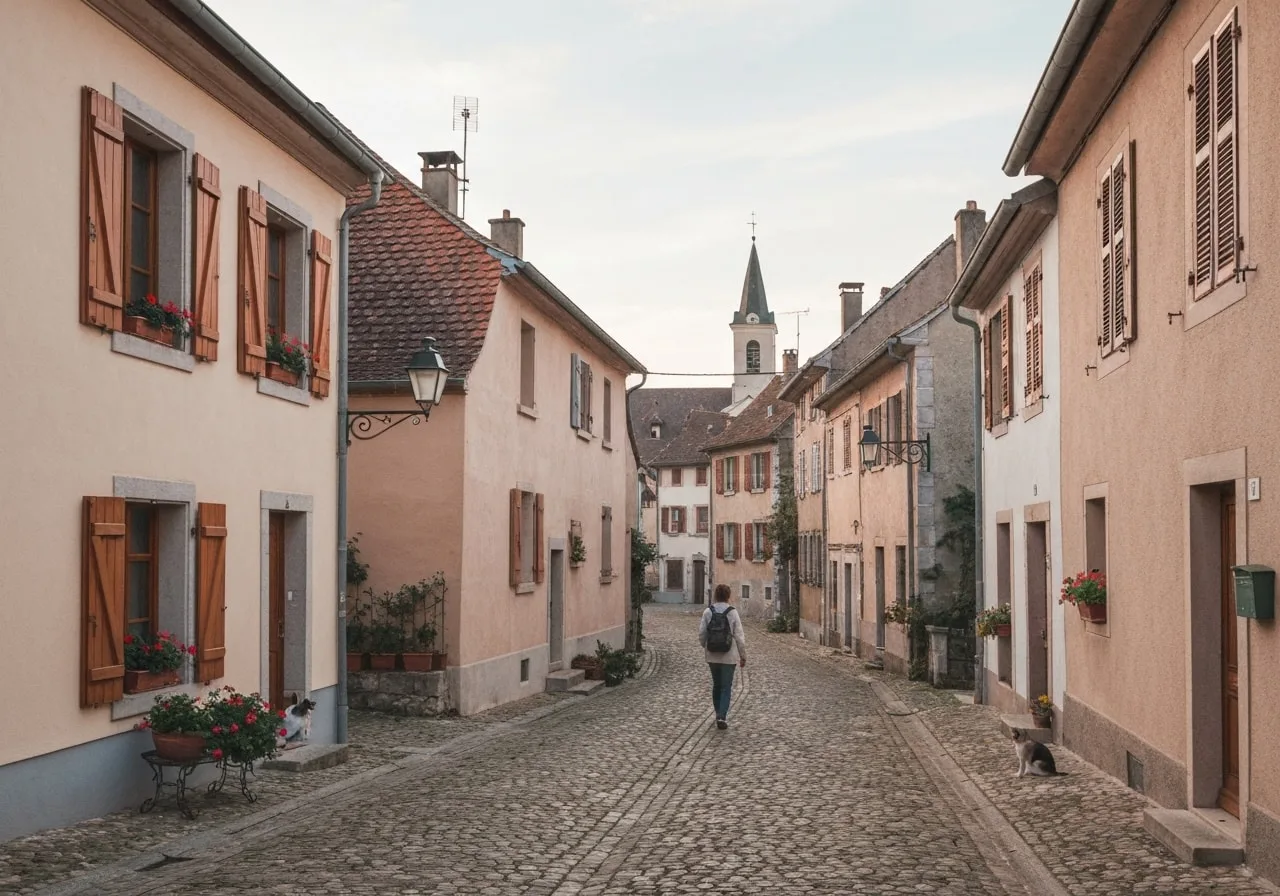
My morning started without an alarm around 8 AM. I made coffee in my apartment kitchen using beans from the roaster I'd discovered on day three. Then came a ten-minute walk to my favourite pastelaria for a nata and people-watching. Back home, work occupied three hours (I was doing a workation). Lunch was leftover caldo verde I'd made the previous night.
That afternoon brought exploration of a neighbourhood I hadn't seen yet. Getting lost deliberately led to discoveries. A bookshop appeared where the owner spoke no English but showed me photographs of Porto from the 1960s. I bought a used book I couldn't read as a souvenir. Had a beer at a local tasca where everyone was watching football.
Evening meant cooking dinner with vegetables from the market. Reading on the apartment balcony followed. Then a walk to the river to watch sunset from the same spot I'd found on day two and returned to five more times.
No museums. No must-sees. No checking off landmarks. But somehow, more memorable than any whirlwind tour.
Slow Travel as Workation: Perfect Combination
Slow travel from India and remote work fit together naturally. Extended stays eliminate travel fatigue, letting you maintain productivity. A single timezone means consistent meeting schedules. Routines create work-life structure that one-night hotel hops destroy.
For Indian remote workers considering a workation, this approach removes the guilt of "not seeing enough." You're not on vacation. You're living somewhere else temporarily. There's no pressure to tourist every day. Having boring Tuesday nights where you order in and watch Netflix is perfectly acceptable. That's the point.
Many destinations have established co-working scenes. Bali, Chiang Mai, Lisbon, and Medellín all offer daily or weekly co-working passes if you need office structure. A good café and apartment WiFi usually suffice though. Our digital nomad visa guide for Indians covers which countries offer official remote work permits for extended stays.
Building Local Connections: The Superpower
The deepest gift of slow travel from India is impossible to replicate with speed: genuine human connection. When you return to the same coffee shop for two weeks, the barista starts remembering your order. When you shop at the same market stall, the vendor saves you the good tomatoes. When you run the same route each morning, you start nodding at the same dog walkers.
People I met through extended stays have invited me into their homes. I've received cooking lessons, book recommendations, and life advice from strangers who became temporary friends. None of this happens in three days. Trust requires repetition. Belonging requires duration.
For solo travellers especially, this approach solves the loneliness problem that fast travel creates. Speed isolates. Stillness connects.
Visa Duration Considerations for Indian Passports
Indian passports don't have the easiest time with visas, but slow travel destinations are often the most accessible ones. Here's a quick visa reference for 2-4 week stays:
- Indonesia: 30 days visa on arrival, extendable to 60 days
- Thailand: 30 days visa-free (cut from 60 days on 15 September 2026)
- Vietnam: 90 days e-visa
- Georgia: e-visa for most Indians; visa-free for up to 90 days in any 180 with a valid US, UK or Schengen visa or residence permit
- Malaysia: 30 days visa-free
- Montenegro: Requires Schengen visa but no additional visa
- Portugal/Schengen: 90 days within 180-day period
- Colombia: 90 days visa-free
The trick is matching your slow travel ambitions to visa reality. Georgia still works for month-long stays, but most Indians should apply for the e-visa first, unless a qualifying US, UK or Schengen visa lets them enter visa-free for up to 90 days in any 180. Thailand's 30-day visa-free access works for three-week trips. For Schengen destinations, the 90-day window provides plenty of time for one concentrated experience.
Slow Travel from India with Family
Extended stay travel isn't just for solo digital nomads. Families might actually benefit more from this approach than anyone.
Children hate constant movement. New beds, new foods, new everything every day triggers anxiety and tantrums. Renting an apartment somewhere for three weeks changes everything. Kids establish routines. They find favourite breakfast spots. They make friends at the neighbourhood playground. They thrive.
Parents get relief too. Cooking familiar foods in a proper kitchen. Doing laundry without hotel prices. Having space to spread out. The financial savings multiply with family size since accommodation and food costs dominate family budgets.
Many Indian families do month-long stays during summer holidays, using the time for language immersion or simply family bonding without work distractions. Slow travel from India transforms what could be an exhausting "doing Europe with kids" trip into a genuine chapter of family life lived abroad.
Environmental Benefits: Sustainable Exploration
The slow travel movement intersects meaningfully with sustainable travel principles. City-hopping involves multiple flights, overtourism at famous landmarks, and the resource consumption of constant movement.
Extended stays dramatically reduce your carbon footprint. One international flight replaces multiple domestic ones. Walking and public transport eliminate taxi expenses. Cooking reduces restaurant dining's food waste. Supporting local businesses means less money for international chains.
Beyond carbon, slow travel from India reduces the overtourism problem. Slow travellers spread out into neighbourhoods. They visit during off-hours. They spend money at local shops. They don't queue at the same five spots every destination marketer promotes.
Packing for Extended Stays
Counter-intuitively, longer trips require less packing. You'll have laundry facilities. Toiletries can be bought locally. You don't need outfit variety since you're not performing tourism for different audiences daily.
My three-week packing list is smaller than my one-week packing list. A carry-on bag, maybe a small personal item. Basics that mix and match. A few nice pieces for occasional dinners out. Everything else can be bought or borrowed.
This minimalism feeds the slow travel philosophy. Light bags mean easier walks, no luggage anxiety, and the psychological freedom of needing less.
Two-Week Itinerary Comparison: Fast vs Slow
Let me illustrate the difference with concrete comparison. Two travellers have two weeks for Southeast Asia.
Fast Traveller:
Days 1-3: Bangkok. See Grand Palace, Chatuchak, Khao San Road. Days 4-6: Fly to Siem Reap, Cambodia. Angkor sunrise, temple circuit. Days 7-9: Fly to Ho Chi Minh City. Cu Chi tunnels, war museum. Days 10-12: Fly to Hanoi. Old Quarter, Halong Bay day trip. Days 13-14: Fly to Singapore. Marina Bay, Gardens. Fly home.
Cost: approximately ₹2.5 lakhs. Five flights, five hotel check-ins, constant taxi/transport, tourist-speed meals, exhaustion, and photos of landmarks.
Slow Traveller:
Days 1-14: Chiang Mai, Thailand. Rent a nice apartment near the old city. First few days: orientation walks, finding favourite spots. Week one: cooking classes, temple visits at leisure, day trip to Doi Suthep, find a massage place you return to. Week two: motorbike trip to Pai for two nights, deeper neighbourhood exploration, cooking for yourself, making connections at cafés.
Cost: approximately ₹1.2 lakhs. One flight, one accommodation, minimal transport, home cooking mixed with local restaurants, genuine rest, and memories of a place you now know.
Which traveller knows Southeast Asia better? Which one rested? Which one would return?
Starting Your Slow Travel Journey
If you're convinced but uncertain how to begin, here's a practical pathway:
First slow trip: Choose somewhere comfortable. Bali or Thailand work well for first-timers because of visa accessibility, familiar tourism infrastructure, affordable monthly stays, and large communities of slow travellers who can show you the rhythm.
Duration: Start with two weeks if you can't manage three. Even two weeks allows the benefits to emerge. Three weeks is where the magic really happens though.
Accommodation: Book an Airbnb or serviced apartment with kitchen facilities. Message hosts about weekly or monthly discounts. Read reviews specifically mentioning long stays.
Planning: Intentionally under-plan. Have a few things you want to do, but leave most days open. Let repetition and discovery fill the time.
Mindset: Release the tourist guilt. You don't have to see everything. You're not failing if you spend a day reading in your apartment. The goal is presence, not productivity.
For longer sabbaticals or career breaks, our gap year planning guide covers multi-month extended travel approaches with detailed budgets.
The Slow Travel Revolution
Somewhere along the way, we confused travel with collection. Countries visited became metrics. Passport stamps became trophies. Instagram posts became the trip's purpose.
Slow travel from India rebels against this mindset. It says that depth matters more than breadth. Knowing one place intimately beats recognizing twenty places superficially. The point of travel isn't to escape life but to experience life differently.
KAYAK's 2026 data shows 84% of Gen Z and Millennial travellers now prefer rural and small-town destinations over major hubs. The extended stay movement is arriving, and Indians are increasingly part of it.
Your next trip could be another exhausting checklist of must-sees. Or it could be three weeks of actually living somewhere. Becoming a temporary local. Returning home genuinely rested, with stories that aren't about landmarks but about people, routines, and unexpected afternoons.
The world isn't going anywhere. You don't have to see all of it at once. Sometimes the most adventurous thing you can do is stay still long enough to actually see where you are.