

Scuba Diving Certification Abroad for Indians: Where, Cost & How
In this guide (14)
- PADI vs SSI: The Certification Agency Showdown
- Understanding Certification Levels: What You Actually Need
- Top Destinations for Scuba Diving Certification
- What Certification Actually Involves: Day by Day
- The Money Breakdown: What's Included vs. Hidden Costs
- Can Non-Swimmers Get Certified?
- Underwater Photography: Getting the Shot
- Insurance for Diving: Don't Skip This
- Medical Requirements and Fitness
- Combining Certification with Your Vacation
- Post-Certification: Where to Dive Next
- What TripCabinet Can Do
- Scuba Diving Certification: Practical Info
- Frequently Asked Questions About Scuba Diving Certification
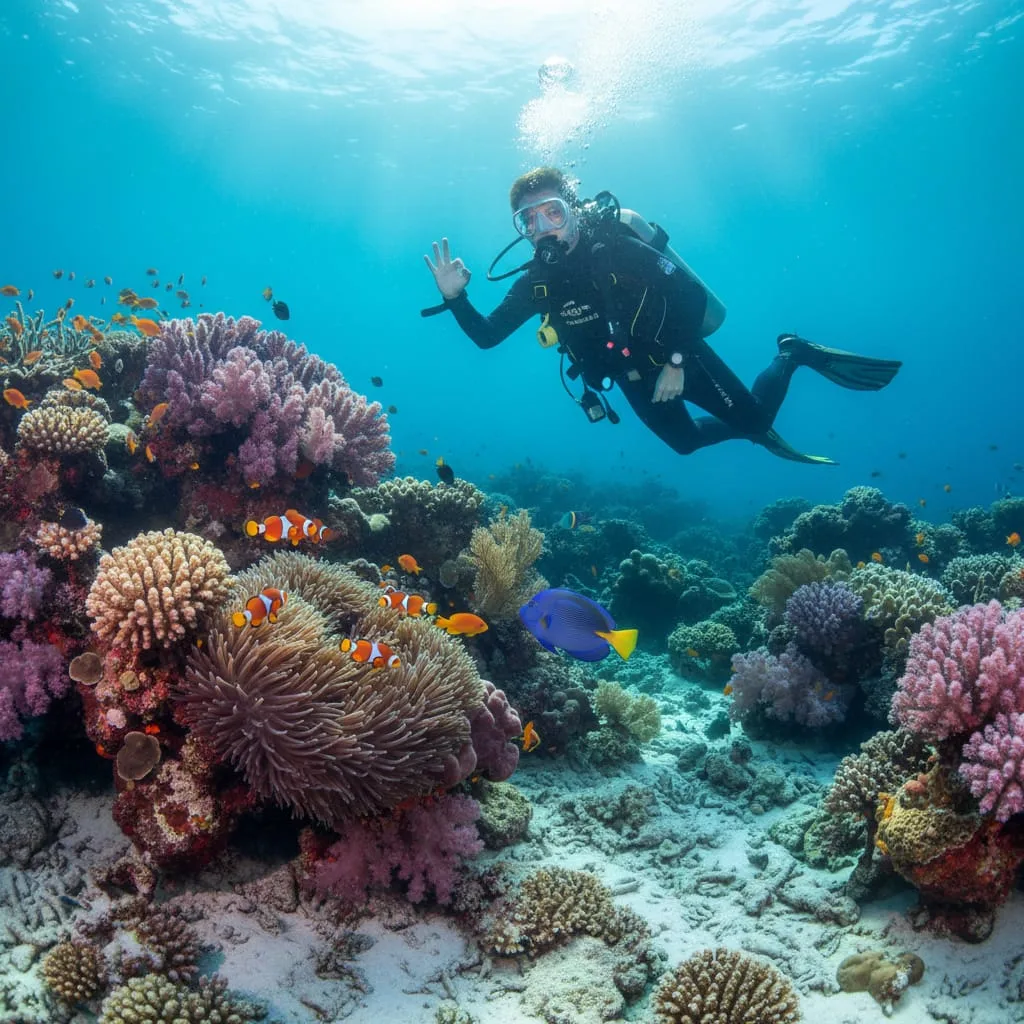
I still remember the panic. Twenty meters underwater off Koh Tao, my regulator purge valve stuck, and I was sucking in saltwater instead of air. My instructor grabbed my shoulder, looked me dead in the eyes through her mask, and calmly handed me her alternate air source. That moment — the fear, the trust, the solution — is exactly why proper scuba diving certification matters before you explore the underwater world. Not a two-hour resort crash course. Real certification.
This guide covers everything about scuba diving certification for Indian divers — where to go, what to pay, and how to avoid getting overcharged. The agencies, the price tags, the destinations that won't murder your wallet, and the stuff they don't put on the dive shop websites. I've been certified for eight years, dived four continents, and watched too many enthusiastic beginners get ripped off. Let's make sure that's not you.
PADI vs SSI: The Certification Agency Showdown
Walk into any dive shop from Havelock to Honduras, and you'll see two logos everywhere: PADI (Professional Association of Diving Instructors) and SSI (Scuba Schools International). Both are legitimate, globally recognized, and will let you rent gear and dive anywhere in the world. But they're not identical.
PADI is the McDonald's of scuba — present literally everywhere. About 70% of the world's divers are PADI certified. Their materials are polished, their standards rigid, and their certification cards recognized even in the most remote dive operations. PADI charges instructors annual membership fees, which gets passed to you. Open Water courses typically run 10-20% pricier than SSI equivalents.
SSI offers free digital materials (PADI charges for theirs), which can save you ₹3,000-5,000 on theory materials alone. SSI instructors don't pay annual fees, so courses often cost less. Recognition? Functionally identical. I've never been turned away from a dive site for holding SSI certification. The only time PADI matters more is if you're going professional — PADI's instructor network is larger.
My honest take: unless you're planning to become a dive instructor, pick whichever agency your chosen dive school offers. A good instructor matters infinitely more than the logo on your card. That said, if you're comparing two otherwise identical schools and one's ₹5,000 cheaper because it's SSI? Take the savings.
Understanding Certification Levels: What You Actually Need
Dive shops love upselling. Here's what each level actually means for recreational diving.
Discover Scuba Diving / Try Dive (Not a Certification)
This isn't certification — it's a supervised experience. You get a 30-minute pool session and one ocean dive with an instructor holding your hand the entire time. Maximum depth: 12 meters. Cost: ₹3,500-8,000 depending on location. Worth it as a "do I even like this?" test, but you can't dive independently afterward. Think of it as a very expensive swimming pool session that happens to be in the ocean.
Open Water Diver (The One You Want)
This is the golden ticket. Open Water certification lets you dive independently with a buddy to 18 meters anywhere in the world. It includes theory learning (online or classroom), confined water training (pool sessions), and four open water dives. Takes 3-4 full days. This is where 90% of recreational divers stop, and honestly, 18 meters covers most reef diving worldwide. Getting your Open Water card is where the scuba diving certification cost investment begins — and it's worth every rupee.
Advanced Open Water
Extends your depth limit to 30 meters and introduces specialty dives: deep diving, navigation, night diving, drift diving. Five adventure dives over 2 days. Useful if you want to hit deeper wrecks or dive sites with strong currents. Not essential for casual holiday divers, but genuinely valuable if you're hooked.
Rescue Diver and Beyond
Rescue Diver requires Emergency First Response (EFR) certification first. It teaches you to handle dive emergencies — panicking buddies, unconscious divers, search patterns. Takes 3-4 days and costs ₹20,000-35,000 depending on location. Only pursue this if you're serious about diving regularly or going professional. Divemaster is the entry-level professional rating.

Top Destinations for Scuba Diving Certification
Location matters for three reasons: cost, water conditions for beginners, and what else you can do when you're not underwater. Here's my ranked list based on value for Indian passport holders.
1. Koh Tao, Thailand — The World's Cheapest Certification
Koh Tao certifies more divers annually than anywhere else on Earth. Competition keeps prices brutal: Open Water courses run ₹18,000-25,000 including accommodation at many dive schools. Yes, including accommodation. The island exists almost exclusively because of diving tourism, so infrastructure is optimized for it.
Water conditions? Warm (28-30°C), calm, and visibility averages 10-20 meters. Perfect for beginners. The downside? It's crowded underwater — you'll share dive sites with 15 other student groups. Marine life is decent but not spectacular compared to Indonesia or the Maldives. Think of it as driver's ed: great for learning, not necessarily the most scenic road.
Getting there: Fly to Bangkok, then either fly to Koh Samui (expensive) or take an overnight bus/train to Chumphon/Surat Thani and ferry over. Budget ₹25,000-35,000 for return flights from Indian metros. Thailand is visa-free for Indians for stays of up to 30 days. Total trip cost for certification + one week: ₹60,000-80,000.
2. Gili Islands & Bali, Indonesia — Best Overall Value
Gili Trawangan is Koh Tao's cooler, slightly pricier cousin. Open Water courses run ₹22,000-30,000. No motorized vehicles on the island, less party chaos than Koh Tao, and genuinely impressive marine life — turtles on almost every dive, reef sharks if you're lucky.
Bali itself offers certification in Tulamben (wreck diving heaven), Nusa Penida (manta rays!), and Amed (chill village vibes). Prices similar to Gili. The advantage over Thailand? Better post-certification diving. Once you're certified, Nusa Penida's manta point and drift dives are world-class. Check our Bali trip cost breakdown for detailed budget planning.
Getting there: Direct flights to Bali from Mumbai, Delhi, and Bangalore. Visa on arrival (30 days) available for Indians at ₹4,500. Proof of funds requirement: ₹4,500/day equivalent. Total certification trip: ₹70,000-1,00,000.
3. Aqaba, Jordan — The Middle East Bargain
Surprised? Jordan's Red Sea coast offers exceptional visibility (30+ meters), warm water, and prices that undercut Southeast Asia sometimes. Open Water runs ₹20,000-28,000 in Aqaba. Combine it with Petra and Wadi Rum for an adventure-packed trip that goes beyond beach holidays.
The diving itself is excellent — coral gardens, wreck dives, and fewer crowds than Thailand. Only downside: Jordan isn't a beach holiday destination. It's desert, history, and diving. Perfect for some, not everyone's cup of chai.
Getting there: Fly via Dubai or direct to Amman (Royal Jordanian). Jordan Pass (includes visa + Petra entry) costs ~₹9,000 and makes the trip significantly more economical. Total trip with certification: ₹85,000-1,20,000.
4. Maldives — Premium Certification, Premium Experience
The Maldives trip cost hits different. Open Water certification runs ₹35,000-50,000 at resort dive centers. Local island alternatives (Maafushi, Fulidhoo) bring that down to ₹28,000-40,000. But here's the thing: the diving itself is spectacular. Manta cleaning stations, whale shark seasons, pristine coral — you're learning in an underwater paradise, not an underwater driving school.
For Indians, direct flights from multiple cities make logistics simple. If budget allows, learning here means your certification dives are also your best dives. That's not nothing. Get proper travel insurance covering diving — the Maldives' nearest decompression chamber is a seaplane ride away.
5. Great Barrier Reef, Australia — The Bucket List Option
Cairns is the gateway to the Great Barrier Reef, and certification courses run ₹40,000-55,000 (AUD 700-950). You're learning on the world's largest living structure, which is frankly ridiculous. Water's cooler (24-28°C), wetsuits are provided, and the biodiversity is unmatched.
The catch? Australia's expensive for everything else — accommodation, food, transport. Indian passport holders need a tourist visa (₹12,000, takes 2-3 weeks). Total trip cost easily hits ₹2,00,000+ for two weeks. Worth it if the Reef is your dream, but not the budget-conscious choice. Check our Australia trip cost guide for realistic budgeting.
6. Andaman Islands, India — The Domestic Option
Havelock Island (Swaraj Dweep) offers Open Water certification for ₹15,000-20,000 — the cheapest option for Indians since there's no international flight or visa. Dive sites like Barracuda City and Johnny's Gorge rival Southeast Asian spots. Water's warm, visibility decent during season (October-May).
Why isn't everyone doing this? Limited flight connectivity (Port Blair only), and the overall trip cost including flights from mainland India often approaches Thailand prices. Still, if you want certification without a passport, Andaman delivers.
What Certification Actually Involves: Day by Day
Knowing the timeline helps you plan your trip around diving days.
Day 1: Theory and Confined Water
Morning: watch videos or complete your online theory (PADI eLearning or SSI app — finish this before you travel to save a day). Afternoon: pool or confined water session. You'll learn hand signals, mask clearing, regulator recovery, buoyancy control, and emergency procedures. Expect 4-5 hours in waist-deep water repeating skills until they're automatic.
Day 2: Open Water Dives 1 & 2
Your first real ocean dives. Maximum depth 12 meters. You'll repeat skills from the pool in actual ocean conditions — mask clearing feels different when there are fish watching. Two dives, surface interval for lunch, then debriefing.
Day 3: Open Water Dives 3 & 4
Deeper dives to 18 meters. Fewer skills to demonstrate, more actual diving. Navigation exercises, buoyancy refinement, and if your instructor's good, some fun reef exploration between skill demonstrations. Final exam (multiple choice, not difficult if you paid attention). By evening, you're certified.
Day 4 (Optional): Most dive shops include a free "fun dive" post-certification. Take it — you're certified, no skills to demonstrate, just you and the ocean.
The Money Breakdown: What's Included vs. Hidden Costs
Advertised course prices typically include:
- All equipment rental during the course
- Theory materials (digital or physical)
- Pool/confined water sessions
- Four open water dives
- Certification processing fee
- Insurance during course dives
What's usually NOT included:
- Accommodation (except some Koh Tao packages)
- Marine park fees (₹500-1,500 per day at popular sites)
- Underwater camera rental (₹800-2,000 per dive)
- Wetsuit rental if course only provides shorties (rare)
- Physical certification card (digital is free, plastic card ₹500-1,500)
- Transport to dive sites (usually included by boat, but check)
Budget an extra ₹3,000-5,000 beyond the course price for incidentals.
Can Non-Swimmers Get Certified?
Technically, yes. PADI requires you to swim 200 meters (any stroke) and float/tread water for 10 minutes. That's it. No freestyle speed test, no deep end diving. I've seen people who couldn't swim a month before pass these requirements after a few pool sessions.
The reality? Being comfortable in water helps enormously. Panic response is real, and it's dangerous 15 meters down. If you're genuinely aquaphobic, a Discover Scuba experience in a pool first might be worthwhile. But if you're merely "not a strong swimmer" — many dive schools offer swim crash courses alongside certification. Ask before booking.
Underwater Photography: Getting the Shot
Everyone wants Instagram-worthy dive photos. Here's the truth: your certification dives will not produce them. You're focused on skills, buoyancy control, and not dying. Photography comes later.
That said, some tips for when you're ready:
- GoPros work great to 10 meters without housing. Deeper needs proper dive housing.
- Red filter is essential below 5 meters (water absorbs red light)
- Get neutrally buoyant before attempting shots — thrashing divers take blurry photos
- Point the camera slightly upward for better lighting
- Don't touch coral or harass marine life for the gram. Seriously.
Many dive shops rent underwater cameras with training included. Budget ₹2,000-4,000 for your fun dives post-certification.
Insurance for Diving: Don't Skip This
Standard travel insurance often excludes scuba diving or caps it at 10-18 meters. For certification dives to 18 meters, confirm your policy covers this depth explicitly. DAN (Divers Alert Network) offers dive-specific insurance starting around ₹4,000/year that covers evacuation, decompression treatment, and diving-related injuries worldwide.
Why does this matter? Decompression sickness treatment in a hyperbaric chamber costs ₹50,000-2,00,000 depending on severity and location. Evacuation from remote islands adds more. Regular travel insurance won't touch this if diving isn't explicitly covered. Read our travel insurance guide for policies that actually cover adventure activities.
Medical Requirements and Fitness
You'll fill out a medical questionnaire before any course. Automatic medical clearance issues include:
- Asthma (requires doctor's clearance showing controlled condition)
- Heart conditions
- Epilepsy or seizure disorders
- Ear/sinus problems
- Pregnancy
- Recent surgery
- Diabetes (often clearable with documentation)
If any boxes are ticked, you'll need a dive medical from a physician familiar with diving medicine. Get this done in India before traveling — finding a dive doctor in Koh Tao isn't fun. Most people pass without issues; this isn't designed to exclude, just ensure safety.
Combining Certification with Your Vacation
Three intensive days of diving still leaves vacation time. Smart itinerary planning:
Thailand: Certify in Koh Tao, then ferry to Koh Phangan or Koh Samui for beach time. Or head north to Bangkok/Chiang Mai for culture.
Indonesia: Certify in Gili Trawangan, then cross to Lombok or Bali for temples, rice terraces, and non-diving adventures.
Maldives: Local islands allow certification + beach + local culture without resort prices.
Don't schedule flights within 24 hours of your last dive — flying after diving risks decompression sickness. Build in a surface interval day.
Post-Certification: Where to Dive Next
Your scuba diving certification never expires and works worldwide. Immediate next steps:
Log your dives. Digital logbooks work fine (PADI app, Dive Log, etc.). Many dive operators check experience levels — 10+ logged dives opens more advanced sites.
Build experience before Advanced Open Water. Do 10-20 fun dives at your current depth limit. The Advanced course is better when you're comfortable, not still figuring out basic buoyancy.
Destinations for newly certified divers:
- Philippines (Palawan, Cebu) — exceptional value, warm water, easy logistics
- Egypt (Red Sea) — affordable from India, legendary dive sites
- Thailand/Malaysia — liveaboards open up Similan Islands, Sipadan
- Andaman — now that you're certified, the dive sites become accessible
What TripCabinet Can Do
Coordinating dive courses, accommodation, flights, and post-certification travel gets complicated. We plan complete dive certification trips — finding reputable schools, building realistic itineraries that account for no-fly periods, and handling logistics so you focus on learning. Not everyone wants to research dive shop reputations across three countries. That's what we're here for.
Scuba Diving Certification: Practical Info
Best time to certify: March-October for Southeast Asia (dry season varies by specific location). October-May for Andaman and Maldives.
Minimum age: 10 years for Junior Open Water (depth-limited to 12m until 15). Full certification at 15+.
Documents needed: Passport (valid 6 months+), medical clearance if required, passport photos for certification card.
What to bring: Swimwear, reef-safe sunscreen (chemical sunscreens kill coral), dive-compatible prescription mask if needed (or wear contacts under mask).
Physical card vs digital: Digital certification (PADI app or SSI) works at 99% of dive shops worldwide. Physical card is backup/souvenir only.
Understanding scuba diving certification cost helps you budget properly. Your underwater world awaits. Whether it's a ₹18,000 course in Koh Tao or a premium Maldives experience, the certification is identical — and it lasts forever. Just remember: the ocean doesn't care about your Instagram followers, and neither do the fish. Get certified properly, respect the environment, and you'll have access to 70% of the planet that most people never see.
Frequently Asked Questions About Scuba Diving Certification
How much does scuba diving certification cost in India vs abroad?
Scuba diving certification abroad cost India varies significantly. In Andaman Islands (domestic), Open Water certification costs ₹15,000-20,000. Abroad, the cheapest option is Koh Tao, Thailand at ₹18,000-25,000, while premium destinations like Maldives range ₹35,000-50,000. Factor in flights and accommodation — a complete Koh Tao trip runs ₹60,000-80,000, making it competitive with Andaman when considering total experience value.
Can I learn scuba diving if I don't know how to swim?
Yes, but with conditions. PADI and SSI require swimming 200 meters (any stroke, no time limit) and floating/treading water for 10 minutes. These are not competitive swimming tests. Many dive schools offer basic swim training alongside certification courses. If you're completely aquaphobic, start with pool-based Discover Scuba to build water comfort. Most non-swimmers can achieve certification-level swimming within 1-2 weeks of practice.
Is PADI or SSI better for Indians getting certified abroad?
Both are equally recognized worldwide. PADI has more dive centers globally (70% market share), while SSI offers free digital learning materials, saving ₹3,000-5,000. For recreational divers, the certification card works identically. Choose based on instructor quality and course price at your chosen destination rather than agency branding. PADI matters slightly more only if you plan to become a professional dive instructor.
How many days does scuba certification take?
Open Water certification requires 3-4 full days: Day 1 covers theory and confined water (pool) skills. Days 2-3 include four open water dives to 18 meters. Some programs compress this into 3 days with longer sessions. You can complete theory online before traveling (PADI eLearning or SSI app), reducing on-site time. Don't schedule flights within 24 hours of your final dive to avoid decompression risks.
Does travel insurance cover scuba diving accidents?
Most standard travel insurance policies exclude scuba diving or limit coverage to 10-18 meters depth. For Open Water certification (18m limit), verify your policy explicitly covers recreational diving to this depth. Consider DAN (Divers Alert Network) insurance starting at ₹4,000/year for comprehensive dive-specific coverage including decompression treatment and emergency evacuation. Hyperbaric chamber treatment can cost ₹50,000-2,00,000 without proper coverage.