


Skip-Gen & Multi-Generational Travel from India: Planning the Perfect Family Trip
In this guide (12)
- Understanding Skip-Gen Travel: Why Multi Generational Travel India Is Booming
- Best Destinations for Multi Generational Travel India Families
- Accessibility Considerations: Making Trips Senior-Friendly
- Flight Strategies for Elderly Travelers
- Health and Travel Insurance for Multi Generational Travel India
- Visa Complications for Elderly Travelers
- Accommodation Strategies for Multi-Generational Groups
- Pacing Your Itinerary: The Slower Travel Approach
- Activities That Bridge Generational Gaps
- Budget Planning for Multi-Generational Travel
- Sample 7-Day Multi-Generational Itineraries
- Planning Your Perfect Multi Generational Travel India Trip
My father-in-law called me last month with an unusual request. "Beta, I want to take Aarav to Switzerland. Just the two of us." My son is eight. My father-in-law is seventy-two. And somehow, this made perfect sense—multi generational travel India is experiencing an unprecedented boom.
According to Hilton's 2026 Travel Trends Report, 79% of Indian families have either completed or are planning skip-gen trips—journeys where grandparents travel with grandchildren without parents. Multi generational travel India represents the fastest-growing travel segment in APAC. Honestly? It's beautiful to watch.
Over the past two years, I've helped plan more than fifty multi-generational trips, from three-generation family reunions in Bali to skip-gen adventures in Japan. The logistics are complex—balancing mobility limitations, energy levels, interests spanning sixty years of age difference, and everyone's dietary restrictions. But when you get it right, these trips create memories that reshape family bonds. This guide covers everything: destination selection by age group, accessibility considerations, flight strategies for elderly travelers, accommodation choices, pacing, and activities that actually work across generations.
Understanding Skip-Gen Travel: Why Multi Generational Travel India Is Booming
Skip-gen travel isn't just a trend—it reflects deeper shifts in Indian family dynamics. Here's why this phenomenon is exploding:
Retired grandparents with resources. The current generation of Indian grandparents includes many who built careers during India's economic liberalization. They have pensions, savings, and time. What they lack is opportunities to connect deeply with grandchildren who are constantly scheduled between school, tuitions, and activities.
Working parents with limited leave. Most dual-income families struggle to take more than a week off together. Grandparents traveling with kids during school holidays solves multiple problems—childcare during breaks, meaningful grandparent bonding, and international exposure for children.
Joint family culture finding new expressions. Traditional joint families may be declining in metros, but the values persist. Skip-gen travel recreates that intergenerational connection in a concentrated, intentional way. My father-in-law talks more to Aarav during one trip than he might in three months of living in the same house.
Research confirms the psychological benefits run deep. Children who spend quality time with grandparents develop stronger emotional resilience and cultural identity. Grandparents report feeling younger, more purposeful, and deeply connected. Meanwhile, the parents get a break they desperately need.
Best Destinations for Multi Generational Travel India Families
Destination selection makes or breaks multi generational travel India trips. The perfect spot for a toddler-grandparent duo differs vastly from what works for teenagers and seniors. Here's my tested breakdown:
Toddlers (Ages 2-5) with Grandparents
Singapore: The gold standard for this age group. Flight time from major Indian cities is 4-6 hours—manageable for both toddlers and elderly travelers. Healthcare infrastructure matches Indian hospital standards (critical when traveling with seniors and young children). Universal Studios has dedicated toddler zones, while the S.E.A. Aquarium fascinates without overstimulating. Most importantly, everything is accessible, clean, and efficient. Check our Singapore family tour packages for itinerary ideas.
Dubai: Excellent for winter trips between November and March. Short 3-4 hour flights make the journey easier on everyone. Every mall has play areas for kids. Dubai Miracle Garden enchants toddlers while grandparents sit comfortably on benches. The metro is senior-friendly with priority seating, and indoor activities mean climate control matters less than you'd think.
Maldives: Counterintuitive but works brilliantly. All-inclusive resorts mean zero logistics stress—critical for elderly travelers managing toddlers. Kids clubs take children for supervised activities while grandparents rest. Shallow lagoons and pools are safe for water play. The biggest challenge is the seaplane transfer for elderly travelers; choose resorts with speedboat access instead.
School-Age Children (Ages 6-12) with Grandparents
Japan: Absolutely magical for this combination. Japanese culture deeply respects elderly travelers—you'll notice it in every interaction. Trains have priority seating that's actually respected. Temple visits engage kids through incense lighting and omikuji fortune papers. Don't miss Nara's deer park (children lose their minds), robot restaurants in Tokyo, and teamLab digital art museums. The cuisine challenge is real—pack backup snacks.
Southeast Asia (Thailand, Vietnam): Budget-friendly options with strong appeal. Thailand's beaches offer gentle activities, while Vietnam's history appeals to grandparents who remember the war era. Street food is surprisingly senior-friendly with mild options available. For detailed guidance, our guide for senior citizens traveling abroad covers visa and health considerations.
Teenagers (Ages 13-18) with Grandparents
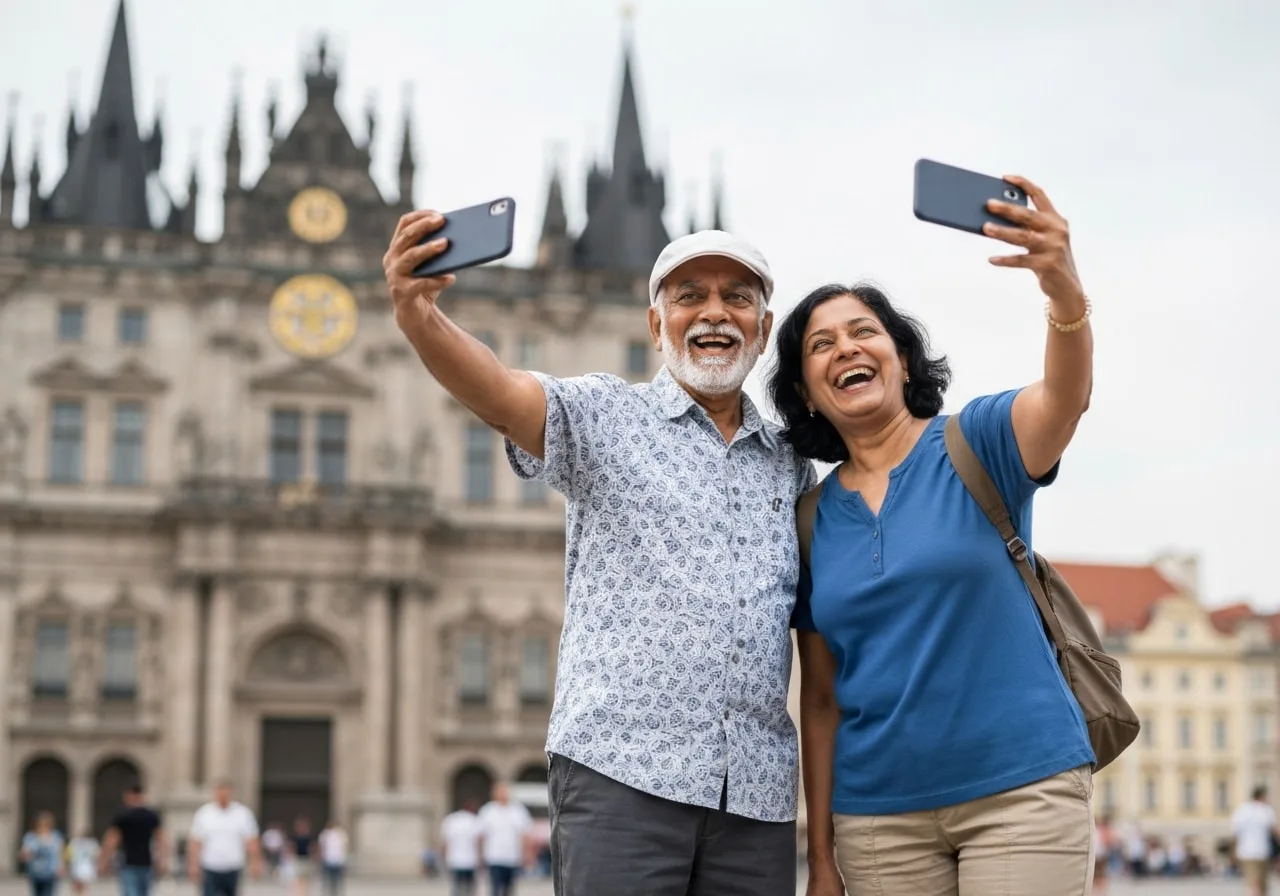
Europe: History comes alive when grandparents share their perspectives. World War II sites hit differently when your grandfather explains partition. Art museums become interesting when your grandmother shares what she learned in school versus what historians say now. London, Paris, and Rome work well—developed infrastructure, manageable distances, excellent public transport.
Australia: Adventure activities like snorkeling and wildlife encounters bridge generational interests. Seniors can comfortably watch from boats while teens dive. Sydney and Melbourne have Indian restaurants on every block—important for elderly travelers missing home food. According to Tourism Australia, multi generational travel India visitors have increased 34% year-over-year.
USA: Theme parks aside (though Universal Orlando has multi-gen appeal), national parks offer accessible viewpoints where grandparents can enjoy scenery while teens hike further. Road trips through California or the American Southwest create bonding opportunities that don't require matching energy levels.
Accessibility Considerations: Making Trips Senior-Friendly
This is where most multi generational travel India trips fail. Families plan exciting itineraries without considering that their sixty-eight-year-old mother can't walk five kilometers through European cobblestones. Here's how to actually make trips accessible:
Hotel selection matters more than star ratings. Ask specific questions: Is there a lift? Can we get a ground floor room? Does the bathroom have grab rails? Is there a walk-in shower or only a bathtub? Many luxury hotels fail basic accessibility while budget apartments surprise with accessible design.
Research wheelchair and mobility aid access. Singapore's MRT has platform gaps that challenge wheelchairs. European trains often require advance booking for wheelchair spaces. Theme parks have rental wheelchairs but limited quantities—arrive early or pre-book. Know which attractions have accessible entrances versus staff-assisted access.
Map medical facilities before you go. Identify hospitals with English-speaking staff and good cardiac/orthopedic departments near your accommodation. Download offline maps with hospital locations marked. For destinations like Bali or Vietnam, know the nearest quality hospital—it might be an hour away.
Consider travel companions' real abilities, not optimistic projections. Your father might say he can walk "anywhere," but observe his actual stamina at home first. Can he climb three flights of stairs? Walk a kilometer without rest? Stand in queues for thirty minutes? Plan based on realistic assessments, not pride-driven claims.
Flight Strategies for Elderly Travelers
Getting elderly family members comfortably to your destination requires planning that goes beyond booking tickets. Through multiple trips with senior travelers, I've refined these approaches:

Book direct flights whenever possible. Connection stress is the biggest issue for elderly travelers. Immigration queues, terminal changes, tight connection times—all harder when you're seventy. The premium for direct flights is worth every rupee. If connections are unavoidable, insist on minimum two-hour layovers.
Pre-book wheelchair assistance through the airline. Call the airline directly—don't rely on online booking systems. Confirm wheelchair assistance at departure, arrival, and any connection points. This isn't about actual wheelchair need; it's about priority boarding, dedicated assistance through immigration, and avoiding long walks through terminals. Our detailed international travel guide for senior citizens from India covers complete airport protocols.
Choose aisle seats strategically. Elderly travelers need bathroom access without climbing over sleeping passengers. Book aisle seats, but not the emergency exit row—airlines require passengers there to assist in emergencies. Bulkhead rows offer more legroom but fixed armrests make exit harder.
Medication management is critical. Carry all medications in original packaging with prescription copies. Distribute across hand luggage (never check medications). Carry a doctor's letter explaining medical conditions and medications, translated into English if your doctor writes in Hindi or regional languages. For insulin or other temperature-sensitive medications, use medical cooler bags.
Compression socks and movement matter. Deep vein thrombosis risk increases with age. Compression socks are non-negotiable for flights over four hours. Set phone reminders for hourly movement—ankle rotations, calf raises, short walks. Hydrate aggressively; avoid alcohol.
Health and Travel Insurance for Multi Generational Travel India
Standard travel insurance excludes pre-existing conditions and often has age limits. For multi generational travel India, you need specialized coverage:
Age-specific policies exist. Companies like Bajaj Allianz, TATA AIG, and ICICI Lombard offer policies covering travelers up to 80 years. Premiums are higher—expect to pay 3-4x what a thirty-year-old pays—but coverage is essential. Don't cheap out here.
Declare all pre-existing conditions. Hiding diabetes or heart conditions to get cheaper premiums backfires catastrophically if claims arise. Full disclosure at purchase protects you. Some insurers cover pre-existing conditions if stable for 90+ days; others exclude entirely.
Understand coverage limits. Emergency evacuation coverage should be at least Rs 50 lakhs for international trips. Medical expense coverage should match destination costs—Rs 20 lakhs might cover Thailand but falls short for USA or Switzerland.
Carry physical documentation. Print insurance cards, emergency contact numbers, and policy summaries. Don't rely on phone apps working internationally. Some hospitals require upfront payment regardless of insurance—carry emergency funds or credit cards with adequate limits.
Visa Complications for Elderly Travelers
Visa processes aren't designed for elderly applicants who may struggle with biometrics or online applications. Navigate these carefully:
Biometric appointments need planning. VFS and embassy centers often have limited slots. Book well in advance. If your elderly family member has difficulty with fingerprint scanners (common with weathered hands), arrive prepared to explain and retry multiple times.
Financial documentation differs. Retired travelers can't show salary slips. Pension statements, fixed deposit certificates, and property documents work as alternatives. Some embassies accept sponsorship letters from traveling adult children.
Medical fitness certificates may be required. Some countries (particularly for long-stay visas) require medical clearance. Even tourist visas to certain destinations may need travel fitness declarations. Get these from reputable hospitals, not unknown clinics.
Consider visa-free or visa-on-arrival destinations. Countries like Thailand (30-day visa-free entry), Indonesia, Maldives, and Sri Lanka minimize paperwork. Dubai's visa process is straightforward, a Singapore visa is applied for through an authorised visa agent, and Malaysia is visa-free for Indians for up to 30 days until 31 Dec 2026 under the current exemption.
Accommodation Strategies for Multi-Generational Groups
Where you stay shapes the entire trip experience. For multi generational travel India families, consider these options:
Serviced apartments and villa rentals. Space matters when three generations share accommodation. Serviced apartments offer separate bedrooms, living areas, and crucially—kitchens. Elderly travelers often need specific dietary accommodations (low-salt, particular spices, familiar foods). Cooking breakfast or light meals solves this elegantly. Platforms like Airbnb and Vrbo offer filtered searches for accessible properties.
Resorts with diverse amenities. The ideal resort has kids clubs (freeing grandparents periodically), spa facilities (grandparents love these), pool areas (universal appeal), and on-site restaurants with flexible menus. Maldives resorts, Thai beach resorts, and Bali's Nusa Dua properties often check all boxes.
Hotels with connecting rooms. If you prefer hotels, connecting room configurations let elderly travelers have privacy while staying close to grandchildren. Request ground floor or elevator-accessible rooms. Call hotels directly to confirm accessibility—booking sites often have incomplete information. For large family group travel from India, we've detailed accommodation strategies extensively.
Location trumps luxury. A three-star hotel near major attractions beats a five-star property requiring thirty-minute commutes. Elderly travelers tire faster; minimizing transit time preserves energy for actual experiences.
Pacing Your Itinerary: The Slower Travel Approach
This is where trip planning for multi generational travel India fundamentally differs from regular travel. You cannot—and should not—maintain normal tourist pace.
Limit activities to two or three per day. Morning activity, lunch break, afternoon rest, evening activity. That's it. Trying to squeeze in more exhausts everyone. Build in genuine downtime, not just meals between attractions.
Afternoon rest is non-negotiable. Plan accommodation that facilitates mid-day breaks. This isn't laziness; it's strategic recovery. Elderly travelers and young children both benefit from afternoon rest. Use this time for quiet activities—reading, card games, naps.
Buffer days save trips. Include at least one day per week with zero fixed plans. Use these for recovery, revisiting favorite spots, or handling unexpected situations. Flexibility prevents the cascade effect where one missed activity ruins downstream plans.
Allow group splitting when needed. Teenagers might want theme park thrill rides while grandparents prefer garden walks. Build itineraries that allow both. Meet for meals, separate for activities when interests diverge. This prevents resentment and ensures everyone enjoys the trip.
Activities That Bridge Generational Gaps
The magic of multi generational travel India happens when activities genuinely engage everyone. These consistently work:
Cooking classes. Learning to make sushi in Japan, pasta in Italy, or pad Thai in Bangkok works across ages. Grandparents share cooking wisdom while children do hands-on tasks. The meal you create together becomes a highlight memory. Look for classes with seating options—standing for two hours challenges elderly participants.
Cultural and heritage tours. History hits differently when your grandfather shares memories of events he witnessed. Walking through partition museums, colonial sites, or war memorials with elderly family members creates understanding that textbooks can't provide. Choose guided tours with seating opportunities and manageable distances.
Nature walks and wildlife experiences. Botanical gardens, bird sanctuaries, and light nature trails work beautifully. Grandparents often have plant and bird knowledge to share. Choose flat, paved paths. Safari drives work well—everyone sits comfortably while wildlife comes to you.
Craft and art workshops. Pottery, painting, textile work, and local crafts engage all ages at individual pace. Nobody needs to match physical ability. The creations become meaningful souvenirs with stories attached.
Boat cruises and scenic rides. River cruises, harbor tours, and scenic train journeys offer shared experiences without physical demands. Seating is guaranteed, views are accessible to all abilities, and conversations happen naturally during transit.
Budget Planning for Multi-Generational Travel
Cost structures differ significantly for multi-generational trips. Plan for these realities:
Accessibility often costs more. Accessible rooms, direct flights, ground floor accommodations, and private vehicles instead of public transport—these come with premiums. Budget 15-20% more than equivalent trips without elderly travelers.
Medical and insurance costs are real. Age-appropriate travel insurance for a seventy-year-old might cost Rs 15,000-25,000 for a two-week trip. Pre-trip medical checkups, medication supplies, and emergency contingency funds add more.
Dining flexibility has costs. Elderly Indian travelers often struggle with unfamiliar cuisines. Budget for Indian restaurant meals even in non-Indian destinations—they're typically pricier than local food. Alternatively, budget for apartment stays with kitchen facilities.
Have transparent cost conversations. Multi-generational trips often involve complex financial dynamics. Some grandparents want to treat everyone; others live on fixed incomes. Discuss who pays what before booking. Split costs clearly to avoid awkwardness.
For first-time international travelers, our guide to planning your first trip abroad with parents from India covers budgeting and family travel dynamics.
Sample 7-Day Multi-Generational Itineraries
Here are two tested itineraries that balance everyone's needs:
Singapore: Grandparents + Children (Ages 4-10)
Day 1: Arrive, settle into serviced apartment (Orchard area recommended), light dinner at nearby hawker center with vegetarian options. Day 2: Gardens by the Bay morning (conservatories are air-conditioned), hotel rest afternoon, Marina Bay Sands light show evening. Day 3: Sentosa Island—choose S.E.A. Aquarium for younger kids or Universal Studios for older ones. Split if needed. Day 4: Buffer day—Orchard Road shopping, swimming, slow breakfast. Day 5: Singapore Zoo morning (tram available), Indian lunch in Little India, afternoon rest, Night Safari evening. Day 6: Chinatown walking tour (short and flat), Merlion Park photos, river cruise. Day 7: Departure—no morning activities, relaxed breakfast, airport transfer.
Dubai: Grandparents + Teenagers
Day 1: Arrive, check into hotel with connected rooms, Dubai Mall exploration (seniors rest in cafes while teens explore). Day 2: Desert safari—choose morning tour for milder temperatures, grandparents can skip dune bashing and join at camp. Day 3: Dubai Frame and Old Dubai walking tour (historic area is flat and manageable), spice souk, abra ride. Day 4: Teens do waterpark, grandparents enjoy hotel spa. Evening reunion for dinner cruise. Day 5: Abu Dhabi day trip—Sheikh Zayed Mosque (accessible, stunning for all ages), Louvre Abu Dhabi. Day 6: Buffer day—beach morning, Dubai Marina walk evening. Day 7: Departure preparation, last-minute shopping.
Planning Your Perfect Multi Generational Travel India Trip
Multi generational travel India requires more planning than standard trips, but the rewards justify every spreadsheet and phone call. Start conversations early—three to four months before intended travel. Discuss realistic abilities, genuine interests, and potential conflicts openly. Choose destinations where everyone has something to love, not just compromise options.
The best multi-generational trips share common elements: slower pace than anyone initially wanted, genuine flexibility when plans change, and activities chosen for connection rather than Instagram moments. When my father-in-law returned from that Switzerland trip with Aarav, they had inside jokes I didn't understand, photos I wasn't in, and stories they'll share forever. That's the magic worth planning for.
If you're considering traveling with very young children alongside elderly family members, our guide to traveling with a baby on international flights from India covers the logistics of managing multiple generations at airports.