

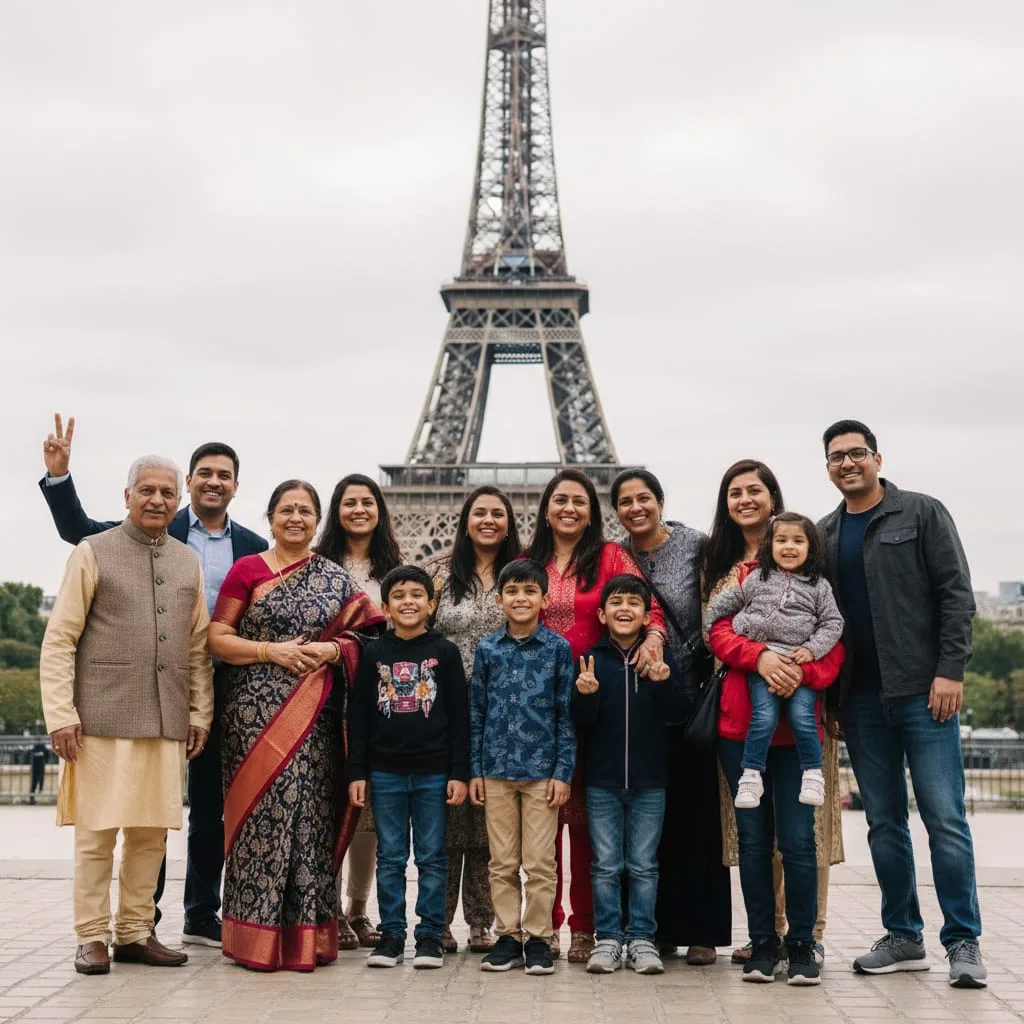
Group Travel Tips for Large Indian Families Going Abroad 2026
In this guide (15)
- Planning for Large Indian Families Abroad: Start 6 Months Before
- Passport and Visa Tips for Large Indian Families Abroad
- Booking Flights When Taking Large Indian Families Abroad
- Accommodation for Large Indian Families Abroad: Villas vs Hotels
- Managing Dietary Needs for Large Indian Families Abroad
- Budget Splitting When Large Indian Families Go Abroad
- WhatsApp Group Management for Large Family Travel
- Activity Planning When Taking Large Indian Families Abroad
- Best Destinations for Large Indian Families Abroad
- Travel Insurance for Large Indian Families Abroad
- Packing and Baggage for Large Family International Travel
- Emergency Planning for Large Indian Families Abroad
- Honest Truths About Large Indian Families Abroad
- Is Taking Large Indian Families Abroad Worth It?
- Frequently Asked Questions
Last December, I coordinated a 15-person family trip to Dubai. If you're planning group travel with large Indian families abroad, let me tell you upfront: by the end of it, I had grey hair I didn't have before, a permanent WhatsApp notification twitch, and strong opinions about why some families should maybe just do video calls instead of vacations. But we made it. Everyone came back alive, mostly speaking to each other, and with enough photos to fill seventeen Instagram accounts.
Here's the thing about taking large Indian families abroad that nobody tells you upfront: the actual travel part is the easy bit. It's the six months before departure that will test every relationship you have. Coordinating passport renewals for 12 family members including my 73-year-old grandmother was a full-time job for 2 months. Papa's passport had expired in 2019 and he only mentioned it when I asked for everyone's documents. Classic.
I've done this three times now — Dubai, Singapore, and Thailand — with groups ranging from 11 to 18 people. These are the lessons I've learned, mostly the hard way, about keeping large Indian families abroad happy and organized while travelling internationally.

Planning for Large Indian Families Abroad: Start 6 Months Before
The biggest mistake families make is thinking they can plan an international trip like a Lonavala weekend. You cannot. With 10+ people, everything takes three times longer than you expect.
Month 6-5: Get everyone's passport details. Check expiry dates — most countries need 6 months validity from travel date. Start the renewal process for anyone whose passport expires within 8 months of travel. This is where you'll discover your uncle renewed his passport but never updated his address, or your aunt's passport has her maiden name but her tickets will be in married name.
Month 4-3: Finalize dates. This sounds simple until you realize your brother's kids have exams, your parents don't want to travel during inauspicious days, and your sister-in-law has a wedding to attend. Pro tip: create a shared Google Sheet where everyone marks their unavailable dates. The overlapping free window is your travel date. No arguments.
Month 3-2: Book flights and accommodation. Visa applications. Start the dietary planning spreadsheet (yes, you need one when taking large Indian families abroad). If you're planning a trip specifically with grandparents and grandchildren, our skip-gen and multi-generational travel guide offers specialized advice for bridging age gaps.
Month 2-1: Activity planning, travel insurance, currency exchange, SIM cards/eSIM setup, and the 47 WhatsApp conversations about what to pack.
Passport and Visa Tips for Large Indian Families Abroad
If you think getting one visa is annoying, try getting twelve. Some actual wisdom from my experience with large Indian families abroad:
Group visa applications are possible for some countries. Singapore allows a single application for families. Thailand's e-visa system lets you add multiple travelers. Dubai tour agents can submit group applications. For parents on their first international trip, having everything handled together reduces their stress significantly.
For Schengen countries, you're stuck with individual appointments, but you can prepare documents together. Create a master folder with everyone's bank statements, employment letters, and cover letters in the same format. It's easier when everyone's papers look consistent.
Documents I recommend keeping ready for every family member:
- Passport copies (front page + all stamped pages)
- Last 6 months bank statements (maintain minimum ₹1-2 lakh balance per person)
- Employment/business proof
- Passport-size photos (always carry 10 extra per person)
- Travel insurance documents
- Hotel booking confirmations
- Return flight tickets
Keep both digital copies (Google Drive folder shared with all adults) and physical copies in a single folder that travels with the group leader. You will need them at immigration. I've been asked for hotel confirmations at Dubai immigration while my aunt panicked because she'd packed hers in checked luggage.
Booking Flights When Taking Large Indian Families Abroad
Airlines have group booking desks. Most Indians don't know this exists. If you're booking 10+ seats, call the airline directly and ask for group fares. You often get:
- 5-15% discount on base fare
- Flexible name changes (huge when traveling with joint families where "maybe" means "maybe")
- Seats blocked together
- Sometimes free meals or extra baggage
Emirates, Air India, Singapore Airlines, Thai Airways — all have dedicated group booking teams. Submit your request 6-8 weeks before travel. The catch: you usually need to pay in full earlier than individual bookings.
Seat selection matters more than you think. With elderly family members or young kids, aisle seats and proximity to bathrooms become important. I made the mistake of letting everyone book randomly once. My grandmother ended up in a window seat in the last row, my nephew got separated from his parents by 15 rows, and the complaints lasted longer than the flight.
Book seats together during booking itself. Pay the ₹300-500 per seat if needed. It's worth it when traveling with large Indian families abroad.
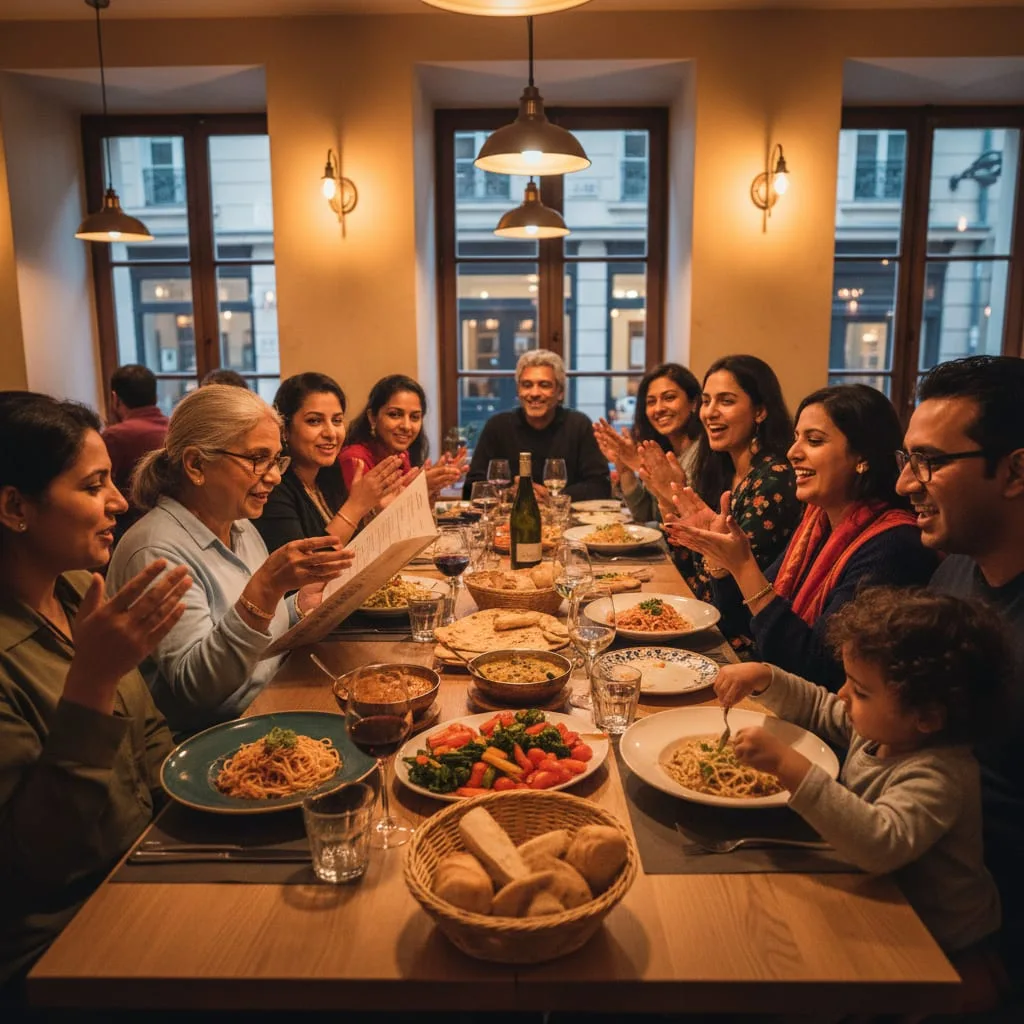
Accommodation for Large Indian Families Abroad: Villas vs Hotels
This is where family dynamics really show up. Everyone wants different things. The kids wanted a pool, my parents wanted attached bathrooms, my uncle wanted a gym, and my wife wanted peace and quiet (impossible with 15 people, but valid).
If your group includes infants or toddlers, accommodation needs change significantly — cribs, sterilizers, and separate sleeping areas become essential. Our guide for traveling with baby on international flights from India covers these considerations in detail.For groups of 12+ people, I strongly recommend villas or serviced apartments over hotels. Here's why:
A 4-bedroom villa in Bali costs around ₹15,000-25,000 per night. Split between 3-4 families, that's ₹4,000-6,000 per family. A decent hotel room in the same area is ₹8,000-10,000 per night. Plus, villas have:
- Shared living spaces where everyone can gather
- Kitchens for cooking (critical for vegetarians and those who can't eat outside food daily)
- Private pools for kids to exhaust themselves
- No corridor noise complaints when children run around at 6 AM
- Space to store everyone's luggage without it becoming an obstacle course
Airbnb, Vrbo, and Booking.com have filters for large groups. Search for properties that accommodate 12-16 guests. Read reviews specifically mentioning families.
The hotel alternative: If you prefer hotels, call the sales team directly and ask for group rates. Most hotels offer discounts for 5+ rooms booked together. Request adjacent rooms on the same floor. Some hotels have connecting rooms — these are gold for families with young kids.
Managing Dietary Needs for Large Indian Families Abroad
In my family of 15, we had: 4 strict vegetarians (no eggs), 2 Jain (no onion, no garlic, no root vegetables), 3 kids who only eat "normal food" (meaning Maggi and pizza), 2 elders who can only digest home-style dal-chawal, and 4 of us who'll eat anything.
Planning meals for this group abroad required military-level coordination.
Research before you go: Every major tourist destination has Indian restaurants. But "Indian" in tourist areas often means butter chicken, which is useless for vegetarians. Look for specifically South Indian or Gujarati restaurants. Singapore's Little India has excellent pure veg options. Dubai's Karama area is packed with Indian restaurants. Bangkok's Pahurat (Little India) has vegetarian food.
What to pack from India:
- MTR ready-to-eat packets (they survive customs, I've carried them everywhere)
- Instant poha/upma mixes
- Maggi noodles and masala packets
- Theplas and khakhra (last 4-5 days)
- Pickle in small containers (under 100ml for carry-on)
- Tea bags and chai masala
- Roasted chana and dry snacks
For elderly family members who struggle with foreign food, booking accommodation with a kitchen is not optional — it's essential. My mother cooked khichdi three nights in Dubai because my grandmother couldn't manage another restaurant meal. Having that option saved our trip. Our guide on international travel for senior citizens covers dietary planning in more detail.
Budget Splitting When Large Indian Families Go Abroad
Money causes more family fights than anything else on trips. Especially when different families have different budgets and spending habits.
Before our first big trip, I created a spreadsheet that we now use for every family vacation. Here's the structure:
Category 1: Fixed shared costs
Flights, visa fees, travel insurance, airport transfers, any group activities. These get divided by total number of adults (children under 12 count as 0.5).
Category 2: Accommodation
If staying in a villa, the cost splits equally per family unit. If hotels with different room types, each family pays their room cost.
Category 3: Meals
Group meals (restaurants where everyone eats together) split per adult head. Individual meals are individual expenses. We had a rule: if someone orders expensive items for themselves, they add the difference to their own tab.
Category 4: Activities
Only activities the whole group does together are shared. If some people want to skip the desert safari and go shopping instead, that's their personal expense.
We use Splitwise app to track expenses in real-time. One person pays at restaurants, adds it to Splitwise immediately, and the app calculates who owes what. We settle up once a week during the trip. No awkward conversations at the end about who paid more.
The uncomfortable money conversation you need to have upfront: Before the trip, ask each family unit their comfortable budget per person. If one family wants to spend ₹2 lakhs per person and another wants to keep it under ₹80,000, you'll have conflict. Better to know this before booking anything. Sometimes the solution is different room categories or optional activities.
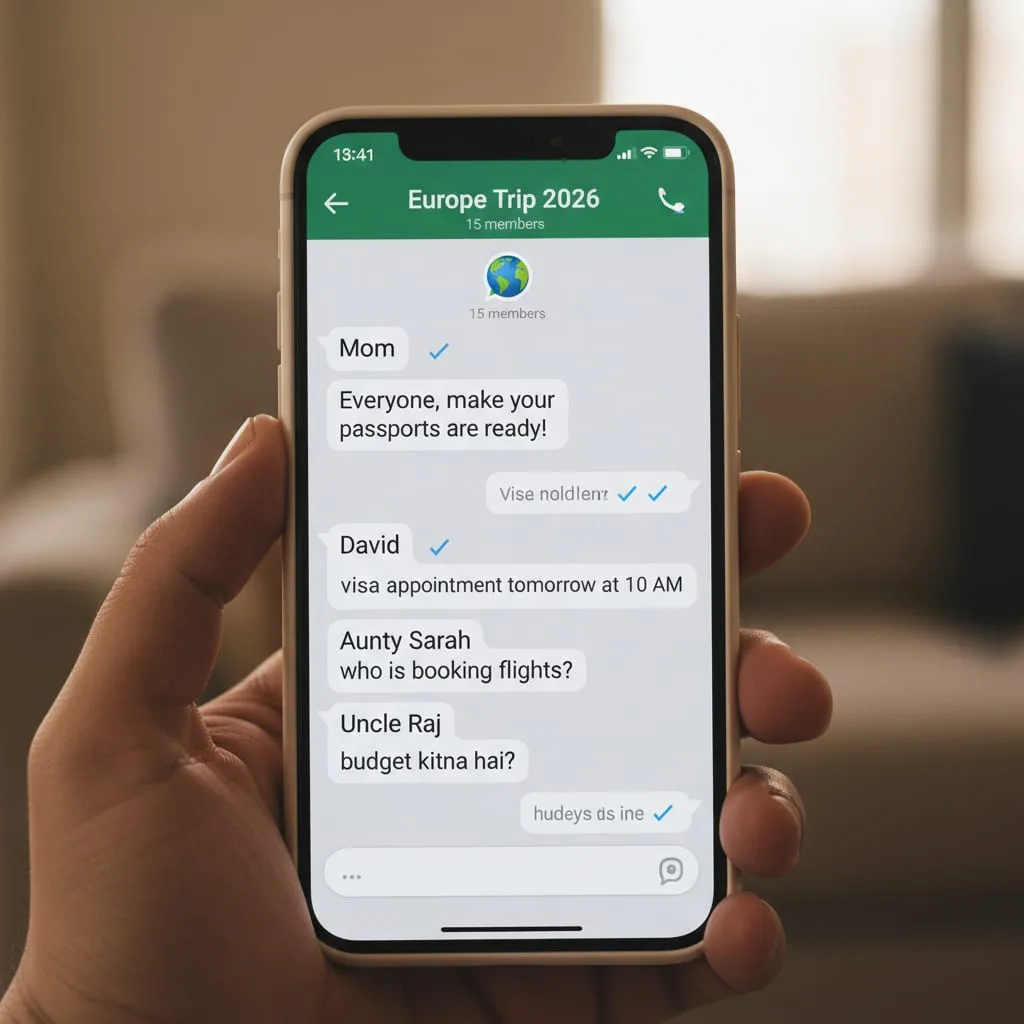
WhatsApp Group Management for Large Family Travel
You will have a family trip WhatsApp group. This is unavoidable. How you manage it determines whether you arrive at the airport sane or already exhausted.
Rules that work:
1. Create multiple groups with clear purposes.
Main group: announcements only, no casual chat
"Trip Chat" group: general discussion, photos, random forwards your uncle sends
"Logistics" group: only adults, only trip-related decisions
2. Pin important messages.
Flight details, hotel addresses, emergency contacts. People will ask "what time is the flight" seventeen times. Pinned messages are your friend.
3. Set a decision deadline.
"Please confirm your activity preferences by Sunday 6 PM. Anyone who doesn't respond is assumed to agree with the majority." This prevents the endless "I'll let you know" responses.
4. One person handles bookings.
Democracy doesn't work for travel planning. Appoint one organizer (probably you, if you're reading this) who makes final calls. Everyone else can give input, but one person decides. Otherwise you'll spend three weeks debating hotel options.
5. Create a shared document with all details.
Google Doc or Notion page with complete itinerary, booking references, emergency numbers, visa copies, insurance details. Share the link in the group. Update it as things change. This becomes your trip bible.
Activity Planning When Taking Large Indian Families Abroad
The kids wanted Universal Studios. Dad wanted to "just rest in the hotel." My aunt wanted shopping. Grandmother wanted temple visits. Planning activities for a multi-generational group requires accepting one truth: you cannot keep everyone happy all the time.
What works instead:
Build in free time. Not every day needs a group activity. Alternate between "everyone together" days and "do your own thing" days. The introverts in your family need this. So do the extroverts, honestly.
Split the group strategically. Adults with kids go to theme parks. Elderly family members visit temples with one younger person for support. Shopping enthusiasts hit the malls. Everyone meets for dinner. This way, nobody spends the whole day doing something they hate.
Book one or two "everyone" activities. A group dinner cruise, a city tour, one major attraction that appeals broadly. These become the shared memory moments everyone talks about later.
Consider physical abilities. My grandmother can't walk more than 500 meters at a stretch. Universal Studios requires hours of walking and standing. Trying to include her would've meant either she suffers or we rush through — neither is okay. It's fine for her to skip some activities and do something more suitable.
Best Destinations for Large Indian Families Abroad
Not all destinations work equally well for big groups. Based on my experience with large Indian families abroad, these are the winners:
Dubai: Indian restaurants everywhere, visa on arrival (now e-visa), direct flights from most Indian cities, activities for all ages, shopping options, and most people speak Hindi. Accommodation ranges from budget to luxury. The only downside is summer heat — avoid May to September.
Singapore: Extremely organized, Little India has every Indian food you need, safe for elderly and children, compact city so less travel fatigue. Marina Bay Sands, Sentosa, Gardens by the Bay — something for everyone. Visa process is smooth for Indians.
Thailand: Budget-friendly, visa on arrival for Indians (15 days), vegetarian food available in tourist areas, temples for the religious members, beaches and nightlife for younger ones. The language barrier is higher than Dubai/Singapore, but tourist areas manage with English.
Malaysia: Combination of Kuala Lumpur city, Langkawi beaches, and Genting Highlands hill station. Indian food is everywhere (Malaysian Indians are a significant population). Visa-free entry for Indians (up to 30 days) makes it easy. Good value for money on accommodation and food.
Bali: Beautiful villas available at reasonable prices, Hindu temples (many Indian families appreciate this), good vegetarian options in Ubud area. The only challenge is longer flight times and not as much Indian food variety as Southeast Asian cities.
Travel Insurance for Large Indian Families Abroad
With 15 people including elderly members and children, something will go wrong. Maybe someone gets food poisoning. Maybe a kid falls sick. Maybe — and this happened to us in Singapore — your uncle's blood pressure spikes and he needs emergency hospital care.
Good travel insurance is non-negotiable when taking large Indian families abroad. What to look for:
- Coverage of at least ₹50 lakhs per person (medical emergencies abroad are expensive)
- Pre-existing condition coverage (important for elderly members)
- Trip cancellation coverage (if one person can't go, can the others get refunds?)
- Baggage delay compensation (with 20 bags traveling, at least one will get delayed)
- 24/7 helpline with Hindi support
Family floater policies sometimes work out cheaper than individual policies. ICICI Lombard, HDFC ERGO, and Bajaj Allianz offer group travel insurance. Get quotes from multiple providers.
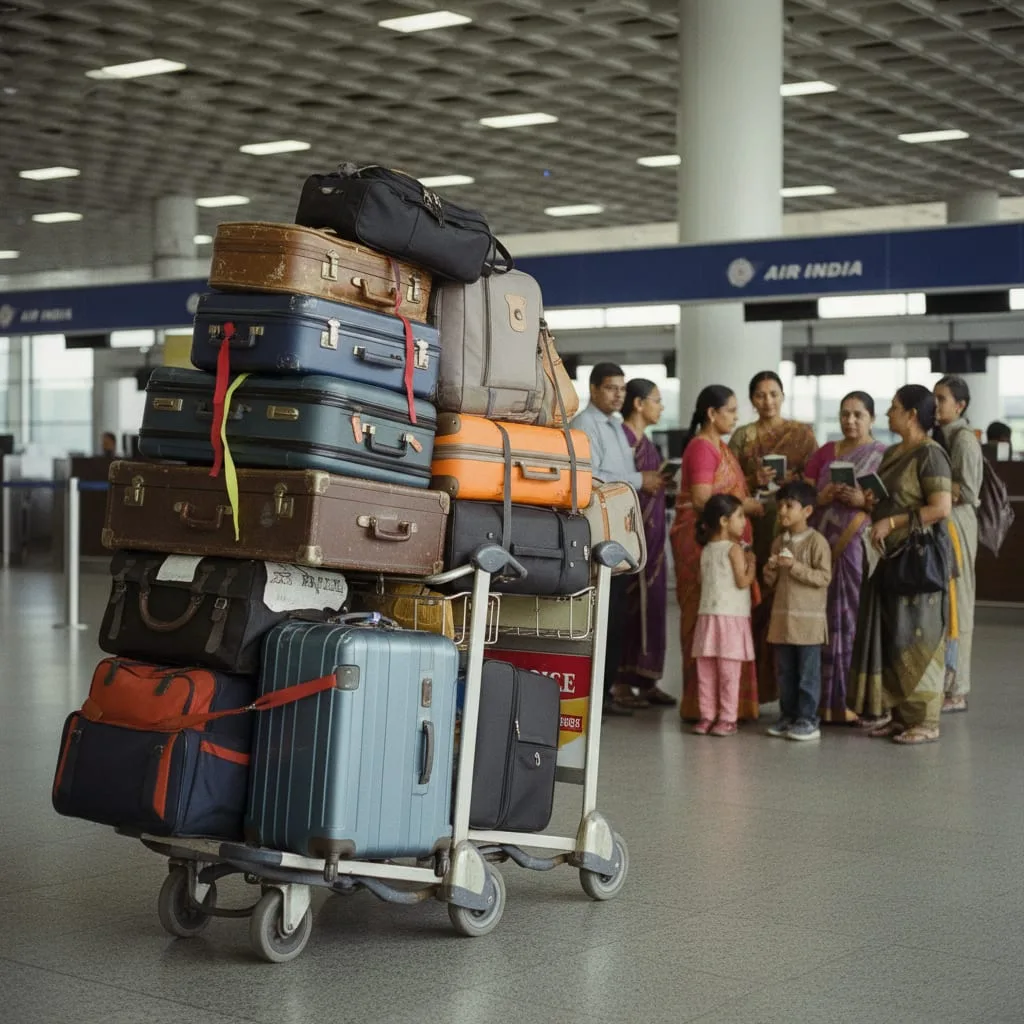
Packing and Baggage for Large Family International Travel
Fifteen people means roughly 30 check-in bags and 15 cabin bags. This is a logistical nightmare at airports. Here's how to manage:
Color-code or tag bags. Buy identical ribbon colors or luggage tags for your family. At the baggage carousel, everyone grabs bags with the same color tag. No confusion, no accidentally taking someone else's black suitcase.
Distribute shared items. Not every family needs to carry a full medical kit, adapter set, or emergency snacks. Create a list of shared items and assign each to one family. One person carries the common medicines, another carries the power strips and adapters, another carries the kids' emergency snack supply.
Keep documents with different people. Don't put all passports in one bag. If that bag gets lost, everyone is stuck. Spread critical documents across multiple people's hand luggage.
Airport check-in strategy: Arrive 4 hours early for international flights when traveling with large groups. Web check-in the day before. If you have elderly or very young family members, most airlines allow priority boarding — ask at the counter.
Emergency Planning for Large Indian Families Abroad
Nobody likes thinking about emergencies, but with elderly members and children, you must have a plan.
Create an emergency contact card with hotel address, local emergency numbers, embassy contact, and family members' phone numbers. Give laminated copies to everyone who might get separated (including children old enough to talk to authorities).
Know the nearest hospital to your accommodation. Save the address in Google Maps offline. Know whether your insurance has a tie-up with local hospitals for cashless treatment.
Carry a small medical kit with: basic painkillers, ORS packets, band-aids, antiseptic, any prescription medications for each family member (with copies of prescriptions), anti-diarrhea medication, and motion sickness pills.
Designate a family leader who everyone follows in case of emergency. In crowded places, this person walks in front, another responsible adult walks at the back. Kids and elderly stay in the middle.
Honest Truths About Large Indian Families Abroad
After three trips with large Indian families abroad, here's the unfiltered truth:
Someone will complain constantly. Accept it. There's always one person who finds fault with everything. The room is too cold. The food is too expensive. The activities are too tiring. You cannot fix this person. Smile, nod, and plan for yourself.
Kids will melt down at the worst times. Usually at immigration or in the middle of a museum. Carry snacks. Carry their favorite toys. Carry patience.
The best memories come from unplanned moments. The group photo everyone refused to take but then loved. The random restaurant you found when the planned one was closed. The card game in the villa living room when it rained and everyone's outdoor plans got cancelled.
Take one day for yourself. Even as the organizer — especially as the organizer — schedule some solo or couple time. Slip away for a coffee, a spa appointment, a walk without fifteen opinions about where to go. You need it.
Document the chaos. Hire a photographer for one group session, but also capture the real moments: your grandfather napping at the airport, kids fighting over ice cream flavors, the twelve different poses before everyone agrees on a group photo. Twenty years later, these matter more than the perfect shots.
Is Taking Large Indian Families Abroad Worth It?
Yes. Absolutely yes.
Despite the coordination headaches, the budget negotiations, the dietary gymnastics, and my temporary passport-renewal-induced insanity, these trips created memories my family still talks about years later. My grandmother had never left India before the Dubai trip. Watching her see the Burj Khalifa lit up at night, genuinely amazed, made every logistical nightmare worth it.
Taking large Indian families abroad is hard. It's expensive. It requires someone (you) to take on a project-manager role for months. But it's also one of the few ways to get multiple generations together without the usual wedding-or-funeral context. You share experiences instead of just photos. You see your serious banker uncle turn into a kid at a theme park. You watch your parents relax in ways they can't at home.
Start with a nearby destination — Singapore or Dubai for a first attempt. Keep the trip short — 5-6 nights is enough for first-timers. Be patient with each other. And when it gets chaotic (it will), remember: the chaos is the story you'll tell later.
TripCabinet plans these exact trips for large Indian families abroad. Multiple families, different generations, all the coordination handled by us so you can focus on actually enjoying your vacation. Because life's too short to spend six months arguing about hotel rooms.
Frequently Asked Questions
How do I plan an international trip for a large Indian family?
Start 6-8 months early. Choose a destination with visa-free or easy e-Visa access (Thailand, Singapore, Malaysia, Dubai). Appoint one coordinator for bookings. Book a group block at one hotel for discounted rates. Use a shared WhatsApp group for itinerary and documents. Budget 20% extra for unexpected family demands.
Which destination is best for large Indian family groups?
Dubai and Singapore are the easiest for large Indian families — familiar food, Hindi-speaking staff, easy visa, excellent infrastructure for all ages. Thailand (Phuket/Bangkok) works for adventurous families. Bali is great for multi-generational groups with villa accommodations that fit 8-12 people.
How do I get group discounts on international flights?
Contact airlines directly for group bookings (10+ passengers). Most airlines offer 5-15% discount on group fares with flexible name changes. Book through airline group desk, not the website. Alternatively, split into smaller groups and use Google Flights to find the cheapest dates where enough seats are available.
How do I handle different dietary requirements in a family group?
Book hotels with breakfast buffets (something for everyone). Research Indian restaurants at the destination in advance. Carry emergency food supplies (thepla, MTR ready meals, instant noodles). For group dinners, choose restaurants with both veg and non-veg options. Share a Google Maps list of pre-vetted restaurants with the group.
Should I use a travel agent for a large family group trip?
For groups of 15+ people, a travel agent saves significant coordination headaches. They handle bulk visa applications, group hotel negotiations, airport transfers for different arrival times, and activity bookings. For smaller groups (8-12), self-planning with one dedicated coordinator works fine and saves 15-20% on agent commissions.