

Maldives Local Islands: The INR 1.5 Lakh Trip Nobody Tells You About
In this guide (10)
- The Real Cost Breakdown: Local Islands vs Resort Bubble
- What You Gain on Maldives Local Islands
- What You Lose on Local Islands: The Honest Trade-Offs
- The Best Maldives Local Islands for Indian Travelers
- Food on Maldives Local Islands: What Indians Need to Know
- Water Sports: The Great Equalizer
- The Practical Planning Section
- Sample 5-Night Local Island Itinerary
- When Resorts Make Sense (And When They Don't)
- Planning Your Maldives Local Islands Trip with TripCabinet
I spent three hours on a public ferry from Male to Maafushi, squeezed between a Maldivian grandmother carrying dried fish and a European backpacker who'd clearly done this before. The ferry cost me MVR 22 — roughly INR 50. That same journey by resort speedboat? MVR 1,500. Welcome to the maldives local islands experience, where the math suddenly makes sense and the Instagram fantasy gets a reality check.
Here's what every glossy Maldives brochure conveniently forgets to mention: you don't need to spend INR 3-5 lakh to see those turquoise waters. The same lagoons, the same reef fish, the same impossibly white sand exists on inhabited local islands — just without the overwater villa and the international bartender mixing your mojito. For Indian travelers watching their rupees, this changes everything.
But let me be honest upfront. Choosing budget maldives from india via local islands isn't just about saving money. It's a fundamentally different experience with real trade-offs. You'll interact with actual Maldivian culture — hear the adhan echo across the island, watch fishermen bring in the day's catch, eat mas huni prepared the way locals have for generations. At resorts, your butler might be Sri Lankan, your chef Italian, and your experience... well, it could be anywhere tropical with that kind of money.
The Real Cost Breakdown: Local Islands vs Resort Bubble
Let's talk numbers because vague promises of "budget travel" mean nothing without them. I've done both — the overwater villa honeymoon splurge and the guesthouse island-hopping trip — so these figures come from actual receipts, not marketing estimates.
Resort Stay (5 Nights, Mid-Range Property)
Flight from Delhi/Mumbai: INR 20,000-35,000 return. Speedboat transfer: INR 8,000-15,000 (some resorts charge more for seaplane, up to INR 40,000). Accommodation: INR 35,000-60,000 per night (water villa) or INR 20,000-35,000 (beach villa). That's INR 1,00,000-3,00,000 just for the room. Food: Full-board packages run INR 8,000-15,000 per person per day. Half-board saves money but limited options. Activities: Snorkeling trips INR 5,000-8,000, diving INR 10,000-15,000 per dive, sunset cruise INR 12,000-20,000. Drinks: A cocktail costs INR 1,200-2,000. Wine by the glass, INR 800-1,500. Beer, INR 600-900.
Total 5-night resort trip: INR 2,50,000 - 5,00,000 per person

Local Island Stay (5 Nights, Maafushi or Similar)
Flight from Delhi/Mumbai: INR 20,000-35,000 return (same flights). Public ferry transfer: INR 100-250 return (or speedboat INR 1,500-3,000). Guesthouse accommodation: INR 3,000-6,000 per night with breakfast. That's INR 15,000-30,000 total. Food: Local cafes INR 400-800 per meal, guesthouse dinner INR 800-1,200. Budget INR 2,000-3,500 per day for all meals. Activities: Snorkeling trips INR 2,000-3,500, diving INR 4,500-7,000 per dive, sandbank picnic INR 2,500-4,000. Drinks: Not available (local islands are dry). Bring your reading instead.
Total 5-night local island trip: INR 70,000 - 1,20,000 per person
The savings are dramatic — often 60-70% less. But those savings come with conditions we need to discuss honestly.
What You Gain on Maldives Local Islands
The local island vs resort debate isn't purely financial. Something shifts when you step off that ferry onto an island where people actually live, where children walk to school, where the mosque's call to prayer structures the day.
Authentic Maldivian Culture
At Centara Grand or any international resort, the experience is designed to feel... international. The staff speak multiple languages (including Hindi, often), the cuisine spans continents, and the vibe is "luxury tropical paradise" — a category that includes Mauritius, Seychelles, Fiji, and anywhere else with clear water and disposable income tourists.
On Maafushi, I watched a man repair his dhoni (traditional fishing boat) using techniques unchanged for generations. At the local cafe, the owner's daughter practiced English by taking my order. The fisherman selling his morning catch remembered my face from the day before. None of this happens when you're isolated on a private island where "local culture" means a scheduled Bodu Beru performance on Thursday nights.
Freedom and Flexibility
Resort guests are essentially captive. Once you've paid for that seaplane transfer and checked into your villa, you're committed. Want to see another island? That's an organized (expensive) excursion. The food menu might be excellent, but you're eating it every meal for a week.
Local island travelers can ferry-hop. Spend two nights on Maafushi, two on Thulusdhoo, one on Gulhi. Try different guesthouses. Eat at different cafes. The flexibility of the maldives local islands approach means your trip can evolve based on recommendations from other travelers or simply your mood.
Better Value Water Activities
Here's something nobody mentions: the same snorkeling trip that costs INR 7,000 at your resort costs INR 2,500 booked through a Maafushi guesthouse. The reef doesn't know which boat brought you. The manta rays don't check your hotel key. Dive centers on local islands often charge half what resort dive centers charge for identical PADI courses.
For water sports enthusiasts — and honestly, why else come to Maldives? — the budget maldives from india approach delivers more ocean time for your rupees.
What You Lose on Local Islands: The Honest Trade-Offs
Now for the uncomfortable truths that budget Maldives guides often gloss over.
The Bikini Beach Situation
Maldives is an Islamic nation. On inhabited local islands, Maldivian values apply. You cannot wear swimwear outside designated "bikini beaches" — small sections of shoreline set aside for tourists.
On Maafushi, the bikini beach is a 5-minute walk from most guesthouses. It's pleasant enough, with loungers and a cafe, but let's be real: it's not the same as having a private beach attached to your overwater villa where you can wear (or not wear) whatever you want.

For couples wanting sunset swims in private, or anyone uncomfortable with the designated-area setup, this is a genuine limitation. I've met travelers who switched to resorts mid-trip because the bikini beach arrangement felt too restrictive.
No Alcohol. Period.
Local islands are completely dry. No wine with dinner. No sundowner cocktails. No cold beer after a hot day. The only legal alcohol in Maldives exists on licensed resort islands and liveaboard boats.
For some travelers, this is fine — even refreshing. For others, particularly honeymooners or those celebrating special occasions, the absence of alcohol significantly impacts the experience. If champagne toast at sunset is non-negotiable, local islands aren't for you.
A workaround exists: book a day trip to a nearby resort (INR 5,000-10,000 including lunch and transfers). You get pool access, beach access, and a bar. Not cheap, but it scratches the itch if needed.
Accommodation Quality Variance
Resort rooms have been photographed, reviewed, and standardized. You know exactly what you're getting at a Soneva or an Anantara. Guesthouses on local islands vary wildly. Some are excellent — clean rooms, strong AC, genuine hospitality. Others are... basic. Thin walls, unreliable hot water, breakfast that's the same thing every day.
Read recent reviews carefully. Book with refundable options when possible. Manage expectations: a INR 4,000/night room on Maafushi is not trying to compete with a INR 40,000/night resort villa.
The Romance Factor
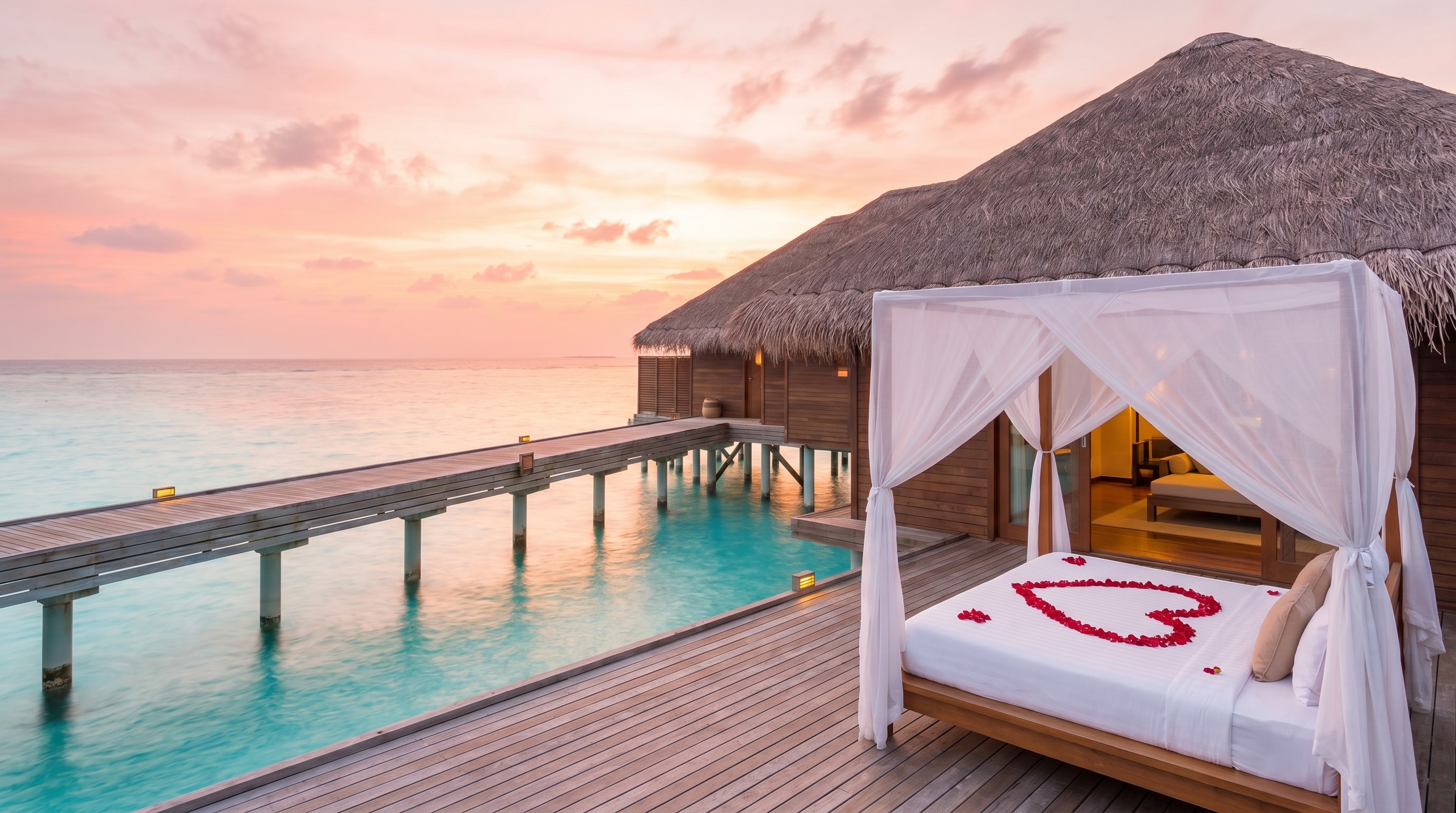
I'll say it plainly: resorts are engineered for romance. Private dinners on the beach. Rose petals on the bed. Couples spa treatments with ocean views. Honeymoon packages with champagne and sunsets.
Guesthouses on local islands are not. You're sharing the beach with other tourists and local families. The dinner might be excellent, but it's at a plastic table under fluorescent lights. Your room is comfortable, not indulgent. For honeymoons or anniversaries, this gap matters.
The Best Maldives Local Islands for Indian Travelers
Not all local islands are equal. Here's where to go based on what you're looking for.
Maafushi: The Gateway Island
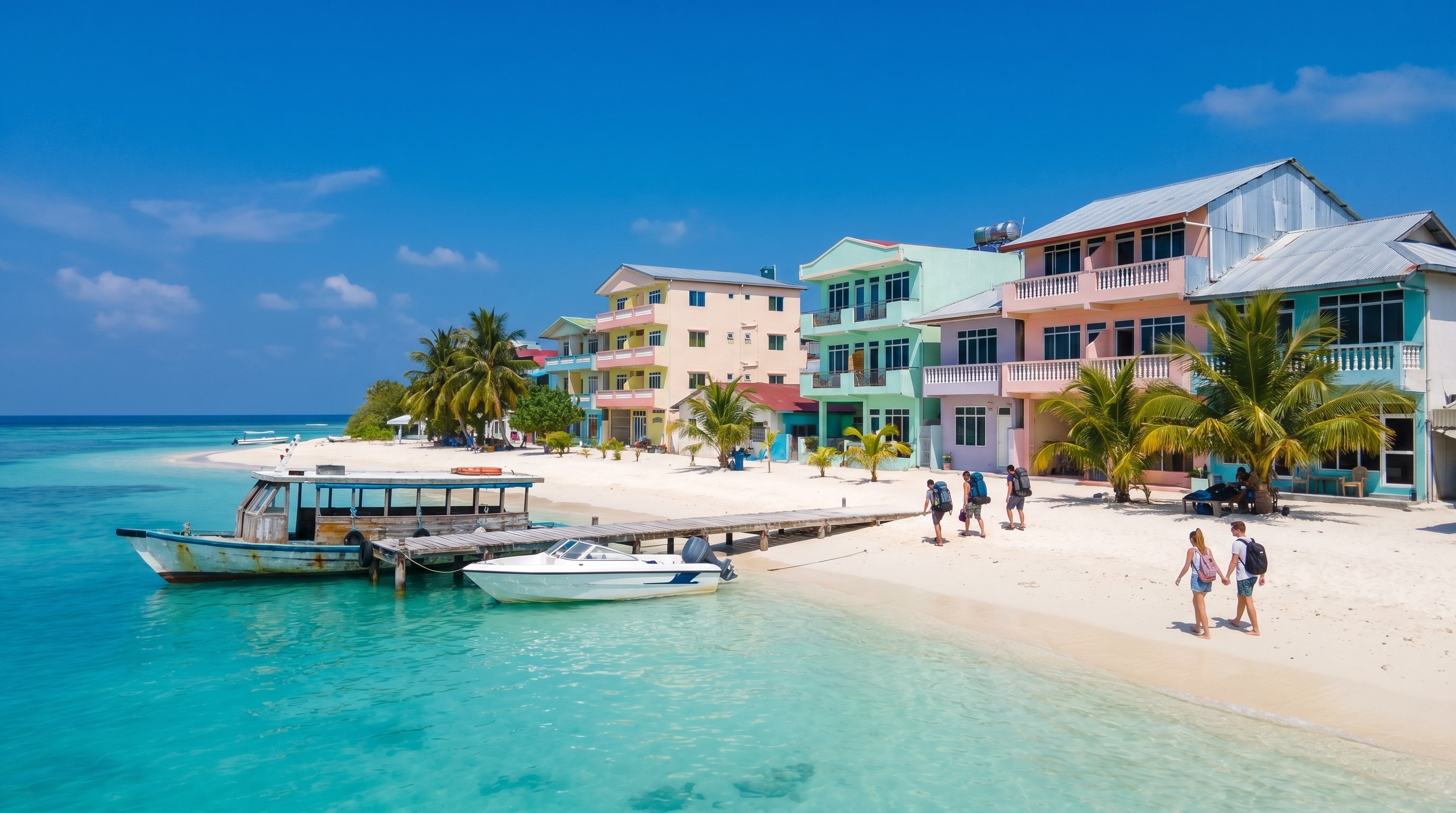
If this is your first maldives local islands trip, start here. Maafushi is the most developed local island for tourism, with dozens of guesthouses, multiple restaurants, and extensive water sports operations. It's 27 km from Male, reachable by public ferry (90 minutes, MVR 22) or speedboat (25 minutes, MVR 350-500).
The infrastructure means reliable services and easy bookings. The trade-off is crowds — during peak season, the bikini beach gets packed, and some visitors say it feels more "tourist village" than "authentic Maldives." For first-timers testing the local island experience, that scaffolding of familiarity can be welcome.
If Maafushi sounds like the right first step, our three-night Maafushi local island package pairs an AC guesthouse room and shared speedboat transfers from Velana airport with a sandbank and bikini beach trip, turtle snorkelling and a sunset dolphin cruise.
Thulusdhoo: The Surfer's Island
Thulusdhoo has legitimate surf breaks (rare in Maldives) plus the famous Coca-Cola factory (the Maldives' main bottling plant, strangely iconic). The island is smaller than Maafushi, less touristy, with a stronger "real village" feel.
It's 27 km from Male, similar to Maafushi but slightly more complex ferry schedule. Surfers should time visits for the southwest monsoon (May-October) when the breaks work best. Non-surfers still get excellent snorkeling and a quieter atmosphere.
Dhiffushi: Quiet and Beautiful
If Maafushi feels too busy, Dhiffushi offers the opposite extreme. This small island (900 residents) has fewer guesthouses, fewer tourists, and a more intimate local experience. The bikini beach is peaceful. The snorkeling house reef is excellent.
Getting there requires a speedboat from Male (about 1 hour) or a more complex ferry routing. The isolation means fewer restaurant options and more reliance on your guesthouse for everything. Bring books, bring patience, bring appreciation for genuine quiet.
Gulhi: Most Authentic
Gulhi is tiny — just 500 residents — and tourism development is minimal. This is as close to "untouched local island life" as you'll find with tourist accommodation. The beach is stunning. The people are friendly in the unfussy way of communities unaccustomed to constant visitors.
Ferry connection from Maafushi is easy, so a common itinerary involves splitting time between both islands — Maafushi for activities and infrastructure, Gulhi for the authentic slow-down.
Food on Maldives Local Islands: What Indians Need to Know
The food situation deserves its own section because it differs significantly from resort dining.

Authentic Maldivian Cuisine
This is your chance to eat what Maldivians actually eat. Mas huni — shredded smoked tuna with coconut, onion, and chili — served with roshi flatbread for breakfast. Garudhiya, a clear fish broth served with rice, lime, chili, and onion. Rihaakuru, a thick fish paste that's an acquired taste but deeply traditional.
Maldivian food is fish-based, coconut-heavy, and often spiced with curry leaves and chili. Vegetarians face challenges — fish is so central to the cuisine that "vegetarian" options might still involve fish stock or dried fish flakes. Strict vegetarians should communicate clearly and repeatedly with their guesthouse.
Tourist-Oriented Cafes
Most local islands with tourism have cafes serving international-ish food: pasta, pizza, grilled fish, fried rice, basic curries. Quality varies. Prices are reasonable (INR 400-800 for a meal) but don't expect fine dining.
Indian food specifically is rare on local islands. Your best bet is the Indian-style curries some cafes attempt, though they're adapted to local tastes. If you need proper dal and roti, pack some instant options or accept that this isn't the trip for familiar comfort food.
Guesthouse Meals
Most guesthouses include breakfast (often buffet-style with fruit, eggs, bread, maybe pancakes) and offer optional lunch/dinner packages. The convenience is real — especially on smaller islands where restaurant options are limited.
Quality depends entirely on the guesthouse. Read reviews mentioning food specifically. A good guesthouse kitchen makes the entire trip better; a bad one becomes a twice-daily disappointment.
Water Sports: The Great Equalizer
Here's where local islands genuinely compete with resorts: the ocean doesn't discriminate by accommodation budget.
Snorkeling
Half-day snorkeling trips from local islands cost INR 2,000-3,500 per person, typically visiting 2-3 spots including nurse shark points, turtle areas, and coral gardens. The same trips from resorts run INR 5,000-8,000. The boats are similar. The reefs are identical. You're paying for the resort's marketing budget and concierge service.
House reef snorkeling (directly off the beach) varies by island. Some local islands have excellent house reefs; others require boat trips to see anything impressive. Research your specific island's reef access before booking.
Diving
PADI Open Water certification on local islands: INR 25,000-35,000. At resorts: INR 45,000-60,000. Fun dives for certified divers: INR 4,500-7,000 locally vs INR 10,000-15,000 at resorts. Multiple dive packages offer better per-dive rates.
Dive quality is instructor-dependent, not island-dependent. Good dive centers exist on both local islands and resorts. Bad ones exist in both places too. Check instructor reviews, equipment quality, and safety protocols regardless of where you're staying.
Other Activities
Sandbank picnics (deserted island lunch trips): INR 2,500-4,000 local vs INR 8,000-12,000 resort. Sunset fishing: INR 2,000-3,500 local vs INR 6,000-10,000 resort. Dolphin cruises: INR 2,000-3,500 local vs INR 5,000-8,000 resort. Jet skiing, parasailing, and motorized water sports are more available at resorts, though some local islands now offer them.
The pattern is consistent: same ocean, same experiences, different price tags.
The Practical Planning Section
Best Time to Visit
Maldives has two seasons: dry (December-April) and wet (May-November). The dry season is peak tourist season with higher prices and better weather. The wet season brings cheaper rates, occasional rain (usually brief afternoon showers), and better surfing conditions.
For budget maldives from india trips, consider shoulder months (November or early May) when prices drop but weather remains reasonable.
Flights from India
Direct flights operate from Delhi, Mumbai, Bangalore, Kochi, and Trivandrum. IndiGo and Air India offer competitive fares. Book 2-3 months ahead for best prices — INR 15,000-25,000 return during sales, INR 25,000-40,000 otherwise.
Male's Velana International Airport connects to local islands by ferry or speedboat. Plan your arrival timing around transfer schedules — arriving too late means an overnight in Male (or airport area guesthouses).
Money Matters
Local currency is Maldivian Rufiyaa (MVR). 1 USD = roughly 15.4 MVR. 1 INR = roughly 0.18 MVR. USD is widely accepted (often preferred), so carrying dollars makes sense. Cards work at most guesthouses but cash helps for small cafes and ferries.
ATMs exist on Male and Maafushi but can run out of cash during peak times. Withdraw enough before heading to smaller islands.
Visa and Documentation
Indian passport holders receive visa-free entry for 30 days. Requirements: valid passport (6+ months remaining), confirmed accommodation booking, return flight ticket. Straightforward for most travelers. Check the Maldives Immigration website for current requirements.
Sample 5-Night Local Island Itinerary
Here's how I'd structure a first maldives local islands trip for maximum experience at minimum cost:
Day 1: Arrive Male, speedboat to Maafushi (25 min, INR 1,500). Check in, explore island, bikini beach sunset. Accommodation: Maafushi guesthouse INR 4,500/night.
Day 2: Full-day snorkeling trip to nurse shark point, turtle reef, sandbank lunch. INR 3,500 all-inclusive. Evening: local cafe dinner, walk the village.
Day 3: Morning ferry to Gulhi (30 min, INR 100). Check in, lunch at local cafe, afternoon house reef snorkeling, sunset on quiet beach. Accommodation: Gulhi guesthouse INR 3,500/night.
Day 4: Morning on Gulhi beach, afternoon ferry back to Maafushi. Diving introduction or second snorkel trip. Final dinner at best local cafe.
Day 5: Late morning ferry to Male (90 min, INR 50). Airport shopping, departure.
Total estimated cost: INR 85,000-1,00,000 including flights, all accommodation, meals, and activities.
When Resorts Make Sense (And When They Don't)
I'm not here to tell you local islands are categorically "better" than resorts. They're different products for different travelers.
Choose resorts if: You're celebrating something romantic (honeymoon, anniversary, milestone). You want alcohol available. You prioritize luxury, privacy, and pampering. You have budget and want to use it. You want certainty — everything organized, predictable, and high-quality.
Choose local islands if: You're traveling with friends or solo. Budget matters but you still want that Maldives water quality. Cultural authenticity interests you. You enjoy flexibility and independent exploration. You want more activities for less money. You're comfortable with basic-to-mid-range accommodation.
Many travelers do hybrid trips: start with local islands for the budget-friendly adventure, finish with 2 nights at a resort for the splurge finale. Best of both worlds, if your budget allows.
Planning Your Maldives Local Islands Trip with TripCabinet
We plan custom Maldives trips that actually match your priorities — not generic packages built for fictional "average travelers." Whether you want pure local island adventure, pure resort indulgence, or that hybrid mix, our team handles the logistics so you focus on the experience.
If you decide the splurge makes sense for your trip, browse our resort recommendations.
Pro tip: time your local island trip with Maldives manta ray season (May-November) for the best marine life and 30-40% lower prices across the board.
The INR 1.5 lakh Maldives exists. It just requires knowing where to look — and being honest about what you're willing to trade for the savings. Those turquoise lagoons don't check your hotel budget. They're waiting either way.
How to Plan a Budget Maldives Trip on Local Islands
Step-by-step guide to planning an affordable Maldives vacation staying on local inhabited islands instead of resorts.
Choose Your Local Island
Research islands based on your priorities: Maafushi for convenience and variety, Thulusdhoo for surfing, Dhiffushi for tranquility, or Gulhi for authenticity. Book 2-3 months ahead for best rates.
Book Flights to Male
Fly into Velana International Airport (MLE) in Male. IndiGo and Air India offer direct flights from major Indian cities. Book during sales for fares around INR 15,000-25,000 return.
Arrange Island Transfer
Contact your guesthouse for speedboat transfers (INR 750-1500) or use public ferries (INR 50-120) if your dates align with ferry schedules. Speedboats are more flexible.
Book Guesthouse Accommodation
Reserve a local guesthouse via Booking.com or direct contact. Expect INR 3,000-6,000 per night for a clean room with AC, often including breakfast.
Plan Excursions
Book snorkeling trips (INR 2,500-4,000), sandbank picnics (INR 3,000-5,000), and diving (INR 5,000-8,000 per dive) through your guesthouse. Group trips are cheaper.
Pack Appropriately
Bring modest clothing for village areas, swimwear only for bikini beaches, reef-safe sunscreen, and snorkeling gear if you have your own to save rental costs.