

Indian Students Europe Budget Travel: The Complete Term Break & Semester Abroad Guide
In this guide (15)
- Indian Students Europe Budget Advantage: The Schengen Visa Hack
- Budget Airlines: Your EUR 20 Ticket to Anywhere in Europe
- The FlixBus Overnight Trick: Save on Hotels AND Transport
- BlaBlaCar: The European Carpool That's Weirdly Great
- Hostels for Indian Students: Your EUR 20-35 Per Night Home Base
- The ISIC Card: Worth Every Paisa for Indian Students in Europe
- Eating on a Student Budget: The EUR 5-10 Per Day Challenge
- Free Things Every European City Offers
- Must-Do Student Trips: Where Everyone Goes (For Good Reason)
- The Interrail Youth Pass: When It Makes Sense
- 5-Day Term Break Itineraries Under EUR 400
- Balancing Part-Time Work and Travel
- Safety Tips: Real Concerns for Indian Students in Europe
- Staying Connected With Family Back in India
- The Honest Reality of Student Travel in Europe
I remember standing at Frankfurt Hauptbahnhof at 2 AM, clutching a EUR 19 FlixBus ticket to Prague, my backpack stuffed with instant upma packets and a crumpled printout of free walking tours. That was my first term break trip as a master's student in Germany, and I had exactly EUR 180 to last me five days. For Indian students Europe budget travel isn't just possible — it's actually more rewarding than expensive travel. Spoiler: I came back with EUR 23 still in my pocket and memories worth ten times my entire semester's stipend.
Here's the truth about traveling Europe on a student budget: you meet interesting people in hostel kitchens at midnight, you discover hole-in-the-wall kebab shops that locals swear by, and you learn that the Louvre is free on the first Sunday of every month. This guide covers everything I wish someone had told me before I arrived in Europe with my student visa and a head full of misconceptions about how expensive everything would be.
Indian Students Europe Budget Advantage: The Schengen Visa Hack
If you're studying in any of the 26 Schengen countries, congratulations. You've essentially won a golden ticket that most Indian tourists would pay lakhs for. Your student visa isn't just permission to study. It's a free pass to explore an entire continent.
Let me be specific. If you're studying in Germany, France, Netherlands, Italy, Spain, Portugal, Austria, Belgium, Czech Republic, Denmark, Estonia, Finland, Greece, Hungary, Iceland, Latvia, Liechtenstein, Lithuania, Luxembourg, Malta, Norway, Poland, Slovakia, Slovenia, Sweden, or Switzerland, you can travel to any other country on this list without applying for a single additional visa. No paperwork. No embassy visits. No visa fees. Just book your ticket and go.
Compare this to an Indian tourist who needs to apply for a Schengen visa (approximately INR 8,000-10,000), provide bank statements, hotel bookings, travel insurance, and wait weeks for approval. You simply flash your student residence permit at any border and walk through.
The only caveat: your student visa must be valid throughout your travel dates. If your visa expires in June, don't plan a trip for May 28th thinking you'll return on June 2nd. Immigration officers at airports aren't known for their flexibility with expired permits.
Budget Airlines: Your EUR 20 Ticket to Anywhere in Europe
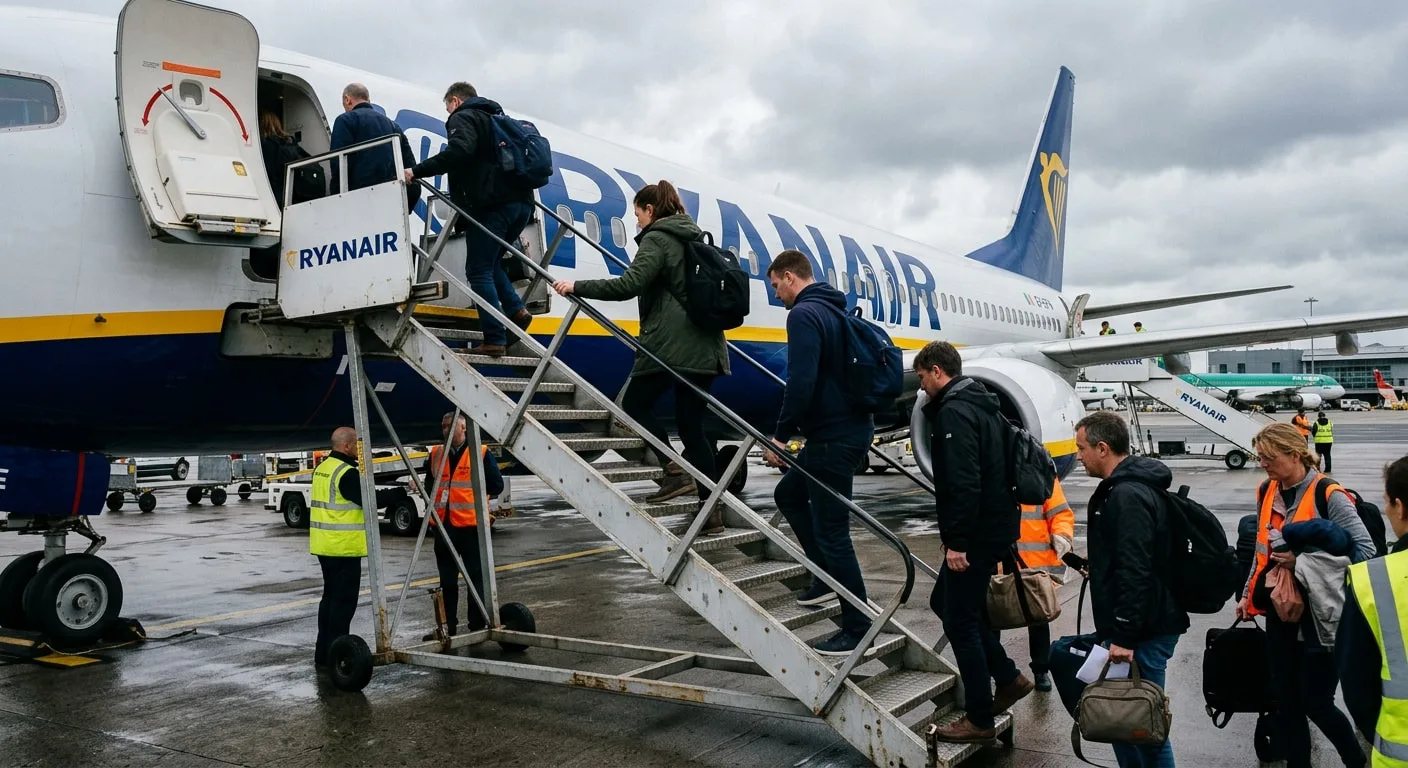
Forget what you know about flying in India. In Europe, budget airlines have made air travel cheaper than train travel, sometimes cheaper than a decent restaurant meal. For Indian students Europe budget flights are the game changer. The big three you need to know are Ryanair (Irish, covers all of Europe), EasyJet (British, strong in Western Europe), and Wizz Air (Hungarian, brilliant for Eastern Europe).

I've flown from Dusseldorf to Barcelona for EUR 14. Milan to Budapest for EUR 22. London to Dublin for EUR 19. These aren't error fares or exceptional sales. These are regular Tuesday afternoon prices if you book 3-6 weeks in advance and fly on weekdays.
Here's the catch that trips up every first-timer: baggage. These airlines make their money by charging for everything not bolted to the seat. A checked bag on Ryanair costs EUR 20-35 each way. Even a small cabin bag that doesn't fit under the seat is EUR 8-15. Learn to travel with just a 40x20x25cm backpack (most budget airlines allow this for free), and you'll save EUR 40-70 per return trip.
Booking Hacks That Actually Work
Sign up for all three airlines' email newsletters. Yes, your inbox will suffer, but you'll get 24-hour early access to sales. I've seen EUR 5 flights during these flash sales. Also download the Skyscanner app and set alerts for routes you're interested in. It shows price history so you know whether EUR 35 to Rome is a good deal or if you should wait.
One more thing: these airlines often fly into secondary airports. Ryanair to "Paris" usually means Paris Beauvais, which is 85km from central Paris. Factor in the EUR 17 shuttle bus and suddenly your EUR 14 flight costs EUR 48 total. Sometimes paying EUR 40 to fly into the main airport saves money. Always check total door-to-door costs.
The FlixBus Overnight Trick: Save on Hotels AND Transport
This is the signature move of broke students across Europe, and it works beautifully once you master sleeping upright. FlixBus operates overnight routes between major cities, departing around 10-11 PM and arriving at 6-7 AM. You save an entire night's accommodation while covering distance. For Indian students Europe budget transport doesn't get better than this.
Some routes that work brilliantly for this:
- Amsterdam to Paris (7 hours, EUR 19-29)
- Munich to Prague (5 hours, EUR 15-22)
- Berlin to Warsaw (6 hours, EUR 15-25)
- Vienna to Budapest (3 hours, EUR 12-18)
- Barcelona to Madrid (8 hours, EUR 20-35)
Pack a neck pillow, download shows offline, bring a light blanket (buses can get cold), and eat a proper dinner before boarding. I've done 47 FlixBus journeys during my two years in Europe, and while I won't pretend it's comfortable, I've saved approximately EUR 1,200 in hotel costs. That funded my entire trip to Norway.
Book on the FlixBus app at least 2-3 weeks ahead. Prices triple closer to departure. Also, if you'll take more than 3 FlixBus trips, their Interflix 5-trip package (EUR 99 for 5 trips) or monthly passes might save even more.
BlaBlaCar: The European Carpool That's Weirdly Great
Indians often hesitate at BlaBlaCar because hitchhiking with strangers sounds sketchy. But this isn't hitchhiking. It's a highly regulated ride-sharing platform where drivers are verified, rated, and reviewed. I've taken probably 30 BlaBlaCar rides and have yet to have a bad experience.
Here's how it works: someone is driving from Munich to Salzburg anyway. They post their trip, you book a seat for EUR 12, and you split their fuel costs. Often faster than buses, always more personal (you actually talk to locals), and usually cheaper than any public transport.
The best part for Indian students? Many drivers love having international passengers. I've had French drivers stop to show me viewpoints, German drivers explain Autobahn culture, and Italian drivers share their grandmother's biscotti recipe. You get transport and a cultural experience rolled into one.
Hostels for Indian Students: Your EUR 20-35 Per Night Home Base
If you've read our comprehensive hostel guide for Indian international travelers, you know the basics. But for student travel specifically, some chains deserve special mention.
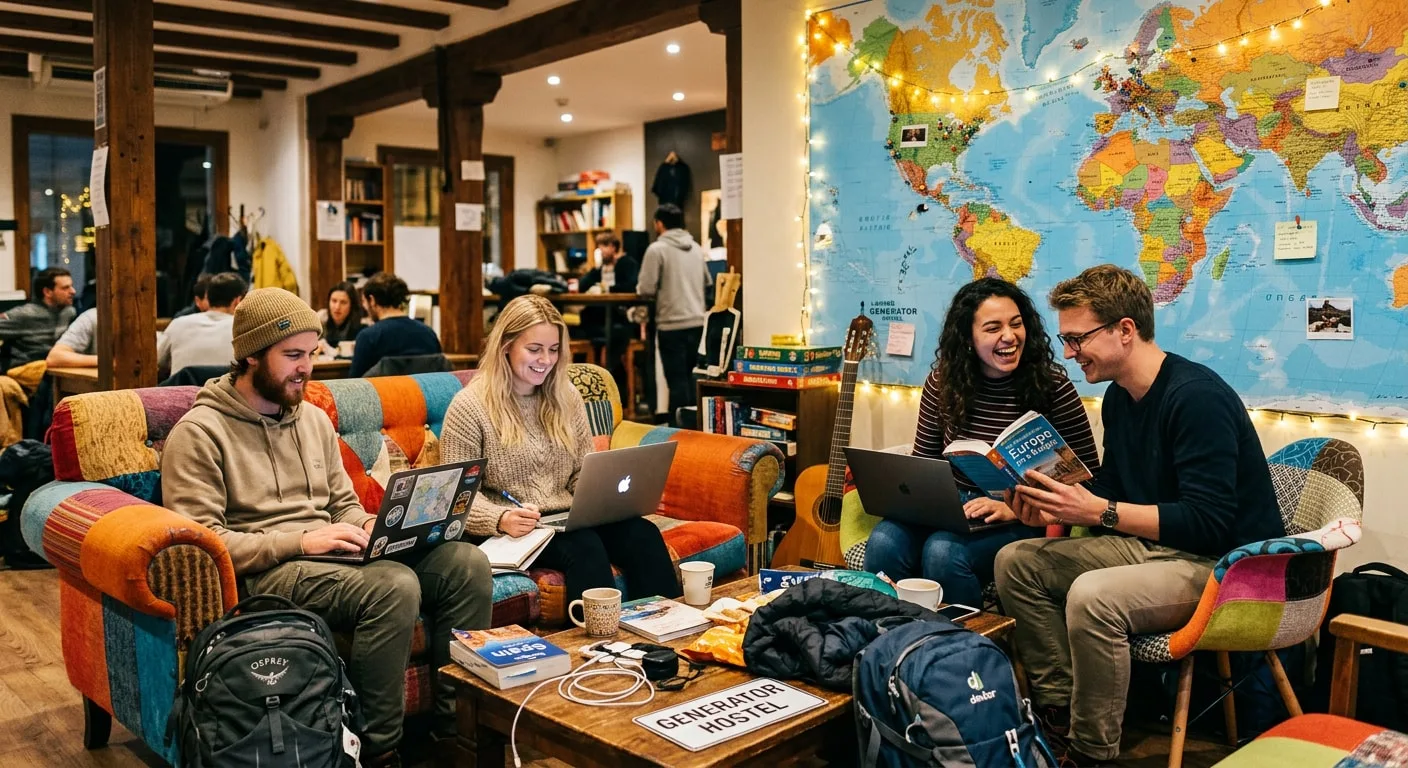
Generator Hostels operate in major cities (London, Paris, Berlin, Rome, Barcelona, Amsterdam, Venice, Dublin, Copenhagen, Stockholm) with a party-but-not-chaotic vibe perfect for students. Clean, modern, excellent common areas, and regular events. Dorm beds run EUR 25-45 depending on city and season.
HI Hostels (Hostelling International) offer discounts with your ISIC student card. They're less social than Generator but reliable, safe, and often in prime locations. Membership costs EUR 15/year and pays for itself within 2-3 stays through member discounts.
A&O Hostels dominate Germany and Austria with the lowest prices around (sometimes EUR 12-18 for dorms). Basic but clean, and their breakfast buffet is surprisingly decent.
The Couchsurfing Option
Couchsurfing is exactly what it sounds like. Locals offer their couch (or spare room) for free to travelers. Yes, free. In exchange, you bring good conversation, maybe cook an Indian meal for them, and leave a nice review.
I've Couchsurfed in 11 European cities. Some hosts became friends I still message. One host in Krakow showed me communist-era architecture that no guidebook mentions. A host in Lisbon introduced me to her grandmother who taught me to make pasteis de nata.
The catch: it takes effort. You need a well-written profile, you need to send personalized requests (not copy-paste), and you need to read host reviews carefully. But if you're broke and extroverted, Couchsurfing can stretch your budget dramatically. Just remember: it's a cultural exchange, not a free hotel. Offer something in return.
The ISIC Card: Worth Every Paisa for Indian Students in Europe
The International Student Identity Card costs approximately EUR 15 (or about INR 1,400) and is accepted at museums, attractions, transport, and shops across 130 countries. For Indian students Europe budget travel means making every euro count. Here's what ISIC gets you:
- 20-50% off museum entry across most of Europe
- Discounts at Generator and HI hostels
- Reduced rates on many train tickets
- Student pricing at attractions like the Colosseum, Anne Frank House, and various castles
- Discounts at some restaurants and shops
Apply online at isic.org or through STA Travel. You'll need proof of full-time enrollment. The card pays for itself within 2-3 museum visits in Western Europe, where regular entry can cost EUR 15-25.
Eating on a Student Budget: The EUR 5-10 Per Day Challenge
Restaurant meals in Western Europe average EUR 15-25. Eating out three times daily would burn EUR 45-75, exceeding many students' entire daily budget. Here's how Indian students Europe budget dining actually works — eating well for under EUR 10 per day.
Turkish/Arab Kebab Shops
Every European city has them. A doner kebab or falafel wrap with all the fixings costs EUR 4-7 and is genuinely filling. These aren't fancy but they're consistent, quick, and everywhere. In Berlin, kebab shops are practically a food group.
Supermarket Strategy
European supermarkets sell ready-made sandwiches, salads, and pasta for EUR 2-5. Lidl, Aldi, Carrefour Express, Tesco Express, and their local equivalents stock everything you need. My standard lunch was a EUR 2.50 sandwich, EUR 0.80 banana, and EUR 1.20 chocolate bar. Total: EUR 4.50, filling enough to skip snacks until dinner.
For cooking hostels (most have kitchens), buy pasta (EUR 0.80), sauce (EUR 1.50), and vegetables (EUR 2-3). You'll get 2-3 meals for under EUR 5 total.
University Canteens
This is the real hack. University cafeterias (Mensa in Germany, restaurants universitaires in France) serve full meals for EUR 2-5. Some require student ID from their institution, others accept any valid student card. Hot meal with sides for EUR 3.50? This is how European students actually survive.
Carry Indian Snacks
Pack chikki, mixture, chakli, instant upma/poha packets, and MTR ready-to-eat meals. When hostel kitchen access is limited or you're on a night bus, these lifesavers prevent expensive desperation purchases at train stations. I always traveled with at least 5 MTR packets. When I missed Indian food, a 3-minute microwaved dal makhani hit exactly right.
Free Things Every European City Offers
Here's what you're not paying for:
Free Walking Tours operate in every major city. Search "free walking tour [city name]" and you'll find operators. You pay what you think it's worth at the end (EUR 5-10 is standard). These are often better than paid tours because guides work for tips and actually try to entertain you.
Free Museum Days are standard across Europe. The Louvre is free on first Sundays. Most UK national museums (British Museum, Natural History Museum, National Gallery) are always free. Many German museums have free hours. Research before each trip. One afternoon at the British Museum would cost EUR 0 while covering 4+ hours of exploration.
Parks and Public Spaces cost nothing and offer authentic local experiences. A picnic in Amsterdam's Vondelpark, sunbathing at Barcelona's Barceloneta Beach, or watching sunset from Rome's Pincio Terrace are all free and memorable.
Must-Do Student Trips: Where Everyone Goes (For Good Reason)
Some destinations have become student travel cliches precisely because they work. Here's the realistic rundown for Indian students Europe budget exploration.
Barcelona Weekend
Beach, architecture, nightlife, football culture if Camp Nou is your thing. Budget around EUR 150-200 for 3 days including cheap flights from most European cities. Warning: Barcelona has Europe's worst pickpocket problem. Keep your phone in front pockets, don't set bags down at cafes, and be alert on La Rambla.
Prague Party Trip
Czech beer costs EUR 1.50 in local pubs. Clubs have no cover or EUR 5 entry. Hostels run EUR 12-18. The city itself is gorgeous, like a fairy-tale set someone forgot to tear down. Budget EUR 100-150 for 3 days including transport from Germany. Just avoid the obvious tourist trap bars in Old Town Square.
Amsterdam Experience
More than just the obvious reasons people visit. The Rijksmuseum, Anne Frank House, canal walks, and cycling culture make it worthwhile even if you skip the coffee shops. Budget EUR 180-250 for 3 days. Expensive but worth one visit.
Swiss Alps Day Trip
If you're studying in Southern Germany, skip the expensive Swiss overnight. Instead, take a day trip to Zurich or Lucerne. Train from Munich or Stuttgart, hike around a stunning lake, eat one overpriced but memorable fondue, return same evening. Total: EUR 80-100 instead of EUR 300+ for an overnight.
The Interrail Youth Pass: When It Makes Sense
Interrail offers discounted passes for travelers under 28. These let you hop on and off trains across Europe for a set number of travel days. If you're planning an ambitious multi-country trip during summer break, the 7-days-in-1-month pass (approximately EUR 220 for youth) can save money compared to booking individual trains.
However, here's the honest assessment: if you're flexible with dates and book 3-4 weeks ahead, budget flights often beat Interrail on pure cost. Interrail makes sense when you value spontaneity (deciding to stop somewhere interesting) or when you're covering ground that budget airlines don't serve well (rural Spain, Italian countryside, Swiss mountain routes).
Read our complete Eurail pass guide for Indians to calculate whether it fits your specific trip.
5-Day Term Break Itineraries Under EUR 400
These assume you're starting from a major European city with budget airline connections. Perfect for Indian students Europe budget planning during short breaks.
Eastern Europe Circuit: EUR 250-300
Day 1: Fly to Budapest (EUR 20-40). Evening thermal baths (EUR 20). Hostel (EUR 15).
Day 2: Free walking tour, ruin bars at night. Hostel (EUR 15).
Day 3: FlixBus to Vienna (EUR 12). Evening at Naschmarkt. Hostel (EUR 25).
Day 4: Schonbrunn Palace (free gardens), Stephansplatz. Hostel (EUR 25).
Day 5: Morning coffee house culture, fly home (EUR 25-40).
Food budget: EUR 50 (EUR 10/day). Total: approximately EUR 250-280.
Portugal Escape: EUR 280-350
Day 1: Fly to Porto (EUR 25-45). Walk Ribeira district. Hostel (EUR 20).
Day 2: Port wine cellars (EUR 15 for tastings). Free walking tour. Hostel (EUR 20).
Day 3: Train to Lisbon (EUR 15). Alfama sunset. Hostel (EUR 25).
Day 4: Belem pastries, LX Factory, Time Out Market. Hostel (EUR 25).
Day 5: Sintra day trip (EUR 15 train). Fly home (EUR 30-50).
Food budget: EUR 50. Total: approximately EUR 280-330.
Balkans Adventure: EUR 200-250
This is where your rupee stretches furthest. Our guide on the cheapest European countries from India covers why the Balkans deliver incredible value.
Day 1: Fly to Belgrade (EUR 30-50). Explore Kalemegdan Fortress. Hostel (EUR 10).
Day 2: Free walking tour, Skadarlija bohemian quarter. Hostel (EUR 10).
Day 3: Bus to Sarajevo (EUR 20). War tunnel museum. Hostel (EUR 12).
Day 4: Old Town, cevapi lunch (EUR 3). Bridge over Miljacka. Hostel (EUR 12).
Day 5: Morning baklava, fly from Sarajevo (EUR 35-50).
Food budget: EUR 35 (EUR 7/day in Balkans!). Total: approximately EUR 200-240.
Balancing Part-Time Work and Travel
Most student visas allow 20 hours per week of work during term and full-time during breaks. If you're working part-time, here's realistic math:
At German minimum wage (EUR 12.41/hour), 20 hours per week generates EUR 248/week before taxes. After about 5 weeks of work, you've earned enough for one solid term break trip including flights, accommodation, and spending money.
The trap many students fall into: working every break instead of traveling. Yes, money is important. But you're in Europe temporarily. That part-time job will exist next semester. The Interrail trip through Scandinavia with your hostel friends won't. Balance is key. Work during term time, travel during breaks. You won't regret the experiences.
Safety Tips: Real Concerns for Indian Students in Europe
Europe is generally safe but not crime-free. Here's what Indian students Europe budget travelers should actually worry about:
Pickpockets are professional in tourist areas of Barcelona, Rome, Paris, and Amsterdam. They work in teams, often with children who look innocent. Keep phones in front pockets, use money belts for passports and cards, and be extra alert on metros and near tourist attractions. I had my wallet lifted in Rome's Termini station because I wasn't paying attention. Don't be me.
Scams target tourists visibly. The petition scam, friendship bracelet scam, and fake police scam all operate across major cities. If strangers approach you aggressively, walk away. No legitimate interaction requires your immediate attention or wallet.
Racism exists but varies by location and context. Eastern Europe can feel less diverse than Western Europe. Student towns are generally more welcoming than random villages. If something feels off, trust your instincts and leave.
Travel insurance isn't optional. Your Indian health insurance doesn't cover Europe. Many universities include student insurance, but verify what it covers. At minimum, ensure you have medical coverage and emergency repatriation. A hospital visit without insurance can cost thousands of euros.
Staying Connected With Family Back in India
Parents worry. This is universal. A few practices that work:
Share your live location via WhatsApp or Google Maps with family during trips. It takes 30 seconds to set up and saves hours of anxious messages. Send a quick photo each morning ("I'm alive, here's breakfast") and they'll worry less about each gap in communication.
Get a European SIM with data. Free WiFi is unreliable. A local SIM (Lycamobile, Lebara, or country-specific options) costs EUR 10-20 per month for plenty of data. When you're standing lost at a Romanian train station at midnight, data access isn't a luxury.
For booking cheap international flights back to India during longer breaks, check our guide on finding deals. Summer break trips home can cost anywhere from INR 35,000 to INR 80,000 depending on when you book and which routes you take.
The Honest Reality of Student Travel in Europe
It's not Instagram perfect. You'll eat terrible sandwiches on delayed trains. You'll sleep in hostel dorms where someone snores like a diesel engine. You'll get lost in cities where nobody speaks English. You'll miss trains, book wrong dates, and occasionally wonder why you didn't just stay in your room watching Netflix.
But you'll also watch sunrise over Charles Bridge with people you met 8 hours ago. You'll have 2 AM conversations in hostel kitchens about life and the universe. You'll discover that the best parts of any city aren't in guidebooks. You'll return to your university flat absolutely exhausted but already planning the next trip.
I spent two years as an Indian student in Europe. I visited 23 countries on a stipend that barely covered rent. Looking back, those FlixBus rides, hostel friendships, and EUR 3 kebab dinners were the education I actually came for. The degree hangs on my wall. The experiences shaped who I am.
Your European semester or master's program will end faster than you expect. The classes and assignments fade into vague memories. The late-night train to Prague with your flatmates doesn't. For Indian students Europe budget travel is the best investment you'll make during your time abroad. Travel broke, travel often, and travel while you have the golden ticket of that student visa. You won't get this chance twice.