
Indonesia Beyond Bali: Yogyakarta, Komodo, Raja Ampat & Java Guide for Indian Travelers
In this guide (10)
- Why Yogyakarta Is Java's Best-Kept Secret for Indians
- Yogyakarta on a Shoestring: What ₹2,000 a Day Gets You
- Komodo National Park: Staring Down Actual Dragons
- Raja Ampat: The World's Best Diving Spot (and You Don't Need to Dive)
- Indonesia Beyond Bali: Practical Logistics for Indian Travelers
- Indonesia Beyond Bali: Full Budget Breakdown from India
- Best Time to Visit Indonesia Beyond Bali Destinations
- Sample 14-Day Indonesia Beyond Bali Itinerary
- What Nobody Tells You: Honest Warnings and Tips
- Frequently Asked Questions
I spent three weeks bouncing around Indonesia beyond Bali last year — from the ancient stupas of Borobudur at 4:30 AM to staring down a 2-metre Komodo dragon that honestly looked like it was deciding whether I was food. And I'll tell you this right now: the rest of Indonesia makes Bali look like a theme park. Not worse, just... different. Rawer. Cheaper. Weirder. If you're an Indian traveler who's already done the Ubud rice terraces and Seminyak beach clubs, Indonesia beyond Bali is the trip that will actually change how you think about Southeast Asia.
Here's the thing most Indians don't realize — Indonesia has 17,508 islands. Seventeen thousand. We visit exactly one of them and call it done. That's like someone visiting Goa and saying they've seen India. Yogyakarta on Java island has the world's largest Buddhist temple (bigger than Angkor Wat, fight me), Komodo National Park has literal prehistoric dragons walking around, and Raja Ampat has marine biodiversity so absurd that scientists keep finding new species there every year. All of this, and your daily budget in Yogyakarta can be under ₹2,000. Two thousand rupees. For everything.
I'm going to walk you through each destination the way I actually experienced them — the logistics that nobody explains properly, the costs in INR that actually matter, the scams to dodge, and the moments that made me sit down and just stare. If you've already checked out our Bali trip cost breakdown from India, think of this as the sequel nobody asked for but everyone needs.
Why Yogyakarta Is Java's Best-Kept Secret for Indians
Yogyakarta — locals call it Jogja (JOKE-jah) — is the cultural capital of Java and honestly the most underrated city in all of Southeast Asia. I landed there on a ₹4,200 one-way flight from Bali's Ngurah Rai airport (Lion Air, booked 10 days in advance, 1 hour 20 minutes) and stepped into a city that felt like a cross between Jaipur and Kathmandu. Batik workshops on every corner. A sultan who still lives in his palace. Street food that costs less than a chai in Starbucks Mumbai.
The city runs on a different clock. Nobody rushes. Becak drivers — these are cycle rickshaws, basically our own cycle-rickshaw walahs but more chill — will take you across the city centre for ₹80-120. Grab works here too, but honestly the becak experience is part of the charm. My hotel near Malioboro Street cost ₹1,100 per night. Clean, AC, hot water, free breakfast with nasi goreng and strong Javanese coffee. I'm not making this up.
Borobudur at Sunrise: Better Than Angkor Wat?
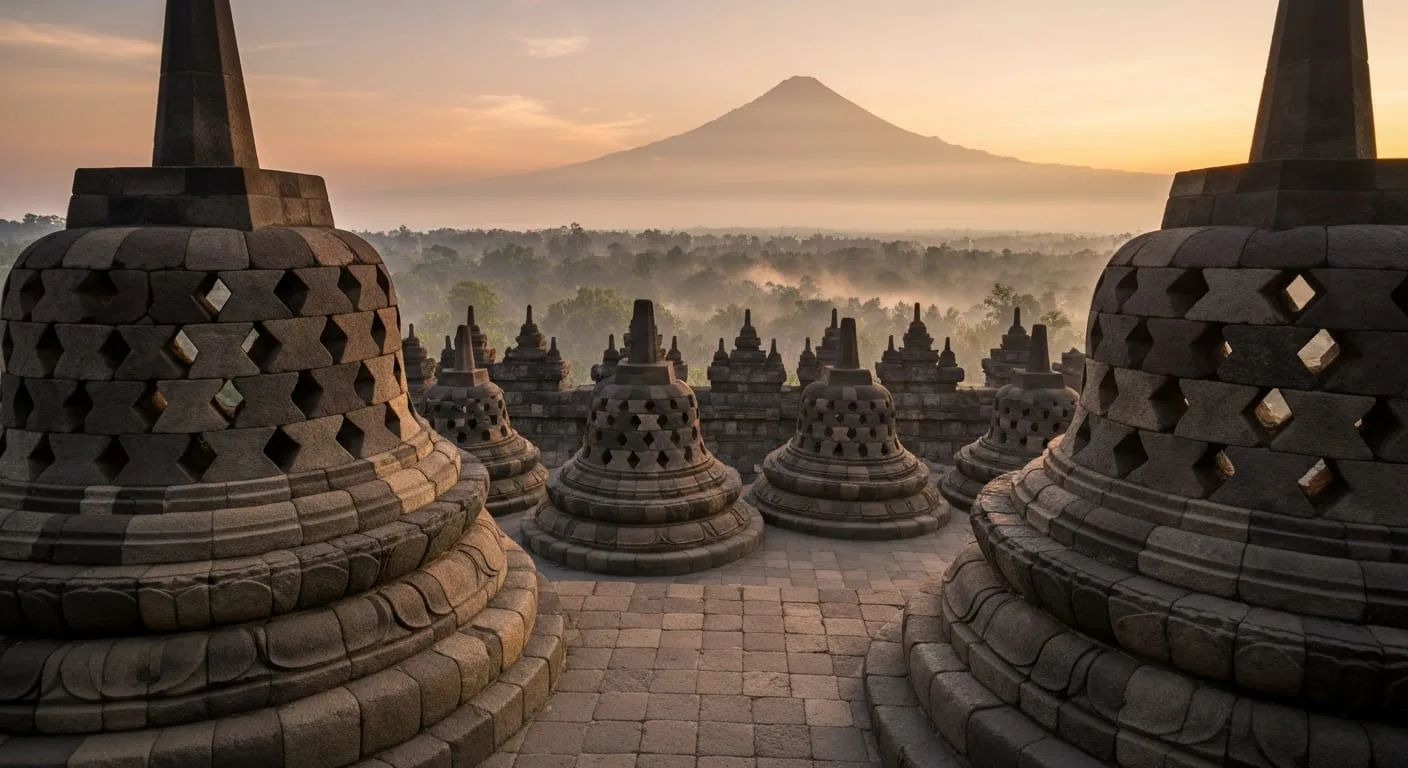
Okay, bold claim. But hear me out. Borobudur is the world's largest Buddhist temple — built in the 9th century, 504 Buddha statues, 72 perforated stupas on the upper terraces, and the whole thing was buried under volcanic ash for centuries before being rediscovered. It's a UNESCO World Heritage Site, and when you stand on the top level at 5 AM watching the sun rise through the mist with Mount Merapi smoking in the background, something shifts in your chest. I'm not being dramatic. I actually teared up a little, and I'm the kind of person who makes fun of people who cry at sunsets.
The sunrise experience costs ₹2,100 for foreigners (₹1,500 regular entry, ₹600 sunrise supplement — you enter at 4:30 AM through Manohara Hotel). Book through the official Borobudur Park website at least 2 days ahead. The regular daytime visit is fine too, but sunrise is non-negotiable if you're making the effort to get here. Pro tip: the guards are strict about drone usage now. Don't even try.
For Indian travelers specifically — and this surprised me — Borobudur's carved relief panels tell the story of Sudhana from the Gandavyuha Sutra. The Buddhist and Hindu connections to Indian history are everywhere. You'll spot familiar mudras, lotus motifs, and narrative panels that could be straight out of Ajanta-Ellora. I spent 3 hours there and still didn't see everything.
Prambanan: The Hindu Temple That Feels Like Home
Twenty minutes from Borobudur (₹300 by Grab), Prambanan is a 9th-century Hindu temple complex dedicated to Shiva, Brahma, and Vishnu. For us Indians, walking into Prambanan is surreal — you're 5,000 km from home and suddenly there are Ramayana reliefs carved into the walls, Nandi statues, and temple architecture that looks like it could be in Khajuraho. Entry is ₹2,100 for foreigners. Come at sunset when the stones turn golden and the crowd thins out. The Ramayana Ballet performance happens on the outdoor stage here during dry season (May-October) and it's genuinely spectacular — ₹1,500-2,500 for tickets.
Yogyakarta on a Shoestring: What ₹2,000 a Day Gets You
This is the part that'll make your budget-traveler heart sing. Yogyakarta is absurdly cheap — not Thailand-cheap, not Vietnam-cheap, but literally-cheaper-than-most-Indian-cities cheap. A plate of nasi gudeg (Jogja's signature jackfruit stew with rice, egg, and chicken) at a warung costs ₹60-100. Let that sink in. Sixty rupees for a full meal.
Malioboro Street is the main drag — batik shops, street vendors, and a night market where you can eat your bodyweight in bakpia (sweet bean pastries) for ₹200. The Sultan's Palace (Kraton) entry is ₹50. Taman Sari Water Castle — an 18th-century royal garden with underground tunnels — costs ₹30. I bought a hand-made batik shirt for ₹400 after 15 minutes of what I'd call aggressive-but-friendly bargaining. The silver village of Kotagede, 20 minutes south, sells handcrafted silver jewellery starting at ₹500.
Mount Merapi — the most active volcano in Indonesia — offers jeep tours through the destroyed villages from the 2010 eruption. ₹800-1,200 per person for a 2-hour tour. Genuinely sobering to see houses half-buried in hardened lava while kids play on the ruins. The jamu market near Pasar Beringharjo sells traditional Javanese herbal tonics for ₹20-30 each — the turmeric-ginger one actually fixed my stomach after a questionable street food situation the night before.
Komodo National Park: Staring Down Actual Dragons
Let me be real — I was nervous about the Komodo trip. Not the sailing part, not the expense, but the actual dragons. These things killed a tourist in 2017. They can run at 20 km/h in short bursts. Their saliva contains over 50 strains of bacteria. And you're supposed to just... walk past them with a ranger carrying a stick? Cool. Very cool.
Getting to Komodo starts with flying to Labuan Bajo, a small town on the western tip of Flores island. From Bali, flights cost ₹5,000-8,000 one-way (Wings Air or Citilink, 1 hour 15 minutes). From Yogyakarta, expect ₹6,000-10,000 with one stop. Labuan Bajo itself is surprisingly developed — good restaurants, decent hotels (₹1,500-4,000/night), and a sunset viewpoint at Sylvia Hill that rivals anything in Bali.
Liveaboard vs Day Trip: Which Boat Tour to Pick
You've got two options for Komodo, and the choice matters:
- Day trip from Labuan Bajo — ₹3,000-5,000 per person, leaves at 6 AM, returns by 5 PM. Covers Komodo or Rinca Island (dragon viewing), Padar Island (the viewpoint), and Pink Beach. Good if you're short on time, but rushed. You'll spend more time on the boat than at each stop.
- 2-3 day liveaboard — ₹15,000-30,000 per person depending on boat quality. Sleeps on the boat, includes all meals, covers both Komodo and Rinca islands, multiple snorkelling stops, Padar Island, Pink Beach, Manta Point. This is what I did and I'd do it again without thinking. This is what makes Indonesia beyond Bali so special. Waking up anchored in a different bay every morning, jumping off the deck into crystal water before breakfast — that's the stuff.
- Luxury liveaboard — ₹50,000-1,20,000 for 3-4 days. Private cabins, proper beds, sometimes even AC. For honeymooners or anyone who can't sleep on a wooden deck (no judgment, the deck was not comfortable).
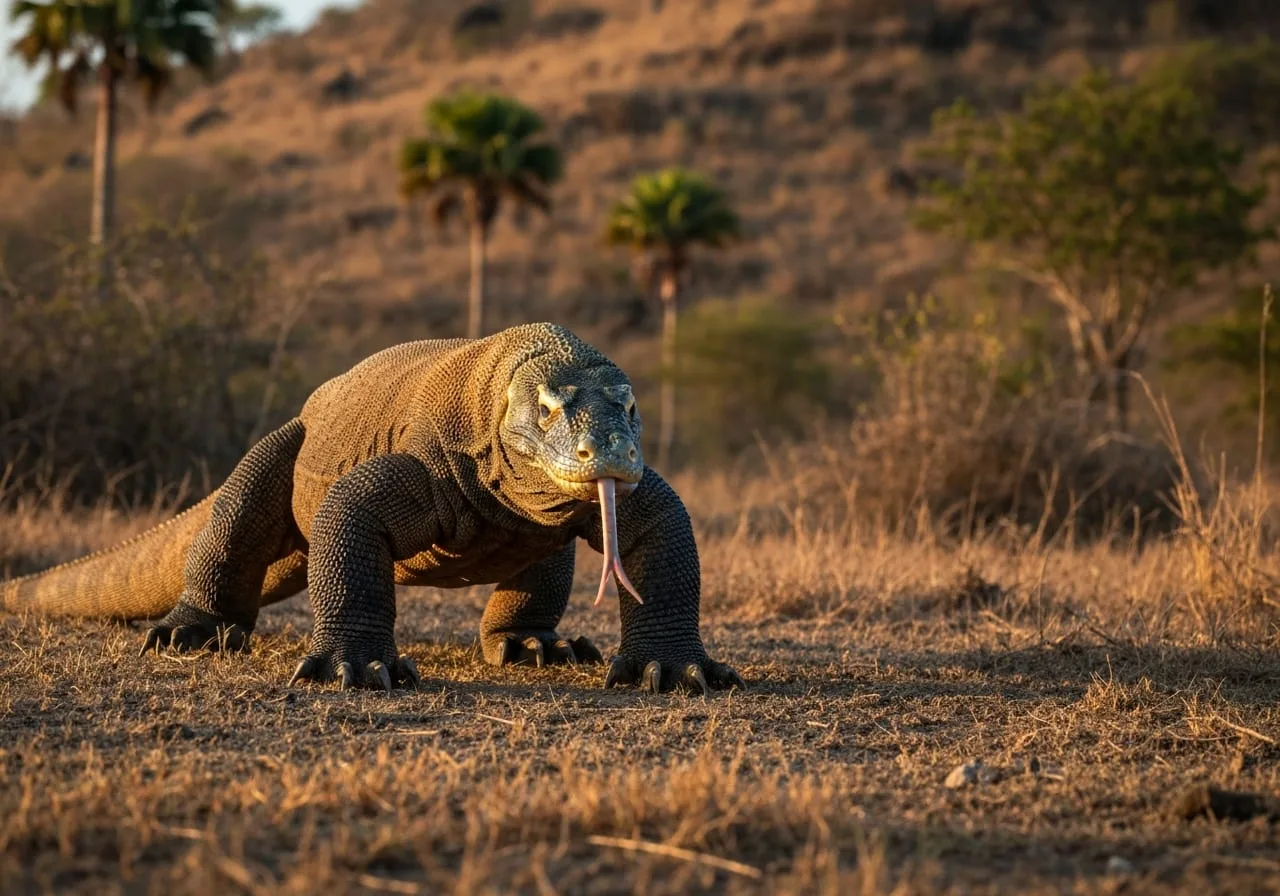
The dragon viewing itself happens on Komodo Island or Rinca Island. Rangers take groups of 10-15 on a 2-hour trek through dry grassland. You WILL see dragons — during my visit we spotted 14 of them, including a massive 3-metre male near the ranger station. They look like something that shouldn't exist anymore. Prehistoric, slow-moving, deceptively fast when motivated. The rangers keep you at 3-4 metre distance. Respect the rules. Seriously.
Padar Island: The Instagram Shot That Actually Delivers
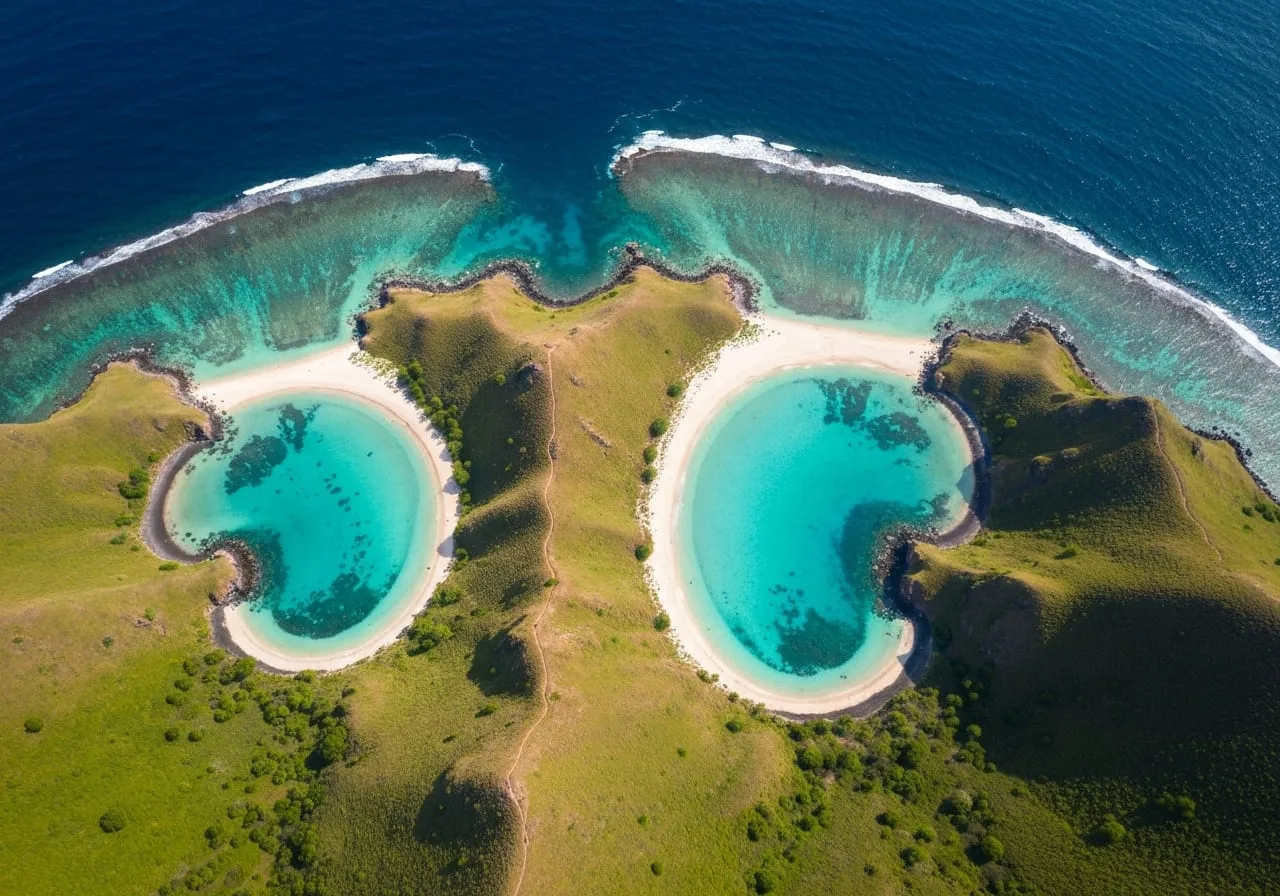
You know that aerial photo of an island with three bays — one white sand, one pink, one black — meeting at a central ridge? That's Padar Island. And for once, the reality matches the Instagram post. The hike to the viewpoint takes 25-30 minutes on a steep trail (bring water, there's zero shade), but the top gives you a 360-degree view that made every person in our group go silent for a good minute. No words, just staring.
Pink Beach — yes, the sand is actually pink (crushed red coral mixes with white sand) — is a surreal snorkelling spot. The reef starts 2 metres from the shore. I saw a sea turtle within 10 minutes of getting in. Manta Point, about 45 minutes by boat, is where manta rays cruise through a cleaning station. Our boat captain said March-April is the best time for mantas. We went in May and still saw three.
Raja Ampat: The World's Best Diving Spot (and You Don't Need to Dive)
Raja Ampat is the kind of place that makes divers emotional. It has the highest recorded marine biodiversity on Earth — over 1,500 fish species and 75% of all known coral species, concentrated in a cluster of 1,500 islands off West Papua. If you're into scuba diving, this is Mecca. But here's what nobody tells you: the snorkelling in this part of Indonesia beyond Bali is almost as good. I'm not a certified diver, and I saw more marine life snorkelling off the jetty of my homestay than I've seen in any dive video on YouTube.
Getting there is the hard part. Fly from Jakarta or Makassar to Sorong (₹8,000-15,000 one-way), then take a 2-hour ferry to Waisai (₹500-800). From Waisai, speedboats take you to various homestays across the islands (₹2,000-5,000 depending on distance). The journey is long — budget a full day for transit each way. Raja Ampat charges a marine park entry permit: ₹8,500 for foreigners (valid 1 year). It's steep but the money goes directly to conservation, and after seeing what's underwater, you won't argue.
Homestays on Stilts Over the Water
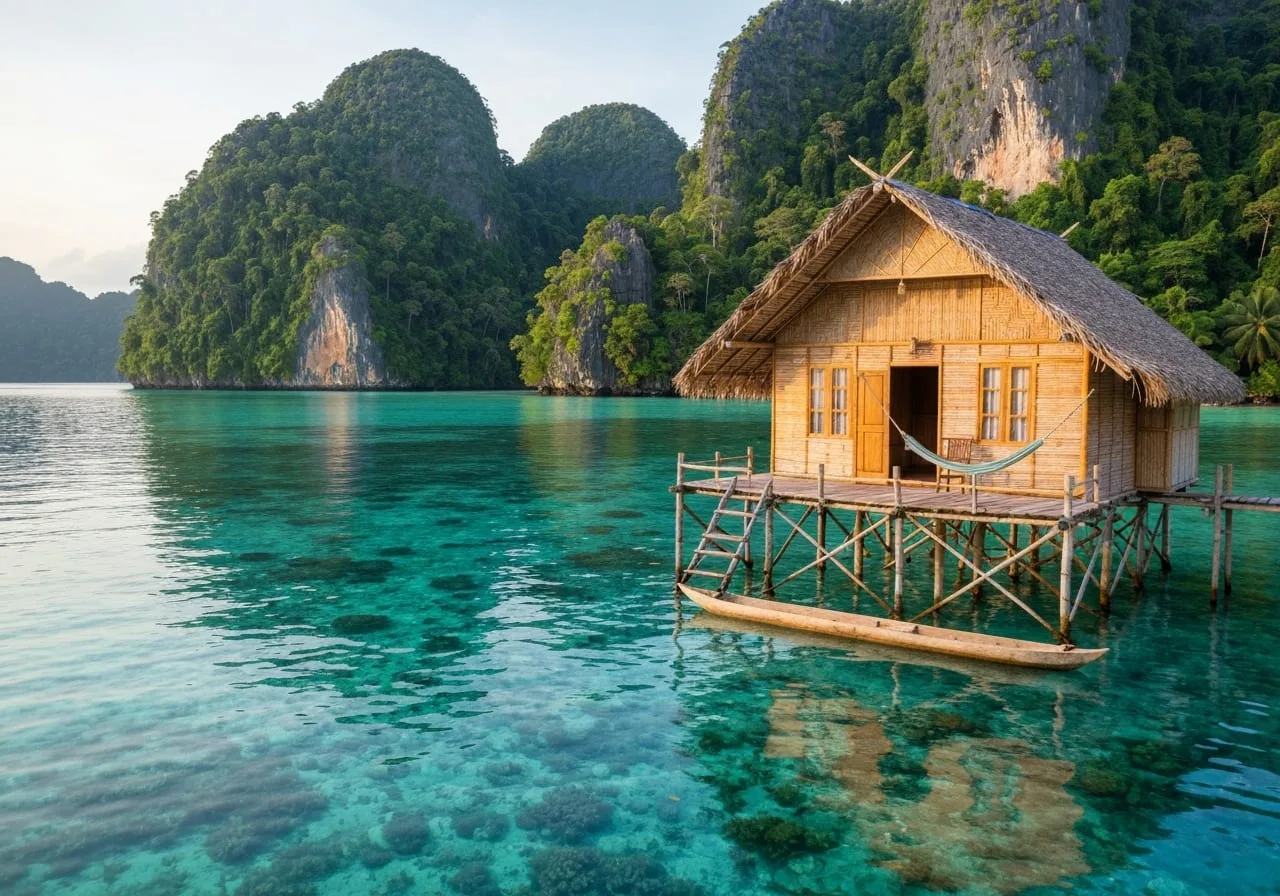
Forget fancy resorts — Raja Ampat's magic is the homestay system. Local Papuan families build wooden bungalows on stilts over the water, with a small deck where you can watch fish swim below you while drinking instant coffee. Most homestays cost ₹2,500-4,500 per night including three meals (rice, fish, vegetables, fruit). No AC, no WiFi (or very patchy), no hot water. What you get instead: a private jetty where you can snorkel with baby reef sharks at 6 AM, guides who know every coral formation by name, and silence so deep you can hear fish breaking the surface at night.
My homestay near Friwen Wall turned out to be one of the top snorkelling sites. The house reef — literally the reef in front of the homestay — had wobbegong sharks, giant clams, nudibranches, barracuda schools, and a resident green turtle. I snorkelled three times a day and saw something new every single time. My host, a fisherman named Yosef, took me to a hidden lagoon accessible only by kayak through a narrow cave opening. That moment — emerging from darkness into a turquoise lagoon surrounded by vertical limestone walls — is maybe the best travel moment of my life. No exaggeration.
Indonesia Beyond Bali: Practical Logistics for Indian Travelers
Now the practical stuff that Indian travelers actually need. Indonesia gives Indians visa-free entry for 30 days — same as Bali, because it's the same country (I've met Indians who didn't realize this). You can enter through any international airport. Return flight from India typically goes through Bali or Jakarta. For this Indonesia beyond Bali itinerary, I'd suggest flying into Yogyakarta via Jakarta or Kuala Lumpur, then taking domestic flights between destinations.
Flights and Getting Around
- India to Yogyakarta — No direct flights. Best routes: Delhi/Mumbai to Jakarta (Air India, Batik Air, ₹18,000-28,000 return) then Jakarta to Yogyakarta (₹2,000-4,000 domestic). Or route via Kuala Lumpur on AirAsia — sometimes cheaper at ₹15,000-22,000 total.
- Yogyakarta to Labuan Bajo (Komodo) — Flights via Bali, ₹6,000-10,000 one-way with one stop. Or fly Yogya to Bali (₹3,000-5,000), spend a day there, then Bali to Labuan Bajo (₹5,000-8,000).
- Labuan Bajo to Raja Ampat — This is the tricky leg. Fly Labuan Bajo to Makassar (₹4,000-7,000), then Makassar to Sorong (₹5,000-9,000). Full day of travel. No shortcuts.
- Domestic airlines — Lion Air, Wings Air, Citilink, Batik Air. Book on Traveloka app (Indonesia's version of MakeMyTrip). Baggage is usually NOT included — add it during booking for ₹800-1,200 per leg.
Money, SIM Cards, and the Vegetarian Situation
Indonesian Rupiah (IDR) is the currency. ₹1 = roughly 190 IDR (March 2026). ATMs are everywhere in Yogyakarta and Labuan Bajo, but carry cash for Raja Ampat — there are literally no ATMs on the islands. I withdrew ₹30,000 worth of IDR from a BNI ATM in Sorong before heading out. Grab works well in Yogyakarta and somewhat in Labuan Bajo.
SIM card: buy a Telkomsel SIM at the airport in Yogyakarta — ₹300 for 15GB data. It works decently across Java and Flores. In Raja Ampat, expect patchy to zero connectivity. I survived 5 days without WhatsApp. My family survived too, eventually.
Vegetarian food situation — honestly, it's tougher than Bali. Java has tempeh and tofu as staples, so vegetarian options exist at most warungs. Just say "tidak pakai daging, tidak pakai ayam" (no meat, no chicken). Nasi goreng can be made vegetarian easily. If you're strictly vegetarian or Jain, check out our Jain food survival guide for Bali — some tips overlap for Java too. In Labuan Bajo, tourist restaurants have veg options. Raja Ampat homestays... you'll eat fish. There's no way around it unless you bring your own supplies (instant noodles, MTR packets, etc.).
Indonesia Beyond Bali: Full Budget Breakdown from India
Here's what the full trip actually costs, broken into three budget tiers. These are per-person estimates for a 14-day itinerary covering Yogyakarta (4 days), Komodo (4 days), and Raja Ampat (6 days including transit).
| Expense | Budget | Mid-Range | Luxury |
|---|---|---|---|
| International flights (return) | ₹18,000 | ₹28,000 | ₹55,000 |
| Domestic flights (3-4 legs) | ₹15,000 | ₹22,000 | ₹35,000 |
| Yogyakarta (4 nights + activities) | ₹8,000 | ₹18,000 | ₹40,000 |
| Komodo liveaboard / day trip | ₹5,000 | ₹20,000 | ₹80,000 |
| Labuan Bajo accommodation (2 nights) | ₹3,000 | ₹8,000 | ₹20,000 |
| Raja Ampat (homestay + permit + transport) | ₹22,000 | ₹35,000 | ₹1,20,000 |
| Food (14 days) | ₹7,000 | ₹14,000 | ₹35,000 |
| Local transport + misc | ₹5,000 | ₹10,000 | ₹25,000 |
| Total (14 days) | ₹83,000 | ₹1,55,000 | ₹4,10,000 |
The budget tier skips the liveaboard (does a day trip to Komodo instead) and uses the cheapest domestic flights. Mid-range is the sweet spot — you get the liveaboard experience, decent accommodation, and can eat well. Luxury includes chartered boats and dive resorts in Raja Ampat. Compare that with a typical Bali trip costing ₹60,000-2 lakh and you'll see that Indonesia beyond Bali offers ridiculous value for a wildly different experience.
Best Time to Visit Indonesia Beyond Bali Destinations
Indonesia spans multiple climate zones, so timing matters depending on where you're going:
- Yogyakarta (Java) — Dry season April-October is ideal. I went in May and had maybe 20 minutes of rain across 4 days. Borobudur sunrise is clearest from June-September. Avoid December-February when it's properly wet.
- Komodo National Park — Best from April to November. The sea is calmest, visibility for snorkelling is 15-25 metres, and Padar Island isn't shrouded in cloud. March-April for the highest chance of manta ray sightings. December-February can mean rough seas and cancelled boat trips.
- Raja Ampat — October to April is peak season (confusingly opposite to the rest of Indonesia because Papua has a different weather pattern). Visibility can reach 30 metres. May-September sees more rain and choppier waters, though diving is possible year-round.
The tricky part is that Komodo and Raja Ampat have overlapping-but-offset peak seasons. If you want both in one trip, October-November is the goldilocks window — tail end of Komodo's good season and the start of Raja Ampat's best months.
Sample 14-Day Indonesia Beyond Bali Itinerary
Here's a realistic itinerary based on my own trip, adjusted for what I'd do differently:
- Days 1-2 — Fly into Yogyakarta. Check into a hotel on Malioboro Street (₹1,000-2,500/night). Day 1 afternoon: Sultan's Palace, Taman Sari, Malioboro night market. Day 2: Borobudur sunrise (leave hotel at 3:30 AM), afternoon at Prambanan for sunset.
- Morning of Day 3 — Mount Merapi jeep tour. Kotagede silver village (afternoon). Jamu market and batik workshop. Last night in Jogja.
- Day 4 — Fly to Labuan Bajo via Bali or direct. Afternoon: explore Labuan Bajo town, sunset at Sylvia Hill viewpoint.
- Days 5-7 — 3-day/2-night liveaboard to Komodo National Park. Komodo Island (Day 5), Padar Island and Pink Beach (Day 6), Rinca Island and Manta Point (Day 7). Return to Labuan Bajo evening.
- Day 8 — Fly Labuan Bajo to Makassar. Night in Makassar (optional: Losari Beach sunset, local seafood at Pantai Akkarena).
- Day 9 — Morning flight to Sorong. Afternoon ferry to Waisai. Speedboat to homestay. Settle in.
- Days 10-13 — Raja Ampat. Snorkelling house reefs, kayaking to hidden lagoons, island hopping by speedboat (arrange through homestay, ₹3,000-5,000/day shared), visit Wayag viewpoint if budget allows (the iconic karst island photo, ₹8,000-12,000 boat trip from most homestay areas).
- Day 14 — Speedboat to Waisai, ferry to Sorong, fly home via Jakarta or Makassar.
What Nobody Tells You: Honest Warnings and Tips
Every travel post about Indonesia beyond Bali conveniently skips the annoying parts. I won't.
Fair warning about domestic flights — they get cancelled or rescheduled constantly. My Wings Air flight from Labuan Bajo got pushed forward by 3 hours with a text message 14 hours before departure. Build buffer days into your itinerary. Don't book tight connections.
About Raja Ampat: this place is remote in a way most Indians haven't experienced. Zero 4G signal. No restaurants or shops anywhere — just the occasional village kiosk selling instant noodles and biscuits. Medication? Bring it. Snacks? Pack them from India. And if you need constant connectivity, this honestly isn't your trip. But if you can handle 4-5 days of genuine disconnection, it might be the most peaceful thing you've ever done.
Sunscreen is expensive in Indonesia (₹500-800 for a small tube). Buy reef-safe sunscreen in India before you go — Raja Ampat's reefs are too precious for chemical sunscreen. Mosquito repellent is essential everywhere. I used Odomos and it worked fine, though the locals swear by their citronella coils.
The language barrier is lower than you'd expect. Indonesians are genuinely friendly to Indian travelers — several people recognized me as Indian and started talking about Shah Rukh Khan and Bollywood. A few basic Bahasa Indonesia phrases go a long way: "terima kasih" (thank you), "berapa harganya" (how much?), "pedas" (spicy — useful when ordering food), "tidak" (no). Also, if you're into adventure travel from India, this trip checks every box — volcanoes, dragons, world-class diving, remote islands, and the kind of stories you'll be telling for years.
Frequently Asked Questions
How much does an Indonesia beyond Bali trip cost from India?
An Indonesia beyond Bali trip covering Yogyakarta, Komodo, and Raja Ampat costs ₹83,000 on a tight budget, ₹1.5 lakh for a comfortable mid-range experience, and ₹4+ lakh for luxury. Yogyakarta alone can be done in ₹30,000-50,000 for 5 days, making it one of the cheapest international destinations from India.
Do Indian citizens need a visa for Indonesia?
No. Indians get visa-free entry for 30 days at all Indonesian international airports, effective since 2023. This applies to Yogyakarta, Jakarta, Bali, Labuan Bajo, and all other points of entry. You need a passport valid for at least 6 months and a return ticket.
Is Komodo Island safe to visit?
Yes, with rangers. All visitors must be accompanied by trained park rangers who carry forked wooden sticks to redirect dragons. Fatal attacks are extremely rare — the last was in 2017. Follow the ranger's instructions, stay with the group, and don't wear red or bring food. The experience feels controlled and safe despite the intimidating wildlife.
How do I get to Raja Ampat from India?
Fly from India to Jakarta or Makassar, then take a connecting flight to Sorong (the gateway city). From Sorong, a 2-hour public ferry runs daily to Waisai (main island hub). Total transit from Delhi takes approximately 18-22 hours with connections. Budget ₹15,000-25,000 for flights from India to Sorong one-way.
Can vegetarians survive in Indonesia beyond Bali?
In Yogyakarta, yes — tempeh, tofu, and vegetable-based dishes are common at most warungs. Say "tanpa daging, tanpa ayam" (no meat, no chicken). In Labuan Bajo, tourist restaurants serve veg options. Raja Ampat is the challenge — homestay meals are fish-based. Carry instant noodles, MTR packets, and snacks if you're strictly vegetarian. Jain travelers should definitely plan ahead.