

Indian Festivals You Can Celebrate Abroad: Where Diwali, Holi and Navratri Hit Different
In this guide (11)
- Singapore: Where Deepavali Gets a 15-Billion-Dollar Makeover
- Malaysia: Thaipusam at Batu Caves Needs Its Own Category
- Mauritius: The Island Where Diwali Is a National Holiday
- United Kingdom: Leicester Diwali and the World's Biggest Navratri
- United States: Times Square Diwali and the Indian Diaspora Effect
- UAE: Diwali in Dubai With Burj Khalifa Dressed Up
- Nepal: Dashain and Tihar (They Call It Something Different)
- Trinidad and Tobago: Phagwa (Holi) in the Caribbean
- Bali: Nyepi and the Hindu Connection You Didn't Expect
- Practical Tips for Indian Festivals Celebrated Abroad
- The Emotional Reality of Festivals Far From Home
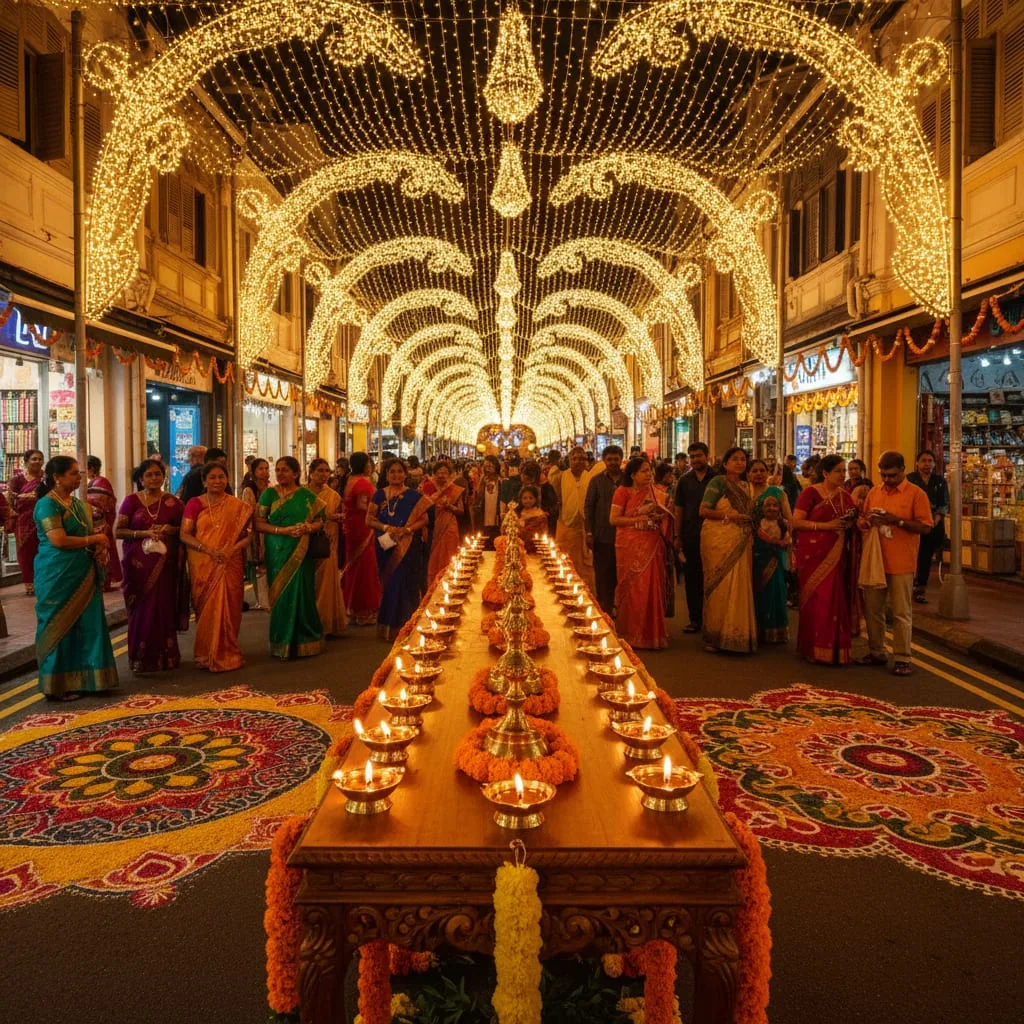
I didn't expect to cry watching a Diwali lamp ceremony in Singapore's Little India. But when the whole street lit up and the Tamil aunties started singing, I lost it. There I was — experiencing one of the most emotional moments of Indian festivals celebrated abroad — 3,000 kilometres from home, surrounded by strangers who somehow felt like family. The diyas flickered exactly like they did on my grandmother's balcony in Chennai. The marigold garlands smelled identical. But everything felt more precious because I was so far from where I thought these moments could exist.
That trip changed how I think about Indian festivals celebrated abroad. I used to assume overseas celebrations were watered-down versions — nice attempts by homesick NRIs, but nothing compared to the real thing. I was completely wrong. Sometimes, being away from home makes you hold tighter to what matters. And when entire communities come together to recreate those traditions in foreign lands, the emotion runs deeper than you'd expect.
This isn't a list of festivals with dates. You can Google that. This is about what it actually feels like to experience our festivals in places where they're not the default — where every rangoli, every diya, every splash of colour exists because someone fought to keep it alive. Let me take you through the countries where Diwali, Holi, Navratri, and other Indian festivals hit genuinely different.
Singapore: Where Deepavali Gets a 15-Billion-Dollar Makeover
Singapore takes Deepavali seriously. Like, government-budget-allocation seriously. Every October, the Public Utilities Board coordinates a light-up in Little India that transforms Serangoon Road into something from a fever dream. We're talking 15 billion LED lights (not a typo), arches spanning the entire street, and installations that would make Bangalore's Commercial Street jealous.
The celebration starts nearly six weeks before Deepavali itself. Walking through Little India from mid-October onwards, you'll find market stalls spilling onto pavements — everything from Lakshmi brass idols to those sparkly Diwali greeting cards that somehow still exist in 2024. Mustafa Centre stays open 24 hours, and trust me, you will lose track of time buying sweets at 2 AM.

What makes Singapore's Deepavali special? The Tamil community here goes all out with cultural programming. The Sri Srinivasa Perumal Temple on Serangoon Road hosts elaborate pujas, and the Indian Heritage Centre organizes heritage walks that'll teach you things about South Indian Diwali traditions you never knew. If you've grown up with North Indian Diwali, experiencing the Tamil version abroad might be your first introduction to how different our regional celebrations actually are.
Timing: Deepavali falls in October/November. The light-up runs from mid-October through mid-November. Public holiday in Singapore — banks, offices, and schools close.
Don't miss: The street food at Tekka Centre (get the mutton biryani and prata), the fire-walking ceremony if your visit coincides with it, and the exact moment when all the lights switch on for the first time each season.
Thaipusam: Singapore's Most Intense Hindu Festival
If Deepavali is about lights and sweets, Thaipusam is about devotion pushed to its physical limits. Every January/February, the procession from Sri Srinivasa Perumal Temple to Sri Thendayuthapani Temple becomes one of the most raw spiritual experiences you'll witness anywhere.
Devotees carry kavadis — elaborate structures attached through body piercings — walking 4.5 kilometres in a trance-like state. The urumi melam drums create a hypnotic rhythm that you feel in your chest before you hear it. I've watched hardened skeptics tear up watching this. It's not about entertainment. It's about witnessing faith so pure it transcends pain.
Singapore's Thaipusam is more accessible than Malaysia's (no mountain climb), but equally powerful. The government provides medical support stations, the route is well-organized, and the community welcomes respectful observers. Just bring water — you'll be standing for hours.
Pongal: Harvest Festival With a Singaporean Twist
Mid-January brings Pongal, and the Tamil community celebrates with the traditional cooking of sweet rice in new pots until it overflows (pon-gal means "to boil over"). You'll find public Pongal cooking demonstrations at Little India, complete with sugarcane decorations and the kolam patterns drawn with rice flour.
What's different here? Singapore's Pongal includes a massive cultural programme at the Esplanade, mixing traditional performances with modern interpretations. It's a good reminder that these festivals aren't frozen in time — they evolve while keeping their essence.
Malaysia: Thaipusam at Batu Caves Needs Its Own Category
Let's be clear: Batu Caves Thaipusam is not for casual tourists. It's a pilgrimage. Every year, over a million devotees climb 272 steps to the temple cave, many carrying kavadis, some with hooks piercing their skin. Processions start at midnight from the Sri Mahamariamman Temple in KL and reach Batu Caves by dawn.

I climbed those steps during Thaipusam once, without carrying anything, just as an observer. By step 150, my legs were screaming. Meanwhile, devotees beside me carried kavadis weighing 30 kilos, some with their cheeks and tongues pierced with vel spears, in complete serenity. That contrast between my struggle and their peace broke something open in my understanding of devotion.
Malaysia's Indian community (7% of the population, primarily Tamil) maintains these traditions with fierce dedication. Beyond Thaipusam, Deepavali here is a national holiday with two days off. The celebration in George Town, Penang, rivals Singapore's, and the food scene during festival season is exceptional.
Planning tip: Thaipusam 2026 falls on February 11. Book KL hotels early — everything near Batu Caves sells out months in advance. The closest station is Batu Caves KTM Komuter, but expect massive crowds on the day itself. Many pilgrims walk the entire route from the city. If you want the full experience without the main-day chaos, visit during the week before when preparations and smaller processions happen.
For more on celebrating these festivals in Southeast Asia, check our detailed guide on Thaipusam, Deepavali & Pongal in Malaysia and Singapore.
Mauritius: The Island Where Diwali Is a National Holiday
Mauritius might be the most underrated destination for Indian festivals celebrated abroad. Nearly 50% of the population has Indian ancestry, and Hindu festivals here aren't minority celebrations — they're national events with government participation.
Diwali in Mauritius is a public holiday. The entire island lights up. Port Louis's Chinatown (yes, Chinatown) gets decorated alongside Hindu areas. The Maheswarnath Temple hosts major celebrations, but honestly, every village has its own festivities. What struck me was how naturally integrated these festivals are — Indo-Mauritians don't feel like diaspora here. They've been home for generations.
Maha Shivaratri: A Pilgrimage That Rivals Varanasi
But the real standout is Maha Shivaratri in Mauritius. Every February/March, over 500,000 pilgrims (in a country of 1.3 million) walk to the Grand Bassin lake — a crater lake they call Ganga Talao because it's believed to connect to the Ganges. Many walk barefoot, covering 80+ kilometres from various starting points across the island.
Pilgrimage happens over three days. Devotees dressed in white carry kanwars decorated with flowers and bells. Chanting echoes across the mountains. By the time everyone reaches the lake for the final puja, the collective energy is overwhelming. If you want to understand how deeply Hindu traditions have taken root outside India, Mauritius during Maha Shivaratri will show you.
Getting there: Mauritius is about 6 hours from India (Mumbai-Port Louis direct flights). February/March is shoulder season, so hotels are reasonable. The Maha Shivaratri dates change annually based on the lunar calendar — 2026 falls in late February.
United Kingdom: Leicester Diwali and the World's Biggest Navratri
Leicester's Diwali is legendary among Indian festivals celebrated abroad. The Golden Mile (Belgrave Road) lights up every autumn with decorations that the city council funds properly. Over 40,000 people pack the streets for the main switch-on event, and the celebration stretches for weeks.
Here's what makes Leicester different: this isn't a recent phenomenon. The city's Indian community, largely from East Africa (Gujaratis who migrated to Kenya/Uganda, then to UK in the 1970s), built these traditions over five decades. Diwali in Leicester feels established, confident, and properly British-Indian — a hybrid culture that doesn't apologize for being either.
Food scene during Diwali is outstanding. Bobby's, one of the oldest vegetarian restaurants outside India, gets packed. Mithai shops along Belgrave Road produce enough barfi and jalebi to feed an army. And unlike Indian metros where Diwali has become increasingly commercial, Leicester retains that neighbourhood-mela energy.
Navratri: Wembley's 50,000-Person Garba
But the UK's most jaw-dropping Indian festival experience? Navratri at Wembley. For nine nights, Wembley Arena transforms into the world's largest garba outside Gujarat. We're talking 50,000 people in traditional chaniya cholis and kediyus, dancing until 3 AM, with professional sound systems and LED lighting that would make any Ahmedabad garba organizer jealous.
Energy here is unmatched. Three generations dance together — grandmothers who remember garba in their village, parents who grew up in Leicester or London, kids who were born British but move like they've danced garba their whole lives. When 50,000 people hit the tali (clap) in perfect sync, the floor vibrates. Literal vibrations you feel in your bones.
Tickets sell out months in advance. Prices range from £25 for general entry to £150+ for premium packages. If you're planning a UK trip in October, aligning it with Navratri might be the most fun you'll have abroad.
United States: Times Square Diwali and the Indian Diaspora Effect
Diwali in Times Square. Yeah, that Times Square. Every autumn, the South Asian community organizes a celebration right in the heart of Manhattan. Traditional dancers perform on stages, the massive billboards flash Diwali greetings, and for a few hours, New York's busiest intersection feels like an Indian mela.
The US celebrations are scattered — no single epicenter like Leicester or Singapore. But that's also their strength. Whether you're in Edison (New Jersey), Jackson Heights (Queens), Devon Avenue (Chicago), or Artesia (California), you'll find communities celebrating with serious commitment. The Gujarati populations in New Jersey and Texas host massive garba nights. The Tamil community in the Bay Area celebrates Pongal with authentic kolam competitions.

Holi celebrations across US cities have exploded in recent years. The Holi Festival of Colors at the Spanish Fork Krishna Temple in Utah draws over 80,000 people — making it one of the largest Holi events worldwide. Most major universities with Indian student populations host Holi events, and they've become increasingly multiethnic.
Practical note: Unlike Singapore or Mauritius, Diwali isn't a federal holiday in the US (though some states and cities now give it official recognition). Plan around regular work schedules. The major celebrations happen on weekends closest to the festival date.
UAE: Diwali in Dubai With Burj Khalifa Dressed Up
Dubai's Diwali is the most extra thing you'll ever see. The Burj Khalifa displays Diwali greetings. Global Village dedicates an entire India pavilion to festival activities. The Gold Souk offers "Diwali special" discounts (which are marketing, but still). Everything in Dubai is turned up to eleven, and Diwali is no exception.
The Indian population in UAE is massive — nearly 3 million in a country of 10 million. Diwali isn't a public holiday, but employers typically give time off. The community organizes events in every neighbourhood. Meena Bazaar in Bur Dubai transforms into Little India for the season.
What's unique about Diwali in Dubai? The scale of the fireworks. While India has crackdowns on firecrackers (for good environmental reasons), Dubai goes all out with professional pyrotechnics displays. The main show at Dubai Festival City rivals anything you'd see for New Year's. Whether that's a positive or a complicated feeling depends on where you stand on the fireworks debate.
Planning a December trip? Our guide to best international trips in December covers Dubai and other options for post-festival travel.
Nepal: Dashain and Tihar (They Call It Something Different)
Nepal's Tihar is Diwali's cousin — though technically not diaspora, it shows how Indian festivals spread beyond borders. Same lunar calendar timing, similar focus on Lakshmi worship, but with unique Nepali elements that make it worth experiencing. The five-day festival includes Kaag Tihar (worshipping crows), Kukur Tihar (worshipping dogs — yes, every dog gets a tika and garland), and Goru Tihar (worshipping cows).
Dashain, which happens about two weeks earlier, is Nepal's biggest festival — even larger than Tihar. It's a ten-day celebration of Goddess Durga's victory over evil, similar to Navratri but with distinctly Nepali rituals. Families reunite, elders give blessings and tika to younger members, and everything shuts down for the main days.
If you're in Kathmandu during Tihar, the Lakshmi Puja night is magical. Every house lights oil lamps, creating patterns visible from the surrounding hills. The Bhailo and Deusi songs (groups singing door-to-door for blessings and money, like Christmas caroling) add a communal soundtrack to the nights.
Timing: Dashain falls in September/October, Tihar in October/November. Expect everything to be closed during the main festival days — plan activities around them, not during.
Trinidad and Tobago: Phagwa (Holi) in the Caribbean
Trinidad's Phagwa might be the purest example of how Indian festivals celebrated abroad adapt while staying true. Indo-Trinidadians, descendants of indentured labourers who arrived in the 1800s, have celebrated Phagwa for over 150 years. It's a national event where people of all ethnicities participate.
The celebration happens at the Divali Nagar site in Chaguanas and across the country. Traditional abeer (coloured powder) gets thrown, but there's also soca music, chutney performances, and a Caribbean energy that doesn't exist anywhere else. Where Indian Holi has religious undertones, Trinidadian Phagwa has evolved into a celebration of community and survival — a reminder that their ancestors maintained these traditions through colonial oppression.
Trinidad's Diwali (they call it Divali) is equally spectacular. The Divali Nagar — a purpose-built festival site — hosts cultural programmes, food stalls, and the lighting of over 20,000 diyas. It's been running since 1986 and is now a major tourist attraction.
Bali: Nyepi and the Hindu Connection You Didn't Expect
Bali isn't Indian, but its Hindu heritage makes it one of the most spiritually resonant places for experiencing Indian festivals celebrated abroad. Nyepi, the Balinese New Year (March), is a day of complete silence. The entire island shuts down — no flights, no traffic, no lights after sunset. It's the opposite of our loud festivals, but deeply spiritual in its own way.
Before Nyepi comes Ogoh-Ogoh — massive demon effigies paraded through streets and then burned. The craftsmanship is extraordinary, and the tradition (banishing evil spirits before the new year) parallels many Indian festival concepts.
For Indian travelers interested in how Hindu traditions evolved differently, Bali is fascinating. The temple dress codes, the offerings, the ceremonies — similar roots, completely different expressions. Our guide on wearing Indian clothes at Bali temples covers how your sarees and kurtas fit into Balinese temple etiquette.
Practical Tips for Indian Festivals Celebrated Abroad
After experiencing festivals across multiple countries, here's what I've learned:
Book early. Festival-period hotels in Singapore, Leicester, and Mauritius sell out 2-3 months in advance. Flight prices spike. This isn't optional — plan ahead or pay triple.
Bring clothes from India. Traditional wear abroad is expensive and limited. Pack your own diyas, rangoli colours, and festival outfits. Singapore and Malaysia have good options in Little India, but Leicester and the US have slim pickings unless you shop at specialized stores.
Connect with local communities. Facebook groups, WhatsApp communities, and temple announcements are how most diaspora populations organize. Reach out before your trip. Strangers will often invite you to home celebrations — and those intimate gatherings are where the real magic happens.
Accept that it will feel different. These festivals aren't replicas of home. They're evolved expressions of traditions that people carried across oceans and protected through generations. That difference is the whole point. If you wanted exactly what you have at home, you'd stay home.
Looking for where to eat during your festival travels? Our guide to Indian restaurants in Singapore and Malaysia covers everything from humble banana leaf meals to fancy fine dining.
The Emotional Reality of Festivals Far From Home
There's a specific loneliness that hits NRIs during festivals. Social media floods with family photos. Cousins post videos of the puja you're missing. Your mother sends voice notes about how the house smells like cardamom and diyas. You're on the other side of the world, maybe at work on what should be a holiday, scrolling through memories of home.
But then you find your way to a community gathering. A Gujarati uncle tells the same terrible jokes your taya would. Someone's grandmother force-feeds you mithai. A kid asks you to help light diyas, and suddenly you're kneeling on a temple floor in Leicester or Singapore or New Jersey, doing exactly what you did as a child, surrounded by people who understand why this matters.
That's what Indian festivals celebrated abroad really offer. Not just the rituals, but the people who refuse to let distance erase them. First-generation immigrants who built temples in their new countries. Their children who learned garba from YouTube tutorials. Grandchildren who can't speak Gujarati but still know every raas step.
I've celebrated Diwali in five countries now. Each one different. Each one moving in ways I didn't anticipate. The common thread isn't the rangoli patterns or the specific prayers — it's the fierce love of people refusing to be homogenized, holding onto their culture while making new homes. If you get the chance to witness that, take it. You'll come back understanding something deeper about what these festivals actually mean.
Planning a trip that includes festival experiences? Our Singapore Chinatown guide covers another cultural quarter worth exploring during your Little India visit.