

Customs Duty Rules for Indians Returning from Abroad: What You Can Bring Back
In this guide (14)
- The Basic Duty-Free Allowance: ₹75,000 Under the Baggage Rules, 2026
- Gold Rules: The Most Misunderstood Customs Rule for Indians
- Electronics: Laptops, Phones, and the Personal Use Grey Area
- Alcohol and Tobacco: Know the Exact Limits
- Perfume, Cosmetics, and Toiletries
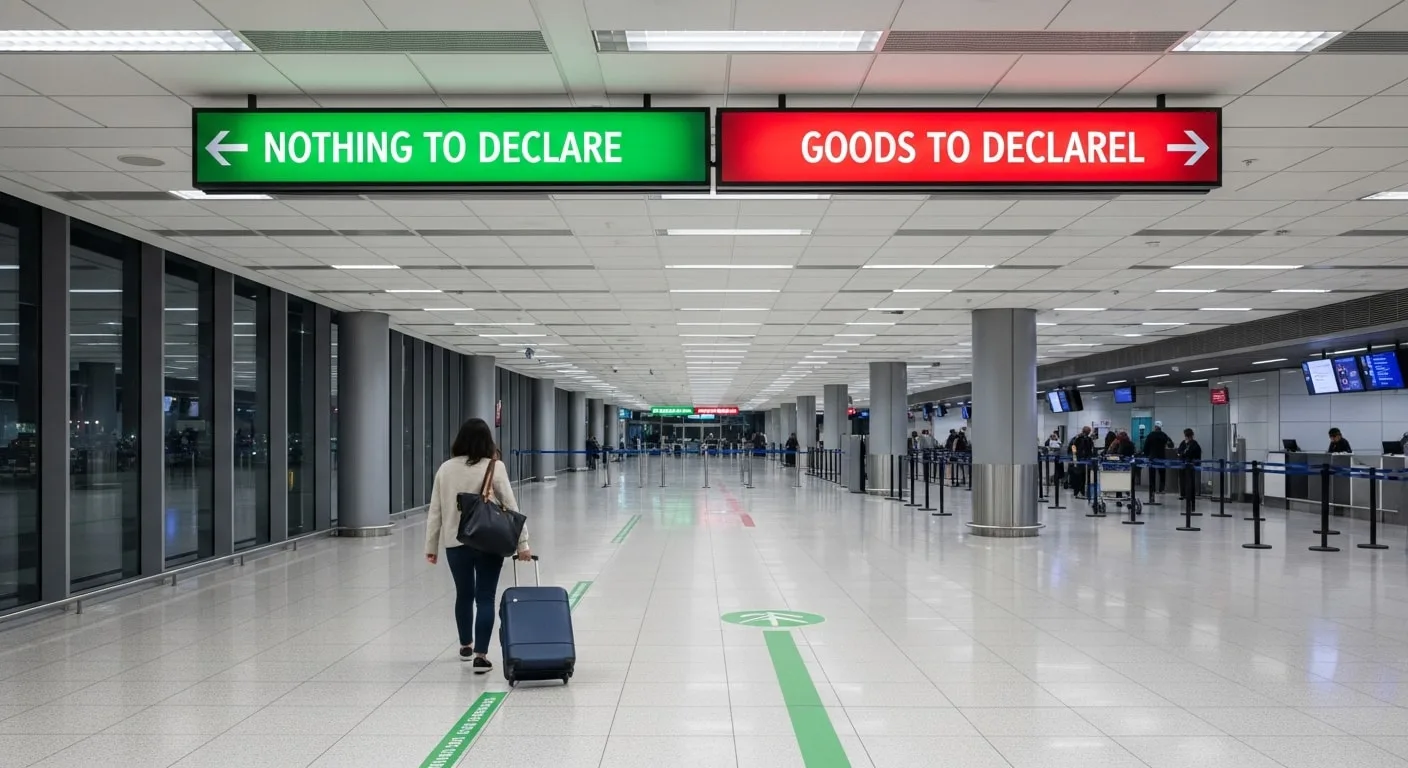
- Green Channel vs. Red Channel: Making the Right Choice
- What Triggers a Customs Inspection
- Prohibited Items: Don't Even Think About It
- E-Filing Your Customs Declaration
- Penalties for Non-Declaration
- Specific Rules for Common Shopping Destinations
- Customs Duty India Returning from Abroad: Practical Tips
- Frequently Asked Questions
- Final Thoughts
I once watched a family at Mumbai airport spend two hours arguing with customs officers over a single gold necklace. The wife had bought it in Dubai for ₹85,000, thinking the duty-free limit applied per person and could be pooled. It doesn't work that way. They ended up paying duty, missing their connecting domestic flight, and ruining what should have been a happy homecoming. Understanding customs duty India returning from abroad rules before you travel saves you from exactly this kind of nightmare.
Most Indian travellers obsess over visa applications, hotel bookings, and Instagram-worthy itineraries. But the return journey through customs? That's when ignorance becomes expensive. I've crossed Indian customs hundreds of times, and I've seen everything from people losing jewellery they couldn't afford to pay duty on, to nervous first-timers being waved through with shopping bags worth lakhs because they knew exactly what to declare and how.
This customs duty India returning from abroad guide covers everything you need to know about bringing things back legally—from the basic duty-free allowance to the specific gold rules that Dubai shoppers need to understand, to the electronics grey areas that confuse almost everyone.

The Basic Duty-Free Allowance: ₹75,000 Under the Baggage Rules, 2026
Every Indian resident faces customs duty India returning from abroad rules that grant a duty-free allowance. The figures changed recently, and a lot of advice still quotes the old ones. The Baggage Rules, 2026 (Notification No. 14/2026-Customs (N.T.), dated 1 February 2026) superseded the Baggage Rules, 2016 with effect from 2 February 2026.
Arriving other than by land — a resident, a tourist of Indian origin, or a foreigner on a valid non-tourist visa: ₹75,000, raised from ₹50,000
A tourist of foreign origin, arriving other than by land: ₹25,000, raised from ₹15,000
Arriving by land: no rupee allowance at all — only used personal effects required for daily necessities, plus travel souvenirs. The 2026 rules drop the old country-specific category for Nepal, Bhutan and Myanmar and key the allowance to how you arrive instead. Fly in from Kathmandu and you are on the ₹75,000 footing; walk across the border and you are not.
Read the phrase the rules actually use: "other than by land". That covers arrival by sea as well as air, so passengers coming home on a cruise into Mumbai, Chennai, Cochin or Goa get the same ₹75,000 as anyone flying in — and onboard duty-free shopping counts against it just like an airport purchase.
This isn't per item—it's the total value of everything you're bringing back that wasn't yours when you left India. Your own clothes, laptop, and phone that you took from India? Those don't count. But that new watch you bought in Singapore, the perfumes from Dubai Duty Free, the chocolates from Switzerland? All of it adds up against your allowance.
Here's what most people get wrong: the allowance is for bonafide baggage. Commercial quantities of anything—even if under ₹75,000 total—will attract duty and questions. Bringing back 50 bottles of perfume "for friends" isn't personal use. It's trade, and customs officers have seen every excuse.
The 2026 rules no longer carve out a reduced allowance for children. The only passenger left out of the ₹75,000 is an infant, which rule 2(e) defines as a child not more than two years of age — and an infant still clears used personal effects and travel souvenirs free of duty under rule 3.
Gold Rules: The Most Misunderstood Customs Rule for Indians
If you've been to Dubai, you've probably thought about gold. The prices are genuinely lower—no making charges, better purity verification, and that dazzling Gold Souk experience. But the customs duty India returning from abroad rules for gold trip up thousands of travellers every year.
Duty-Free Gold Allowance
Two things about this allowance changed in 2026, and both matter.
Female passengers: up to 40 grams of jewellery
All other passengers: up to 20 grams of jewellery
The rupee value caps are gone. The 2016 rules paired those weights with a ₹50,000 ceiling for a gentleman passenger and ₹1,00,000 for a lady passenger. Rule 6 of the Baggage Rules, 2026 states a weight limit only, with no value ceiling written into it.
But this was never a general holiday-shopper's allowance, and still isn't. Rule 6 applies only to a resident or a tourist of Indian origin who has been residing abroad for more than one year. If you flew to Dubai for a week, this allowance is not yours — jewellery you buy counts against the ordinary ₹75,000 free allowance like any other purchase. This is the single most misread line in the whole baggage code, and it is where most airport arguments start.
"Jewellery" is defined in rule 2(f) as articles of adornment ordinarily worn by a person, made of gold, silver, platinum or other precious metals, whether studded or not.
Duty Rates If You Exceed the Limit
Brought gold beyond the duty-free allowance? You'll pay:
- Gold bars, coins, or bullion: 6% for an eligible passenger (Indian passport or Indian origin, back after at least six months abroad, up to 1 kg, duty paid in convertible foreign currency), 36% for every other passenger
- Gold jewellery: the same 6% or 36% split, on the value exceeding your allowance (ornaments studded with stones or pearls sit outside that rate and are charged as ordinary baggage)
So if you are a holiday traveller bringing back a gold chain worth ₹95,000, the first ₹75,000 sits inside your general free allowance and duty applies to the ₹20,000 above it. Rates change with the tariff, so confirm the current rate before you travel rather than budgeting from an old figure.
If you don't declare gold that exceeds your allowance and get caught? The penalties escalate quickly: confiscation of the gold, fines up to five times the duty amount, and in serious cases, prosecution under the Customs Act. I've detailed the Dubai-specific gold shopping and customs duty calculations in our Dubai gold shopping customs duty guide—essential reading if you're planning a jewellery shopping trip.
What Counts as Jewellery vs. Bullion
Gold bars are obviously bullion. But what about a thick gold chain with no stones? Or bangles? The rule is practical: if it's wearable and finished as jewellery, it's jewellery. Plain gold coins, whether they have religious symbols or not, are bullion. Customs officers look at intent—if something looks like an investment rather than adornment, expect it to be classified as bullion.
Electronics: Laptops, Phones, and the Personal Use Grey Area
When it comes to customs duty India returning from abroad, electronics create more confusion than any other category. Let me clear it up.
What You Can Bring Duty-Free
The 2026 rules put the laptop beyond argument: a passenger aged 18 or above, other than a crew member, is allowed clearance of one new laptop, including a notepad, free of duty in bona fide baggage. That is a stated entitlement, not an officer's discretion.
Beyond that, one mobile phone, one camera (even an expensive DSLR) and one tablet in personal use fall under "bonafide baggage" and don't count against your ₹75,000 allowance.
But—and this is crucial—you should be able to prove they're for personal use. A sealed box suggests resale. Multiple units definitely suggest resale. I've seen travellers bringing two iPhones (one for "wife at home") get questioned and asked to pay duty on the second one.
What Attracts Duty
Anything beyond personal use quantities. Bringing three smartphones, two laptops, five hard drives? Expect to explain yourself. Dutiable goods in baggage are charged at one flat rate, 38.5% (35% basic customs duty plus the social welfare surcharge on it), whatever the item is. On a ₹1,50,000 iPhone with no free allowance left, that is about ₹57,750 if you can't convince officers it's personal use.
Pro tip: If you're carrying expensive electronics you purchased in India (like a MacBook), keep the invoice. I've heard of travellers being questioned about their own laptops because they looked too new. Having proof of Indian purchase eliminates hassle.

Alcohol and Tobacco: Know the Exact Limits
The alcohol allowance is refreshingly straightforward: 2 litres per person. It doesn't matter if that's two bottles of wine, one bottle of whisky and one of vodka, or one giant 2-litre bottle of rum. Total liquid volume across all alcoholic beverages cannot exceed 2 litres.
Anything over 2 litres gets confiscated or taxed at about 150% of the value (yes, 150%). This is why experienced travellers never push their luck with alcohol—the duty makes it completely uneconomical.
For cigarettes: 100 sticks (one carton) or 25 cigars or 125 grams of tobacco. Again, exceeding this doesn't just mean paying duty—it means confiscation in most cases, since customs doesn't want to deal with assessing duty on small tobacco quantities.
If you're returning from duty-free shopping destinations, I've covered maximizing your purchases legally in the duty-free shopping guide for Indian travellers.
Perfume, Cosmetics, and Toiletries
No specific limits exist for perfumes and cosmetics as personal items. However, they count toward your ₹75,000 duty-free allowance. Bringing back ₹30,000 worth of perfumes is fine—just remember that leaves ₹45,000 for everything else.
What triggers suspicion: multiple bottles of the same perfume, products still shrink-wrapped in retail quantities, or anything that suggests you might be planning to resell. A collection of different perfumes for personal use? No problem. Ten identical bottles of J'adore? Problem.
Green Channel vs. Red Channel: Making the Right Choice
Understanding customs duty India returning from abroad means knowing about the two customs channels at every Indian airport:
Green Channel: "Nothing to declare." Walk through if your total purchases are under your duty-free allowance and you're carrying no restricted items.
Red Channel: "Goods to declare." Use this if you have items exceeding duty-free limits, gold beyond allowance, or anything requiring customs assessment.
Here's what actually happens: Green channel isn't a free pass. Officers randomly stop people, and they're very good at spotting nervousness. If you're selected for inspection in the green channel and found to have dutiable goods, you pay the duty PLUS a penalty (usually 100% of the duty amount). Walking through green with undeclared gold? That's not smart savings—it's doubling your liability if caught.
Red channel is slower but honest. Officers calculate duty, you pay, you leave with a receipt, and there's no penalty, no stress. For anything borderline, I always recommend red.
First-time flyers often don't know which channel to use—if you're confused about the overall airport process, start with our first-time airport immigration guide.
What Triggers a Customs Inspection
After processing thousands of passengers daily, customs officers develop instincts. Here's what typically triggers closer inspection:
- Excessive baggage: Arriving with five suitcases when most tourists have two
- Returning from specific destinations: Dubai, Singapore, and Southeast Asian countries get extra scrutiny for gold and electronics
- Nervous behaviour: Avoiding eye contact, excessive sweating, story inconsistencies
- Wrapped gifts: Multiple gift-wrapped boxes suggest items you don't want examined
- Tips from airlines: If you bought heavily at duty-free, that information sometimes reaches customs
- Profiling: Yes, it happens. Frequent travellers to gold-shopping destinations get flagged
The solution isn't to avoid these triggers—it's to have nothing to hide. Carry invoices, know your allowances, use red channel when appropriate.
Prohibited Items: Don't Even Think About It
Some items cannot be brought into India regardless of value or duty willingness:
- Drones: Require DGCA import clearance. Bringing a DJI from abroad without permission means confiscation
- Satellite phones: Iridium, Thuraya, etc. are completely prohibited for import
- Certain food items: Fresh fruits, vegetables, meat, dairy from most countries (to prevent agricultural diseases)
- Ivory and wildlife products: Heavily penalized under CITES
- Counterfeit goods: Fake designer items get seized, and you could face trademark violation charges
- Foreign currency notes over US$5,000, or foreign exchange of any kind over US$10,000: must be declared to customs on the Currency Declaration Form
- Indian currency exceeding ₹25,000: Cannot be taken out or brought back over this limit
On currency rules specifically, I've explained the limits and exchange options in the forex options guide for Indian travellers.
E-Filing Your Customs Declaration
To simplify customs duty India returning from abroad compliance, India now offers e-filing of customs declarations through the ATITHI app and the ICEGATE customs portal. This isn't mandatory yet for most travellers, but it speeds up clearance significantly.
How it works:
- Download ATITHI app or visit Indian Customs website
- Fill in your passport details, flight information, and items to declare
- Submit before landing or at the airport
- Show the confirmation QR code to officers
Pre-filing is especially useful if you're declaring gold or high-value items. Officers can review your declaration before you reach them, making the physical clearance faster.
Penalties for Non-Declaration
Violations of customs duty India returning from abroad rules carry penalties that scale with severity:
Undeclared dutiable goods (green channel): Duty + 100% penalty (so effectively double the duty)
Smuggling attempt (concealment, false declaration): Confiscation + fine up to 4 times the value + potential prosecution
Prohibited items: Confiscation + fine + criminal charges depending on item
Commercial quantities disguised as personal: Treated as smuggling, full penalties apply
Is it worth risking ₹10,000 in duty savings to potentially lose ₹50,000 or more in penalties? Never.
Specific Rules for Common Shopping Destinations
Dubai
Gold is the main concern. Electronics from Dubai don't have special rules—normal personal use logic applies. Dates, chocolates, and Arabic sweets count toward your allowance but rarely trigger issues unless you're carrying wholesale quantities.
Singapore and Malaysia
Electronics scrutiny is high because prices are significantly lower. Officers know exactly what the latest iPhone costs abroad vs. India. Multiple devices will be questioned.
Thailand and Bali
Handicrafts and home decor items are generally fine. But reproduction antiques (fake vintage items) can create confusion—officers might think they're genuine antiquities, which have export restrictions from these countries.
USA and Europe
Brand-name goods (bags, watches, electronics) get attention. Officers know Indians shop luxury during Western trips. Invoices help prove genuine purchase rather than counterfeits.
Customs Duty India Returning from Abroad: Practical Tips
After years of crossing customs, here's what I always do:
Keep all invoices in one folder. Not scattered in shopping bags—one clear folder, organized by item category. If questioned, you can immediately show proof of purchase.
Remove price tags and packaging where sensible. A watch on your wrist looks like personal use. The same watch in a box looks like merchandise.
Know your math before landing. Add up everything you're bringing back. If it's close to ₹75,000, decide in advance whether you'll declare or hope for green channel luck.
Don't carry items "for friends." The moment you say something isn't yours, it becomes a customs issue. Everything in your bag should be yours.
Be honest when questioned. Officers are trained interrogators. Inconsistent stories trigger deeper inspections. Simple truth—"Yes, I bought this watch in Singapore for myself"—creates no follow-up.
Arrive early for domestic connections. If you're connecting to a domestic flight and customs takes longer than expected (because of declaration or random inspection), you need buffer time. I've seen that Dubai family scenario multiple times.
Frequently Asked Questions
Can I pool the duty-free allowance with family members?
No. The ₹75,000 allowance is individual and non-transferable. If your wife's purchases are ₹30,000 and yours are ₹95,000, you'll pay duty on your ₹20,000 excess—you cannot claim her unused ₹20,000.
What if I've been abroad for more than a year?
Two separate things apply. Under rule 6 they may clear jewellery duty free — 40 grams for a female passenger, 20 grams for any other passenger — which a short-stay holidaymaker cannot. And under rule 7, anyone transferring residence to India gets allowances for personal and household articles set out in the Appendices to the Baggage Rules, 2026, which scale with the length of stay abroad. Both sit on top of the ordinary ₹75,000 general free allowance.
Is wearing gold jewellery the same as carrying it in luggage?
Yes, legally. However, practically, worn jewellery attracts less attention than boxed jewellery. But if stopped and asked, you must declare everything truthfully regardless of whether it's on your body or in your bag.
Do I need to declare gifts received abroad?
Yes. A gift is still an item you're bringing into India. The ₹75,000 allowance includes gifts. Only items you're sending by post as gifts have different rules.
Can customs officers open sealed electronics?
Yes. They have full authority to open any package for inspection. Sealed boxes actually increase suspicion of resale intent.
What happens to confiscated items?
Confiscated goods are held by customs. For items where duty can be paid (like gold over allowance), you can pay and retrieve them. For prohibited items, they're destroyed or auctioned by the government.
Final Thoughts
The customs duty India returning from abroad rules aren't designed to ruin your homecoming—they exist to regulate what enters the country and ensure fair taxation. The ₹75,000 allowance is genuinely generous for typical travellers bringing back souvenirs, clothes, and reasonable quantities of chocolates and perfumes. It's when people push boundaries—especially with gold and electronics—that problems arise.
Know your allowances. Keep invoices. Use the red channel when you're over limits. That family I mentioned at the start? They could have paid about ₹3,600 in duty at red channel (36% on the ₹10,000 above the ₹75,000 allowance), caught their flight, and been home for dinner. Instead, they paid double that plus missed a flight because they tried to avoid what was, in the end, a fairly small expense. Don't be that family.