

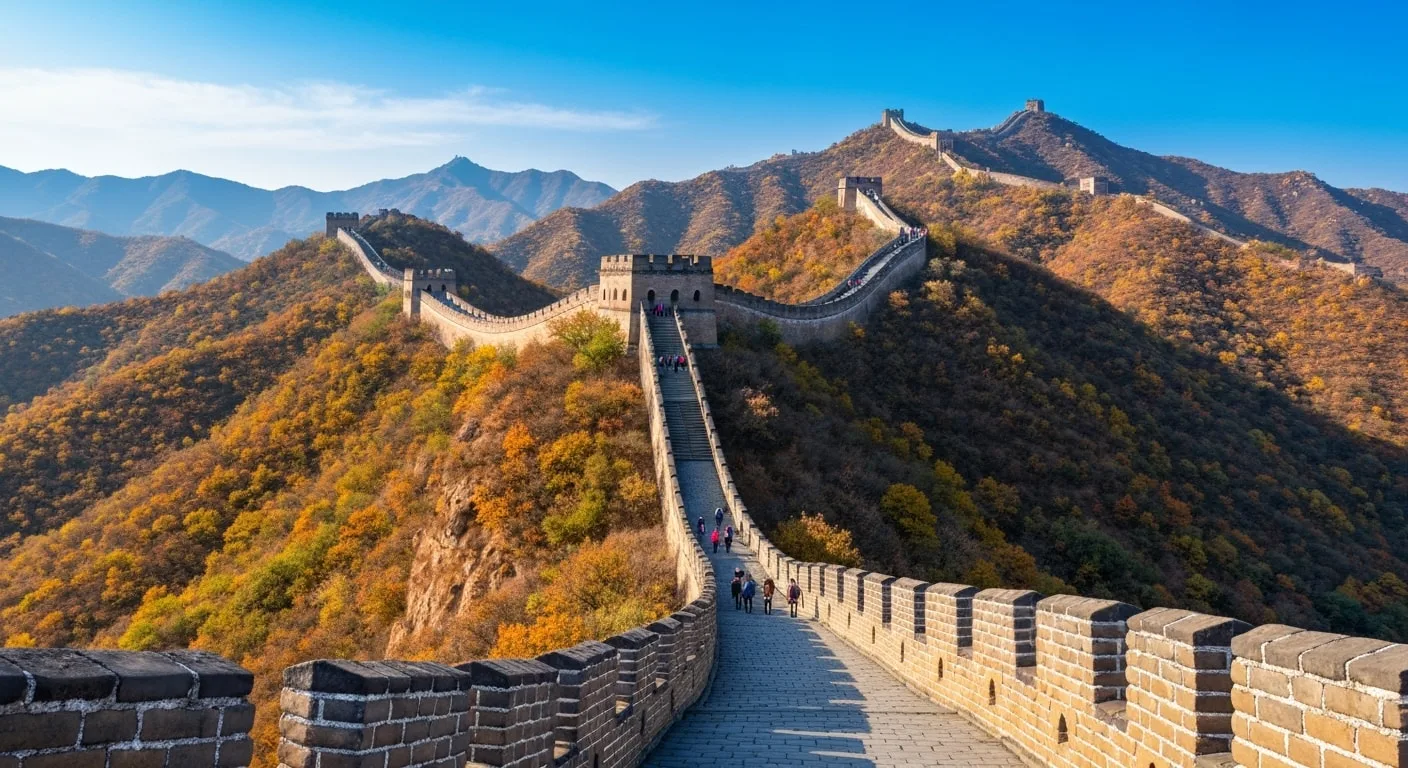
China Trip from India 2026: New Visa System, Direct Flights & Budget Guide
In this guide (16)
- The New China Visa System for Indians (2026 Update)
- China Trip from India 2026: Direct Flight Options
- Beijing: The Imperial Capital (3-4 Days)
- Shanghai: The Future Arrived Early (3-4 Days)
- Xi'an: Terracotta Warriors and Ancient Walls (2-3 Days)
- Chengdu: Pandas and Sichuan Fire (2-3 Days)
- High-Speed Rail: China's Secret Weapon
- The Great Firewall: VPN and Connectivity Survival
- WeChat Pay and Alipay: The Cash Problem
- Vegetarian Food in China: The Honest Truth
- China Trip from India 2026: Complete Budget Breakdown
- Best Time to Visit China from India
- Safety and Practical Notes
- What to Pack
- Planning Your China Trip from India 2026 Itinerary
- Final Thoughts
I was sitting in a Beijing hutong alley last October, chopsticks in hand, steam rising from a bowl of hand-pulled noodles that cost me ₹60. Planning my China trip from India 2026 was supposed to be complicated — visa hassles, no direct flights, the Great Firewall. Yet here I was, laughing with a retired schoolteacher who couldn't share a single word of English with me. That's China — frustrating, fascinating, and nothing like what you've heard.
A China trip from India 2026 just got dramatically easier. China launched online visa applications in December 2025, China Eastern started daily Delhi-Shanghai flights in January, and the 240-hour transit visa-free policy means you might not need a full visa at all. Yet almost no Indian travel content covers China. We're too busy writing about Thailand and Singapore while one of the world's most extraordinary countries sits a few hours away, surprisingly affordable and wildly underrated.
This guide covers everything you need: the new visa system, direct flight options, a realistic budget breakdown in rupees, the cities worth your time, and the practical stuff nobody mentions — like how to survive without Google Maps or WhatsApp. Whether you're planning 10 days or two weeks, you'll leave here knowing exactly what you're getting into.
The New China Visa System for Indians (2026 Update)
China's visa process was historically painful. Embassy visits, specific appointment slots, paper applications, and a lot of waiting. That changed significantly in late 2025.
The Chinese government launched an online visa application portal in December 2025 for most tourist visa categories. You still need to submit your passport physically (via designated collection centers in Delhi, Mumbai, and Kolkata), but the initial application, document upload, and payment happen online. Processing takes 4-7 business days, and the tourist visa costs approximately ₹4,500-6,000 depending on processing speed.
Documents required remain similar: valid passport with 6+ months validity, recent photograph, confirmed flight bookings, hotel reservations, travel insurance, and proof of funds (bank statements). The online system just eliminates the embassy queue nightmare.
The 240-Hour Transit Visa-Free Option
Here's something most Indians don't know: you might not need a visa at all. China's 240-hour (10-day) transit visa-free policy allows Indian passport holders to stay up to 10 days without a visa if you're transiting through specific cities to a third country.
Eligible entry cities include Beijing, Shanghai, Xi'an, Chengdu, Guangzhou, and several others. The catch: your onward destination cannot be India. You need to fly somewhere else — Hong Kong, Singapore, Thailand work perfectly. Book a cheap flight to Hong Kong at the end, explore China visa-free for 10 days, then fly home from Hong Kong. It's a legitimate loophole that saves you ₹5,000+ and the visa hassle.
One warning: this policy requires you to stay within the designated province or region of your entry city. Entering through Shanghai means you're restricted to the Yangtze River Delta region (Shanghai, Jiangsu, Zhejiang). Plan your itinerary accordingly.
China Trip from India 2026: Direct Flight Options
The flight situation improved massively in 2026. China Eastern now operates daily direct flights from Delhi to Shanghai Pudong (DEL-PVG), with return fares ranging ₹25,000-45,000 depending on season and booking time. Flight time is approximately 5 hours 30 minutes. This is a game changer — previously, you had to connect through Hong Kong, Bangkok, or Singapore, adding 8-12 hours to your journey.
Air China flies Delhi to Beijing (DEL-PEK) three times weekly, priced similarly. If Beijing is your primary focus, this saves backtracking.
For budget travelers, one-stop flights via Hong Kong (Cathay Pacific), Singapore (Singapore Airlines), or Bangkok (Thai Airways) often cost ₹18,000-28,000 return. The layover adds time but saves money. Check our guide on finding cheap international flights from India for booking strategies.
Book 2-3 months ahead for best prices. Chinese New Year period (late January/early February) sees prices spike 40-60% — avoid unless you specifically want to experience the festival chaos.
Beijing: The Imperial Capital (3-4 Days)
Beijing hits you with scale. Everything is massive — the Forbidden City sprawls across 180 acres, Tiananmen Square swallows football fields, the Great Wall stretches beyond imagination. You'll feel small here, which is precisely the point centuries of emperors intended.
The Great Wall: Skip Badaling, Go to Mutianyu
Every first-timer wants the Great Wall. Fair enough — it's extraordinary. But where you go matters enormously. Badaling is the closest section to Beijing and subsequently overrun with tour groups, souvenir hawkers, and human traffic jams. The wall experience becomes a crowd management exercise.
Mutianyu sits 70km northeast of Beijing. The wall is beautifully restored, the crowds are manageable, and you get cable car access plus a toboggan ride down (genuinely fun, not gimmicky). A taxi costs around ₹2,500 round trip; alternatively, take Bus 916 from Dongzhimen to Huairou (₹100) then a local taxi (₹400). Budget ₹500 for entry plus ₹200 for cable car.
Go early. Gates open at 7:30 AM. By 10 AM, the tour buses arrive. That first hour with morning mist over the mountains and the wall snaking across ridges — that's the photograph you came for.
Forbidden City and Tiananmen Square
The Forbidden City requires advance booking online (Palace Museum website). Slots sell out days ahead, especially in peak season. Book immediately after confirming your China dates. Entry costs approximately ₹400, but the experience of walking through 500 years of imperial history is worth far more.
Tiananmen Square is free to enter but requires passport and security screening. Come at sunrise for flag-raising ceremony (times change seasonally) — the atmosphere is genuinely moving, regardless of your politics.
Hutongs and Temple of Heaven
Beijing's hutongs (traditional alleyways) around Nanluoguxiang and the Drum Tower area offer the human-scale Beijing that monuments miss. Wander without GPS (since Google Maps won't work anyway), get lost, find a hole-in-the-wall dumpling shop, watch old men playing chess. This is where Beijing lives.
Temple of Heaven is architecturally stunning and less overwhelming than the Forbidden City. Go weekend mornings to see locals doing tai chi, playing instruments, and practicing ballroom dancing in the park. The ticket costs ₹250 for full park access including all buildings.
Shanghai: The Future Arrived Early (3-4 Days)
Beijing is China's history. Shanghai is its ambition. The Pudong skyline looks like concept art for a science fiction film, yet it's real and you can walk through it.
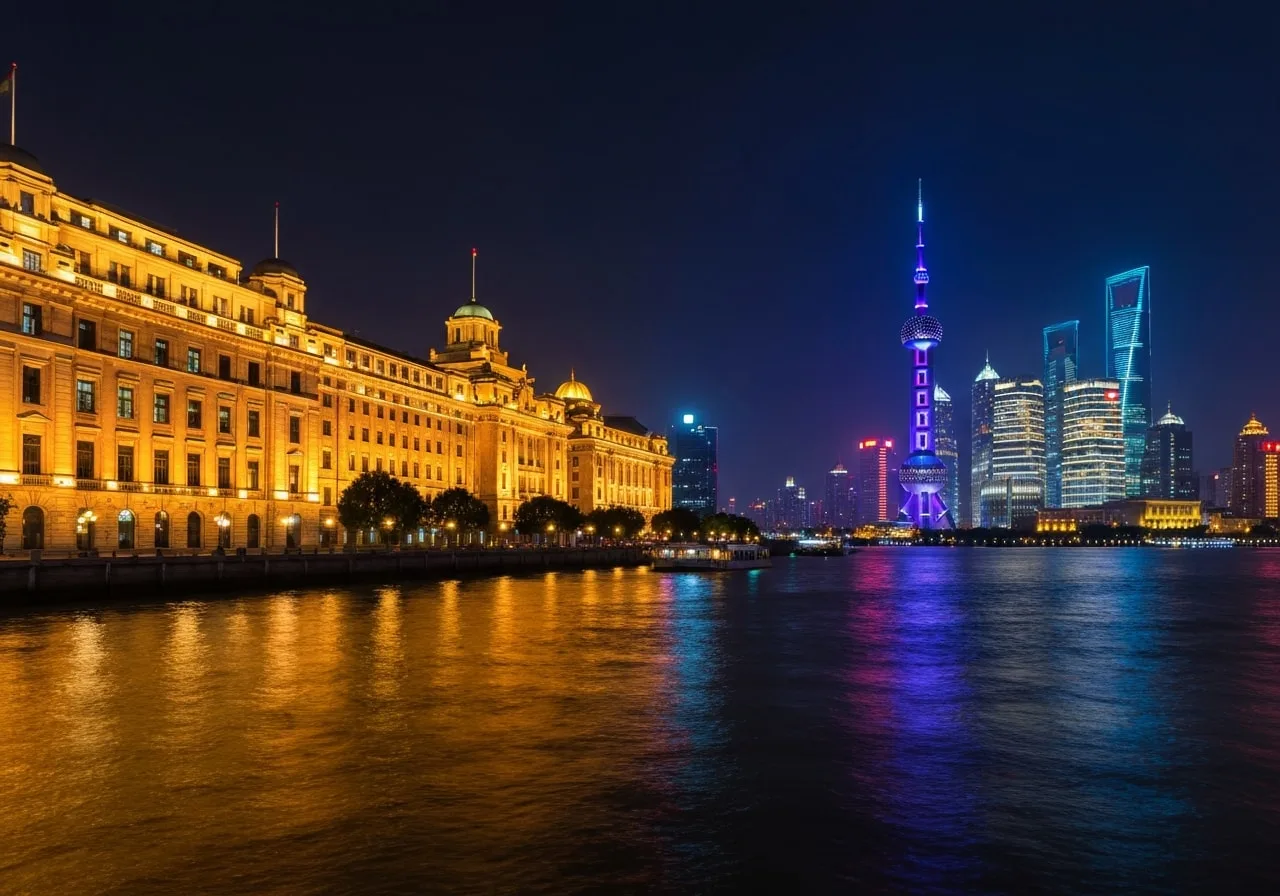
The Bund and Pudong
Walk the Bund at dusk. Colonial-era European architecture lines one side of the Huangpu River; across the water, the Oriental Pearl Tower and Shanghai Tower pierce the sky in defiant modernity. It's theatrical in a way few cityscapes achieve. Stay for the light show at 7 PM (varies seasonally).
Cross the river via the Bund Sightseeing Tunnel — it's cheesy, psychedelic, and costs ₹400 for a 5-minute underground light show tram ride. Somehow, it works. Alternatively, take the ferry (₹15) for a no-frills crossing.
Shanghai Tower observation deck (118th floor) costs ₹800 but delivers views that justify the price. World Financial Center's "bottle opener" observation bridge is slightly cheaper at ₹600.
Yu Garden and the Old City
Yu Garden offers classical Chinese garden design in a compact space — rockeries, koi ponds, pavilions, and 400-year-old trees. The surrounding bazaar is touristy but the xiaolongbao (soup dumplings) at Nanxiang Mantou Dian have been served here since 1900. Entry costs approximately ₹250.
Zhujiajiao Water Town (Day Trip)
An hour from Shanghai, this 1,700-year-old water town offers canal streets, stone bridges, and considerably fewer tourists than Suzhou or Hangzhou. Take Metro Line 17 to Zhujiajiao Station. Combined ticket for major sites costs ₹400. Go on a weekday if possible.
The Maglev Experience
Shanghai's magnetic levitation train runs from Pudong Airport to Longyang Road metro station at 430 km/h. The 30km journey takes 7 minutes 20 seconds. One-way ticket costs ₹350 (cheaper if you show your same-day flight boarding pass). It's gimmicky, overpriced compared to the metro, and absolutely worth doing once.
Xi'an: Terracotta Warriors and Ancient Walls (2-3 Days)
Xi'an served as China's capital for thirteen dynasties. The Terracotta Warriors alone justify a visit, but the ancient city walls, Muslim Quarter food scene, and historical depth make it essential for any two-week China trip from India 2026.
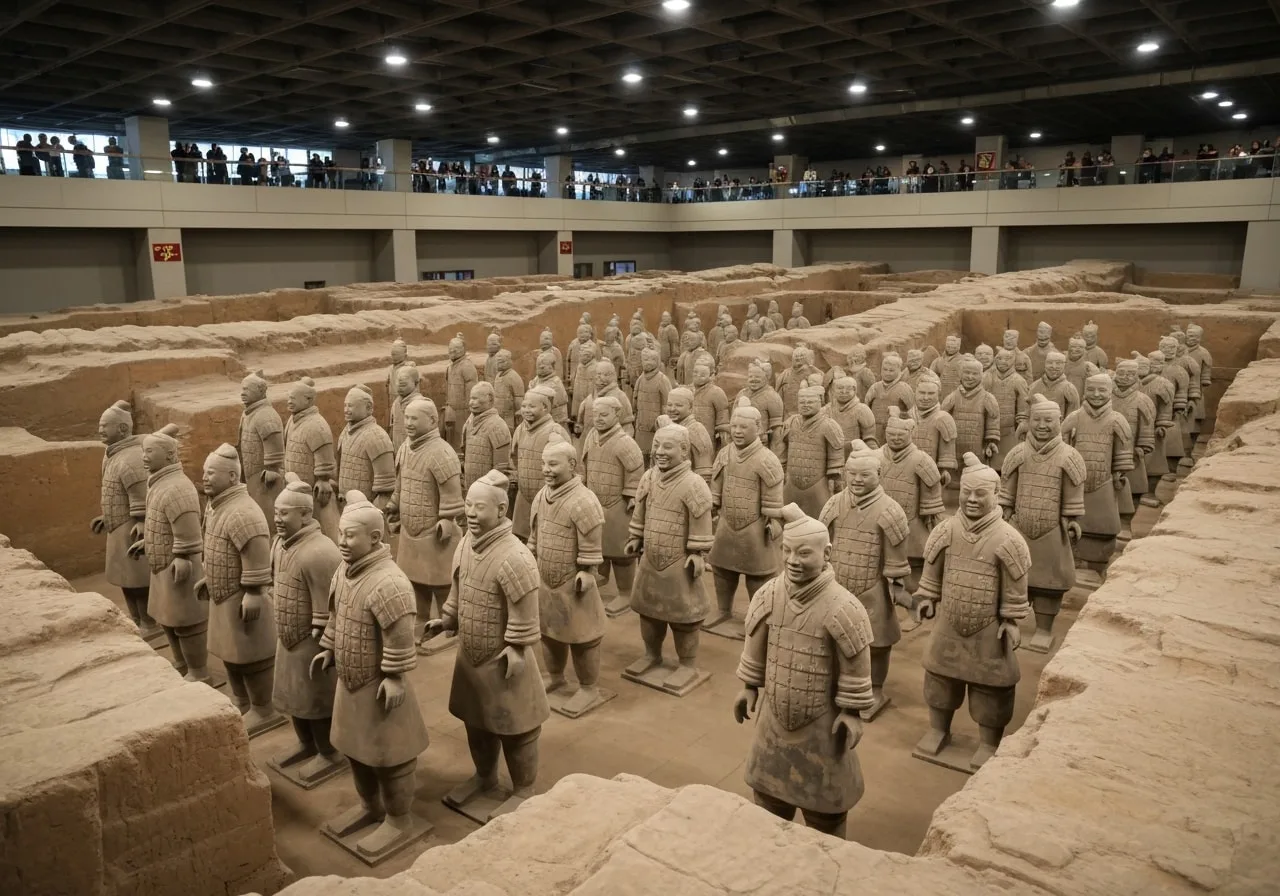
Terracotta Warriors
Emperor Qin Shi Huang built an army of 8,000 clay soldiers to guard his tomb in 210 BCE. They stood underground for 2,200 years until a farmer digging a well accidentally discovered them in 1974. The scale is incomprehensible until you're standing in Pit 1, looking at rank upon rank of warriors, each with unique facial features.
Take Tourist Bus 5 from Xi'an Railway Station (₹50, 90 minutes) or hire a private taxi (₹800 round trip including waiting time). Entry costs ₹1,000 for the full site. Audio guide costs extra but helps — without context, you're just looking at statues.
Allow 3-4 hours. Go early; by 11 AM the tour groups create viewing congestion.
City Walls and Muslim Quarter
Xi'an's 14th-century city walls remain intact — 14km of ramparts you can walk or cycle around. Rent a bike at the South Gate (₹200 for 2 hours) and circumnavigate the old city. Evening views as the wall illuminates are spectacular.
The Muslim Quarter around the Drum Tower is chaotic, touristy, and serves incredible food. Look for yangrou paomo (lamb bread soup), roujiamo (Chinese hamburger), and various skewered meats. Non-vegetarians will be in heaven. The area operates mainly 10 AM to 10 PM; peak atmosphere is evening.
Chengdu: Pandas and Sichuan Fire (2-3 Days)
Two reasons bring travelers to Chengdu: giant pandas and the mouth-numbing cuisine that made Sichuan famous. Both deliver.
Chengdu Research Base of Giant Panda Breeding
Arrive at 7:30 AM when gates open. The pandas are most active during morning feeding (before 10 AM). By afternoon, they're doing what pandas do best — sleeping. The base spreads across hillside bamboo groves; allow 2-3 hours to explore properly. Entry costs approximately ₹400.
Skip the panda holding photo experience. It costs ₹15,000+, involves minimal actual interaction, and the ethical considerations are questionable. Watch them eating bamboo from the viewing platforms instead — genuinely more entertaining.
Sichuan Food: The Capsaicin Gauntlet
Sichuan cuisine doesn't just use chili — it deploys Sichuan peppercorns that create a numbing, tingling sensation called "ma la." Hotpot is the flagship experience: a bubbling cauldron of chili oil where you cook raw ingredients at your table. Haidilao chain offers reliable quality and English menus; local spots are better but navigation is harder.
Mapo tofu, kung pao chicken, dan dan noodles — these dishes originated here in forms far more aggressive than the Indianized versions you know. Start mild, escalate carefully. Your digestive system will thank you.

High-Speed Rail: China's Secret Weapon
Forget domestic flights. China's high-speed rail network is extraordinary — punctual, comfortable, affordable, and city-center to city-center. The CRH trains cruise at 300-350 km/h, turning Beijing-Shanghai (1,300km) into a 4.5-hour journey.
Routes for a typical India to China trip:
- Beijing to Xi'an: 4.5 hours, ₹2,000 second class
- Xi'an to Chengdu: 3.5 hours, ₹1,800 second class
- Chengdu to Shanghai: 10 hours, ₹3,500 second class (or fly)
- Shanghai to Beijing: 4.5 hours, ₹2,200 second class
Book via Trip.com (accepts international cards) or China DIY Travel. Tickets release 15 days ahead. Second class is perfectly comfortable; first class adds legroom and slightly reclining seats for 50% more cost.
You'll need your passport to book and board. Arrive at least 30 minutes early — stations require security screening and are often massive.
The Great Firewall: VPN and Connectivity Survival
This section will save your trip. China blocks Google (all services including Maps, Gmail, YouTube), WhatsApp, Instagram, Facebook, Twitter, and most Western apps you rely on daily. This is not theoretical — it's absolute. Your apps will not work.
Download a VPN before entering China. You cannot download VPN apps once inside — the app stores are blocked too. ExpressVPN, NordVPN, and Surfshark work reasonably well but not perfectly. Expect 60-70% connectivity on good days, dead zones on others. The VPN situation is a constant cat-and-mouse game with Chinese authorities.
Download offline maps via Maps.me or download China-specific areas while still connected. Baidu Maps works without VPN but is entirely in Chinese.
For communication, WeChat is essential. Create an account before arrival and add contacts. It's China's WhatsApp, Instagram, Uber, and payment system combined. Without WeChat, you're isolated.
Check our guide on essential travel apps for international trips for download links and setup instructions. Also review mobile connectivity options — Chinese SIM cards exist but require registration hassles.
WeChat Pay and Alipay: The Cash Problem
China has become nearly cashless. Street vendors, metro stations, restaurants, even beggars use QR code payments. And until 2024, foreigners couldn't access these systems.
The situation improved: both WeChat Pay and Alipay now accept international credit cards for tourists. Download both apps, link your Visa or Mastercard, and you can scan QR codes like locals. The interface is somewhat confusing but functional. Keep ₹10,000-15,000 equivalent in cash (Chinese yuan) as backup — some places, especially outside major cities, still prefer cash, and ATMs accepting foreign cards can be sparse.
Vegetarian Food in China: The Honest Truth
This is where I'll be direct: vegetarian travel in mainland China is challenging. Most dishes contain meat, fish sauce, oyster sauce, or lard. Tofu preparations often include pork mince. "Vegetables" might arrive stir-fried in animal fat. The concept of strict vegetarianism isn't widely understood.
Survival strategies:
- Buddhist restaurants (素食 - sùshí): Found near major temples. Entirely vegetarian, often vegan. Food quality varies from excellent to basic.
- Learn key phrases: "Wǒ bù chī ròu" (I don't eat meat). "Wǒ chī sù" (I eat vegetarian). Carry a translation card with these phrases.
- Chinese Muslim restaurants: While not vegetarian, they avoid pork and have clearer meat-free options like egg fried rice, vegetable noodles.
- Hotel breakfast buffets: Usually have identifiable vegetarian options.
Our guide on navigating language barriers abroad includes printable phrase cards that help with food restrictions.
China Trip from India 2026: Complete Budget Breakdown
Here's what a realistic China trip from India 2026 costs. I'm calculating for mid-range comfort — not backpacker hostels, not luxury hotels.
| Category | Budget (₹) | Mid-Range (₹) | Comfort (₹) |
|---|---|---|---|
| Flights (Return) | 22,000 | 32,000 | 45,000 |
| Visa | 5,000 | 5,000 | 5,000 |
| Accommodation (12 nights) | 18,000 | 36,000 | 60,000 |
| High-Speed Rail | 6,000 | 8,000 | 12,000 |
| Local Transport (Metro/Taxi) | 3,000 | 5,000 | 8,000 |
| Food (12 days) | 12,000 | 18,000 | 30,000 |
| Attractions & Activities | 6,000 | 10,000 | 15,000 |
| Travel Insurance | 1,500 | 2,000 | 3,000 |
| Miscellaneous/Buffer | 5,000 | 8,000 | 12,000 |
| TOTAL | 78,500 | 1,24,000 | 1,90,000 |
The budget column assumes hostel dorms, street food, second-class trains, and careful spending. Mid-range gets you private hotel rooms (3-star), restaurant meals, and a few taxis. Comfort means 4-star hotels, business-class trains, and dining without budget stress.
Best Time to Visit China from India
Timing your China trip from India 2026 matters. China spans multiple climate zones, but for the classic Beijing-Xi'an-Shanghai route:
April-May (Spring): Comfortable temperatures, cherry blossoms in some areas, manageable crowds. Probably the best window.
September-October (Autumn): Excellent weather, Great Wall photos with fall colors. October 1-7 is Golden Week — avoid unless you enjoy queuing for three hours at every attraction.
November-March (Winter): Cold but fewer tourists. Beijing drops to -5°C; Shanghai to 2-5°C. The Great Wall in snow is hauntingly beautiful if you're prepared.
June-August (Summer): Hot, humid, peak tourist season, summer holidays mean crowds. Not ideal.
Safety and Practical Notes
China is remarkably safe for tourists. Violent crime against foreigners is extremely rare. Petty theft exists in crowded areas (as anywhere), but pickpocketing is less common than in European tourist cities.
Scams to watch: "Art student" approaches asking you to visit a gallery (you'll be pressured to buy overpriced paintings), tea house invitations from strangers (bill comes to thousands), fake monks asking for donations. Just decline and walk away.
Medical care in major cities is good but expensive. Travel insurance is essential — hospital visits are charged upfront. Pharmacies are everywhere; basic medications available without prescription.
Air quality in Beijing and northern cities can be poor. Download an AQI (Air Quality Index) app and carry a few N95 masks for high-pollution days. Shanghai is generally better.
What to Pack
- VPN (downloaded before arrival) — Cannot stress this enough
- Physical maps/offline maps — When VPN fails, GPS still works; you need map data
- Phrase card — Key phrases for vegetarian food, directions, emergencies
- Power adapter — China uses Type A/I plugs (same as US); Indian devices need adapters
- Toilet paper/tissues — Public restrooms often don't provide them
- Comfortable walking shoes — You'll walk 15,000+ steps daily
- Sunscreen and hat — Chinese sun can be fierce, especially at elevation (Great Wall)
- N95 masks — For pollution days
Planning Your China Trip from India 2026 Itinerary
For 10-14 days, a practical routing:
10-Day Option: Beijing (4 days) → Train to Xi'an (2 days) → Train to Shanghai (3 days) → Fly home
14-Day Option: Beijing (4 days) → Train to Xi'an (3 days) → Train to Chengdu (3 days) → Flight to Shanghai (3 days) → Fly home
The 14-day version is better if you want pandas and Sichuan food. The 10-day works for first-timers focusing on the iconic sites.
Final Thoughts
Your China trip from India 2026 won't fit neatly into expectations. The language barrier is real. The internet censorship is frustrating. The crowds at major sites test patience. Yet there's something about standing on the Great Wall at dawn, watching Shanghai's skyline ignite at dusk, or sharing a meal with people you can't verbally communicate with — these moments don't happen in easier destinations.
The 2026 visa changes and direct flights from India remove the logistical barriers that made China feel inaccessible. What remains is a country that rewards those willing to navigate its quirks. Pack your VPN, lower your expectations for vegetarian food, and go. The noodles in that Beijing hutong are waiting.