

Bhutan Trip Cost from India: SDF, Permits & Real Budget 2026
In this guide (16)
- Bhutan Trip Cost from India: Summary Table (2026)
- Bhutan Trip Cost for 2 People and Per-Day Cost
- Understanding the SDF: Why Indians Pay INR 1,200, Not $100
- Bhutan Permit for Indian Nationals: No Visa Needed
- Getting to Bhutan: Flights vs Road from India
- Where to Stay: Bhutan Hotel Costs for Indians
- 5-Day Bhutan Itinerary: Thimphu, Punakha & Paro
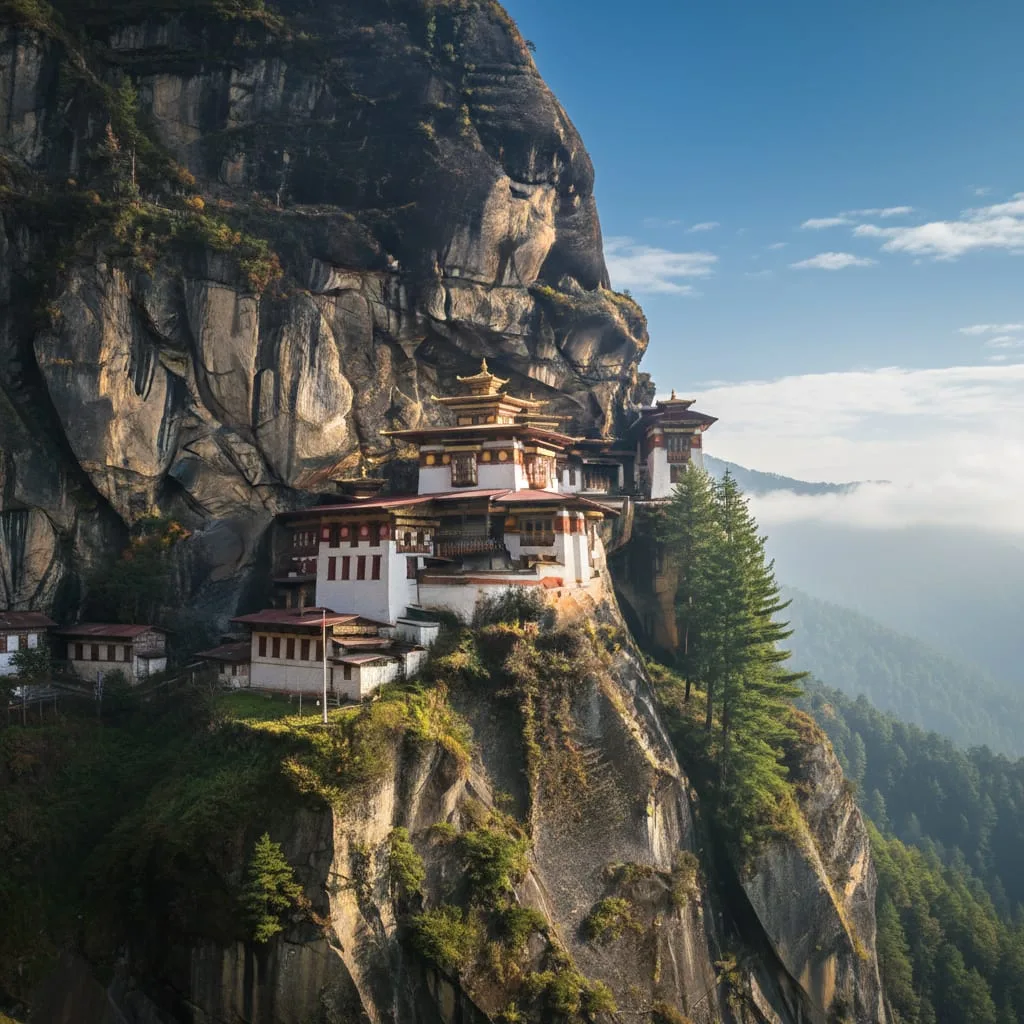
- Tiger's Nest Monastery: Honest Difficulty Assessment
- Food in Bhutan: What to Eat & What It Costs
- Currency & Money Tips for Bhutan
- Best Time to Visit Bhutan from India
- What to Pack for Bhutan
- Bhutan Trip Cost from India: Budget Breakdown by Style
- Common Mistakes Indians Make in Bhutan
- Is Bhutan Worth the Cost for Indians?
- Frequently Asked Questions
Cross from Jaigaon into Phuentsholing and the change is immediate: hardly any honking, clean streets and traffic police in the traditional gho. For Indian travellers the first practical question is the budget, and Bhutan prices Indian passport holders very differently from everyone else.
This guide breaks down what your bhutan trip cost from india looks like in 2026, both by road via Phuentsholing and by flying into Paro: where the money goes, what is worth the spend, and where travellers commonly overpay.
Here's the thing nobody tells you upfront: Indians get a MASSIVE discount compared to other tourists. While Americans and Europeans pay USD 100 per night just for the Sustainable Development Fee, we pay INR 1,200 per night. That's roughly $12. That one rule changes the whole budget.
Bhutan Trip Cost from India: Summary Table (2026)
Before we get into the details, here's what you're actually looking at for a 5-day trip:
| Expense Category | Budget (Road Trip) | Mid-Range | Comfortable |
|---|---|---|---|
| Transport (from Siliguri/Bagdogra) | INR 3,000-4,000 | INR 15,000-20,000 | INR 25,000-35,000 |
| SDF (INR 1,200 x 4 nights) | INR 4,800 | INR 4,800 | INR 4,800 |
| Hotels (4 nights) | INR 6,000-8,000 | INR 12,000-16,000 | INR 24,000-36,000 |
| Food (5 days) | INR 4,000-5,000 | INR 6,000-8,000 | INR 10,000-15,000 |
| Sightseeing & Activities | INR 3,000-4,000 | INR 5,000-7,000 | INR 8,000-12,000 |
| Certified guide (5 days, indicative) | INR 7,500-15,000 | INR 7,500-15,000 | INR 7,500-15,000 |
| Permits & Misc | INR 1,500 | INR 2,000 | INR 3,000 |
| TOTAL PER PERSON | INR 30,000-42,000 | INR 52,000-73,000 | INR 82,000-1,21,000 |
Now let me explain each of these so you know exactly where your money goes.
Bhutan Trip Cost for 2 People and Per-Day Cost
The table above is per person. Travelling as a couple or with a friend lowers the per-head cost, because the hotel room, any private taxi and the guide are shared, while the SDF, food, flights or jeep seats and entry fees are paid per person.
| 5 days / 4 nights | Solo traveller, per person per day | Total for 2 people |
|---|---|---|
| Budget (road, shared room) | INR 6,000-8,400 | INR 47,000-62,000 |
| Mid-range (one or two flights) | INR 10,400-14,600 | INR 86,000-1,15,000 |
| Comfortable (4-star, private car) | INR 16,400-24,200 | INR 1,34,000-1,91,000 |
The fixed daily costs every Indian visitor pays:
- SDF: INR 1,200 per person per night (half for children aged 6-12, free for 5 and under). A couple pays INR 2,400 a night, or INR 9,600 for 4 nights.
- Entry permit: no separate fee; the SDF is paid when the permit is issued.
- Monument fees: Taktsang (Tiger's Nest) Nu 1,000; Punakha Dzong, Tashichho Dzong, Memorial Chorten, Kyichu, Changangkha and Chhimi Lhakhang Nu 500 each. Buddha Dordenma is free.
- Certified guide: required for every day of the trip; budget about INR 1,500-3,000 a day, shared by the group (indicative operator rates).
Driving your own car? Indian-registered vehicles can use the designated zone at Phuentsholing free of charge. Beyond Rinchending Check Post they pay a Green Tax of Nu 4,500 per day and must be registered on the Check Post Management System; carry the original driving licence, RC (vehicle not more than 10 years old), insurance and emission certificate.
Is Bhutan cheaper than an Indian hill trip? Usually not. The SDF alone adds INR 1,200 per person per night, and stays must be in Department of Tourism certified hotels. What keeps Bhutan affordable for Indians is that the SDF is a fraction of the USD 100 other visitors pay, and the rupee is accepted at par with the ngultrum.
Understanding the SDF: Why Indians Pay INR 1,200, Not $100
The Sustainable Development Fee is Bhutan's way of funding free healthcare, free education, and environmental conservation. According to the Tourism Council of Bhutan, this fee directly supports the country's commitment to remaining carbon negative.
For most international tourists, the SDF is USD 100 per person per night — roughly INR 9,600. Steep, right?
But here's where being Indian pays off. Under the India-Bhutan friendship treaty, Indian nationals (along with Bangladeshis and Maldivians) are exempt from the international SDF. Instead, we pay a Regional Tourist SDF of INR 1,200 per night. This single rule is the biggest reason Bhutan is affordable for Indian travellers.

Quick math: A 5-day, 4-night trip for other tourists = USD 400 just in SDF. For Indians? INR 4,800 (about $50). We save over INR 33,000 on this single line item.
The SDF is paid when your entry permit is issued, either online through the Department of Immigration portal (immi.gov.bt) or in person at the point of entry. Children aged 5 and below are exempt. Don't let anyone tell you that you need to pay more — INR 1,200/night is the government-mandated rate for Indians.
Bhutan Permit for Indian Nationals: No Visa Needed
Indians don't need a visa for Bhutan. What you need is an entry permit, and the process is actually straightforward once you know what to bring.
Documents Required
- Original Indian passport with at least six months' validity (recommended) OR original Voter ID card
- Children under 18: passport or birth certificate in English, travelling with a legal guardian
- 2 passport-size photographs
- Hotel booking confirmation (Department of Tourism certified accommodation is mandatory for the whole trip)
- Travel insurance for the duration of the trip
- Return ticket or travel itinerary
Permit Process by Entry Point
Via Phuentsholing (Road): You can apply for the permit online before travelling at immi.gov.bt, or have your hotel or tour operator apply for you, which avoids most of the wait at the border. If you apply on arrival, the Department of Immigration issues permits at the Pedestrian Terminal in Phuentsholing; bring a passport-size photograph and expect long waits in peak season (October-November).
Via Paro Airport (Flight): Apply for the permit online before you fly, or ask your hotel or tour operator to apply for you. You can also apply on arrival at Paro, but there may be a long wait depending on how many people are applying at the time.
One gotcha: the Department of Tourism requires tourists to be accompanied by a guide certified by the Department at all times in Bhutan, including inside dzongs and monuments, and recommends booking the guide before you reach the border. Route permits are no longer needed for tourists moving around the country. Guides typically cost about INR 1,500-3,000 a day for Indian travellers (indicative operator rates), shared by the group.
Planning independently? The Consulate General of India in Phuentsholing lists what Indian tourists planning their own trip should arrange: an entry permit, Department of Tourism certified accommodation for the whole trip (mandatory), a tour guide, travel insurance and transport within the country.
Getting to Bhutan: Flights vs Road from India
This is where your bhutan trip cost from india varies the most. Let me break down both options honestly.
Option 1: Flying to Paro
Only two airlines fly to Bhutan — Druk Air (Royal Bhutan Airlines) and Bhutan Airlines. Both operate from Delhi, Kolkata, Guwahati, and Bagdogra.
Flight Costs (One-Way, 2026 Prices):
- Delhi to Paro: INR 12,000-18,000
- Kolkata to Paro: INR 8,000-12,000
- Bagdogra to Paro: INR 6,000-9,000
- Guwahati to Paro: INR 7,000-11,000
The Paro landing is one of the world's most dramatic — the plane weaves between mountains, and you can see monasteries from your window. Worth experiencing at least one way.
For budget flights to reach Bagdogra or Guwahati, check our guide on finding cheap flights from India.
Option 2: Road via Phuentsholing
The budget option. From Siliguri/NJP, it's about 4-5 hours to Jaigaon (Indian side) by shared jeep (INR 300-400) or private taxi (INR 2,500-3,000).
From Phuentsholing, you'll need another vehicle to Thimphu. The 6-hour mountain drive is beautiful but brutal — endless switchbacks through the Himalayas. Shared vehicles cost around INR 400-500 per person. Private taxis run INR 3,500-4,500.
If you're prone to motion sickness, consider flying at least one way: the road to Thimphu is a long run of hairpin bends, so eat light before setting off.
Where to Stay: Bhutan Hotel Costs for Indians
Bhutan isn't backpacker-cheap, but it's not Singapore either. Here's what accommodation actually costs:
Budget Hotels (INR 1,500-2,500/night)
Basic but clean rooms, attached bathroom, hot water (usually). Examples: Hotel Dorji Elements in Thimphu, Sonam Trophel in Paro. These are family-run guesthouses — don't expect room service, but do expect warm hospitality.
Mid-Range Hotels (INR 3,000-5,000/night)
Better locations, proper restaurants, maybe a view. Hotel Taktsang in Paro, Hotel Druk in Thimphu. Comfortable enough that you won't complain.
Upscale Options (INR 6,000-15,000/night)
Zhiwa Ling, Taj Tashi, Le Meridien. Full amenities, spa, excellent restaurants. The Taj Tashi dinner buffet with ema datshi (chili cheese) made properly is a highlight.
For senior travelers who need extra comfort, our international travel guide for senior citizens covers accessibility considerations.
5-Day Bhutan Itinerary: Thimphu, Punakha & Paro
This is the classic circuit most first-timers do, and honestly, it's classic for good reason.
Day 1: Arrive Paro or Phuentsholing
If flying, you land in Paro around midday. Check into your hotel, walk around the town, visit the local market. If coming by road, you'll likely spend the night in Phuentsholing after clearing immigration.
Day 2: Thimphu
Drive to Thimphu (1.5 hours from Paro, or full day from Phuentsholing). Visit Buddha Dordenma — the massive golden Buddha overlooking the valley. Evening walk at Memorial Chorten where locals do their evening prayers. The craft market near the traffic circle (yes, Bhutan famously has no traffic lights) has decent souvenirs.
Day 3: Punakha
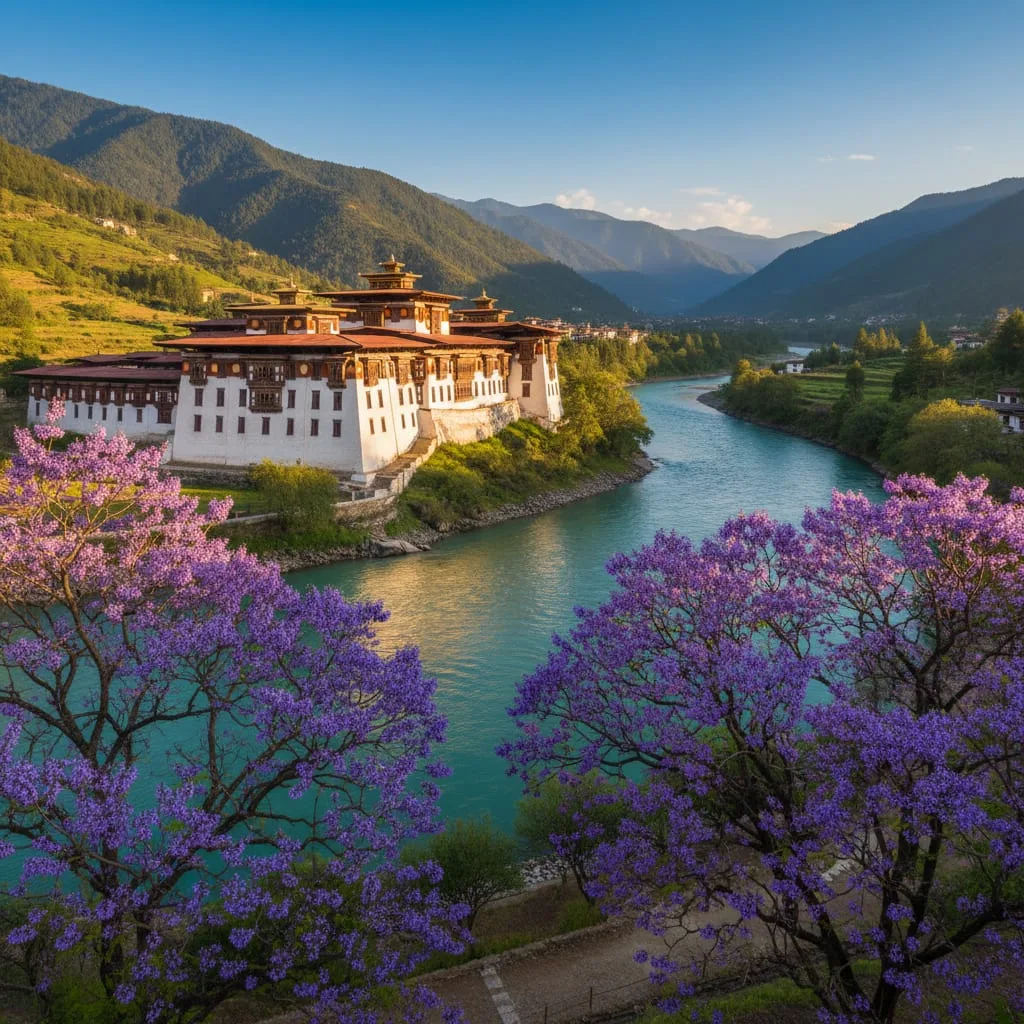
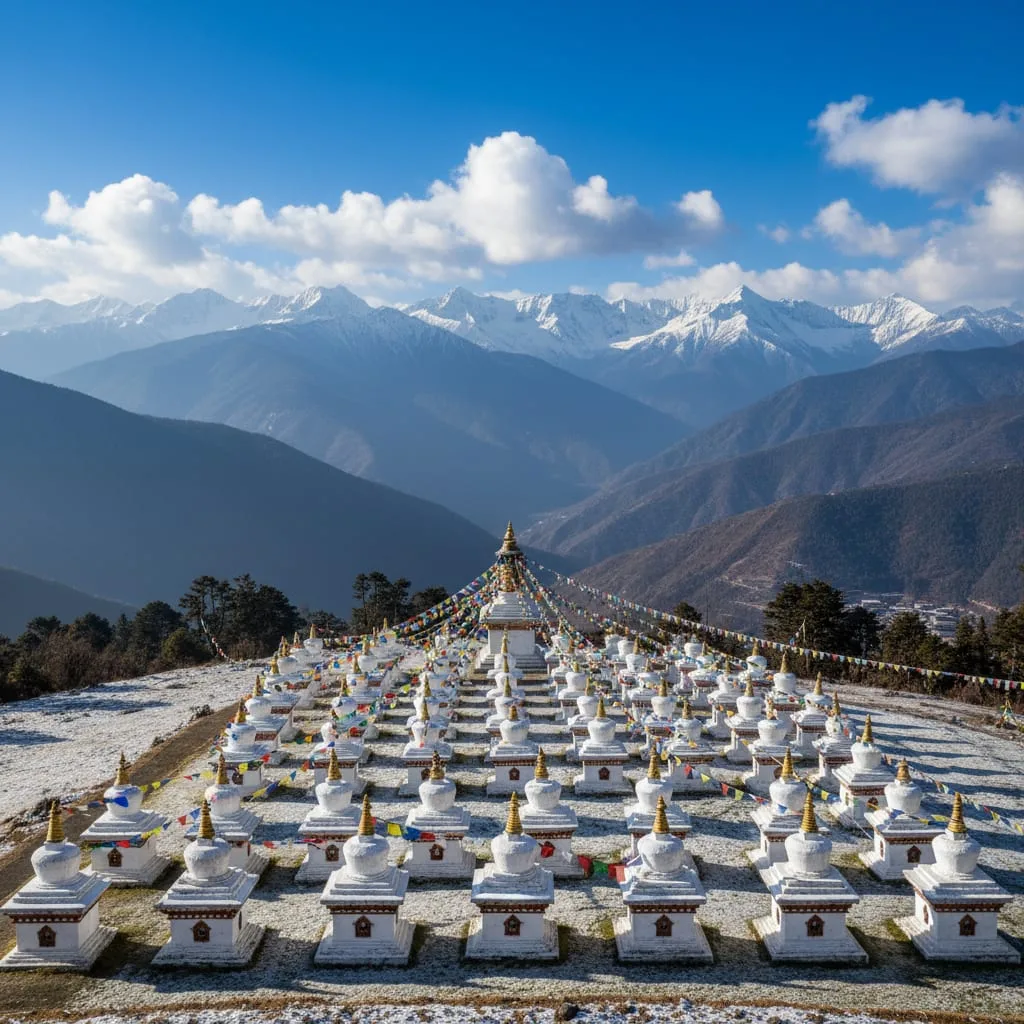
Cross Dochula Pass (3,100m) with its 108 memorial stupas. On a clear day, you can see the entire Himalayan range including Gangkar Puensum, the world's highest unclimbed peak. Punakha Dzong is the most beautiful fortress in Bhutan — sitting at the confluence of two rivers, it's especially stunning in spring when jacaranda trees bloom purple.
Day 4: Paro & Tiger's Nest Hike
The main event. Wake up early (I mean 5:30 AM early) to start the Tiger's Nest hike by 7 AM. The monastery clings to a cliff 900 meters above the valley floor. Round trip takes 4-6 hours depending on your fitness. More on this below.
Day 5: Departure
Morning flight from Paro or drive back to Phuentsholing. If you have time, the National Museum in Paro (housed in an ancient watchtower) is worth an hour.
Tiger's Nest Monastery: Honest Difficulty Assessment
Paro Taktsang — Tiger's Nest — is THE reason most people visit Bhutan. Let me give you the real picture, not the Instagram version.
The Stats:
- Distance: 5-6 km round trip
- Elevation gain: 900 meters
- Time: 4-6 hours total (including monastery visit)
- Entry fee: Nu 1,000 (= INR 1,000) per person; 50% off for ages 6-18, free for 5 and under
How Hard Is It Really?
Harder than it looks in photos. The trail starts gentle, then gets progressively steeper. After the first cafeteria (halfway point, about 1.5 hours up), it becomes a proper climb with uneven stone steps. The final stretch involves descending into a gorge and climbing back up to the monastery.
Even reasonably fit hikers are usually breathing hard by the end, and people who haven't exercised in months often struggle. Expect sore legs for a day or two afterwards.
Tips That Actually Help:
- Start by 7 AM. Afternoon clouds often obscure the view, and it gets warm.
- Hire a horse till the cafeteria (INR 700-1,000) if you want to save energy for the harder second half.
- Carry water (at least 1.5 liters) and glucose biscuits.
- Wear proper shoes with good grip; sandals and chappals are a poor choice on the steep, uneven steps.
- No phones or cameras allowed inside the monastery (lockers available for INR 50).
Is it worth the knee pain? Absolutely. Standing on that cliff edge, looking at a 17th-century monastery built where Guru Rinpoche meditated on the back of a flying tigress — yeah, that's a moment.
Food in Bhutan: What to Eat & What It Costs
Bhutanese food revolves around chilies, cheese, and rice. The national dish — ema datshi — is literally just chilies cooked in cheese. Sounds simple, tastes like fire.
Meal Costs:
- Local restaurant meal: INR 200-350
- Hotel restaurant: INR 400-700
- Upscale dining: INR 800-1,500
What to Try:
- Ema Datshi — Chili cheese, spicier than you expect
- Kewa Datshi — Potato cheese, milder option
- Phaksha Paa — Pork with red chilies (non-veg folks, this is excellent)
- Momos — Similar to Tibetan/Nepali style, good everywhere
- Red Rice — Nutty, slightly chewy, very Bhutanese
Indian Food Availability:
Every tourist area has restaurants serving dal-rice, roti-sabzi, and North Indian staples. Quality varies. Hotel restaurants generally do better than standalone places. Vegetarians will manage fine — just expect repetition.
Currency & Money Tips for Bhutan
The Bhutanese Ngultrum (BTN) is pegged 1:1 with Indian Rupee. In practice, this means:
- INR 500 notes and below are accepted everywhere — shops, hotels, restaurants, taxis
- INR 2000 notes are NOT accepted — don't carry them
- ATMs exist in Thimphu and Paro — but they dispense Ngultrum, not INR
- Card acceptance is limited — some upscale hotels take cards, most places are cash-only
- UPI works at many merchants — BHIM UPI QR payments have been accepted at merchants acquired through the Royal Monetary Authority of Bhutan since July 2021, but carry cash as backup, especially outside towns
Recommendation: carry enough INR cash (notes of INR 500 and below) for most of the trip. For a 5-day mid-range trip, roughly INR 35,000-51,000 per person covers the hotels, food, sightseeing, guide and SDF shown in the table above.
Best Time to Visit Bhutan from India
March to May (Spring): A favourite season with many visitors. Rhododendrons blooming across the hills, pleasant temperatures (15-20°C in valleys), clear skies. Punakha's jacaranda season is April.
September to November (Autumn): Post-monsoon clarity means stunning Himalayan views. Festival season (Thimphu Tshechu usually in September/October) brings traditional mask dances. Most crowded period — book hotels early.
December to February (Winter): Cold (down to 0°C at night in Thimphu) but clear. Fewer tourists, potentially lower hotel rates. Dochula Pass might have snow. Pack layers.
June to August (Monsoon): Roads can be iffy, leeches on trails, views often clouded. Not recommended unless you enjoy uncertainty.
What to Pack for Bhutan
- Layers: Temperature swings 15+ degrees between morning and afternoon
- Sturdy walking shoes: Essential for Tiger's Nest, useful everywhere
- Rain jacket: Weather changes fast in mountains
- Sunscreen & sunglasses: High altitude = stronger UV
- Power bank: Charging points aren't always convenient
- Cash (INR 500 and below): As discussed above
- Passport/Voter ID + 2 passport-size photos: For permits
- Basic medicines: Altitude can trigger headaches, carry Diamox if prone to altitude issues
Bhutan Trip Cost from India: Budget Breakdown by Style
Here are three realistic scenarios based on current 2026 prices:
Backpacker Budget: INR 30,000-42,000 (5 Days)
Travel by road from Siliguri. Stay in basic guesthouses (INR 1,500-2,000/night). Eat at local restaurants. Use shared transport within Bhutan. Skip the horse at Tiger's Nest. The certified guide for all 5 days is the biggest extra, at about INR 7,500-15,000, shared if you travel as a group. This requires flexibility and comfort with basic facilities, but it's absolutely doable.
Mid-Range Comfort: INR 52,000-73,000 (5 Days)
Fly one way (Bagdogra-Paro), road the other. Stay in proper hotels with attached restaurants. Hire a private taxi for internal travel (INR 2,500-3,500/day), with a certified guide throughout. This is the sweet spot for most Indian travelers.
Comfortable Travel: INR 82,000-1,21,000 (5 Days)
Fly both ways from Delhi or Kolkata. Stay at 4-star hotels like Zhiwa Ling. Private vehicle and certified guide throughout. Can also add rafting at Punakha or a cooking class. For families or traveling with parents, this level removes all stress.
Common Mistakes Indians Make in Bhutan
1. Not carrying enough cash: Card acceptance is limited and ATMs can be empty or out of service, so arrive with enough INR cash rather than relying on the first ATM you find.
2. Underestimating the Tiger's Nest hike: It's not a morning stroll. Train a bit before if you're sedentary.
3. Skipping Punakha: Some people just do Thimphu-Paro. Punakha Dzong alone justifies the extra day.
4. Overpacking: You're not going to a fashion show. Mountains don't care about your outfit coordination.
5. Arriving without a guide booked: Tourists must be accompanied by a Department of Tourism certified guide throughout the trip, and the Department recommends booking one before you reach the border.
Is Bhutan Worth the Cost for Indians?
Short answer: Yes, but with the right expectations.
Bhutan isn't a beach holiday or a shopping destination. It's a place where you walk through 500-year-old fortresses, hike to monasteries that shouldn't logically exist, and experience a country that genuinely measures Gross National Happiness.
At roughly INR 30,000-73,000 per person for a 5-day trip, Bhutan is cheaper than a Maldives water villa week, offers more cultural depth than a Dubai mall marathon, and is one of the few international trips where your Indian passport is actually an advantage.
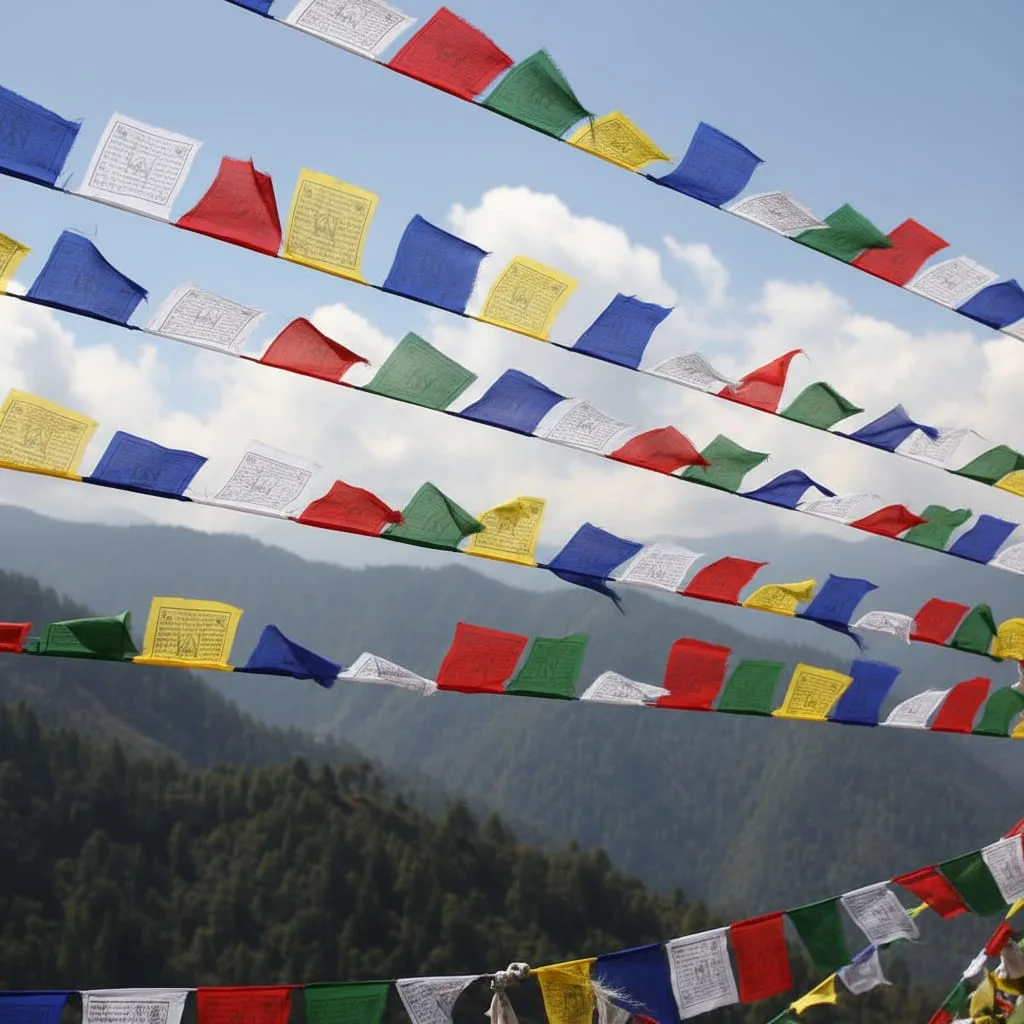
The six-hour drive from Phuentsholing to Thimphu is tiring, all mountain switchbacks. But sunrise at Dochula Pass, with the Himalayas turning pink and gold, prayer flags snapping in the wind and hardly any traffic noise, explains why so many travellers come back.
Bhutan doesn't try to impress you. It just exists, peacefully, and somehow that's enough.
Frequently Asked Questions
How much does a Bhutan trip cost from India in 2026?
Indian nationals pay significantly less than other tourists. A 5-day Bhutan trip from India costs about ₹30,000-42,000 per person on a budget by road, ₹52,000-73,000 mid-range and ₹82,000-1,21,000 for comfortable travel, including a certified guide for all 5 days, which Bhutan requires for tourists. Indians pay a reduced Sustainable Development Fee of INR 1,200 per night instead of the USD 100 per night that most other nationalities pay.
Do Indian citizens need a visa for Bhutan?
No, Indian citizens do not need a visa for Bhutan. You need a permit which is processed at the entry point (Phuentsholing or Paro airport) with your valid Indian passport or Voter ID. There is no separate permit fee; the SDF of INR 1,200 per night is paid when the permit is issued. You can apply online in advance at immi.gov.bt or on arrival, where waits can be long in peak season.
What is the SDF for Bhutan and do Indians pay it?
The Sustainable Development Fee is USD 100 per night for most international tourists. Indians, Bangladeshis, and Maldivians pay a reduced regional SDF of INR 1,200 per night (INR 600 for children aged 6-11) on top of accommodation, food, transport and entry fees.
How do I reach Bhutan from India?
Two options: fly Druk Air or Bhutan Airlines to Paro (roughly ₹6,000-18,000 one way depending on the city), or drive via Jaigaon to Phuentsholing border crossing. The overland route from Siliguri takes about 4-5 hours and costs under ₹1,000.
What is the best time to visit Bhutan?
March-May for rhododendron blooms and pleasant weather, and September-November for clear Himalayan views and the famous Thimphu Tshechu festival. Avoid June-August monsoon season when roads become dangerous.
Planning this trip?
Tell us roughly when and how many — our travel expert sends you a custom quote, usually within a few hours.